Kirjojen hintavertailu. Mukana 12 390 323 kirjaa ja 12 kauppaa.

Kirjailija

László Krasznahorkai

Kirjat ja teokset yhdessä paikassa: 84 kirjaa, julkaisuja vuosilta 2000-2026, suosituimpien joukossa Seiobo tuolla alhaalla. Vertaile teosten hintoja ja tarkista saatavuus suomalaisista kirjakaupoista.

Mukana myös kirjoitusasut: Laszlo Krasznahorkai

84 kirjaa

Kirjojen julkaisuhaarukka 2000-2026.

The World Goes on

The World Goes on

László Krasznahorkai

NEW DIRECTIONS PUBLISHING CORPORATION
2017
sidottu
In The World Goes On, a narrator first speaks directly, then tells eleven unforgettable stories, and then bids farewell ("for here I would leave this earth and these stars, because I would take nothing with me"). As L szl Krasznahoraki himself explains: "Each text is about drawing our attention away from this world, speeding our body toward annihilation, and immersing ourselves in a current of thought or a narrative..." A Hungarian interpreter obsessed with waterfalls, at the edge of the abyss in his own mind, wanders the chaotic streets of Shanghai. A traveler, reeling from the sights and sounds of Varanasi, encounters a giant of a man on the banks of the Ganges ranting on the nature of a single drop of water. A child laborer in a Portuguese marble quarry wanders off from work one day into a surreal realm utterly alien from his daily toils. The World Goes On is another amazing masterpiece by the winner of the 2015 Man Booker International Prize. "The excitement of his writing," Adam Thirwell proclaimed in the New York Review of Books, "is that he has come up with this own original forms--there is nothing else like it in contemporary literature."
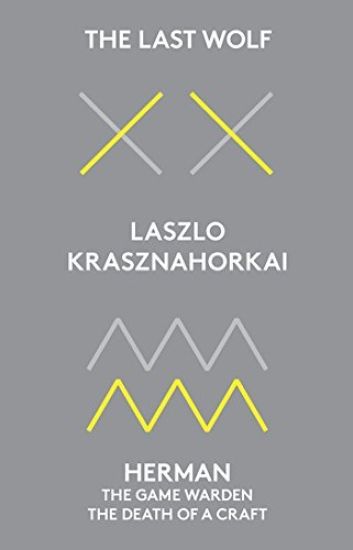
The Last Wolf & Herman

The Last Wolf & Herman

Laszlo Krasznahorkai

NEW DIRECTIONS PUBLISHING CORPORATION
2016
sidottu
The Last Wolf, translated by George Szirtes, features a classic, obsessed Krasznahorkai narrator, a man hired to write (by mistake, by a glitch of fate) the true tale of the last wolf of Extremadura, a barren stretch of Spain. This miserable experience (being mistaken for another, dragged about a cold foreign place, appalled by a species' end) is narrated--all in a single sentence--as a sad looping tale, a howl more or less, in a dreary wintry Berlin bar to a patently bored bartender. The Last Wolf is Krasznahorkai in a maddening nutshell--with the narrator trapped in his own experience (having internalized the extermination of the last creature of its kind and "locked Extremadura in the depths of his own cold, empty, hollow heart")--enfolding the reader in the exact same sort of entrapment to and beyond the end, with its first full-stop period of the book.Herman, "a peerless virtuoso of trapping who guards the splendid mysteries of an ancient craft gradually sinking into permanent oblivion," is asked to clear a forest's last "noxious beasts." In Herman I: the Game Warden, he begins with great zeal, although in time he "suspects that maybe he was 'on the wrong scent.'" Herman switches sides, deciding to track entirely new game...In Herman II: The Death of a Craft, the same situation is viewed by strange visitors to the region. Hyper-sexualized aristocratic officers on a very extended leave are enjoying a saturnalia with a bevy of beauties in the town nearest the forest. With a sense of effete irony, they interrupt their orgies to pitch in with the manhunt of poor Herman, and in the end, "only we are left to relish the magic bouquet of this escapade..." Translated by John Batki.
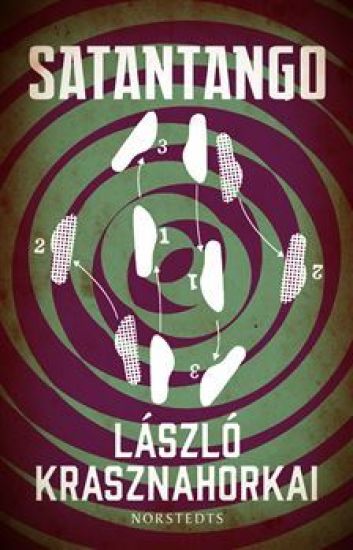
Satantango

Satantango

László Krasznahorkai

Norstedts
2015
sidottu
Nobelpriset i litteratur 2025: "för hans visionära och kraftfulla författarskap som mitt i undergångens fasa upprätthåller tron på konstens möjligheter." László Krasznahorkais debutroman från 1985 som kommit att bli en modern klassiker. "Djävulen har alltid roligast." Satantango utspelas under några få dagar. Det regnar ständigt. Ett tiotal invånare i en liten by har lämnats till sitt öde och smider planer, sviker löften och begår onda handlingar. Och så dansar de - en onykter tango eller csardas på värdshuset när den tröstlösa dagen övergår till källarmörk natt. Eller som en av huvudpersonerna, fru Schmidt, fäster uppmärksamheten på: "Att dansa är min enda svaghet." "Verkligheten utforskad vid vansinnets rand. Vilken form skulle det ta sig i samtidslitteraturen? Kanske som romaner skrivna av László Krasznahorkai, den svåre, säregne, betvingande, visionäre ungerske författaren." James Wood i The New Yorker László Krasznahorkai presenterades på svenska 2014 med romanen Motståndets melankoli, vilken hyllades av en enig kritikerkår. "Läs honom innan han får Nobelpriset!" Tidningen Vi.
Modstandens melankoli

Modstandens melankoli

László Krasznahorkai

Forlaget Sisyfos
2015
nidottu
En lille landsby i det sydøstlige Ungarn hjemsøges af et cirkus der medbringer en kæmpe blåhval på en blokvogn. Med cirkustruppens ankomst begynder byen at forandre sig og et faretruende oprør tager sin begyndelse. Uddrag fra bogen: ”Hverdagenes vante orden var afløst af et stadig mere omsiggribende kaos, fremtiden syntes uforudsigelig, fortiden uigenkaldelig og alle dagliglivets foreteelser så vilkårlige, at man for så vidt kunne forestille sig hvad som helst, for den sags skyld også at ikke en eneste dør i verden længere kunne åbnes, eller at hveden groede med akset nedad, eftersom det kun var symptomerne på den destruktive desintegration, der var mærkbare, mens årsagerne blev ved med at være uoverskuelige og abstrakte, følgelig var der intet andet at gøre, end hårdnakket at gribe til hvad som helst, blot det var håndgribeligt.” László Krasznahorkai er født i Gyula i Ungarn i 1954. Han er en af Ungarns vigtigste samtidsforfattere og er blevet tildelt en række litterære priser i Ungarn, Tyskland og USA for sine romaner og noveller. I 2015 modtog han The Man Booker International Prize. Sammen med landsmændene Imre Kertész, Peter Nadas og Peter Esterházy udgør han en generation af forfattere, der alle har haft deres gennembrud i tiden efter Anden Verdenskrig. Hans stil bliver ofte sammenlignet med forfattere som W.G. Sebald og Thomas Bernhard, mens hans eksistentielle tematikker kan sammenstilles med Kafkas, Gogols eller Dostojevskijs. ”Modstandens melankoli” er den første af hans romaner, der er oversat til dansk.
Motståndets melankoli

Motståndets melankoli

László Krasznahorkai

Norstedts
2014
sidottu
Nobelpriset i litteratur 2025: "för hans visionära och kraftfulla författarskap som mitt i undergångens fasa upprätthåller tron på konstens möjligheter." Fru Pflaum sitter på ett försenat tåg på väg hem och kan inte låta bli att tycka att alla hennes medpassagerare är sällsynt sorgliga skepnader. Så sjaskiga och obetydliga. Väl hemma tvingas hon ta itu med sin son Valuska, som gått in i sin egen drömvärld och låter sig styras av stjärnhimlen. Hon får också besök av den illasinnade fru Eszter, som planerar att ta över hela staden genom politiskt ränkspel, och vars make numera skriver musik enligt bortglömda och säregna harmonier. Till råga på allt har en cirkus just anlänt, som inte bara säger sig kunna förevisa världens största val utan också släpper lös brutala och olycksbådande krafter i den lilla staden. Den ungerske författaren László Krasznahorkai, född 1954, har länge betraktats som en av Europas stora författare och presenteras nu med romanen Motståndets melankoli äntligen för svenska läsare. "Krasznahorkai är den ungerska samtidslitteraturens apokalyptiske mästare på samma nivå som Gogol och Melville." Susan Sontag "Den enda författare jag vet som uppnått något liknande är Birgitta Trotzig, i romaner som De utsatta eller En berättelse från kusten." Steve Sem-Sandberg
Satantango

Satantango

László Krasznahorkai; George (TRN) Szirtes

New Directions Publishing Corporation
2013
pokkari
Now in paperback, Satantango, the novel that inspired Bela Tarr's classic film, is proof that the devil has all the good times. Set in an isolated hamlet, the novel unfolds over the course of a few rain-soaked days. Only a dozen inhabitants remain in the bleak village, rank with the stench of failed schemes, betrayals, failure, infidelity, sudden hopes, and aborted dreams. "Their world," in the words of the renowned translator George Szirtes is "rough and ready, lost somewhere between the cosmic and tragic, in one small insignificant corner of the cosmos. Theirs is the dance of death." Into this world comes, it seems, a messiah...
Seiobo There Below

Seiobo There Below

Laszlo Krasznahorkai; Ottilie (TRN) Mulzet; Laszlo Krasznahorkai

New Directions Publishing Corporation
2013
pokkari
Seiobo -- a Japanese goddess -- has a peach tree in her garden that blossoms once every three thousand years: its fruit brings immortality. In Seiobo There Below, we see her returning again and again to mortal realms, searching for a glimpse of perfection. Beauty, in Krasznahorkai's new novel, reflects, however fleetingly, the sacred -- even if we are mostly unable to bear it. Seiobo shows us an ancient Buddha being restored; Perugino managing his workshop; a Japanese Noh actor rehearsing; a fanatic of Baroque music lecturing a handful of old villagers; tourists intruding into the rituals of Japan's most sacred shrine; a heron hunting.... Over these scenes and more -- structured by the Fibonacci sequence -- Seiobo hovers, watching it all.
Im Norden ein Berg, im Süden ein See, im Westen Wege, im Osten ein Fluss
Im Süden Kyotos, außerhalb der Stadt, liegt ein buddhistisches Kloster. Eine labyrinthische Steigung führt an diesen Ort. Hier hat jedes Ding seinen Platz: Pflanzen, Wind und Vögel, Pagoden, Höfe, Terrassen. Kleines groß werden zu lassen, Schönheit im Alltäglichen aufzuspüren, das gelingt Krasznahorkai in diesem meditativen Text, der die Hinfälligkeit des Menschen und die Beharrlichkeit der Natur beschwört.
The Melancholy of Resistance

The Melancholy of Resistance

László Krasznahorkai

NEW DIRECTIONS PUBLISHING CORPORATION
2002
nidottu
A powerful, surreal novel, in the tradition of Gogol, about the chaotic events surrounding the arrival of a circus in a small Hungarian town. The Melancholy of Resistance, L szl Krasznahorkai's magisterial, surreal novel, depicts a chain of mysterious events in a small Hungarian town. A circus, promising to display the stuffed body of the largest whale in the world, arrives in the dead of winter, prompting bizarre rumors. Word spreads that the circus folk have a sinister purpose in mind, and the frightened citizens cling to any manifestation of order they can find music, cosmology, fascism. The novel's characters are unforgettable: the evil Mrs. Eszter, plotting her takeover of the town; her weakling husband; and Valuska, our hapless hero with his head in the clouds, who is the tender center of the book, the only pure and noble soul to be found. Compact, powerful and intense, The Melancholy of Resistance, as its enormously gifted translator George Szirtes puts it, "is a slow lava flow of narrative, a vast black river of type." And yet, miraculously, the novel, in the words of The Guardian, "lifts the reader along in lunar leaps and bounds."
The Melancholy of Resistance

The Melancholy of Resistance

László Krasznahorkai; George Szirtes

NEW DIRECTIONS PUBLISHING CORPORATION
2000
sidottu
A powerful, surreal novel, in the tradition of Gogol, about the chaotic events surrounding the arrival of a circus in a small Hungarian town. The Melancholy of Resistance, L szl Krasznahorkai's magisterial, surreal novel, depicts a chain of mysterious events in a small Hungarian town. A circus, promising to display the stuffed body of the largest whale in the world, arrives in the dead of winter, prompting bizarre rumors. Word spreads that the circus folk have a sinister purpose in mind, and the frightened citizens cling to any manifestation of order they can find music, cosmology, fascism. The novel's characters are unforgettable: the evil Mrs. Eszter, plotting her takeover of the town; her weakling husband; and Valuska, our hapless hero with his head in the clouds, who is the tender center of the book, the only pure and noble soul to be found. Compact, powerful and intense, The Melancholy of Resistance, as its enormously gifted translator George Szirtes puts it, "is a slow lava flow of narrative, a vast black river of type." And yet, miraculously, the novel, in the words of The Guardian, "lifts the reader along in lunar leaps and bounds."