Kirjailija
Lloyd Llewellyn-Jones
Kirjat ja teokset yhdessä paikassa: 25 kirjaa, julkaisuja vuosilta 2003-2027, suosituimpien joukossa The Culture of Animals in Antiquity. Vertaile teosten hintoja ja tarkista saatavuus suomalaisista kirjakaupoista.
25 kirjaa
Kirjojen julkaisuhaarukka 2003-2027.
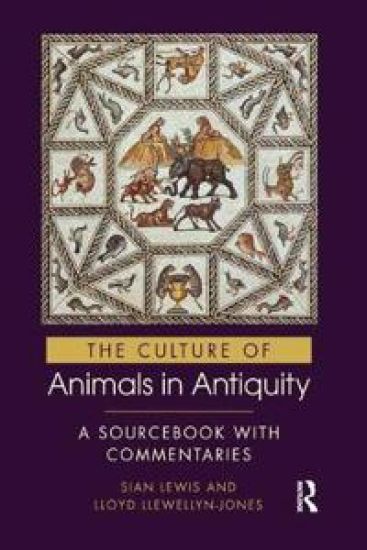
The Culture of Animals in Antiquity provides students and researchers with well-chosen and clearly presented ancient sources in translation, some well-known, others undoubtedly unfamiliar, but all central to a key area of study in ancient history: the part played by animals in the cultures of the ancient Mediterranean. It brings new ideas to bear on the wealth of evidence – literary, historical and archaeological – which we possess for the experiences and roles of animals in the ancient world.Offering a broad picture of ancient cultures in the Mediterranean as part of a wider ecosystem, the volume is on an ambitious scale. It covers a broad span of time, from the sacred animals of dynastic Egypt to the imagery of the lamb in early Christianity, and of region, from the fallow deer introduced and bred in Roman Britain to the Asiatic lioness and her cubs brought as a gift by the Elamites to the Great King of Persia. This sourcebook is essential for anyone wishing to understand the role of animals in the ancient world and support learning for one of the fastest growing disciplines in Classics.

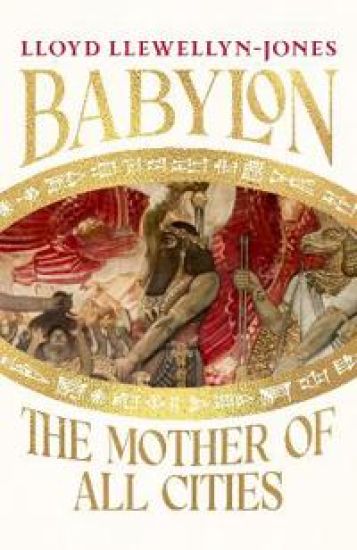
'Compelling and authoritative . . . an exhilarating portrait of one of the world's greatest cities.' SIMON SEBAG MONTEFIORE 'A masterpiece' TRISTAN HUGHES _____ Babylon often appears more myth than history. Purportedly the site of the Hanging Gardens and the Tower of Babel, its infamous presence in the Bible has made it a byword for sinful decadence. But Babylon was a real place teeming with life, a bustling mega-city on the Euphrates where schoolteachers, artisans, priests, slaves, prostitutes and soldiers rubbed shoulders in maze-like streets and busy marketplaces. The city was home to some extraordinary rulers, from Hammurabi the great lawgiver to Nebuchadnezzar II, the conqueror-king, under whose reign the city glistened in gold and lapis lazuli. In Babylon, Lloyd Llewellyn-Jones brings the city vividly to life, tracing its foundation through to its world domination, and subsequent decline, fall and ruin into dust. From ribald drinking songs to acerbic letters between rival kings, the extraordinary ancient sources help inform what is both a stunning work of scholarship and a fascinating evocation of a long-lost world. More praise for BABYLON: 'Engrossing and informative' DR. ERIC H. CLINE 'Sweeps you up and carries you off like the River Tigris itself!' IRVING FINKEL
'Babylon' is a name that has a double life: it denotes the great ancient Mesopotamian city with a long and complex history, and it is also a fictive allusion with a wide variety of connotations, from the Hebrew bible's Tower of Babel, through the New Testament's 'Whore of Babylon', to the iconic song 'The Rivers of Babylon' by the 1970s pop group Boney M. The first royal dynasty of Babylon was founded by an Amorite interloper named Sumu-la-El a thousand years after the fall of the great Sumerian city states of Ur and Uruk, creating a new superpower in the Near East. Clinging close to the might River Euphrates, the city quickly grew in size and, thanks to its military prowess, soon expanded its territories, sweeping down to the Persian Gulf and advancing north into Syria. The kingdom of Babylonia came in to being and, governed from mighty Babylon, setting the agenda for what civilization meant. This fascinating book explores Babylon's reputation as a city with a dual legacy by exploring its rich ancient past and its astonishing mythic legacy.
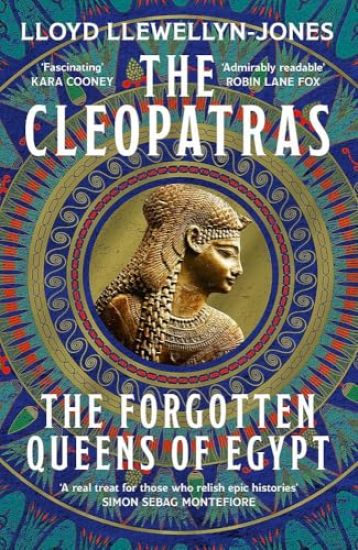
'A thrilling biography, filled with the imperial ambitions and merciless intrigues' SIMON SEBAG MONTEFIORECleopatra: lover, seductress, and Egypt's greatest queen.A woman more myth than history, immortalized in poetry, drama, music, art, and film.She captivated Julius Caesar and Marc Antony, the two greatest Romans of the day, and died in a blaze of glory, with an asp clasped to her breast - or so the legend tells us.But the real-life story of the historical Cleopatra VII is even more compelling. She was the last of seven Cleopatras who ruled Egypt before it was subsumed into the Roman Empire. The seven Cleopatras were the powerhouses of the Ptolemaic Dynasty, the Macedonian family who ruled Egypt after Alexander the Great. Emulating the practices of the gods, the Cleopatras married their full-blood brothers and dominated the normally patriarchal world of politics and warfare. These extraordinary women keep a close grip on power in the wealthiest country of the ancient world.Each of the seven Cleopatras wielded absolute power. Their ruthless, single-minded, focus on dominance - generation after generation - resulted in extraordinary acts of betrayal, violence, and murder in the most malfunctional dynasty in history. Professor Lloyd Llewellyn-Jones offers fresh and powerful insight into the real story of the Cleopatras, and the beguiling and tragic legend of the last queen of Egypt.Praise for The Cleopatras:'A real treat for those who relish epic histories of family power' SIMON SEBAG MONTEFIORE'Admirably readable' ROBIN LANE FOX'Unlocks the fascinating history of many queens' KARA COONEY 'A vivid account' ADRIAN DODSON
Sister-Queens in the High Hellenistic Period
Lloyd Llewellyn-Jones; Alex McAuley
TAYLOR FRANCIS LTD
2024
nidottu
Sister-Queens in the High Hellenistic Period is a cutting-edge exploration of ancient queenship and the significance of family politics in the dysfunctional dynasties of the late Hellenistic world.This volume, the first full-length study of Kleopatra III and Kleopatra Thea and their careers as queens of Egypt and Syria, thoroughly examines the roles and ideology of royal daughters, wives, and queens in Egypt, the ancient Near East, and ancient Israel and provides a comprehensive study of the iconography, public image, and titles of each queen and their cultural precedents. In addition, this book also offers an introduction to the critical concept of the ‘High Hellenistic Period’ and the maturation of royal female power in the second century BCE.Sister-Queens in the High Hellenistic Period is suitable for students and scholars in ancient history, Egyptology, classics, and gender studies, as well as the general reader interested in ancient queenship, ancient Egypt, the Hellenistic world, and gender in antiquity.
'A thrilling biography, filled with the imperial ambitions and merciless intrigues' SIMON SEBAG MONTEFIORECleopatra: lover, seductress, and Egypt's greatest queen.A woman more myth than history, immortalized in poetry, drama, music, art, and film.She captivated Julius Caesar and Marc Antony, the two greatest Romans of the day, and died in a blaze of glory, with an asp clasped to her breast - or so the legend tells us.But the real-life story of the historical Cleopatra VII is even more compelling. She was the last of seven Cleopatras who ruled Egypt before it was subsumed into the Roman Empire. The seven Cleopatras were the powerhouses of the Ptolemaic Dynasty, the Macedonian family who ruled Egypt after Alexander the Great. Emulating the practices of the gods, the Cleopatras married their full-blood brothers and dominated the normally patriarchal world of politics and warfare. These extraordinary women keep a close grip on power in the wealthiest country of the ancient world.Each of the seven Cleopatras wielded absolute power. Their ruthless, single-minded, focus on dominance - generation after generation - resulted in extraordinary acts of betrayal, violence, and murder in the most malfunctional dynasty in history. Professor Lloyd Llewellyn-Jones offers fresh and powerful insight into the real story of the Cleopatras, andthe beguiling and tragic legend of the last queen of Egypt.Praise for The Cleopatras:'A real treat for those who relish epic histories of family power' SIMON SEBAG MONTEFIORE'Admirably readable' ROBIN LANE FOX'Unlocks the fascinating history of many queens' KARA COONEY 'A vivid account' ADRIAN DODSON
'A thrilling biography, filled with the imperial ambitions and merciless intrigues' SIMON SEBAG MONTEFIORECleopatra: lover, seductress, and Egypt's greatest queen.A woman more myth than history, immortalized in poetry, drama, music, art, and film.She captivated Julius Caesar and Marc Antony, the two greatest Romans of the day, and died in a blaze of glory, with an asp clasped to her breast - or so the legend tells us.But the real-life story of the historical Cleopatra VII is even more compelling. She was the last of seven Cleopatras who ruled Egypt before it was subsumed into the Roman Empire. The seven Cleopatras were the powerhouses of the Ptolemaic Dynasty, the Macedonian family who ruled Egypt after Alexander the Great. Emulating the practices of the gods, the Cleopatras married their full-blood brothers and dominated the normally patriarchal world of politics and warfare. These extraordinary women keep a close grip on power in the wealthiest country of the ancient world.Each of the seven Cleopatras wielded absolute power. Their ruthless, single-minded, focus on dominance - generation after generation - resulted in extraordinary acts of betrayal, violence, and murder in the most malfunctional dynasty in history. Professor Lloyd Llewellyn-Jones offers fresh and powerful insight into the real story of the Cleopatras, and the beguiling and tragic legend of the last queen of Egypt.Praise for The Cleopatras:' A great storyteller with an eye for detail, a vivid prose style, and a penchant for pop culture.' BARRY STRAUSS'A real treat for those who relish epic histories of family power' SIMON SEBAG MONTEFIORE'Admirably readable' ROBIN LANE FOX'Unlocks the fascinating history of many queens' KARA COONEY 'A vivid account' ADRIAN DODSON
The definitive story of the seven Cleopatras, the powerful goddess-queens of ancient Egypt One of history's most iconic figures, Cleopatra is rightly remembered as a clever and charismatic ruler. But few today realize that she was the last in a long line of Egyptian queens who bore that name. In The Cleopatras, historian Lloyd Llewellyn-Jones tells the dramatic story of these seven incomparable women, vividly recapturing the lost world of Hellenistic Egypt and tracing the kingdom's final centuries before its fall to Rome. The Cleopatras were Greek-speaking descendants of Ptolemy, the general who conquered Egypt alongside Alexander the Great. They were closely related as mothers, daughters, sisters, half-sisters, and nieces. Each wielded absolute power, easily overshadowing their husbands or sons, and all proved to be shrewd and capable leaders. Styling themselves as goddess-queens, the Cleopatras ruled through the canny deployment of arcane rituals, opulent spectacles, and unparalleled wealth. They navigated political turmoil and court intrigues, led armies into battle and commanded fleets of ships, and ruthlessly dispatched their dynastic rivals. The Cleopatras is a fascinating and richly textured biography of seven extraordinary women, restoring these queens to their deserved place among history's greatest rulers.
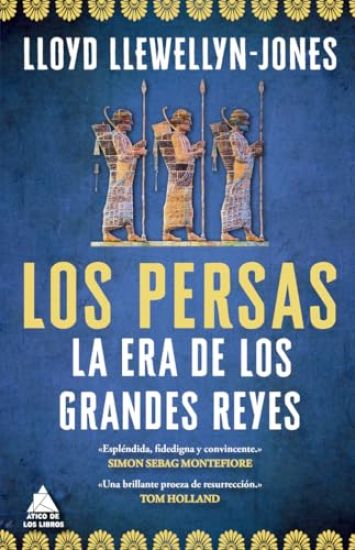
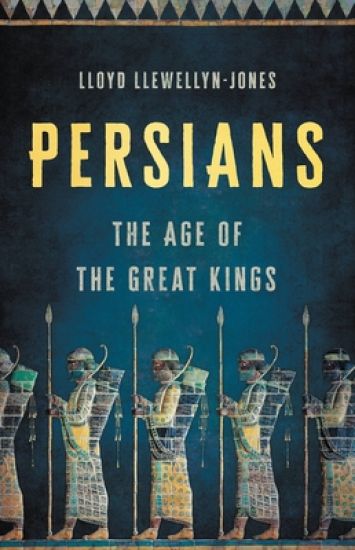
A "brilliant feat of resurrection" (Tom Holland, author of Dominion), offering a stunning portrait of the magnificent splendor and enduring legacy of ancient Persia The Achaemenid Persian kings ruled over the largest empire of antiquity, stretching from Libya to the steppes of Asia and from Ethiopia to Pakistan. From the palace-city of Persepolis, Cyrus the Great, Darius, Xerxes, and their heirs reigned supreme for centuries until the conquests of Alexander of Macedon brought the empire to a swift and unexpected end in the late 330s BCE. In Persians, historian Lloyd Llewellyn-Jones tells the epic story of this dynasty and the world it ruled. Drawing on Iranian inscriptions, cuneiform tablets, art, and archaeology, he shows how the Achaemenid Persian Empire was the world's first superpower--one built, despite its imperial ambition, on cooperation and tolerance. This is the definitive history of the Achaemenid dynasty and its legacies in modern-day Iran, a book that completely reshapes our understanding of the ancient world.
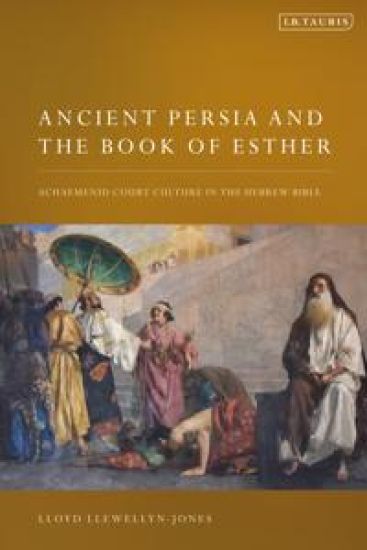
A Spectator 2023 Book of the YearEsther is the most visual book of the Hebrew Bible and was largely crafted in the Fourth Century BCE by an author who was clearly au fait with the rarefied world of the Achaemenid court. It therefore provides an unusual melange of information which can enlighten scholars of Ancient Iranian Studies whilst offering Biblical scholars access into the Persian world from which the text emerged.In this book, Lloyd Llewellyn-Jones unlocks the text of Esther by reading it against the rich iconographic world of ancient Persia and of the Near East. Ancient Persia and the Book of Esther is a cultural and iconographic exploration of an important, but often undervalued, biblical book, and Llewellyn-Jones presents the book of Esther as a rich source for the study of life and thought in the Persian Empire. The author reveals answers to important questions, such as the role of the King’s courtiers in influencing policy, the way concubines at court were recruited, the structure of the harem in shifting the power of royal women, the function of feasting and drinking in the articulation of courtly power, and the meaning of gift-giving and patronage at the Achaemenid court.
Sister-Queens in the High Hellenistic Period
Lloyd Llewellyn-Jones; Alex McAuley
Routledge
2022
sidottu
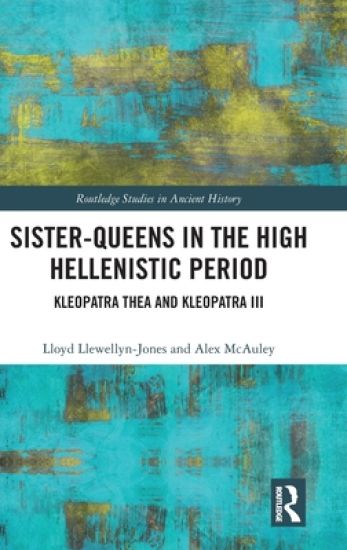
Sister-Queens in the High Hellenistic Period is a cutting-edge exploration of ancient queenship and the significance of family politics in the dysfunctional dynasties of the late Hellenistic world.This volume, the first full-length study of Kleopatra III and Kleopatra Thea and their careers as queens of Egypt and Syria, thoroughly examines the roles and ideology of royal daughters, wives, and queens in Egypt, the ancient Near East, and ancient Israel and provides a comprehensive study of the iconography, public image, and titles of each queen and their cultural precedents. In addition, this book also offers an introduction to the critical concept of the ‘High Hellenistic Period’ and the maturation of royal female power in the second century BCE.Sister-Queens in the High Hellenistic Period is suitable for students and scholars in ancient history, Egyptology, classics, and gender studies, as well as the general reader interested in ancient queenship, ancient Egypt, the Hellenistic world, and gender in antiquity.
A stunning portrait of the magnificent splendor and enduring legacy of ancient Persia The Achaemenid Persian kings ruled over the largest empire of antiquity, stretching from Libya to the steppes of Asia and from Ethiopia to Pakistan. From the palace-city of Persepolis, Cyrus the Great, Darius, Xerxes, and their heirs reigned supreme for centuries until the conquests of Alexander of Macedon brought the empire to a swift and unexpected end in the late 330s BCE. In Persians, historian Lloyd Llewellyn-Jones tells the epic story of this dynasty and the world it ruled. Drawing on Iranian inscriptions, cuneiform tablets, art, and archaeology, he shows how the Achaemenid Persian Empire was the world's first superpower--one built, despite its imperial ambition, on cooperation and tolerance. This is the definitive history of the Achaemenid dynasty and its legacies in modern-day Iran, a book that completely reshapes our understanding of the ancient world.
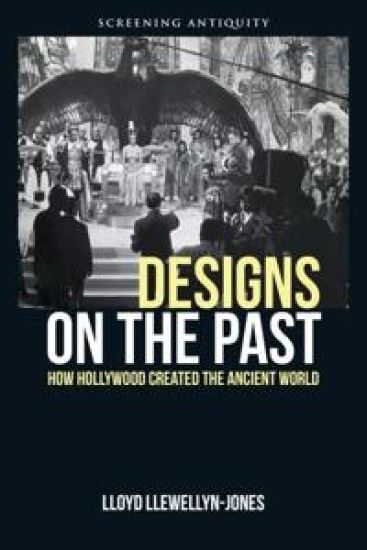
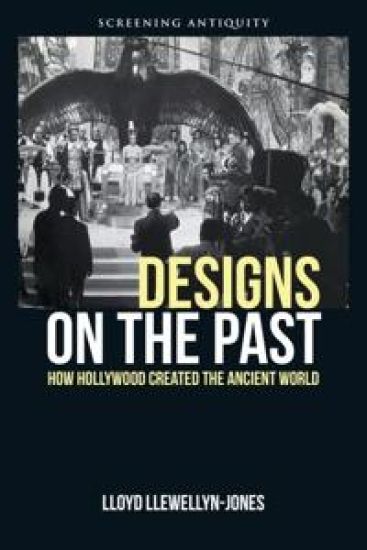
In the period 1916-1966, during its so-called Golden Age, Hollywood developed a passion for the ancient world and produced many epic movie blockbusters. The studios used every device they could find to wow audiences with the spectacle of antiquity.In this unique study, Lloyd Llewellyn-Jones shows how Hollywood carefully and skilfully created the popular modern perception of the ancient world. He analyses how producers, art directors, costumiers, publicity agents, movie stars, and inevitably, 'a cast of thousands' literally designed and crafted the ancient world from scratch.This lively book offers a technical as well as a theoretical guide to a much-neglected area of film studies and reception studies that will appeal to anyone working in these disciplines.Key Features:This is the first study of the mechanisms and ideologies behind the making of epic movies in HollywoodLavishly illustrated including rare and fascinating marketing material and production stills produced by Hollywood at the timeExplores the casting and consequences of movie stars in historical rolesSets a new agenda for exploring the relationship between history and film and between history and visual culture.Lloyd Llewellyn-Jones is Professor of Ancient History at Cardiff University.
King and Court in Ancient Persia 559 to 331 BCE
Lloyd Llewellyn-Jones
Edinburgh University Press
2013
sidottu
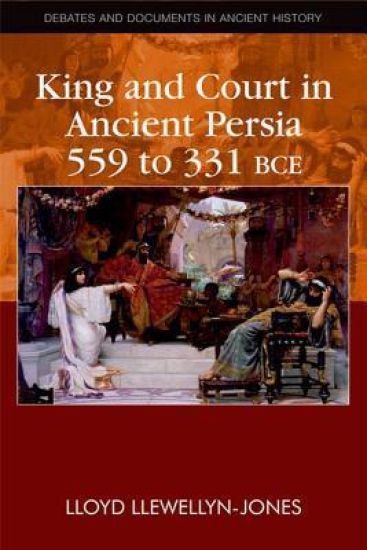
This title explores Achaemenid kingship and argues for the centrality of the royal court in elite Persian society. The first Persian Empire (559-331 BC) was the biggest land empire the world had seen, and seated at the heart of its vast dominions, in the south of modern-day Iran, was the person of the Great King. Hidden behind the walls of his vast palace, and surrounded by the complex rituals of court ceremonial, the Persian monarch was undisputed master of his realm, a god-like figure of awe, majesty, and mystery. Yet the court of the Great King was no simple platform for meaningless theatrical display; at court, presentation mattered: nobles vied for position and prestige, and the royal family attempted to keep a tight grip on dynastic power - in spite of succession struggles, murders, and usurpations, for the court was also the centre of political decision-making and the source of cultural expression. This book explores the representation of Persian monarchy and the court of the Achaemenid Great Kings from the point of view of the ancient Iranians themselves (as well as other Near Eastern peoples) and through the sometimes distorted prism of Classical and Biblical sources. It draws on rich Iranian and Classical sources. It examines key issues such as royal ideology, court structure, ceremony and ritual, royal migrations, gender, hierarchy, architecture and space and cultural achievements. It accesses the rarefied but dangerous world of Persian palace life. It includes guides to further reading and web resources to encourage research.
King and Court in Ancient Persia 559 to 331 BCE
Lloyd Llewellyn-Jones
Edinburgh University Press
2013
nidottu
This book explores Achaemenid kingship and argues for the centrality of the royal court in elite Persian society. The first Persian Empire (559-331 BC) was the biggest land empire the world had seen, and seated at the heart of its vast dominions, in the south of modern-day Iran, was the person of the Great King. Hidden behind the walls of his vast palace, and surrounded by the complex rituals of court ceremonial, the Persian monarch was undisputed master of his realm, a god-like figure of awe, majesty, and mystery. Yet the court of the Great King was no simple platform for meaningless theatrical display; at court, presentation mattered: nobles vied for position and prestige, and the royal family attempted to keep a tight grip on dynastic power - in spite of succession struggles, murders, and usurpations, for the court was also the centre of political decision - making and the source of cultural expression. This book explores the representation of Persian monarchy and the court of the Achaemenid Great Kings from the point of view of the ancient Iranians themselves (as well as other Near Eastern peoples) and through the sometimes distorted prism of Classical and Biblical sources. Key Features: draws on rich Iranian and Classical sources; examines key issues such as royal ideology, court structure, ceremony and ritual, royal migrations, gender, hierarchy, architecture and space and cultural achievements; accesses the rarefied but dangerous world of Persian palace life; and includes guides to further reading and web resources to encourage research.
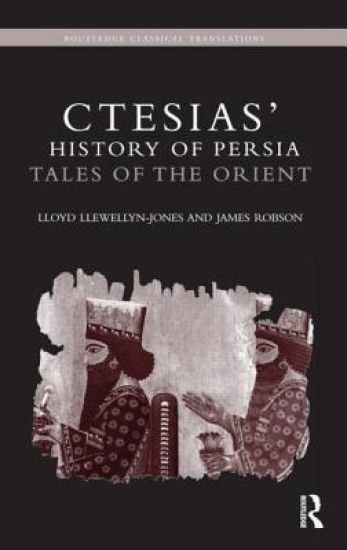
Towards the end of the fifth century BC Ctesias of Cnidus wrote his 23 book History of Persia. Ctesias is a remarkable figure: he lived and worked in the Persian court and, as a doctor, tended to the world’s most powerful kings and queens. His position gave him special insight into the workings of Persian court life and access to the gossip and scandal surrounding Persian history and court politics, past and present. His History of Persia was completed at a time when the Greeks were fascinated by Persia and seems very much to cater to contemporary interest in Persian wealth and opulence, powerful Persian women, the institution of the harem, kings and queens, eunuchs and secret plots. Presented here in English translation for the first time with commentaries, Ctesias offers a fascinating insight into Persia in the fifth century BC.