Kirjojen hintavertailu. Mukana 12 390 323 kirjaa ja 12 kauppaa.

Kirjailija

Luce Irigaray

Kirjat ja teokset yhdessä paikassa: 54 kirjaa, julkaisuja vuosilta 1973-2024, suosituimpien joukossa Je, Tu, Nous. Vertaile teosten hintoja ja tarkista saatavuus suomalaisista kirjakaupoista.

54 kirjaa

Kirjojen julkaisuhaarukka 1973-2024.

Je, Tu, Nous

Je, Tu, Nous

Luce Irigaray

Routledge
2007
nidottu
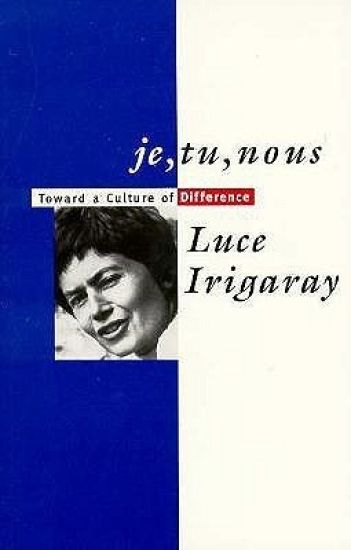
A passionate celebrator of "sexual difference," Luce Irigaray was never simply after the social equality that her generation so publicly demanded. She was seeking more fundamentally a society that celebrated the differences between the genders and their coming together in a union without hierarchy. As she formulates it in this compellingly readable introduction to her own thought, Irigaray is writing about how "I" and "You" become "We." Exploring along the way women’s experiences of motherhood, abortion, the AIDS crisis and the beauty industry, this book presents one of the most important thinkers of our day in her own words.
Je, Tu, Nous

Je, Tu, Nous

Luce Irigaray

Routledge
1992
nidottu
Irigaray offers the clearest available introduction to her own work. Focusing on power, women, gender and patriarchal mythologies, she lays out what for her has become the central problem for women in the modern world.
Gebete für jeden Tag - Prières quotidiennes

Gebete für jeden Tag - Prières quotidiennes

Luce Irigaray

Les Editions Du Crieur Public
2024
pokkari
In Gebete f r jeden Tag - Pri res quotidiennes widmet sich Irigaray der spirituellen Dimension der menschlichen Existenz, indem sie die Beziehung zwischen dem Selbst, dem Anderen sowie der Natur hinterfragt. Diese Sammlung von Gebeten und Reflexionen zeichnet sich durch einen sensiblen und introspektiven Ansatz aus, in dem sie Themen wie Achtsamkeit, Verbundenheit und das Heilige im Alltag erforscht. Sie verbindet ihre feministische Perspektive mit spirituellen berlegungen und betont die Bedeutung von Empathie, F rsorge und gegenseitigem Respekt. Dieses Buch pr sentiert sich als philosophischer und spiritueller Leitfaden, der einen universellen Ansatz f r Respekt und Verbindung zum Anderen propagiert und zu einer inneren Reflexion einl dt, die ein bewussteres und aufmerksameres Leben f rdert. Dans Gebete f r jeden Tag - Pri res quotidiennes, Irigaray se penche sur la dimension spirituelle de l'existence humaine, en interrogeant la relation entre soi, l'autre et la nature. Ce recueil de pri res et de r flexions se distingue par une approche sensible et introspective, o elle explore des th matiques telles que l'attention, la connexion et le sacr dans la vie quotidienne. Elle associe sa perspective f ministe des consid rations spirituelles, soulignant l'importance de l'empathie, du soin et du respect mutuel. Ce livre se pr sente comme un guide philosophique et spirituel, pr nant une approche universelle du respect et de la connexion l'autre, et invite une r flexion int rieure, encourageant une mani re de vivre plus consciente et attentive.
The Mediation of Touch

The Mediation of Touch

Luce Irigaray

Springer International Publishing AG
2024
nidottu
The first communication between human beings, the one between the newborn and the mother, happens through touch. Strangely this first way of relating to each other has barely been considered by our education and our culture, which have favoured sight to the detriment of touch. And yet touching and being touched means experiencing ourselves as living beings. For lack of such a touch, we do not perceive the limits nor the sensitive potential of our bodies. Then we remain immersed in a natural or a cultural universe, incapable of reaching our own individuation and of knowing our fundamental difference from the other(s).Desire, in particular sexuate desire, is a call for touching one another anew. But this touch requires us to have gained our autonomy and to be able to open up to and commune with the other as transcendent to ourselves while staying in ourselves. This book unveils and explores how touch can act as a basic living mediation in love and,more generally, in our comprehensive individual and collective human becoming. It also considers how touch can contribute to founding a culture respectful of difference instead of subjecting them to an ideal of sameness. We need touch as mediation to fulfil our humanity and to build a truly human thinking and world.
A New Culture of Energy

A New Culture of Energy

Luce Irigaray

Columbia University Press
2021
sidottu
In A New Culture of Energy, Luce Irigaray reflects on three critical concerns of our time: the cultivation of energy in its many forms, the integration of Asian and Western traditions, and the reenvisioning of religious figures for the contemporary world. A philosopher as well as a psychoanalyst, Irigaray draws deeply on her personal experience in addressing these questions. In her view, although psychoanalysis can succeed in releasing mental energy, it fails to support physical and spiritual well-being. In pursuit of an alternative, she took up the bodily practices of yoga and pranayama breathing, which she considers in light of her analysis of sexuate belonging and difference. Reflecting on these practices, Irigaray contrasts yoga’s approach to the natural world with how the Western tradition privileges mastery over nature. These varied sources provoke her to question how a tradition imagines transcendence and the divine. In the book’s final section, she reinterprets the figure of Mary through breath, self-affection, and touch, recalibrating her physicality within a natural world. A reflection on the liberation of human energy, this book urges us to cultivate an evolutionary culture in harmony with all living beings.
A New Culture of Energy

A New Culture of Energy

Luce Irigaray

Columbia University Press
2021
pokkari
In A New Culture of Energy, Luce Irigaray reflects on three critical concerns of our time: the cultivation of energy in its many forms, the integration of Asian and Western traditions, and the reenvisioning of religious figures for the contemporary world. A philosopher as well as a psychoanalyst, Irigaray draws deeply on her personal experience in addressing these questions. In her view, although psychoanalysis can succeed in releasing mental energy, it fails to support physical and spiritual well-being. In pursuit of an alternative, she took up the bodily practices of yoga and pranayama breathing, which she considers in light of her analysis of sexuate belonging and difference. Reflecting on these practices, Irigaray contrasts yoga’s approach to the natural world with how the Western tradition privileges mastery over nature. These varied sources provoke her to question how a tradition imagines transcendence and the divine. In the book’s final section, she reinterprets the figure of Mary through breath, self-affection, and touch, recalibrating her physicality within a natural world. A reflection on the liberation of human energy, this book urges us to cultivate an evolutionary culture in harmony with all living beings.
Sharing the Fire

Sharing the Fire

Luce Irigaray

Springer Nature Switzerland AG
2020
nidottu
Whilst he broaches the theme of the difference between the sexes, Hegel does not go deep enough into the question of their mutual desire as a crucial stage in our becoming truly human. He ignores the dialectical process regarding sensitivity and sensuousness. And yet this is needed to make spiritual the relation between two human subjectivities differently determined by nature and to ensure the connection between body and spirit, nature and culture, private life and public life. This leads Hegel to fragment human subjectivity into yearnings for art, religion and philosophy thereby losing the unity attained through the cultivation of a longing for the absolute born of a desire for one another as different.Furthermore, our epoch of history is different from the Hegelian one and demands that we consider additional aspects of human subjectivity. This is essential if we are to overcome the nihilism inherent in our traditional metaphysics without falling into aworse nihilism due to a lack of rigorous thinking common today.The increasing power of technique and technologies as well as the task of building a world culture are two other challenges we face. Our sexuate belonging provides us with a universal living determination of our subjectivity – now a dual subjectivity - and also with a natural energy potential which allows us to use technical resources without becoming dependent on them.
Das Mysterium Marias

Das Mysterium Marias

Luce Irigaray

Les Editions Du Crieur Public
2019
pokkari
Die Gestalt der Maria ist in der christlichen Theologie nahezu abwesend, obgleich sie neben Jesus die Mit-Erl serin der Welt ist. Diese Abwesenheit Marias in den Texten kontrastiert mit ihrer Allgegenw rtigkeit in der Kunst und widerspricht dem Eifer, mit dem das christliche Volk nicht aufh rt, sich an sie zu wenden. Luce Irigaray n hert sich dem Mysterium, das Maria darstellt, und der Rolle, die sie in der Inkarnation des G ttlichen f r die Menschheit spielt. Wie kann man nicht von der Tatsache ber hrt werden, dass die Virginit t Marias nicht nur eine nat rliche sein kann, sondern vor allem eine Virginit t des Atems, der Seele sein muss, die sie dazu bef higt, ein anderes Ereignis des G ttlichen zur Welt zu bringen? In diesem Licht hat Luce Irigaray die so reiche Ikonographie der Verk ndigung interpretiert, insbesondere das Erwecken und das Teilen des Atems, zu dem der Engel Maria einl dt. Das Schweigen, das Unsichtbare und das Ber hren, so wesentlich f r die Gestalt Marias, werden nicht als Zeichen einer blo en Passivit t oder Unterwerfung unter einen beliebigen Herrn interpretiert, sondern als Elemente einer weiblichen Pr senz, die imstande ist, in sich das aufzunehmen und zur Welt zu bringen, was noch nicht geschehen ist, sei es auf der menschlichen oder auf der g ttlichen Ebene. Dank der Betonung des Atems und der nat rlichen wie spirituellen Qualit ten der Frau erscheint Maria als eine Gestalt der Weisheit, gleich denen, die wir in anderen Kulturen finden, eine m gliche Vermittlerin zwischen verschiedenen Traditionen. Maria offenbart sich also als eine gewisserma en verh llte Manifestierung der g ttlichen Kraft, dessen Tr gerin und Verantwortliche eine Frau ist.
To Be Born

To Be Born

Luce Irigaray

Springer International Publishing AG
2017
nidottu
“According to the words of Phaedrus in the Symposium of Plato, Love, sometimes named Eros, has no parents, no age, no history, and its origin remains unknown to anyone. Love, whose destiny is said to be unique amongst the gods and humans, perhaps embodies desire for a conjunction always in search of its happening. Love would represent a dynamism longing for the copula incarnating the transcendence of our being. As such, Love would remain the everlasting yearning for the accomplishment of the ecstatic destiny of humanity.” In this book, Luce Irigaray - philosopher, linguist, psychologist and psychoanalyst - proposes nothing less than a new way of conceiving what a human being is as well as a means to ensure our individual and relational development from birth. Unveiling the mystery of our origin is probably what most motivates our quests and plans. And yet such a disclosure proves to be impossible. Indeed we were born as one from a union between two, and we are forever deprived of an origin of our own. Hence our ceaseless search for roots: in our genealogy, in the place where we were born, in our culture, religion or language. But a human being cannot develop from its own roots as a tree does. As humans, we must take responsibility for our own being and existence without any given continuity with our origin and background. How can we achieve that? First by cultivating our breathing, which is more than a means to come into the world and to exist; breathing also allows us to transcend mere survival to secure for ourselves a spiritual becoming. Taking on our sexuate belonging is the second element which enables us to assume our natural existence. Indeed, this determination at once brings us energy and provides us with a structure which contributes to our individuation and our relations with other living beings and the world. Our sexuation can compensate for our absence of roots too by compelling us to unite with the other sex so that we freely approach the copulative conjunction from which we were born; that is, the mystery of our origin. This does not occur through a mere sexual instinct or drive, but requires us to cultivate desire and love with respect for our mutual difference(s). In this way we can give rise to a new human being, not only at a natural but also at an ontological level.
Att läsa Spinoza

Att läsa Spinoza

Antonio Negri; Gilles Deleuze; Baruch Spinoza; Étienne Balibar; Luce Irigaray

Tankekraft Förlag
2016
nidottu
Baruch Spinoza har under de senaste decennierna tilldragit sig ett ökat filosofiskt intresse. Inte minst inom den politiska teorin har 1600-talsfilosofens formuleringar om demokratins villkor och förutsättningarna för grundandet av en politisk gemenskap blivit utgångspunkt för ett fruktbart nytänkande kring makt och motstånd i en samtida kontext. I denna antologi samlas ett brett urval av inflytelserika läsningar som ur skilda men besläktade perspektiv tar sig an hela rikedomen i Spinozas tänkande – från hans utläggningar om etik, politik och kunskap till den mer allmänna frågan om den filosofiska aktualiteten i klassiska filosofiska verk. Som helhet erbjuder boken ett rikhaltigt material för fördjupade studier i den spinozistiska traditionen. Innehållsförteckning: ”Spinozas filosofiska aktualitet: Heidegger, Adorno, Foucault” av Pierre Macherey, ”Definitionen av sanning hos Descartes och Spinoza” av Martial Gueroult, ”Vi och Spinoza” av Gilles Deleuze, ”Hegels idealistiske Spinoza” av Pierre Macherey, ”Om Spinoza” av Louis Althusser, ”Inneslutningen: En läsning av Spinoza” av Luce Irigaray, ”Spinozas stängda antologi” av Alain Badiou, ”Kropp och själ: Logiken om det ena eller det andra hos Spinoza” av Chantal Jacquet, ”’Politisk traktat’ eller grundandet av den moderna demokratin” av Antonio Negri, ”Den ’fria multitudens’ gåta” av François Zourabichvili, ”Spinoza Anti-Orwell: Massornas fruktan” av Étienne Balibar, ”Kvinnor och tjänare i Spinozas demokrati” av Alexandre Matheron, ”Spinozas historieteori eller filosofi om den historiska utvecklingen” av André Tosel, ”Den etiska världsbilden” av Gilles Deleuze, ”Spinoza och postmodernisterna” av Antonio Negri.
Je, Tu, Nous

Je, Tu, Nous

Luce Irigaray

Routledge
2016
sidottu
Irigaray offers the clearest available introduction to her own work. Focusing on power, women, gender and patriarchal mythologies, she lays out what for her has become the central problem for women in the modern world.
Elemental Passions

Elemental Passions

Luce Irigaray

Routledge
2016
sidottu
Elemental Passions explores the man/woman relaitonship in a series of meditations of the senses and the formal elements. Its form resembles a series of love letters in which, however, the identity-and even the reality-of the adressee are deliberately obscured.
Through Vegetal Being

Through Vegetal Being

Luce Irigaray; Michael Marder

Columbia University Press
2016
pokkari
Blossoming from a correspondence between Luce Irigaray and Michael Marder, Through Vegetal Being is an intense personal, philosophical, and political meditation on the significance of the vegetal for our lives, our ways of thinking, and our relations with human and nonhuman beings. The vegetal world has the potential to rescue our planet and our species and offers us a way to abandon past metaphysics without falling into nihilism. Luce Irigaray has argued in her philosophical work that living and coexisting are deficient unless we recognize sexuate difference as a crucial dimension of our existence. Michael Marder believes the same is true for vegetal difference. Irigaray and Marder consider how plants contribute to human development by sustaining our breathing, nourishing our senses, and keeping our bodies and minds alive. They note the importance of returning to ancient Greek tradition and engaging with Eastern teachings to revive a culture closer to nature. As a result, we can reestablish roots when we are displaced and recover the vital energy we need to improve our sensibility and relation to others. This generative discussion points toward a more universal way of becoming human that is embedded in the vegetal world.
Through Vegetal Being

Through Vegetal Being

Luce Irigaray; Michael Marder

Columbia University Press
2016
sidottu
Blossoming from a correspondence between Luce Irigaray and Michael Marder, Through Vegetal Being is an intense personal, philosophical, and political meditation on the significance of the vegetal for our lives, our ways of thinking, and our relations with human and nonhuman beings. The vegetal world has the potential to rescue our planet and our species and offers us a way to abandon past metaphysics without falling into nihilism. Luce Irigaray has argued in her philosophical work that living and coexisting are deficient unless we recognize sexuate difference as a crucial dimension of our existence. Michael Marder believes the same is true for vegetal difference. Irigaray and Marder consider how plants contribute to human development by sustaining our breathing, nourishing our senses, and keeping our bodies and minds alive. They note the importance of returning to ancient Greek tradition and engaging with Eastern teachings to revive a culture closer to nature. As a result, we can reestablish roots when we are displaced and recover the vital energy we need to improve our sensibility and relation to others. This generative discussion points toward a more universal way of becoming human that is embedded in the vegetal world.
Building a New World

Building a New World

Luce Irigaray; Michael Marder

Palgrave Macmillan
2015
sidottu
With an original introduction by Luce Irigaray, and original texts from her students and collaborators, this book imagines the outlines of a more just, ecologically attuned world that flourishes on the basis of sexuate difference.
Je, Tu, Nous

Je, Tu, Nous

Luce Irigaray

Routledge
2015
sidottu
A passionate celebrator of "sexual difference," Luce Irigaray was never simply after the social equality that her generation so publicly demanded. She was seeking more fundamentally a society that celebrated the differences between the genders and their coming together in a union without hierarchy. As she formulates it in this compellingly readable introduction to her own thought, Irigaray is writing about how "I" and "You" become "We." Exploring along the way women’s experiences of motherhood, abortion, the AIDS crisis and the beauty industry, this book presents one of the most important thinkers of our day in her own words.
Building a New World

Building a New World

Luce Irigaray; Michael Marder

Palgrave Macmillan
2015
nidottu
With an original introduction by Luce Irigaray, and original texts from her students and collaborators, this book imagines the outlines of a more just, ecologically attuned world that flourishes on the basis of sexuate difference.
In the Beginning, She Was

In the Beginning, She Was

Luce Irigaray

Bloomsbury Academic USA
2012
sidottu
In this new book, crucial for understanding her journey, Luce Irigaray goes further than in Speculum and questions the work of the Pre-Socratics at the root of our culture. Reminding us of the story of Ulysses and Antigone, she demonstrates how, from the beginning, Western tradition represents an exile for humanity. Indeed, to emerge from the maternal origin, man elaborated a discourse of mastery and constructed a world of his own that grew away from life and prevented perceiving the real as it is. To recover our natural belonging and learn how to cultivate it humanly is imperative and needs turning back before the golden age of Greek culture. Another language is, then, to discover, capable of expressing living energy and transforming our instincts into shareable desires.In the Beginning, She Was reworks themes that are central to Irigaray's thought: the limits of Western logic, the sexuation of discourse, the existence of two different subjects, the necessity of art as mediation towards another culture. These themes are approached with a new level of maturity that reconfirms the place of Irigaray as one of the world's most important contemporary thinkers.
In the Beginning, She Was

In the Beginning, She Was

Luce Irigaray

Bloomsbury Academic USA
2012
nidottu
In this new book, crucial for understanding her journey, Luce Irigaray goes further than in Speculum and questions the work of the Pre-Socratics at the root of our culture. Reminding us of the story of Ulysses and Antigone, she demonstrates how, from the beginning, Western tradition represents an exile for humanity. Indeed, to emerge from the maternal origin, man elaborated a discourse of mastery and constructed a world of his own that grew away from life and prevented perceiving the real as it is. To recover our natural belonging and learn how to cultivate it humanly is imperative and needs turning back before the golden age of Greek culture. Another language is, then, to discover, capable of expressing living energy and transforming our instincts into shareable desires.In the Beginning, She Was reworks themes that are central to Irigaray's thought: the limits of Western logic, the sexuation of discourse, the existence of two different subjects, the necessity of art as mediation towards another culture. These themes are approached with a new level of maturity that reconfirms the place of Irigaray as one of the world's most important contemporary thinkers.
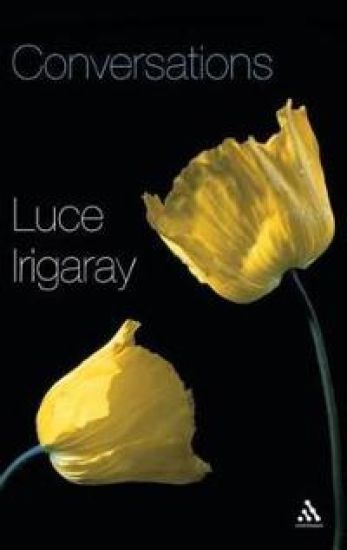
Conversations

Conversations

Luce Irigaray

Continuum International Publishing Group Ltd.
2008
sidottu
This is an important collection of interviews in which Luce Irigaray discusses the full range of her work and ideas with leading academics in the fields of Continental Philosophy, Feminist Theory and Critical Theory.Dialogue is a privileged method in Luce Irigaray's work. Covering all the key topics that have been central to her work in the last thirty years, this book offers an essential insight into Irigaray's career as one of the world's most important contemporary thinkers. The topics and theorists approached include: philosophy, in particular Hegel, Heidegger, Merleau-Ponty and Deleuze; language as information, communication-between and artistic expression; universality and difference; natural and cultural identities; motherhood and gendered subjectivities; cultivation of desire and love; building houses and sharing lives; being two and being in community; the other and others; relational identity and education; globalisation and ethics; politics and human rights; spirituality and religion; practice and culture of Yoga; and, of course, being and becoming woman.Ideal for students seeking an overview of Irigaray's thought, as well as those already familiar with her work, this collection brings together for the first time Irigaray's conversations over the years with the people who have been involved in studying and researching her enormous contribution to Continental Philosophy, Spirituality, Cultural Theory and Feminism.