Kirjojen hintavertailu. Mukana 12 455 308 kirjaa ja 12 kauppaa.

Kirjailija

Mari Ruti

Kirjat ja teokset yhdessä paikassa: 27 kirjaa, julkaisuja vuosilta 2006-2025, suosituimpien joukossa A World of Fragile Things. Vertaile teosten hintoja ja tarkista saatavuus suomalaisista kirjakaupoista.

27 kirjaa

Kirjojen julkaisuhaarukka 2006-2025.

The Creative Self

The Creative Self

Mari Ruti; Gail M. Newman

Columbia University Press
2025
sidottu
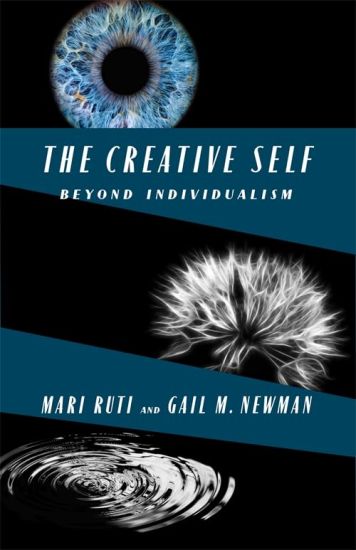
“Be the best you can be!” Practically from the moment we are born, we are taught to optimize our lives—to devote ourselves to increasing our productivity and efficiency, which, we are told, will make us happier and more successful. The imperative of constant self-improvement, however, drains us dry even as it promises to build us up.The Creative Self delves into the hegemony of neoliberal self-optimization and turns to psychoanalysis in search of an alternative. In paired chapters, Mari Ruti and Gail M. Newman examine the works of the psychoanalysts Marion Milner and Donald W. Winnicott. They provide deeply personal accounts of how these thinkers resonate with day-to-day life, exploring modes of selfhood that subtly but profoundly resist the lure and escape the trap of competitive individualism. Milner urges us to relinquish the ego in the face of loss and lack, and Winnicott asks us to accept the paradoxes of the self instead of demanding their resolution. Together, their insights help us flourish where neoliberal self-improvement would stifle us. Combining the intellectual, the personal, and the political from two perspectives that converge and diverge in striking ways, this book offers an antidote to transactional individualism and envisions forms of creative living beyond its confines.
The Creative Self

The Creative Self

Mari Ruti; Gail M. Newman

Columbia University Press
2025
pokkari
“Be the best you can be!” Practically from the moment we are born, we are taught to optimize our lives—to devote ourselves to increasing our productivity and efficiency, which, we are told, will make us happier and more successful. The imperative of constant self-improvement, however, drains us dry even as it promises to build us up.The Creative Self delves into the hegemony of neoliberal self-optimization and turns to psychoanalysis in search of an alternative. In paired chapters, Mari Ruti and Gail M. Newman examine the works of the psychoanalysts Marion Milner and Donald W. Winnicott. They provide deeply personal accounts of how these thinkers resonate with day-to-day life, exploring modes of selfhood that subtly but profoundly resist the lure and escape the trap of competitive individualism. Milner urges us to relinquish the ego in the face of loss and lack, and Winnicott asks us to accept the paradoxes of the self instead of demanding their resolution. Together, their insights help us flourish where neoliberal self-improvement would stifle us. Combining the intellectual, the personal, and the political from two perspectives that converge and diverge in striking ways, this book offers an antidote to transactional individualism and envisions forms of creative living beyond its confines.
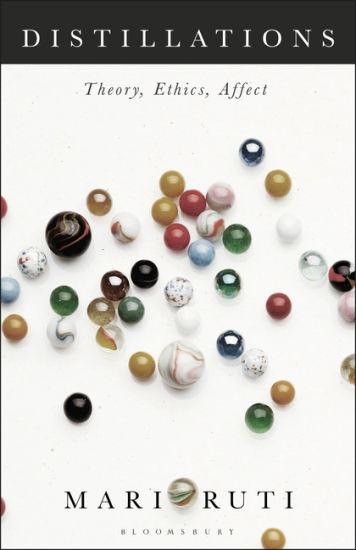
Distillations

Distillations

Mari Ruti

Bloomsbury Academic USA
2018
sidottu
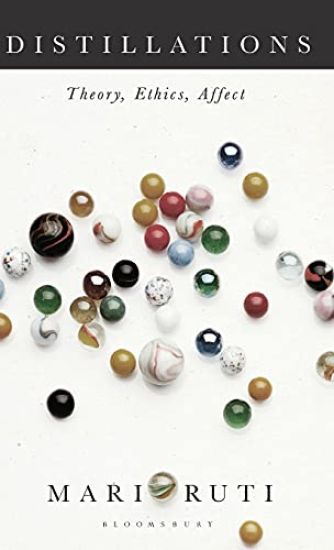
Distilling into concise and focused formulations many of the main ideas that Mari Ruti has sought to articulate throughout her writing career, this book reflects on the general state of contemporary theory as it relates to posthumanist ethics, political resistance, subjectivity, agency, desire, and bad feelings such as anxiety. It offers a critique of progressive theory’s tendency to advance extreme models of revolt that have little real-life applicability. The chapters move fluidly between several theoretical registers, the most obvious of these being continental philosophy, psychoanalytic theory, Butlerian ethics, affect theory, and queer theory. One of the central aims of Distillations is to explore the largely uncharted territory between psychoanalysis and affect theory, which are frequently pitted against each other as hopelessly incompatible, but which Ruti shows can be brought into a productive dialogue.
Penis Envy and Other Bad Feelings

Penis Envy and Other Bad Feelings

Mari Ruti

Columbia University Press
2018
sidottu
Mari Ruti combines theoretical reflection, cultural critique, feminist politics, and personal experience to analyze the prevalence of bad feelings in contemporary everyday life. Proceeding from a playful engagement with Freud’s idea of penis envy, Ruti’s autotheoretical commentary fans out to a broader consideration of neoliberal pragmatism. She focuses on the emphasis on good performance, high productivity, constant self-improvement, and relentless cheerfulness that characterizes present-day Western society. Revealing the treacherousness of our fantasies of the good life, particularly the idea that our efforts will eventually be rewarded—that things will eventually get better—Ruti demystifies the false hope that often causes us to tolerate an unbearable present.Theoretically rigorous and lucidly written, Penis Envy and Other Bad Feelings is a trenchant critique of contemporary gender relations. Refuting the idea that we live in a postfeminist world where gender inequalities have been transcended, Ruti describes how neoliberal heteropatriarchy has transformed itself in subtle and stealthy, and therefore all the more insidious, ways. Mobilizing Michel Foucault’s concept of biopolitics, Jacques Lacan’s account of desire, and Lauren Berlant’s notion of cruel optimism, she analyzes the rationalization of intimacy, the persistence of gender stereotypes, and the pornification of heterosexual culture. Ruti shines a spotlight on the depression, anxiety, frustration, and disenchantment that frequently lie beneath our society’s sugarcoated mythologies of self-fulfillment, romantic satisfaction, and professional success, speaking to all who are concerned about the emotional costs of the pressure-cooker ethos of our age.
The Summons of Love

The Summons of Love

Mari Ruti

Columbia University Press
2011
sidottu
We are conditioned to think that love heals wounds, makes us happy, and gives our lives meaning. When the opposite occurs and love causes fracturing, disenchantment, and existential turmoil, we suffer deeply, especially if we feel that love has failed us or that we have failed to experience what others seem so effortlessly to enjoy. In this eloquently argued, psychologically informed book, Mari Ruti portrays love as a much more complex, multifaceted phenomenon than we tend to appreciate-an experience that helps us encounter the depths of human existence. Love's ruptures are as important as its triumphs, and sometimes love succeeds because it fails. At the heart of Ruti's argument is a meditation on interpersonal ethics that acknowledges the inherent opacity of human interiority and the difficulty of taking responsibility for what we cannot fully understand. Yet the fact that humans are often irrational in love does not absolve us of ethical accountability. In Ruti's view, we must work harder to map the unconscious patterns motivating our romantic behavior. As opposed to popular spiritual approaches urging us to live fully in the now, Ruti treats the past as a living component of the present. Only when we catch ourselves at those moments when the past speaks in the present can we keep ourselves from hurting the ones we love. Equally important, Ruti emphasizes transcending our individual histories of pain, an act that allows us to face the unconscious demons that dictate our relational choices. Written with substance and compassion, The Summons of Love restores the enlivening and transformative possibilities of romance.
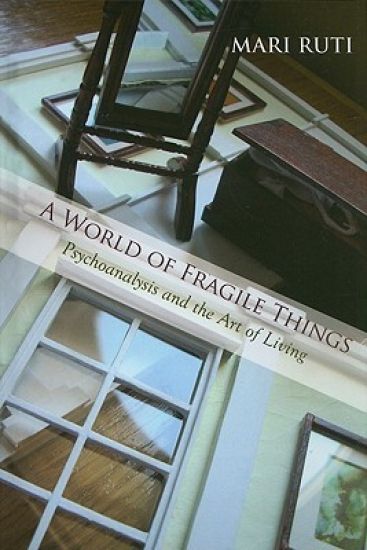
A World of Fragile Things

A World of Fragile Things

Mari Ruti

State University of New York Press
2009
sidottu
Psychoanalytic perspective on what Western philosophers from Socrates to Foucault have called "the art of living."How are our lives meaningful? What is the relationship of loss to creativity? How can we best engage and overcome our suffering? From Socrates to Foucault, Western philosophers have sought to define "the art of living"-the complex craft of human existence that elicits our thoughtful participation, and the idea that even though death escapes our control, life is not something that simply happens to us in a passive manner but is instead a process that invites our active and lively engagement. A World of Fragile Things offers a distinctly psychoanalytic perspective on "the art of living," one that focuses on ongoing and ever-evolving processes of self-fashioning rather than defining a fixed and unitary sense of self. With a compelling blend of philosophical insight and psychoanalytic acumen, Mari Ruti asks experts and readers alike to probe the complexities of human existence, offering a contemporary outlook on some of the most enduring questions of Western thought.
A World of Fragile Things

A World of Fragile Things

Mari Ruti

State University of New York Press
2009
pokkari
Psychoanalytic perspective on what Western philosophers from Socrates to Foucault have called "the art of living."How are our lives meaningful? What is the relationship of loss to creativity? How can we best engage and overcome our suffering? From Socrates to Foucault, Western philosophers have sought to define "the art of living"-the complex craft of human existence that elicits our thoughtful participation, and the idea that even though death escapes our control, life is not something that simply happens to us in a passive manner but is instead a process that invites our active and lively engagement. A World of Fragile Things offers a distinctly psychoanalytic perspective on "the art of living," one that focuses on ongoing and ever-evolving processes of self-fashioning rather than defining a fixed and unitary sense of self. With a compelling blend of philosophical insight and psychoanalytic acumen, Mari Ruti asks experts and readers alike to probe the complexities of human existence, offering a contemporary outlook on some of the most enduring questions of Western thought.
Now and Then

Now and Then

Salah El Moncef; Mari Ruti

Penelope Books
2024
sidottu
As its title suggests, Now & Then is an urgent plea to revisit the present in relation to the past-to bear in mind the admonition that "The past is never dead. It's not even past" (William Faulkner). Lurking behind the warning is a ponderous question that haunts this collection of stories and essays: Are we going to have to relive it all over again-the era of racial, ethnic, and national tensions that made the 1930s such a terrifying decade in the history of western societies? In two stories and two essays, Salah el Moncef conjures up a set of fearful symmetries between the flimsy diversity and globalism of "Now," and the authoritarian, martial echoes of "Then," a world long consigned to the ash heap of history-or so we think. Moncef's collection of stories and essays is a timely reminder that Now and Then are frightfully similar-a warning we would do well to heed.
Now and Then

Now and Then

Salah El Moncef; Mari Ruti

Penelope Books
2024
pokkari
As its title suggests, Now & Then is an urgent plea to revisit the present in relation to the past-to bear in mind the admonition that "The past is never dead. It's not even past" (William Faulkner). Lurking behind the warning is a ponderous question that haunts this collection of stories and essays: Are we going to have to relive it all over again-the era of racial, ethnic, and national tensions that made the 1930s such a terrifying decade in the history of western societies? In two stories and two essays, Salah el Moncef conjures up a set of fearful symmetries between the flimsy diversity and globalism of "Now," and the authoritarian, martial echoes of "Then," a world long consigned to the ash heap of history-or so we think. Moncef's collection of stories and essays is a timely reminder that Now and Then are frightfully similar-a warning we would do well to heed.
Penis Envy and Other Bad Feelings

Penis Envy and Other Bad Feelings

Mari Ruti

Columbia University Press
2021
pokkari
Mari Ruti combines theoretical reflection, cultural critique, feminist politics, and personal experience to analyze the prevalence of bad feelings in contemporary everyday life. Proceeding from a playful engagement with Freud’s idea of penis envy, Ruti’s autotheoretical commentary fans out to a broader consideration of neoliberal pragmatism. She focuses on the emphasis on good performance, high productivity, constant self-improvement, and relentless cheerfulness that characterizes present-day Western society. Revealing the treacherousness of our fantasies of the good life, particularly the idea that our efforts will eventually be rewarded—that things will eventually get better—Ruti demystifies the false hope that often causes us to tolerate an unbearable present.Theoretically rigorous and lucidly written, Penis Envy and Other Bad Feelings is a trenchant critique of contemporary gender relations. Refuting the idea that we live in a postfeminist world where gender inequalities have been transcended, Ruti describes how neoliberal heteropatriarchy has transformed itself in subtle and stealthy, and therefore all the more insidious, ways. Mobilizing Michel Foucault’s concept of biopolitics, Jacques Lacan’s account of desire, and Lauren Berlant’s notion of cruel optimism, she analyzes the rationalization of intimacy, the persistence of gender stereotypes, and the pornification of heterosexual culture. Ruti shines a spotlight on the depression, anxiety, frustration, and disenchantment that frequently lie beneath our society’s sugarcoated mythologies of self-fulfillment, romantic satisfaction, and professional success, speaking to all who are concerned about the emotional costs of the pressure-cooker ethos of our age.
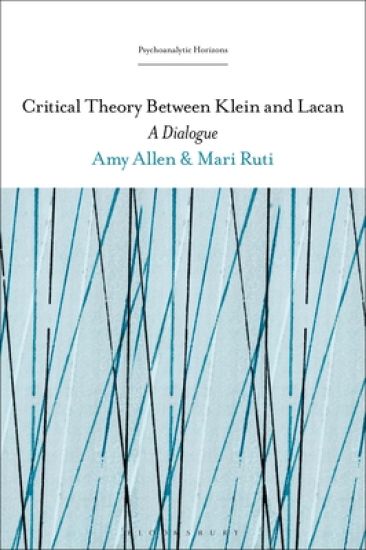
Critical Theory Between Klein and Lacan

Critical Theory Between Klein and Lacan

Mari Ruti; Amy Allen

Bloomsbury Academic USA
2021
nidottu
Critical Theory Between Klein and Lacan explores convergences and divergences in the psychoanalytic theories of Melanie Klein and Jacques Lacan, with a special focus on the implications of their work for critical theory, broadly construed. The book is co-authored in the form of a dialogue between Amy Allen, a prominent representative of Frankfurt School critical theory with expertise on Klein, and Mari Ruti, a leading Lacanian critical theorist. Klein and Lacan are among the two most important and influential psychoanalytic theorists after Freud. Their work has profound implications for how we understand subjectivity, intersubjectivity, autonomy, agency, desire, affect, trauma, history, and the potential for individual and social change. Allen and Ruti offer distinctive interpretations of Klein and Lacan that not only bring out their complexities but also highlight productive points of convergence where most psychoanalytic and critical theorists see irreconcilable differences. The book is organized around key themes that cut across and through the work of Klein and Lacan, culminating in an assessment of the implications of their theories for thinking about politics.
Critical Theory Between Klein and Lacan

Critical Theory Between Klein and Lacan

Mari Ruti; Amy Allen

Bloomsbury Academic USA
2019
sidottu
Critical Theory Between Klein and Lacan explores convergences and divergences in the psychoanalytic theories of Melanie Klein and Jacques Lacan, with a special focus on the implications of their work for critical theory, broadly construed. The book is co-authored in the form of a dialogue between Amy Allen, a prominent representative of Frankfurt School critical theory with expertise on Klein, and Mari Ruti, a leading Lacanian critical theorist. Klein and Lacan are among the two most important and influential psychoanalytic theorists after Freud. Their work has profound implications for how we understand subjectivity, intersubjectivity, autonomy, agency, desire, affect, trauma, history, and the potential for individual and social change. Allen and Ruti offer distinctive interpretations of Klein and Lacan that not only bring out their complexities but also highlight productive points of convergence where most psychoanalytic and critical theorists see irreconcilable differences. The book is organized around key themes that cut across and through the work of Klein and Lacan, culminating in an assessment of the implications of their theories for thinking about politics.
Distillations

Distillations

Mari Ruti

Bloomsbury Academic USA
2018
nidottu
Distilling into concise and focused formulations many of the main ideas that Mari Ruti has sought to articulate throughout her writing career, this book reflects on the general state of contemporary theory as it relates to posthumanist ethics, political resistance, subjectivity, agency, desire, and bad feelings such as anxiety. It offers a critique of progressive theory’s tendency to advance extreme models of revolt that have little real-life applicability. The chapters move fluidly between several theoretical registers, the most obvious of these being continental philosophy, psychoanalytic theory, Butlerian ethics, affect theory, and queer theory. One of the central aims of Distillations is to explore the largely uncharted territory between psychoanalysis and affect theory, which are frequently pitted against each other as hopelessly incompatible, but which Ruti shows can be brought into a productive dialogue.
The Ethics of Opting Out

The Ethics of Opting Out

Mari Ruti

Columbia University Press
2017
pokkari
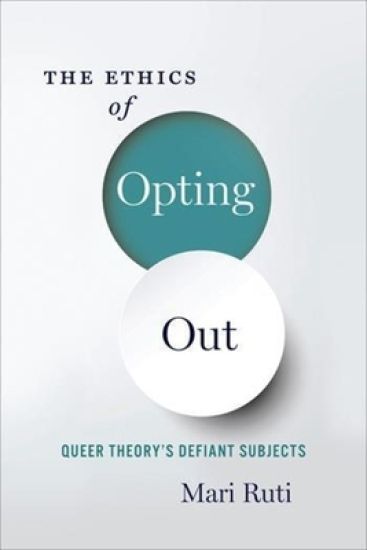
In The Ethics of Opting Out, Mari Ruti provides an accessible yet theoretically rigorous account of the ideological divisions that have animated queer theory during the last decade, paying particular attention to the field's rejection of dominant neoliberal narratives of success, cheerfulness, and self-actualization. More specifically, she focuses on queer negativity in the work of Lee Edelman, Jack Halberstam, and Lynne Huffer, and on the rhetoric of bad feelings found in the work of Sara Ahmed, Lauren Berlant, David Eng, Heather Love, and Jose Munoz. Ruti highlights the ways in which queer theory's desire to opt out of normative society rewrites ethical theory and practice in genuinely innovative ways at the same time as she resists turning antinormativity into a new norm. This wide-ranging and thoughtful book maps the parameters of contemporary queer theory in order to rethink the foundational assumptions of the field.
The Ethics of Opting Out

The Ethics of Opting Out

Mari Ruti

Columbia University Press
2017
sidottu
In The Ethics of Opting Out, Mari Ruti provides an accessible yet theoretically rigorous account of the ideological divisions that have animated queer theory during the last decade, paying particular attention to the field's rejection of dominant neoliberal narratives of success, cheerfulness, and self-actualization. More specifically, she focuses on queer negativity in the work of Lee Edelman, Jack Halberstam, and Lynne Huffer, and on the rhetoric of bad feelings found in the work of Sara Ahmed, Lauren Berlant, David Eng, Heather Love, and Jose Munoz. Ruti highlights the ways in which queer theory's desire to opt out of normative society rewrites ethical theory and practice in genuinely innovative ways at the same time as she resists turning antinormativity into a new norm. This wide-ranging and thoughtful book maps the parameters of contemporary queer theory in order to rethink the foundational assumptions of the field.
Feminist Film Theory and Pretty Woman

Feminist Film Theory and Pretty Woman

Mari Ruti

Bloomsbury Academic USA
2016
nidottu
In Feminist Film Theory and Pretty Woman, Mari Ruti traces the development of feminist film theory from its foundational concepts such as the male gaze, female spectatorship, and the masquerade of femininity to 21st-century analyses of neoliberal capitalism, consumerism, postfeminism, and the revival of “girly” femininity as a cultural ideal. By interpreting Pretty Woman as a movie that defies easy categorization as either feminist or antifeminist, the book counters the all-too-common critical dismissal of romantic comedies as mindless drivel preoccupied with trivial “feminine” concerns such as love and shopping. The book’s lucid presentation of the key concerns of feminist film theory, along with its balanced reading of Pretty Woman, shed light on a Hollywood genre often overlooked by film critics: the romantic comedy.
Feminist Film Theory and Pretty Woman

Feminist Film Theory and Pretty Woman

Mari Ruti

Bloomsbury Academic USA
2016
sidottu
In Feminist Film Theory and Pretty Woman, Mari Ruti traces the development of feminist film theory from its foundational concepts such as the male gaze, female spectatorship, and the masquerade of femininity to 21st-century analyses of neoliberal capitalism, consumerism, postfeminism, and the revival of “girly” femininity as a cultural ideal. By interpreting Pretty Woman as a movie that defies easy categorization as either feminist or antifeminist, the book counters the all-too-common critical dismissal of romantic comedies as mindless drivel preoccupied with trivial “feminine” concerns such as love and shopping. The book’s lucid presentation of the key concerns of feminist film theory, along with its balanced reading of Pretty Woman, shed light on a Hollywood genre often overlooked by film critics: the romantic comedy.
The Age of Scientific Sexism

The Age of Scientific Sexism

Mari Ruti

Bloomsbury Academic USA
2015
sidottu
We trust our sciences to operate on a plane of objectivity and fact in a world of subjectivity and cultural ideologies, but should we? In The Age of Scientific Sexism, philosopher Mari Ruti offers a sharp critique of the gender profiling tendencies of evolutionary psychology, untangling the insidious threads of various gender mythologies that have infiltrated—or perhaps even define—this faux-science. Selling stereotypes as scientific facts, evolutionary psychology continually brings retrograde models of sexuality into mainstream culture: it insists that men and women live in two completely different psychological, emotional, and sexual universes, and that they will consequently always be locked in a vicious battle of the sexes. Among these regressive arguments is the assumption that men’s sexuality is urgent and indiscriminate, whereas women are “naturally” reluctant, reticent, and choosy—a concept constructed to justify masculine behavior, such as cheating, that women have historically found painful. On its most basic level, The Age of Scientific Sexism explores our impulse to “explain” romantic behavior through science: in the increasingly egalitarian gender landscape of our society, why are we so eager to embrace the rampant gender profiling that evolutionary psychology promotes? Perhaps these simplistic gender caricatures owe their popularity, at least in part, to our overly pragmatic society pragmatic society, which encourages us to search for easy answers to complex questions.