Kirjojen hintavertailu. Mukana 12 126 680 kirjaa ja 12 kauppaa.

Kirjailija

Mark Rowlands

Kirjat ja teokset yhdessä paikassa: 32 kirjaa, julkaisuja vuosilta 1999-2025, suosituimpien joukossa Koirien onni. Vertaile teosten hintoja ja tarkista saatavuus suomalaisista kirjakaupoista.

32 kirjaa

Kirjojen julkaisuhaarukka 1999-2025.
Koirien onni

Koirien onni

Mark Rowlands

Eurooppalaisen filosofian seura
2025
nidottu
Filosofit pohtivat, mitä on hyvä elämä. Koirat elävät sitä. Koirien onni kertoo, miksi hetkessä eläminen ilman jatkuvaa pohdiskelua on parasta mahdollista elämää.
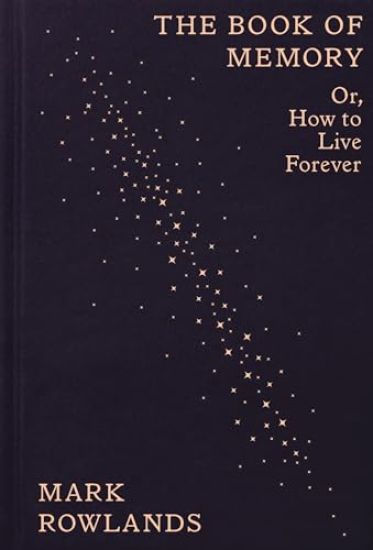
The Book of Memory

The Book of Memory

Mark Rowlands

GRANTA BOOKS
2025
sidottu
'The book of you is dominated by night-black seas, sprinkled with shining island sentences: tiny islets of remembrance, glimmering in the night.' Memory isn't all that we think it is. Each time we revisit even our most deeply ingrained memories, they can soften and consolidate, distorted. Yet they also carry within them the blueprint of each person's unique style. From episodic memories like shining islands in dark water, and forgotten memories that underpin our personalities, to the memories authored by others that we carry within us, Rowlands explores our negotiations with the past and how memory makes us who we are. Drawing on the latest neurological and psychological research and on a range of writers and thinkers, The Book of Memory is a mesmerising journey into how memories are made, lost and remembered, with important consequences for how we understand ourselves.
The Book of Memory: How We Become Who We Are
A brilliant journey through the nature of memory, helping us understand how what is lost--and what is remembered--shapes who we are. In this revelatory and intimate exploration of the way memory works, Mark Rowlands, author of The Philosopher and the Wolf, reveals how memories aren't fixed. They soften and consolidate--and are distorted--each time we revisit them, even those memories most deeply ingrained. The way we call on memory is closer to a "negotiation with the past." From episodic memories like "shining islands in dark waters" and forgotten "Rilkean" memories that underpin our personalities and essential style to the memories we might hold that have been authored by others close to us, The Book of Memory draws on philosophical argument, a range of writers and thinkers, the latest neurological research, and psychology experiments to chart how memories are made, lost and remembered, with important consequences for how we understand ourselves.
The Happiness of Dogs

The Happiness of Dogs

Mark Rowlands

GRANTA BOOKS
2025
nidottu
If a dog could write a book of philosophy, what would it contain? If you have spent part of your life with a dog, you may find certain questions popping, unbidden, into your mind. Is my dog living a fulfilled life? Is my dog a good dog? Does my dog love me? This, however only scratches the surface of a canine philosophy. Drawing on his life lived with dogs (two German shepherds, the amiable Hugo and his dark twin Shadow; Brenin, a wolf hybrid, and Tess his wolf dog daughter; and Nina, a German shepherd/malamute mix), on the ideas of philosophers from Socrates to Hume and Sartre, and on the cutting edge psychology of canine cognition, philosopher Mark Rowlands explores the way dogs experience the world to bring us closer to an understanding of ourselves. While dogs feel unparalleled joy and focus in the moment, humans are burdened by the disquietude of anxiety, doubt and even anguish. Happiness for dogs can be achieved in the daily chase of a squirrel, for humans it is much more elusive. Digging deep into their morality, freedoms, consciousness, intelligence and love of life, Rowlands discovers that dogs have a unique way of existing which amounts to a different philosophical outlook altogether - if they could write such a thing - and that they may have better answers to the meaning of life than we do.
Animal Rights

Animal Rights

Mark Rowlands

MIT PRESS LTD
2025
nidottu
A fresh view of animals and what we owe them.Do animals have moral standing? Do they count, morally speaking? In Animal Rights, Mark Rowlands argues that they do and explores the implications of this idea. He identifies three different waves in animal rights writing. The first wave was defined by a traditional dispute between utilitarianism (represented by Peter Singer) and rights-based approaches (represented by Tom Regan) to ethics. The second wave was defined by an expansion in a conception of ethics, which saw utilitarian and rights-based approaches supplemented by other ethical traditions, including contractualism, virtue ethics, and care ethics. The third wave was defined by an expansion in our conception of animals, driven by exciting new developments in the field of comparative psychology.Each of these waves had ramifications for how we understand the moral status of animals, but, this book argues, and reinforces, the core idea that animals deserve moral respect. In earlier waves, discussions of animal ethics had been focused on the issue of animal suffering. But the third wave is defined by the idea that animals are far more than merely sufferers or enjoyers of experiences but are instead authors of their own lives: creatures capable of choosing how to live, shaped by a conception of their life and how they would like it to go. Rowlands writes that, no matter what moral theory you choose, the most plausible version of that theory entails that animals have moral standing and that our obligations to them are far more substantial than many of us care to acknowledge.
The Word of Dog: What Our Canine Companions Can Teach Us about Living a Good Life
If you have spent any part of your life with a dog, you may have found certain questions popping, unbidden, into your mind: Is my dog living a fulfilled life? Is my dog a good dog? Does my dog love me? Addressing these questions compels you to confront not just your dog's life but yours as well--to think about what fulfillment, and meaning, in life really is.In The Word of Dog, philosopher Mark Rowlands explores these questions and suggests that in dogs we can see hints--faint, shrouded, but discernible--of what a better way of living might look like. Perhaps none of us can be happy in the way a dog can, but The Word of Dog shows us we could do a lot better than we're doing simply by listening to the unspoken wisdom our dogs reveal to us every day of their happy, uncomplicated lives.
The Happiness of Dogs

The Happiness of Dogs

Mark Rowlands

GRANTA BOOKS
2024
sidottu
If a dog could write a book of philosophy, what would it contain? If you have spent part of your life with a dog, you may find certain questions popping, unbidden, into your mind. Is my dog living a fulfilled life? Is my dog a good dog? Does my dog love me? This, however only scratches the surface of a canine philosophy. Drawing on his life lived with dogs (two German shepherds, the amiable Hugo and his dark twin Shadow; Brenin, a wolf hybrid, and Tess his wolf dog daughter; and Nina, a German shepherd/malamute mix), on the ideas of philosophers from Socrates to Hume and Sartre, and on the cutting edge psychology of canine cognition, philosopher Mark Rowlands explores the way dogs experience the world to bring us closer to an understanding of ourselves. "A masterclass in canine philosophy" Tim Dowling, Guardian
World on Fire

World on Fire

Mark Rowlands

Oxford University Press Inc
2021
sidottu
Mark Rowlands presents a novel analysis of three epoch-defining environmental problems: climate, extinction, and pestilence. Our climate is changing at a rate that is unprecedented and, if unchecked, disastrous. Species are disappearing hundreds or thousands of times faster than normal. COVID-19 has wreaked social and economic havoc but is merely the latest off a blossoming production line of emerging infectious diseases, many of which have the potential to be far worse. Rowlands establishes that all three problems are consequences of choices we have made about energy, which can be divided into two major forms: fuel and food. Focusing on food choices as far more central to the issue than commonly recognized, he argues that the solution is breaking our collective habit of eating animals. Rowlands shows that in doing so, we stem our insatiable hunger for land, which he identifies as central to the problems of extinction and pestilence. He explains that reversing the industrial farming of animals for food will first, substantially cut climate emissions, rapidly enough to allow sustainable energy technologies time to become viable alternatives; and most importantly, make vast areas of a land available for the kind of aggressive afforestation policy that he shows as necessary to bring all three problems under control. With World on Fire, Mark Rowlands identifies the source of our environmental ills and provides a compelling and accessible account of how to solve them.
Can Animals Be Persons?

Can Animals Be Persons?

Mark Rowlands

Oxford University Press Inc
2019
sidottu
Can animals be persons? To this question, scientific and philosophical consensus has taken the form of a resounding, 'No!' In this book, Mark Rowlands disagrees. Not only can animals be persons, many of them probably are. Taking, as his starting point, John Locke's classic definition of a person, as "a thinking intelligent being, that has reason and reflection, and can consider itself the same thinking thing, in different times and places," Rowlands argues that many animals can satisfy all of these conditions. A person is an individual in which four features coalesce: consciousness, rationality, self-awareness and other-awareness, and many animals are such individuals. Consciousness--something that is like to have an experience--is widely distributed through the animal kingdom. Many animals are capable of both causal and logical reasoning. Many animals are also self-aware, since a form of self-awareness is essentially built into the possession of conscious experience. And some animals are capable of a kind of awareness of the minds of others, quite independently of whether they possess a theory of mind. This is not just a book about animals, however. As well as being fascinating in their own right, animals, as Claude Levi-Strauss once put it, are "good to think." In this seamless interweaving of the empirical study of animal minds with philosophy and its history, this book makes a powerful case for the idea that reflection on animals allows us to better understand each of these four pillars of personhood, and so illuminates what means for any individual--animal or human--to be conscious, rational, self- and other-aware.
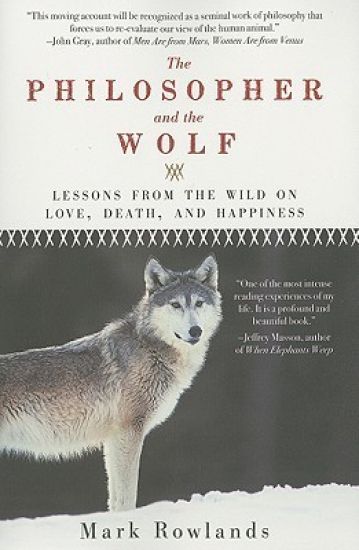
The Philosopher and the Wolf

The Philosopher and the Wolf

Mark Rowlands

Granta Books
2017
nidottu
This fascinating book charts the relationship between Mark Rowlands, a rootless philosopher, and Brenin, his extraordinarily well-travelled wolf. More than just an exotic pet, Brenin exerted an immense influence on Rowlands as both a person, and, strangely enough, as a philosopher, leading him to re-evaluate his attitude to love, happiness, nature and death. By turns funny (what do you do when your wolf eats your air-conditioning unit?) and poignant, this life-affirming classic of popular philosophy will make you reappraise what it means to be human.
Fame

Fame

Mark Rowlands

Routledge
2017
sidottu
One of the most distinctive cultural phenomena of recent years has been the rise and rise of fame. In this book, Mark Rowlands argues that our obsession with fame has transformed it. Fame was once associated with excellence or achievement in some or other field of endeavour. But today we are obsessed with something that is, in effect, quite different: fame unconnected with any discernible distinction, fame that allows a person to be famous simply for being famous. This book shows why this new fame is simultaneously fascinating and worthless. To understand this new form of fame, Rowlands maintains, we have to engage in an extensive philosophical excavation that takes us back to a dispute that began in ancient Greece between Plato and Protagoras, and was carried on in a remarkable philosophical experiment that began in eighteenth-century France. Somewhat like contestants on a reality TV show, today we find ourselves, unwittingly, playing out the consequences of this experiment.
Memory and the Self

Memory and the Self

Mark Rowlands

Oxford University Press Inc
2016
sidottu
The idea that our memories, in some sense, make us who we are, is a common one-and not at all implausible. After all, what could make us who we are if not the things we have experienced, thought, felt and desired on these idiosyncratic pathways through space and time that we call lives? And how can we retain these experiences, thoughts, feelings and desires if not through memory? On the other hand, most of what we have experienced has been forgotten. And there is now a considerable body of evidence that suggests that, even when we think we remember, our memories are likely to be distorted, sometimes beyond recognition. Imagine writing your autobiography, only to find that that most of it has been redacted, and much of the rest substantially rewritten. What would hold this book together? What would make it the unified and coherent account of a life? The answer, Mark Rowlands argues, lies, partially hidden, in a largely unrecognized form of memory-Rilkean memory. A Rilkean memory is produced when the content of a memory is lost but the act of remembering endures, in a new, mutated, form: a mood, a feeling, or a behavioral disposition. Rilkean memories play a significant role in holding the self together in the face of the poverty and inaccuracy of the contents of memory. But Rilkean memories are important not just because of what they are, but also because of what they were before they became such memories. Acts of remembering sculpt the contents of memories out of the slabs of remembered episodes. Our acts of remembering ensure that we are in the content of each of our memories-present in the way a sculptor is present in his creation-even when this content is lamentably sparse and endemically inaccurate.
A Good Life

A Good Life

Mark Rowlands

GRANTA BOOKS
2016
nidottu
Myshkin was born on a certain day and died on a certain day - and some things happened to him in between. These things presented him with ethical questions and this book is a record of his attempt to answer those questions. Discovered by his son after Myshkin's death, A Good Life is one man's reckoning with the life he has led and the choices he made. It is at once a philosophical handbook for living and a page-turning narrative. A Good Life is one man's life (birth, death, education, religion, morality, illness and so on) told through a philosophical lens. It is a riveting examination of the ethical questions we face, and the decisions we must make, and a defence of the idea that at the beating heart of morality we find love. And it is written with the conviction that, on their own, moral rules and principles are childish things - risible and easily refuted. It is only a life in its entirety that can be morally judged. A Good Life is sometimes profoundly funny, sometimes deeply serious. It is as readable as a novel and as provocative as the best philosophy. It is the finest work to date by a charming and brilliant thinker.
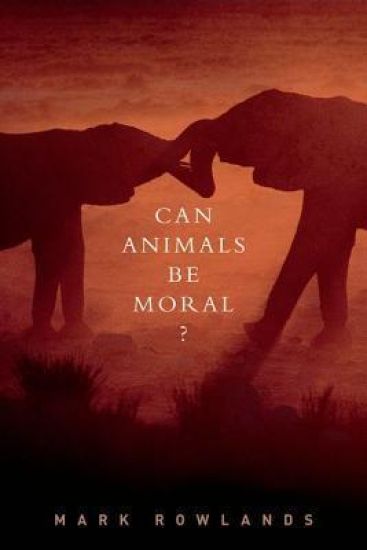
Can Animals Be Moral?

Can Animals Be Moral?

Mark Rowlands

Oxford University Press Inc
2015
nidottu
From eye-witness accounts of elephants apparently mourning the death of family members to an experiment that showed that hungry rhesus monkeys would not take food if doing so gave another monkey an electric shock, there is much evidence of animals displaying what seem to be moral feelings. But despite such suggestive evidence, philosophers steadfastly deny that animals can act morally, and for reasons that virtually everyone has found convincing. In Can Animals be Moral?, philosopher Mark Rowlands examines the reasoning of philosophers and scientists on this question--ranging from Aristotle and Kant to Hume and Darwin--and reveals that their arguments fall far short of compelling. The basic argument against moral behavior in animals is that humans have capabilities that animals lack. We can reflect on our motivations, formulate abstract principles that allow that allow us to judge right from wrong. For an actor to be moral, he or she must be able scrutinize their motivations and actions. No animal can do these things--no animal is moral. Rowland naturally agrees that humans possess a moral consciousness that no animal can rival, but he argues that it is not necessary for an individual to have the ability to reflect on his or her motives to be moral. Animals can't do all that we can do, but they can act on the basis of some moral reasons--basic moral reasons involving concern for others. And when they do this, they are doing just what we do when we act on the basis of these reasons: They are acting morally.
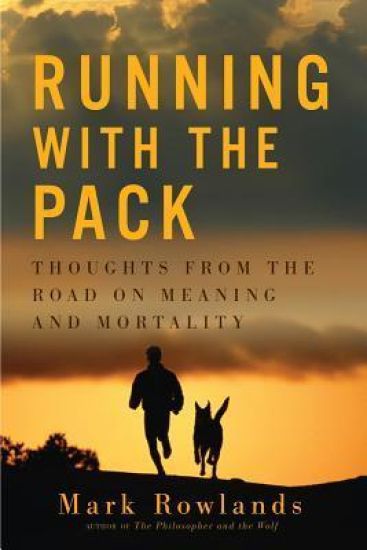
Running with the Pack

Running with the Pack

Mark Rowlands

Granta Books
2014
nidottu
'Most of the serious thinking I have done over the past twenty years has been done while running.' Mark Rowlands has run for most of his life. He has also been a professional philosopher. And for him the two - running and philosophising - are inextricably connected. In Running with the Pack he tells us about the most significant runs of his life: from the entire day he spent running as a boy in Wales, to the runs along French beaches and up Irish mountains with his beloved wolf Brenin, and through Florida swamps more recently with his dog Nina. Woven throughout the book are profound meditations on mortality, middle age and the meaning of life. This is a highly original and moving book that will make the philosophically inclined want to run, and those who love running become intoxicated by philosophical ideas.
Running with the Pack: Thoughts from the Road on Meaning and Mortality
"Most of the serious thinking I have done over the past twenty years has been done while running," says philosophy professor Rowlands, who has run for most of his life. And for him, running and philosophizing, are inextricably connected. In Running with the Pack, he reveals the most significant runs of his life--from the entire day he spent running as a boy in Wales, to the runs along French beaches and up Irish mountains with his beloved wolf, Brenin, and through Florida swamps with his dog, Nina. Intertwined with this honest, passionate and witty memoir are the fascinating meditations that those runs triggered, from mortality, midlife and the meaning of life. A highly original and moving book that will make the philosophically inclined want to run, and those who love running become intoxicated by the beauty of philosophy.
Animal Rights: All That Matters

Animal Rights: All That Matters

Mark Rowlands

John Murray Learning
2013
nidottu
Are humans really different at all? Animal Rights is a big deal. From animal testing to vegetarianism, and hunting to preservation of fish stocks, it's a topic that's always in the news. Mark Rowlands, author of The Philosopher and the Wolf, is the world's best known philosopher of animal rights. In this introduction to the topic, he starts by asking whether there is anything about humans that makes us psychologically or physiologically distinctive - so that there might be a moral justification for treating animals in a different way to how we treat humans. From this foundation, he goes on to explore specific issues of eating animals, experimentation, pets, hunting, zoos, predation and engineering animals. He ends with a challenging argument of how an improved understanding of animal ethics can and should affect your choices.
Can Animals Be Moral?

Can Animals Be Moral?

Mark Rowlands

Oxford University Press Inc
2012
sidottu
Can animals act for moral reasons? Philosophical tradition answers, almost univocally, "no." Recent work in cognitive ethology, however, points in the other direction. Philosophical tradition has apparently convincing arguments on its side. But cognitive ethology can point to a growing body of empirical evidence that suggests these arguments must be wrong. This groundbreaking book assimilates both philosophical and ethological frameworks into a unified whole. In part, ethologists have not understood the enormous logical obstacles facing the claim that animals can act morally. But, in part also, philosophers have been guilty of over-intellectualizing crucial concepts such as moral motivation and action. Building on the ethological evidence, this book engages in meticulous philosophical analysis and argument, and the resulting answer to the question is a qualified "yes." Animals can act morally in the sense they can act for moral reasons. Or, at least, they are no compelling logical obstacles to supposing that this is the case. This conclusion has important implications not just for our understanding of animals but also of the central concepts we employ in understanding the moral lives of humans, such as motivation, action, and agency.
Philosopher and the Wolf: Lessons from the Wild on Love, Death, and Happiness
Mark Rowlands was a young philosophy professor, rootless and searching for life s greater meaning. Shortly after arriving at the University of Alabama, he noticed a classified ad in the local paper advertising wolf cubs for sale, and decided he had to investigate, if only out of curiosity. It was love at first sight, and the bond that grew between philosopher and wolf reaffirms for us the incredible relationships that exist between man and animal. When Mark welcomed his new companion, Brenin, into his home, but more than just an exotic pet, Brenin exerted an immense influence on Rowlands both as a person, and, strangely enough, as a philosopher, leading him to reevaluate his attitude toward love, happiness, nature, death, and the true meaning of companionship."
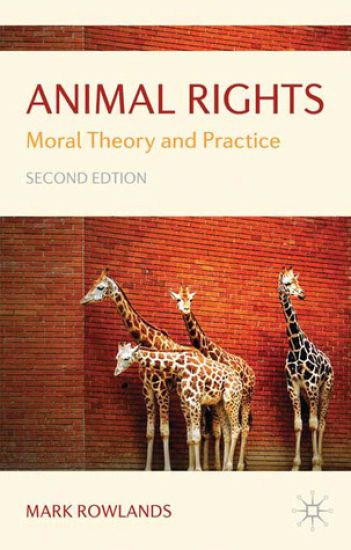
Animal Rights

Animal Rights

Mark Rowlands

Palgrave Macmillan
2009
sidottu
In this 2nd edition the author has substantially revised his book throughout, updating the moral arguments and adding a chapter on animal minds. Importantly, rather than being a polemic on animal rights, this book is also a considered and imaginative evaluation of moral theory as explored through the issue of animal rights.