Kirjailija
Martin Heidegger
Kirjat ja teokset yhdessä paikassa: 206 kirjaa, julkaisuja vuosilta 1956-2026, suosituimpien joukossa Martin Heidegger, Ontologie. Hermeneutik Der Faktizitat. Vertaile teosten hintoja ja tarkista saatavuus suomalaisista kirjakaupoista.
206 kirjaa
Kirjojen julkaisuhaarukka 1956-2026.
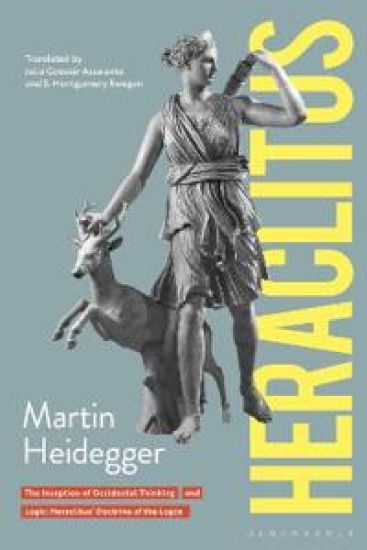
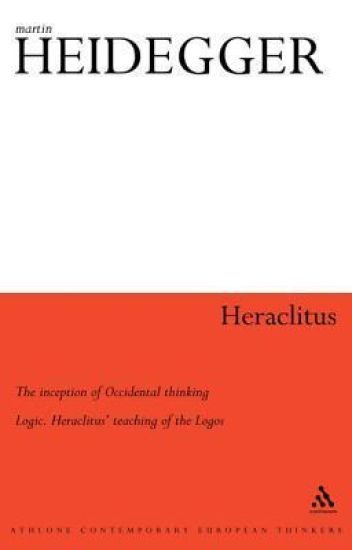
Heraclitus is the first English translation of Volume 55 of Martin Heidegger’s Gesamtausgabe. This important volume consists of two lecture courses given by Heidegger at the University of Freiburg over the Summers of 1943 and 1944 on the thought of Heraclitus. These lectures shed important light on Heidegger’s understanding of Greek thinking, as well as his understanding of Germany, the history of philosophy, the Western world, and their shared destinies.
Martin Heidegger, Ontologie. Hermeneutik Der Faktizitat
Martin Heidegger
Verlag Vittorio Klostermann
2017
sidottu
Heideggers fruhe Freiburger und die ersten Marburger Vorlesungen haben eine besondere Bedeutung, weil sie Einblick gewahren in seinen Denkweg in dem Jahrzehnt zwischen seiner Habilitation (1916) und dem Erscheinen von Sein und Zeit (1926). In diesen Jahren hat er so gut wie nichts publiziert, aber allein auf Grund seiner Lehrtatigkeit verbreitete sich der legendare Ruf dieses geheimnisvollen Freiburger Privatdozenten an den anderen Universitaten. Es war eben die Hermeneutik der Faktizitat, d. i. die Selbstauslegung des Subjekts als Da-Sein, In-der-Welt-Sein, Sorge, die das Thema dieser Vorlesung (Sommersemester 1923) ist. Magisch angezogen sassen in seinen (meist nur einstundigen) Vorlesungen und Ubungen als junge Studenten die Philosophieprofessoren der nachsten Jahrzehnte und erlebten fasziniert die ersten Schritte in eine neue Richtung des Denkens mit, die dann in Heideggers Hauptwerk Sein und Zeit ihre fragmentarisch gebliebene Ausformung fand.
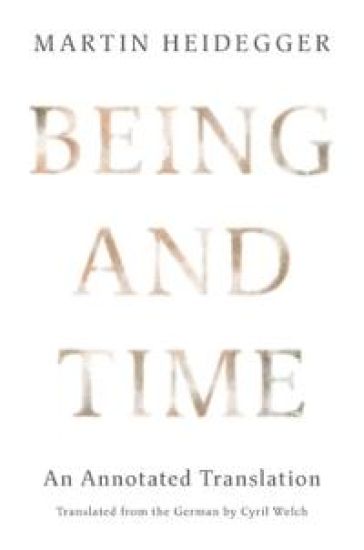
The publication in 1927 of Martin Heidegger's magnum opus, Being and Time, signaled an intellectual event of the first order and had an impact in fields far beyond that of philosophy proper. Being and Time has long been recognized as a landmark work of the twentieth century for its original analyses of the character of philosophic inquiry and the relation of the possibility of such inquiry to the human situation. Still provocative and much disputed, Heidegger's text has been taken as the inspiration for a variety of innovative movements in fields ranging from psychoanalysis, literary theory, existentialism, ethics, hermeneutics, and theology. A work that disturbs the traditions of philosophizing that it inherits, Being and Time raises questions about the end of philosophy and the possibilities for thinking liberated from the presumptions of metaphysics.The Stambaugh translation captures the vitality of the language and thinking animating Heidegger's original text. It is also the most comprehensive edition insofar as it includes the marginal notes made by Heidegger in his own copy of Being and Time, and takes account of the many changes that he made in the final German edition of 1976. The revisions to the original translation correct some ambiguities and problems that have become apparent since the translation appeared fifteen years ago. Bracketed German words have also been liberally inserted both to clarify and highlight words and connections that are difficult to translate, and to link this translation more closely to the German text.
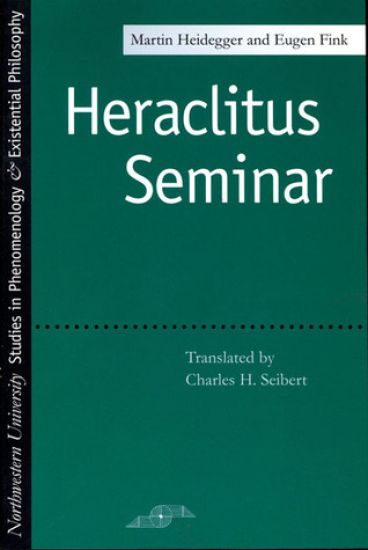
In 1966-67 Martin Heidegger and Eugen Fink conducted an extraordinary seminar on the fragments of Heraclitus. Heraclitus Seminar records those conversations, documenting the imaginative and experimental character of the multiplicity of interpretations offered and providing an invaluable portrait of Heidegger involved in active discussion and explication.Heidegger's remarks in this seminar illuminate his interpretations not only of pre-Socratic philosophy, but also of figures such as Hegel and Holderllin. At the same time, Heidegger clarifies many late developments in his own understanding of truth, Being, and understanding. Heidegger and Fink, both deeply rooted in the Freiburg phenomenological tradition, offer two competing approaches to the phenomenological reading of the ancient text-a kind of reading that, as Fink says, is "not so much concerned with the philological problematic ... as with advancing into the matter itself, that is, toward the matter that must have stood before Heraclitus's spiritual view.
Den här volymen ät ett bidrag till förståelsen av nihilismen som ett viktigt uttryck för den moderna epoken, såväl filosofiskt, litterärt som politiskt. Två texter presenteras; Jüngers Över linjen och Heideggers svar på denna skrift Om varafrågan.
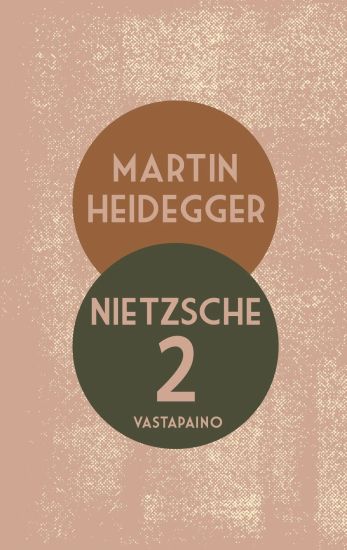
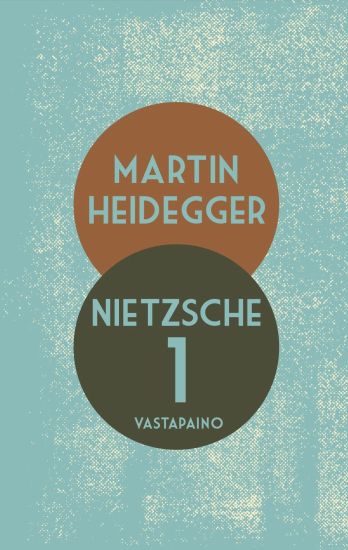
Filosofian suomentaja Markku Lehtinen tarttui Martin Heideggerin järkelemäiseen "Nietzsche 1-2"- teokseen, jonka vaikutus mannermaiseen ajatteluun on ollut valtava. Martin Heidegger oli 1900-luvun merkittävimpiä filosofeja, ja "Nietzsche" on yksi hänen pääteoksistaan. Teoksen pohjana ovat Heideggerin Freiburgin yliopistossa 1930-luvun lopussa ja 1940-luvun alussa pitämät luentosarjat sekä pitämättä jääneiden luentojen käsikirjoituksia, joita hän on muokannut julkaisua varten. Lisäksi kirjaan sisältyy Nietzscheä käsitteleviä tutkielmia 1940-luvun alusta. ”Koska Heideggerin välienselvittely Nietzschen kanssa koskee olemisen kysymyksen selvittämistä”, väittää filosofi Otto Pöggeler, ”joutuu Heidegger luopumaan kaikesta siitä, mikä siihen asti oli ollut etualalla Nietzschen tutkimuksessa: innostumisesta ja herättelystä, psykologisten ja moraalisten ilmiöiden tarkkailusta, kulttuurikritiikistä ja kulttuuripropagandasta, maailmankatsomuksellisesta taistelusta Nietzschen kanssa, häntä vastaan ja hänestä.” Temaattisesti kirjaa jäsentää Heideggerin tulkinta Friedrich Nietzschen vallantahdon käsitteestä ja sen eri ulottuvuuksista: vallantahdon asema Nietzschen taidefilosofiassa sekä vallantahdon suhde tietoon, Euroopan kulttuuria uhkaavaan nihilismiin ja Nietzschen keskeiseen ajatukseen saman ikuisesta paluusta. "Nietzsche" ei kuitenkaan ole pelkästään tutkielma kiistellystä 1800-luvun ajattelijasta, vaan Heidegger tarkastelee teoksessa Euroopan koko historiaa ja tulevaisuutta, kun kansallissosialismi on ottanut siitä otteen ja sota häämöttää näköpiirissä, sekä etsii alkua uudenlaiselle ajattelulle ja jopa uudelle historialle. Vuonna 1961 ilmestyneen teoksen vaikutus mannermaiseen ajatteluun on ollut ratkaiseva. Voisi jopa sanoa, että mannermainen filosofia on puhunut ja puhuu Nietzsche-kirjasta silloinkin, kun sitä ei eksplisiittisesti mainita.
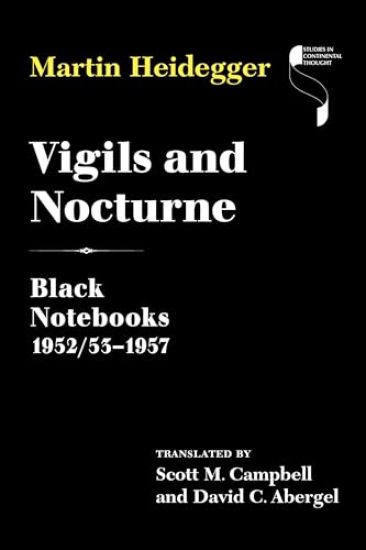
Vigils and Nocturne is the latest English translation of Martin Heidegger's Collected Works. Presenting three of Heidegger's later "Black Notebooks" from the 1950s, this volume chronicles the philosopher's private thoughts and personal observations after the reinstatement of his right to teach in 1951. In this volume, we see many of Heidegger's fascinating meditations on topics ranging from language, metaphysics, and technology to the turn, the event, and the meaning of Being, as well as contemporary events and concerns: Sputnik, nuclear energy, and the atomic bomb. Heidegger also develops new ways of approaching key concepts in his thinking, particularly focusing on the vigil and the nocturne and a relatively new idea in his work: Ver-Hältnis, or the relation of holding back. Through all this, Vigils and Nocturne showcases Heidegger's idiosyncratic and creative use of language, presenting a new way of approaching key concepts in his thinking.
This volume of Martin Heidegger's Black Notebooks contains five short notebooks the philosopher composed during the pivotal years of 1942 to 1948. The notebooks constitute a form of intellectual diary with personal reflections on the fall of National Socialism, the occupation of Germany after WWII, and Heidegger's own philosophical legacy. They address Heidegger's political activities as Rector of Freiburg University in the early phase of National Socialism and testify to his embittered reaction to his own denazification process. While this volume constitutes Heidegger's most intensely personal and autobiographical text, it also documents pivotal philosophical moments between his earlier and later philosophy. Readers interested in the history of intellectuals under National Socialism will find personal insights from the hand of a major philosopher who became involved with National Socialism. Readers interested in the development of Heidegger's thinking will find insightful documentation for the emergence of his post-WWII philosophical work.
The two treatises The Overcoming of Metaphysics (1938/39) and The Essence of Nihilism (1946–1948) do not belong together temporally or formally, but they are brought together in this volume because they both treat a common thesis from the standpoint of different questions – namely, that nihilism is the essence of metaphysics in relation to the history of being. The overcoming of metaphysics is, for Heidegger, the decisive historical moment in which metaphysics is experienced as the history of the abandonment by being and overcome at the same time. The abandonment of beings by being reveals itself in the final and most extreme intensification of metaphysics as the “unconditioned predominance of manipulation.” Manipulation means here the all-dominating producibility of beings. The Essence of Nihilism is linked to the idea of overcoming. This text deals with the attempt to elucidate the essence of nihilism through Nietzsche’s words “God is dead.” The killing of God springs from the will to power as the most extreme form of manipulation. The being of beings is grasped here as the positing of values emanating from the will to power. In this positing of being as value, it becomes clear that being itself remained unthought in metaphysics. Therefore, metaphysics as such is nihilism proper. These key works by Heidegger, now available in English for the first time, will be of great interest to students and scholars of philosophy and to anyone interested in Heidegger’s thought.
This volume comprises the lecture course that Heidegger gave in 1941 on the metaphysics of German Idealism. The first part of the lecture course contains a preliminary consideration of the distinction between ground and existence. The elucidation of the conceptual history includes a striking confrontation with Kierkegaard’s and Jaspers’ concepts of existence, as well as an elucidation of the concept of existence in Being and Time, which Heidegger distinguishes from the former concepts. Heidegger’s self-interpretation is not an end in itself, however, but rather a way of pointing to Schelling’s distinction between ground and existence, whose root and inner necessity and whose various versions Heidegger discusses subsequently. The second part of the lecture course is focused on Schelling’s “freedom treatise,” which Heidegger regards as the pinnacle of the metaphysics of German Idealism. Heidegger’s consideration of Schelling’s distinction between ground and existence finds its guiding thread in the introduction of the realms of being – eternal or finite, each being is a joining of the ground of existence and existence itself. In a subsequent overview, Heidegger discusses the relation of the distinction between ground and existence to the essence of human freedom and to the essence of the human. On the basis of this discussion, it becomes possible to grasp the connection between freedom and evil in Schelling’s system. This important work by Heidegger, published here in English for the first time, will be of great interest to students and scholars of philosophy and to anyone interested in Heidegger’s work.
Vi står aldrig utanför filosofin. En filosofiinledning kan därför omöjligen leda in någon på filosofins område. I stället måste den frigöra och sätta igång den filosofi som vi alltid redan bär med oss. Men hur går detta till, och vad är filosofi? Filosofi betraktas ibland som en vetenskap och ibland som en världsåskådning. I själva verket är filosofin ingetdera. Men om vi slår in på tankevägar som jämför filosofi med först vetenskap och sedan världsåskådning kan vi själva kanske bli filosoferande och på så vis komma filosofins väsen på spåret. Inledning till filosofin är en serie föreläsningar från 1928-1929. När de hålls har den banbrytande boken Vara och tid nyligen utkommit, och Heidegger plockar upp många trådar därifrån. Men samtidigt rör sig hans tänkande i nya riktningar. Det löper över antika greker och kristna teologer, över Immanuel Kant och begreppet värld och över samtidens vetenskapliga och existentiella kriser. Vad det slutligen mynnar ut i är förkunnandet av filosofin som ett frihetsprojekt. Inledning till filosofin publicerades postumt och bygger på Heideggers egna föreläsningsmanuskript kompletterade av omsorgsfulla studentanteckningar. Resultatet är en böljande text som är än muntlig, än teknisk och som har något att erbjuda såväl den erfarna kännaren som den som närmar sig Heidegger för första gången. I översättning av Ruben Wiwe och med fackgranskning av Charlotta Weigelt.