

Kirjailija
Martin Heidegger
Kirjat ja teokset yhdessä paikassa: 206 kirjaa, julkaisuja vuosilta 1956-2026, suosituimpien joukossa Martin Heidegger, Ontologie. Hermeneutik Der Faktizitat. Vertaile teosten hintoja ja tarkista saatavuus suomalaisista kirjakaupoista.
206 kirjaa
Kirjojen julkaisuhaarukka 1956-2026.


Throughout his career, Martin Heidegger read and reinterpreted his own writings. This was part of the entirely self-critical orientation of the journey in the landscape of thought. On My Own Publications is the first English-language translation of volume 82 of Heidegger's Complete Works. Started a decade after Being and Time (1927), much of this volume presents running commentary, interpretations, and insights of many of Heidegger's fundamental works, illuminating the philosopher's notes and personal thoughts on his own works and offering a rare look inside the mind of an influential thinker. Focusing on several works including What Is Metaphysics? (1929), The Origin of the Work of Art (1935-36), and The Letter on Humanism (1946), On My Own Publications presents Heidegger reading, interpreting, and confronting some of his own most important and influential publications.
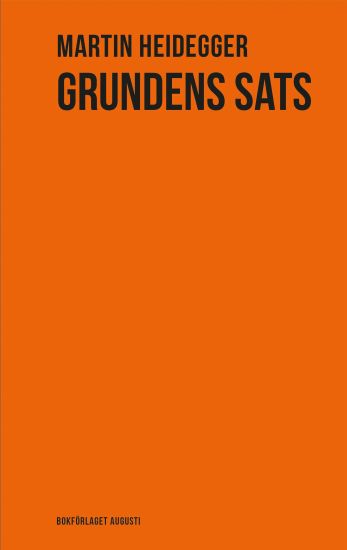
Grundens sats utgörs av en föreläsningsserie från 1955 56. Här utgår Heidegger från Leibniz princip nihil est sine ratione ingenting är utan grund, vilket är en av metafysikens mest grundläggande satser. Heidegger tydliggör emellertid att den inte är obetingat giltig, utan att den måste förstås utifrån varat. Han för också fram sina mest genomarbetade reflektioner kring historien eller varats skepnad, ett av de viktigaste inslagen i den sene Heideggers filosofi. Grundens sats är också en av Heideggers mest konstnärligt komponerade texter och innehåller viktiga reflektioner kring språk, översättning, tänkande, föremålslighet och teknologi tillsammans med en diskussion av tänkare som Aristoteles, Goethe, Kant och Leibniz, med flera. Tidigare oöversatt föreligger nu Grundens sats för första gången på svenska, tillsammans med utförliga kommentarer och noter. Martin Heidegger (1889 1976) är författare till några av 1900-talets viktigaste filosofiska verk som Till tänkandets sak, Vara och tid samt Brev om humanismen.

Briefwechsel 1922-1976 und andere Dokumente
Hans-Georg Gadamer; Martin Heidegger
Klostermann Vittorio GmbH
2024
sidottu
R ussissez votre bac de philosophie 2024 gr ce notre tude du philosophe Heidegger R dig e de mani re claire et pr cise, cette analyse philosophique est con ue pour aider l'ensemble des lyc ens.Gr ce notre travail ditorial, les points suivants n'auront plus aucun secret pour vous: la biographie du philosophe, l' tude de sa pens e, l'analyse de ses th mes principaux et le courant philosophique auquel il appartient.

Introduction to Philosophy (volume 27 of Heidegger's Complete Works) presents Heidegger's lecture course delivered in the winter semester of 1928–1929 at the University of Freiburg, translated into English for the first time by William McNeil. In this lecture series, Heidegger explores two major themes: the relation between philosophy and science and the relation between philosophy and Weltanschauung (worldview). Through extensive analyses of truth, unconcealment, and transcendence, he delves into topics that would expand into his later work. From being-with and community to the phenomenon of world and the "play" of world, Heidegger covers a wide range of philosophical concepts with unprecedented clarity and profound insight. Introduction to Philosophy offer an encounter with a true master at work.

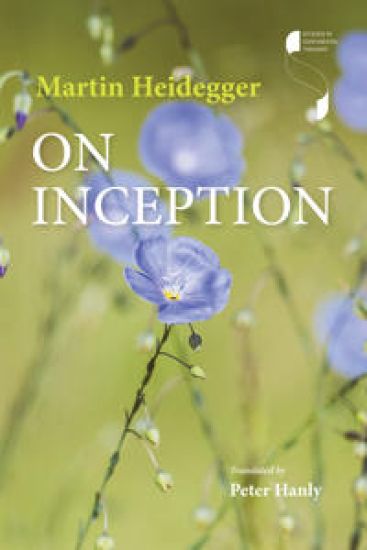
On Inception is a translation of Martin Heidegger's ber den Anfang (GA 70). This work belongs to the crucial period, before and during WWII, when Heidegger was at work on a series of treatises that begins with "Contributions to Philosophy" and includes "The Event" and "The History of Beyng." These works are difficult, even hermetic, but represent a crucial development in Heidegger's thinking. On Inception deepens the investigation underway in the other volumes of the series and provides a unique perspective on Heidegger's thinking of Being and of Event. Here, Heidegger asks, with a greater insistence than anywhere else in his work, what it might mean to think of being as event, and not as presence. Event cannot be thought without the sense of a beginning—an inception—and so, Heidegger insists, we must try to think of being as inception, as fundamentally inceptive. On Inception pursues rigorously the difficult and puzzling implications of this speculation. It does not merely extend work already undertaken but also opens doors onto wholly other pathways.
![Was heißt Denken?. Vorlesung Wintersemester 1951/52. [Was bedeutet das alles?]](/covers/9783150144916.jpg)
Was heißt Denken?. Vorlesung Wintersemester 1951/52. [Was bedeutet das alles?]
Martin Heidegger
Reclam Philipp Jun.
2023
pokkari

This volume consists of over one-hundred epistolary exchanges between Martin Heidegger and one of his earliest students, Karl Löwith, who became a renowned and accomplished philosopher in his own right. The letters span a period of just over fifty years and range from casual to philosophical in tone. The more philosophically oriented letters shed important light on the ideas and writings of both Heidegger and Löwith, while the more casual letters provide insight into Heidegger the teacher, the man, and the friend, as well as into Löwith the devoted but reflectively critical student. By providing previously untranslated materials, this volume contributes to a greater understanding of the lives and the work of these two crucially important philosophers. Additionally, through the various bibliographical and cultural details that are disclosed along the way, this volume contributes to a greater understanding of German intellectual and cultural history during the span of its most challenging and devastating years.
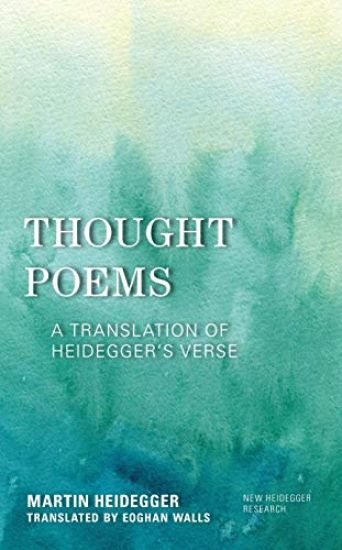
Thought Poems: A Translation of Heidegger's Verse
Martin Heidegger
Rowman Littlefield Publishers
2023
nidottu
Heidegger's turn to poetry in the latter half of his career is well known, but his own verse has to date received relatively little attention. How can we understand Heideggerian poetics without a thorough reading of the poet's own verse? Thought-Poems offers a translation of GA81 of Heidegger's collected works, where the reader can read the German version alongside the English text. Musical, allusive, engaged deeply with humanity's primordial relationships, the Gedachtes or thought-poems here translated show Heidegger's language at its most beautiful, and open new ways to conceive of the relationship between language and being.
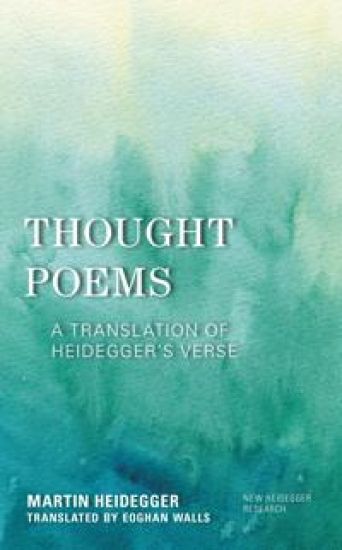
Heidegger’s turn to poetry in the latter half of his career is well known, but his own verse has to date received relatively little attention. How can we understand Heideggerian poetics without a thorough reading of the poet’s own verse? Thought-Poems offers a translation of GA81 of Heidegger’s collected works, where the reader can read the German version alongside the English text. Musical, allusive, engaged deeply with humanity’s primordial relationships, the Gedachtes or thought-poems here translated show Heidegger’s language at its most beautiful, and open new ways to conceive of the relationship between language and being.
The texts and notes collected in this volume offer unique insight into the development of Heidegger’s thinking on language and art from the late 1930s to the early 1950s – a tumultuous period both for Heidegger personally and for Germany as a whole. Following Germany’s defeat in World War II, Heidegger was banned from teaching at Freiburg University, where he had been a professor since 1928, and his thinking underwent significant changes as he began to cultivate different modes of silence and non-saying in his philosophy of language. This volume illuminates these shifts and charts the evolution of key terms in Heidegger’s philosophy of language during this key period in the development of his thought. The central theme of Heidegger’s reflections on language in this volume is his repeated engagement with the character of the word, silence and the unsaid, and his rejection of the instrumental conception of language, where he instead prioritized conversation as the “homeland of language.” Alongside references to Hölderlin and von Hofmannsthal and shrewd scrutiny of aural phenomena such as silent thought and speechlessness, speech is demonstrated to be intimately connected to the human essence. In a later section, Heidegger examines the place of art, in particular the plastic arts, and the role of the artist in conjunction with the new industrial landscape and architecture of his time, and in juxtaposition with ancient Greek attitudes to space and the polis. This key work by Heidegger, now available in English for the first time, will be of great interest to students and scholars of philosophy and to anyone interested in Heidegger’s thought.
The two treatises The Overcoming of Metaphysics (1938/39) and The Essence of Nihilism (1946–1948) do not belong together temporally or formally, but they are brought together in this volume because they both treat a common thesis from the standpoint of different questions – namely, that nihilism is the essence of metaphysics in relation to the history of being. The overcoming of metaphysics is, for Heidegger, the decisive historical moment in which metaphysics is experienced as the history of the abandonment by being and overcome at the same time. The abandonment of beings by being reveals itself in the final and most extreme intensification of metaphysics as the “unconditioned predominance of manipulation.” Manipulation means here the all-dominating producibility of beings. The Essence of Nihilism is linked to the idea of overcoming. This text deals with the attempt to elucidate the essence of nihilism through Nietzsche’s words “God is dead.” The killing of God springs from the will to power as the most extreme form of manipulation. The being of beings is grasped here as the positing of values emanating from the will to power. In this positing of being as value, it becomes clear that being itself remained unthought in metaphysics. Therefore, metaphysics as such is nihilism proper. These key works by Heidegger, now available in English for the first time, will be of great interest to students and scholars of philosophy and to anyone interested in Heidegger’s thought.

Seminare: Kant-Leibniz-Schiller (Teil 2: Sommersemester 1936 Bis Sommersemester 1942)
Martin Heidegger
Verlag Vittorio Klostermann
2022
sidottu
The remarks on "art" and "aesthetics" at the center of the volume provide the connecting link to the great "Holzwege" treatise "Der Ursprung des Kunstwerkes," the first elaboration of which goes back to 1935. The volume begins with the exhaustive and unique interpretation of Kant's "Critique of Aesthetic Judgment" in summer semester of 1936. As Heidegger writes to Elisabeth Blochmann on June 27, 1936, he conceived of this interpretation as an alternative draft to the "empty slogans" of contemporary (National Socialist) art doctrine. The question of "art" is further elaborated during the following winter semester by Heidegger's only seminar on Schiller, which deals with the famous "Briefe zur asthetischen Erziehung des Menschen". The two concluding seminars on Kant's "Prolegomena" and on the "Progress" of metaphysics (of summer semesters 1941 and 1942, respectively) are closely related to each other and are devoted to Kant's later expositions and retrospective self-interpretations of his main work "Critique of Pure Reason".

Seminare: Kant-Leibniz-Schiller (Teil 2: Sommersemester 1936 Bis Sommersemester1942)
Martin Heidegger
Verlag Vittorio Klostermann
2022
nidottu
The remarks on "art" and "aesthetics" at the center of the volume provide the connecting link to the great "Holzwege" treatise "Der Ursprung des Kunstwerkes," the first elaboration of which goes back to 1935. The volume begins with the exhaustive and unique interpretation of Kant's "Critique of Aesthetic Judgment" in summer semester of 1936. As Heidegger writes to Elisabeth Blochmann on June 27, 1936, he conceived of this interpretation as an alternative draft to the "empty slogans" of contemporary (National Socialist) art doctrine. The question of "art" is further elaborated during the following winter semester by Heidegger's only seminar on Schiller, which deals with the famous "Briefe zur asthetischen Erziehung des Menschen". The two concluding seminars on Kant's "Prolegomena" and on the "Progress" of metaphysics (of summer semesters 1941 and 1942, respectively) are closely related to each other and are devoted to Kant's later expositions and retrospective self-interpretations of his main work "Critique of Pure Reason".
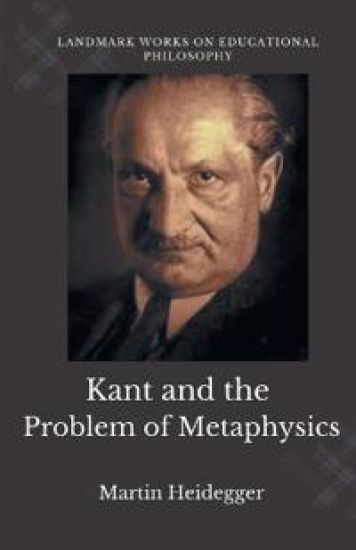
This work has been selected by scholars as being culturally important and is part of the knowledge base of civilization as we know it.This work is in the public domain in the United States of America, and possibly other nations. Within the United States, you may freely copy and distribute this work, as no entity (individual or corporate) has a copyright on the body of the work.Scholars believe, and we concur, that this work is important enough to be preserved, reproduced, and made generally available to the public. To ensure a quality reading experience, this work has been proofread and republished using a format that seamlessly blends the original graphical elements with text in an easy-to-read typeface.We appreciate your support of the preservation process, and thank you for being an important part of keeping this knowledge alive and relevant.

Duns Scotus's Doctrine of Categories and Meaning
Martin Heidegger
INDIANA UNIVERSITY PRESS
2022
sidottu
Duns Scotus's Doctrine of Categories and Meaning is a key text for the origins of Martin Heidegger's concept of "facticity." Originally submitted as a postdoctoral thesis in 1915, it focuses on the 13th-century philosopher-theologian John Duns Scotus. Heidegger first analyzes Scotus's doctrine of categories, then offers a meticulous explanation of the Grammatica Speculativa, a work of medieval grammar now known to be authored by the Modist grammarian Thomas of Erfurt. Taken together, these investigations represent an early foray into Heidegger's lifelong philosophical concerns, "the question of being in the guise of the problem of categories and the question of language in the guise of the doctrine of meaning." This new and unique translation of one of Heidegger's earliest works offers an important look at his early thinking before the question of being became his central concern and will appeal to readers exploring Heidegger's philosophical development, medieval philosophy, phenomenological interpretations of the history of philosophy, and the philosophy of language.
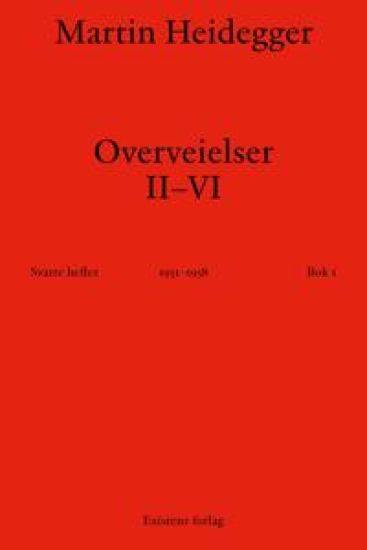
De svarte heftene er en samling tekster skrevet av den tyske filosofen Martin Heidegger i årene 1931 til 1970. Tekstene viser klarere enn Heideggers øvrige skrifter hva som er hans innerste anliggende: en radikal forvandling av menneskets vesen. Heidegger bestemte før sin død at de svarte heftene skulle holdes hemmelig fram til publiseringen. De kom ut på tysk i årene 2014-2022, samlet i ni bøker, og har skapt stor debatt verden over. «Overveielser II-VI» ble skrevet samtidig som Adolf Hitler overtok makten i Tyskland og konsoliderte det nasjonalsosialistiske herredømmet, en hendelse som satte tydelige spor i Heideggers filosofi.