Kirjojen hintavertailu. Mukana 12 296 846 kirjaa ja 12 kauppaa.

Kirjailija

Martyn Hammersley

Kirjat ja teokset yhdessä paikassa: 51 kirjaa, julkaisuja vuosilta 1990-2025, suosituimpien joukossa Kvalitative metoder. Vertaile teosten hintoja ja tarkista saatavuus suomalaisista kirjakaupoista.

51 kirjaa

Kirjojen julkaisuhaarukka 1990-2025.
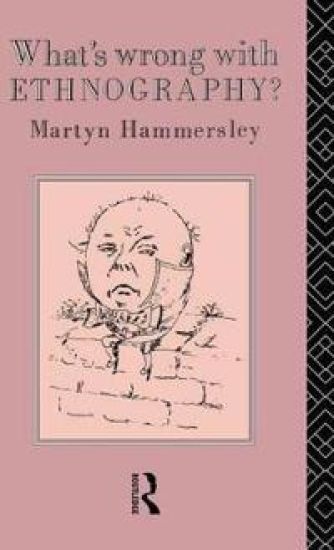
What's Wrong With Ethnography?

What's Wrong With Ethnography?

Martyn Hammersley

Routledge
2015
sidottu
This stimulating and refreshing study, written by one of the leading commentators in the field, provides novel answers to these crucial questions. "What's Wrong With Ethnography provides a fresh look at the rationale for and distinctiveness of ethnographic research in sociology, education and related fields, and succeeds in slaying a number of currently fashionable sacred cows. Relativism, critical theory, the uniqueness of the case study and the distinction between qualitative and quantitative research are all examined and found wanting as a basis for informed ethnography. The policy and political implications of ethnography are a particular focus of attention. The author compels the reader to reexamine some basic methodological assumptions in an exciting way", Martin Bulmer, London School of Economics.
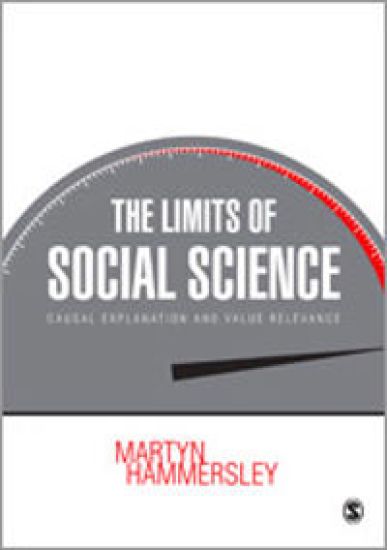
The Limits of Social Science

The Limits of Social Science

Martyn Hammersley

SAGE Publications Ltd
2014
sidottu
What forms of knowledge can social science claim to produce? Does it employ causal analysis, and if so what does this entail? What role should values play in the work of social scientists? These are the questions addressed in this book. They are closely interrelated, and the answers offered here challenge many currently prevailing assumptions. They carry implications both for research practice, quantitative or qualitative, and for the public claims that social scientists make about the value of their work. The arguments underpinning this challenge to conventional wisdom are laid out in detail in the first half of the book. In later chapters their implications are explored for two substantive areas of intrinsic importance: the study of social mobility and educational inequalities; and explanations for urban riots, notably those that took place in London and other English cities in the summer of 2011.
The Limits of Social Science

The Limits of Social Science

Martyn Hammersley

SAGE Publications Ltd
2014
nidottu
What forms of knowledge can social science claim to produce? Does it employ causal analysis, and if so what does this entail? What role should values play in the work of social scientists? These are the questions addressed in this book. They are closely interrelated, and the answers offered here challenge many currently prevailing assumptions. They carry implications both for research practice, quantitative or qualitative, and for the public claims that social scientists make about the value of their work. The arguments underpinning this challenge to conventional wisdom are laid out in detail in the first half of the book. In later chapters their implications are explored for two substantive areas of intrinsic importance: the study of social mobility and educational inequalities; and explanations for urban riots, notably those that took place in London and other English cities in the summer of 2011.
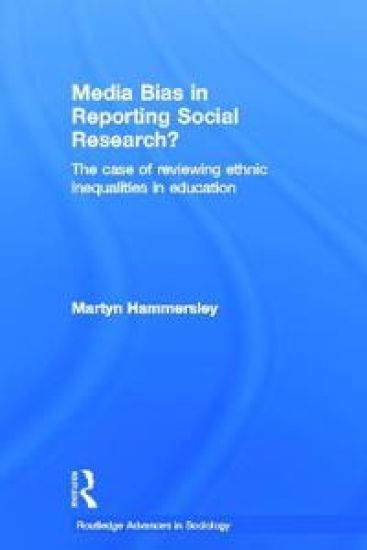
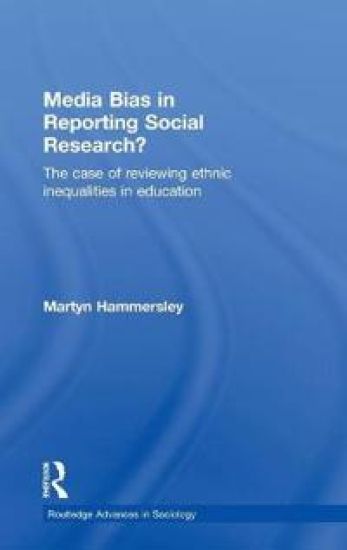
Media Bias in Reporting Social Research?

Media Bias in Reporting Social Research?

Martyn Hammersley

Routledge
2013
nidottu
In recent years, the importance of disseminating the findings of social research has been given increased emphasis. The most effective way in which this can be done is via the mass media. However, there are frequent complaints that media coverage of social and educational research is very limited and often distorted. Through a detailed analysis of a particular case about ethnic inequalities in educational achievement, this book examines some of the processes involved in the reporting of research findings, and their implications for judgements about media distortion and bias. This volume is relevant to many fields, including education, media studies, cultural studies, sociology and social policy.
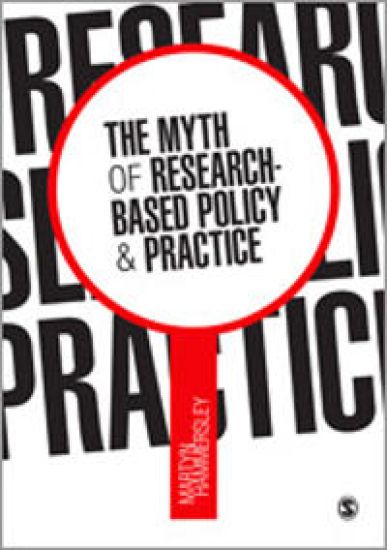
The Myth of Research-Based Policy and Practice

The Myth of Research-Based Policy and Practice

Martyn Hammersley

SAGE Publications Ltd
2013
sidottu
Martyn Hammersley's provocative new text interrogates the complex relationship between research, policymaking and practice, against the background of the evidence-based practice movement. Addressing a series of probing questions, this book reflects on the challenge posed by the idea that social research can directly serve policymaking and practice. Key questions explored include: - Is scientific research evidence-based? - What counts as evidence for evidence-based practice? - Is social measurement possible, and is it necessary? - What are the criteria by which qualitative research should be judged? The book also discusses the case for action research, the nature of systematic reviews, proposals for interpretive reviews, and the process of qualitative synthesis. Highly readable and undeniably relevant, this book is a valuable resource for both academics and professionals involved with research.
The Myth of Research-Based Policy and Practice

The Myth of Research-Based Policy and Practice

Martyn Hammersley

SAGE Publications Ltd
2013
nidottu
Martyn Hammersley's provocative new text interrogates the complex relationship between research, policymaking and practice, against the background of the evidence-based practice movement. Addressing a series of probing questions, this book reflects on the challenge posed by the idea that social research can directly serve policymaking and practice. Key questions explored include: - Is scientific research evidence-based? - What counts as evidence for evidence-based practice? - Is social measurement possible, and is it necessary? - What are the criteria by which qualitative research should be judged? The book also discusses the case for action research, the nature of systematic reviews, proposals for interpretive reviews, and the process of qualitative synthesis. Highly readable and undeniably relevant, this book is a valuable resource for both academics and professionals involved with research.
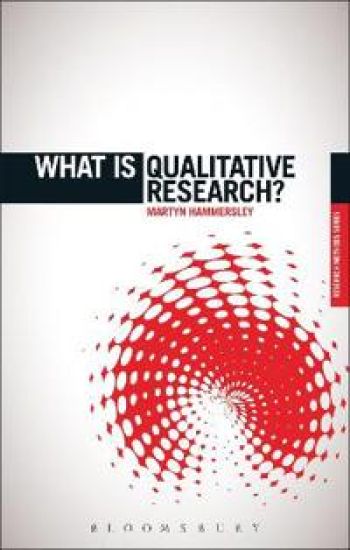
What is Qualitative Research?

What is Qualitative Research?

Martyn Hammersley

Bloomsbury Academic
2012
sidottu
This book is available as open access through the Bloomsbury Open Access programme and is available on www.bloomsburycollections.com.This book invites readers to explore the nature of qualitative research, and to recognise the varied and conflicting forms it can take. It examines how these contrast with quantitative work, as well as how they differ from journalism and imaginative literature. The book describes various methodological philosophies that have shaped qualitative work, as well as different types of orientation to be found within it today. It offers clear definitions of key terms and concepts, and also a detailed exploration of recent disputes among qualitative researchers, with a view to showing how differences in practice relate to underlying commitments. This book will be a vital resource for both new and experienced researchers.
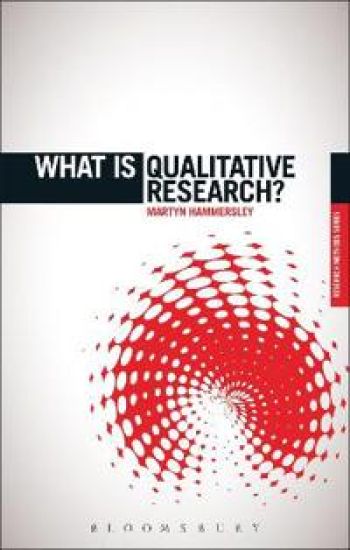
What is Qualitative Research?

What is Qualitative Research?

Martyn Hammersley

Bloomsbury Academic
2012
nidottu
This book is available as open access through the Bloomsbury Open Access programme and is available on www.bloomsburycollections.com.This book invites readers to explore the nature of qualitative research, and to recognise the varied and conflicting forms it can take. It examines how these contrast with quantitative work, as well as how they differ from journalism and imaginative literature. The book describes various methodological philosophies that have shaped qualitative work, as well as different types of orientation to be found within it today. It offers clear definitions of key terms and concepts, and also a detailed exploration of recent disputes among qualitative researchers, with a view to showing how differences in practice relate to underlying commitments. This book will be a vital resource for both new and experienced researchers.
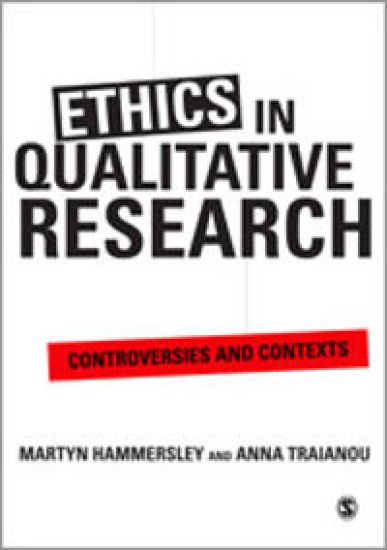
Ethics in Qualitative Research

Ethics in Qualitative Research

Martyn Hammersley; Anna Traianou

SAGE Publications Ltd
2012
nidottu
All social researchers need to think about ethical issues. Their salience has recently been increased by the pressures of ethical regulation, particularly in the case of qualitative research. But what are ethical issues? And how should they be approached? These are not matters about which there is agreement. Ethics in Qualitative Research explores conflicting philosophical assumptions, the diverse social contexts in which ethical problems arise, and the complexities of handling them in practice. The authors argue that the starting point for any discussion of research ethics must be the values intrinsic to research, above all the commitment to knowledge-production. However, the pursuit of inquiry is rightly constrained by external values, and the book focuses on three of these: minimising harm, respecting autonomy, and protecting privacy. These external values are shown to be far from unequivocal in character, often in conflict with one another (or with the commitments of research), and always subject to situational interpretation and practical judgment. Nevertheless, it is contended that in the present challenging times it is essential that qualitative researchers uphold research values. Martyn Hammersley is Professor of Educational and Social Research at The Open University. Anna Traianou is Senior Lecturer in the Department of Educational Studies, Goldsmiths, University of London.
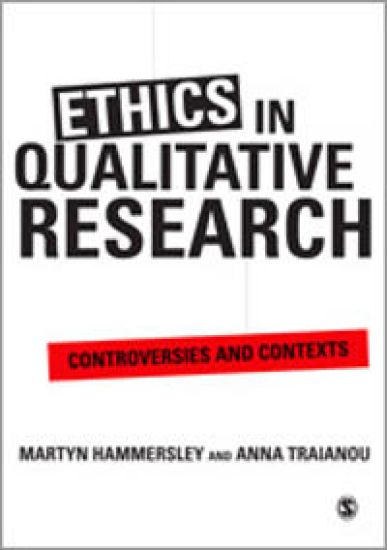
Ethics in Qualitative Research

Ethics in Qualitative Research

Martyn Hammersley; Anna Traianou

SAGE Publications Ltd
2012
sidottu
All social researchers need to think about ethical issues. Their salience has recently been increased by the pressures of ethical regulation, particularly in the case of qualitative research. But what are ethical issues? And how should they be approached? These are not matters about which there is agreement. Ethics in Qualitative Research explores conflicting philosophical assumptions, the diverse social contexts in which ethical problems arise, and the complexities of handling them in practice. The authors argue that the starting point for any discussion of research ethics must be the values intrinsic to research, above all the commitment to knowledge-production. However, the pursuit of inquiry is rightly constrained by external values, and the book focuses on three of these: minimising harm, respecting autonomy, and protecting privacy. These external values are shown to be far from unequivocal in character, often in conflict with one another (or with the commitments of research), and always subject to situational interpretation and practical judgment. Nevertheless, it is contended that in the present challenging times it is essential that qualitative researchers uphold research values. Martyn Hammersley is Professor of Educational and Social Research at The Open University. Anna Traianou is Senior Lecturer in the Department of Educational Studies, Goldsmiths, University of London.
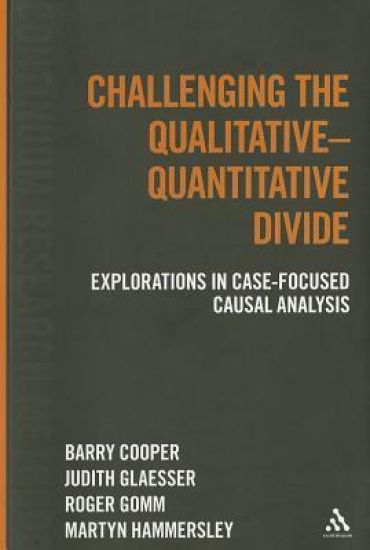
Challenging the Qualitative-Quantitative Divide

Challenging the Qualitative-Quantitative Divide

Barry Cooper; Judith Glaesser; Roger Gomm; Martyn Hammersley
Continuum Publishing Corporation
2012
sidottu
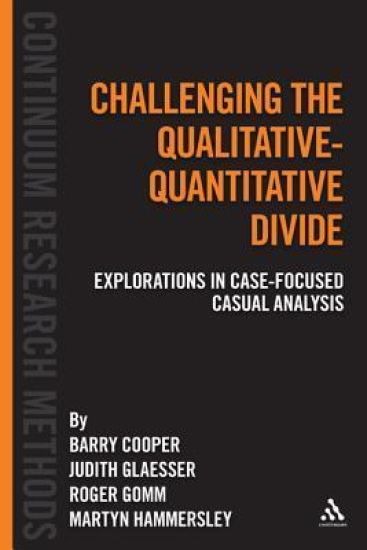
This title offers an exploration of case-focused methods as a means of bridging the quantitative-qualitative divide and the key methodological issues. This book challenges the divide between qualitative and quantitative approaches that is now institutionalized within social science. Rather than suggesting the 'mixing' of methods, "Challenging the Qualitative-Quantitative Divide" provides a thorough interrogation of the arguments and practices characteristic of both sides of the divide, focusing on how well they address the common problems that all social research faces, particularly as regards causal analysis. The authors identify some fundamental weaknesses in both quantitative and qualitative approaches, and explore whether case-focused analysis - for instance, in the form of Qualitative Comparative Analysis, Analytic Induction, Grounded Theorising, or Cluster Analysis - can bridge the gap between the two sides.
Challenging the Qualitative-Quantitative Divide

Challenging the Qualitative-Quantitative Divide

Barry Cooper; Judith Glaesser; Roger Gomm; Martyn Hammersley
Continuum Publishing Corporation
2012
nidottu
This book offers an exploration of case-focused methods as a means of bridging the quantitative-qualitative divide and the key methodological issues. This book challenges the divide between qualitative and quantitative approaches that is now institutionalized within social science. Rather than suggesting the 'mixing' of methods, "Challenging the Qualitative-Quantitative Divide" provides a thorough interrogation of the arguments and practices characteristic of both sides of the divide, focusing on how well they address the common problems that all social research faces, particularly as regards causal analysis. The authors identify some fundamental weaknesses in both quantitative and qualitative approaches, and explore whether case-focused analysis - for instance, in the form of Qualitative Comparative Analysis, Analytic Induction, Grounded Theorising, or Cluster Analysis - can bridge the gap between the two sides.
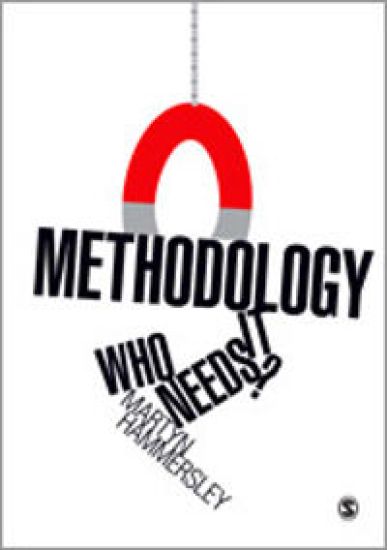
Methodology: Who Needs It?

Methodology: Who Needs It?

Martyn Hammersley

SAGE Publications Ltd
2010
nidottu
The literature on social science methods and the issues surrounding them has grown massively and continues to increase. Yet many social scientists are ambivalent about methodology. For some, it plays a central, perhaps even an all-encompassing, role; while, for others, it is desirable only in small amounts, or indeed is regarded as an irrelevance, as a distraction from actually doing research. In this book, Hammersley argues that, in large part, this reflects and is part of a wider problem: the gradual decline of a previously influential academic model of inquiry. This has occurred as a result of ideological challenges and the erosion of the institutional conditions that support academic work. He defends this model, spelling out the demands it places upon social scientists, and examining such issues as the proper role of methodology, the nature of objectivity, the false idea that social scientists should be intellectuals or social critics, the dialectic of academic discussion, the ethics of belief, and the limits of academic freedom. More broadly, he also questions the role of the social research within society and what it means to be a social scientist in the 21st century. Hammersley's book is engagingly written and controversial. It tackles the major issues of contemporary social research methodology head on and is an essential read for anyone with an interest in this field.
Methodology: Who Needs It?

Methodology: Who Needs It?

Martyn Hammersley

SAGE Publications Ltd
2010
sidottu
The literature on social science methods and the issues surrounding them has grown massively and continues to increase. Yet many social scientists are ambivalent about methodology. For some, it plays a central, perhaps even an all-encompassing, role; while, for others, it is desirable only in small amounts, or indeed is regarded as an irrelevance, as a distraction from actually doing research. In this book, Hammersley argues that, in large part, this reflects and is part of a wider problem: the gradual decline of a previously influential academic model of inquiry. This has occurred as a result of ideological challenges and the erosion of the institutional conditions that support academic work. He defends this model, spelling out the demands it places upon social scientists, and examining such issues as the proper role of methodology, the nature of objectivity, the false idea that social scientists should be intellectuals or social critics, the dialectic of academic discussion, the ethics of belief, and the limits of academic freedom. More broadly, he also questions the role of the social research within society and what it means to be a social scientist in the 21st century. Hammersley's book is engagingly written and controversial. It tackles the major issues of contemporary social research methodology head on and is an essential read for anyone with an interest in this field.
Questioning Qualitative Inquiry

Questioning Qualitative Inquiry

Martyn Hammersley

SAGE Publications Inc
2008
sidottu
Is qualitative research in crisis? In Questioning Qualitative Inquiry Martyn Hammersley raises fundamental questions about the current state of qualitative social research. He examines some of the changes that have taken place within it over the past fifty years, suggesting that the move away from natural science as a model, and towards an appeal to literature and art, involves rejection of key principles that are essential to research of any kind. Hammersley argues that, in important respects, qualitative inquiry has not lived up to the claims originally made on its behalf, and that more recent developments have worsened the situation. Insufficient attention has been given to the problems surrounding leading ideas like thick description, analytic induction, and constructionism. The argument is pursued through discussion of the work of influential writers - such as Clifford, Geertz, Denzin and Lincoln - and by detailed examination of concrete issues, like the value of interview data, the rationales for discourse and conversation analysis, the role of rhetoric in research reports, and the nature of assessment criteria. At a time when qualitative inquiry is coming under renewed challenge in some quarters, the task of addressing the methodological problems it faces has become urgent. These essays on current developments and debates are essential reading for anyone interested in the future of qualitative research.
Questioning Qualitative Inquiry

Questioning Qualitative Inquiry

Martyn Hammersley

SAGE Publications Inc
2008
nidottu
Is qualitative research in crisis? In Questioning Qualitative Inquiry Martyn Hammersley raises fundamental questions about the current state of qualitative social research. He examines some of the changes that have taken place within it over the past fifty years, suggesting that the move away from natural science as a model, and towards an appeal to literature and art, involves rejection of key principles that are essential to research of any kind. Hammersley argues that, in important respects, qualitative inquiry has not lived up to the claims originally made on its behalf, and that more recent developments have worsened the situation. Insufficient attention has been given to the problems surrounding leading ideas like thick description, analytic induction, and constructionism. The argument is pursued through discussion of the work of influential writers - such as Clifford, Geertz, Denzin and Lincoln - and by detailed examination of concrete issues, like the value of interview data, the rationales for discourse and conversation analysis, the role of rhetoric in research reports, and the nature of assessment criteria. At a time when qualitative inquiry is coming under renewed challenge in some quarters, the task of addressing the methodological problems it faces has become urgent. These essays on current developments and debates are essential reading for anyone interested in the future of qualitative research.
Media Bias in Reporting Social Research?

Media Bias in Reporting Social Research?

Martyn Hammersley

Routledge
2006
sidottu
In recent years, the importance of disseminating the findings of social research has been given increased emphasis. The most effective way in which this can be done is via the mass media. However, there are frequent complaints that media coverage of social and educational research is very limited and often distorted. Through a detailed analysis of a particular case about ethnic inequalities in educational achievement, this book examines some of the processes involved in the reporting of research findings, and their implications for judgements about media distortion and bias. This volume is relevant to many fields, including education, media studies, cultural studies, sociology and social policy.
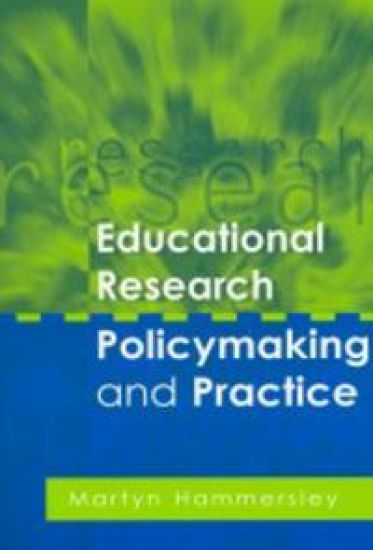
Educational Research, Policymaking and Practice

Educational Research, Policymaking and Practice

Martyn Hammersley

SAGE Publications Inc
2002
nidottu
`This valuable book addresses an important current issues for education research in developed countries - the relationship between research on the one hand and policy-making and education practice on the other' - Stephen Gorard, Cardiff University, British Journal of Education Studies `Martyn Hammersley has produced a remarkably complete analysis of the strengths and weaknesses of educational research. I believe the analysis to be fair to all parties' - Lewis Elton, British Journal of Educational Technology Educational research and its relationship with policy making and practice has been a perennial concern. This book deals with some basic and controversial questions about that issue, including: - Can there be harmony in the relationship between researchers and educational policymakers or practitioners? - Do increases in knowledge always lead to practical improvement, and never to undesirable consequences? - Would educational research flourish if it were subjected to more central, and external, control? - What is the role of research reviews in making the results of research publicly available? Educational Research maps the demands now being made on educational research against the background complexities of the relationship between research and practice. This book is for students on methodology courses, taught courses and research degrees in education, social science disciplines, social policy and health studies both at masters and doctoral level.
Educational Research, Policymaking and Practice

Educational Research, Policymaking and Practice

Martyn Hammersley

SAGE Publications Inc
2002
sidottu
`This valuable book addresses an important current issues for education research in developed countries - the relationship between research on the one hand and policy-making and education practice on the other' - Stephen Gorard, Cardiff University, British Journal of Education Studies `Martyn Hammersley has produced a remarkably complete analysis of the strengths and weaknesses of educational research. I believe the analysis to be fair to all parties' - Lewis Elton, British Journal of Educational Technology Educational research and its relationship with policy making and practice has been a perennial concern. This book deals with some basic and controversial questions about that issue, including: - Can there be harmony in the relationship between researchers and educational policymakers or practitioners? - Do increases in knowledge always lead to practical improvement, and never to undesirable consequences? - Would educational research flourish if it were subjected to more central, and external, control? - What is the role of research reviews in making the results of research publicly available? Educational Research maps the demands now being made on educational research against the background complexities of the relationship between research and practice. This book is for students on methodology courses, taught courses and research degrees in education, social science disciplines, social policy and health studies both at masters and doctoral level.