Kirjojen hintavertailu. Mukana 12 595 353 kirjaa ja 12 kauppaa.

Kirjailija

Matsuo Basho

Kirjat ja teokset yhdessä paikassa: 37 kirjaa, julkaisuja vuosilta 1985-2026, suosituimpien joukossa Haikumagasinet 6-7. Vertaile teosten hintoja ja tarkista saatavuus suomalaisista kirjakaupoista.

Mukana myös kirjoitusasut: Matsuo Bashö, Matsuo Bashô, Matsuo Bashō

37 kirjaa

Kirjojen julkaisuhaarukka 1985-2026.

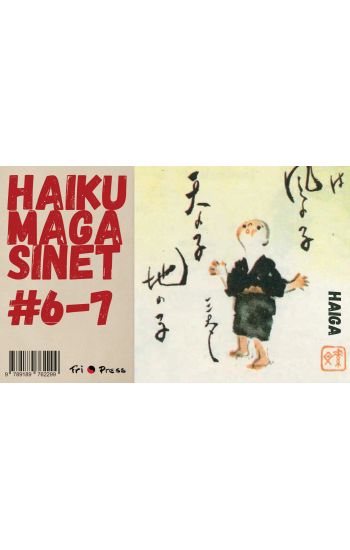
Haikumagasinet 6-7

Haikumagasinet 6-7

Bo Ranman; Birk Andersson; Matsuo Basho; Bengt O Björklund; Yosa Buson; Fukuda Chiyo-ni; Michael Economou; Eric Fylkeson; Kobayashi Issa; Hajime Kawakimi; Jack Kerouac; Christer Nilsson; Otomo No Oemaru; Kerstin Park; Dag Persson; Beatriz Quevedo de Hansen; Håkan Sandell; Masaoka Shiki; Nagai Tatsuo; Yasuhara Teishitsu; Teresa Wennberg

Fri Press Fridens höjd
2024
nidottu
Haiku-dikter tillsammans med bilder kallas enligt den japanska traditionen för ”Haiga”. Dikterna i Haikumagasinet är skrivna av både japanska mästare – som levde för flera hundra år sedan – och samtida poeter. Dikterna tolkas fritt till bilder av konstnärer, professionella tecknare, studenter och de som målar vid sidan om.MEDARBETAREPoeter Bo Ranman Birk Andersson Matsuo Basho Bengt O Björklund Yosa Buson Fukuda Chiyo-ni Michael Economou Eric Fylkeson Kobayashi Issa Hajime Kawakimi Jack Kerouac Christer Nilsson Otomo No Oemaru Kerstin Park Dag Persson Beatriz Quevedo de Hansen Håkan Sandell Masaoka Shiki Nagai Tatsuo Yasuhara Teishitsu Teresa WennbergIllustratör Jonas Amnerå Anders Blomdahl Lousiana Chin Cheung Dan Faleh Irja Hulterström Ellen Kroon Isabella Karlsson Anna Landgren Joakim Larsson Wilda Levhed Michaela Linderoth Ulf Lundkvist Sara Lundstedt Martin Medin Santaro Sobun Takawaki Kathleen Tandrup Anna WiikFormgivare Sara Lundstedt Se mer om Haikumagasinet på www.fripress.se
Haikumagasinet 4

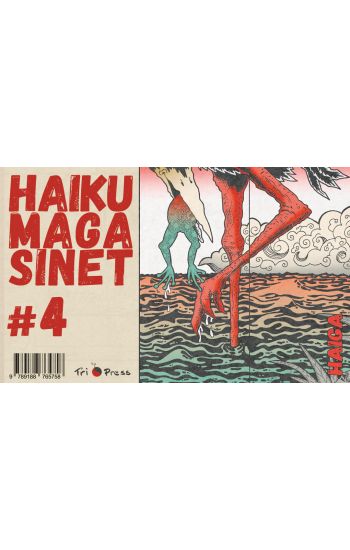
Haikumagasinet 4

Bo Ranman; Dag Persson; Matsuo Basho; Yosa Buson; Fukuda Chiyo-ni; Lars Granström; Ola Lindberg; Masaoka Shiki; Peter Svensson; Teresa Wennberg; Irja Hulterström; Rebecka Högild

Fri Press Fridens höjd
2022
nidottu
Haiku-dikter tillsammans med bilder kallas enligt den japanska traditionen för ”Haiga”. Dikterna i Haikumagasinet är skrivna av både japanska mästare som levde för flera hundra år sedan – och samtida poeter. De tolkas fritt till bilder av konstnärer, professionella tecknare, studenter och de som målar vid sidan om.Haikumagasinet sammanför alltså inte bara text och bild, utan även gammalt och nytt, öst och väst. Det är en unik publikation som för första gången kan publicera Haiga ur ett lekfullt, svenskt och modernt perspektiv.Läs mer på www.fripress.se
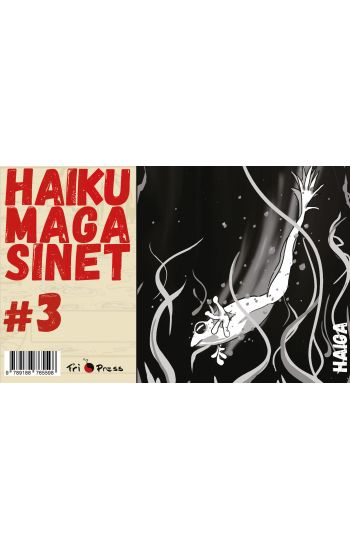
Haikumagasinet 3

Haikumagasinet 3

Bo Ranman; Dag Persson; Fukuda Chiyo-ni; Matsuo Basho; Ola Lindberg; Anna Maris; Arakida Moritake; Kerstin Park; Yamaguchi Sodo; Peter Svensson; Sten Svensson; Teresa Wennberg; Anna Wiik; Nora Zolotov

Fri Press Fridens höjd
2021
nidottu
I Haikumagasinet #3 har elva aktiva illustratörer bidragit med illustrationer och var och en har sin stil och tolkning av poesin. Poeterna är allt ifrån flera hundra år gamla japanska mästare till nutida svenska poeter med haiku som gemensam nämnare. Med bokens lilla format berör illustrationerna på ett alldeles särskilt sätt. Liksom haikun i sig är haikumagasinet till synes enkelt men öppnar en värld av förnimmelser, tankar och emotioner. Tiden som illustratörerna har ägnat åt att bearbeta diktens korta rader förmedlas till den mottagliga läsaren. Läs mer på www.fripress.se
The Narrow Road

The Narrow Road

Matsuo Basho

NEW DIRECTIONS PUBLISHING CORPORATION
2026
nidottu
In the spring of 1689, Basho set off from Tokyo on a now-famous pilgrimage: this epic walk, spanning about 1500 miles, took him to the deep north of Honshu, and then back along the island's western coast and finally down to Lake Biwa. Along his route he encountered friends and fellow travelers, the changing seasons and terrains, renowned sites (temples, waterfalls, landmarks), a few perils, and many enthralling moments of total peace, delight, beauty, and introspection. Basho--Zen Buddhist, ardent walker, master of the haiku--follows the calling of the road, finding incredible joy in his freedom and drinking in brief glimmers of transient perfection.
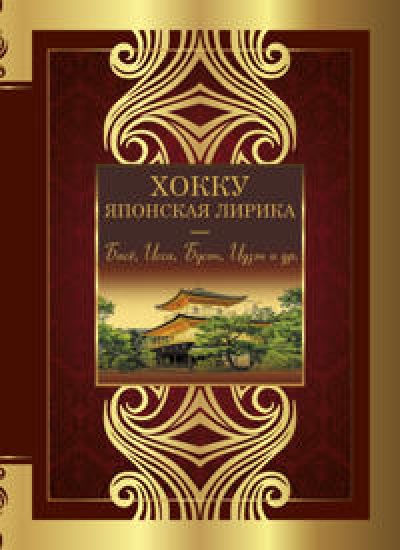
Khokku. Sobranie sochinenij

Khokku. Sobranie sochinenij

Matsuo Bashö; Yosa Buson

Ast
2025
sidottu
Japonskie liricheskie stikhotvorenija khokku (khajku) otlichajutsja predelnoj lakonichnostju i osoboj poetikoj. V neskolkikh slogakh oni otrazhajut zhizn prirody i cheloveka v ikh nerastorzhimom edinstve na fone vechnogo krugovorota vremen goda. Etu poeziju nevozmozhno postich srazu: japonskoe ponjatie "poslechuvstvovanie" peredaet ee suschnost - tikhij otzvuk, kotoryj dolgo zhivet v serdtse, rozhdennyj slovom. Odno iz glavnykh svojstv khokku - sposobnost probuzhdat voobrazhenie, i takie mastera, kak Basjo, Buson i Issa, po-prezhnemu vyzyvajut u nas tikhoe voskhischenie i zhivoj otklik.V perevode poeta, filologa i literaturoveda Very Markovoj eti unikalnye miniatjury obretajut novuju zhizn. Ee rabota prevraschaet lakonichnye khokku v aforistichnye verlibry, plavno perekhodjaschie v belye stikhi, sokhranjaja tonkost obrazov i filosofskuju glubinu originalov.Illjustratsii Igorja Sakurova pridajut sborniku osoboe ocharovanie: graficheskie i tsvetnye raboty khudozhnika pogruzhajut chitatelja v atmosferu japonskoj estetiki, gde kazhdoe izobrazhenie - prodolzhenie poeticheskoj stroki.Eta kniga - priglashenie k sozertsaniju i razmyshleniju, k otkrytiju mira, gde slovo, linija i tishina zvuchat v sovershennoj garmonii.
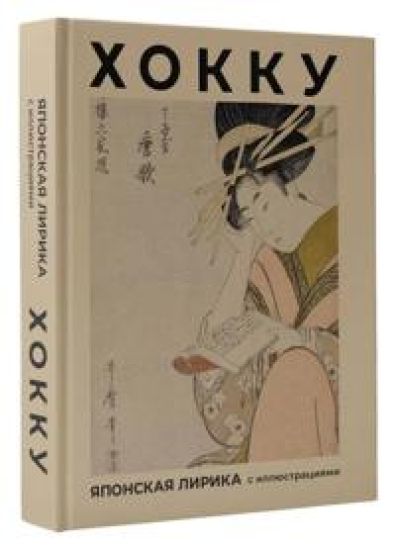
Khokku. Japonskaja lirika s illjustratsijami

Khokku. Japonskaja lirika s illjustratsijami

Yosa Buson; Kobayashi Issa; Matsuo Bashö

Ast
2025
sidottu
Japonskie liricheskie stikhotvorenija khokku (khajku) otlichajutsja predelnoj lakonichnostju i svoeobraznoj poetikoj, otobrazhaja svoim slogom zhizn prirody i cheloveka v ikh slitnom, nerastorzhimom edinstve na fone krugovorota vremen goda. Japonskuju liriku v polnoj mere otobrazhaet termin "poslechuvstvovanie" - ved daleko ne srazu zatikhaet glubokij otzvuk, rozhdennyj slovom. Sposobnost budit voobrazhenie - odno iz glavnykh svojstv japonskoj poezii. Takie mastera, kak Basjo, Buson i Issa, - lish nemnogie iz tekh, chi stikhi po-prezhnemu sposobny budorazhit nashi chuvstva. V perevode poeta, filologa i literaturoveda Very Nikolaevny Markovoj unikalnye japonskie poeticheskie miniatjury prevraschajutsja v aforistichnye verlibry, perekhodjaschie v belye stikhi.Perevodchik: Markova Vera Nikolaevna
Khokku. Japonskaja lirika

Khokku. Japonskaja lirika

Matsuo Bashö

Ast
2024
sidottu
Japonskie liricheskie stikhotvorenija khokku (khajku) otlichajutsja predelnoj lakonichnostju i svoeobraznoj poetikoj, otobrazhaja svoim slogom zhizn prirody i cheloveka v ikh slitnom, nerastorzhimom edinstve na fone krugovorota vremen goda. Japonskuju liriku v polnoj mere otobrazhaet termin "poslechuvstvovanie" - ved daleko ne srazu zatikhaet glubokij otzvuk, rozhdennyj slovom. Sposobnost budit voobrazhenie - odno iz glavnykh svojstv japonskoj poezii. Takie mastera, kak Basjo, Buson i Issa, - lish nemnogie iz tekh, chi stikhi po-prezhnemu sposobny budorazhit nashi chuvstva.V perevode poeta, filologa i literaturoveda Very Nikolaevny Markovoj unikalnye japonskie poeticheskie miniatjury prevraschajutsja v aforistichnye verlibry, perekhodjaschie v belye stikhi.
Vo tme bezlunnoj nochi

Vo tme bezlunnoj nochi

Matsuo Bashö

Ast
2022
sidottu
V etot sbornik voshli raboty Matsuo Basjo raznykh let, sposobnye pomoch chitatelju sostavit jasnoe i chetkoe predstavlenie o stilistike cheloveka, fakticheski lichno sozdavshego zhanr, kotoromu predstojalo stat (i naveki ostatsja) svoeobraznym simvolom japonskoj poezii, - khajku.Khajku, kotoroe do nego bylo chisto narodnym, komicheskim, sochno-grubovatym stikhotvornym zhanrom - i kotoroe on prevratil v sverkajusche-ottochennuju, idealno chetkuju v tekhnicheskom otnoshenii poeticheskuju formu, v kotoroj pejzazhnaja i filosofskaja lirika slivajutsja v nechto edinoe - tak, chto kartiny prirody stanovjatsja svoeobraznoj illjustratsiej dlja filosofskoj mysli.Poezija Basjo prosta i v to zhe vremja slozhna, polna tonchajshikh assotsiatsij, izjaschnykh obrazov i pochti intuitivnykh dlja ponimanija namekov, garmonichna i preispolnena chisto dzen-buddistskoj glubiny mysli - slovom, ona otnositsja k velichajshim literaturnym shedevram chelovechestva, nepodvlastnym khodu vremeni.
Maloe sobranie sochinenij

Maloe sobranie sochinenij

Matsuo Bashö

Azbooka
2022
sidottu
Velikij japonskij poet Matsuo Basjo spravedlivo schitaetsja sozdatelem populjarnogo nyne na ves mir poeticheskogo zhanra khajku. Ego usilijami trekhstishija iz chisto igrovoj, polushutochnoj poezii postepenno prevratilis v vysokoe poeticheskoe iskusstvo, proniknutoe dukhom dzen-buddijskoj filosofii. Tvorchestvo Basjo tak mnogogranno, chto ego trudno svesti k odnomu znamenatelju. V nastojaschee izdanie voshli proizvedenija, predstavljajuschie raznye storony ego udivitelnogo talanta: mnogochislennye stikhotvorenija, putevye dnevniki i prozaicheskie nabroski.
Vo tme bezlunnoj nochi

Vo tme bezlunnoj nochi

Matsuo Bashö

Ast
2022
nidottu
V etot sbornik voshli raboty Matsuo Basjo raznykh let, sposobnye pomoch chitatelju sostavit jasnoe i chetkoe predstavlenie o stilistike cheloveka, fakticheski lichno sozdavshego zhanr, kotoromu predstojalo stat (i naveki ostatsja) svoeobraznym simvolom japonskoj poezii, - khajku.Khajku, kotoroe do nego bylo chisto narodnym, komicheskim, sochno-grubovatym stikhotvornym zhanrom - i kotoroe on prevratil v sverkajusche-ottochennuju, idealno chetkuju v tekhnicheskom otnoshenii poeticheskuju formu, v kotoroj pejzazhnaja i filosofskaja lirika slivajutsja v nechto edinoe - tak, chto kartiny prirody stanovjatsja svoeobraznoj illjustratsiej dlja filosofskoj mysli.Poezija Basjo prosta i v to zhe vremja slozhna, polna tonchajshikh assotsiatsij, izjaschnykh obrazov i pochti intuitivnykh dlja ponimanija namekov, garmonichna i preispolnena chisto dzen-buddistskoj glubiny mysli - slovom, ona otnositsja k velichajshim literaturnym shedevram chelovechestva, nepodvlastnym khodu vremeni.
Khokku. Japonskaja lirika. Plakuchej ivy ten...
Japonskie liricheskie stikhotvorenija khokku (khajku) otlichajutsja predelnoj lakonichnostju i svoeobraznoj poetikoj, otobrazhaja svoim slogom zhizn prirody i cheloveka v ikh slitnom, nerastorzhimom edinstve na fone krugovorota vremen goda. Japonskuju liriku v polnoj mere otobrazhaet termin "poslechuvstvovanie" - ved daleko ne srazu zatikhaet glubokij otzvuk, rozhdennyj slovom. Sposobnost budit voobrazhenie - odno iz glavnykh svojstv japonskoj poezii. Takie mastera, kak Basjo, Buson i Issa, - lish nemnogie iz tekh, chi stikhi po-prezhnemu sposobny budorazhit nashi chuvstva.V perevode poeta, filologa i literaturoveda Very Nikolaevny Markovoj unikalnye japonskie poeticheskie miniatjury prevraschajutsja v aforistichnye verlibry, perekhodjaschie v belye stikhi.
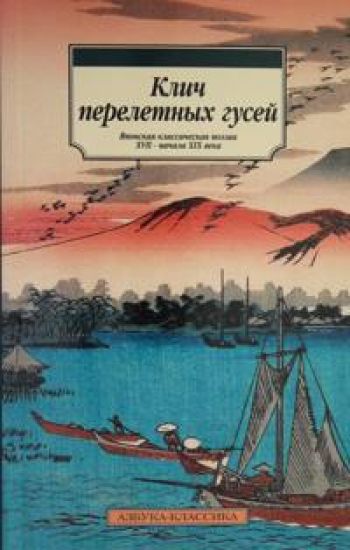
Klich pereletnykh gusej. Japonskaja klassicheskaja poezija XVII - nachala XIX veka
V antologiju, podgotovlennuju izvestnym vostokovedom i perevodchikom japonskoj poezii Aleksandrom Dolinym, vkljucheny klassicheskie proizvedenija znamenitykh poetov XVII - nachala XIX v., takikh kak Matsuo Basjo, Josa-no Buson, Kobajasi Issa, Ikhara Sajkaku, Kamo Mabuti, Odzava Roan, Rjokan, Okuma Kotomiti, Raj Sanjo i mnogikh drugikh, chi stikhi voshli v zolotoj fond japonskoj i mirovoj literatury, a takzhe koloritnye obraztsy jumoristicheskoj poezii i folklora "veselykh kvartalov"..Kniga vossozdaet istoricheskuju panoramu japonskoj poezii epokhi Edo vo vsem ee zhanrovo-stilisticheskom raznoobrazii i znakomit chitatelja s novymi imenami, ranee neizvestnymi v nashej strane. Izdanie snabzheno vstupitelnoj statej i primechanijami.Perevodchik: Dolin Aleksandr
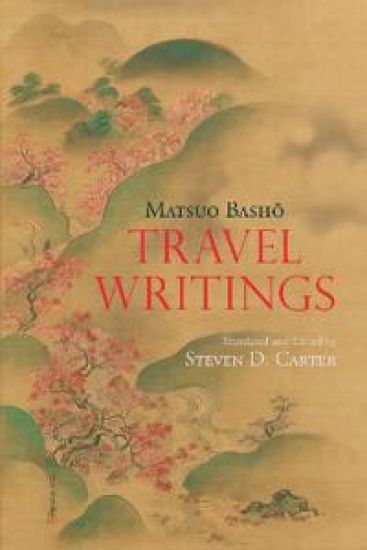
Travel Writings

Travel Writings

Matsuo Basho

Hackett Publishing Co, Inc
2020
sidottu
"The travel writings of Matsuo Basho are of enormous literary importance, and so it is a joy to see them collected in this compact volume, in translations of exemplary elegance, faithfulness, and accessibility. The annotations are especially valuable: they show a solid grasp of the author’s life, work, and times, and provide rich and detailed background information about allusions to Chinese and Japanese classics. Along with the high quality of the translations themselves, this thorough commentary makes the book a significant scholarly resource and will help readers appreciate the density and delicacy of Basho’s writing. A very welcome addition to the English-language literature on one of the central poets of the Japanese tradition." —David B. Lurie, Columbia University
Travel Writings

Travel Writings

Matsuo Basho

Hackett Publishing Co, Inc
2020
nidottu
"The travel writings of Matsuo Basho are of enormous literary importance, and so it is a joy to see them collected in this compact volume, in translations of exemplary elegance, faithfulness, and accessibility. The annotations are especially valuable: they show a solid grasp of the author’s life, work, and times, and provide rich and detailed background information about allusions to Chinese and Japanese classics. Along with the high quality of the translations themselves, this thorough commentary makes the book a significant scholarly resource and will help readers appreciate the density and delicacy of Basho’s writing. A very welcome addition to the English-language literature on one of the central poets of the Japanese tradition." —David B. Lurie, Columbia University
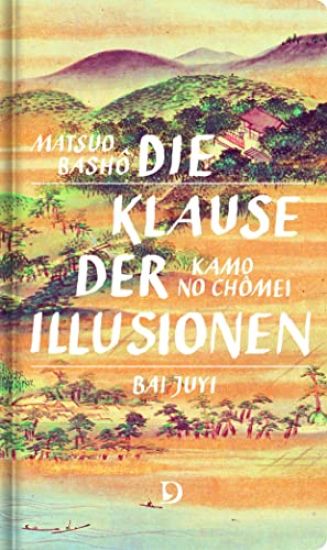
Narrow Road to the Interior & Hojoki

Narrow Road to the Interior & Hojoki

Matsuo Bashō; Kamo No Chōmei

Naxos
2020
mp3 cd-levyllä
Japanese poetry is known for its clarity and concision, and Narrow Road to the Interior and Hōjōki are two of the best loved and most intensely Japanese works of their kind; famous for their beautiful, delicate verse and subtle insight into the human condition.It has been said of Narrow Road that it was as if the very soul of Japan had itself written it. The poem takes the form of a travel diary and traces the poet's journey from Edo (modern day Tokyo) to the northern interior of the country.Hōjōki, a much earlier work written by Kamo no Chōmei, a Buddhist hermit, is essentially a meditation on the transience of the world. Read by the famous classical Japanese actor Togo Igawa, the full beauty of its ancient cadences and rhythms is drawn forth.
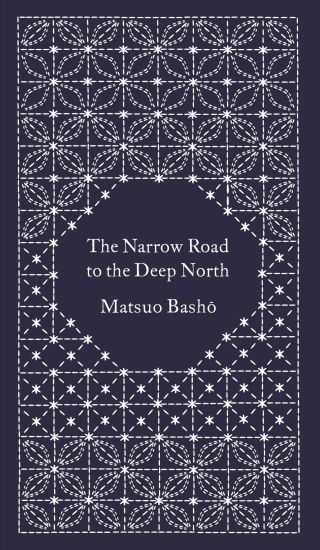
The Narrow Road to the Deep North and Other Travel Sketches
In his perfectly crafted haiku poems, Basho described the natural world with great simplicity and delicacy of feeling. When he composed The Narrow Road to the Deep North he was a serious student of Zen Buddhism setting off on a series of travels designed to strip away the trappings of the material world and bring spiritual enlightenment. He wrote of the seasons changing, of the smell of the rain, the brightness of the moon and the beauty of the waterfall, through which he sensed the mysteries of the universe. These travel writings not only chronicle Basho's perilous journeys through Japan, but also capture his vision of eternity in the transient world around him.
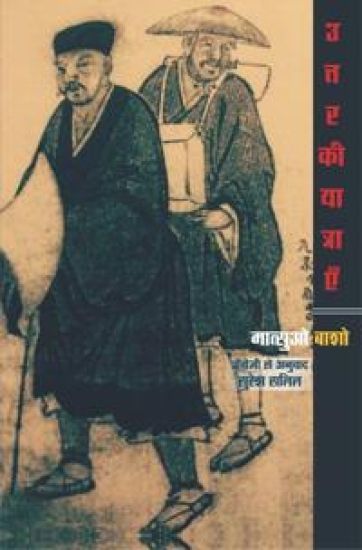
Uttar Ki Yatrayen

Uttar Ki Yatrayen

Matsuo Basho; Tr Suresh Salil

Rajkamal Prakashan Pvt. Ltd
2019
sidottu
जापानी महाकवि बाशो उन बिरले कवियों में से हैं जिनकी कविता का अनुवाद शायद संसार की हर छोटी-बड़ी भाषा में हुआ है। हाइकू नामक विधा का जि़क्र आते ही प्राय सभी रसिकों को जो पहला नाम याद आता है वह बाशो का है। बाशो जितने बड़े और अविराम कवि थे उतने ही अथक यात्री भी। उनका यह यात्रा-वृत्त अपने क़िस्म का अनोखा है। वरिष्ठ कवि सुरेश सलिल ने बहुत मनोयोग और कल्पनाशीलता से इसे अँग्रेज़ी से अनूदित किया है। उन्होंने बहुत जतन से यथास्थान सन्दर्भ के नोट्स भी दिये हैं जिनसे स्थानों, कवियों, राजवंशों आदि का पता भी होता चलता है। रज़ा पुस्तक माला में एक महाकवि का यात्रा-वृत्त बहुत अच्छे हिन्दी अनुवाद में प्रस्तुत करते हुए हमें प्रसन्नता है।' अशोक वाजपेयी.
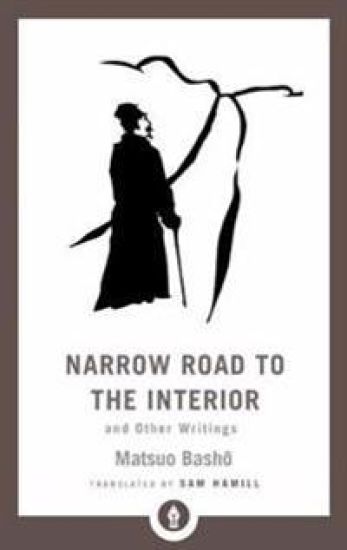
Narrow Road to the Interior

Narrow Road to the Interior

Matsuo Basho; Sam Hamill

Shambhala Publications Inc
2019
nidottu
A beautiful translation of one of the most-loved classics of Japanese literature. Here is the most complete single-volume collection of the writings of one of the great luminaries of Asian literature. Basho (1644-1694)--who elevated the haiku to an art form of utter simplicity and intense spiritual beauty--is best known in the West as the author of Narrow Road to the Interior, a travel diary of linked prose and haiku that recounts his journey through the far northern provinces of Japan. This volume includes a masterful translation of this celebrated work along with three other less well-known but important works by Basho: Travelogue of Weather-Beaten Bones, The Knapsack Notebook, and Sarashina Travelogue. There is also a selection of over two hundred and fifty of Basho's finest haiku. In addition, the translator has provided an introduction detailing Basho's life and work and an essay on the art of haiku.