Kirjailija
May Sinclair
Kirjat ja teokset yhdessä paikassa: 222 kirjaa, julkaisuja vuosilta 1980-2026, suosituimpien joukossa The Zaffre Book of Occult Fiction. Vertaile teosten hintoja ja tarkista saatavuus suomalaisista kirjakaupoista.
222 kirjaa
Kirjojen julkaisuhaarukka 1980-2026.
This work has been selected by scholars as being culturally important and is part of the knowledge base of civilization as we know it.This work is in the public domain in the United States of America, and possibly other nations. Within the United States, you may freely copy and distribute this work, as no entity (individual or corporate) has a copyright on the body of the work.Scholars believe, and we concur, that this work is important enough to be preserved, reproduced, and made generally available to the public. To ensure a quality reading experience, this work has been proofread and republished using a format that seamlessly blends the original graphical elements with text in an easy-to-read typeface.We appreciate your support of the preservation process, and thank you for being an important part of keeping this knowledge alive and relevant.
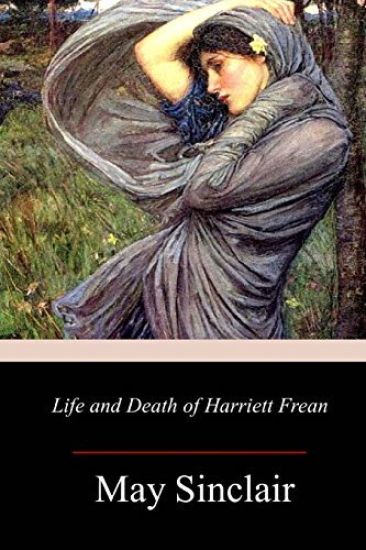
Life and Death of Harriett Frean
May Sinclair
Createspace Independent Publishing Platform
2017
nidottu
Life and Death of Harriett Frean By May Sinclair

The Divine Fire (1904). By: May Sinclair: Novel (Original Classics)
May Sinclair
Createspace Independent Publishing Platform
2017
nidottu
Did Horace "dare" take a risk on that poet Rickman? The poet dropped his aitches, for one thing. And there was the matter of that actress he doted on -- low-class Yet cousin Lucia kept asking about him . . . and Horace did think maybe, just maybe, Rickman was a genius. But could Horace introduce Rickman to his club? He yearned to -- and yet, as he told Lucia, "The burnt critic dreads the divine fire " In this witty 1904 novel of literary and social manners and foibles, May Sinclair demonstrates all the wit, perception and style that made her one of the most respected -- and most read -- novelists of her time. May Sinclair was the pseudonym of Mary Amelia St. Clair (24 August 1863 - 14 November 1946), a popular British writer who wrote about two dozen novels, short stories and poetry.She was an active suffragist, and member of the Woman Writers' Suffrage League. May Sinclair was also a significant critic in the area of modernist poetry and prose, and she is attributed with first using the term stream of consciousness in a literary context, when reviewing the first volumes of Dorothy Richardson's novel sequence Pilgrimage (1915-67), in The Egoist, April 1918. Early life: She was born in Rock Ferry, Cheshire. Her father was a Liverpool shipowner, who went bankrupt, became an alcoholic, and died before she was an adult. Her mother was strict and religious; the family moved to Ilford on the edge of London. After one year of education at Cheltenham Ladies College, she acted as caretaker for her brothers, as four of the five, all older, were suffering from a fatal congenital heart disease. Career: From 1896 she wrote professionally, to support herself and her mother, who died in 1901. An active feminist, Sinclair treated a number of themes relating to the position of women, and marriage. She also wrote non-fiction based on studies of philosophy, particularly German idealism. Her works sold well in the United States. Around 1913, at the Medico-Psychological Clinic in London, she became interested in psychoanalytic thought, and introduced matter related to Sigmund Freud's teaching in her novels.In 1914, she volunteered to join the Munro Ambulance Corps, a charitable organization (which included Lady Dorothie Feilding, Elsie Knocker and Mairi Chisholm) that aided wounded Belgian soldiers on the Western Front in Flanders. She was sent home after only a few weeks at the front; she wrote about the experience in both prose and poetry. She wrote early criticism on Imagism and the poet H. D. (1915 in The Egoist); she was on social terms with H. D. (Hilda Doolittle), Richard Aldington and Ezra Pound at the time. She also reviewed in a positive light the poetry of T. S. Eliot (1917 in the Little Review) and the fiction of Dorothy Richardson (1918 in The Egoist). It was in connection with Richardson that she introduced "stream of consciousness" as a literary term, which was very generally adopted. Some aspects of Sinclair's subsequent novels have been traced as influenced by modernist techniques, particularly in the autobiographical Mary Olivier: A Life (1919). She was included in the 1925 Contact Collection of Contemporary Writers. Sinclair was a believer in Spiritualism, and was also a member of the Society for Psychical Research from 1914. Sinclair wrote two volumes of supernatural fiction, Uncanny Stories (1923) and The Intercessor and Other Stories (1931).E. F. Bleiler called Sinclair "an underrated writer" and described Uncanny Stories as "excellent".Gary Crawford has stated Sinclair's contribution to the supernatural fiction genre, "small as it is, is notable"....
Two sides of a question (1901). By: May Sinclair: May Sinclair was the pseudonym of Mary Amelia St. Clair
May Sinclair
Createspace Independent Publishing Platform
2017
nidottu
May Sinclair was the pseudonym of Mary Amelia St. Clair (24 August 1863 - 14 November 1946), a popular British writer who wrote about two dozen novels, short stories and poetry.She was an active suffragist, and member of the Woman Writers' Suffrage League. May Sinclair was also a significant critic in the area of modernist poetry and prose, and she is attributed with first using the term stream of consciousness in a literary context, when reviewing the first volumes of Dorothy Richardson's novel sequence Pilgrimage (1915-67), in The Egoist, April 1918. Early life: She was born in Rock Ferry, Cheshire. Her father was a Liverpool shipowner, who went bankrupt, became an alcoholic, and died before she was an adult. Her mother was strict and religious; the family moved to Ilford on the edge of London. After one year of education at Cheltenham Ladies College, she acted as caretaker for her brothers, as four of the five, all older, were suffering from a fatal congenital heart disease. Career: From 1896 she wrote professionally, to support herself and her mother, who died in 1901. An active feminist, Sinclair treated a number of themes relating to the position of women, and marriage. She also wrote non-fiction based on studies of philosophy, particularly German idealism. Her works sold well in the United States. Around 1913, at the Medico-Psychological Clinic in London, she became interested in psychoanalytic thought, and introduced matter related to Sigmund Freud's teaching in her novels.In 1914, she volunteered to join the Munro Ambulance Corps, a charitable organization (which included Lady Dorothie Feilding, Elsie Knocker and Mairi Chisholm) that aided wounded Belgian soldiers on the Western Front in Flanders. She was sent home after only a few weeks at the front; she wrote about the experience in both prose and poetry. She wrote early criticism on Imagism and the poet H. D. (1915 in The Egoist); she was on social terms with H. D. (Hilda Doolittle), Richard Aldington and Ezra Pound at the time. She also reviewed in a positive light the poetry of T. S. Eliot (1917 in the Little Review) and the fiction of Dorothy Richardson (1918 in The Egoist). It was in connection with Richardson that she introduced "stream of consciousness" as a literary term, which was very generally adopted. Some aspects of Sinclair's subsequent novels have been traced as influenced by modernist techniques, particularly in the autobiographical Mary Olivier: A Life (1919). She was included in the 1925 Contact Collection of Contemporary Writers. Sinclair was a believer in Spiritualism, and was also a member of the Society for Psychical Research from 1914. Sinclair wrote two volumes of supernatural fiction, Uncanny Stories (1923) and The Intercessor and Other Stories (1931).E. F. Bleiler called Sinclair "an underrated writer" and described Uncanny Stories as "excellent".Gary Crawford has stated Sinclair's contribution to the supernatural fiction genre, "small as it is, is notable".Jacques Barzun included Sinclair among a list of supernatural fiction writers that "one should make a point of seeking out".Brian Stableford has stated that Sinclair's "supernatural tales are written with uncommon delicacy and precision, and they are among the most effective examples of their fugitive kind." Andrew Smith has described Uncanny Stories as "an important contribution to the ghost story". From the late 1920s she was suffering from the early signs of Parkinson's disease, and ceased writing. She settled with a companion in Buckinghamshire in 1932.
The Tysons (Mr. and Mrs. Nevill Tyson). By: May Sinclair: Novel (World's classic's)
May Sinclair
Createspace Independent Publishing Platform
2017
nidottu
May Sinclair was the pseudonym of Mary Amelia St. Clair (24 August 1863 - 14 November 1946), a popular British writer who wrote about two dozen novels, short stories and poetry.She was an active suffragist, and member of the Woman Writers' Suffrage League. May Sinclair was also a significant critic in the area of modernist poetry and prose, and she is attributed with first using the term stream of consciousness in a literary context, when reviewing the first volumes of Dorothy Richardson's novel sequence Pilgrimage (1915-67), in The Egoist, April 1918. Early life: She was born in Rock Ferry, Cheshire. Her father was a Liverpool shipowner, who went bankrupt, became an alcoholic, and died before she was an adult. Her mother was strict and religious; the family moved to Ilford on the edge of London. After one year of education at Cheltenham Ladies College, she acted as caretaker for her brothers, as four of the five, all older, were suffering from a fatal congenital heart disease. Career: From 1896 she wrote professionally, to support herself and her mother, who died in 1901. An active feminist, Sinclair treated a number of themes relating to the position of women, and marriage. She also wrote non-fiction based on studies of philosophy, particularly German idealism. Her works sold well in the United States. Around 1913, at the Medico-Psychological Clinic in London, she became interested in psychoanalytic thought, and introduced matter related to Sigmund Freud's teaching in her novels.In 1914, she volunteered to join the Munro Ambulance Corps, a charitable organization (which included Lady Dorothie Feilding, Elsie Knocker and Mairi Chisholm) that aided wounded Belgian soldiers on the Western Front in Flanders. She was sent home after only a few weeks at the front; she wrote about the experience in both prose and poetry. She wrote early criticism on Imagism and the poet H. D. (1915 in The Egoist); she was on social terms with H. D. (Hilda Doolittle), Richard Aldington and Ezra Pound at the time. She also reviewed in a positive light the poetry of T. S. Eliot (1917 in the Little Review) and the fiction of Dorothy Richardson (1918 in The Egoist). It was in connection with Richardson that she introduced "stream of consciousness" as a literary term, which was very generally adopted. Some aspects of Sinclair's subsequent novels have been traced as influenced by modernist techniques, particularly in the autobiographical Mary Olivier: A Life (1919). She was included in the 1925 Contact Collection of Contemporary Writers. Sinclair was a believer in Spiritualism, and was also a member of the Society for Psychical Research from 1914. Sinclair wrote two volumes of supernatural fiction, Uncanny Stories (1923) and The Intercessor and Other Stories (1931).E. F. Bleiler called Sinclair "an underrated writer" and described Uncanny Stories as "excellent".Gary Crawford has stated Sinclair's contribution to the supernatural fiction genre, "small as it is, is notable".Jacques Barzun included Sinclair among a list of supernatural fiction writers that "one should make a point of seeking out".Brian Stableford has stated that Sinclair's "supernatural tales are written with uncommon delicacy and precision, and they are among the most effective examples of their fugitive kind." Andrew Smith has described Uncanny Stories as "an important contribution to the ghost story". From the late 1920s she was suffering from the early signs of Parkinson's disease, and ceased writing. She settled with a companion in Buckinghamshire in 1932.
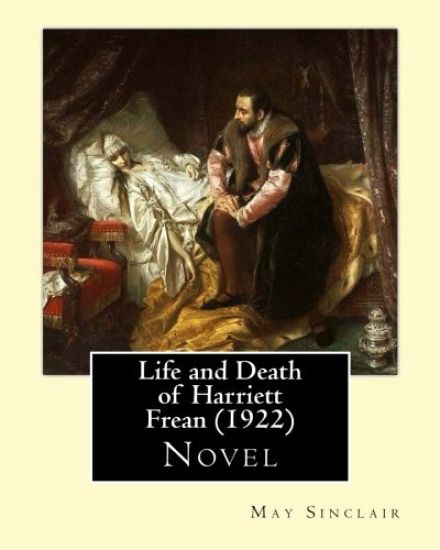
Life and Death of Harriett Frean (1922). By: May Sinclair: Novel
May Sinclair
Createspace Independent Publishing Platform
2017
nidottu
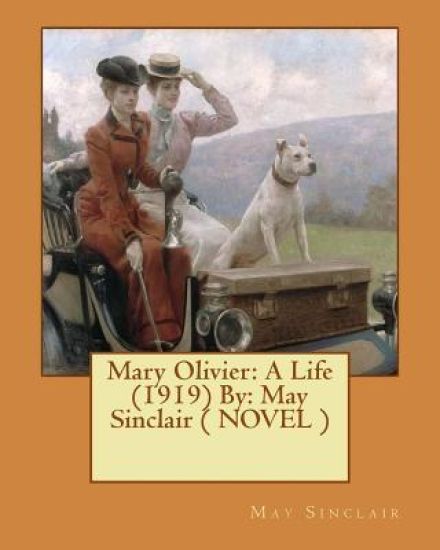
Mary Olivier: A Life (1919) By: May Sinclair ( NOVEL )
May Sinclair
Createspace Independent Publishing Platform
2017
nidottu

The Divine Fire (1904) By: May Sinclair
May Sinclair
Createspace Independent Publishing Platform
2017
nidottu
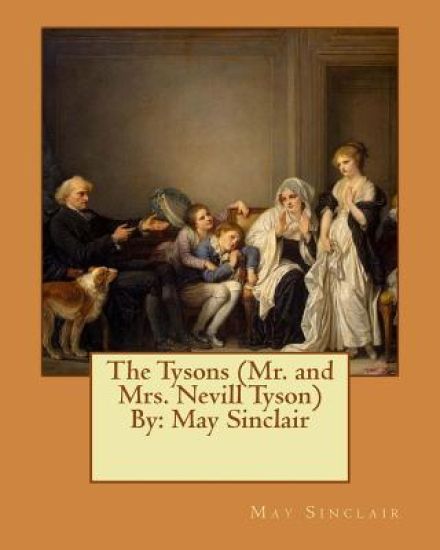
The Tysons (Mr. and Mrs. Nevill Tyson) By: May Sinclair
May Sinclair
Createspace Independent Publishing Platform
2017
nidottu

The Tree of Heaven. By: May Sinclair
May Sinclair
Createspace Independent Publishing Platform
2017
nidottu

Life and Death of Harriett Frean. (1922) ( NOVEL ) by: May Sinclair
May Sinclair
Createspace Independent Publishing Platform
2017
nidottu

Life and Death of Harriett Frean
May Sinclair
Createspace Independent Publishing Platform
2016
nidottu
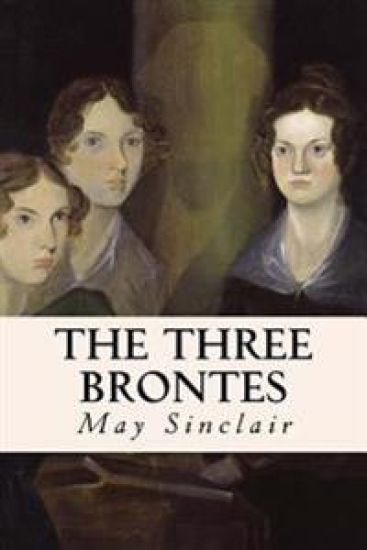
It is impossible to write of the Bronte sisters and forget the place they lived in, the black-grey, naked village, bristling like a rampart on the clean edge of the moor; the street, dark and steep as a gully, climbing the hill to the Parsonage at the top; the small oblong house, naked and grey, hemmed in on two sides by the graveyard, its five windows flush with the wall, staring at the graveyard where the tombstones, grey and naked, are set so close that the grass hardly grows between. The Bront s were a nineteenth-century literary family associated with the village of Haworth in the West Riding of Yorkshire, England. The sisters, Charlotte (1816-1855), Emily (1818-1848), and Anne (1820-1849), are well known as poets and novelists. Like many contemporary female writers, they originally published their poems and novels under male pseudonyms: Currer, Ellis, and Acton Bell. Their stories immediately attracted attention for their passion and originality. Charlotte's Jane Eyre was the first to know success, while Emily's Wuthering Heights, Anne's The Tenant of Wildfell Hall and other works were later to be accepted as masterpieces of literature. The three sisters and their brother, Branwell (1817-1848), were very close and during childhood developed their imaginations first through oral storytelling and play set in an intricate imaginary world, and then through the collaborative writing of increasingly complex stories set therein. The deaths of first their mother, and then of their two older sisters marked them profoundly and influenced their writing, as did the relative isolation in which they were raised. Their home, the parsonage at Haworth in Yorkshire, now the Bront Parsonage Museum, has become a place of pilgrimage for hundreds of thousands of visitors each year. Anne Bront (17 January 1820 - 28 May 1849) was an English novelist and poet, the youngest member of the Bront literary family. The daughter of Patrick Bront , a poor Irish clergyman in the Church of England, Anne Bront lived most of her life with her family at the parish of Haworth on the Yorkshire moors. She also attended a boarding school in Mirfield between 1836 and 1837. At 19 she left Haworth and worked as a governess between 1839 and 1845. After leaving her teaching position, she fulfilled her literary ambitions. She published a volume of poetry with her sisters (Poems by Currer, Ellis, and Acton Bell, 1846) and two novels. Agnes Grey, based upon her experiences as a governess, was published in 1847. Her second and last novel, The Tenant of Wildfell Hall, which is considered to be one of the first sustained feminist novels, appeared in 1848. Like her poems, both her novels were first published under the masculine pen name of Acton Bell. Anne's life was cut short when she died of what is now suspected to be pulmonary tuberculosis at the age of 29. Emily Jane Bront (30 July 1818 - 19 December 1848) was an English novelist and poet who is best known for her only novel, Wuthering Heights, now considered a classic of English literature. Emily was the third-eldest of the four surviving Bront siblings, between the youngest Anne and her brother Branwell. She wrote under the pen name Ellis Bell. Partly because the re-publication of The Tenant of Wildfell Hall was prevented by Charlotte Bront after Anne's death, she is not as well known as her sisters. However, her novels, like those of her sisters, have become classics of English literature. Charlotte Bront (/21 April 1816 - 31 March 1855) was an English novelist and poet, the eldest of the three Bront sisters who survived into adulthood and whose novels have become classics of English literature. She first published her works (including her best known novel, Jane Eyre) under the pen name Currer Bell.