Kirjojen hintavertailu. Mukana 12 506 868 kirjaa ja 12 kauppaa.

Kirjailija

Mehran Kamrava

Kirjat ja teokset yhdessä paikassa: 32 kirjaa, julkaisuja vuosilta 1992-2025, suosituimpien joukossa Democracy in the Balance. Vertaile teosten hintoja ja tarkista saatavuus suomalaisista kirjakaupoista.

32 kirjaa

Kirjojen julkaisuhaarukka 1992-2025.

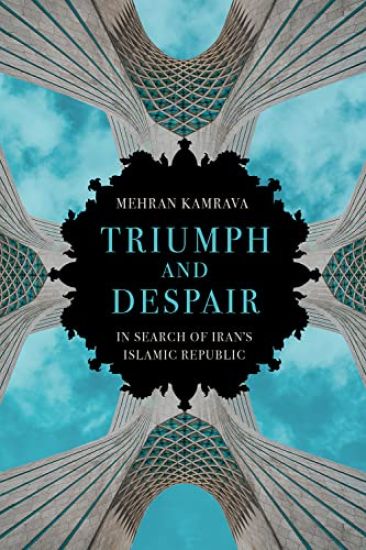
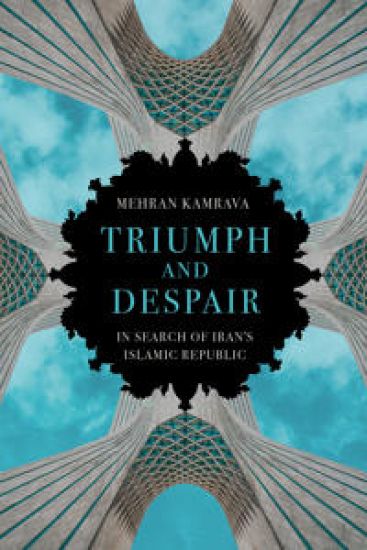
Triumph and Despair

Triumph and Despair

Mehran Kamrava

C HURST CO PUBLISHERS LTD
2025
nidottu
Triumph and Despair tells the dramatic story of post-revolutionary Iran's first four decades, from its establishment in 1979 until today. The revolutionary coalition that overthrew the monarchy was at once democratic, populist and Islamic. The Islamists, and the Khomeinists in particular, were able to capitalise effectively on prevailing conditions on the ground; to frame the new republic's constitution, capture nascent institutions, and consolidate their power by eliminating opponents through a reign of terror. Once the war with Iraq was over and after the death of the new order's charismatic founder, Ayatollah Khomeini, the Islamic Republic was consolidated: first by tweaking its institutional arrangements, and then by fostering economic development and post-war reconstruction. A reformist interlude then followed, reversed unceremoniously by a return of populism and a broader authoritarian retrenchment. Today Iran remains at odds with itself, its economy too deeply political to yield meaningful developmental results, its foreign relations too conflicted to allow it a productive place in the community of nations. As Iran's nationalities and its women and youth carve out spaces for themselves in the broader narrative, competing identities--religious, national and otherwise--abound. After forty years, the Islamic Republic remains a country in search of itself.
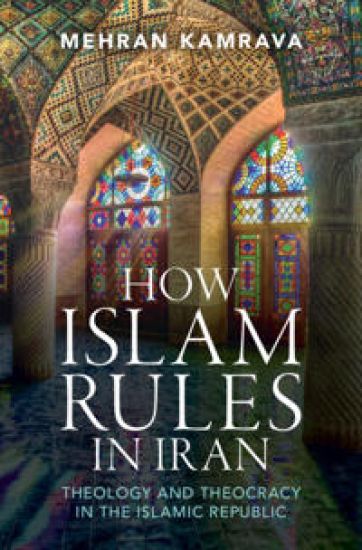
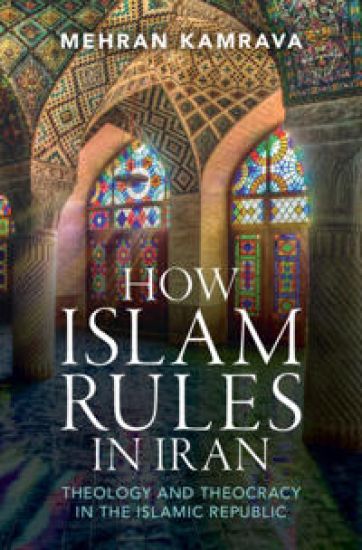
How Islam Rules in Iran

How Islam Rules in Iran

Mehran Kamrava

Cambridge University Press
2024
pokkari
This study provides a comprehensive examination of the evolution of Islam as a ruling framework in postrevolutionary Iran up to the present day. Beginning with the position and structure of Iran's clerical establishment under the Islamic Republic, Kamrava delves into the jurisprudential debates that have shaped the country's political institutions and state policies. Kamrava draws on extensive ?eldwork to examine various religious narratives that inform the basis of contemporary Iranian politics, also revealing the political salience of common practices and beliefs, such as religious guardianship and guidance, Islam as a source of social protection, the relationship between Islam and democracy, the sources of divine and popular legitimacy, and the theoretical justi?cations for religious authoritarianism. Providing access to many Persian-language sources for the ?rst time, Kamrava shows how religious intellectual production in Iran has impacted the ongoing transformation of Iranian Shi'ism and ultimately underwritten the fate of the Islamic Republic.
How Islam Rules in Iran

How Islam Rules in Iran

Mehran Kamrava

Cambridge University Press
2024
sidottu
This study provides a comprehensive examination of the evolution of Islam as a ruling framework in postrevolutionary Iran up to the present day. Beginning with the position and structure of Iran's clerical establishment under the Islamic Republic, Kamrava delves into the jurisprudential debates that have shaped the country's political institutions and state policies. Kamrava draws on extensive ?eldwork to examine various religious narratives that inform the basis of contemporary Iranian politics, also revealing the political salience of common practices and beliefs, such as religious guardianship and guidance, Islam as a source of social protection, the relationship between Islam and democracy, the sources of divine and popular legitimacy, and the theoretical justi?cations for religious authoritarianism. Providing access to many Persian-language sources for the ?rst time, Kamrava shows how religious intellectual production in Iran has impacted the ongoing transformation of Iranian Shi'ism and ultimately underwritten the fate of the Islamic Republic.
Righteous Politics

Righteous Politics

Mehran Kamrava

Cambridge University Press
2023
pokkari
Since the establishment of the Islamic Republic of Iran in 1979, the Iranian political system has been subject to diminishing legitimacy. In recent years, various waves of protest have spread across the country and the question of the resilience of the revolutionary state becomes more pressing by the day. Drawing from extensive fieldwork and rare primary sources, Mehran Kamrava provides here a comprehensive and accessible analysis of the Iranian state and the various formal and informal institutions through which it operates. The book offers an in-depth analysis of the Iranian state, from the Constitution to the powers and offices of the Supreme Leader, the Islamic Revolutionary Guard Corps to the several intelligence agencies. Paying careful attention to the nuances of Iranian politics, Kamrava also highlights how factional politics and rentierism have served to enhance state resilience. Presenting a range of original insights, this book is invaluable to understanding the inner workings of the contemporary Iranian state.
Righteous Politics

Righteous Politics

Mehran Kamrava

Cambridge University Press
2023
sidottu
Since the establishment of the Islamic Republic of Iran in 1979, the Iranian political system has been subject to diminishing legitimacy. In recent years, various waves of protest have spread across the country and the question of the resilience of the revolutionary state becomes more pressing by the day. Drawing from extensive fieldwork and rare primary sources, Mehran Kamrava provides here a comprehensive and accessible analysis of the Iranian state and the various formal and informal institutions through which it operates. The book offers an in-depth analysis of the Iranian state, from the Constitution to the powers and offices of the Supreme Leader, the Islamic Revolutionary Guard Corps to the several intelligence agencies. Paying careful attention to the nuances of Iranian politics, Kamrava also highlights how factional politics and rentierism have served to enhance state resilience. Presenting a range of original insights, this book is invaluable to understanding the inner workings of the contemporary Iranian state.
Triumph and Despair: In Search of Iran's Islamic Republic
Triumph and Despair tells the dramatic story of post-revolutionary Iran's first four decades, from its establishment in 1979 until today. The revolutionary coalition that overthrew the monarchy was at once democratic, populist and Islamic. The Islamists, and the Khomeinists in particular, were able to capitalize effectively on prevailing conditions on the ground; to frame the new republic's constitution, capture nascent institutions, and consolidate their power by eliminating opponents through a reign of terror. Once the war with Iraq was over and after the death of the new order's charismatic founder, Ayatollah Khomeini, the Islamic Republic was consolidated: first by tweaking its institutional arrangements, and then by fostering economic development and post-war reconstruction. A reformist interlude then followed, reversed unceremoniously by a return of populism and a broader authoritarian retrenchment. Today Iran remains at odds with itself, its economy too deeply political to yield meaningful developmental results, its foreign relations too conflicted to allow it a productive place in the community of nations. As Iran's nationalities and its women and youth carve out spaces for themselves in the broader narrative, competing identities-religious, national and otherwise-abound. After forty years, the Islamic Republic remains a country in search of itself.
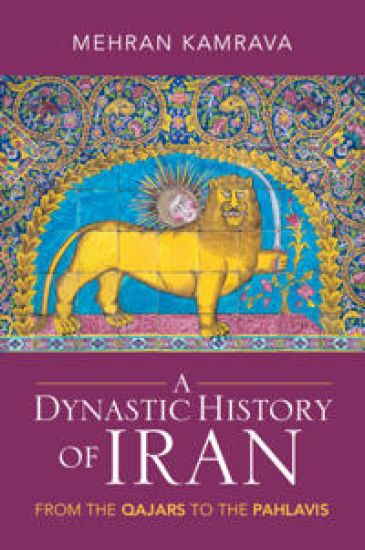
A Dynastic History of Iran

A Dynastic History of Iran

Mehran Kamrava

Cambridge University Press
2022
pokkari
This rich dynastic study examines the political histories of Iran's last two monarchical dynasties, the Qajars and the Pahlavis. Tracing the rise and fall of both dynasties, Mehran Kamrava addresses essential questions about how and why they rose to power; what domestic and international forces impacted them; how they ruled; and how they met their end. Exploring over two hundred years of political history, Kamrava's comprehensive yet concise account places developments within relevant frameworks in an accessible manner. With detailed examinations of Iran's history, politics, and economics, he interrogates the complexities of dynastic rule in Iran and considers its enduring legacy. Developing innovative interpretations and utilizing original primary sources, this book illuminates the impact of the monarchy's rule and ultimate collapse on Iranian history, as well as Iran's subsequent politics and revolution.
A Dynastic History of Iran

A Dynastic History of Iran

Mehran Kamrava

Cambridge University Press
2022
sidottu
This rich dynastic study examines the political histories of Iran's last two monarchical dynasties, the Qajars and the Pahlavis. Tracing the rise and fall of both dynasties, Mehran Kamrava addresses essential questions about how and why they rose to power; what domestic and international forces impacted them; how they ruled; and how they met their end. Exploring over two hundred years of political history, Kamrava's comprehensive yet concise account places developments within relevant frameworks in an accessible manner. With detailed examinations of Iran's history, politics, and economics, he interrogates the complexities of dynastic rule in Iran and considers its enduring legacy. Developing innovative interpretations and utilizing original primary sources, this book illuminates the impact of the monarchy's rule and ultimate collapse on Iranian history, as well as Iran's subsequent politics and revolution.
Cultural Politics in the Third World
First Published in 1999. This book does not aim to offer a new or radically different interpretation of the ongoing debate over cultural geography. Kamrava states nor does it seek to present a universal theory of what Third World countries have done or ought to do as they navigate the political, economic and sociocultural traumas of development. Instead, it tries to place culture in its proper political perspective in the Third World.
A Concise History of Revolution

A Concise History of Revolution

Mehran Kamrava

Cambridge University Press
2019
pokkari
Presenting a new framework for the study of revolutions, this innovative exploration of French, Russian, Chinese, Vietnamese, Cuban, Iranian, South African, and more recent Arab revolutions, provides a theoretically grounded and empirically comprehensive demonstration of how revolutions mean more than mere state collapse and rebuilding. Through the examination of multiple historical case studies, and use of extensive historical examples to explore a range of revolutions, Mehran Kamrava reveals the range and depth of human emotion and motivations that are so prevalent and consequential in revolutions, from personal commitment to sacrifice, determination, leadership ability, charisma, opportunism, and avarice.
A Concise History of Revolution

A Concise History of Revolution

Mehran Kamrava

Cambridge University Press
2019
sidottu
Presenting a new framework for the study of revolutions, this innovative exploration of French, Russian, Chinese, Vietnamese, Cuban, Iranian, South African, and more recent Arab revolutions, provides a theoretically grounded and empirically comprehensive demonstration of how revolutions mean more than mere state collapse and rebuilding. Through the examination of multiple historical case studies, and use of extensive historical examples to explore a range of revolutions, Mehran Kamrava reveals the range and depth of human emotion and motivations that are so prevalent and consequential in revolutions, from personal commitment to sacrifice, determination, leadership ability, charisma, opportunism, and avarice.
Inside the Arab State

Inside the Arab State

Mehran Kamrava

Oxford University Press, USA
2018
sidottu
The 2011 Arab uprisings and their subsequent aftermath have thrown into question some of our long-held assumptions about the foundational aspects of the Arab state. While the regional and international consequences of the uprisings continue to unfold with great unpredictability, their ramifications for the internal lives of the states in which they unfolded are just as dramatic and consequential. States historically viewed as models of strength and stability have been shaken to their foundations. Borders thought impenetrable have collapsed; sovereignty and territoriality have been in flux. This book examines some of the central questions facing observers and scholars of the Middle East concerning the nature of power and politics before and after 2011 in the Arab world. The focus of the book revolves around the very nature of politics and the exercise of power in the Arab world, conceptions of the state, its functions and institutions, its sources of legitimacy, and basic notions underlying it such as sovereignty and nationalism. Inside the Arab State adopts a multi-disciplinary approach, examining a broad range of political, economic, and social variables. It begins with an examination of politics, and more specifically political institutions, in the Arab world from the 1950s on, tracing the travail of states, and the wounds they inflicted on society and on themselves along the way, until the eruption of the 2011 uprisings. The uprisings, the states' responses to them, and efforts by political leaders to carve out for themselves means of legitimacy are also discussed, as are the reasons for the emergence and rise of Daesh and the Islamic State. Power, I argue, and increasingly narrow conceptions of it in terms of submission and conformity, remains at the heart of Arab politics, popular protests and yearnings for change notwithstanding. Much has changed in the Arab world over the last several decades. But even more has stayed the same.
Inside the Arab State

Inside the Arab State

Mehran Kamrava

C Hurst Co Publishers Ltd
2018
sidottu
Inside the Arab State offers a comprehensive examination of contemporary Arab politics before and after the 2011 uprisings. Mehran Kamrava examines a broad range of political, economic, and social variables that shaped conceptions of power, functions and institutions of the state, the rise and evolution of social movements, the eruption of civil war in some countries and fragile polities in others, and evolving civil–military relations before and after the 2011 uprisings. Beginning with an examination of politics, and more specifically political institutions, in the Arab world from the 1950s on, the book traces the challenges faced by Arab states, and the wounds they inflicted on their societies and on themselves along the way. And at the crux of the book are the 2011 uprisings, states' responses to them, and efforts by political leaders to carve out new forms of legitimacy, as well as the reasons for the emergence and rise of the Islamic State. Power, and an increasingly narrow conception of it in terms of submission and conformity, remains at the heart of Arab politics, popular protests and yearnings for change notwithstanding. The 2011 uprisings changed much in the Arab world, but even more has stayed the same.
Troubled Waters

Troubled Waters

Mehran Kamrava

Cornell University Press
2018
sidottu
Troubled Waters looks at four dynamics in the Persian Gulf that have contributed to making the region one of the most volatile and tension-filled spots in the world. Mehran Kamrava identifies the four dynamics as: the neglect of human dimensions of security, the inherent instability involved in reliance on the United States and the exclusion of Iraq and Iran, the international and security policies pursued by inside and outside actors, and a suite of overlapping security dilemmas. These four factors combine and interact to generate long-term volatility and ongoing tensions within the Persian Gulf. Through insights from Kamrava's interviews with Gulf elites into policy decisions, the consequences of security dilemmas, the priorities of local players, and the neglect of identity and religion, Troubled Waters examines the root causes of conflicts and crises that are currently unfolding in the region. As Kamrava demonstrates, each state in the region, including Saudi Arabia, Iran, and Qatar, has embarked on vigorous security-producing efforts as part of foreign policy, flooding the area with more munitions—thereby increasing insecurity and causing more mistrust in a part of the world that needs no more tension.
Revolution in Iran

Revolution in Iran

Mehran Kamrava

Routledge
2018
nidottu
Observers of Iran have often ascribed the main cause of the revolution to economic problems under the Shah’s regime. This book, first published in 1990, on the other hand focuses on the political and social factors which contributed of the Pahlavi dynasty. Mehran Kamrava looks at the revolution in detail as a political phenomenon, making use of extensive interviews with former revolutionary leaders, cabinet ministers and diplomats to show the central role of the political collapse of the regime in bringing about the revolution. He concentrates on the internal and the international developments leading to this collapse, and the social environment in which the revolution’s leaders emerged.
Revolution in Iran

Revolution in Iran

Mehran Kamrava

Routledge
2016
sidottu
Observers of Iran have often ascribed the main cause of the revolution to economic problems under the Shah’s regime. This book, first published in 1990, on the other hand focuses on the political and social factors which contributed of the Pahlavi dynasty. Mehran Kamrava looks at the revolution in detail as a political phenomenon, making use of extensive interviews with former revolutionary leaders, cabinet ministers and diplomats to show the central role of the political collapse of the regime in bringing about the revolution. He concentrates on the internal and the international developments leading to this collapse, and the social environment in which the revolution’s leaders emerged.
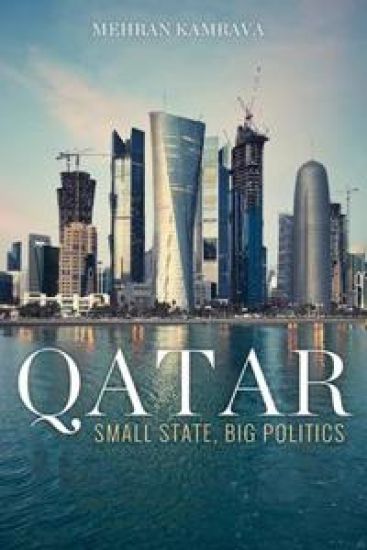
Qatar

Qatar

Mehran Kamrava

Cornell University Press
2015
pokkari
The Persian Gulf state of Qatar has fewer than 2 million inhabitants, virtually no potable water, and has been an independent nation only since 1971. Yet its enormous oil and gas wealth has permitted the ruling al Thani family to exert a disproportionately large influence on regional and even international politics. Qatar is, as Mehran Kamrava explains in this knowledgeable and incisive account of the emirate, a "tiny giant": although severely lacking in most measures of state power, it is highly influential in diplomatic, cultural, and economic spheres.Kamrava presents Qatar as an experimental country, building a new society while exerting what he calls "subtle power." It is both the headquarters of the global media network Al Jazeera and the site of the U.S. Central Command's Forward Headquarters and the Combined Air Operations Center. Qatar has been a major player during the European financial crisis, it has become a showplace for renowned architects, several U.S. universities have established campuses there, and it will host the FIFA World Cup in 2022. Qatar's effective use of its subtle power, Kamrava argues, challenges how we understand the role of small states in the global system. Given the Gulf state's outsized influence on regional and international affairs, this book is a critical and timely account of contemporary Qatari politics and society.
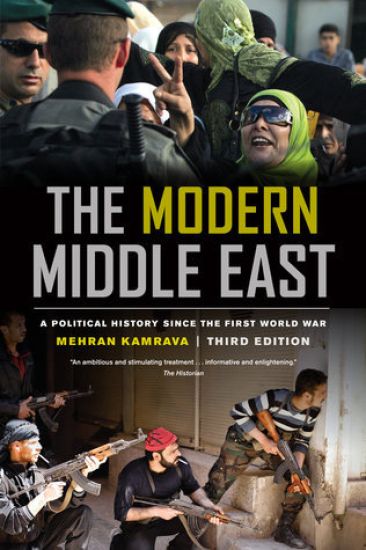
The Modern Middle East, Third Edition

The Modern Middle East, Third Edition

Mehran Kamrava

University of California Press
2013
pokkari
From the fall of the Ottoman Empire through the Arab Spring, this completely revised and updated edition of Mehran Kamrava's classic treatise on the making of the contemporary Middle East remains essential reading for students and general readers who want to gain a better understanding of this diverse region.
Qatar

Qatar

Mehran Kamrava

Cornell University Press
2013
sidottu
The Persian Gulf state of Qatar has fewer than 2 million inhabitants, virtually no potable water, and has been an independent nation only since 1971. Yet its enormous oil and gas wealth has permitted the ruling al Thani family to exert a disproportionately large influence on regional and even international politics. Qatar is, as Mehran Kamrava explains in this knowledgeable and incisive account of the emirate, a "tiny giant": although severely lacking in most measures of state power, it is highly influential in diplomatic, cultural, and economic spheres.Kamrava presents Qatar as an experimental country, building a new society while exerting what he calls "subtle power." It is both the headquarters of the global media network Al Jazeera and the site of the U.S. Central Command's Forward Headquarters and the Combined Air Operations Center. Qatar has been a major player during the European financial crisis, it has become a showplace for renowned architects, several U.S. universities have established campuses there, and it will host the FIFA World Cup in 2022. Qatar's effective use of its subtle power, Kamrava argues, challenges how we understand the role of small states in the global system. Given the Gulf state's outsized influence on regional and international affairs, this book is a critical and timely account of contemporary Qatari politics and society.