Kirjailija
Michael E. O'Hanlon
Kirjat ja teokset yhdessä paikassa: 32 kirjaa, julkaisuja vuosilta 1997-2021, suosituimpien joukossa The Future of Land Warfare. Vertaile teosten hintoja ja tarkista saatavuus suomalaisista kirjakaupoista.
32 kirjaa
Kirjojen julkaisuhaarukka 1997-2021.
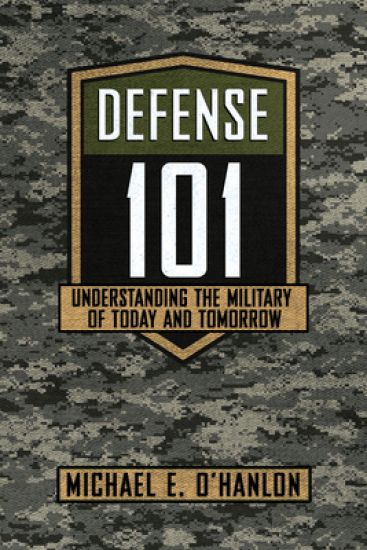
In Defense 101, a concise primer for understanding the United States' $700+ billion defense budget and rapidly changing military technologies, Michael O'Hanlon provides a deeply informed yet accessible analysis of American military power. After an introduction in which O'Hanlon surveys today's international security environment, provides a brief sketch of the history of the US military, its command structure, the organization of its three million personnel, and a review of its domestic basing and global reach, Defense 101 provides in-depth coverage of four critical areas in military affairs: • Defense Budgeting and Resource Allocation: detailed budget and cost breakdowns, wartime spending allocations, economics of overseas basing, military readiness, and defense budgeting versus US grand strategy • Gaming and Modeling Combat: wargaming, micro modeling, nuclear exchange calculations, China scenarios, and assessments of counterinsurgency missions • Technological Change and Military Innovation: use of computers, communications, and robotics, cutting-edge developments in projectiles and propulsion systems • The Science of War, military uses of space, missile defense, and nuclear weapons, testing, and proliferation For policy makers and experts, military professionals, students, and citizens alike, Defense 101 helps make sense of the US Department of Defense, the basics of war and the future of armed conflict, and the most important characteristics of the American military.
America needs better options for resolving potential crises.In recent years, the Pentagon has elevated its concerns about Russia and China as potential military threats to the United States and its allies. But what issues could provoke actual conflict between the United States and either country? And how could such a conflict be contained before it took the world to the brink of thermonuclear catastrophe, as was feared during the cold war?Defense expert Michael O'Hanlon wrestles with these questions in this insightful book, setting them within the broader context of hegemonic change and today's version of great-power competition.The book examines how a local crisis could escalate into a broader and much more dangerous threat to peace. What if, for example, Russia's ?little green men? seized control of a community, like Narva or an even smaller town in Estonia, now a NATO ally? Or, what if China seized one of the uninhabited Senkaku islands now claimed and administered by Japan, or imposed a partial blockade of Taiwan?Such threats are not necessarily imminent, but they are far from inconceivable. Washington could be forced to choose, in these and similar cases, between risking major war to reverse the aggression, and appeasing China or Russia in ways that could jeopardize the broader global order.O'Hanlon argues that the United States needs a better range of options for dealing with such risks to peace. He advocates ?integrated deterrence,? which combines military elements with economic warfare. The military components would feature strengthened forward defenses as well as, possibly, limited military options against Russian or Chinese assets in other theaters. Economic warfare would include offensive elements, notably sanctions, as well as measures to ensure the resilience of the United States and allies against possible enemy reprisal.The goal is to deter war through a credible set of responses that are more commensurate than existing policy with the stakes involved in such scenarios.
In this new Brookings Marshall Paper, Michael O'Hanlon argues that now is the time for Western nations to negotiate a new security architecture for neutral countries in eastern Europe to stabilize the region and reduce the risks of war with Russia. He believes NATO expansion has gone far enough. The core concept of this new security architecture would be one of permanent neutrality. The countries in question collectively make a broken-up arc, from Europe's far north to its south: Finland and Sweden; Ukraine, Moldova, and Belarus; Georgia, Armenia, and Azerbaijan; and finally Cyprus plus Serbia, as well as possibly several other Balkan states. Discussion on the new framework should begin within NATO, followed by deliberation with the neutral countries themselves, and then formal negotiations with Russia.The new security architecture would require that Russia, like NATO, commit to help uphold the security of Ukraine, Georgia, Moldova, and other states in the region. Russia would have to withdraw its troops from those countries in a verifiable manner; after that, corresponding sanctions on Russia would be lifted. The neutral countries would retain their rights to participate in multilateral security operations on a scale comparable to what has been the case in the past, including even those operations that might be led by NATO. They could think of and describe themselves as Western states (or anything else, for that matter). If the European Union and they so wished in the future, they could join the EU. They would have complete sovereignty and self-determination in every sense of the word. But NATO would decide not to invite them into the alliance as members. Ideally, these nations would endorse and promote this concept themselves as a more practical way to ensure their security than the current situation or any other plausible alternative.
"How to stabilize the security relationship between Washington and Beijing.The U.S.-China relationship has not always been smooth, but since Richard Nixon's opening in the early 1970s, the two countries have evolved a relationship that has been generally beneficial to both parties. Economic engagement and a diplomatic partnership together with robust trade and investment relations, among other activities, have meant a peaceful context for reform and China's rise, helping to lift millions of Chinese out of poverty and giving the PRC incentive to work within the U.S.-led global order.The logic of the relationship, however, is now open to serious debate on both sides of the Pacific. After a period of American preoccupation with the Middle East, President Obama attempted a rebalancing of U.S. interests toward the Asia-Pacific region. With the Trump administration in office, the U.S.-China relationship appears to be at a crossroads: does it continue to focus on constructive engagement and managing differences, or prepare for a new era of rivalry and conflict?Here, following up on their 2014 book, Strategic Reassurance and Resolve, the authors provide a more balanced assessment of the current state of relations and suggest measures that could help stabilize the security relationship, without minimizing the very real problems that both Beijing and Washington must address. The authors are hopeful, but are also under no illusions about the significance of the challenges now posed to the bilateral relationship, as well as regional order, by the rise of China and the responses of America together with its allies."
"U.S. defense spending isn’t excessive and, in fact, should continue to grow because it’s both affordable and necessary in today's challenging world.The United States spends a lot of money on defense—$607 billion in the current fiscal year. But Brookings national security scholar Michael O'Hanlon argues that is roughly the right amount given the overall size of the national economy and continuing U.S. responsibilities around the world. If anything, he says spending should increase modestly under the next president, remaining near 3 percent of gross domestic product.Recommendations in this book differ from the president's budget plan in two key ways. First, the author sees a mismatch in the Pentagon’s current plans between ends and means. The country needs to spend enough money to carry out its military missions and commitments. Second, O'Hanlon recommends dropping a plan to cut the size of the Army from the current 475,000 active-duty soldiers to 450,000.The U.S. national defense budget is entirely affordable—relative to the size of the economy, relative to past levels of effort by this country in the national security domain, and relative, especially, to the costs of failing to uphold a stable international order. Even at a modestly higher price, it will be the best $650 billion bargain going, and a worthy investment in this country’s security and its long-term national power."
"What happens if we bet too heavily on unmanned systems, cyber warfare, and special operations in our defense?In today's U.S. defense policy debates, big land wars are out. Drones, cyber weapons, special forces, and space weapons are in. Accordingly, Pentagon budget cuts have honed in on the army and ground forces: this, after the long wars in Iraq and Afghanistan, seems like an appealing idea. No one really wants American boots on the ground in bloody conflicts abroad. But it is not so easy to simply declare an end to messy land wars. A survey of the world's trouble spots suggests that land warfare has more of a future than many now seem to believe.In The Future of Land Warfare, Michael O'Hanlon offers an analysis of the future of the world's ground forces: Where are large-scale conflicts or other catastrophes most plausible? Which of these could be important enough to require the option of a U.S. military response? And which of these could in turn demand significant numbers of American ground forces in their resolution? O'Hanlon is not predicting or advocating big American roles in such operations—only cautioning against overconfidence that we can and will avoid them.O'Hanlon considers a number of illustrative scenarios in which large conventional forces may be necessary: discouraging Russia from even contemplating attacks against the Baltic states; discouraging China from considering an unfriendly future role on the Korean peninsula; handling an asymmetric threat in the South China Sea with the construction and protection of a number of bases in the Philippines and elsewhere; managing the aftermath of a major and complex humanitarian disaster superimposed on a security crisis—perhaps in South Asia; coping with a severe Ebola outbreak not in the small states of West Africa but in Nigeria, at the same time that country falls further into violence; addressing a further meltdown in security conditions in Central America."
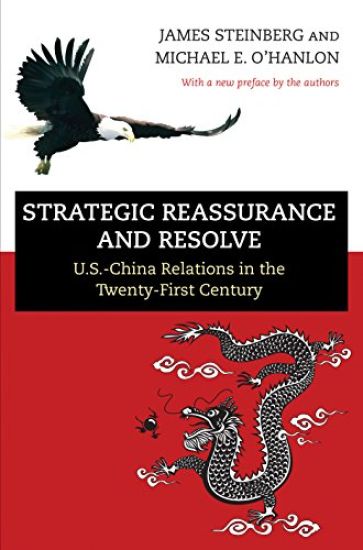
Strategic Reassurance and Resolve
James Steinberg; Michael E. O'Hanlon
Princeton University Press
2015
pokkari
After forty years of largely cooperative Sino-U.S. relations, policymakers, politicians, and pundits on both sides of the Pacific see growing tensions between the United States and China. Some go so far as to predict a future of conflict, driven by the inevitable rivalry between an established and a rising power, and urge their leaders to prepare now for a future showdown. Others argue that the deep economic interdependence between the two countries and the many areas of shared interests will lead to more collaborative relations in the coming decades. In this book, James Steinberg and Michael O'Hanlon stake out a third, less deterministic position. They argue that there are powerful domestic and international factors, especially in the military and security realms, that could well push the bilateral relationship toward an arms race and confrontation, even though both sides will be far worse off if such a future comes to pass. They contend that this pessimistic scenario can be confidently avoided only if China and the United States adopt deliberate policies designed to address the security dilemma that besets the relationship between a rising and an established power. The authors propose a set of policy proposals to achieve a sustainable, relatively cooperative relationship between the two nations, based on the concept of providing mutual strategic reassurance in such key areas as nuclear weapons and missile defense, space and cyber operations, and military basing and deployments, while also demonstrating strategic resolve to protect vital national interests, including, in the case of the United States, its commitments to regional allies.
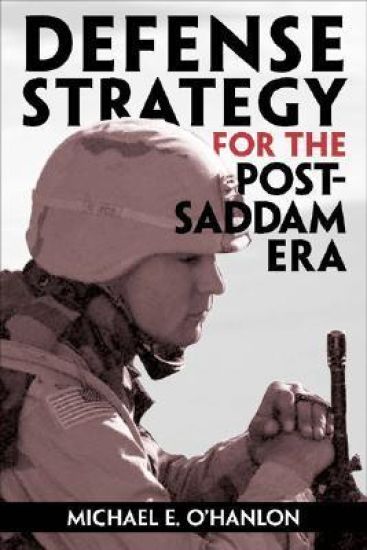
U.S. Defense Strategy After Saddam
Michael E. O'Hanlon; Strategic Studies Institute
Lulu.com
2014
nidottu
This paper, by Michael O'Hanlon of the Brookings Institution, reconstitutes SSI's Letort Papers series. This group of publications include papers, retrospectives, speeches or essays of interest to the defense academic community that may not correspond with our mainstream policy-oriented publications. In this Letort Paper, Dr. O'Hanlon suggests how reductions in various weapons modernization programs and other economies might release funds for the critical needs of U.S. ground forces.
Strategic Reassurance and Resolve
James Steinberg; Michael E. O'Hanlon
Princeton University Press
2014
sidottu
After forty years of largely cooperative Sino-U.S. relations, policymakers, politicians, and pundits on both sides of the Pacific see growing tensions between the United States and China. Some go so far as to predict a future of conflict, driven by the inevitable rivalry between an established and a rising power, and urge their leaders to prepare now for a future showdown. Others argue that the deep economic interdependence between the two countries and the many areas of shared interests will lead to more collaborative relations in the coming decades. In this book, James Steinberg and Michael O'Hanlon stake out a third, less deterministic position. They argue that there are powerful domestic and international factors, especially in the military and security realms, that could well push the bilateral relationship toward an arms race and confrontation, even though both sides will be far worse off if such a future comes to pass. They contend that this pessimistic scenario can be confidently avoided only if China and the United States adopt deliberate policies designed to address the security dilemma that besets the relationship between a rising and an established power. The authors propose a set of policy proposals to achieve a sustainable, relatively cooperative relationship between the two nations, based on the concept of providing mutual strategic reassurance in such key areas as nuclear weapons and missile defense, space and cyber operations, and military basing and deployments, while also demonstrating strategic resolve to protect vital national interests, including, in the case of the United States, its commitments to regional allies.
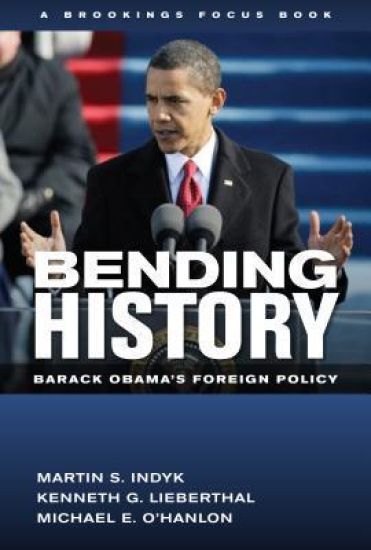
Bending History
Martin S. Indyk; Kenneth G. Lieberthal; Michael E. O'Hanlon
Brookings Institution
2013
nidottu
"By the time of Barack Obama's inauguration as the 44th president of the United States, he had already developed an ambitious foreign policy vision. By his own account, he sought to bend the arc of history toward greater justice, freedom, and peace; within a year he was awarded the Nobel Peace Prize, largely for that promise.In Bending History, Martin Indyk, Kenneth Lieberthal, and Michael O'Hanlon measure Obama not only against the record of his predecessors and the immediate challenges of the day, but also against his own soaring rhetoric and inspiring goals. Bending History assesses the considerable accomplishments as well as the failures and seeks to explain what has happened.Obama's best work has been on major and pressing foreign policy challenges—counterterrorism policy, including the daring raid that eliminated Osama bin Laden; the ""reset"" with Russia; managing the increasingly significant relationship with China; and handling the rogue states of Iran and North Korea. Policy on resolving the Israeli-Palestinian conflict, however, has reflected serious flaws in both strategy and execution. Afghanistan policy has been plagued by inconsistent messaging and teamwork. On important ""softer"" security issues—from energy and climate policy to problems in Africa and Mexico—the record is mixed. As for his early aspiration to reshape the international order, according greater roles and responsibilities to rising powers, Obama's efforts have been well-conceived but of limited effectiveness.On issues of secondary importance, Obama has been disciplined in avoiding fruitless disputes (as with Chavez in Venezuela and Castro in Cuba) and insisting that others take the lead (as with Qaddafi in Libya). Notwithstanding several missteps, he has generally managed well the complex challenges of the Arab awakenings, striving to strike the right balance between U.S. values and interests.The authors see Obama's foreign policy to date as a triumph of discipline and realism over ideology. He has been neither the transformative beacon his devotees have wanted, nor the weak apologist for America that his critics allege. They conclude that his grand strategy for promoting American interests in a tumultuous world may only now be emerging, and may yet be curtailed by conflict with Iran. Most of all, they argue that he or his successor will have to embrace U.S. economic renewal as the core foreign policy and national security challenge of the future."
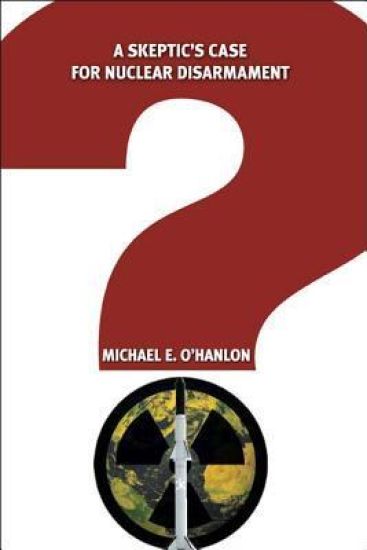
In 2007 two former U.S. secretaries of state, a defense secretary, and a former senator wrote persuasively in the Wall Street Journal that the time had come to move seriously toward a nuclear-free world. Almost two years later, the Global Zero movement was born with its chief aim to rid the world of such weapons once and for all by 2030. But is it realistic or even wise to envision a world without nuclear weapons? More and more people seem to think so. Barack Obama has declared “America's commitment to seek the peace and security of a world without nuclear weapons”. But that is easier said than done. Michael O'Hanlon places his own indelible stamp on this critical issue, putting forth a “friendly skeptic's case for nuclear disarmament”.Calls to “ban the bomb” are as old as the bomb itself, but the pace and organization of nonproliferation campaigns have picked up greatly recently. The growing Global Zero movement, for example, wants treaty negotiations to begin in 2019. Would this be prudent or even feasible in a world that remains dangerous, divided, and unpredictable? After all, America's nuclear arsenal has been its military trump card for much of the period since World War II. Pursuing a nuclear weapons ban prematurely or carelessly could alarm allies, leading them to consider building their own weapons - the opposite of the intended effect. O'Hanlon clearly presents the dangers of nuclear weapons and the advantages of disarmament as a goal. But even once an accord is in place, he notes, temporary suspension of restrictions may be necessary in response to urgent threats such as nuclear “cheating” or discovery of an advanced biological weapons program. To take all nuclear options off the table forever strengthens the hand of those that either do not make that pledge or do not honor it. For the near term, traditional approaches to arms control, including dismantling existing bomb inventories, can pave the way to make a true nonproliferation regime possible in the decades ahead.
"President Barack Obama survived a tenuous economy and a toxic political environment to win re-election in 2012, but the bitter partisan divide in Washington survived as well. So did the country's huge fiscal deficit. in this, the latest in a long line of Brookings Institution analyses of the defense budget, Michael O'Hanlon considers how best to balance national security and fiscal responsibility during a period of prolonged economic stress and political acrimony—even as the world remains unsettled, from Afghanistan to Iran to Syria to the western Pacific region.O'Hanlon explains why the large defense cuts that would result from prolonged sequestration or from deficit-reduction projects such as the Bowles-Simpson plan are too deep. But the bulk of his book represents an effort to look for greater savings than the Obama administration's 2012 proposals would allow.Praise for the work of Michael O'Hanlon The Opportunity: ""A practical and hard-headed analysis of how another Strategic Arms Reduction Treaty might be achieved""— Financial Times The Science of War: ""Timely, thoughtful, and full of insight. A signal contribution to the field.""—General David S. Petraeus, U.S. Army A Skeptic's Case for Nuclear Disarmament: ""O'Hanlon expertly unravels the myriad threads of the often abstruse disputes about nuclear weapons and disarmament.""— New York Times Book Review"
The U.S. military is one of the largest and most complex organizations in the world. How it spends its money, chooses tactics, and allocates its resources have enormous implications for national defense and the economy. The Science of War is the only comprehensive textbook on how to analyze and understand these and other essential problems in modern defense policy. Michael O'Hanlon provides undergraduate and graduate students with an accessible yet rigorous introduction to the subject. Drawing on a broad range of sources and his own considerable expertise as a defense analyst and teacher, he describes the analytic techniques the military uses in every crucial area of military science. O'Hanlon explains how the military budget works, how the military assesses and deploys new technology, develops strategy and fights wars, handles the logistics of stationing and moving troops and equipment around the world, and models and evaluates battlefield outcomes. His modeling techniques have been tested in Iraq and Afghanistan, including the methods he used to predict higher-than-anticipated troop fatalities in Iraq--controversial predictions that have since been vindicated. The Science of War is the definitive resource on warfare in the twenty-first century. * Gives the best introduction to defense analysis available * Covers defense budgeting * Shows how to model and predict outcomes in war * Explains military logistics, including overseas basing * Examines key issues in military technology, including missile defense, space warfare, and nuclear-weapons testing * Based on the author's graduate-level courses at Princeton, Columbia, and Georgetown universities
"In 2007 two former U.S. secretaries of state, a defense secretary, and a former senator wrote persuasively in the Wall Street Journal that the time had come to move seriously toward a nuclear-free world. Almost two years later, the Global Zero movement was born with its chief aim to rid the world of such weapons once and for all by 2030.But is it realistic or even wise to envision a world without nuclear weapons? More and more people seem to think so. Barack Obama has declared ""America's commitment to seek the peace and security of a world without nuclear weapons."" But that is easier said than done. Michael O'Hanlon places his own indelible stamp on this critical issue, putting forth a ""friendly skeptic's case for nuclear disarmament.""Calls to ""ban the bomb"" are as old as the bomb itself, but the pace and organization of nonproliferation campaigns have picked up greatly recently. The growing Global Zero movement, for example, wants treaty negotiations to begin in 2019. Would this be prudent or even feasible in a world that remains dangerous, divided, and unpredictable? After all, America's nuclear arsenal has been its military trump card for much of the period since World War II. Pursuing a nuclear weapons ban prematurely or carelessly could alarm allies, leading them to consider building their own weapons—the opposite of the intended effect.O'Hanlon clearly presents the dangers of nuclear weapons and the advantages of disarmament as a goal. But even once an accord is in place, he notes, temporary suspension of restrictions may be necessary in response to urgent threats such as nuclear ""cheating"" or discovery of an advanced biological weapons program. To take all nuclear options off the table forever strengthens the hand of those that either do not make that pledge or do not honor it. For the near term, traditional approaches to arms control, including dismantling existing bomb inventories, can pave the way to make a true nonproliferation regime possible in the decades ahead."
Toughing It Out in Afghanistan
Michael E. O'Hanlon; Hassina Sherjan
Brookings Institution
2010
nidottu
"""Michael O'Hanlon and Hassina Sherjan have written a superb analysis of the current strategy in Afghanistan. It is an insightful work by two authors with exceptional knowledge and experience. It is a must-read for those who want a clear understanding of the situation, the strategy, and the path ahead in this crucial conflict."" —General Anthony C. Zinni, USMC (Retired)In this unique collaboration between an American scholar and an Afghan American entrepreneur, Toughing It Out in Afghanistan provides a succinct look at the current situation in Afghanistan with policy prescriptions for the future.Drawing partly on personal experiences, O'Hanlon and Sherjan outline the tactics being used to protect the Afghan population and defeat the insurgents. They discuss ongoing efforts to reform the Afghan police, to run a better prison system for detainees, to enlist the help of more of Afghanistan's tribes, and to attack corruption. They also discuss the Afghan resistance, including an explanation of how the Taliban mounted a comeback and what it will take to defeat them.The authors also seek to demolish common myths about Afghanistan, such as the notion that somehow its people hate foreigners. And they explain how to use metrics, such as those in the Brookings Afghanistan Index, to determine if the new strategy is succeeding in the course of 2010 and 2011. Included are policy suggestions to further increase the size and capabilities of the Afghan army and police, to facilitate Afghan businesses' involvement in economic recovery, to expand the role of other Muslim nations in the effort, and to create a strong international aid coordinator as a civilian counterpart to NATO's military leader."
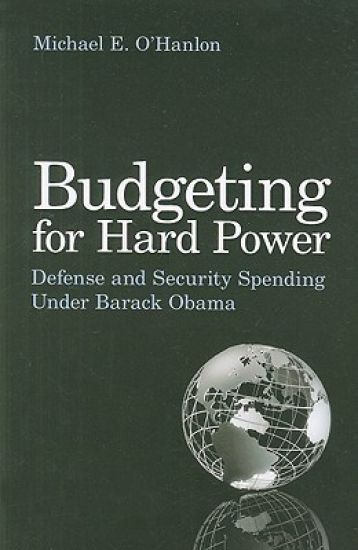
"These are extraordinary times in U.S. national security policy. America remains engaged in both Iraq and Afghanistan while facing a global economic downturn. Homeland security concerns still abound in the wake of the September 11 attacks. Even as the financial crisis places considerable pressure on the U.S. budget, President Obama will have to spend a great deal of time and money on national security, hard power, and war. How should these competing demands be prioritized? How much money will be needed? How much will be available, and how should it be spent? Budgeting for Hard Power continues the long and proud tradition of Brookings analysis on defense spending. As with previous volumes, this book examines the budgets of the Pentagon and the Department of Energy's nuclear weapons programs. But Michael O'Hanlon takes his analysis further, addressing the wide range of activities crucial for American security as a result of 9/11 and the ongoing wars. He considers homeland security resources and selected parts of the State Department and foreign operations budgets—offering a more complete overall look at the elements that make up America's ""hard power"" budget, a concept that he and Kurt Campbell wrote about in Hard Power: The New Politics of National Security (2006).With future federal deficits projected to top $1 trillion, O'Hanlon calls for Defense, State, and Homeland Security budgets to be as frugal as possible. At the same time, he recognizes that resources should be selectively increased in certain areas to compensate for years of systematic underfunding, especially in certain areas of homeland security, diplomacy, and foreign assistance. In his typically clear and concise manner, O'Hanlon shows policymakers how to wrestle with the resource allocation decisions affecting the national security of the United States."
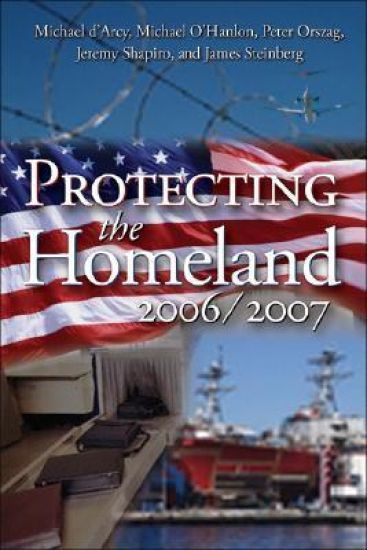
Protecting the Homeland 2006/2007
Michael d'Arcy; Michael E. O'Hanlon; Peter R. Orszag
Brookings Institution
2006
nidottu
"Immediately after September 11, the Brookings Institution began a comprehensive, multidisciplinary project focused on the key policy challenge of these dangerous times—assessing and improving homeland defense. That intense effort produced Protecting the American Homeland, and it continues in this important new book. In Protecting the Homeland 2006/2007, Brookings foreign policy experts analyze current homeland security concerns and the adequacy (or inadequacy) of current policies designed to address them. The authors present both the big picture and the smaller components of homeland security policy that make up the whole. They make specific recommendations on intelligence reform, science and technology policy and the protection of critical infrastructure within the United States. They also look ahead to consider what dangers we should anticipate and plan for, recommending policies that will work to that end. One of the strands running through Protecting the Homeland 2006/2007 is the need to ""stitch the seams"" in our homeland security blanket through greater integration and coordination. The authors emphasize that the U.S. federal government must work together with key partners who have been insufficiently integrated into American homeland security activities to date. These actors include foreign governments, state and local government, and the private sector, and the coordination must occur in several different areas (e.g. border protection, finance, technology, intelligence). The U.S. government should not—indeed, it cannot—do it alone. By its very nature, homeland security is a problem that defies the usual bureaucratic boundaries. Effective homeland security policy demands intense collaboration on new issues and between organizations that have not traditionally needed each other. This book is of interest and importance to journalists, analysts, policymakers, scholars, and citizens concerned with protecting their homeland against terrorism and related dangers. "
The Brookings Institution has long produced an analysis of America's defense budgets and policies. The war on terror and the ongoing operations in Iraq and Afghanistan have forced upon this country soaring defense budgets and unprecedented challenges in policymaking. In the newest installment in this tradition, leading foreign policy expert Michael O'Hanlon offers policy recommendations for strengthening the ability of America's military to respond to international crises in a tumultuous world. The United States can, for the foreseeable future, be confident that its armed forces will remain engaged in Iraq, as well as in Afghanistan and other theaters in the war on terror. It will also need to remain involved in deterrence missions in the western Pacific, most notably in Korea and the Taiwan Strait. It will wish to remain engaged in European security, since the capabilities and cohesion of the NATO alliance have important implications for the United States globally. O'Hanlon reviews these priorities, asking tough questions and developing frameworks for answering them: What military will the United States need in the future?How much will it cost?How can the U.S. increase the size of its ground forces without increasing the size of the defense budget?In an era of apocalyptic terror threats, and at a time of $400 billion defense budgets and $400 billion federal budget deficits, how can this country protect its citizens while maintaining fiscal responsibility?