Kirjojen hintavertailu. Mukana 12 264 757 kirjaa ja 12 kauppaa.

Kirjailija

Michael Friedman

Kirjat ja teokset yhdessä paikassa: 27 kirjaa, julkaisuja vuosilta 1998-2024, suosituimpien joukossa Healing Diabetes. Vertaile teosten hintoja ja tarkista saatavuus suomalaisista kirjakaupoista.

Mukana myös kirjoitusasut: Michaël Friedman

27 kirjaa

Kirjojen julkaisuhaarukka 1998-2024.

On Joachim Jungius’ Texturæ Contemplatio

On Joachim Jungius’ Texturæ Contemplatio

Michael Friedman

Springer International Publishing AG
2024
nidottu
The book offers an analysis of Joachim Jungius’ Texturæ Contemplatio - a hitherto-unpublished manuscript written in German and Latin that deals with weaving, knitting and other textile practices, attempting to present as well various fabrics and textile techniques in a scientifical and even mathematical framework. The book aims to provide the epistemological, technical and historic framework for Jungius’ manuscript, inspecting fabrics, weaving techniques as well as looms and other textile machines in Holy Roman Empire during the Early Modern Period. It also offers a unique investigation of the notion and metaphor of ‘texture’ during this period, and explores, within the wider context of the ‘meeting’ or ‘trading zones’ thesis, the relations between artisans and natural philosophers during the 17th century. The book is of interest to historians of philosophy and mathematics, as well as historians of technology.

On Joachim Jungius’ Texturæ Contemplatio

On Joachim Jungius’ Texturæ Contemplatio

Michael Friedman

Springer International Publishing AG
2023
sidottu
The book offers an analysis of Joachim Jungius’ Texturæ Contemplatio - a hitherto-unpublished manuscript written in German and Latin that deals with weaving, knitting and other textile practices, attempting to present as well various fabrics and textile techniques in a scientifical and even mathematical framework. The book aims to provide the epistemological, technical and historic framework for Jungius’ manuscript, inspecting fabrics, weaving techniques as well as looms and other textile machines in Holy Roman Empire during the Early Modern Period. It also offers a unique investigation of the notion and metaphor of ‘texture’ during this period, and explores, within the wider context of the ‘meeting’ or ‘trading zones’ thesis, the relations between artisans and natural philosophers during the 17th century. The book is of interest to historians of philosophy and mathematics, as well as historians of technology.
Ramified Surfaces

Ramified Surfaces

Michael Friedman

BIRKHAUSER VERLAG AG
2022
nidottu
The book offers an extensive study on the convoluted history of the research of algebraic surfaces, focusing for the first time on one of its characterizing curves: the branch curve. Starting with separate beginnings during the 19th century with descriptive geometry as well as knot theory, the book focuses on the 20th century, covering the rise of the Italian school of algebraic geometry between the 1900s till the 1930s (with Federigo Enriques, Oscar Zariski and Beniamino Segre, among others), the decline of its classical approach during the 1940s and the 1950s (with Oscar Chisini and his students), and the emergence of new approaches with Boris Moishezon’s program of braid monodromy factorization.By focusing on how the research on one specific curve changed during the 20th century, the author provides insights concerning the dynamics of epistemic objects and configurations of mathematical research. It is in this sense that the book offers to take the branch curve as a cross-section through the history of algebraic geometry of the 20th century, considering this curve as an intersection of several research approaches and methods. Researchers in the history of science and of mathematics as well as mathematicians will certainly find this book interesting and appealing, contributing to the growing research on the history of algebraic geometry and its changing images.
Healing Diabetes

Healing Diabetes

Michael Friedman; Alexander McLennan

Canadian College of Naturopathic Medicine Press
2021
nidottu
Prevention and treatment of late-onset (type 2) diabetes has become a medical priority due to the near epidemic of this disease in recent years. Once considered a disease of the elderly, non-insulin dependent diabetes is now common among the middle-aged and even children, the product of our poor diet, lack of exercise, and chemically polluted environment. However, naturopathic medicine, using optimum nutrition, botanical medicine, and lifestyle counselling, offers safe and effective therapies to prevent and treat diabetes type 2 naturally, even to reverse diabetes type 1 when diagnosed early. This book provides an in-depth and fully-documented study of the pathophysiology of diabetes and the naturopathic medical care of this condition. Ideal for high-risk individuals and patients looking for greater depth of understanding than offered in 'pop' diabetes books. For the healthcare practitioner, "Healing Diabetes" comes complete with well researched diagnostic and therapeutic protocols and case studies.
There's No Pill for This

There's No Pill for This

Michaël Friedman

Chelsea Green Publishing Co
2020
nidottu
'An open, honest, and up-to-date guide, based on personal experience in addition to science, for people living with MS along with their caregivers.' –Library Journal From a doctor living with MS: how to dramatically improve your quality of life with diet, hormones, supplements, exercise, and other lifestyle adjustments Most of us take for granted the little things in life—like walking out to the mailbox, socialising with friends, or enjoying a cup of tea. But what if each daily activity required intensive planning and effort? That’s what living with multiple sclerosis is like, and author Michaël Friedman knows this from first-hand experience. Since his diagnosis of multiple sclerosis a decade ago, Dr. Friedman has been searching for a cure for the disease. After years of research, he realised that he had some of the answers right in his naturopathic medicine toolbox, and others, surprisingly, lay in the realm of conventional medicine. There’s No Pill for This tells his story and offers treatment advice and hope to those who suffer from MS. He does not promise a miracle cure but instead provides the personal prescriptions he follows that are delaying the disease process and radically improving his quality of life, including dietary measures and supplements to support a healthy microbiome and hormone therapies that can reduce neuroinflammation and possibly promote neurorestoration. Dr. Friedman presents a daily protocol for MS patients, including diet, supplement, detoxification, and hormone strategies; mindfulness therapy; physical therapy; and a wide range of beneficial lifestyle adjustments related to exercise, sleep routines, time management, stress management, and more. He also offers special advice for supporting healthy bladder and bowel function and improving oxygen supply. In the book’s conclusion, Dr. Friedman reflects on what this complicated chronic disease has taught him, and continues to teach him, about the value of humility and about what is truly important in life.
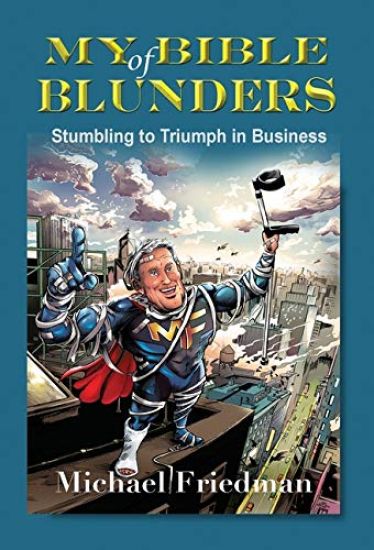
My Bible of Blunders

My Bible of Blunders

Michael Friedman

Encompass Editions
2019
sidottu
After forty years in professional sport and business, Michael Friedman sits down to describe the harrowing career path that he -- a self-described "ordinary guy"-- pursued, stumbled on, raced along, departed from, triumphed through and is still following with undiminished enthusiasm.This is no "how to" book, as Friedman admits, nor a "how not to" book. It's simply what happened, but recounted with enough honesty that we can laugh and learn as we try to keep up with Mike's busy but meandering path.He began as a basketball-crazed kid, grew to become a professional basketball coach, leapt from that world into the pizza business because it seemed a good idea at the time, made a success of it over nine years, leapt from pizza to real estate dealing, rose, fell, rose, finally settled on the financing of real estate development and then, suddenly, has dived into telling others what he's learned and how -- and infecting them with his enthusiasm.My Bible of Blunders is 140 pages of whizz-bang business adventures featuring an ordinary guy who does some extraordinary things.
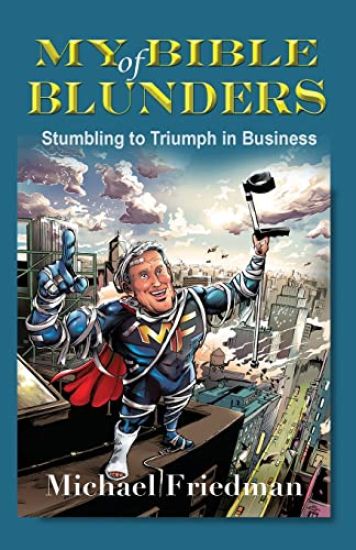
My Bible of Blunders

My Bible of Blunders

Michael Friedman

Encompass Editions
2019
pokkari
After forty years in professional sport and business, Michael Friedman sits down to describe the harrowing career path that he -- a self-described "ordinary guy"-- pursued, stumbled on, raced along, departed from, triumphed through and is still following with undiminished enthusiasm.This is no "how to" book, as Friedman admits, nor a "how not to" book. It's simply what happened, but recounted with enough honesty that we can laugh and learn as we try to keep up with Mike's busy but meandering path.He began as a basketball-crazed kid, grew to become a professional basketball coach, leapt from that world into the pizza business because it seemed a good idea at the time, made a success of it over nine years, leapt from pizza to real estate dealing, rose, fell, rose, finally settled on the financing of real estate development and then, suddenly, has dived into telling others what he's learned and how -- and infecting them with his enthusiasm.My Bible of Blunders is 140 pages of whizz-bang business adventures featuring an ordinary guy who does some extraordinary things.
Titus Andronicus

Titus Andronicus

Michael Friedman

Manchester University Press
2019
nidottu
Michael D. Friedman’s second edition of this stage history of Shakespeare’s Titus Andronicus adds an examination of twelve major theatrical productions and one film that appeared in the years 1989–2009. Friedman identifies four lines of descent in the recent performance history of the play: the stylised, realistic, darkly comic, and political approaches, which culminate in Julie Taymor’s harrowing film Titus (1999). Aspects of Taymor’s eclectic vision of ancient Rome under the grip of modern fascism were copied by several subsequent productions, making Titus the most characteristic, as well as the most influential, contemporary performance of the play. Friedman’s work extends Alan Dessen’s original study to include Taymor’s film, along with chapters devoted to the efforts of international directors including Gregory Doran, Silviu Purcarete, and Yukio Ninagawa.
A History of Folding in Mathematics

A History of Folding in Mathematics

Michael Friedman

Springer Nature Switzerland AG
2019
nidottu
While it is well known that the Delian problems are impossible to solve with a straightedge and compass – for example, it is impossible to construct a segment whose length is cube root of 2 with these instruments – the discovery of the Italian mathematician Margherita Beloch Piazzolla in 1934 that one can in fact construct a segment of length cube root of 2 with a single paper fold was completely ignored (till the end of the 1980s). This comes as no surprise, since with few exceptions paper folding was seldom considered as a mathematical practice, let alone as a mathematical procedure of inference or proof that could prompt novel mathematical discoveries. A few questions immediately arise: Why did paper folding become a non-instrument? What caused the marginalisation of this technique? And how was the mathematical knowledge, which was nevertheless transmitted and prompted by paper folding, later treated and conceptualised? Aiming to answer these questions, this volume provides, for the first time, an extensive historical study on the history of folding in mathematics, spanning from the 16th century to the 20th century, and offers a general study on the ways mathematical knowledge is marginalised, disappears, is ignored or becomes obsolete. In doing so, it makes a valuable contribution to the field of history and philosophy of science, particularly the history and philosophy of mathematics and is highly recommended for anyone interested in these topics.
A History of Folding in Mathematics

A History of Folding in Mathematics

Michael Friedman

Birkhauser Verlag AG
2018
sidottu
While it is well known that the Delian problems are impossible to solve with a straightedge and compass – for example, it is impossible to construct a segment whose length is cube root of 2 with these instruments – the discovery of the Italian mathematician Margherita Beloch Piazzolla in 1934 that one can in fact construct a segment of length cube root of 2 with a single paper fold was completely ignored (till the end of the 1980s). This comes as no surprise, since with few exceptions paper folding was seldom considered as a mathematical practice, let alone as a mathematical procedure of inference or proof that could prompt novel mathematical discoveries. A few questions immediately arise: Why did paper folding become a non-instrument? What caused the marginalisation of this technique? And how was the mathematical knowledge, which was nevertheless transmitted and prompted by paper folding, later treated and conceptualised? Aiming to answer these questions, this volume provides, for the first time, an extensive historical study on the history of folding in mathematics, spanning from the 16th century to the 20th century, and offers a general study on the ways mathematical knowledge is marginalised, disappears, is ignored or becomes obsolete. In doing so, it makes a valuable contribution to the field of history and philosophy of science, particularly the history and philosophy of mathematics and is highly recommended for anyone interested in these topics.
Foundations of Space-Time Theories

Foundations of Space-Time Theories

Michael Friedman

Princeton University Press
2016
sidottu
This book, explores the conceptual foundations of Einstein's theory of relativity: the fascinating, yet tangled, web of philosophical, mathematical, and physical ideas that is the source of the theory's enduring philosophical interest. Originally published in 1983. The Princeton Legacy Library uses the latest print-on-demand technology to again make available previously out-of-print books from the distinguished backlist of Princeton University Press. These editions preserve the original texts of these important books while presenting them in durable paperback and hardcover editions. The goal of the Princeton Legacy Library is to vastly increase access to the rich scholarly heritage found in the thousands of books published by Princeton University Press since its founding in 1905.
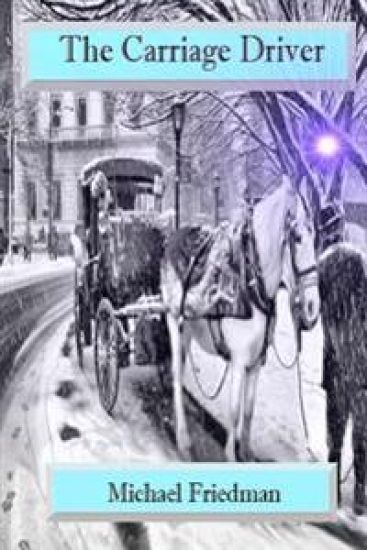
The Carriage Driver

The Carriage Driver

Michael Friedman

Mockingbird Books
2015
nidottu
We are all led to believe that there is life after death. Western religion in all of its forms advises us so. Eastern religions have their versions, and many promises are made in these religions as well. No matter the religion or continent of the world, promises have been made. The hereafter or afterlife holds many mysteries for all of us. There does not seem to be any clear measure of what lies ahead. This work presents the instances where a person's life has led to a carriage ride to the Promised Land. We are all familiar with images of the boatman in a dark pool with a shrouded body with its eyes covered with coins, carrying a soul to the land of the dead. The skiff glides into a murky gloom and drifts silently into the unknown that waits across the river Styx. The Carriage Driver requires no money; he waits patiently for all those that have gained admittance to the next higher life. The concept is simplicity itself. The Carriage Driver with his beautiful and intuitive white mare Nuelle provides passage. If the passenger wishes to wait for a loved one, there is a castle in the sky whose spires puncture heaven to accommodate them. Those that have avoided the gates of hell have obviously gained special privilege. These stories explore those privileges. The old man and the stillborn child decide to return as twin brothers. The homeless woman decides to wait at the castle for her son's turn before they continue. When it is the turn of a husband and wife of half a century who were born the same day, hour, and minute to go, they choose to ride the back of a whale with Ursa Major as their guide to the heavens. The setting is Boston, with all of its history. But there are Carriage Drivers in all cities, towns, boroughs and villages. These stories bring us hope; they inspire what is good in us, and they are meant to make you think about the setting of your hereafter. Take pause, Nuelle and The Carriage Driver are waiting for you and your loved ones. "...finds the heart and won't let go" - Genna E. "Totally engrossing and full of metaphors and deep felt emotion..." - Peg C. "Excellent and quite mysterious " - Martie C. "Your words were magical and dreamy." - Ruby F. "Magical, flowery, romantic, and more " - Mary C. "Seriously the Carriage Driver is a painting in words." - Verlie B. "I sat here for several minutes, drifting into paradise and gazing at all the flowers and images in my mind that your words created." - Phyllis D. "Your writing is as soothing as a teddy bear and as detailed as a Monet masterpiece." - Maria J. "Your Carriage Driver series is the best of the best." - Theresa D.
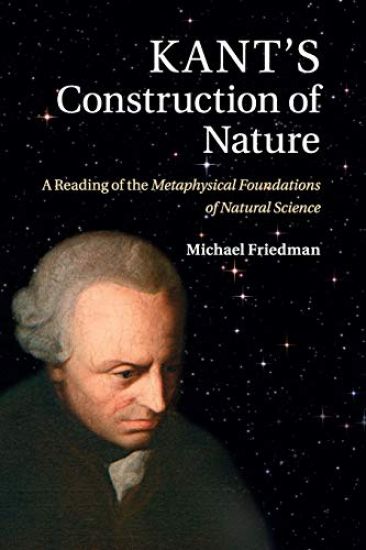
Kant's Construction of Nature

Kant's Construction of Nature

Michael Friedman

Cambridge University Press
2015
pokkari
Kant's Metaphysical Foundations of Natural Science is one of the most difficult but also most important of Kant's works. Published in 1786 between the first (1781) and second (1787) editions of the Critique of Pure Reason, the Metaphysical Foundations occupies a central place in the development of Kant's philosophy, but has so far attracted relatively little attention compared with other works of Kant's critical period. Michael Friedman's book develops a new and complete reading of this work and reconstructs Kant's main argument clearly and in great detail, explaining its relationship to both Newton's Principia and eighteenth-century scientific thinkers such as Euler and Lambert. By situating Kant's text relative to his pre-critical writings on metaphysics and natural philosophy and, in particular, to the changes Kant made in the second edition of the Critique, Friedman articulates a radically new perspective on the meaning and development of the critical philosophy as a whole.
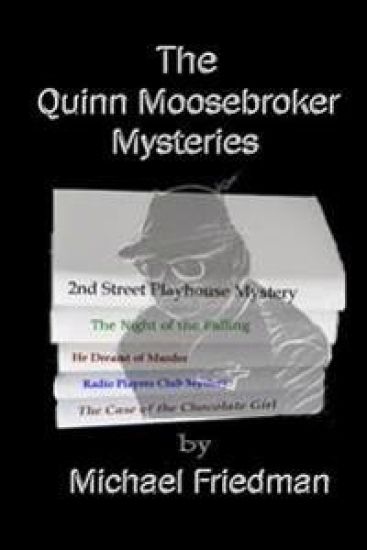
The Quinn Moosebroker Mysteries

The Quinn Moosebroker Mysteries

Michael Friedman

Mockingbird-Books
2014
nidottu
Detective Quinn Moosebroker arrived in the sleepy town of Clearview Terrace a broken man. A shoot out in the line of duty killed his partner and a second bullet ended his career with the Allentown Police Department. In his forced retirement, he lives with his daughter Kate and has become a Sunday painter. His one activity is the restoration of a 1946 wood-paneled Chrysler Town and Country and an occasional trip to the local used book shop run by Blake Knightly. Kate sets her father up on a blind date with the widow Betty Atwood to see a local play at a community theater. At the end of act one Pepper Bishop, owner of the Second Street Mystery Playhouse is murdered. Betty Atwood starts the beginning of the best first date in history and the best thing that has happened to her in the years since her husband's passing. The couples casual encounter quickly develops into a partnership that unveils a pornographers scheme to sell photographs of non-consenting Clearview Terrace ladies to a big city true-detective publisher. During Quinn and Betty's investigation Quinn bumps heads with the local authority in the form of Detective DeLaMonte a renegade dismissed from the New Orleans Police department. Eleanor Pennyworth finds Quinn Moosebroker's name in an address book with the word 'trusted' written in pencil. When her partner is found dead in his Clearview Terrace home, she calls in Quinn to investigate a missing literary manuscript known as Night of the Falling. Quinn and Betty find themselves in a world of book people and rare book treasures. Quinn relays a conversation about a young man's dream of murder to Betty he overheard on a quiet Saturday afternoon at the local barbershop. The story hits Betty so hard that while she tried to sleep that night she received a visitor in the form of a little boy at the foot of her bed. The haunting guest and Quinn's growing loyalty to Betty lead them to a government cover-up at a North Carolina Marine Corp Camp and to an aging Marine and his estranged wife. On the return home, along a cold dark southern highway, Betty adjusts the Town and Country's radio and a broadcast that correctly describes the night he was shot and his partner was killed sends them on a detour deep into a steel town and Quinn's past. The investigation undoes Dolan Braon in a local crime boss and exposes the far reaching tentacles of his organization. An innocent trip to the grand opening of a Clearview Terrace thrift store and an unexpected find send this detective duo skirting along the edges of stolen Nazi loot as they do their best to find the rightful owner of a piece of art that has survived all that has come its way. Clearview Terrace will never be the same.
Foundations of Space-Time Theories

Foundations of Space-Time Theories

Michael Friedman

Princeton University Press
2014
pokkari
This book, explores the conceptual foundations of Einstein's theory of relativity: the fascinating, yet tangled, web of philosophical, mathematical, and physical ideas that is the source of the theory's enduring philosophical interest. Originally published in 1983. The Princeton Legacy Library uses the latest print-on-demand technology to again make available previously out-of-print books from the distinguished backlist of Princeton University Press. These editions preserve the original texts of these important books while presenting them in durable paperback and hardcover editions. The goal of the Princeton Legacy Library is to vastly increase access to the rich scholarly heritage found in the thousands of books published by Princeton University Press since its founding in 1905.
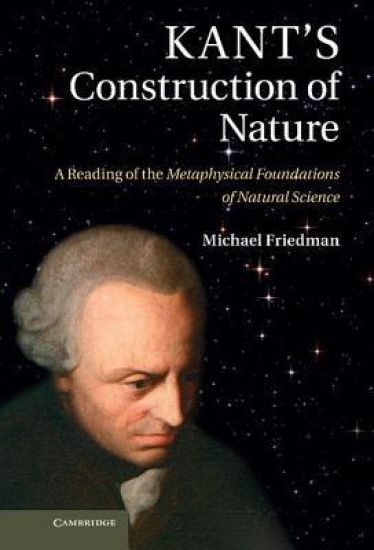
Kant's Construction of Nature

Kant's Construction of Nature

Michael Friedman

Cambridge University Press
2013
sidottu
Kant's Metaphysical Foundations of Natural Science is one of the most difficult but also most important of Kant's works. Published in 1786 between the first (1781) and second (1787) editions of the Critique of Pure Reason, the Metaphysical Foundations occupies a central place in the development of Kant's philosophy, but has so far attracted relatively little attention compared with other works of Kant's critical period. Michael Friedman's book develops a new and complete reading of this work and reconstructs Kant's main argument clearly and in great detail, explaining its relationship to both Newton's Principia and eighteenth-century scientific thinkers such as Euler and Lambert. By situating Kant's text relative to his pre-critical writings on metaphysics and natural philosophy and, in particular, to the changes Kant made in the second edition of the Critique, Friedman articulates a radically new perspective on the meaning and development of the critical philosophy as a whole.