Kirjojen hintavertailu. Mukana 12 595 353 kirjaa ja 12 kauppaa.
Kirjailija
Michael Jackson
Kirjat ja teokset yhdessä paikassa: 72 kirjaa, julkaisuja vuosilta 1982-2024, suosituimpien joukossa Machiavelliana. Vertaile teosten hintoja ja tarkista saatavuus suomalaisista kirjakaupoista.
Recent world-wide political developments have persuaded many people that we are again living in what Hannah Arendt called “dark times.” Jackson’s response to this age of uncertainty is to remind us how much experience falls outside the concepts and categories we habitually deploy in rendering life manageable and intelligible. Drawing on such critical thinkers as Hannah Arendt, Theodor Adorno, Walter Benjamin, and Karl Jaspers, whose work was profoundly influenced by the catastrophes that overwhelmed the world in the middle of the last century, Jackson explores the transformative and redemptive power of marginalized voices in the contemporary conversation of humankind.
As the Church continues the upward climb of dominance and preeminence from the abyss of the "Dark Ages" to its place of pre-determined glory through Jesus Christ, of ruling among the nations, God is manifesting His Plan, as the Holy Spirit releases revelation after revelation of what the Church is destined to be. One such example is the scripture of Ephesians: 4: 11-13."And he gave some, apostles; and some, prophets; and some, evangelists; and some, pastors and teachers; For the perfecting of the saints, for the work of the ministry, for the edifying of the body of Christ: Till we all come in the unity of the faith, and of the knowledge of the Son of God, unto a perfect man, unto the measure of the stature of the fulness of Christ."I have been asked on numerous occasion what is the "5 Fold Ministry? Many have heard of the term but really don't know what it means and they have never asked within their own church exactly what is the "5 Fold Ministry." They state they did not want to embarrass themselves. I usually have two answers for them. First, the only dumb question is the one you do not ask. As with anything else in life, how can one learn if they fail to ask questions? When it comes to your salvation, make sure you get answers. Not just answers but biblical answers. Find out where it is in the bible and then prove to yourself that you have received a biblical answer.
No building stands without having, as its base, a solid foundation. Attitude is the "advance man" of our true selves. Its roots spread inward and upward, anchored in past experiences, and the fruit branch spans outward exposed for all to see. Attitude is described as a settled way of thinking or feeling about someone or something, typically one that is re ected in a person's behavior. Attitude can be both our best friend and our worst enemy. It is more honest and more consistent than our words. It's the manner, which either draws people to us, or repels them from us. It is never content unless it is expressed. It is the librarian of our past, the speaker of our present, and the prophet of our future. Yet, who controls this attitude?You do Your attitude is 100% completely within your control There are plenty of things in life that we have no control over. For example, there is absolutely nothing we could do about how people react to us, or our products and services. All we can do is control the manner in which we react. Yet, so many people let the reactions of others determine their outlook for the day. Think about it; are you as positive, upbeat and driven on a day full of rejection or criticism, as you would be on a highly successful day?How do you react to failure? Do you walk away discouraged and complain about it or do you take control, stay focused, accept a lesson learned, and go on with your life? Success in life is based on using good judgment and good judgment is founded on life's experiences. The only way one can gain experience is through failure. We have learned success resulting from our past failures. This, and our reactions, are an honest image of our attitude.
Our title is "RELEASING THE LEADER FROM WITHIN: AN OUTLINED APPROACH." I believe that God is raising up disciples who will be developed extensively in their character and their hearts. No longer will God accept leaders who He's gifted but having NONE of HIS Grace within them "embarrass" the Church This is what necessitates the drafting of this outline booklet. We are fully persuaded this is the "Now" cry and qualification of the Holy Spirit. The reality is that many are called, but few are chosen Matthew 22:14]. Most people will look at this scripture and think that the reality of being chosen falls on the Lord: His responsibility was to grant us the opportunity to join Him in His Kingdom by sending Christ to die in our stead. IT'S OUR CHOOSING WHETHER WE ENTER IN OR NOT. WE MAKE THE FINAL DECISION What Joshua said in Joshua 24:15 still rings true today; "... if it seems evil unto you to serve the LORD, choose you this day whom ye will serve; whether the gods which your fathers served that were on the other side of the flood, or the gods of the Amorites, in whose land ye dwell: but as for me ... we will serve the LORD."Make the choice. Yes, I know it will hurt, and definitely, it will take much work. The Holy Spirit will "woooo" you but You will have to stir Yourself. ONLY YOU can "release" the Leader that is within YOU Loose Him ... let him go. The earnest expectation of all of creation is waiting for the "MANIFESTATIONS" of the sons of God. God's Speed
In Machiavelliana Michael Jackson and Damian Grace offer a comprehensive study of the uses and abuses of Niccolò Machiavelli’s name in society generally and in academic fields distant from his intellectual origins. It assesses the appropriation of Machiavelli in didactic works in management, social psychology, and primatology, scholarly texts in leaderships studies, as well as novels, plays, commercial enterprises, television dramas, operas, rap music, Mach IV scales, children’s books, and more. The book audits, surveys, examines, and evaluates this Machiavelliana against wider claims about Machiavelli. It explains the origins of Machiavelli’s reputation and the spread of his fame as the foundation for the many uses and misuses of his name. They conclude by redressing the most persistent distortions of Machiavelli.
Michael Jackson has spent much of his career elaborating his rich conception of lifeworlds, mining his ethnographic and personal experience for insights into how our subjective and social lives are mutually constituted. In How Lifeworlds Work, Jackson draws on years of ethnographic fieldwork in West Africa to highlight the dynamic quality of human relationships and reinvigorate the study of kinship and ritual. How, he asks, do we manage the perpetual process of accommodation between social norms and personal emotions, impulses, and desires? How are these two dimensions of lived reality joined, and how are the dual imperatives of individual expression and collective viability managed? Drawing on the pragmatist tradition, psychology, and phenomenology, Jackson offers an unforgettable, beautifully written account of how we make, unmake, and remake, our lifeworlds.
Michael Jackson has spent much of his career elaborating his rich conception of lifeworlds, mining his ethnographic and personal experience for insights into how our subjective and social lives are mutually constituted. In How Lifeworlds Work, Jackson draws on years of ethnographic fieldwork in West Africa to highlight the dynamic quality of human relationships and reinvigorate the study of kinship and ritual. How, he asks, do we manage the perpetual process of accommodation between social norms and personal emotions, impulses, and desires? How are these two dimensions of lived reality joined, and how are the dual imperatives of individual expression and collective viability managed? Drawing on the pragmatist tradition, psychology, and phenomenology, Jackson offers an unforgettable, beautifully written account of how we make, unmake, and remake, our lifeworlds.
Philosophy and anthropology have long debated questions of difference: rationality versus irrationality, abstraction versus concreteness, modern versus premodern. What if these disciplines instead focused on the commonalities of human experience? Would this effort bring philosophers and anthropologists closer together? Would it lead to greater insights across historical and cultural divides? In As Wide as the World Is Wise, Michael Jackson encourages philosophers and anthropologists to mine the space between localized and globalized perspectives, to resolve empirically the distinctions between the one and the many and between life and specific forms of life. His project balances abstract epistemological practice with immanent reflection, promoting a more situated, embodied, and sensuous approach to the world and its in-between spaces. Drawing on a lifetime of ethnographic fieldwork in West Africa and Aboriginal Australia, Jackson resets the language and logic of academic thought from the standpoint of other lifeworlds. He extends Kant's cosmopolitan ideal to include all human societies, achieving a radical break with elite ideas of the subjective and a more expansive conception of truth.
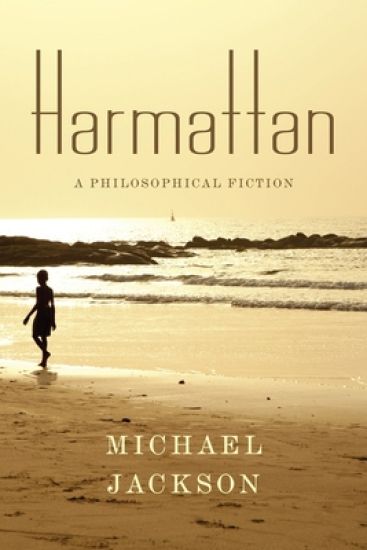
We all experience qualms and anxieties when we move from the known to the unknown. Though our fulfillment in life may depend on testing limits, our faintheartedness is a reminder of our need for security and our awareness of the risks of venturing into alien worlds. Evoking the hot, dust-filled Harmattan winds that blow from the Sahara to the Gulf of Guinea, this book creatively explores what it means to be buffeted by the unforeseen and the unknown. Celebrating the life-giving potential of people, places, and powers that lie beyond our established worlds, Harmattan connects existential vitality to the act of resisting prescribed customs and questioning received notions of truth. At the book's heart is the fictional story of Tom Lannon, a graduate student from Cambridge University, who remains ambivalent about pursuing a conventional life. After traveling to Sierra Leone in the aftermath of its devastating civil war, Tom meets a writer who helps him explore the possibilities of renewal. Illustrating the fact that certain aspects of human existence are common to all people regardless of culture and history, Harmattan remakes the distinction between home and world and the relationship between knowledge and life.
We all experience qualms and anxieties when we move from the known to the unknown. Though our fulfillment in life may depend on testing limits, our faintheartedness is a reminder of our need for security and our awareness of the risks of venturing into alien worlds. Evoking the hot, dust-filled Harmattan winds that blow from the Sahara to the Gulf of Guinea, this book creatively explores what it means to be buffeted by the unforeseen and the unknown. Celebrating the life-giving potential of people, places, and powers that lie beyond our established worlds, Harmattan connects existential vitality to the act of resisting prescribed customs and questioning received notions of truth. At the book's heart is the fictional story of Tom Lannon, a graduate student from Cambridge University, who remains ambivalent about pursuing a conventional life. After traveling to Sierra Leone in the aftermath of its devastating civil war, Tom meets a writer who helps him explore the possibilities of renewal. Illustrating the fact that certain aspects of human existence are common to all people regardless of culture and history, Harmattan remakes the distinction between home and world and the relationship between knowledge and life.
Experience every emotion known to man as these journals of journey's you've taken. Those you have not and those you would never want to. From the mouths of babes comes the accounts of things you'd love to hear and the last thing you would want known!
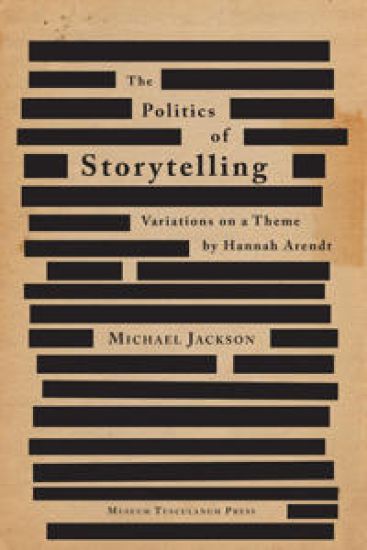
Hannah Arendt famously argued that politics are best understood as a power relationship between private and public realms. And storytelling, she argued, creates a vital bridge between these realms, a place where individual passions and shared perspectives can be contested and interwoven. In "The Politics of Storytelling", anthropologist Michael Jackson explores and expands on Arendt's notions, bringing stories from all around the world into impressive cross-cultural analysis. Jackson retells stories from the Kuranko in Sierre Leone, the Australian Aboriginals, and the South African Truth and Reconciliation Commission -- by refugees, renegades, and war veterans. Focusing on the violent and volatile conditions under which stories are told -- or silenced -- he explores the power of narrative to remake reality, enabling people to symbolically alter their relations and help reclaim an existential viability. Above all, he shows how Arendt's writings on narrative deepen our understanding of the critical, therapeutic, and politic role of storytelling, that it is one of the crucial ways by which we understand one another.
While the Three Stooges were the longest-active and most productive comedy team in Hollywood, their artistic height coincided with the years Curly was with them, from 1932 to 1946. To their fans, Curly stands out as the zaniest of the three. Famous for his high-pitched voice, his “n’yuk-n’yuk-n’yuk” and “why, soitenly,” and his astonishing athleticism, Curly was a true natural, an untrained actor with a knack for improvisation. Yet for decades, little was known about his personal life. Then, in 1985, Joan Howard Maurer, Curly’s niece, published this definitive biography. When she first set out to write the book, there was almost no biographical information available about Curly. So she spoke at length to his relatives, friends, and colleagues. She amassed a wealth of Curly memorabilia, a mixture of written material and rare photographs of Curly’s family, films, and personal life. In Curly: An Illustrated Biography of the Superstooge, she put it all together to come up with the first and only in-depth look at this crazy comedic genius. She included plenty of intimate details about his astonishing relationship with his mother, his marriages, and his interactions with his daughters and friends. Despite its excellence as a well-rounded portrait of the most unpredictable—and most popular—Stooge, Curly has long been out of print. This new edition of a timeless classic, now updated with previously unpublished facts, is sure to be appreciated by Three Stooges fans new and old.
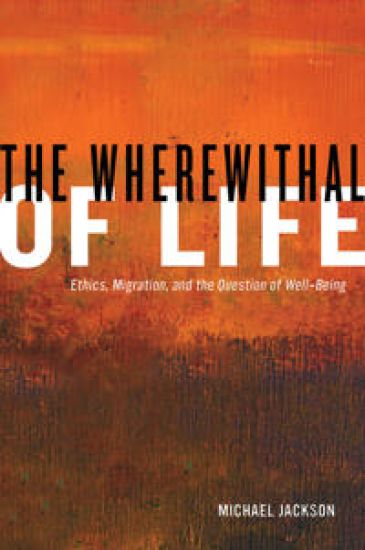
The Wherewithal of Life engages with current developments in the anthropology of ethics and migration studies to explore in empirical depth and detail the life experiences of three young men - a Ugandan migrant in Copenhagen, a Burkina Faso migrant in Amsterdam, and a Mexican migrant in Boston - in ways that significantly broaden our understanding of the existential situations and ethical dilemmas of those migrating from the global south. Michael Jackson offers the first biographically based phenomenological account of migration and mobility, providing new insights into the various motives, tactics, dilemmas, dreams, and disappointments that characterize contemporary migration. It is argued that the quandaries of African or Mexican migrants are not unique to people moving between 'traditional' and 'modern' worlds. While more intensely felt by the young, seeking to find a way out of a world of limited opportunity and circumscribed values, the experiences of transition are familiar to us all, whatever our age, gender, ethnicity or social status - namely, the impossibility of calculating what one may lose in leaving a settled life or home place; what one may gain by risking oneself in an alien environment; the difficulty of striking a balance between personal fulfillment and the moral claims of kinship; and the struggle to know the difference between 'concrete' and 'abstract' utopias (the first reasonable and worth pursuing; the second hopelessly unattainable).
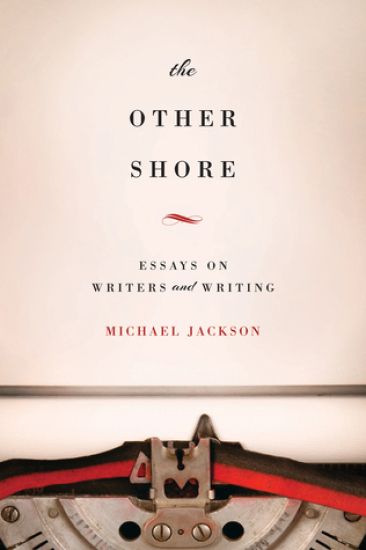
In this book, ethnographer and poet Michael Jackson addresses the interplay between modes of writing, modes of understanding, and modes of being in the world. Drawing on literary, anthropological and autobiographical sources, he explores writing as a technic akin to ritual, oral storytelling, magic and meditation, that enables us to reach beyond the limits of everyday life and forge virtual relationships and imagined communities. Although Maurice Blanchot wrote of the impossibility of writing, the passion and paradox of literature lies in its attempt to achieve the impossible - a leap of faith that calls to mind the mystic's dark night of the soul, unrequited love, nostalgic or utopian longing, and the ethnographer's attempt to know the world from the standpoint of others, to put himself or herself in their place. Every writer, whether of ethnography, poetry, or fiction, imagines that his or her own experiences echo the experiences of others, and that despite the need for isolation and silence his or her work consummates a relationship with them.