Kirjojen hintavertailu. Mukana 12 595 353 kirjaa ja 12 kauppaa.

Kirjailija

Michael Jackson

Kirjat ja teokset yhdessä paikassa: 72 kirjaa, julkaisuja vuosilta 1982-2024, suosituimpien joukossa Machiavelliana. Vertaile teosten hintoja ja tarkista saatavuus suomalaisista kirjakaupoista.

72 kirjaa

Kirjojen julkaisuhaarukka 1982-2024.

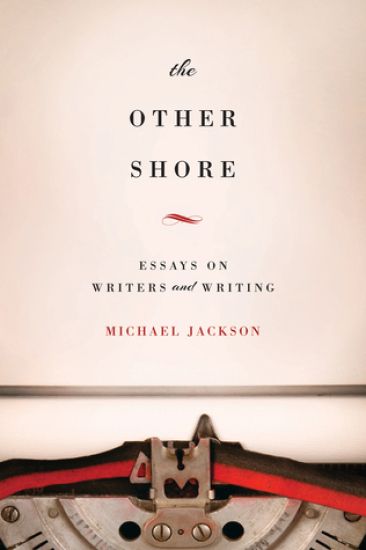
The Other Shore

The Other Shore

Michael Jackson

University of California Press
2012
sidottu
In this book, ethnographer and poet Michael Jackson addresses the interplay between modes of writing, modes of understanding, and modes of being in the world. Drawing on literary, anthropological and autobiographical sources, he explores writing as a technics akin to ritual, oral storytelling, magic and meditation, that enables us to reach beyond the limits of everyday life and forge virtual relationships and imagined communities. Although Maurice Blanchot wrote of the impossibility of writing, the passion and paradox of literature lies in its attempt to achieve the impossible - a leap of faith that calls to mind the mystic's dark night of the soul, unrequited love, nostalgic or utopian longing, and the ethnographer's attempt to know the world from the standpoint of others, to put himself or herself in their place. Every writer, whether of ethnography, poetry, or fiction, imagines that his or her own experiences echo the experiences of others, and that despite the need for isolation and silence his or her work consummates a relationship with them.
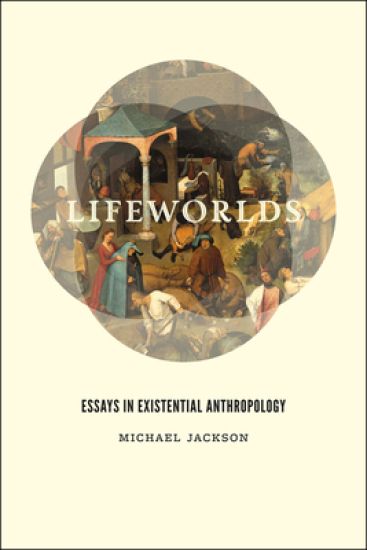
Lifeworlds

Lifeworlds

Michael Jackson

University of Chicago Press
2012
sidottu
Michael Jackson's "Lifeworlds" is a masterful collection of essays, the culmination of a career aimed at understanding the relationship between anthropology and philosophy. Seeking the truths that are found in the interstices between examiner and examined, world and word, and body and mind, and taking inspiration from James, Dewey, Arendt, Husserl, Sartre, Camus, and, especially, Merleau-Ponty, Jackson creates in these chapters a distinctive anthropological pursuit of existential inquiry. More important, he buttresses this philosophical approach with committed empirical research. Traveling from the Kuranko in Sierra Leone to the Maori in New Zealand to the Warlpiri in Australia, Jackson argues that anthropological subjects continually negotiate - imaginatively, practically, and politically - their relations with the forces surrounding them and the resources they find in themselves or in solidarity with significant others. At the same time that they mirror facets of the larger world, they also help shape it. Stitching the themes, people, and locales of these essays into a sustained argument for a philosophical anthropology that focuses on the places between, Jackson offers a pragmatic understanding of how people act to make their lives more viable, to grasp the elusive, to counteract external powers, and to turn abstract possibilities into embodied truths.
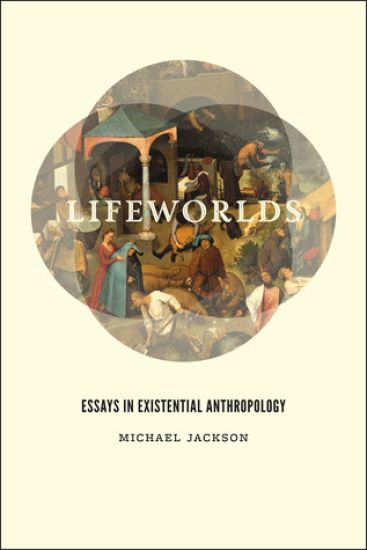
Lifeworlds

Lifeworlds

Michael Jackson

University of Chicago Press
2012
nidottu
Michael Jackson's "Lifeworlds" is a masterful collection of essays, the culmination of a career aimed at understanding the relationship between anthropology and philosophy. Seeking the truths that are found in the interstices between examiner and examined, world and word, and body and mind, and taking inspiration from James, Dewey, Arendt, Husserl, Sartre, Camus, and, especially, Merleau-Ponty, Jackson creates in these chapters a distinctive anthropological pursuit of existential inquiry. More important, he buttresses this philosophical approach with committed empirical research. Traveling from the Kuranko in Sierra Leone to the Maori in New Zealand to the Warlpiri in Australia, Jackson argues that anthropological subjects continually negotiate - imaginatively, practically, and politically - their relations with the forces surrounding them and the resources they find in themselves or in solidarity with significant others. At the same time that they mirror facets of the larger world, they also help shape it. Stitching the themes, people, and locales of these essays into a sustained argument for a philosophical anthropology that focuses on the places between, Jackson offers a pragmatic understanding of how people act to make their lives more viable, to grasp the elusive, to counteract external powers, and to turn abstract possibilities into embodied truths.
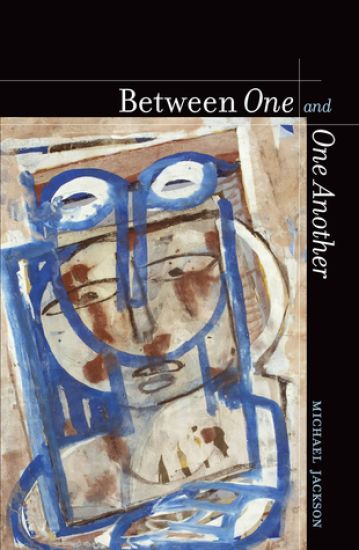
Between One and One Another

Between One and One Another

Michael Jackson

University of California Press
2012
pokkari
Michael Jackson extends his path-breaking work in existential anthropology by focusing on the interplay between two modes of human existence: that of participating in other peoples' lives and that of turning inward to one's self. Grounding his discussion in the subtle shifts between being acted upon and taking action, Jackson shows how the historical complexities and particularities found in human interactions reveal the dilemmas, conflicts, cares, and concerns that shape all of our lives. Through portraits of individuals encountered in the course of his travels, including friends and family, and anthropological fieldwork pursued over many years in such places as Sierra Leone and Australia, Jackson explores variations on this theme. As he describes the ways we address and negotiate the vexed relationships between "I" and "we" - the one and the many - he is also led to consider the place of thought in human life.
Between One and One Another

Between One and One Another

Michael Jackson

University of California Press
2012
sidottu
Michael Jackson extends his path-breaking work in existential anthropology by focusing on the interplay between two modes of human existence: that of participating in other peoples' lives and that of turning inward to one's self. Grounding his discussion in the subtle shifts between being acted upon and taking action, Jackson shows how the historical complexities and particularities found in human interactions reveal the dilemmas, conflicts, cares, and concerns that shape all of our lives. Through portraits of individuals encountered in the course of his travels, including friends and family, and anthropological fieldwork pursued over many years in such places as Sierra Leone and Australia, Jackson explores variations on this theme. As he describes the ways we address and negotiate the vexed relationships between "I" and "we" - the one and the many - he is also led to consider the place of thought in human life.
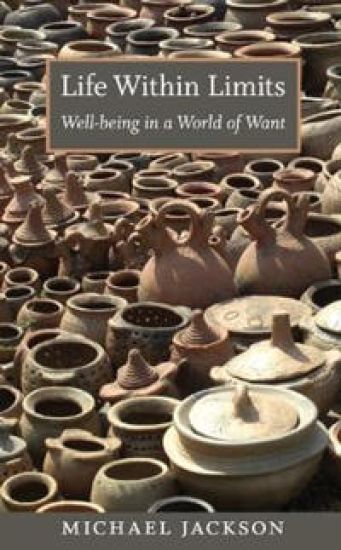
Life Within Limits

Life Within Limits

Michael Jackson

Duke University Press
2011
sidottu
The sense that well-being remains elusive, transitory, and unevenly distributed is felt by the rich as well as the poor, and in all societies. To explore this condition of existential dissatisfaction, the anthropologist Michael Jackson traveled to Sierra Leone, described in a recent UN report as the “least livable” country in the world. There he revisited the village where he did his first ethnographic fieldwork in 1969–70 and lived in 1979. Jackson writes that Africans have always faced forces from without that imperil their lives and livelihoods. Though these forces have assumed different forms at different times-slave raiding, warfare, epidemic illness, colonial domination, state interference, economic exploitation, and corrupt government-they are subject to the same mix of magical and practical reactions that affluent Westerners deploy against terrorist threats, illegal immigration, market collapse, and economic recession. Both the problem of well-being and the question of what makes life worthwhile are grounded in the mystery of existential discontent-the question as to why human beings, regardless of their external circumstances, are haunted by a sense of insufficiency and loss. While philosophers have often asked the most searching questions regarding the human condition, Jackson suggests that ethnographic method offers one of the most edifying ways of actually exploring those questions.
Life Within Limits

Life Within Limits

Michael Jackson

Duke University Press
2011
pokkari
The sense that well-being remains elusive, transitory, and unevenly distributed is felt by the rich as well as the poor, and in all societies. To explore this condition of existential dissatisfaction, the anthropologist Michael Jackson traveled to Sierra Leone, described in a recent UN report as the “least livable” country in the world. There he revisited the village where he did his first ethnographic fieldwork in 1969–70 and lived in 1979. Jackson writes that Africans have always faced forces from without that imperil their lives and livelihoods. Though these forces have assumed different forms at different times-slave raiding, warfare, epidemic illness, colonial domination, state interference, economic exploitation, and corrupt government-they are subject to the same mix of magical and practical reactions that affluent Westerners deploy against terrorist threats, illegal immigration, market collapse, and economic recession. Both the problem of well-being and the question of what makes life worthwhile are grounded in the mystery of existential discontent-the question as to why human beings, regardless of their external circumstances, are haunted by a sense of insufficiency and loss. While philosophers have often asked the most searching questions regarding the human condition, Jackson suggests that ethnographic method offers one of the most edifying ways of actually exploring those questions.
Moonwalk

Moonwalk

Michael Jackson

Cornerstone
2010
pokkari
The only book Michael Jackson ever wrote about his lifeIt chronicles his humble beginnings in the Midwest, his early days with the Jackson 5, and his unprecedented solo success.
Moonwalk: A Memoir

Moonwalk: A Memoir

Michael Jackson

Crown Archetype
2009
sidottu
The #1 New York Times bestseller Michael Jackson's one and only autobiography - his life, in his words. With original Foreword by Jacqueline Kennedy Onassis, a new Introduction by Motown founder Berry Gordy, and an Afterword by Michael Jackson's editor and publisher, Shaye Areheart. -I've always wanted to be able to tell stories, you know, stories that came from my soul. I'd like to sit by a fire and tell people stories - make them see pictures, make them cry and laugh, take them anywhere emotionally with something as deceptively simple as words. I'd like to tell tales to move their souls and transform them. I've always wanted to be able to do that. Imagine how the great writers must feel, knowing they have that power. I sometimes feel I could do it. It's something I'd like to develop. In a way, songwriting uses the same skills, creates the emotional highs and lows, but the story is a sketch. It's quicksilver. There are very few books written on the art of storytelling, how to grip listeners, how to get a group of people together and amuse them. No costumes, no makeup, no nothing, just you and your voice, and your powerful ability to take them anywhere, to transform their lives, if only for minutes.- -Michael Jackson, in MoonwalkFrom the 1988 edition: Megastar Michael Jackson's singularly brilliant career and intensely private lifestyle have become a magnificent obsession for millions of rock fans and celebrity watchers throughout the world. His double-platinum singles rocket to the top of the music charts with a velocity equaled only by the inevitable accompaniment of wild rumors about his eccentric personal life. Now for the first time, Michael Jackson breaks the fiercely guarded barrier of silence that has surrounded him in a remarkably candid and courageous book -- Moonwalk. In this intimate and often moving personal account of Michael Jackson's public and private life, he recalls a childhood that was both harsh and joyful but always formidable. Michael and his brothers played amateur music shows and seamy Chicago strip joints until Motown's corporate image makers turned the Jackson 5 into worldwide superstars. Michael Jackson and the Jackson 5 have combined sales of over 200 million albums. He talks about the happy prankster days of his youth, traveling with his brothers, and of his sometimes difficult relationships with his family over the years. He speaks candidly about the inspiration behind his music, his mesmerizing dance moves, and the compulsive drive to create that has made him one of the biggest stars in the music business and a legend in his own time. The Guinness Book of World Records lists Thriller as the biggest-selling-album of all time. In Moonwalk, Michael Jackson shares his personal feelings about some of his most public friends...friends like Diana Ross, Berry Gordy, Quincy Jones, Paul McCartney, Fred Astaire, Marlon Brando, and Katharine Hepburn. He talks openly about the crushing isolation of his fame, of his first love, of his plastic surgery, and of his wholly exceptional career and the often bizarre and unfair rumors that have surrounded it. Illustrated with rare photographs from Jackson family albums and Michael's personal photographic archives, as well as a drawing done by Michael exclusively for this book, Moonwalk is a memorable journey to the very heart and soul of a modern musical genius.
Sexual Escapades B4 Music Ministry

Sexual Escapades B4 Music Ministry

Beatrice Monique Haywood Whitley; Indure Meadows; Michael Jackson

Createspace Independent Publishing Platform
2009
nidottu
Sexual Escapades B4 Music Ministry by Trice Whitley is an unfiltered, eye-opening memoir that takes readers on a journey of personal transformation. With raw honesty and a conversational style, Trice shares her real-life experiences, diving into the struggles and lessons learned before stepping into her music ministry. This book not only explores the trials of her past but also imparts powerful insights on integrity, character, motivation, and spiritual growth. It's a must-read for anyone seeking inspiration and a reminder that redemption and purpose are possible through faith and resilience. Perfect for readers looking for an authentic and transformative story.
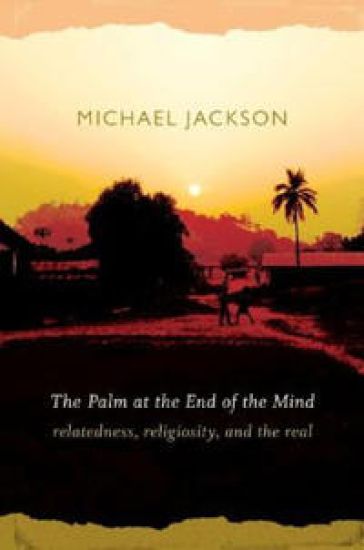
The Palm at the End of the Mind

The Palm at the End of the Mind

Michael Jackson

Duke University Press
2009
pokkari
In many societies and for many people, religiosity is only incidentally connected with texts or theologies, church or mosque, temple or monastery. Drawing on a lifetime of ethnographic work among people for whom religion is not principally a matter of faith, doctrine, or definition, Michael Jackson turns his attention to those situations in life where we come up against the limits of language, our strength, and our knowledge, yet are sometimes thrown open to new ways of understanding our being-in-the-world, to new ways of connecting with others. Through sixty-one beautifully crafted essays based on sojourns in Europe, West Africa, the United States, Australia, and New Zealand, and taking his cue from Wallace Stevens’s late poem, “Of Mere Being,” Jackson explores a range of experiences where “the palm at the end of the mind” stands “beyond thought,” on “the edge of space,” “a foreign song.” Moments of crisis as well as everyday experiences in cafés, airports, and offices disclose the subtle ways in which a single life shades into others, the boundaries between cultures become blurred, fate unfolds through genealogical time, elective affinities make their appearance, and different values contend.
The Palm at the End of the Mind

The Palm at the End of the Mind

Michael Jackson

Duke University Press
2009
sidottu
In many societies and for many people, religiosity is only incidentally connected with texts or theologies, church or mosque, temple or monastery. Drawing on a lifetime of ethnographic work among people for whom religion is not principally a matter of faith, doctrine, or definition, Michael Jackson turns his attention to those situations in life where we come up against the limits of language, our strength, and our knowledge, yet are sometimes thrown open to new ways of understanding our being-in-the-world, to new ways of connecting with others. Through sixty-one beautifully crafted essays based on sojourns in Europe, West Africa, the United States, Australia, and New Zealand, and taking his cue from Wallace Stevens’s late poem, “Of Mere Being,” Jackson explores a range of experiences where “the palm at the end of the mind” stands “beyond thought,” on “the edge of space,” “a foreign song.” Moments of crisis as well as everyday experiences in cafés, airports, and offices disclose the subtle ways in which a single life shades into others, the boundaries between cultures become blurred, fate unfolds through genealogical time, elective affinities make their appearance, and different values contend.
Excursions

Excursions

Michael Jackson

Duke University Press
2007
sidottu
A village in Sierra Leone. A refugee trail over the Pyrenees in French Catalonia. A historic copper mine in Sweden. The Shuf mountains in Lebanon. The Swiss Alps. The heart of the West African diaspora in southeast London. The anthropologist Michael Jackson makes his sojourns to each of these far-flung locations, and to his native New Zealand, occasions for exploring the contradictions and predicaments of social existence. He calls his explorations “excursions” not only because each involved breaking with settled routines and certainties, but because the image of an excursion suggests that thought is always on the way, the thinker a journeyman whose views are perpetually tested by encounters with others. Throughout Excursions, Jackson emphasizes the need for preconceptions and conventional mindsets to be replaced by the kind of open-minded critical engagement with the world that is the hallmark of cultural anthropology.Focusing on the struggles and quandaries of everyday life, Jackson touches on matters at the core of anthropology-the state, violence, exile and belonging, labor, indigenous rights, narrative, power, home, and history. He is particularly interested in the gaps that characterize human existence, such as those between insularity and openness, between the things over which we have some control and the things over which we have none, and between ourselves and others as we talk past each other, missing each others’ meanings. Urging a recognition of the limits to which human existence can be explained in terms of cause and effect, he suggests that knowing why things happen may ultimately be less important than trying to understand how people endure in the face of hardship.
Excursions

Excursions

Michael Jackson

Duke University Press
2007
pokkari
A village in Sierra Leone. A refugee trail over the Pyrenees in French Catalonia. A historic copper mine in Sweden. The Shuf mountains in Lebanon. The Swiss Alps. The heart of the West African diaspora in southeast London. The anthropologist Michael Jackson makes his sojourns to each of these far-flung locations, and to his native New Zealand, occasions for exploring the contradictions and predicaments of social existence. He calls his explorations “excursions” not only because each involved breaking with settled routines and certainties, but because the image of an excursion suggests that thought is always on the way, the thinker a journeyman whose views are perpetually tested by encounters with others. Throughout Excursions, Jackson emphasizes the need for preconceptions and conventional mindsets to be replaced by the kind of open-minded critical engagement with the world that is the hallmark of cultural anthropology.Focusing on the struggles and quandaries of everyday life, Jackson touches on matters at the core of anthropology-the state, violence, exile and belonging, labor, indigenous rights, narrative, power, home, and history. He is particularly interested in the gaps that characterize human existence, such as those between insularity and openness, between the things over which we have some control and the things over which we have none, and between ourselves and others as we talk past each other, missing each others’ meanings. Urging a recognition of the limits to which human existence can be explained in terms of cause and effect, he suggests that knowing why things happen may ultimately be less important than trying to understand how people endure in the face of hardship.
Den store ølboken

Den store ølboken

Michael Jackson

Pegasus
2007
sidottu
Med ny tekst, reviderte kart og mer enn hundre nye bilder beskriver forfatteren øl og setter store og små ølmerker inn i sin rette sammenheng. Dette er en bok som vil overraske, skrevet av en forfatter som også internasjonalt har vært en inspirasjonskilde for nye ølbryggere. Illustrert.
Existential Anthropology

Existential Anthropology

Michael Jackson

Berghahn Books
2005
pokkari
Inspired by existential thought, but using ethnographic methods, Jackson explores a variety of compelling topics, including 9/11, episodes from the war in Sierra Leone and its aftermath, the marginalization of indigenous Australians, the application of new technologies, mundane forms of ritualization, the magical use of language, the sociality of violence, the prose of suffering, and the discourse of human rights. Throughout this compelling work, Jackson demonstrates that existentialism, far from being a philosophy of individual being, enables us to explore issues of social existence and coexistence in new ways, and to theorise events as the sites of a dynamic interplay between the finite possibilities of the situations in which human beings find themselves and the capacities they yet possess for creating viable forms of social life.
Existential Anthropology

Existential Anthropology

Michael Jackson

Berghahn Books, Incorporated
2005
sidottu
Inspired by existential thought, but using ethnographic methods, Jackson explores a variety of compelling topics, including 9/11, episodes from the war in Sierra Leone and its aftermath, the marginalization of indigenous Australians, the application of new technologies, mundane forms of ritualization, the magical use of language, the sociality of violence, the prose of suffering, and the discourse of human rights. Throughout this compelling work, Jackson demonstrates that existentialism, far from being a philosophy of individual being, enables us to explore issues of social existence and coexistence in new ways, and to theorise events as the sites of a dynamic interplay between the finite possibilities of the situations in which human beings find themselves and the capacities they yet possess for creating viable forms of social life.