Kirjojen hintavertailu. Mukana 12 390 323 kirjaa ja 12 kauppaa.

Kirjailija

Michael Marder

Kirjat ja teokset yhdessä paikassa: 47 kirjaa, julkaisuja vuosilta 2010-2026, suosituimpien joukossa The Phoenix Complex. Vertaile teosten hintoja ja tarkista saatavuus suomalaisista kirjakaupoista.

47 kirjaa

Kirjojen julkaisuhaarukka 2010-2026.

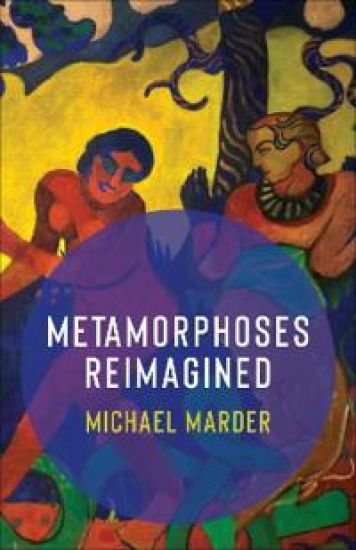
Metamorphoses Reimagined

Metamorphoses Reimagined

Michael Marder

Columbia University Press
2025
sidottu
In Ovid’s Metamorphoses, existence is perpetual transformation. Humans and gods become plants and animals, stones and stars—or something in between. No rigid distinctions remain untroubled. In his own time and in ours, Ovid’s work challenges fundamental assumptions about the universe and humans’ place in it.Metamorphoses Reimagined offers a twenty-first-century retelling of Ovid’s masterpiece that decenters the human. Michael Marder reinvents the text in new genres—letters, essays, confessions, prayers, poetic fragments, and dramatic dialogues, among others—some picking up where the original left off, others reconceiving the narrative in alternative forms. Marder’s metamorphoses invert protagonists’ relationships and reinterpret their transformations, playing with stylistic adaptations and foregrounding nonanthropocentric points of view. Above all, they explore the metamorphosis of language itself and ask in what, if any, sense the notion and the figure of the human are worth holding onto today.Providing fresh perspective on Ovid’s classic in light of contemporary concerns, Metamorphoses Reimagined is a work of breathtaking philosophical, literary, and linguistic experimentation, proposing creative ways to write and think, to be and become.
Metamorphoses Reimagined

Metamorphoses Reimagined

Michael Marder

Columbia University Press
2025
pokkari
In Ovid’s Metamorphoses, existence is perpetual transformation. Humans and gods become plants and animals, stones and stars—or something in between. No rigid distinctions remain untroubled. In his own time and in ours, Ovid’s work challenges fundamental assumptions about the universe and humans’ place in it.Metamorphoses Reimagined offers a twenty-first-century retelling of Ovid’s masterpiece that decenters the human. Michael Marder reinvents the text in new genres—letters, essays, confessions, prayers, poetic fragments, and dramatic dialogues, among others—some picking up where the original left off, others reconceiving the narrative in alternative forms. Marder’s metamorphoses invert protagonists’ relationships and reinterpret their transformations, playing with stylistic adaptations and foregrounding nonanthropocentric points of view. Above all, they explore the metamorphosis of language itself and ask in what, if any, sense the notion and the figure of the human are worth holding onto today.Providing fresh perspective on Ovid’s classic in light of contemporary concerns, Metamorphoses Reimagined is a work of breathtaking philosophical, literary, and linguistic experimentation, proposing creative ways to write and think, to be and become.
Eco-Freud From A to Z

Eco-Freud From A to Z

Michael Marder

BLOOMSBURY PUBLISHING PLC
2025
nidottu
An unprecedented conceptual portrait of Freud as an ecological thinker, this book analyzes our current approaches to ecology and the environmental crisis through the lens of psychoanalysis. Conceived as a theoretical tool-kit, the alphabetically arranged entries—from “Geo-psycho-analysis” to “Trauma extensions” and from “Fetishism and the Climate” to “Obsessive Self-Blaming”—guide the reader toward a deeper appreciation of the unconscious forces at work in our green dreams and nightmares. Along the way, an intriguing image of psychic life emerges through a careful rereading of Freud’s oeuvre, where the ego is “eco”, while minerals, animals, and plants are all given their due for the shaping of human existence.
Eco-Freud From A to Z

Eco-Freud From A to Z

Michael Marder

BLOOMSBURY PUBLISHING PLC
2025
sidottu
An unprecedented conceptual portrait of Freud as an ecological thinker, this book analyzes our current approaches to ecology and the environmental crisis through the lens of psychoanalysis. Conceived as a theoretical tool-kit, the alphabetically arranged entries—from “Geo-psycho-analysis” to “Trauma extensions” and from “Fetishism and the Climate” to “Obsessive Self-Blaming”—guide the reader toward a deeper appreciation of the unconscious forces at work in our green dreams and nightmares. Along the way, an intriguing image of psychic life emerges through a careful rereading of Freud’s oeuvre, where the ego is “eco”, while minerals, animals, and plants are all given their due for the shaping of human existence.
Lerin & Hystad : electronic flora

Lerin & Hystad : electronic flora

Elisabet Yanagisawa; Timothy Morton; Michael Marder; Lars Lerin; Brandon LaBelle; Mats Karström; Suresh Jayaram; Emanuele Coccia; Nadia Bensbih; Giovanni Aloi; Simon Torssell Lerin; Bettina Hvidevold Hystad

Art Theory Publishing
2025
nidottu
This book documents Lerin/Hystad s meetings with more than a hundred different plants through sketches, text, and music. The otherness of the non-human is by nature inexpugnable. The baseline of our sharing the planet with them, at this point in its evolutional history, entails making kin while negotiating distance. In line with the mounting environmental concerns, artists began to nurture the desire to present less mediated encounters with nature. Central to Lerin/Hystad s modus operandi is a principle of ecological interconnectedness that manifests the undeniable presence of more than human worlds. The main objective has been that of dismantling the anthropocentric view that humans are the most perfect and intelligent species on this planet while inviting us to reconsider non-human intelligences and complexities as valuable diversity. Lerin connects sensors to the plants that Hystad has carefully drawn in their environment. The sensors register electrical currents that plants produce through their biological rhythms and that form a communicational network with animals, bacteria, and fungi. Genom teckning, text och musik, samlar den här boken Lerin/Hystads möten med över hundra olika växter. Det icke-mänskliga är, till sin natur, ofrånkomligen annorlunda oss. För att vi ska kunna samexistera på jorden krävs det därför, vid denna punkt i evolutionshistorien, att vi knyter an till det främmande samtidigt som vi också aktivt förhåller oss till dess ofrånkomliga annanhet. I takt med att miljöhoten har ökat har också konstnärerna uttryckt en ökad vilja att genom konsten möta naturen direkt. Lerin/Hystads modus operandi vilar på den ekologiska sammankopplingens princip och förutsätter att det existerar fler världar än människans. Viktigast av allt har varit att nedmontera den antropocentriska bilden av människan som planetens intelligentaste och mest fulländade varelse för att i stället lyfta fram det icke-mänskligas många komplexa intelligenser som delar av en rik mångfald. Lerin kopplar sensorer till de växter som Hystad så noggrant har tecknat i det vilda. Dessa sensorer känner sedan av alla de elektriska impulser som orsakas av växternas egen biologiska rytm och som bildar kommunikationsnätverk tillsammans med djuren, bakterierna och svamparna.
The Phoenix Complex

The Phoenix Complex

Michael Marder

MIT PRESS LTD
2023
nidottu
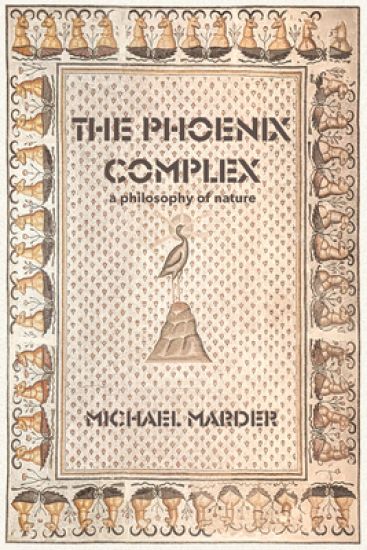
An innovative, wide-ranging consideration of the global ecological crisis and its deep philosophical and theological roots. Global crises, from melting Arctic ice to ecosystem collapse and the sixth mass extinction, challenge our age-old belief in nature as a phoenix with an infinite ability to regenerate itself from the ashes of destruction. Moving from antiquity to the present and back, Michael Marder provides an integrated examination of philosophies of nature drawn from traditions around the world to illuminate the theological, mythical, and philosophical origins of the contemporary environmental emergency. From there, he probes the contradictions and deadlocks of our current predicament to propose a philosophy of nature for the twenty-first century. As Marder analyzes our reliance on the image and idea of the phoenix to organize our thoughts about the natural world, he outlines the obstacles in the path of formulating a revitalized philosophy of nature. His critical exposition of the phoenix complex draws on Chinese, Indian, Russian, European, and North African traditions. Throughout, Marder lets the figure of the phoenix guide readers through theories of immortality, intergenerational and interspecies relations, infinity compatible with finitude, resurrection, reincarnation, and a possibility of liberation from cycles of rebirth. His concluding remarks on a phoenix-suffused philosophy of nature and political thought extend from the Roman era to the writings of Hannah Arendt.
Green Mass

Green Mass

Michael Marder

Stanford University Press
2021
sidottu
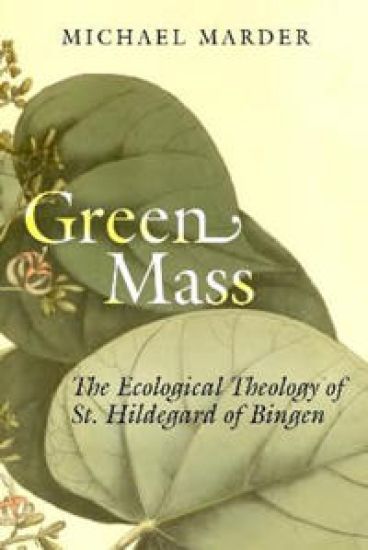
Green Mass is a meditation on—and with—twelfth-century Christian mystic and polymath Saint Hildegard of Bingen. Attending to Hildegard's vegetal vision, which greens theological tradition and imbues plant life with spirit, philosopher Michael Marder uncovers a verdant mode of thinking. The book stages a fresh encounter between present-day and premodern concerns, ecology and theology, philosophy and mysticism, the material and the spiritual, in word and sound. Hildegard's lush notion of viriditas, the vegetal power of creation, is emblematic of her deeply entwined understanding of physical reality and spiritual elevation. From blossoming flora to burning desert, Marder plays with the symphonic multiplicity of meanings in her thought, listening to the resonances between the ardency of holy fire and the aridity of a world aflame. Across Hildegard's cosmos, we hear the anarchic proliferation of her ecological theology, in which both God and greening are circular, without beginning or end. Introduced with a foreword by philosopher Marcia Sá Cavalcante Schuback and accompanied by cellist Peter Schuback's musical movements, which echo both Hildegard's own compositions and key themes in each chapter of the book, this multifaceted work creates a resonance chamber, in which to discover the living world anew. The original compositions accompanying each chapter are available free for streaming and for download at www.sup.org/greenmass
Dump Philosophy

Dump Philosophy

Michael Marder

Bloomsbury Academic
2020
nidottu
Ranging across philosophy, theology, ecology, psychology, and art, in Dump Philosophy Michael Marder argues that the earth, along with everything that lives and thinks on it, is at an advanced stage of being converted into a dump for industrial output and its by-products feeding consumerism and its excesses. Every day, scientific studies, media reports, and first-hand accounts of the rapidly deteriorating state of the environment hit us with a growing and disconcerting force. Trends such as microplastics in water, airborne toxins, topsoil degradation, and dangerous levels of carbon dioxide have upset the delicate ecological balance that has until now been sustaining life on the planet. Marder's original treatise paints a portrait of the Anthropocene as a global dump which wreaks havoc, causing disease and degrading our sensation, perception, and thinking, so that nuance is lost and ideas are reduced to soundbites in chains of free association. Describing the dump's fundamental characteristics and its effects on the body and the mind, he contemplates wider physiological, social, economic, and environmental metabolisms in the age of dumping, as well as the role of philosophy caught in its crosshairs. While surveying the devastation that is the reality of the twenty-first century, the book provides a frightening and yet intellectually spellbinding glimpse of the future.
Dump Philosophy

Dump Philosophy

Michael Marder

Bloomsbury Academic
2020
sidottu
Ranging across philosophy, theology, ecology, psychology, and art, in Dump Philosophy Michael Marder argues that the earth, along with everything that lives and thinks on it, is at an advanced stage of being converted into a dump for industrial output and its by-products feeding consumerism and its excesses. Every day, scientific studies, media reports, and first-hand accounts of the rapidly deteriorating state of the environment hit us with a growing and disconcerting force. Trends such as microplastics in water, airborne toxins, topsoil degradation, and dangerous levels of carbon dioxide have upset the delicate ecological balance that has until now been sustaining life on the planet. Marder's original treatise paints a portrait of the Anthropocene as a global dump which wreaks havoc, causing disease and degrading our sensation, perception, and thinking, so that nuance is lost and ideas are reduced to soundbites in chains of free association. Describing the dump's fundamental characteristics and its effects on the body and the mind, he contemplates wider physiological, social, economic, and environmental metabolisms in the age of dumping, as well as the role of philosophy caught in its crosshairs. While surveying the devastation that is the reality of the twenty-first century, the book provides a frightening and yet intellectually spellbinding glimpse of the future.
Political Categories

Political Categories

Michael Marder

Columbia University Press
2019
pokkari
Western philosophy has been dominated by the concept or the idea—the belief that there is one sovereign notion or singular principle that can make reality explicable and bring all that exists under its sway. In modern politics, this role is played by ideology. Left, right, or center, political schools of thought share a metaphysics of simplification. We internalize a dominant, largely unnoticeable framework, oblivious to complex, plural, and occasionally conflicting or mutually contradictory explanations for what is the case.In this groundbreaking work, Michael Marder proposes a new methodology for political science and philosophy, one which he terms “categorial thinking.” In contrast to the concept, no category alone can exhaust the meaning of anything: categories are so many folds, complications, respectful of multiplicity. Ranging from classical Aristotelian and Kantian philosophies to phenomenology and contemporary politics, Marder's book offers readers a theoretical toolbox for the interpretation of political phenomena, processes, institutions, and ideas. His categorial apparatus encompasses political temporality and spatiality; the revolutionary and conservative modalities of political actuality, possibility, and necessity; quantitative and qualitative approaches to the study of political reality; the meaning of political relations; and various senses of political being. Under this lens, the political appears not as a singular concept but as a family of categories, allowing room for new, plural, and often antagonistic ideas about the state, the people, sovereignty, and power.
Political Categories

Political Categories

Michael Marder

Columbia University Press
2019
sidottu
Western philosophy has been dominated by the concept or the idea—the belief that there is one sovereign notion or singular principle that can make reality explicable and bring all that exists under its sway. In modern politics, this role is played by ideology. Left, right, or center, political schools of thought share a metaphysics of simplification. We internalize a dominant, largely unnoticeable framework, oblivious to complex, plural, and occasionally conflicting or mutually contradictory explanations for what is the case.In this groundbreaking work, Michael Marder proposes a new methodology for political science and philosophy, one which he terms “categorial thinking.” In contrast to the concept, no category alone can exhaust the meaning of anything: categories are so many folds, complications, respectful of multiplicity. Ranging from classical Aristotelian and Kantian philosophies to phenomenology and contemporary politics, Marder's book offers readers a theoretical toolbox for the interpretation of political phenomena, processes, institutions, and ideas. His categorial apparatus encompasses political temporality and spatiality; the revolutionary and conservative modalities of political actuality, possibility, and necessity; quantitative and qualitative approaches to the study of political reality; the meaning of political relations; and various senses of political being. Under this lens, the political appears not as a singular concept but as a family of categories, allowing room for new, plural, and often antagonistic ideas about the state, the people, sovereignty, and power.
Energy Dreams

Energy Dreams

Michael Marder

Columbia University Press
2017
pokkari
The question of energy is among the most vital for the future of humanity and the flourishing of life on this planet. Yet, only very rarely (if at all) do we ask what energy is, what it means, what ends it serves, and how it is related to actuality, meaning-making, and instrumentality. Energy Dreams interrogates the ontology of energy from the first coinage of the word energeia by Aristotle to the current practice of fracking and the popularity of "energy drinks." Its sustained, multi-disciplinary investigation builds a theoretical infrastructure for an alternative energy paradigm. This study unhinges stubbornly held assumptions about energy, conceived in terms of a resource to be violently extracted from the depths of the earth and from certain living beings (such as plants, converted into biofuels), a thing that, teetering on the verge of depletion, sparks off movement and is incompatible with the inertia of rest. Consulting the insights of philosophers, theologians, psychologists and psychoanalysts, economic and political theorists, and physicists, Michael Marder argues that energy is not only a coveted object of appropriation but also the subject who dreams of amassing it; that it not only resides in the dimension of depth but also circulates on the surface; that it activates rest as much as movement, potentiality as much as actuality; and that it is both the means and the end of our pursuits. Ultimately, Marder shows that, instead of being grounded in utopian naivete, the dreams of another energy-to be procured without devastating everything in existence-derive from the suppressed concept of energy itself.
Energy Dreams

Energy Dreams

Michael Marder

Columbia University Press
2017
sidottu
The question of energy is among the most vital for the future of humanity and the flourishing of life on this planet. Yet, only very rarely (if at all) do we ask what energy is, what it means, what ends it serves, and how it is related to actuality, meaning-making, and instrumentality. Energy Dreams interrogates the ontology of energy from the first coinage of the word energeia by Aristotle to the current practice of fracking and the popularity of "energy drinks." Its sustained, multi-disciplinary investigation builds a theoretical infrastructure for an alternative energy paradigm. This study unhinges stubbornly held assumptions about energy, conceived in terms of a resource to be violently extracted from the depths of the earth and from certain living beings (such as plants, converted into biofuels), a thing that, teetering on the verge of depletion, sparks off movement and is incompatible with the inertia of rest. Consulting the insights of philosophers, theologians, psychologists and psychoanalysts, economic and political theorists, and physicists, Michael Marder argues that energy is not only a coveted object of appropriation but also the subject who dreams of amassing it; that it not only resides in the dimension of depth but also circulates on the surface; that it activates rest as much as movement, potentiality as much as actuality; and that it is both the means and the end of our pursuits. Ultimately, Marder shows that, instead of being grounded in utopian naivete, the dreams of another energy-to be procured without devastating everything in existence-derive from the suppressed concept of energy itself.
Plant-Thinking

Plant-Thinking

Michael Marder; Gianni Vattimo; Santiago Zabala

Columbia University Press
2013
pokkari
The margins of philosophy are populated by non-human, non-animal living beings, including plants. While contemporary philosophers tend to refrain from raising ontological and ethical concerns with vegetal life, Michael Marder puts this life at the forefront of the current deconstruction of metaphysics. He identifies the existential features of plant behavior and the vegetal heritage of human thought so as to affirm the potential of vegetation to resist the logic of totalization and to exceed the narrow confines of instrumentality. Reconstructing the life of plants "after metaphysics," Marder focuses on their unique temporality, freedom, and material knowledge or wisdom. In his formulation, "plant-thinking" is the non-cognitive, non-ideational, and non-imagistic mode of thinking proper to plants, as much as the process of bringing human thought itself back to its roots and rendering it plantlike.
Plant-Thinking

Plant-Thinking

Michael Marder; Gianni Vattimo; Santiago Zabala

Columbia University Press
2013
sidottu
The margins of philosophy are populated by non-human, non-animal living beings, including plants. While contemporary philosophers tend to refrain from raising ontological and ethical concerns with vegetal life, Michael Marder puts this life at the forefront of the current deconstruction of metaphysics. He identifies the existential features of plant behavior and the vegetal heritage of human thought so as to affirm the potential of vegetation to resist the logic of totalization and to exceed the narrow confines of instrumentality. Reconstructing the life of plants "after metaphysics," Marder focuses on their unique temporality, freedom, and material knowledge or wisdom. In his formulation, "plant-thinking" is the non-cognitive, non-ideational, and non-imagistic mode of thinking proper to plants, as much as the process of bringing human thought itself back to its roots and rendering it plantlike.
Groundless Existence

Groundless Existence

Michael Marder

Continuum Publishing Corporation
2012
nidottu
Groundless Existence discusses the implicit phenomenological and existential foundations of Schmitt's political philosophy. The book's unique contribution lies in its claim that Schmitt decisively breaks with the metaphysical tradition and predicates the political on the "groundless" categories of existence, including risk, decision, and agonism. This argument is substantiated by both tacit and explicit existentialist and phenomenological underpinnings of Schmitt's work, discussed here for the first time in book form. The book provides an insight into the implications of Schmitt's thought reconceptualized in the light of contemporary political developments. An essential text for anyone interested in the political theory of Carl Schmitt, it offers a new reading of Schmitt's work against the double background of phenomenology and existentialism.
The Event of the Thing

The Event of the Thing

Michael Marder

University of Toronto Press
2011
pokkari
Jacques Derrida's writings often embed the key themes of deconstruction in a notion of the thing. The Event of the Thing is the most complete examination to date of Derrida's understanding of thinghood and its crucial role in psychoanalysis, ethics, literary theory, aesthetics, and Marxism. Arguing that the thing, as a figure of otherness, destabilizes the metaphysical edifice it underlies, Michael Marder reveals the contributions it makes to critiques of humanism and idealism. Subsequently, the new realism that emerges from deconstruction holds the possibility of an event that problematizes all attempts to objectify the thing. An illuminating analysis of Derrida and phenomenology, The Event of the Thing is an innovative and compelling study of a crucial aspect of one of the twentieth century's greatest thinkers.
Of Joints and Other Articulations

Of Joints and Other Articulations

Michael Marder

NORTHWESTERN UNIVERSITY PRESS
2026
sidottu
Articulates a philosophical mode of thinking modeled after our bodily construction points What if we were to reimagine bodies of all kinds - biological and ecosystemic, political and textual, cosmic and artistic - from the perspective of their joints? This is the wager of Michael Marder's philosophical treatise, which explores the extremes of totalization and fragmentation by following the model of the joints, the structures that both articulate anddisarticulate complex living unities. Of Joints and Other Articulations: The Futures of Arthrosophy proposes that as embodied figures of relations, joints shed new light on the question of time and the meaning of art, the activity of language and the fluctuations of good and ill health, political violence and humility, conversions and perversions. Arthrosophy, the wisdom of joints, supplements and substantiates philosophy itself, teaching us how to think through and with our knees and elbows, hips and shoulders, sutures and pivot joints.
Of Joints and Other Articulations

Of Joints and Other Articulations

Michael Marder

NORTHWESTERN UNIVERSITY PRESS
2026
nidottu
Articulates a philosophical mode of thinking modeled after our bodily construction points What if we were to reimagine bodies of all kinds - biological and ecosystemic, political and textual, cosmic and artistic - from the perspective of their joints? This is the wager of Michael Marder's philosophical treatise, which explores the extremes of totalization and fragmentation by following the model of the joints, the structures that both articulate and disarticulate complex living unities. Of Joints and Other Articulations: The Futures of Arthrosophy proposes that as embodied figures of relations, joints shed new light on the question of time and the meaning of art, the activity of language and the fluctuations of good and ill health, political violence and humility, conversions and perversions. Arthrosophy, the wisdom of joints, supplements and substantiates philosophy itself, teaching us how to think through and with our knees and elbows, hips and shoulders, sutures and pivot joints.