Kirjojen hintavertailu. Mukana 12 153 008 kirjaa ja 12 kauppaa.

Kirjailija

Michael Novak

Kirjat ja teokset yhdessä paikassa: 48 kirjaa, julkaisuja vuosilta 1979-2018, suosituimpien joukossa Rebound. Vertaile teosten hintoja ja tarkista saatavuus suomalaisista kirjakaupoista.

48 kirjaa

Kirjojen julkaisuhaarukka 1979-2018.

Rebound

Rebound

Kim R. Holmes; Michael Novak

Rowman Littlefield
2013
sidottu
There is a huge concern in America today that the country is in decline, one of the few sentiments that – nationally – our increasingly polarized political leaders can agree on. Americans fear that the economy and our culture itself are in deep crisis. They are also frustrated that the ruling classes are unable to fix America’s problems. Kim R. Holmes’ Rebound taps into these concerns, taking a fresh look at how America has moved away from the principles and practices that once made it the world’s greatest nation. Far from accepting America’s inevitable decline, as so many today do, Holmes argues that decline is a choice, not an inevitability or destiny. To restore our culture, revitalize our economy, and ensure we return to being the world’s number one power, America must reconnect with its historical DNA: the ingredients of its greatness. This book lays out the vision and roadmap for how America can bounce back, with examples from throughout our nation’s history that prove we’ve always been able to meet the challenges facing us, no matter how largely they may loom.
Unmeltable Ethnics

Unmeltable Ethnics

Michael Novak

Routledge
2018
sidottu
This new, enlarged edition of an influential book originally published in 1972 as The Rise of the Unmeltable Ethnicsextends the author's wise and generous view of ethnicity. Its aim "is to raise consciousness about a crucial part of the American experience: to involve each reader in self-inquiry. Who, after all, are you? What history brought you to where you are? Why are you different from others?" But the point of such inquiry is civility: "The new ethnic consciousness embodied in this book delights in recognition of subtle differences in the movements of the soul. It is not a call to separatism but to self-consciousness. It does not seek division but rather accurate, mutual appreciation."This new edition contains six new essays by the author, including the acclaimed "Pluralism: A Humanistic Perspective." New, too, is Novak's comprehensive introduction, bringing the argument up to date. Novak describes how and why ethnicity has become a prominent issue in American politics. He also sharply denounces the current ideology of "multiculturalism" as a disfiguration of genuine ethnicity. "Multiculturalism is moved by the eros of Narcissus" Novak writes, "the new ethnicity is driven by the eros of unrestricted understanding."When the book first appeared, Time said that "Novak has attacked the American Dream in order to open up a possible second chapter for it." Newsweek called it "a tough-minded, provocative book which could well signal an important change in American politics."This new edition adds crucial distinctions for those seeking an intelligent path through such current-day mystifications as "multiculturalism" and "diversity." Twenty-five years ago, Novak's argument led the way in focusing on families, neighborhoods, and other "mediating institutions" of civil society. It is an argument critical to a realistic sense of national community.
The History of Science and the New Humanism
In this classic work, the foremost historian of science in our time, George Sarton, sums up his reflections on the role of science and of the humanities in our culture. Voicing his opposition to the old-fashioned humanists on the one hand, and to the 'uneducated' men of science and technicians on the other, Sarton points out to the former that the humanities without scientific are essentially incomplete. He warns the latter that without history, without philosophy, without arts and letters, without a living religion, human life on this planet would cease to be worthwhile.After outlining his 'Faith of a Humanist' in the opening section, Sarton goes on to analyze 'The History of Science and the History of Civilization,' to discuss the progress of scientific thought since ancient times in 'East and West,' and to propose the solution for the educational and cultural crisis of our time in 'The New Humanism' and in 'The History of Science and the Problems of Today.' He concludes not only that science is a source of technological development that has changed the face of the earth and has convulsed our lives for good and evil, but that it nonetheless affords the best means of understanding the world, its people, and the multitude of their relationships. 'Science is the conscience of mankind.'Included in this edition is Robert M. Merton's address before the Sarton Centennial meeting of November 1984. It is a stunning tour de force in its own right, providing insights into Sarton, teaching and research at Harvard in the 1930s, and the personal interaction between Sarton the mentor, and Merton the pupil. The essay supplements May Sarton's earlier 'Informal Portrait of George Sarton.'
The Guns of Lattimer

The Guns of Lattimer

Michael Novak

Routledge
2018
sidottu
On September 10, 1897, in the hamlet of Lattimer mines, Pennsylvania, an armed posse took aim and fired into a crowd of oncoming mine workers, who were marching in their corner of the coal-mining region to call their fellow miners out on strike. The marchers Poles, Slovaks, Hungarians, most of whom could not yet speak English were themselves armed only with an American flag and a timid, budding confidence in their new found rights as free men in their newly adopted country. The mine operators took another view of these rights and of the strange, alien men who claimed them. When the posse was done firing, nineteen of the demonstrators were dead and thirty-nine were seriously wounded. Some six months later a jury of their peers was to exonerate the deputies of any wrong-doing.This long-forgotten incident is here movingly retold by Michael Novak, himself the son of Slovak immigrants and one of our most gifted writers and social observers. In his hands, the so-called "Lattimer Massacre" becomes not only a powerful story in its own right (and an invaluable key to the history of the growth of the united mine Workers), but an allegory of that peculiarly American experience undergone over and over again throughout the land, and down to this very day; the experience of new immigrants, still miserable with poverty and bewilderment and suffering the trauma of culture shock, being confronted by the hostility and blind contempt of the "real" Americans.In Michael Novak's uniquely vivid account, the incident at Lattimer is seen as a tragedy brought on not so much by inhumanity as by the profound failure of majority WASP society to understand the needs and responses of "foreigners." The Guns of Lattimer is a gripping book that tells Americans, old and new, a great deal about themselves and the society they live in.
Catholic Social Thought and Liberal Institutions
Increasingly, the religious leaders of the world are addressing problems of political economy, expressing concern about the poor. But will their efforts actually help the poor? Or harm them? Much depends, Michael Novak asserts, upon what kind of institutions are constructed, that is, upon realism and practicality.His thesis may be simply stated: Although the Catholic Church during the nineteenth and early twentieth centuries set itself against liberalism as an ideology, it has slowly come to admire liberal institutions such as democracy and free markets. Between the Catholic vision of social justice and liberal institutions, Novak argues, there is a profound consonance (but not identity). Both celebrate realism, respect for institutions, and prudence or practical wisdom. The Catholic tradition adds to liberal individualism a strong communitarian sense.This book was first published in 1984 as Freedom with Justice. This new edition adds both a lengthy introduction carrying forward the original argument and a long concluding chapter on Pope John Paul IPs controversial new encyclical of early 1988, Sollicitudo Rei Socialis.
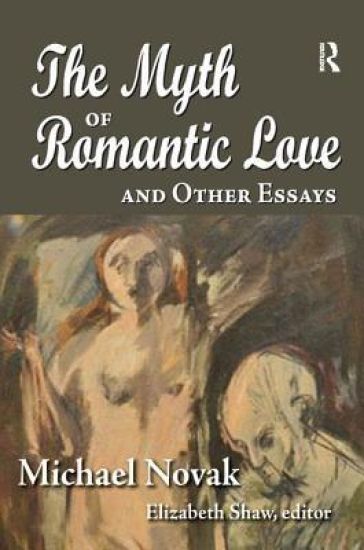
The Myth of Romantic Love and Other Essays
Written by noted Catholic philosopher Michael Novak, the selections in The Myth of Romantic Love and Other Essays highlight the arc of his intellectual career. Collectively demonstrating the fundamental unity of Novak's work, the sixteen essays in this book span a broad range of political, economic, and social topics.The selections offer clarity of thinking for the sake of concrete ends. For example, "The Myth of Romantic Love," the chapter from which the title of this work is drawn, sharply distinguishes the "love" that popular culture portrays from the true Christian vision of love. And "The Family out of Favor" argues, "if things go well with the family, life is worth living; when the family falters, life falls apart." Thus, true Christian love manifest in marriage and family life is a greater resource for civilized society than any other institution.Although this collection shows that Novak's viewpoints did evolve over time, he remains a thinker that is clearly rooted in the ancient and medieval Catholic tradition. From his discussions of gender relations, to economics, culture, and politics, his perspective honors the primacy of man and his immediate experience, and thereby ultimately glorifies the Creator. Novak's writing will infuriate some readers, and inspire many others but both comrades-in-arms and intellectual opponents will find the clarity and intensity of his writings undeniable.
Choosing Presidents

Choosing Presidents

Michael Novak

Routledge
2017
sidottu
In Choosing Presidents, Novak uses the election of an American president as a means to dissect the symbols of our national life and politics, exposing many as distorted perceptions of American realities. This work is a guide to the complexities of electoral politics and a lasting contribution to our understanding of the presidency.The author is Michael Novak.
The Experience of Nothingness

The Experience of Nothingness

Michael Novak

Routledge
2017
sidottu
In The Experience of Nothingness, Michael Novak has two objectives. First, he shows the paths by which the experience of nothingness is becoming common among all those who live in free societies. Second, he details the various experiences that lead to the nothingness point of view. Most discussions of these matters have been so implicated in the European experience that the term "nihilism" has a European ring. Novak, however, articulates this experience of formlessness in an American context.In his new introduction, the author lists four requirements that must be met by an individual in order for the experience of nothingness to emerge: a commitment to honesty, a commitment to courage, recognition of how widespread the experience of nothingness is, and a virtue of will. Novak writes that these principles are what guide self-described philosophical nihilists. But many people simply borrow the nihilistic conclusions without observing the moral commitments to them. For this reason Novak believes that nihilism is fraudulent as a theory intended to explain the experience of nothingness. Nihilism in practice, he maintains, often results in a form of intolerance. The Experience of Nothingness is a work that will cause many scholars to rethink their beliefs. It should be read by philosophers, theologians, sociologists, political theorists, and cultural historians.
Belief and Unbelief

Belief and Unbelief

Michael Novak

Routledge
2017
sidottu
This is perhaps the most widely read of Michael Novak's books. Belief and Unbelief attempts to push intelligence and articulation as far as possible into the stuff of what so many philosophers set aside as subjectivity. It is an impassioned critique of the idea of an unbridgeable gap between the emotive and the cognitive ? and in its own way, represents a major thrust at positivist analysis.Written in a context of personal tragedy as well as intellectual search, the book is grounded in the belief that human experience is enclosed within a person to person relationship with the source of all things ? sometimes in darkness, other tunes in aridity, but always in deep encounter with community and courage. It is written with a deep fidelity to classical Catholic thought as well as a sense of the writings of sociology, anthropology, and political theory?from Harold Lasswell to Friedrich von Hayek.This third edition includes Novak's brilliant 1961 article "God in the Colleges" from Harper's ? a critique of the technification of university life that rules issues of love, death, and personal destiny out of bounds, and hence leaves aside the mysteries of contingency and risk, in favor of the certainties of research, production, and consumption. For such a "lost generation" Belief and Unbelief will remain of tremendous interest and impact.When the book first appeared thirty years ago, it was praised by naturalists and religious thinkers alike. Sidney Hook called it "a remarkable book, written with verve and distinction." James Collins termed it "a lively and valuable essay from which a reflective, religiously concerned reader can draw immense profit." And The Washington Post reviewer claimed that "Novak has written a rich, relentlessly honest introduction to the problem of belief. It is a deeply personal book, rigorous in argument and open ended in conclusions."
The Open Church

The Open Church

Michael Novak

Routledge
2017
sidottu
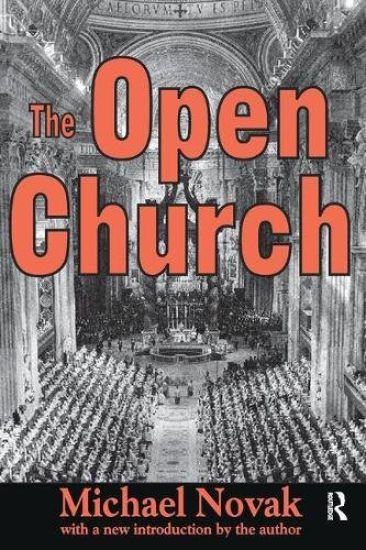
Michael Novak's eyewitness report on the second and pivotal session of Vatican II in 1964 vividly inter weaves pageantry, politics, and theology. An unusually well-informed lay intellectual, who had earned a theological degree just before the Council, Novak applauded the purposes of Pope John XXIII and his successor Paul VI-"to throw open the windows of the church." In this report, he coined the classic description of the foes of the reforms at Vatican II as the party of "nonhistorical orthodoxy," emphasizing the eternal and unchanging, neglecting history and contingency. The author recounts many moments of high drama-Pope Paul VI's opening speech, the vote on the collegiality of bishops, the plea of Cardinal Bea on behalf of the chapter on Jews, and Bishop De Smedt's defense of religious freedom. His colorful chapter on the American bishops in 1964 serves as a fascinating benchmark, as do his many insights into the new role of the laity. His final chapter is a moving tribute to the Open Church engaging the contemporary world, and his new introduction brings this report up to date. This work will be of compelling interest to those interested in the post-conciliar fall of Communism, under the great John Paul II-who took his name from his two predecessors at Vatican II. The winner of the million-dollar Templeton Prize for Progress in Religion (1994), Michael Novak is a theologian, author, and former U.S. ambassador. He currently holds the George Frederick Jewett Chair in Religion and Public Policy at the American Enterprise Institute in Washington, D.C. where he is director of social and political studies. His writings have appeared in every major Western language, and in Chinese, Bengali, Korean, and Japanese. Also available from Transaction are his Catholic Social Thought and Liberal Institutions, The Experience of Nothingness, The Guns of Lattimer, Unmeltable Ethnics, Belief and Unbelief, and Choosing Presidents.
Social Justice Isn't What You Think It Is

Social Justice Isn't What You Think It Is

Michael Novak; Paul Adams

Encounter Books,USA
2015
sidottu
What is social justice? For Friedrich Hayek, it was a mirage--a meaningless, ideological, incoherent, vacuous cliche. He believed the term should be avoided, abandoned, and allowed to die a natural death. For its proponents, social justice is a catchall term that can be used to justify any progressive-sounding government program. It endures because it venerates its champions and brands its opponents as supporters of social injustice, and thus as enemies of humankind. As an ideological marker, social justice always works best when it is not too sharply defined. In Social Justice Isn't What You Think It Is, Michael Novak and Paul Adams seek to clarify the true meaning of social justice and to rescue it from its ideological captors. In examining figures ranging from Antonio Rosmini, Abraham Lincoln, and Hayek, to Popes Leo XIII, John Paul II, and Francis, the authors reveal that social justice is not a synonym for "progressive" government as we have come to believe. Rather, it is a virtue rooted in Catholic social teaching and developed as an alternative to the unchecked power of the state. Almost all social workers see themselves as progressives, not conservatives. Yet many of their "best practices" aim to empower families and local communities. They stress not individual or state, but the vast social space between them. Left and right surprisingly meet. In this surprising reintroduction of its original intention, social justice represents an immensely powerful virtue for nurturing personal responsibility and building the human communities that can counter the widespread surrender to an ever-growing state.
The Myth of Romantic Love and Other Essays

The Myth of Romantic Love and Other Essays

Michael Novak

AldineTransaction
2013
sidottu
Written by noted Catholic philosopher Michael Novak, the selections in The Myth of Romantic Love and Other Essays highlight the arc of his intellectual career. Collectively demonstrating the fundamental unity of Novak's work, the sixteen essays in this book span a broad range of political, economic, and social topics.The selections offer clarity of thinking for the sake of concrete ends. For example, "The Myth of Romantic Love," the chapter from which the title of this work is drawn, sharply distinguishes the "love" that popular culture portrays from the true Christian vision of love. And "The Family out of Favor" argues, "if things go well with the family, life is worth living; when the family falters, life falls apart." Thus, true Christian love manifest in marriage and family life is a greater resource for civilized society than any other institution.Although this collection shows that Novak's viewpoints did evolve over time, he remains a thinker that is clearly rooted in the ancient and medieval Catholic tradition. From his discussions of gender relations, to economics, culture, and politics, his perspective honors the primacy of man and his immediate experience, and thereby ultimately glorifies the Creator. Novak's writing will infuriate some readers, and inspire many others—but both comrades-in-arms and intellectual opponents will find the clarity and intensity of his writings undeniable.
Living the Call

Living the Call

Michael Novak; William E Simon

Encounter Books,USA
2011
sidottu
Since 1965 the number of priests in the United States has fallen by some 30,000. But over that same time period, more than 30,000 laypeople have come into the employ of parishes and other Church institutions. Laypeople have stepped up to serve in a variety of new ministries, and they are relieving their pastors of many administrative burdens, enabling them to focus on their proper priestly duties. Lay teachers now outnumber nuns, brothers, and priests in Catholic schools by at least 19 to 1. In the history of the Church, laypeople have never been asked to do so much. William E. Simon, Jr. and Michael Novak call attention to this great shift in Living the Call. The first part of the book tells the personal stories of nine faithful laypeople now serving the Church in new and diverse ways. Simon and Novak's insight is that more and more who work in the Church feel the need to shape their lives in a new way, matched to their different needs and adjusted to the new base of knowledge about the world with which they begin. In response to this need, the second part of Living the Call offers practical examples and reflections on a number of themes, including entering into the presence of God and learning different forms of prayer, reading that refreshes the mind and deepens the soul, and the graces of the sacraments and how being a spouse contributes to holiness.
Intelligence as a Principle of Public Economy

Intelligence as a Principle of Public Economy

Carlo Cattaneo; Michael Novak; Carlos G. Lacaita

Lexington Books
2007
nidottu
Intelligence as a Principle of Public Economy offers the best expression of the life and thought of the nineteenth-century Italian political economist Carlo Cattaneo. Available here for the first time in English, this volume showcases pensiero come principio d'economia publica, Cattaneo's pioneering vision of economic growth that emphasized the central role of intelligence and will in economic processes, the value of knowledge and innovation, and the importance of liberty. This classic of Italian thought is framed by a long biographical sketch of Cattaneo's life before, during, and after the Italian Risorgimento and an afterword that demonstrates the continuing relevance of Cattaneo's social, political, and economic ideas to today's ongoing debate about the importance of a free society.
Washington's God

Washington's God

Jana Novak; Michael Novak

Basic Books
2007
pokkari
In Washington's God Michael Novak-one of America's leading neoconservative pundits-and his daughter, Jana, uncover George Washington's religious life. Finally the record is set straight on the most thoroughly misunderstood aspect of Washington's life. The Novaks focus on Washington's strong trust in divine Providence and see this belief as providing the unifying narrative to his monumental life.
The Tiber Was Silver

The Tiber Was Silver

Michael Novak

Ave Maria University Press
2005
nidottu
This reprint of Michael Novak’s first novel is an intriguing story about a young man preparing for priesthood in Rome and studying theology at the Gregorianum, and his struggles with whether he is truly called to the priesthood. It takes place in the 1950’s, a time of the Hungarian Revolution, the launching of the Sputnik, when Kennedy succeeded Eisenhower, just before Pope John XXIII would take the place of Pope Pius XII, and when there were evident stirrings within the Church that would ultimately result in Vatican II. The Tiber Was Silver provides a unique view of the pre-conciliar Church through the eyes of a young seminarian and draws the reader into his momentous decision.
The Founders on God and Government

The Founders on God and Government

Michael Novak

Rowman Littlefield Publishers
2004
nidottu
'In God We Trust?' The separation of church and state is a widely contested topic in the American political arena. Whether for or against, debaters frequently base their arguments in the Constitution and the principles of the American founding. However, Americans' perception of the founding has narrowed greatly over the years, focusing on a handful of eminent statesmen. By exploring the work of nine founding fathers, including often overlooked figures like John Carroll and George Mason, The Founders on God and Government provides a more complete picture of America's origins. The contributors, all noted scholars, examine the lives of individual founders and investigate the relationship between their religious beliefs and political thought. Bringing together original documents and analytical essays, this book is an excellent addition to the library of literature on the founding, and sheds new light on religion's contributions to American civic culture.