Kirjojen hintavertailu. Mukana 12 390 323 kirjaa ja 12 kauppaa.

Kirjailija

Michael O'Sullivan

Kirjat ja teokset yhdessä paikassa: 30 kirjaa, julkaisuja vuosilta 2003-2025, suosituimpien joukossa The Value of the Humanities in Higher Education. Vertaile teosten hintoja ja tarkista saatavuus suomalaisista kirjakaupoista.

Mukana myös kirjoitusasut: Michael O’Sullivan, Michael O' Sullivan

30 kirjaa

Kirjojen julkaisuhaarukka 2003-2025.

The Value of the Humanities in Higher Education

The Value of the Humanities in Higher Education

Evelyn Tsz Yan Chan; Flora Ka Yu Mak; Thomas Siu Ho Yau; Yutong Hu; Michael O'Sullivan; Eddie Tay

Springer Verlag, Singapore
2020
nidottu
This book presents an extensive analysis of the multifaceted benefits that higher education in the humanities offers individuals and society, as explored in the context of Hong Kong. Using both quantitative graduate employment survey data and qualitative data from interviews with past humanities graduates and with leading humanities scholars, the study provides an objective picture of the “value” of humanities degrees in relation to the economic needs and growth of Hong Kong, together with an in-depth exploration of their value and use in the eyes of humanities graduates and practitioners. Therefore, although it is hardly the only book on the value and status quo of the humanities worldwide, it nonetheless stands out in this crowded field as one of the very few extended studies that draws on empirical data.The book will appeal to both an academic and a wider audience, including members of the general public, non-academic educators, and government administrators interested in the status quo of humanities education, whether in Hong Kong or elsewhere. The report also includes a wealth of text taken directly from interviews with humanities graduates, who share their compelling life stories and views on the value of their humanities education.
Narrative, Digitality, Well-Being

Narrative, Digitality, Well-Being

Michael O’Sullivan

Springer International Publishing AG
2025
sidottu
Narrative, Digitality, Well-Being Narrative, Digitality, Wellbeing adopts a transdisciplinary approach in exploring new forms of narrative that have emerged in a digital age, an age of new online practices that are both associated with increased risk and enhanced sense of identity. The book examines new literary narratives, new philosophies of digitality, and new approaches to cross-disciplinary work between narrative theory and psychology in the context of digital environments, interactions, and practices. It also explores through textual analysis and quantitative and qualitative analysis how users shape and understand these new narrative interactions for their own wellbeing and how educators assess the relationships between narratives and wellbeing in the classroom and lecture theatre. The book argues that theories of narrative need to be updated to account for these new forms of narrative and to account for the new ways narrative is employed by users to enhance wellbeing.
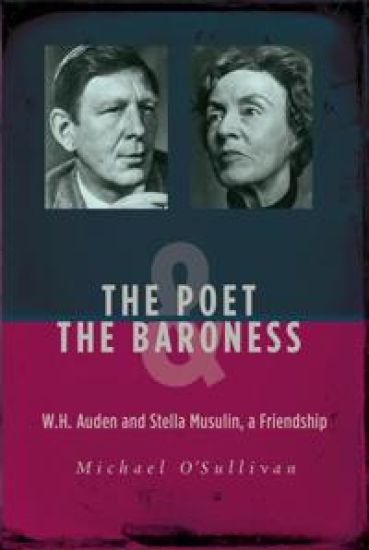
The Poet & the Baroness

The Poet & the Baroness

Michael O'Sullivan

CENTRAL EUROPEAN UNIVERSITY PRESS
2023
nidottu
For long periods in history, the Austrian capital found itself on the geographical edge of western civilisation. Yet from the 18th century on, Vienna has been a vibrant centre of European culture. This city is the scene of the formidable meeting of the two outstanding intellectuals that are at the core of this book. The warm relationship between W.H. Auden, the celebrated British-American poet (1907–1973), and his fellow expatriate, the Welsh-Austrian journalist, translator and writer Stella Musulin (1915–1996) lasted while Auden resided in the nearby small town of Kirchstetten starting in 1958. It was here that the poet was laid to rest in the autumn of 1973. This book is based on the unpublished letters of Auden to Musulin and her private journals. The study of this inspiring material yields new insights into Auden’s last, prolific, creative period and underscores the ‘Austrian Auden.’ In addition, Michael O’Sullivan pays tribute to the closest ‘Austrian’ friend of the poet. Baroness Stella von Musulin was an intellectual whose two books for Faber & Faber are acknowledged as classics: Vienna in the Age of Metternich and Austria: People & Landscape (with a foreword by Auden). The author situates the close relationship of two individuals in the context of Austria’s complex political, social, and cultural history in the Cold War years.
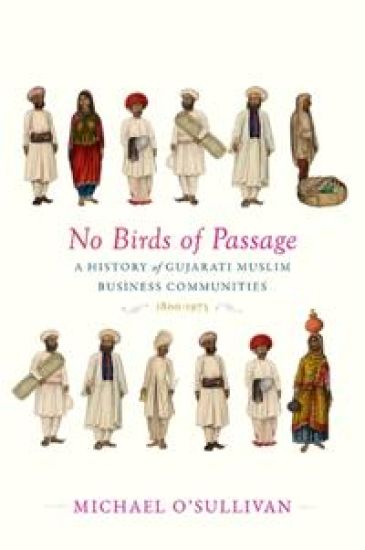
No Birds of Passage

No Birds of Passage

Michael O’Sullivan

HARVARD UNIVERSITY PRESS
2023
sidottu
A sweeping account of three Gujarati Muslim trading communities, whose commercial success over nearly two centuries sheds new light on the history of capitalism, Islam, and empire in South Asia.During the nineteenth century, three Gujarati Muslim commercial castes—the Bohras, Khojas, and Memons—came to dominate Muslim business in South Asia. Although these communities constitute less than 1 percent of South Asia’s Muslim population, they are still disproportionately represented among the region’s leading Muslim-owned firms today. In No Birds of Passage, Michael O’Sullivan argues that the conditions enabling their success have never been understood, thanks to stereotypes—embraced equally by colonial administrators and Muslim commentators—that estrange them from their religious identity. Yet while long viewed as Hindus in all but name, or as “Westernized” Muslims who embraced colonial institutions, these groups in fact entwined economic prerogatives and religious belief in a distinctive form of Muslim capitalism.Following entrepreneurial firms from Gujarat to the Hijaz, Hong Kong, Mombasa, Rangoon, and beyond, O’Sullivan reveals the importance of kinship networks, private property, and religious obligation to their business endeavors. This paradigm of Muslim capitalism found its highest expression in the jamaats, the central caste institutions of each community, which combined South Asian, Islamicate, and European traditions of corporate life. The jamaats also played an essential role in negotiating the position of all three groups in relation to British authorities and Indian Muslim nationalists, as well as the often-sharp divisions within the castes themselves.O’Sullivan’s account sheds light on Gujarati Muslim economic life from the dawn of colonial hegemony in India to the crisis of the postcolonial state, and provides fascinating insights into the broader effects of capitalist enterprise on Muslim experience in modern South Asia.
Cloneliness

Cloneliness

Michael O'Sullivan

Bloomsbury Academic USA
2021
nidottu
Recent posthuman philosophies, human-computer interface studies, and technology-inspired biopolitical discourses and practices are reinventing and reimagining loneliness in different communities. Cloneliness: The Reproduction of Loneliness takes a cross-cultural approach to loneliness by examining 20th-century artistic expressions and examinations of loneliness in the context of more recent global expressions grounded in social networks, virtual reality, the biopolitical commons, academic credentialization and such practices as Hikikomori. Newer forms of loneliness, pushed by the algorithms of biopolitical capitalism, result in what this books calls "cloneliness." Michael O'Sullivan plots the transformation in loneliness in literature and philosophy in readings that take us from Henry James and such classic works as Frank O’Connor’s The Lonely Voice and Richard Yates’s Eleven Kinds of Loneliness to more recent expressions in such writers as David Foster Wallace, Yiyun Li, and Sayaka Murata.Michael O’Sullivan argues that cloneliness as an institutional practice of reproduction in society nurtures, normalizes, and reproduces loneliness in order to create subjects who are more willing to accept ideologies of competition, “extreme individualism,” and the stresses of being "interconnected loners."
LockdownLovers

LockdownLovers

Michael O'Sullivan

Penguin Books
2021
pokkari
Lockdown Lovers is a story set across two continents, six humans and a pangolin, the mammal reportedly at the root of the virus. Pushed to the limits of their endurance in lockdown and then quarantine conditions, John Ryan, a Hong Kong academic, and Phoebe Ho, a Hong Kong district councilor, decide to break the rules of their quarantine and rediscover what has been denied them for too long – impassioned human contact. The novel alternates between the perspectives of John, John’s wife Sue, his son Sam, Phoebe, Kwok-ying, a Government Health official, Princess Selina, a millionaire’s heiress, and the pangolin, as they all find their own way to deal with the dramatic changes in their lives environments. John even travels back to Ireland, desperate to assist his parents in their lockdown. The story ends in Hong Kong in 2022, two years after the first appearance of the virus in the city. The novel reminds us of our undying capacities for contact and closeness even at times of pandemic, when they seem threatened like never before.
Cloneliness

Cloneliness

Michael O'Sullivan

Bloomsbury Academic USA
2019
sidottu
Recent posthuman philosophies, human-computer interface studies, and technology-inspired biopolitical discourses and practices are reinventing and reimagining loneliness in different communities. Cloneliness: The Reproduction of Loneliness takes a cross-cultural approach to loneliness by examining 20th-century artistic expressions and examinations of loneliness in the context of more recent global expressions grounded in social networks, virtual reality, the biopolitical commons, academic credentialization and such practices as Hikikomori. Newer forms of loneliness, pushed by the algorithms of biopolitical capitalism, result in what this books calls "cloneliness." Michael O'Sullivan plots the transformation in loneliness in literature and philosophy in readings that take us from Henry James and such classic works as Frank O’Connor’s The Lonely Voice and Richard Yates’s Eleven Kinds of Loneliness to more recent expressions in such writers as David Foster Wallace, Yiyun Li, and Sayaka Murata.Michael O’Sullivan argues that cloneliness as an institutional practice of reproduction in society nurtures, normalizes, and reproduces loneliness in order to create subjects who are more willing to accept ideologies of competition, “extreme individualism,” and the stresses of being "interconnected loners."
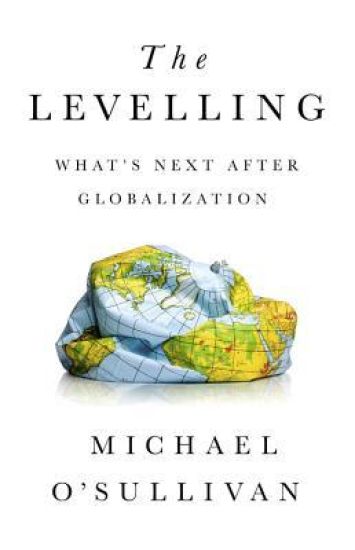
The Levelling

The Levelling

Michael O'Sullivan

PublicAffairs,U.S.
2019
sidottu
The world is at a turning point. While globalization benefited many, it produced extremes with drastic wealth inequality, indebtedness, and political volatility among the most important. As the ground underneath globalization undergoes tectonic shifts, noisy, chaotic, and disorderly events--such as Brexit and the election of Donald Trump--are the first harbingers of a world being turned upside down.In this book, Michael O'Sullivan shows the many ways the levelling of the twenty-first century will unfold: The levelling-out of wealth between rich and poor countries; of power between nations and regions; of political accountability and responsibility between political leaders and "the people"; and of institutional power--away from central banks and defunct twentieth-century institutions such as the WTO and IMF.The Levelling comes at a crucial time in the rise and fall of nations and has special importance for Americans as our place in the world undergoes radical change--the ebbing of our influence, profound questions over our economic model, the apparent decay in our society, and turmoil in our public life-- before our very eyes.
Irish Expatriatism, Language and Literature

Irish Expatriatism, Language and Literature

Michael O'Sullivan

Springer Nature Switzerland AG
2018
nidottu
This book examines how Irishness as national narrative is consistently understood ‘from a distance’. Irish Presidents, critics, and media initiatives focus on how Irishness is a global resource chiefly informed by the experiences of an Irish diaspora predominantly working in English, while also reminding Irish people ‘at home’ that Irish is the 'national tongue'. In returning to some of Ireland’s major expat writers and international diplomats, this book examines the economic reasons for their migration, the opportunities they gained by working abroad (sometimes for the British Empire), and their experiences of writing and governing in non-native English speaking communities such as China and Hong Kong. It argues that their concerns about belonging, loneliness, the desire to buy a place ‘back home’, and losing a language are shared by today’s generation of social network expatriates.
Irish Expatriatism, Language and Literature

Irish Expatriatism, Language and Literature

Michael O'Sullivan

Springer International Publishing AG
2018
sidottu
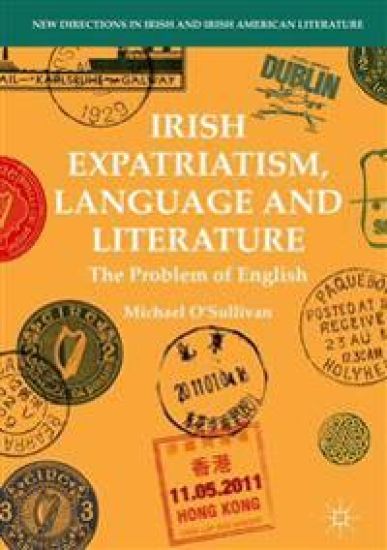
This book examines how Irishness as national narrative is consistently understood ‘from a distance’. Irish Presidents, critics, and media initiatives focus on how Irishness is a global resource chiefly informed by the experiences of an Irish diaspora predominantly working in English, while also reminding Irish people ‘at home’ that Irish is the 'national tongue'. In returning to some of Ireland’s major expat writers and international diplomats, this book examines the economic reasons for their migration, the opportunities they gained by working abroad (sometimes for the British Empire), and their experiences of writing and governing in non-native English speaking communities such as China and Hong Kong. It argues that their concerns about belonging, loneliness, the desire to buy a place ‘back home’, and losing a language are shared by today’s generation of social network expatriates.
Patrick Leigh Fermor

Patrick Leigh Fermor

Michael O'Sullivan

Central European University Press
2018
nidottu
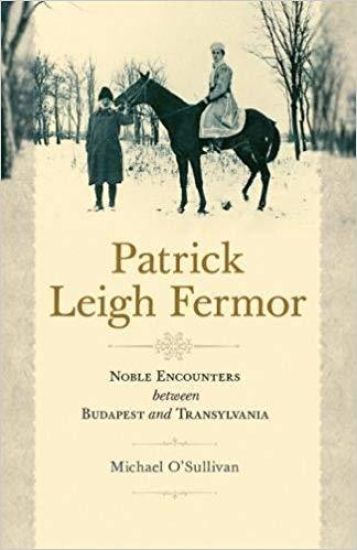
This book revisits the trajectory of one section of Patrick Leigh Fermor's famous excursion on foot from the Hook of Holland to Constantinople in the 1930s. The highly regarded British travel writer and heroic wartime Special Operations Executive officer walked into Hungary as a youth of 19 at Easter and left Transylvania in August 1934. This intrepid traveler, "a cross between Indiana Jones, James Bond and Graham Greene" as the New York Times obituary put it in 2011, published his experiences half a century later. Between the Woods and the Water, that covers the part of the epic foot journey from the middle Danube to the Iron Gates, has been a bestseller since it was first published in 1986. In the present volume Michael O'Sullivan reveals the identity of the interesting characters in the travelogue, interviewing several of them eyetoeye. The many counts and barons among his 1934 contacts are a proof of Leigh Fermor's lifelong attraction to the aristocracy. Rich with photos and other documents on places and persons both from the thirties and today, the book offers a compelling social and political history of the period and the area. It provides a particular portrait of Hungary and Transylvania when they were on the brink of momentous change.
Academic Barbarism, Universities and Inequality

Academic Barbarism, Universities and Inequality

Michael O'Sullivan

Palgrave Macmillan
2017
nidottu
The image of the university is tarnished: this book examines how recent philosophies of education, new readings of its economics, new technologies affecting research and access, and contemporary novelists' representations of university life all describe a global university that has given up on its promise of greater educational equality.
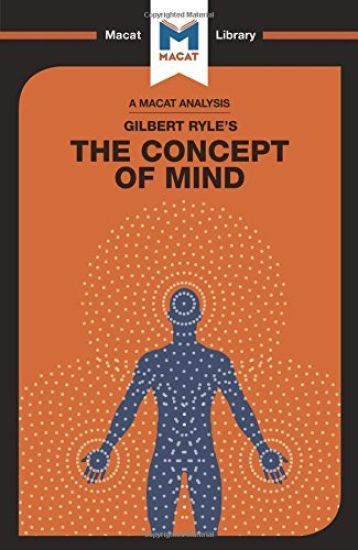
An Analysis of Gilbert Ryle's The Concept of Mind

An Analysis of Gilbert Ryle's The Concept of Mind

Michael O'sullivan

Macat International Limited
2017
sidottu
Gilbert Ryle’s 1949 The Concept of Mind is now famous above all as the origin of the phrase “the ghost in the machine” – a phrase Ryle used to attack the popular idea that our bodies and minds are separate. His own position was that mental acts are not at all distinct from bodily actions. Indeed, they are the same thing, merely described in different ways – and if one cuts through the confusing language of the old philosophical debates, he suggests, that becomes clear. While, in many ways, modern philosophers of mind have moved on from or discarded Ryle’s actual arguments, The Concept of Mind remains a classic example of two central critical thinking skills: interpretation and reasoning. Ryle was what is known as an “ordinary language” philosopher – a school who considered many philosophical problems to exist purely because of philosophical language. He therefore considered his task as a philosopher to be one of cutting through confusing language, and clarifying matters – exemplifying the critical thinking skill of interpretation at its best. Rather than adding to philosophical knowledge as such, moreover, he saw his role as one of mapping it – giving it what he called a “logical geography.” As such, The Concept of Mind is also all about reasoning: laying out, organizing, and systematizing clear arguments.
An Analysis of David Hume's An Enquiry Concerning Human Understanding
David Hume’s 1748 Enquiry Concerning Human Understanding is a modern philosophical classic that helped reshape epistemology – the philosophy of knowledge. It is also a classic of the critical thinking skills of analysis and reasoning. Analysis is all about understanding how arguments work and fit together. Having strong analytical skills helps to break down arguments, pull out the evidence on which they rely, and understand the kinds of implicit assumptions and reasons on which they work. Reasoning, meanwhile, means building and presenting arguments, forming well-structured, evidenced, and organised cases for a particular point of view. Hume applied his analytical skills to arguments about how humans know and understand the world, and how our minds work. At base, he was trying to analyse human reason itself – to show the workings and limitations of the human mind, and show the origins of our beliefs. Hume went on to apply his reasoning skills, creating an enduring argument about the nature of human knowledge. The result was one of the most striking and famous works in the history of philosophy.
Philosophical Investigations

Philosophical Investigations

Michael O'Sullivan

Macat International Limited
2017
sidottu
Many still consider Ludwig Wittgenstein’s 1953 Philosophical Investigations to be one of the breakthrough works of twentieth-century philosophy. The book sets out a radically new conception of philosophy itself, and demonstrates all the attributes of a fine analytical mind. Taking an argument from Plato and subjecting it to detailed (and very clear) analysis, Wittgenstein shows his understanding of how the sequence and function of differing parts of a highly-complex argument can be broken down and assessed. In so doing, he reaches a logical position of simultaneous agreement and disagreement with Plato’s philosophical position. Philosophical Investigations is also a powerful example of the skill of interpretation. Philosophical problems often arise from confusions in the use of language – and the way to solve these problems, Wittgenstein posits, is by clarifying language use. He argues that philosophers must study ordinary uses of language and examine how people use it as a tool in their everyday lives. In this highly-interpretative way, the meaning of a word or sentence becomes relative to the context (people, culture, community) in which it is used. Rather than debate abstract problems, Wittgenstein urges philosophers to concern themselves with ordinary life and the concrete situations in which humans find themselves.
An Analysis of Immanuel Kant's Critique of Pure Reason

An Analysis of Immanuel Kant's Critique of Pure Reason

Michael O'Sullivan

Macat International Limited
2017
sidottu
Immanuel Kant’s Critique of Pure Reason is one of the most influential works in the history of philosophy – not to mention one of the most challenging. Its topic is the nature of human knowledge, and the question of whether or not it is possible to have knowledge of the world at all. Over two centuries later, Kant’s treatise remains a subject of fierce debate among philosophers, who continue to offer new interpretations of his meaning. What is not in doubt is the work’s originality and brilliance – nor its mastery of creative thinking. Creative thinkers are able to bring a new perspective to questions and problems, look at things from a different angle, and show them in a fresh light. Kant achieved this by mediating between the two major schools of philosophical thought concerning knowledge – empiricism and rationalism – to create a complex third way. Where empiricists believed all knowledge is founded on experience, and rationalists believed true knowledge is founded on reason alone, Kant evaluated their arguments and proposed a third position – one incorporating elements of both, but within specific limits. As infamously dense as it is profound, Kant’s Critique shows creative thinking operating at a level few can aspire to reach.
An Analysis of David Hume's An Enquiry Concerning Human Understanding
David Hume’s 1748 Enquiry Concerning Human Understanding is a modern philosophical classic that helped reshape epistemology – the philosophy of knowledge. It is also a classic of the critical thinking skills of analysis and reasoning. Analysis is all about understanding how arguments work and fit together. Having strong analytical skills helps to break down arguments, pull out the evidence on which they rely, and understand the kinds of implicit assumptions and reasons on which they work. Reasoning, meanwhile, means building and presenting arguments, forming well-structured, evidenced, and organised cases for a particular point of view. Hume applied his analytical skills to arguments about how humans know and understand the world, and how our minds work. At base, he was trying to analyse human reason itself – to show the workings and limitations of the human mind, and show the origins of our beliefs. Hume went on to apply his reasoning skills, creating an enduring argument about the nature of human knowledge. The result was one of the most striking and famous works in the history of philosophy.
An Analysis of Ludwig Wittgenstein's Philosophical Investigations

An Analysis of Ludwig Wittgenstein's Philosophical Investigations

Michael O' Sullivan

Macat International Limited
2017
nidottu
Many still consider Ludwig Wittgenstein’s 1953 Philosophical Investigations to be one of the breakthrough works of twentieth-century philosophy. The book sets out a radically new conception of philosophy itself, and demonstrates all the attributes of a fine analytical mind. Taking an argument from Plato and subjecting it to detailed (and very clear) analysis, Wittgenstein shows his understanding of how the sequence and function of differing parts of a highly-complex argument can be broken down and assessed. In so doing, he reaches a logical position of simultaneous agreement and disagreement with Plato’s philosophical position. Philosophical Investigations is also a powerful example of the skill of interpretation. Philosophical problems often arise from confusions in the use of language – and the way to solve these problems, Wittgenstein posits, is by clarifying language use. He argues that philosophers must study ordinary uses of language and examine how people use it as a tool in their everyday lives. In this highly-interpretative way, the meaning of a word or sentence becomes relative to the context (people, culture, community) in which it is used. Rather than debate abstract problems, Wittgenstein urges philosophers to concern themselves with ordinary life and the concrete situations in which humans find themselves.
An Analysis of Immanuel Kant's Critique of Pure Reason

An Analysis of Immanuel Kant's Critique of Pure Reason

Michael O'Sullivan

Macat International Limited
2017
nidottu
Immanuel Kant’s Critique of Pure Reason is one of the most influential works in the history of philosophy – not to mention one of the most challenging. Its topic is the nature of human knowledge, and the question of whether or not it is possible to have knowledge of the world at all. Over two centuries later, Kant’s treatise remains a subject of fierce debate among philosophers, who continue to offer new interpretations of his meaning. What is not in doubt is the work’s originality and brilliance – nor its mastery of creative thinking. Creative thinkers are able to bring a new perspective to questions and problems, look at things from a different angle, and show them in a fresh light. Kant achieved this by mediating between the two major schools of philosophical thought concerning knowledge – empiricism and rationalism – to create a complex third way. Where empiricists believed all knowledge is founded on experience, and rationalists believed true knowledge is founded on reason alone, Kant evaluated their arguments and proposed a third position – one incorporating elements of both, but within specific limits. As infamously dense as it is profound, Kant’s Critique shows creative thinking operating at a level few can aspire to reach.
An Analysis of Gilbert Ryle's The Concept of Mind

An Analysis of Gilbert Ryle's The Concept of Mind

Michael O'sullivan

Macat International Limited
2017
nidottu
Gilbert Ryle’s 1949 The Concept of Mind is now famous above all as the origin of the phrase “the ghost in the machine” – a phrase Ryle used to attack the popular idea that our bodies and minds are separate. His own position was that mental acts are not at all distinct from bodily actions. Indeed, they are the same thing, merely described in different ways – and if one cuts through the confusing language of the old philosophical debates, he suggests, that becomes clear. While, in many ways, modern philosophers of mind have moved on from or discarded Ryle’s actual arguments, The Concept of Mind remains a classic example of two central critical thinking skills: interpretation and reasoning. Ryle was what is known as an “ordinary language” philosopher – a school who considered many philosophical problems to exist purely because of philosophical language. He therefore considered his task as a philosopher to be one of cutting through confusing language, and clarifying matters – exemplifying the critical thinking skill of interpretation at its best. Rather than adding to philosophical knowledge as such, moreover, he saw his role as one of mapping it – giving it what he called a “logical geography.” As such, The Concept of Mind is also all about reasoning: laying out, organizing, and systematizing clear arguments.