Kirjojen hintavertailu. Mukana 12 152 606 kirjaa ja 12 kauppaa.

Kirjailija

Michael Pollan

Kirjat ja teokset yhdessä paikassa: 54 kirjaa, julkaisuja vuosilta 1988-2026, suosituimpien joukossa Cómo Cambiar Tu Mente / How to Change Your Mind: Lo Que La Nueva Ciencia de la Psicodelia Nos Enseña Sobre La Conciencia, La Muerte, La Adicción, La D. Vertaile teosten hintoja ja tarkista saatavuus suomalaisista kirjakaupoista.

54 kirjaa

Kirjojen julkaisuhaarukka 1988-2026.

Cómo Cambiar Tu Mente / How to Change Your Mind: Lo Que La Nueva Ciencia de la Psicodelia Nos Enseña Sobre La Conciencia, La Muerte, La Adicción, La D
Ahora en Netflix en un docu-serie de cuatro partes llamado "How to Change Your Mind" en donde abre el camino a la historia y los usos de los psicod licos, incluidos el LSD, la psilocibina, la terapia MDMA y la mescalina. Uno de los 10 mejores libros del 2018 seg n en New York Times. En la lista de los mejores libros de Publishers Weekly del 2018 Una brillante y valiente investigaci n de Michael Pollan, autor de cinco best sellersde The New York Times, sobre la revoluci n m dica y cient fica en torno a las drogas psicod licas, y la fascinante historia de sus propias experiencias psicod licas que le cambiaron la vida. Cuando Michael Pollan se propuso investigar por qu el LSD y la psilocibina (el componente activo de las setas alucin genas) proporcionan un enorme alivio a personas que padecen condiciones de dif cil tratamiento como el trastorno por estr s postraum tico, la depresi n o la adicci n, no ten a la intenci n de escribir lo que es sin lugar a dudas su libro m s personal. Pero al descubrir c mo estas notables sustancias mejoran la vida no solo de pacientes con problemas de salud mental sino tambi n de personas que simplemente se enfrentan a los altibajos de la vida cotidiana, decidi explorar la cartograf a de la mente tanto en primera como en tercera persona. As comenz una singular aventura que lo llevar a a la experimentaci n de la conciencia alterada, a la profunda inmersi n en la neurociencia m s pionera y al contacto con una prodigiosa comunidad subterr nea de expertos psicod licos. En esta ejemplar investigaci n period stica, Pollan revisa archivos hist ricos y documentos cient ficos para separar la verdad de los mitos, la propaganda y el p nico moral alrededor de estas drogas que se ha ido acumulando desde los a os sesenta, cuando un pu ado de personajes rebeldes catalizaron una poderosa corriente hacia lo que entonces era un prometedor campo de investigaci n. Sugerente, pol mico y deslumbrante, una mezcla nica de ciencia, memoria, historia y medicina, este libro es el resultado de un viaje a una nueva, emocionante e inesperada frontera de la percepci n, de nuestra comprensi n de la mente, del yo y de nuestro lugar en el mundo. El verdadero objeto de este «diario de a bordo mental no son solo las drogas psicod licas, sino el enigma en torno a la conciencia humana y a c mo deber amos actuar cuando buscamos encontrar sentido a nuestras vidas en un mundo que nos regala al mismo tiempo momentos de placer y de dolor. ENGLISH DESCRIPTION One of the 10 New York Times Best Books 2018. A Publisher Weekly Best Book 2018 A brilliant and brave investigation by Michael Pollan, author of five New York Times best sellers, into the medical and scientific revolution taking place around psychedelic drugs--and the spellbinding story of his own life-changing psychedelic experiences When Michael Pollan set out to research how LSD and psilocybin (the active ingredient in magic mushrooms) are being used to provide relief to people suffering from difficult-to-treat conditions such as depression, addiction and anxiety, he did not intend to write what is undoubtedly his most personal book. But upon discovering how these remarkable substances are improving the lives not only of the mentally ill but also of healthy people coming to grips with the challenges of everyday life, he decided to explore the landscape of the mind in the first person as well as the third. Thus began a singular adventure into the experience of various altered states of consciousness, along with a dive deep into both the latest brain science and the thriving underground community of psychedelic therapists. Pollan sifts the historical record to separate the truth about these mysterious drugs from the myths that have surrounded them since the Sixties, when a handful of psychedelic evangelists catalyzed a powerful backlash against what was then a promising field of research. A unique and elegant blend of science, memoir, travel writing, history, and medicine, How to Change Your Mind is a triumph of participatory journalism. By turns dazzling and edifying, it is the gripping account of a journey to an exciting and unexpected new frontier in our understanding of the mind, the self, and our place in the world. The true subject of Pollan's "mental travelogue" is not just psychedelic drugs, but the eternal puzzle of human consciousness and how, in a world that offers us both struggle and beauty, we can do our best to be fully present and find meaning in our lives.
A World Appears: Exploring the Labyrinth of Consciousness
From the bestselling author of How to Change Your Mind, a pioneering search for consciousness in the brain and beyond A World Appears is the story of the quest to solve the greatest mystery in nature: consciousness. How does it feel to be you with your own personal feelings, thoughts and experiences? Every one of us is intimately familiar with consciousness, but no one knows how – or why – it came to be that three pounds of grey matter can generate a subjective point of view.The early 1990s marked the birth of a new science of consciousness, based on the assumption that the phenomenon could be explained in terms of brain activity, but that effort is faltering, and wilder ideas, such as panpsychism, are now getting a hearing. Indeed, there is now reason to doubt that ‘objective science’ as we have known it since Galileo has the right tools to plumb first-person experience. A World Appears takes Michael Pollan from the laboratories where scientists are searching for the neural correlates of consciousness to encounters with philosophers and novelists and Buddhist monks, whom he finds have just as much to teach us about consciousness, if not more.A story that begins in a brain lab in Seattle ends, of all places, in a cave in the mountains of New Mexico, where the author discovers that explaining consciousness may be less urgent than learning to practice it in our everyday lives.
A World Appears: A Journey Into Consciousness
From the #1 New York Times bestselling author of How to Change Your Mind, a panoptic exploration of consciousness--what it is, who has it, and why--and a meditation on the essence of our humanity When it comes to the phenomenon that is consciousness, there is one point on which scientists, philosophers, and artists all agree: it feels like something to be us. Yet the fact that we have subjective experience of the world remains one of nature's greatest mysteries. How is it that our mental operations are accompanied by feelings, thoughts, and a sense of self? What would a scientific investigation of our inner life look like, when we have as little distance and perspective on it as fish do of the sea? In A World Appears, Michael Pollan traces the unmapped continent that is consciousness, bringing radically different perspectives--scientific, philosophical, literary, spiritual and psychedelic--to see what each can teach us about this central fact of life. When neuroscientists began studying consciousness in the early 1990s, they sought to explain how and why three pounds of spongy gray matter could generate a subjective point of view--assuming that the brain is the source of our perceived reality. Pollan takes us to the cutting edge of the field, where scientists are entertaining more radical (and less materialist) theories of consciousness. He introduces us to "plant neurobiologists" searching for the first flicker of consciousness in plants, scientists striving to engineer feelings into AI, and psychologists and novelists seeking to capture the felt experience of our slippery stream of consciousness. In Pollan's dazzling exploration of consciousness, he discovers a world far deeper and stranger than our everyday reality. Eye-opening and mind-expanding, A World Appears takes us into the laboratories of our own minds, ultimately showing us how we might make better use of the gift of awareness to more meaningfully connect with the world and our deepest selves.
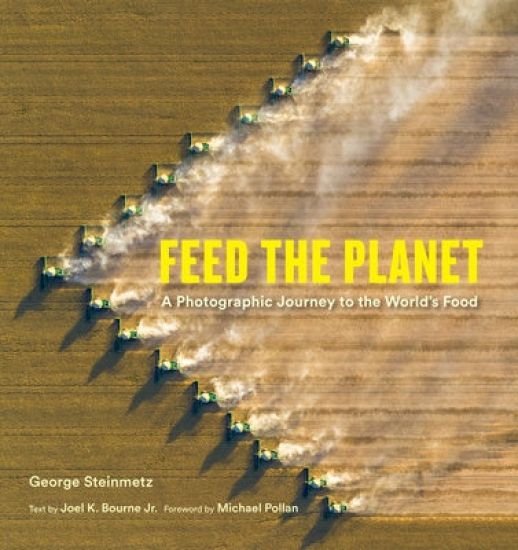
Feed the Planet

Feed the Planet

Michael Pollan

ABRAMS
2024
sidottu
"The aerial images are revelatory, sometimes unsettling and surprisingly beautiful" (New York Times Book Review) Acclaimed photographer George Steinmetz documents the awesome global effort that puts food on our tables and transforms the surface of the Earth With a foreword by Michael Pollan and an introduction and informative captions by veteran environmental journalist Joel K. Bourne Jr., Feed the Planet brings the impact of visual images, accompanied by clear explanations and accurate information, to one of humanity’s deepest needs, greatest pleasures, and most pressing challenges: Bringing nutritious and sustainably produced food to the Earth's growing population, in the face of destabilizing climate change. It’s the rare book that reveals how the world works, laying the groundwork for thinking about how our personal choices shape the future well-being of everyone. Do you know where your food comes from? To find out, photographer George Steinmetz spent a decade documenting food production in more than 36 countries on 6 continents, 24 US states, and 5 oceans. In striking aerial images, he captures the massive scale of 21st-century agriculture that has sculpted 40 percent of the Earth’s surface. He explores the farming of staples like wheat and rice, the cultivation of vegetables and fruits, fishing and aquaculture, and meat production. He surveys traditional farming in diverse cultures, and he penetrates vast agribusinesses that fuel international trade. From Kansas wheat fields to a shrimp cocktail’s origins in India to cattle stations in Australia larger than some countries, Steinmetz tracks the foods we eat back to land and sea, field and factory. He takes us places that most of us never see, although our very lives depend on them.
Madregler

Madregler

Michael Pollan

G. E. C. Gads Forlag
2024
nidottu
Madregler er en aktuel bog om vores kostvaner og de glemte nedarvede traditioner og viden om mad. Bogen omsætter denne viden til tre grundlæggende principper: Spis mad. Ikke for meget. Mest grønt.Syv enkle ord. Hverken mere eller mindre. Pollan udfolder disse syv ord til 64 brugbare regler til hverdagen. Blandt andet, at vi skal holde os fra mad, som vores olde- eller bedsteforældre, ikke ville kunne genkende, eller at vi skal spise al den junkfood, vi har lyst til, så længe vi selv tilbereder den. Madregler består af tre dele, som alle beskæftiger sig med vores kost og spisevaner: Hvad bør jeg spise? Hvilken slags mad bør jeg spise? Hvordan bør jeg spise? Det er første gang, Michael Pollan udkommer på dansk.Madreglerne er indsamlet i hele verden og udgør en blanding af de bedste husråd, overleverin­ger fra de traditionelle madkulturer og god sund fornuft. De er enkle og skabt til at hjælpe os med at spise den rigtige mad i moderate mængder. Denne bog er alt, hvad vi har brug for, for at spise og leve sundt og godt.Bogen er forsynet med et forord af Marie Hertz, kok, tv-vært og underviser på Suhrs Højskole. Kunstneren Asmund Havsteen-Mikkelsen har stået for illustrationerne. Som journalist, forfatter, underviser og aktivist er Michael Pollan (f. 1955) en markant stemme i debatten om vores madvaner i den vestlige del af verden. Han er tidligere blevet nævnt som en af de 100 mest indflydelsesrige personer i verden af Time Magazine. Pollan skriver om menneskets forbindelse til naturen og den levende verden omkring os. Navnlig den vestlige madkultur og vores fødevarer er et tilbagevendende tema i forfatterskabet, der blandt andet omfatter bøgerne Cooked, In Defense of Food og The Omnivore’s Dilemma, som alle har været på New York Times’ bestsellerliste.
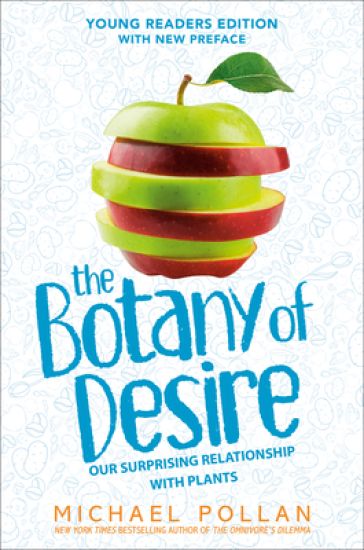
The Botany of Desire Young Readers Edition

The Botany of Desire Young Readers Edition

Michael Pollan

Penguin Young Readers
2024
pokkari
In this entertaining young readers edition of the environmental studies classic, Michael Pollan demonstrates how people and domesticated plants have formed a reciprocal relationship. He links four fundamental human desires—sweetness, beauty, energy, and control—with the plants that satisfy them: the apple, the tulip, coffee, and the potato. In telling the stories of four familiar species, Pollan illustrates how the plants have evolved to satisfy humankind’s most basic yearnings. And just as we’ve benefited from these plants, we have also helped them to thrive.
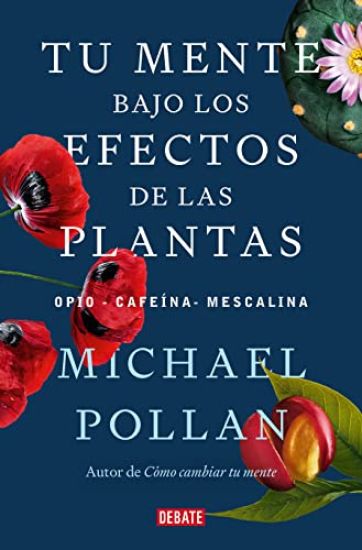
Tu Mente Bajo Los Efectos de Las Plantas / This Is Your Mind on Plants
Un libro provocador que cambiar la percepci n que tenemos de las drogas, las plantas psicoactivas y todo los tab es que las rodean. «Maravilloso. Derrumba las diferencias entre legal e ilegal, m dico y recreativo, ex tico y cotidiano, apelando al principio que une a todo ello: las afinidades entre la bioqu mica vegetal y la mente humana .--The New York Review of Books Usamos las plantas a diario para alterar nuestra conciencia. Nos relajamos con lavanda o valeriana y nos activamos con cafe na, sin jam s pensar en ello como una adicci n. Entonces por qu otras sustancias de origen vegetal, como la psilocibina o la mescalina, son ilegales? Seg n qu el criterio se ensalzan los beneficios del caf y en cambio plantar amapolas es delito en algunos lugares? Michael Pollan investiga tres drogas de origen vegetal, el opio, la cafe na y la mescalina, para mostrar la arbitrariedad de nuestro juicio respecto a estas sustancias, profundamente condicionado por el estigma social. El autor revisa el papel de las plantas psicoactivas en distintas pocas y culturas, a la vez que experimenta con sus efectos. El objetivo es comprender por qu el ser humano hace todo lo posible para alterar su conciencia y, al tiempo, limita este deseo universal con leyes y condena social. Esta obra, combinaci n de historia, divulgaci n cient fica, memorias e incluso periodismo gonzo, ofrece una mirada desprejuiciada y atenta a las distintas variables que han determinado la condena o la legalizaci n. Y da cuenta de la genuina curiosidad del ser humano a la hora de relacionarse con la naturaleza y alcanzar niveles distintos de percepci n de nuestro entorno. ENGLISH DESCRIPTION The instant New York Times bestseller A Washington Post Notable Book One of NPR's Best Books of the Year "Expert storytelling . . . Pollan] masterfully elevates a series of big questions about drugs, plants and humans that are likely to leave readers thinking in new ways." --New York Times Book Review From #1 New York Times bestselling author Michael Pollan, a radical challenge to how we think about drugs, and an exploration into the powerful human attraction to psychoactive plants--and the equally powerful taboos. Of all the things humans rely on plants for--sustenance, beauty, medicine, fragrance, flavor, fiber--surely the most curious is our use of them to change consciousness: to stimulate or calm, fiddle with or completely alter, the qualities of our mental experience. Take coffee and tea: People around the world rely on caffeine to sharpen their minds. But we do not usually think of caffeine as a drug, or our daily use as an addiction, because it is legal and socially acceptable. So, then, what is a "drug"? And why, for example, is making tea from the leaves of a tea plant acceptable but making tea from a seed head of an opium poppy a federal crime? In This Is Your Mind on Plants, Michael Pollan dives deep into three plant drugs--opium, caffeine, and mescaline--and throws the fundamental strangeness, and arbitrariness, of our thinking about them into sharp relief. Exploring and participating in the cultures that have grown up around these drugs while consuming (or, in the case of caffeine, trying not to consume) them, Pollan reckons with the powerful human attraction to psychoactive plants. Why do we go to such great lengths to seek these shifts in consciousness, and then why do we fence that universal desire with laws and customs and fraught feelings? In this unique blend of history, science, and memoir, as well as participatory journalism, Pollan examines and experiences these plants from several very different angles and contexts, and shines a fresh light on a subject that is all too often treated reductively--as a drug, whether licit or illicit. But that is one of the least interesting things you can say about these plants, Pollan shows, for when we take them into our bodies and let them change our minds, we are engaging with nature in one of the most profound ways we can. Based in part on an essay published almost twenty-five years ago, this groundbreaking and singular consideration of psychoactive plants, and our attraction to them through time, holds up a mirror to our fundamental human needs and aspirations, the operations of our minds, and our entanglement with the natural world.
Sinnenas trädgård : växterna som förändrar medvetandet
Tre droger – opium, koffein och meskalin. Han provar dem, avstår dem, väger dem etiskt. Sinnenas trädgård är essä, memoar och reportage i ett. Michael Pollan, vars förra bok Psykedelisk renässans gjorde stor internationell succé, fördjupar här sitt banbrytande sätt att se på våra grundläggande mänskliga behov och önskningar i relation till sinnesvidgande substanser.
Mir inoj. Chto psikhodelika mozhet rasskazat o soznanii, smerti, strastjakh, depressii i transtsendentnosti
Kogda Majkl Pollan gotovilsja issledovat primenenie narkoticheskikh veschestv v lechenii depressii, zavisimosti i trevozhnosti, kotorye tak slozhno poborot, on sovsem ne namerevalsja sozdavat to, chto poluchilos, - samuju lichnuju iz ego knig. No obnaruzhiv, chto eti veschestva sposobny povysit kachestvo zhizni ne tolko dushevnobolnykh, no i vpolne zdorovykh ljudej, edva sderzhivajuschikh davlenie so storony povsednevno-sti, on reshil opredelit topografiju sobstvennogo soznanija i mnogoe vpisal ot pervogo litsa. Tak nachalos ego puteshestvie po razlichnym izmenennym sostojanijam, v khode kotorogo on obraschaetsja k dostizhenijam naukio mozge. Pollan takzhe nemalo porabotal v arkhivakh, chtoby otdelit pravdu o psikhodelikakh ot rasprostranennykh mifov, dominirovavshikh v pred-stavlenijakh o nikh s 1960-kh godov, kogda lobbirovalos negativnoe otnoshenie k tomu, chto imelo potentsial dlja nauki.Eto unikalnoe sochetanie istorii, meditsiny i nauki s biograficheskimi epizodami, zakhvatyvajuschee opisanie lichnogo opyta, otsylajuschego k novomu rubezhu nashego ponimanija razuma, lichnosti i mesta v mire. Podlinnaja tema "psikhodelicheskogo traveloga" Pollana - ne tolko psikhodeliki, no i nerazreshimaja zagadka chelovecheskogo soznanija - kak v mire, stalkivajuschim nas so stradanijami i udovolstvijami, my mozhem otyskat smysl v nashikh zhiznjakh.
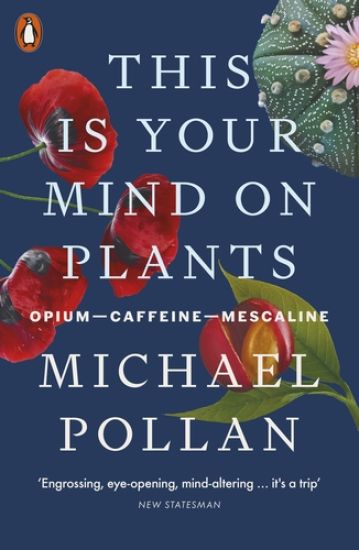
This Is Your Mind On Plants

This Is Your Mind On Plants

Michael Pollan

PENGUIN BOOKS LTD
2022
pokkari
THE INSPIRATION FOR THE MAJOR NEW NETFLIX SERIES, HOW TO CHANGE YOUR MIND 'It's a trip - engrossing, eye-opening, mind altering' New Statesman 'Fascinating. Pollan is the perfect guide ... curious, careful, open minded' The Guardian Of all the many things humans rely on plants for, surely the most curious is our use of them to change consciousness: to stimulate, calm, or completely alter the qualities of our mental experience. In This Is Your Mind On Plants, Michael Pollan explores three very different drugs - opium, caffeine and mescaline - and throws the fundamental strangeness of our thinking about them into sharp relief. Exploring and participating in the cultures that have grown up around these drugs, while consuming (or in the case of caffeine, trying not to consume) them, Pollan reckons with the powerful human attraction to psychoactive plants, and the equally powerful taboos. In a unique blend of history, science, memoir and reportage, Pollan shines a fresh light on a subject that is all too often treated reductively. In doing so, he proves that there is much more to say about these plants than simply debating their regulation, for when we take them into our bodies and let them change our minds, we are engaging with nature in one of the most profound ways we can. This ground-breaking and singular book holds up a mirror to our fundamental human needs and aspirations, the operations of our minds and our entanglement with the natural world.
This Is Your Mind on Plants

This Is Your Mind on Plants

Michael Pollan

PENGUIN BOOKS
2022
nidottu
The instant New York Times bestseller A Washington Post Notable Book One of NPR's Best Books of the Year "Expert storytelling . . . Pollan] masterfully elevates a series of big questions about drugs, plants and humans that are likely to leave readers thinking in new ways." --New York Times Book Review From #1 New York Times bestselling author Michael Pollan, a radical challenge to how we think about drugs, and an exploration into the powerful human attraction to psychoactive plants--and the equally powerful taboos. Of all the things humans rely on plants for--sustenance, beauty, medicine, fragrance, flavor, fiber--surely the most curious is our use of them to change consciousness: to stimulate or calm, fiddle with or completely alter, the qualities of our mental experience. Take coffee and tea: People around the world rely on caffeine to sharpen their minds. But we do not usually think of caffeine as a drug, or our daily use as an addiction, because it is legal and socially acceptable. So, then, what is a "drug"? And why, for example, is making tea from the leaves of a tea plant acceptable, but making tea from a seed head of an opium poppy a federal crime? In This Is Your Mind on Plants, Michael Pollan dives deep into three plant drugs--opium, caffeine, and mescaline--and throws the fundamental strangeness, and arbitrariness, of our thinking about them into sharp relief. Exploring and participating in the cultures that have grown up around these drugs while consuming (or, in the case of caffeine, trying not to consume) them, Pollan reckons with the powerful human attraction to psychoactive plants. Why do we go to such great lengths to seek these shifts in consciousness, and then why do we fence that universal desire with laws and customs and fraught feelings? In this unique blend of history, science, and memoir, as well as participatory journalism, Pollan examines and experiences these plants from several very different angles and contexts, and shines a fresh light on a subject that is all too often treated reductively--as a drug, whether licit or illicit. But that is one of the least interesting things you can say about these plants, Pollan shows, for when we take them into our bodies and let them change our minds, we are engaging with nature in one of the most profound ways we can. Based in part on an essay published almost twenty-five years ago, this groundbreaking and singular consideration of psychoactive plants, and our attraction to them through time, holds up a mirror to our fundamental human needs and aspirations, the operations of our minds, and our entanglement with the natural world.
This Is Your Mind on Plants

This Is Your Mind on Plants

Michael Pollan

PENGUIN AUDIOBOOKS
2021
cd
The instant New York Times bestseller A Washington Post Notable Book One of NPR's Best Books of the Year "Expert storytelling . . . Pollan] masterfully elevates a series of big questions about drugs, plants and humans that are likely to leave readers thinking in new ways." --New York Times Book Review From #1 New York Times bestselling author Michael Pollan, a radical challenge to how we think about drugs, and an exploration into the powerful human attraction to psychoactive plants--and the equally powerful taboos. Of all the things humans rely on plants for--sustenance, beauty, medicine, fragrance, flavor, fiber--surely the most curious is our use of them to change consciousness: to stimulate or calm, fiddle with or completely alter, the qualities of our mental experience. Take coffee and tea: People around the world rely on caffeine to sharpen their minds. But we do not usually think of caffeine as a drug, or our daily use as an addiction, because it is legal and socially acceptable. So, then, what is a "drug"? And why, for example, is making tea from the leaves of a tea plant acceptable, but making tea from a seed head of an opium poppy a federal crime? In This Is Your Mind on Plants, Michael Pollan dives deep into three plant drugs--opium, caffeine, and mescaline--and throws the fundamental strangeness, and arbitrariness, of our thinking about them into sharp relief. Exploring and participating in the cultures that have grown up around these drugs while consuming (or, in the case of caffeine, trying not to consume) them, Pollan reckons with the powerful human attraction to psychoactive plants. Why do we go to such great lengths to seek these shifts in consciousness, and then why do we fence that universal desire with laws and customs and fraught feelings? In this unique blend of history, science, and memoir, as well as participatory journalism, Pollan examines and experiences these plants from several very different angles and contexts, and shines a fresh light on a subject that is all too often treated reductively--as a drug, whether licit or illicit. But that is one of the least interesting things you can say about these plants, Pollan shows, for when we take them into our bodies and let them change our minds, we are engaging with nature in one of the most profound ways we can. Based in part on an essay published almost twenty-five years ago, this groundbreaking and singular consideration of psychoactive plants, and our attraction to them through time, holds up a mirror to our fundamental human needs and aspirations, the operations of our minds, and our entanglement with the natural world.
This Is Your Mind on Plants

This Is Your Mind on Plants

Michael Pollan

Random House Large Print Publishing
2021
nidottu
From #1 New York Times bestselling author Michael Pollan, a radical challenge to how we think about drugs, and an exploration into the powerful human attraction to psychoactive plants--and the equally powerful taboos. Of all the things humans rely on plants for--sustenance, beauty, medicine, fragrance, flavor, fiber--surely the most curious is our use of them to change consciousness: to stimulate or calm, fiddle with or completely alter, the qualities of our mental experience. Take coffee and tea: People around the world rely on caffeine to sharpen their minds. But we do not usually think of caffeine as a drug, or our daily use as an addiction, because it is legal and socially acceptable. So, then, what is a "drug"? And why, for example, is making tea from the leaves of a tea plant acceptable, but making tea from a seed head of an opium poppy a federal crime? In This Is Your Mind on Plants, Michael Pollan dives deep into three plant drugs--opium, caffeine, and mescaline--and throws the fundamental strangeness, and arbitrariness, of our thinking about them into sharp relief. Exploring and participating in the cultures that have grown up around these drugs while consuming (or, in the case of caffeine, trying not to consume) them, Pollan reckons with the powerful human attraction to psychoactive plants. Why do we go to such great lengths to seek these shifts in consciousness, and then why do we fence that universal desire with laws and customs and fraught feelings? In this unique blend of history, science, and memoir, as well as participatory journalism, Pollan examines and experiences these plants from several very different angles and contexts, and shines a fresh light on a subject that is all too often treated reductively--as a drug, whether licit or illicit. But that is one of the least interesting things you can say about these plants, Pollan shows, for when we take them into our bodies and let them change our minds, we are engaging with nature in one of the most profound ways we can. Based in part on an essay published almost twenty-five years ago, this groundbreaking and singular consideration of psychoactive plants, and our attraction to them through time, holds up a mirror to our fundamental human needs and aspirations, the operations of our minds, and our entanglement with the natural world.
Din foranderlige bevidsthed

Din foranderlige bevidsthed

Michael Pollan

Forlaget Klim
2019
nidottu
Kan psykedeliske stoffer være en måde at tænke anderledes om dødsangst, depression og alderdom på? Ja, kan de ændre vores syn på verden? Michael Pollan tager os på en gribende og fascinerende rejse fra genkomsten af psilocybin og LSD i psykiatrisk forskning og ud mod sindets horisonter og muligheder.Da LSD blev opdaget i 1940’erne, troede lægerne, de stod på tærsklen af en psykologisk revolution. De så overvældende resultater i behandlingen af lidelser som afhængighed og depression – og mulighed for at bruge de psykedeliske stoffer til at undersøge bevidsthedens mysterier. Men optimismen varede ikke ved. Da ungdomsoprøret rullede ind over USA i 1960’erne, blev de psykedeliske stoffer koblet til modkulturen og presset ud af universiteterne og politisk under jorden. I 40 år turde ingen tage forskningen op.Lige indtil et umage par – en Silicon Valley-ingeniør der bor i en skov og en højt estimeret, ranglet professor med hang til meditation – i 2006 fik godkendt et studie på det prestigefyldte universitet Johns Hopkins.I dag er en stille, men gennemgribende revolution i gang. Studier viser, at dødeligt syge kræftpatienter kan håndtere deres dødsangst efter at være guidet af en psykolog gennem en psilocybinoplevelse. USA’s og EU’s lægemiddelmyndigheder finansierer enorme studier i psykedeliske stoffer, fordi man håber, de kan afhjælpe den truende depressionsbølge, der er ved at slå ind over den vestlige verden. I London er det første center for psykedelisk forskning åbnet. Og på Rigshospitalet undersøger man effekterne på hjernen.I ‘Din foranderlige bevidsthed’ fortæller Michael Pollan på varm, uhelbredeligt nysgerrig og sober vis historien om de psykedeliske stoffer. Han beskriver, hvad der skete, da det første forskningskapitel blev fortrængt, og hvordan det andet folder sig ud lige nu. Han tager os på en rejse ind i en verden af psykologer, shamaner og svampejægere, der beretter om exceptionelle oplevelser med dyb og forandrende effekt. Kigger med i hjernescanneren, når forskerne viser, hvordan det netværk i hjernen, der er knyttet til vores selv, dæmpes. Og endelig prøver han (for første gang i en alder af næsten 60) stofferne selv.En rapport fra det, der meget vel kan være fremtiden for vores psykologi og vores forskning i bevidsthed.
Psykedelisk renessanse

Psykedelisk renessanse

Michael Pollan

Flux
2019
sidottu
Da den amerikanske journalisten Michael Pollan prøvde psykedeliske stoffer, oppdaget han at det fantes et liv etter egoet. Hvorfor ble stoffene så tabubelagt at all forskning på dem stanset i flere tiår? Og hvilken rolle kan de spille i fremtidens psykiatri? Da LSD ble oppdaget på 1940-tallet, opplevde leger og forskere at vi stod overfor en psykologisk revolusjon. LSD bar på et løfte om å skape en forståelse av hva bevissthet er, samt å lindre psykisk lidelse. Så kom 60-tallet, hvor en politisk motreaksjon til hippiebevegelsen satte en stopper for videre forskning. Psykedeliske stoffer ble stigmatisert og kriminalisert. Evnen til å knekke noen av menneskelivets største gåter, bevissthet og psykisk lidelse, forsvant. Michael Pollan er en av verdens fremste vitenskapsforfattere. I «Psykedelisk renessanse» tegner han et portrett av en ny generasjon forskere som strever med å knuse mytene rundt psykedeliske stoffer. Han går dypt inn i bevisstheten for å forstå hvordan vi kan redusere angst, stress og avhengighetsproblematikk. Boken er en modig granskning av den pågående medisinske og vitenskapelige revolusjonen rundt psykedeliske stoffer. Pollan forteller også den fascinerende historien om sine egne, livsendrende erfaringer med psykedelika.
Psykedelisk renässans : den nya vetenskapen om medvetandet, döden, beroende, depression och transcedens
När LSD upptäcktes på 1940-talet tycktes det för forskare och läkare utgöra startpunkten för en psykologisk revolution. De psykedeliska substanserna föreföll inte bara kunna sprida ljus över medvetandets mysterier utan också ge lindring mot missbruk och psykiskt lidande.På 1960-talet ledde en omfattande spridning av LSD, magiska svampar och andra psykedeliska substanser till en motreaktion och all forskning förbjöds. Men inte alla lät sig tystas. Under senare år har forskningen gradvis återupptagits och vetenskapliga artiklar har publicerats om dessa medels potential. Kan dessa substanser, givna under kontrollerade former, bota depressioner och missbruk, lindra ångest i livets slutskede eller rentav förbättra människors liv?I Psykedelisk renässans ger sig den amerikanske journalisten Michael Pollan ut på en hisnande resa i de psykedeliska substansernas historia och praktik, möter den nya generation av forskare som idag står i frontlinjen och tar del av neurovetenskapens senaste landvinningar. Är världen redo att omvärdera psykedeliska substanser och släppa fördomarna?