Kirjojen hintavertailu. Mukana 12 197 915 kirjaa ja 12 kauppaa.

Kirjailija

Michael Ruse

Kirjat ja teokset yhdessä paikassa: 51 kirjaa, julkaisuja vuosilta 1979-2024, suosituimpien joukossa Darwin and Design. Vertaile teosten hintoja ja tarkista saatavuus suomalaisista kirjakaupoista.

51 kirjaa

Kirjojen julkaisuhaarukka 1979-2024.

Darwin and Design

Darwin and Design

Michael Ruse

Harvard University Press
2004
nidottu
The intricate forms of living things bespeak design, and thus a creator: nearly 150 years after Darwin's theory of natural selection called this argument into question, we still speak of life in terms of design--the function of the eye, the purpose of the webbed foot, the design of the fins. Why is the "argument from design" so tenacious, and does Darwinism--itself still evolving after all these years--necessarily undo it? The definitive work on these contentious questions, Darwin and Design surveys the argument from design from its introduction by the Greeks, through the coming of Darwinism, down to the present day. In clear, non-technical language Michael Ruse, a well-known authority on the history and philosophy of Darwinism, offers a full and fair assessment of the status of the argument from design in light of both the advances of modern evolutionary biology and the thinking of today's philosophers--with special attention given to the supporters and critics of "intelligent design."The first comprehensive history and exposition of Western thought about design in the natural world, this important work suggests directions for our thinking as we move into the twenty-first century. A thoroughgoing guide to a perennially controversial issue, the book makes its own substantial contribution to the ongoing debate about the relationship between science and religion, and between evolution and its religious critics.
Charles Darwin

Charles Darwin

Michael Ruse

Cambridge University Press
2024
pokkari
Charles Darwin's theory of evolution was one of the most significant revolutions in the history of science. Widely debated after the publication of the Origin of Species in 1859, it continues to be controversial. In this volume, Michael Ruse offers the definitive history of the theory of evolution through natural selection. Tracing Darwin's intellectual journey and experiences that lead him to his novel insights, Ruse explores his scientific contributions as well as their relationship to philosophical issues and religious implications, as well as being both inspiration and challenge to novelists and poets. He also shows how the Darwin's ideas continue to have contemporary relevance, as they shed light on social issues and problems, such as race, sexual orientation and the connections between Darwin's thinking to that of Sigmund Freud, and the status of women, including the possibility and desirability of social change. Written in an engaging, non-technical style, Ruse's volume serves as an ideal introduction to the ideas of one of the key figures in the history of modern science.
Charles Darwin

Charles Darwin

Michael Ruse

Cambridge University Press
2024
sidottu
Charles Darwin's theory of evolution was one of the most significant revolutions in the history of science. Widely debated after the publication of the Origin of Species in 1859, it continues to be controversial. In this volume, Michael Ruse offers the definitive history of the theory of evolution through natural selection. Tracing Darwin's intellectual journey and experiences that lead him to his novel insights, Ruse explores his scientific contributions as well as their relationship to philosophical issues and religious implications, as well as being both inspiration and challenge to novelists and poets. He also shows how the Darwin's ideas continue to have contemporary relevance, as they shed light on social issues and problems, such as race, sexual orientation and the connections between Darwin's thinking to that of Sigmund Freud, and the status of women, including the possibility and desirability of social change. Written in an engaging, non-technical style, Ruse's volume serves as an ideal introduction to the ideas of one of the key figures in the history of modern science.
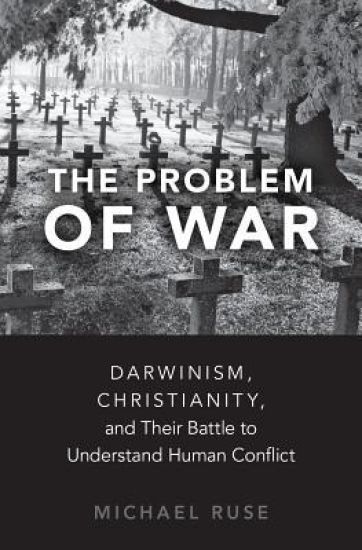
The Problem of War

The Problem of War

Michael Ruse

Oxford University Press Inc
2019
sidottu
Darwinian evolutionary theory is one of the brightest jewels in the crown of science, yet it has been highly controversial since its first appearance in the On the Origin of Species in 1859. Well known is the opposition of so many Christians, an opposition that shows little sign of abating today. In The Problem of War, philosopher Michael Ruse argues that the roots of the unease lie not simply (as many think) in a straight clash between science and religion, but more deeply in the fact that, while professional biologists are producing first-class science, Darwinism has always had a somewhat darker side where it functions as a secular religion, a form of humanism, directly challenging Christianity. Testing and confirming this claim, The Problem of War is an in-depth study of Christians and of Darwinians on the theme of war. It covers a wide range of thinkers: on the Christian side from Augustine to modern theologians such as Reinhold Niebuhr and Karl Barth, to the present Regius Professor of Theology at Oxford Nigel Biggar; and on the Darwinian side from Darwin himself to more modern thinkers like Konrad Lorenz, Frans de Waal, and the present Johnstone Family Professor in the Department of Psychology at Harvard, Steven Pinker. Ruse shows that the dynamic between Darwinians and Christians has not been a straightforward opposition, and complicates as it moves through the 20th century, as some Christian thinkers start to favor the inevitability of war and Darwinians acknowledge the idea of moral progress. Ruse shows how in some cases, some were even able to integrate Darwinian and Christian perspectives on war. Best categorized as intellectual history, The Problem of War is a narrative, using a wide and deep breadth of knowledge and references to reveal nuances in how war as a core function of human nature has been understood. By appreciating the religious nature of the dispute, Ruse helps to foster a better understanding of the ongoing criticisms of Darwinism and creates a way for differing Christian and Darwinian perspectives to indeed find common meeting ground.
Evolutionary Naturalism

Evolutionary Naturalism

Michael Ruse

Routledge
2015
nidottu
This is a collection of essays on the history and philosophy of evolutionary biology by the well-known Canadian scholar, Michael Ruse. Much has been written newly for the collection, as the author explores themes of evolutionary naturalism, putting the theory of knowledge and of moral behaviour on a philosophical basis informed by contemporary evolutionary biology. Divided into three parts, the first set of essays considers issues in the history of science - Darwin, population biology, and the new paleontological theory of `punctuated equilibria' - attempting to find a path between the crude objectivity espoused by many working scientists, and the rank relativism of post-modernist critiques of science. The second set of essays turns directly to the theory of knowledge (epistemology), arguing that the fact that we are evolved beings rather than objects of special creation, must and does inform our thinking about the external world. The third set of essays, the most controversial, turns to questions of morality, arguing that ethical systems are ultimately no more than collective illusions put in place by our biology, because humans are essentially social animals. Written in a clear and non-technical fashion, this collection carries forward debate on a number of controversial issues, showing that the time has now come to take philosophy from the hands of academic theorists and to embrace fully the findings and consequences of modern science.
Atheism

Atheism

Michael Ruse

Oxford University Press Inc
2015
sidottu
Over the last decade, "New Atheists" such as Sam Harris, Richard Dawkins, and Christopher Hitchens have pushed the issue of atheism to the forefront of public discussion. Yet very few of the ensuing debates and discussions have managed to provide a full and objective treatment of the subject. Atheism: What Everyone Needs to Know provides a balanced look at the topic, considering atheism historically, philosophically, theologically, sociologically and psychologically. Written in an easily accessible style, the book uses a question and answer format to examine the history of atheism, arguments for and against atheism, the relationship between religion and science, and the issue of the meaning of life-and whether or not one can be a happy and satisfied atheist. Above all, the author stresses that the atheism controversy is not just a matter of the facts, but a matter of burning moral concern, both about the stand one should take on the issues and the consequences of one's commitment.
Atheism

Atheism

Michael Ruse

Oxford University Press Inc
2015
nidottu
Over the last decade, "New Atheists" such as Sam Harris, Richard Dawkins, and Christopher Hitchens have pushed the issue of atheism to the forefront of public discussion. Yet very few of the ensuing debates and discussions have managed to provide a full and objective treatment of the subject. Atheism: What Everyone Needs to Know provides a balanced look at the topic, considering atheism historically, philosophically, theologically, sociologically and psychologically. Written in an easily accessible style, the book uses a question and answer format to examine the history of atheism, arguments for and against atheism, the relationship between religion and science, and the issue of the meaning of life-and whether or not one can be a happy and satisfied atheist. Above all, the author stresses that the atheism controversy is not just a matter of the facts, but a matter of burning moral concern, both about the stand one should take on the issues and the consequences of one's commitment.
The Gaia Hypothesis

The Gaia Hypothesis

Michael Ruse

University of Chicago Press
2013
sidottu
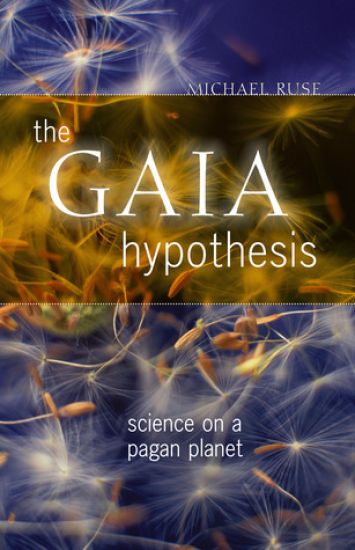
In 1965 English scientist James Lovelock had a flash of insight: the Earth is not just teeming with life; the Earth, in some sense, is life. He mulled this revolutionary idea over for several years, first with his close friend the novelist William Golding, and then in an extensive collaboration with the American scientist Lynn Margulis. In the early 1970s, he finally went public with the Gaia hypothesis, the idea that everything happens for an end: the good of planet Earth. Lovelock and Margulis were scorned by professional scientists, but the general public enthusiastically embraced Lovelock and his hypothesis. People joined Gaia groups; churches had Gaia services, sometimes with new music written especially for the occasion. There was a Gaia atlas, Gaia gardening, Gaia herbs, Gaia retreats, Gaia networking, and much more. And the range of enthusiasts was-and still is-broad. In The Gaia Hypothesis, philosopher Michael Ruse, with his characteristic clarity and wit, uses Gaia and its history, its supporters and detractors, to illuminate the nature of science itself. Gaia emerged in the 1960s, a decade when authority was questioned and status and dignity stood for nothing, but its story is much older. Ruse traces Gaia's connection to Plato and a long history of goal-directed and holistic-or organicist-thinking and explains why Lovelock and Margulis' peers rejected it as pseudoscience. But Ruse also shows why the project was a success. He argues that Lovelock and Margulis should be commended for giving philosophy firm scientific basis and for provoking important scientific discussion about the world as a whole, its homeostasis or - in this age of global environmental uncertainty - its lack thereof. Melding the world of science and technology with the world of feeling, mysticism, and religion, The Gaia Hypothesis will appeal to a broad range of readers, from students and scholars of the history and philosophy of science to anyone interested in New Age culture.
The Philosophy of Human Evolution

The Philosophy of Human Evolution

Michael Ruse

Cambridge University Press
2012
sidottu
This book provides a unique discussion of human evolution from a philosophical viewpoint, looking at the facts and interpretations since Charles Darwin's The Descent of Man. Michael Ruse explores such topics as the nature of scientific theories, the relationships between culture and biology, the problem of progress and the extent to which evolutionary issues pose problems for religious beliefs. He identifies these issues, highlighting the problems for morality in a world governed by natural selection. By taking a philosophical viewpoint, the full ethical and moral dimensions of human evolution are examined. This book engages the reader in a thorough discussion of the issues, appealing to students in philosophy, biology and anthropology.
Evolutionary Naturalism

Evolutionary Naturalism

Michael Ruse

Routledge
1995
sidottu
This is a collection of essays on the history and philosophy of evolutionary biology by the well-known Canadian scholar, Michael Ruse. Much has been written newly for the collection, as the author explores themes of evolutionary naturalism, putting the theory of knowledge and of moral behaviour on a philosophical basis informed by contemporary evolutionary biology. Divided into three parts, the first set of essays considers issues in the history of science - Darwin, population biology, and the new paleontological theory of `punctuated equilibria' - attempting to find a path between the crude objectivity espoused by many working scientists, and the rank relativism of post-modernist critiques of science. The second set of essays turns directly to the theory of knowledge (epistemology), arguing that the fact that we are evolved beings rather than objects of special creation, must and does inform our thinking about the external world. The third set of essays, the most controversial, turns to questions of morality, arguing that ethical systems are ultimately no more than collective illusions put in place by our biology, because humans are essentially social animals. Written in a clear and non-technical fashion, this collection carries forward debate on a number of controversial issues, showing that the time has now come to take philosophy from the hands of academic theorists and to embrace fully the findings and consequences of modern science.
Reading Ruse

Reading Ruse

Michael Ruse

Cascade Books
2024
pokkari
Philosopher of science Michael Ruse is an influential and provocative voice in current debates on biology, religion, and ethics. This collection brings into one volume representative samples of the broad range of Ruse's oeuvre, as represented in his academic books, mainly from post-2000. Ruse's writings in this period are gathered under seven headings, each with five readings: -Atheism, Belief, and Faith -Darwinism, Belief, and Religion -Darwin, Darwinism, and Darwinian Thought -Progress and Directionality in Evolution -Design, Telos, and Purpose in the Natural World -Naturalism, Sociobiology, and Their Entailments -Darwinian Ethics and Morality.
The New Biology

The New Biology

Michael J. Reiss; Michael Ruse

HARVARD UNIVERSITY PRESS
2023
sidottu
In this accessible analysis, a philosopher and a science educator look at biological theory and society through a synthesis of mechanistic and organicist points of view to best understand the complexity of life and biological systems. The search for a unified framework for biology is as old as Plato's musings on natural order, which suggested that the universe itself is alive. But in the twentieth century, under the influence of genetics and microbiology, such organicist positions were largely set aside in favor of mechanical reductionism, by which life looks like a more complicated version of physics, one that can be reduced to the behavior of organic molecules. But can organisms truly be understood in mechanical terms, or do we need to view life from the perspective of whole organisms to make sense of biological complexity? The New Biology argues for the validity of holistic treatments of nature from the perspectives of philosophy, history, and biology and outlines the largely unrecognized undercurrent of organicism that has persisted. Mechanistic biology has been invaluable in understanding a range of biological issues, but Michael Reiss and Michael Ruse contend that reductionism alone cannot answer all our questions about life. Whether we are considering human health, ecology, or the relationship between sex and gender, we need to draw from both organicist and mechanistic frameworks. It's not always a matter of combining organicist and mechanistic perspectives, Reiss and Ruse argue. There is scope for a range of ways of understanding the complexity of life and biological systems. Organicist and mechanistic approaches are not simply hypotheses to be confirmed or refuted, but rather operate as metaphors for describing a universe of sublime intricacy.
Understanding the Christianity–Evolution Relationship

Understanding the Christianity–Evolution Relationship

Michael Ruse

Cambridge University Press
2023
pokkari
The relationship between science and religion is a topic that runs rife with misconceptions, misunderstandings and debates. Are science and religion always in conflict? Is Darwin's theory of evolution through natural selection atheistic? How does history shape current debates around science and religion? This book explores these questions in a neutral and balanced way, focusing on the Christianity-evolution relationship. It shows that two paradigms – the world as an organism and the world as a machine – have critically informed and guided the discussions. The author uses his deep understanding of the history and philosophy of science, particularly Darwinian evolutionary theory and its controversies through the past 150 years, to bring fresh ideas to the debate and to wider discussions such as environmental issues and hate. Understanding the Christianity-Evolution Relationship provides a lively and informative analysis and lays out multiple views so that readers can make their own judgements to increase their understanding.
Evolution and Christianity

Evolution and Christianity

Michael Ruse

Cambridge University Press
2023
pokkari
This Element discusses the relationship between Christianity and evolutionary theory, with special emphasis on Darwinian evolutionary theory (Darwinism). The Creationists argue that the two are incompatible and it is religion that is the truth and Darwinism the falsity. The New Atheists argue that the two are incompatible and it is religion that is the falsity and Darwinism the truth. Through a careful examination of both Darwinian theory and Christianity, it is shown that both extremes are mistaken. It is accepted that there are difficult issues to be solved, for example the problem of evil - which some think is exacerbated by Darwinism - and the necessarily appearance of Homo sapiens - which is problematic if evolutionary theory does not guarantee progress and the evolution of humans as the apotheosis. It is argued that there are ways forward, and Christianity and evolutionary thinking can be shown compatible.
Understanding Natural Selection

Understanding Natural Selection

Michael Ruse

Cambridge University Press
2022
pokkari
Natural selection, as introduced by Charles Darwin in the Origin of Species (1859), has always been a topic of great conceptual and empirical interest. This book puts Darwin's theory of evolution in historical context showing that, in important respects, his central mechanism of natural selection gives the clue to understanding the nature of organisms. Natural selection has important implications, not just for the understanding of life's history – single-celled organism to man – but also for our understanding of contemporary social norms, as well as the nature of religious belief. The book is written in clear, non-technical language, appealing not just to philosophers, historians, and biologists, but also to general readers who find thinking about important issues both challenging and exciting.
Understanding Natural Selection

Understanding Natural Selection

Michael Ruse

Cambridge University Press
2022
sidottu
Natural selection, as introduced by Charles Darwin in the Origin of Species (1859), has always been a topic of great conceptual and empirical interest. This book puts Darwin's theory of evolution in historical context showing that, in important respects, his central mechanism of natural selection gives the clue to understanding the nature of organisms. Natural selection has important implications, not just for the understanding of life's history – single-celled organism to man – but also for our understanding of contemporary social norms, as well as the nature of religious belief. The book is written in clear, non-technical language, appealing not just to philosophers, historians, and biologists, but also to general readers who find thinking about important issues both challenging and exciting.
Why We Hate

Why We Hate

Michael Ruse

OXFORD UNIVERSITY PRESS INC
2022
sidottu
An insightful and probing exploration of the contradiction between humans' enormous capacity for hatred and their evolutionary development as a social species Why We Hate tackles a pressing issue of both longstanding interest and fresh relevance: why a social species like Homo sapiens should nevertheless be so hateful to itself. We go to war and are prejudiced against our fellow human beings. We discriminate on the basis of nationality, class, race, sexual orientation, religion, and gender. Why are humans at once so social and so hateful to each other? In this book, prominent philosopher Michael Ruse looks at scientific understandings of human hatred, particularly Darwinian evolutionary theory. He finds the secret to this paradox in our tribal evolutionary past, when we moved ten thousand years ago from being hunter-gatherers to agriculturalists--a shift that paved the way for modern civilization. Simply put, as Ruse paraphrases, "our modern skulls house Stone Age minds." Combining rigorous argument with an engaging and accessible style, Ruse makes frequent use of historical examples, examining the history of two World Wars, and the U.S. offensive against Iraq. He also gives many pertinent and up-to-date examples of prejudice, including the significance of Brexit and the systemic racism that lead to the Black Lives Matter movement. Ruse pays special attention to egregious cases of hatred, such as the treatment of Jews by the Third Reich, and to pressing contemporary issues, including the status of women. Ruse concludes with constructive suggestions for ways in which we might reconcile the contradictory aspects of our nature. Why We Hate will be of interest and value to a wide range of readers interested in the role of human nature in current events, as well as to readers interested in philosophy, the life sciences, social sciences (especially anthropology and archaeology), and beyond.
The Cambridge History of Atheism 2 Volume Hardback Set
The two-volume Cambridge History of Atheism offers an authoritative and up to date account of a subject of contemporary interest. Comprised of sixty essays by an international team of scholars, this History is comprehensive in scope. The essays are written from a variety of disciplinary perspectives, including religious studies, philosophy, sociology, and classics. Offering a global overview of the subject, from antiquity to the present, the volumes examine the phenomenon of unbelief in the context of Christian, Islamic, Buddhist, Hindu, and Jewish societies. They explore atheism and the early modern Scientific Revolution, as well as the development of Charles Darwin's theory of evolution and its continuing implications. The History also includes general survey essays on the impact of scepticism, agnosticism and atheism, as well as contemporary assessments of thinking. Providing essential information on the nature and history of atheism, The Cambridge History of Atheism will be indispensable for both scholarship and teaching, at all levels.
A Philosopher Looks at Human Beings

A Philosopher Looks at Human Beings

Michael Ruse

Cambridge University Press
2021
pokkari
Why do we think ourselves superior to all other animals? Are we right to think so? In this book, Michael Ruse explores these questions in religion, science and philosophy. Some people think that the world is an organism - and that humans, as its highest part, have a natural value (this view appeals particularly to people of religion). Others think that the world is a machine - and that we therefore have responsibility for making our own value judgements (including judgements about ourselves). Ruse provides a compelling analysis of these two rival views and the age-old conflict between them. In a wide-ranging and fascinating discussion, he draws on Darwinism and existentialism to argue that only the view that the world is a machine does justice to our humanity. This new series offers short and personal perspectives by expert thinkers on topics that we all encounter in our everyday lives.