

Kirjailija
Michael Taussig
Kirjat ja teokset yhdessä paikassa: 33 kirjaa, julkaisuja vuosilta 1991-2025, suosituimpien joukossa Postcards for Mia. Vertaile teosten hintoja ja tarkista saatavuus suomalaisista kirjakaupoista.
33 kirjaa
Kirjojen julkaisuhaarukka 1991-2025.
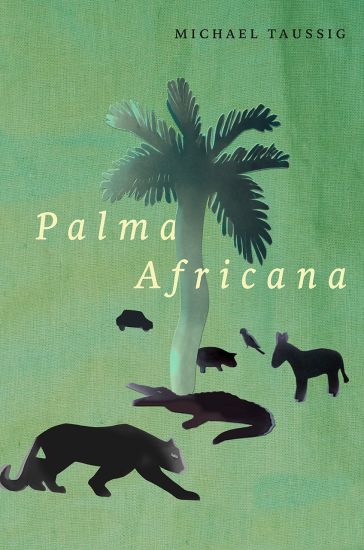
"It is the contemporary elixir from which all manner of being emerges, the metamorphic sublime, an alchemist's dream." So begins Palma Africana, the latest attempt by anthropologist Michael Taussig to make sense of the contemporary moment. But to what elixir does he refer? Palm oil. Saturating everything from potato chips to nail polish, palm oil has made its way into half of the packaged goods in our supermarkets. By 2020, world production will be double what it was in 2000. In Colombia, palm oil plantations are covering over onetime cornucopias of animal, bird, and plant life. Over time, they threaten indigenous livelihoods and give rise to abusive labor conditions and major human rights violations. The list of entwined horrors--climatic, biological, social--is long. But Taussig takes no comfort in our usual labels: "habitat loss," "human rights abuses," "climate change." The shock of these words has passed; nowadays it is all a blur. Hence, Taussig's keen attention to words and writing throughout this work. He takes cues from precursors' ruminations: Roland Barthes' suggestion that trees form an alphabet in which the palm tree is the loveliest; William Burroughs' retort to critics that for him words are like animals--cut them and the words are let free. Steeped in a lifetime of philosophical and ethnographic exploration, Palma Africana undercuts the banality of the destruction taking place all around us and offers a penetrating vision of the global condition. Richly illustrated and written with experimental verve, this book is Taussig's Tristes Tropiques for the twenty-first century.
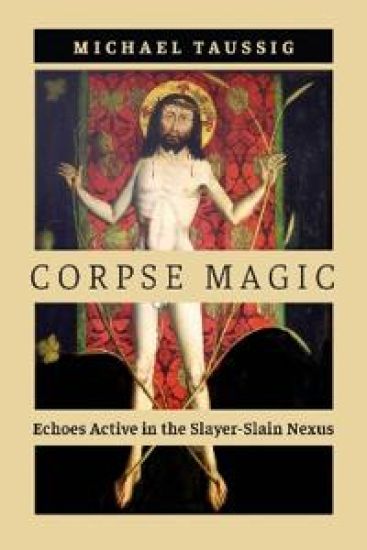
Corpse Magic examines beliefs about vengeance the slain magically enact on their killers, focusing on lethal violence in Colombia and the United States.Corpse Magic is a response to the global ubiquity of violence. In this bracing new work, the influential anthropologist Michael Taussig puts killings in Colombia, by gangs and guerrillas, police and the military, and agents of agribusiness, in conversation with mass shootings and police killings, disproportionately of Black people, in the United States. In both contexts, he examines the effects of violent killing on its victims, its perpetrators, and those who witness and relive it through media footage. Drawing from literature, religion, philosophy, and anthropology, Taussig traces the idea that the act of killing “infects” the killer and spreads outward, then connects this concept of contagion to beliefs in Colombia and elsewhere that the souls of the slain possess those of their slayers and that magic can be used to empower or thwart corpses as agents of vengeance. In this powerful and imaginative work, Taussig asks what kind of power the dead continue to have; what kinds of magic can manage that power; and what, if anything, can stop seemingly endless cycles of violence.
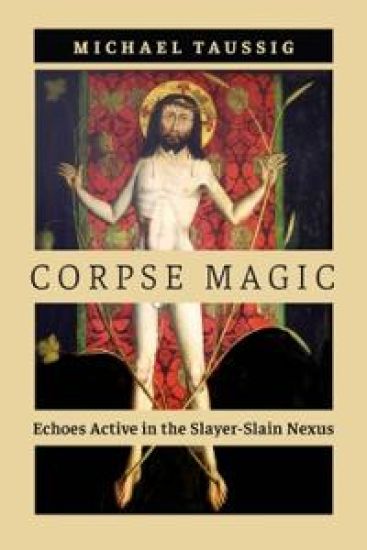
Corpse Magic examines beliefs about vengeance the slain magically enact on their killers, focusing on lethal violence in Colombia and the United States.Corpse Magic is a response to the global ubiquity of violence. In this bracing new work, the influential anthropologist Michael Taussig puts killings in Colombia, by gangs and guerrillas, police and the military, and agents of agribusiness, in conversation with mass shootings and police killings, disproportionately of Black people, in the United States. In both contexts, he examines the effects of violent killing on its victims, its perpetrators, and those who witness and relive it through media footage. Drawing from literature, religion, philosophy, and anthropology, Taussig traces the idea that the act of killing “infects” the killer and spreads outward, then connects this concept of contagion to beliefs in Colombia and elsewhere that the souls of the slain possess those of their slayers and that magic can be used to empower or thwart corpses as agents of vengeance. In this powerful and imaginative work, Taussig asks what kind of power the dead continue to have; what kinds of magic can manage that power; and what, if anything, can stop seemingly endless cycles of violence.

A new collection of essays reflecting on the centrality of writing anthropological practice from one of the discipline’s most influential thinkers. Michael Taussig’s work is known for its critical insights and bold, experimental style. In the eleven essays in this new collection, Taussig reflects on the act of writing itself, demonstrating its importance for anthropological practice and calling for the discipline to keep experiential knowledge from being extinguished as fieldnotes become scholarship. Setting out to show how this can be done, And the Garden Is You exemplifies a form of exploratory writing that preserves the spontaneity of notes scribbled down in haste. In these essays, the author’s reflections take us from his childhood in Sydney to trips to Afghanistan, Colombia, Finland, Italy, Turkey, and Syria. Along the way, Taussig explores themes of fabulation and provocation that are central to his life’s work, in addition to the thinkers dearest to him—Bataille, Benjamin, Burroughs, and Nietzsche, among others. This collection is vintage Taussig, bound to interest longtime readers and newcomers alike.
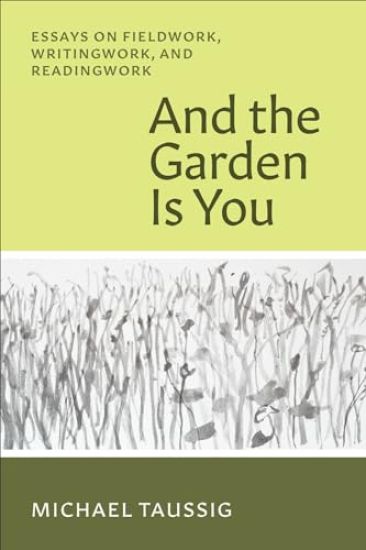
A new collection of essays reflecting on the centrality of writing anthropological practice from one of the discipline’s most influential thinkers. Michael Taussig’s work is known for its critical insights and bold, experimental style. In the eleven essays in this new collection, Taussig reflects on the act of writing itself, demonstrating its importance for anthropological practice and calling for the discipline to keep experiential knowledge from being extinguished as fieldnotes become scholarship. Setting out to show how this can be done, And the Garden Is You exemplifies a form of exploratory writing that preserves the spontaneity of notes scribbled down in haste. In these essays, the author’s reflections take us from his childhood in Sydney to trips to Afghanistan, Colombia, Finland, Italy, Turkey, and Syria. Along the way, Taussig explores themes of fabulation and provocation that are central to his life’s work, in addition to the thinkers dearest to him—Bataille, Benjamin, Burroughs, and Nietzsche, among others. This collection is vintage Taussig, bound to interest longtime readers and newcomers alike.
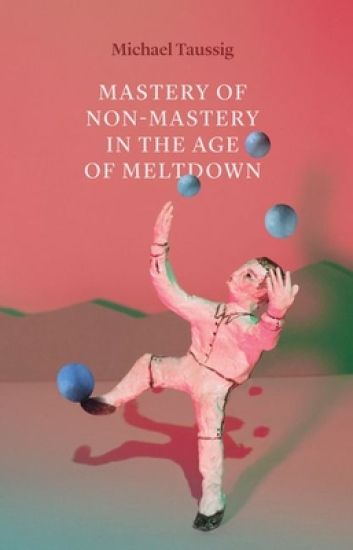
Mastery of Non–Mastery in the Age of Meltdown
Michael Taussig
University of Chicago Press
2020
sidottu
For centuries, humans have excelled at mimicking nature in order to exploit it. Now, with the existential threat of global climate change on the horizon, the ever-provocative Michael Taussig asks what function a newly invigorated mimetic faculty might exert along with such change. Mastery of Non-Mastery in the Age of Meltdown is not solely a reflection on our condition but also a theoretical effort to reckon with the impulses that have fed our relentless ambition for dominance over nature. Taussig seeks to move us away from the manipulation of nature and reorient us to different metaphors and sources of inspiration to develop a new ethical stance toward the world. His ultimate goal is to undo his readers’ sense of control and engender what he calls “mastery of non-mastery.” This unique book developed out of Taussig’s work with peasant agriculture and his artistic practice, which brings performance art together with aspects of ritual. Through immersive meditations on Walter Benjamin, D. H. Lawrence, Emerson, Bataille, and Proust, Taussig grapples with the possibility of collapse and with the responsibility we bear for it.
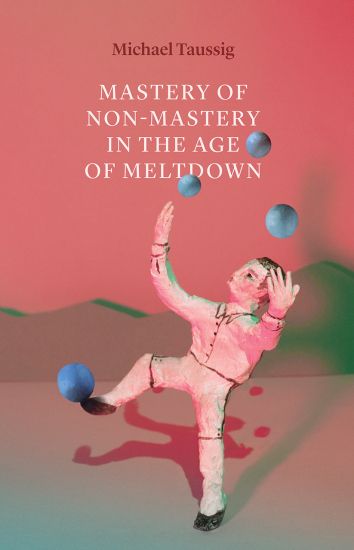
Mastery of Non–Mastery in the Age of Meltdown
Michael Taussig
University of Chicago Press
2020
nidottu
For centuries, humans have excelled at mimicking nature in order to exploit it. Now, with the existential threat of global climate change on the horizon, the ever-provocative Michael Taussig asks what function a newly invigorated mimetic faculty might exert along with such change. Mastery of Non-Mastery in the Age of Meltdown is not solely a reflection on our condition but also a theoretical effort to reckon with the impulses that have fed our relentless ambition for dominance over nature. Taussig seeks to move us away from the manipulation of nature and reorient us to different metaphors and sources of inspiration to develop a new ethical stance toward the world. His ultimate goal is to undo his readers’ sense of control and engender what he calls “mastery of non-mastery.” This unique book developed out of Taussig’s work with peasant agriculture and his artistic practice, which brings performance art together with aspects of ritual. Through immersive meditations on Walter Benjamin, D. H. Lawrence, Emerson, Bataille, and Proust, Taussig grapples with the possibility of collapse and with the responsibility we bear for it.
In this ambitious and accomplished work, Taussig explores the complex and interwoven concepts of mimesis, the practice of imitation, and alterity, the opposition of Self and Other. The book moves from the nineteenth-century invention of mimetically capacious machines, such as the camera, to the fable of colonial ‘first contact’ and the alleged mimetic power of ‘primitives’. Twenty years after the original publication, Taussig revisits the work in a new preface which contextualises the impact of Mimesis and Alterity. Drawing on the ideas of Benjamin, Adorno and Horckheimer and ethnographic accounts of the Cuna, Taussig demonstrates how the history of mimesis is deeply tied to colonialism and the idea of alterity has become increasingly unstable. Vigorous and unorthodox, this cross-cultural discussion continues to deepen our understanding of the relationship between ethnography, racism and society.
In this ambitious and accomplished work, Taussig explores the complex and interwoven concepts of mimesis, the practice of imitation, and alterity, the opposition of Self and Other. The book moves from the nineteenth-century invention of mimetically capacious machines, such as the camera, to the fable of colonial ‘first contact’ and the alleged mimetic power of ‘primitives’. Twenty years after the original publication, Taussig revisits the work in a new preface which contextualises the impact of Mimesis and Alterity. Drawing on the ideas of Benjamin, Adorno and Horckheimer and ethnographic accounts of the Cuna, Taussig demonstrates how the history of mimesis is deeply tied to colonialism and the idea of alterity has become increasingly unstable. Vigorous and unorthodox, this cross-cultural discussion continues to deepen our understanding of the relationship between ethnography, racism and society.

“It is the contemporary elixir from which all manner of being emerges, the metamorphic sublime, an alchemist’s dream.” So begins Palma Africana, the latest attempt by anthropologist Michael Taussig to make sense of the contemporary moment. But to what elixir does he refer? Palm oil. Saturating everything from potato chips to nail polish, palm oil has made its way into half of the packaged goods in our supermarkets. By 2020, world production will be double what it was in 2000. In Colombia, palm oil plantations are covering over one-time cornucopias of animal, bird, and plant life. Over time, they threaten indigenous livelihoods and give rise to abusive labor conditions and major human rights violations. The list of entwined horrors—climatic, biological, social—is long. But Taussig takes no comfort in our usual labels: “habitat loss,” “human rights abuses,” “climate change.” The shock of these words has passed; nowadays it is all a blur. Hence, Taussig’s keen attention to words and writing throughout this work. He takes cues from precursors’ ruminations: Roland Barthes’s suggestion that trees form an alphabet in which the palm tree is the loveliest; William Burroughs’s retort to critics that for him words are alive like animals and don’t like to be kept in pages—cut them and the words are let free. Steeped in a lifetime of philosophical and ethnographic exploration, Palma Africana undercuts the banality of the destruction taking place all around us and offers a penetrating vision of the global condition. Richly illustrated and written with experimental verve, this book is Taussig’s Tristes Tropiques for the twenty-first century.
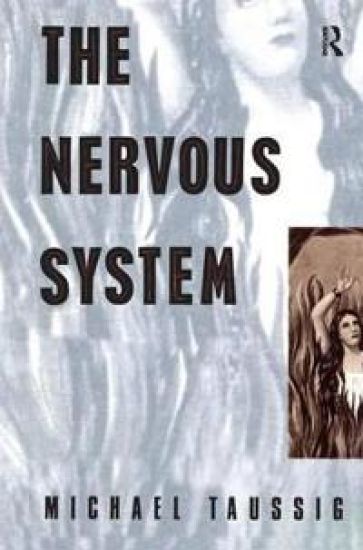
In a series of intriguing essays ranging over terror, State fetishism, shamanic healing in Latin America, homesickness, and the place of the tactile eye in both magic and modernity, anthropologist Michael Taussig puts into representational practice a curious type of engaged writing. Based on a paranoiac vision of social control and its understanding as in a permanent state of emergency leaving no room for contemplation between signs and things, these essays hover between story-telling and high theory and thus create strange new modes of critical discourse. The Nervous System will appeal to writers, scholars, artists, film makers, and readers interested in critical theory, aesthetics, and politics.
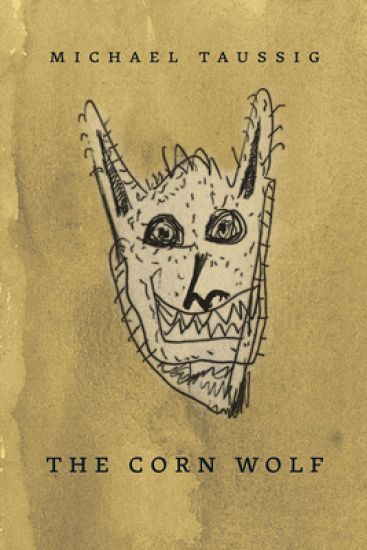
Collecting a decade of work from iconic anthropologist and writer Michael Taussig, The Corn Wolf pinpoints a moment of intellectual development for the master stylist, exemplifying the "nervous system" approach to writing and truth that has characterized his trajectory. Pressured by the permanent state of emergency that imbues our times, this approach marries storytelling with theory, thickening spiraling analysis with ethnography and putting the study of so-called primitive societies back on the anthropological agenda as a way of better understanding the sacred in everyday life. The leading figure of these projects is the corn wolf, whom Wittgenstein used in his fierce polemic on Frazer's Golden Bough. For just as the corn wolf slips through the magic of language in fields of danger and disaster, so we are emboldened to take on the widespread culture of academic-or what he deems "agribusiness"-writing, which strips ethnography from its capacity to surprise and connect with other worlds, whether peasant farmers in Colombia, Palestinians in Israel, protestors in Zuccotti Park, or eccentric yet fundamental aspects of our condition such as animism, humming, or the acceleration of time. A glance at the chapter titles-such as "The Stories Things Tell" or "Iconoclasm Dictionary"-along with his compelling drawings, testifies to the resonant sensibility of these works, which lope like the corn wolf through the boundaries of writing and understanding.
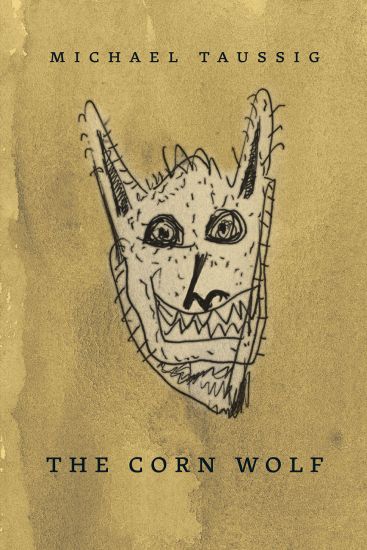
Collecting a decade of work from iconic anthropologist and writer Michael Taussig, The Corn Wolf pinpoints a moment of intellectual development for the master stylist, exemplifying the "nervous system" approach to writing and truth that has characterized his trajectory. Pressured by the permanent state of emergency that imbues our times, this approach marries storytelling with theory, thickening spiraling analysis with ethnography and putting the study of so-called primitive societies back on the anthropological agenda as a way of better understanding the sacred in everyday life. The leading figure of these projects is the corn wolf, whom Wittgenstein used in his fierce polemic on Frazer's Golden Bough. For just as the corn wolf slips through the magic of language in fields of danger and disaster, so we are emboldened to take on the widespread culture of academic-or what he deems "agribusiness"-writing, which strips ethnography from its capacity to surprise and connect with other worlds, whether peasant farmers in Colombia, Palestinians in Israel, protestors in Zuccotti Park, or eccentric yet fundamental aspects of our condition such as animism, humming, or the acceleration of time. A glance at the chapter titles-such as "The Stories Things Tell" or "Iconoclasm Dictionary"-along with his compelling drawings, testifies to the resonant sensibility of these works, which lope like the corn wolf through the boundaries of writing and understanding.
Occupy
W. J. T. Mitchell; Bernard Harcourt; Michael Taussig; Bernard E. Harcourt
University of Chicago Press
2013
sidottu
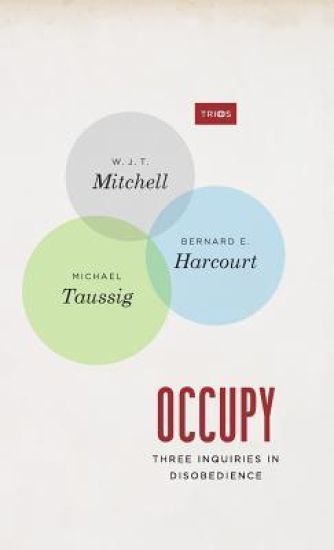
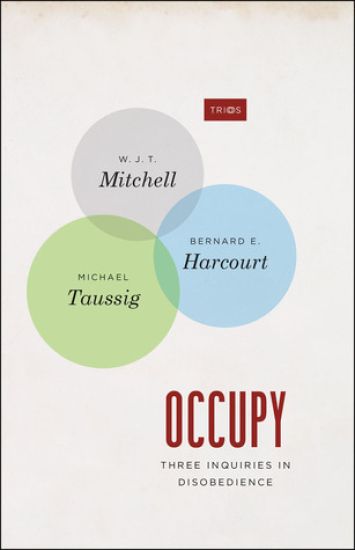
Mic check! Mic check! Lacking amplification in Zuccotti Park, Occupy Wall Street protestors addressed one another by repeating and echoing speeches throughout the crowd. In "Occupy", W. J. T. Mitchel, Bernard E. Harcourt, and Michael Taussig take the protestors' lead and perform their own resonant call-and-response, playing off of each other in three essays that engage the extraordinary Occupy movement that has swept across the world, examining everything from self-immolations in the Middle East to the G8 crackdown in Chicago to the many protest signs still visible worldwide. "You break through the screen like "Alice in Wonderland"," Taussig writes in the opening essay, "and now you can't leave or do without it." Following Taussig's artful blend of participatory ethnography and poetic meditation on Zuccotti Park, political and legal scholar Harcourt examines the crucial difference between civil and political disobedience. He shows how by effecting the latter - by rejecting the very discourse and strategy of politics - Occupy Wall Street protestors enacted a radical new form of protest. Finally, media critic and theorist Mitchell surveys the global circulation of Occupy images across mass and social media and looks at contemporary works by artists such as Antony Gormley and how they engage the body politic, ultimately examining the use of empty space itself as revolutionary monument. "Occupy" stands not as a primer on or an authoritative account of 2011's revolutions, but as a snapshot, a second draft of history, beyond journalism and the polemics of the moment - an occupation itself. Each Trios book addresses a pressing theme in critical theory, philosophy, or cultural studies through three extended essays written in close collaboration by leading scholars.
Occupy – Three Inquiries in Disobedience
W. J. T. Mitchell; Bernard Harcourt; Michael Taussig; Bernard E. Harcourt
University of Chicago Press
2013
nidottu
Mic check! Mic check! Lacking amplification in Zuccotti Park, Occupy Wall Street protestors addressed one another by repeating and echoing speeches throughout the crowd. In "Occupy", W. J. T. Mitchell, Bernard E. Harcourt, and Michael Taussig take the protestors' lead and perform their own resonant call-and-response, playing off of each other in three essays that engage the extraordinary Occupy movement that has swept across the world, examining everything from self-immolations in the Middle East to the G8 crackdown in Chicago to the many protest signs still visible worldwide. "You break through the screen like Alice in Wonderland," Taussig writes in the opening essay, "and now you can't leave or do without it." Following Taussig's artful blend of participatory ethnography and poetic meditation on Zuccotti Park, political and legal scholar Harcourt examines the crucial difference between civil and political disobedience. He shows how by effecting the latter - by rejecting the very discourse and strategy of politics - Occupy Wall Street protestors enacted a radical new form of protest. Finally, media critic and theorist Mitchell surveys the global circulation of Occupy images across mass and social media and looks at contemporary works by artists such as Antony Gormley and how they engage the body politic, ultimately examining the use of empty space itself as a revolutionary monument. "Occupy" stands not as a primer on or an authoritative account of 2011's revolutions, but as a snapshot, a second draft of history, beyond journalism and the polemics of the moment - an occupation itself. Each Trios book addresses a pressing theme in critical theory, philosophy, or cultural studies through three extended essays written in close collaboration by leading scholars.
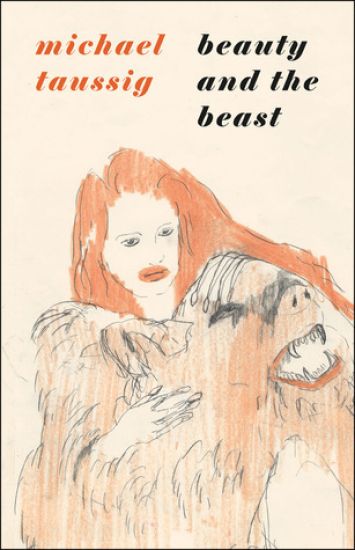
"Beauty and the Beast" begins with a question: Is beauty destined to end in tragedy? Drawing on extensive fieldwork in Colombia, Michael Taussig scrutinizes the anxious, audacious, and sometimes destructive attempts people make to transform their bodies through cosmetic surgery and liposuction. He balances an examination of surgeries meant to enhance an individual's beauty with an often overlooked counterpart, surgeries performed - often on high-profile criminals - to disguise one's identity. Situating this globally shared phenomenon within the economic, cultural, and political history of Colombia, Taussig links the country's long civil war and its bodily mutilation and torture to the beauty industry at large, sketching Colombia as a country whose high aesthetic stakes make it a stage where some of the most important and problematic ideas about the body are played out. Central to Taussig's examination is George Bataille's notion of depense, or "wasting." While depense is often used as a critique, Taussig also looks at the exuberance such squandering creates and its position as a driving economic force. Depense, he argues, is precisely what these procedures are all about, and the beast on the other side of beauty should not be dismissed as simple recompense. At once theoretical and colloquial, public and intimate, "Beauty and the Beast" is a true-to-place ethnography-written in Taussig's trademark voice-that tells a thickly layered but always accessible story about the lengths to which people will go to be physically remade.
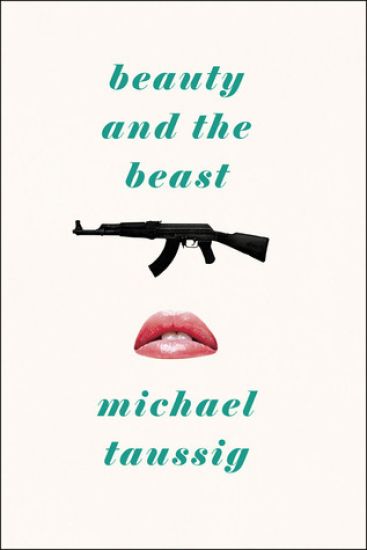
"Beauty and the Beast" begins with a question: Is beauty destined to end in tragedy? Drawing on extensive fieldwork in Colombia, Michael Taussig scrutinizes the anxious, audacious, and sometimes destructive attempts people make to transform their bodies through cosmetic surgery and liposuction. He balances an examination of surgeries meant to enhance an individual's beauty with an often overlooked counterpart, surgeries performed - often on high-profile criminals - to disguise one's identity. Situating this globally shared phenomenon within the economic, cultural, and political history of Colombia, Taussig links the country's long civil war and its bodily mutilation and torture to the beauty industry at large, sketching Colombia as a country whose high aesthetic stakes make it a stage where some of the most important and problematic ideas about the body are played out. Central to Taussig's examination is George Bataille's notion of depense, or "wasting." While depense is often used as a critique, Taussig also looks at the exuberance such squandering creates and its position as a driving economic force. Depense, he argues, is precisely what these procedures are all about, and the beast on the other side of beauty should not be dismissed as simple recompense. At once theoretical and colloquial, public and intimate, "Beauty and the Beast" is a true-to-place ethnography-written in Taussig's trademark voice-that tells a thickly layered but always accessible story about the lengths to which people will go to be physically remade.
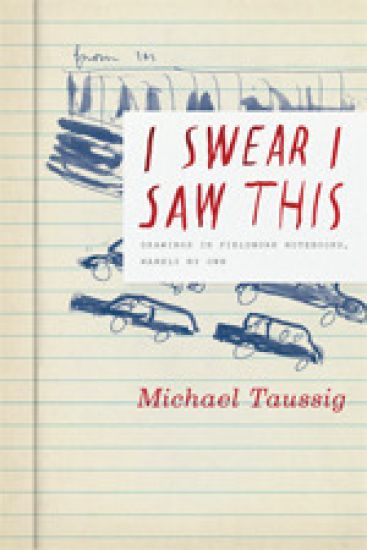
"I Swear I Saw This" records visionary anthropologist Michael Taussig's reflections on the fieldwork notebooks he kept through forty years of travels in Colombia. Taking as a starting point a drawing he made in Medellin in 2006 - as well as its caption, "I Swear I Saw This" - Taussig considers the fieldwork notebook as a type of modernist literature and the place where writers and other creators first work out the imaginative logic of discovery. Notebooks mix the raw material of observation with reverie, juxtaposed, in Taussig's case, with drawings, watercolors, and newspaper cuttings, which blend the inner and outer worlds in a fashion reminiscent of Brion Gysin and William Burroughs' surreal cut-up technique. Focusing on the small details and observations that are lost when writers convert their notes into finished pieces, Taussig calls for new ways of seeing and using the notebook as form. Memory emerges as a central motif in "I Swear I Saw This" as he explores his penchant to inscribe new recollections in the margins or directly over the original entries days or weeks after an event. This palimpsest of after thoughts leads to ruminations on Freud's analysis of dreams, Proust's thoughts on the involuntary workings of memory, and Benjamin's theories of history-fieldwork, Taussig writes, provokes childhood memories with startling ease. "I Swear I Saw This" exhibits Taussig's characteristic verve and intellectual audacity, here combined with a revelatory sense of intimacy. He writes, "drawing is thus a depicting, a hauling, an unravelling, and being impelled toward something or somebody." Readers will exult in joining Taussig once again as he follows the threads of a tangled skein of inspired associations.
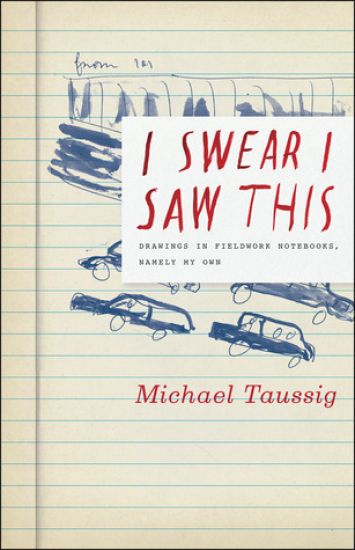
"I Swear I Saw This" records visionary anthropologist Michael Taussig's reflections on the fieldwork notebooks he kept through forty years of travels in Colombia. Taking as a starting point a drawing he made in Medellin in 2006 - as well as its caption, "I Swear I Saw This" - Taussig considers the fieldwork notebook as a type of modernist literature and the place where writers and other creators first work out the imaginative logic of discovery. Notebooks mix the raw material of observation with reverie, juxtaposed, in Taussig's case, with drawings, watercolors, and newspaper cuttings, which blend the inner and outer worlds in a fashion reminiscent of Brion Gysin and William Burroughs' surreal cut-up technique. Focusing on the small details and observations that are lost when writers convert their notes into finished pieces, Taussig calls for new ways of seeing and using the notebook as form. Memory emerges as a central motif in "I Swear I Saw This" as he explores his penchant to inscribe new recollections in the margins or directly over the original entries days or weeks after an event. This palimpsest of after thoughts leads to ruminations on Freud's analysis of dreams, Proust's thoughts on the involuntary workings of memory, and Benjamin's theories of history-fieldwork, Taussig writes, provokes childhood memories with startling ease. "I Swear I Saw This" exhibits Taussig's characteristic verve and intellectual audacity, here combined with a revelatory sense of intimacy. He writes, "drawing is thus a depicting, a hauling, an unravelling, and being impelled toward something or somebody." Readers will exult in joining Taussig once again as he follows the threads of a tangled skein of inspired associations.