
Kirjailija
Michael Williams
Kirjat ja teokset yhdessä paikassa: 140 kirjaa, julkaisuja vuosilta 1970-2026, suosituimpien joukossa Expressivism, Pragmatism and Representationalism. Vertaile teosten hintoja ja tarkista saatavuus suomalaisista kirjakaupoista.
140 kirjaa
Kirjojen julkaisuhaarukka 1970-2026.

How to Read the Bible Pack, Second Edition
Gordon D. Fee; Douglas Stuart; Christopher J. H. Wright; Mark L. Strauss; Michael Williams; Leland Ryken
Zondervan
2017
nidottu
The Bible is accessible. It's meant to be read and comprehended by everyone from armchair readers to seminary students. A few essential insights into the Bible can clear up a lot of misconceptions and help you grasp the meaning of Scripture and its application to your twenty-first-century life. The How to Read the Bible Pack, Second Edition includes everything you need to understand the Bible more clearly and get the most out of your Bible-reading experience.The How to Read the Bible Pack, Second Edition includes six books by six leading biblical scholars:How to Read the Bible for All Its Worth by Gordon D. Fee and Douglas StuartHow to Read the Bible Book by Book by Gordon D. Fee and Douglas StuartHow to Read the Bible through the Jesus Lens by Michael WilliamsHow to Read the Bible as Literature by Leland RykenHow to Preach and Teach the Old Testament for All Its Worth by Christopher J. H. WrightHow to Choose a Translation for All Its Worth by Gordon D. Fee and Mark L. Strauss The How to Read the Bible Pack, Second Edition will help you read the Bible more accurately and in greater depth so you can uncover the inexhaustible worth that is in God's Word.
Expressivism, Pragmatism and Representationalism
Huw Price; Simon Blackburn; Robert Brandom; Paul Horwich; Michael Williams
Cambridge University Press
2013
sidottu
Pragmatists have traditionally been enemies of representationalism but friends of naturalism, when naturalism is understood to pertain to human subjects, in the sense of Hume and Nietzsche. In this volume Huw Price presents his distinctive version of this traditional combination, as delivered in his René Descartes Lectures at Tilburg University in 2008. Price contrasts his view with other contemporary forms of philosophical naturalism, comparing it with other pragmatist and neo-pragmatist views such as those of Robert Brandom and Simon Blackburn. Linking their different 'expressivist' programmes, Price argues for a radical global expressivism that combines key elements from both. With Paul Horwich and Michael Williams, Brandom and Blackburn respond to Price in new essays. Price replies in the closing essay, emphasising links between his views and those of Wilfrid Sellars. The volume will be of great interest to advanced students of philosophy of language and metaphysics.
Expressivism, Pragmatism and Representationalism
Huw Price; Simon Blackburn; Robert Brandom; Paul Horwich; Michael Williams
Cambridge University Press
2013
pokkari
Pragmatists have traditionally been enemies of representationalism but friends of naturalism, when naturalism is understood to pertain to human subjects, in the sense of Hume and Nietzsche. In this volume Huw Price presents his distinctive version of this traditional combination, as delivered in his René Descartes Lectures at Tilburg University in 2008. Price contrasts his view with other contemporary forms of philosophical naturalism, comparing it with other pragmatist and neo-pragmatist views such as those of Robert Brandom and Simon Blackburn. Linking their different 'expressivist' programmes, Price argues for a radical global expressivism that combines key elements from both. With Paul Horwich and Michael Williams, Brandom and Blackburn respond to Price in new essays. Price replies in the closing essay, emphasising links between his views and those of Wilfrid Sellars. The volume will be of great interest to advanced students of philosophy of language and metaphysics.


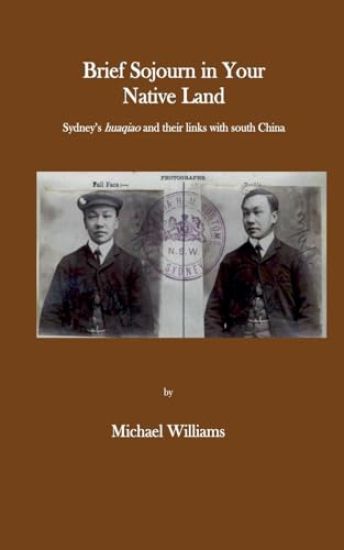
Brief Sojourn in Your Native Land highlights the enduring connection between Sydney and South China from the late 19th century to the mid-20th century, maintained by thousands of Sydney residents born in the diverse districts of the Pearl River Delta. The work draws on a wide range of Immigration Restriction Act files, along with other sources such as the late 19th-century 'Royal Commission on Alleged Chinese Gambling, ' the burial register of the Chinese section of Rookwood Cemetery, and oral histories from descendants of these residents. The narrative reveals the experiences of a generation often referred to as huaqiao, whose ties to their home villages are traced from youth through adulthood and into retirement, passing onto subsequent generations.Key aspects of this enduring connection include the importance of their districts of origin, restricted marriage choices, evolving conditions in China, the emergence of a new generation, and the impact of the White Australia Policy's 1901 Immigration Restriction Act and its administration. Throughout their lives, the huaqiao were largely driven by a desire to support their families in their home villages, fostering ties between these villages and Sydney that lasted for at least two generations.

It has been said many times (by me anyway) that Chinese Australian history is perforce reliant on European observers - often of dubious quality and more often dubious perspectives (see Observers 8). Nevertheless, there are instances - increasing over time naturally - of Chinese Australians speaking in their own voice. Here are presented a selection of writings by Chinese Australian's in both Chinese and English. They range from the first (certainly the earliest extant) piece of Chinese writing in Australia as an indentured shepherd named Ang defends himself in 1850 from a murder charge, to a full novel written in Classical Chinese in 1910 on the eve of China's Republican revolution by the Melbourne based Wong Shee Ping. As well, there are reasoned attacks on discriminatory legislation, personal memoirs old and new, poetry, letters to those who have done well, and short stories expressing something of life in "white" Australia for someone of non-white heritage.Together these 'Chinese 8' provide an insight into the many facets of Chinese Australian history as provided by Chinese Australian's themselves. Here they are presented in reverse chronological order - just for fun.

Much of the evidence we have of Chinese Australian history, particularly from the 19th century, comes from European observers and their records. These sources often reflect patronising attitudes at best and outright stereotypes or fabrications at worst. Such accounts frequently reveal more about the writers than about the people they describe-an insight that is valuable in itself. However, within this diverse and sometimes problematic material, there are moments of thoughtful and intriguing observation, even when shaped by ignorance or prejudice. Sincere personal observations, despite their limitations, can still offer meaningful insights.The collection presented here is a small selection of material drawn from 19th-century Australian sources. It includes a range of perspectives: from the musings of a naive English teacher to the observations of an experienced China consul; from an eyewitness account of the first 150 Chinese gold seekers passing through Bathurst in 1855 to the impressions of a spectator at a Chinese opera. It even features writings from notable authors such as the creators of Mary Poppins and The Man from Snowy River. No such compilation would be complete without contributions from two perennial commentators: the journalist and the travel writer.
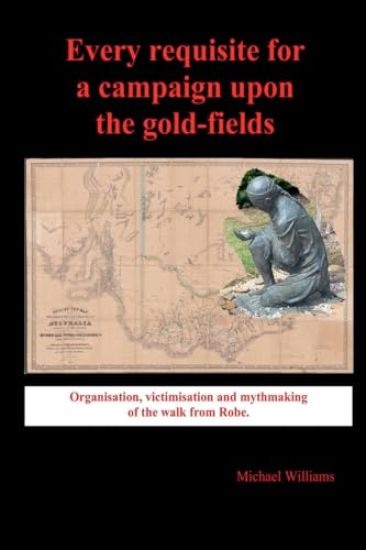
Of the many episodes that make up the oftentimes exotic impression of Chinese Australian history the 1850s walk from the small port of Robe in South Australia to the goldfields of Victoria has repeatedly taken on epic proportions. Its 'long march' like length, tales of hardship and death, not to mention present-day outrage at the discriminatory tax the walk was designed to avoid, all combine to make the stuff of legends. Yet remarkably the telling of this history has largely been left to local historians with their characteristic eagerness to retell every tale and make use of every allusion to their subject with little regard to plausibility, contradiction or even relevance. Thus, while the arrival of thousands of gold seekers from southern China in the mid-1850s at Robetown on Guichen Bay, South Australia, in order to avoid taxes imposed by the neighbouring gold rich colony of Victoria is well known, it is surprisingly little understood in detail.
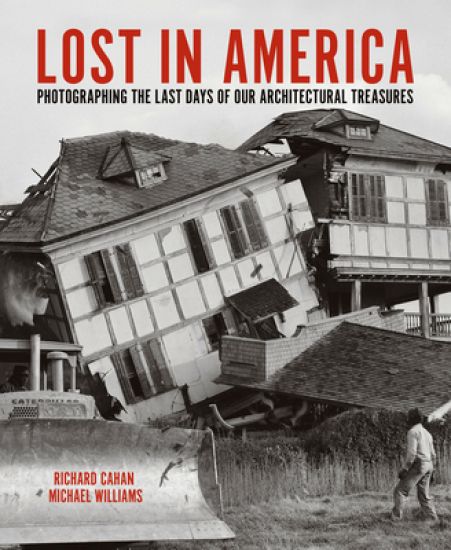
Lost in America: Photographing the Last Days of Our Architectural Treasures
Richard Cahan; Michael Williams
Cityfiles Press
2023
sidottu
Lost in America documents the life and death of America's architectural and historic treasures. The book is based on a remarkable archive created by the Historic American Building Survey (HABS), a Works Progress Administration project that still documents the nation's most important buildings. Lost in America focuses on 100 buildings that have been torn down over the past 90 years. Some―like New York's Penn Station and Chicago's Stock Exchange―were majestic. Others―like a tiny bridge in rural Montana and a small farmstead torn down for Denver's International Airport―were modest. But they all reflected America's story before they were razed. Using haunting black-and-white images by the nation's top architectural photographers, the book presents a timely look at what we've lost.
Innocence is a brutal word. Death of a Waterlily is, in the purest sense, an experience through depression and trauma. Through one hundred poems, a story is told. Through this anthology, the simplest thoughts of a tormented mind unfurl themselves for the reader. Through the pages within, the waterlily dies. For innocence is a brutal word.