Kirjojen hintavertailu. Mukana 12 657 676 kirjaa ja 12 kauppaa.
Kirjailija
Michael Young
Kirjat ja teokset yhdessä paikassa: 63 kirjaa, julkaisuja vuosilta 1984-2025, suosituimpien joukossa Future Real. Vertaile teosten hintoja ja tarkista saatavuus suomalaisista kirjakaupoista.
This second edition of the classic Universal Design in Higher Education is a comprehensive, up-to-the-minute guide for creating fully accessible college and university programs. The second edition has been thoroughly revised and expanded, and it addresses major recent changes in universities and colleges, the law, and technology.As larger numbers of people with disabilities attend postsecondary educational institutions, there have been comparable greater efforts to make the full array of classes, services, and programs accessible to all students. This revised edition provides both a full survey of those measures and practical guidance for schools as they work to turn the goal of universal accessibility into a reality. As such, it makes an indispensable contribution to the growing body of literature on special education and universal design. This book will be of particular value to university and college administrators, and to special education researchers, teachers, and activists.
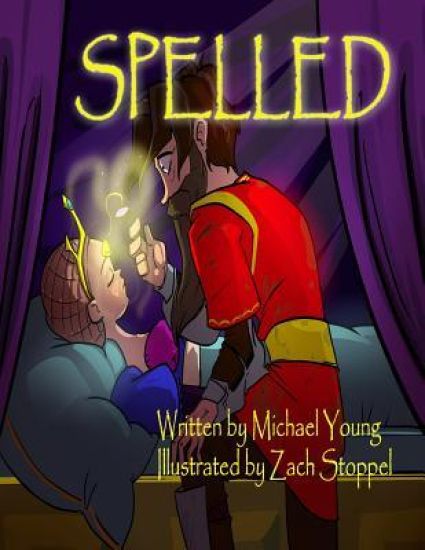
A classic fairytale of King John's quest to save his queen. Spelled by an evil sorceress, King John must forge the Dark Forest to save his only love - Queen Orvis. Little does he know that when he finds the one item that will save the queen time begins to run out. Can he make it back to the castle in time to save his one true love?
Worship has always been at the center of God's heart. Ironically if you turn to the center of your bible you will see the book of Psalms. These are songs written over 3,000 years ago, which are still sung to this day. The styles of the music accompanying them have changed dramatically over the years but the underlying constant throughout the ages is the intent of the musician to bring a proficient, heart-felt offering through his musicianship. But how does one accomplish such an undertaking? The answers lay just ahead in the chapters that follow. This comprehensive instructor's guide, which parallels the popular book "The Art to Leading Worship", is a practical teacher's manual which helps teach students, worship leaders, and musicians, in the applications necessary in attaining the goal of reaching a state of excellence in ones music and its presentation to a congregation. Pastors and conference leaders all over the world can utilize this in-depth instructional manual, making it available to attendees, in a way that some others have yet to fully attain. This manual goes fully in depth into how to create dynamics, mood, the differentiating between praise and performance, harmonies, practice and practice schedules, writing out sheet music, presiding and speaking before a congregation, eye contact, preparation, flow of songs and services, how to structure them and create one continuous work of beauty, power point, body language, preparation for single church sites or multi-campus churches and so, so much more. Michael Young, a worship leader that has been leading in worship for over 29 years and skillfully plays more than a dozen different instruments, will lead you through the learning process with clear and concise points that are easy to read and fun to follow. "The Art of Leading Worship" truly stands out in its genre as the book worship leaders from all denominations will turn to as the definitive 'how-to' guide in the future and this teachers manual will help in the process of raising up trained leaders in your church who can proficiently and joyfully lead your congregation in sincere and excellent worship. Be sure to pick up copies of "The Art to Leading Worship"- "Workbook" that accompanies this teacher's guide for all of your worship team members. Together let us make a joyful noise unto our Lord
Not since Thomas Friedman’s From Beirut to Jerusalem in 1989 has a journalist offered such a poignant and passionate portrait of Lebanon—a uniquely pluralist Arab country struggling to defend its viability in a turbulent and treacherous Middle East.Michael Young, who was taken to Lebanon at age seven by his Lebanese mother after the death of his American father and who has worked most of his career as a journalist there for American publications, brings to life a country in the crossfire of invasions, war, domestic division, incessant sectarian scheming, and often living in fear of its neighbors. Young knows or has known many of the players, politicians, writers, and religious leaders. A country riven by domestic tensions that have often resulted in assassinations, under the considerable sway of Hezbollah (in alliance with Iran and Syria), frequently set upon by Israel and Syria, nearly destroyed by civil war, Lebanon remains an exception among Arab countries because it is a place where liberal instincts and tolerance struggle to stay alive. An important and enduring symbol, Lebanon was once the outstanding example of an (almost) democratic society in an inhospitable, dangerous region—a laboratory both for modernity and violence, as a Lebanese intellectual who was later assassinated once put it. Young relates the growing tension between a domineering Syria and a Lebanese opposition in which charismatic leader and politician Rafiq al-Hariri was assassinated and the Independence Intifada—the Cedar Revolution—broke out. His searing account of his country’s confrontation with its domestic and regional demons is one of hope found and possibly lost. In this stunning narrative, Young tells us what might have been his country’s history, and what it may yet be.
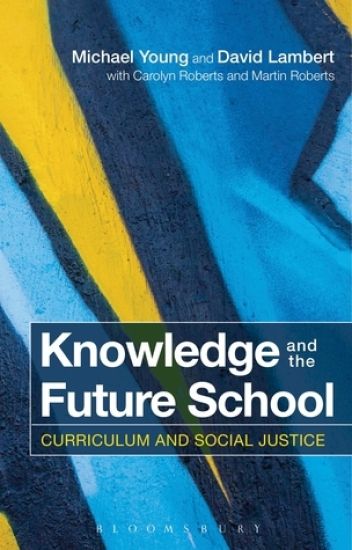
Written at a time of uncertainty about the implications of the English government’s curriculum policies, Knowledge and the Future School engages with the debate between the government and large sections of the educational community. It provides a forward-looking framework for head teachers, their staff and those involved in training teachers to use when developing the curriculum of individual schools in the context of a national curriculum. While explaining recent ideas in the sociology of educational knowledge, the authors draw on Michael Young’s earlier research with Johan Muller to distinguish three models of the curriculum in terms of their assumptions about knowledge, referred to in this book as Future 1, Future 2 and Future 3. They link Future 3 to the idea of 'powerful knowledge' for all pupils as a curriculum principle for any school, arguing that the question of knowledge is intimately linked to the issue of social justice and that access to 'powerful knowledge' is a necessary component of the education of all pupils. Knowledge and the Future School offers a new way of thinking about the problems that head teachers, their staff and curriculum designers face. In charting a course for schools that goes beyond current debates, it also provides a perspective that policy makers should not avoid.
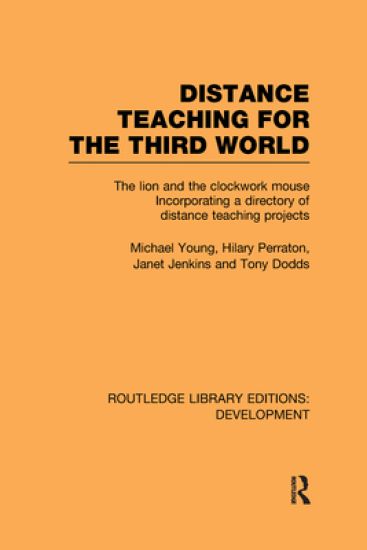
This reissue, first published in 1980, is based on the experiences of the International Extension College in developing distance teaching. The volume begins by reviewing the world problems of educational quality and quantity, and then examines the ways in which print, broadcasts and group study have been used to train teachers, to improve classroom education, to teach by correspondence out of school, and to support rural development. It then considers how that experience can be used, perhaps by creating a network of radio colleges, to supplement and extend existing schools and colleges. Finally, the book includes a descriptive and annotated bibliography of over 100 distance teaching projects in 65 third world countries.
This book is a survey of the relations of the Herodian dynasty of Roman Judaea, a family which included Herod the Great, who is infamous for ordering the 'massacre of the innocents' in the "Gospel of Matthew". Michael Young's review includes the figures Agrippina I, Agrippina II and Berenice II. It reviews their internal policies, from the establishment of the dynasty in the first century BC to the Siege of Jerusalem in AD 70 by Titus, which ended the Great Jewish Revolt.
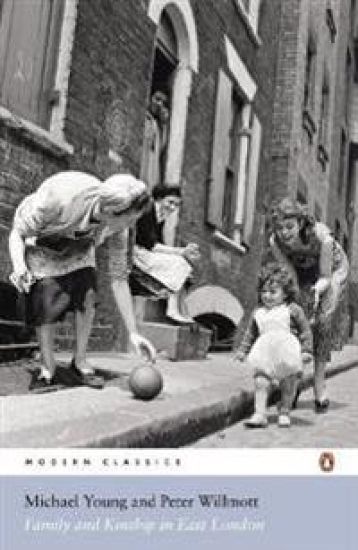
First published in 1957 ,and reprinted with a new introduction in 1986, Michael Young and Peter Willmott’s book on family and kinship in Bethnal Green in the 1950s is a classic in urban studies. A standard text in planning, housing, family studies and sociology, it predicted the failure in social terms of the great rehousing campaign which was getting under way in the 1950s. The tall flats built to replace the old ‘slum’ houses were unpopular. Social networks were broken up. The book had an immediate impact when it appeared – extracts were published in the newspapers, the sales were a record for a report of a sociological study, Government ministers quoted it. But the approach it advocated was not accepted until the late 1960s, and by then it was too late.This Routledge Revivals reissue includes the authors' introduction from the 1986 reissue, reviewing the impact of the book and its ideas thirty years on. They argue that if the lessons implicit in the book had been learned in the 1950s, London and other British cities might not have suffered the 'anomie' and violence manifested in the urban riots of the 1980s.
This reissue, first published in 1980, is based on the experiences of the International Extension College in developing distance teaching. The volume begins by reviewing the world problems of educational quality and quantity, and then examines the ways in which print, broadcasts and group study have been used to train teachers, to improve classroom education, to teach by correspondence out of school, and to support rural development. It then considers how that experience can be used, perhaps by creating a network of radio colleges, to supplement and extend existing schools and colleges. Finally, the book includes a descriptive and annotated bibliography of over 100 distance teaching projects in 65 third world countries.
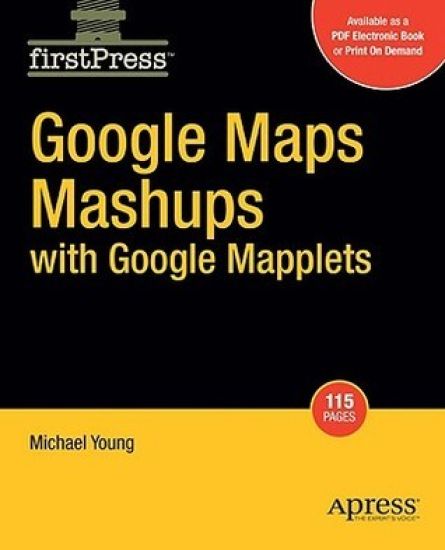
Have a Google Maps mashup that you'd like to expose to millions of users on maps.google.com? New to the mapping craze, but have an idea for a killer map–based application? Want to learn how to create GeoRSS and KML feeds with your geotagged content, exposing your customer to new ways of exploring and navigating your content? Google Maps Mashups with Google Mapplets Is the first book to cover Google's Mapplet technology Shows you how to create Google Maps–based applications and publish to maps.google.com Provides a single–source resource and practical guide to Mapplets and mashups Teaches you how to mash up Mapplets using location–specific data Includes examples of real–world applications
'This book tackles some of the most important educational questions of the day... It is rare to find a book on education which is theoretically sophisticated and practically relevant: this book is.' From the Foreword by Hugh LauderWhat is it in the twenty-first century that we want young people, and adults returning to study, to know? What is it about the kind of knowledge that people can acquire at school, college or university that distinguishes it from the knowledge that people acquire in their everyday lives everyday lives, at work, and in their families? Bringing Knowledge Back In draws on recent developments in the sociology of knowledge to propose answers to these key, but often overlooked, educational questions. Michael Young traces the changes in his own thinking about the question of knowledge in education since his earlier books Knowledge and Control and The Curriculum of the Future. He argues for the continuing relevance of the writings of Durkheim and Vygotsky and the unique importance of Basil Bernstein’s often under-appreciated work. He illustrates the importance of questions about knowledge by investigating the dilemmas faced by researchers and policy makers in a range of fields. He also considers the broader issue of the role of sociologists in relation to educational policy in the context of increasingly interventionist governments. In so doing, the book: provides conceptual tools for people to think and debate about knowledge and education in new ways provides clear expositions of difficult ideas at the interface of epistemology and the sociology of knowledge makes explicit links between theoretical issues and practical /policy questions offers a clear focus for the future development of the sociology of education as a key field within educational studies. This compelling and provocative book will be essential reading for anyone involved in research and debates about the curriculum as well as those with a specific interest in the sociology of education.
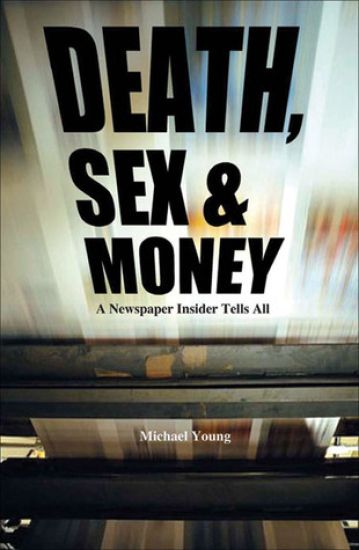
What was it like being at the news desk on the evening of September 11? On the day of the Port Arthur massacre? And on the weekend when Princess Diana was killed in that tunnel in Paris? Few readers, even the dedicated ones, have any real understanding of how a newspaper functions, and of its daily needs and appetites. Who makes the decision to publish a particular story? Why are some stories covered and others ignored? Who is who on a newspaper - what does the editor-in-chief do, how does this role affect the editor, and what about the role of the chief of staff and the news editor? And where does advertising fit into all this? ""Death, Sex and Money"" will take you behind a newspaper's news desk, and afford you a glimpse into the frenetic world of newspaper journalism, in an age when newspapers have moved from being a special kind of business to being just another business. It will show how a newspaper moves from being empty at the start of the day to being full twelve hours later, put readers in the shoes of a journalist on the news-gathering trail and, among other things, examine the truisms of what drives circulation. Critically, it examines what it is that newspapers consider news.
Although housing in Bethnal Green was often appalling, a complex network of relatives - families of three generations held together by the powerful mother-daughter bond at the centre - was always available to provide mutual aid and a sense of community. It was when families were rehoused in the immaculate new estates outside London, miles away from their kin, that the vital support system broke down, with disastrous effects on the quality of people's lives.This famous book, based on a major three-year research project, makes clear how planners have frequently failed to understand real human needs; it also provides a marvellous portrait of the resilience and generosity of spirit which went at least some way to compensate for the deptivations of inner-city working-class life.
A Good Death is based on a survey in East London and provides a wide range of fascinating and helpful insights into all aspects of experiencing death and surviving grief.The voices in the book are those of people who have managed to cope despite being under the shadow of impending death. Their experience could be a comfort to anybody in a similar situation. A Good Death is intended for people who are dying, for their lay and professional carers and for student doctors, nurses and social workers.
Michael Young has christened the oligarchy of the future "Meritocracy." Indeed, the word is now part of the English language. It would appear that the formula: IQ+Effort=Merit may well constitute the basic belief of the ruling class in the twenty-first century. Projecting himself into the year 2034, the author of this sociological satire shows how present decisions and practices may remold our society.It is widespread knowledge that it is insufficient to be somebody's nephew to obtain a responsible post in business, government, teaching, or science. Experts in education and selection apply scientific principles to sift out the leaders of tomorrow. You need intelligence rating, qualification, experience, application, and a certain caliber to achieve status. In a word, one must show merit to advance in the new society of tomorrow.In a new opening essay, Young reflects on the reception of his work, and its production, in a candid and lively way. Many of the critical ambiguities surrounding its original publication are now clarified and resolved. What we have is what the Guardian of London called "A brilliant essay." and what Time and Tide described as "a fountain gush of new ideas. Its wit and style make it compulsively enjoyable reading from cover to cover."