Kirjailija
Muhammad Iqbal
Kirjat ja teokset yhdessä paikassa: 57 kirjaa, julkaisuja vuosilta 2004-2026, suosituimpien joukossa Six Lectures on the Reconstruction of Religious Thought in Islam. Vertaile teosten hintoja ja tarkista saatavuus suomalaisista kirjakaupoista.
57 kirjaa
Kirjojen julkaisuhaarukka 2004-2026.
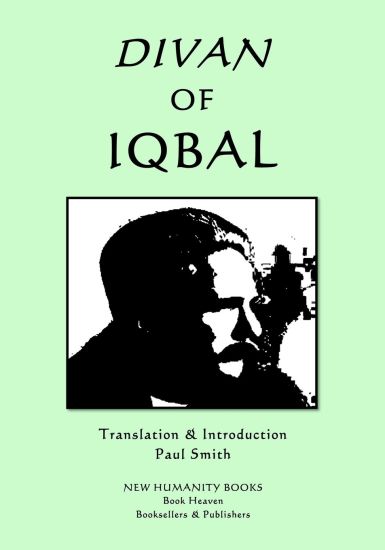
DIVAN OF IQBAL Translation & Introduction Paul Smith Muhammad Iqbal (1873-1938) was born in Sialkot, Punjab. He graduated from Government College, Lahore with a master's degree in philosophy. He taught there while he established his reputation as an Urdu poet. During this period his poetry expressed an ardent Indian nationalism, but a marked change came over his views when he was studying for his doctorate at Cambridge, visiting German universities and qualifying as a barrister. The philosophies of Nietzsche and Bergson influenced him and he became critical of Western civilization that he regarded as decadent. He turned to Islam and Sufism for inspiration and rejected nationalism as a disease of the West. These ideas found expression in his long poems written in Persian, presumably to gain his ideas an audience in the Moslem world outside India. Becoming convinced that Muslims were in danger from the Hindu majority if India should become independent, he gave his support to Jinnah as the leader of India's Muslims. In his final years he returned to Urdu as his medium with ghazals inspired by his on-and-off Sufism. Here is a large collection of his ruba'is, ghazals, nazms, qit'as, Masnavis & a qasida in English in the correct rhyme-structure and meaning. Introduction on his Life, Times & Poetry and Poetic Forms he wrote in. Large Format, 7" x 10" 251 pages. COMMENTS ON PAUL SMITH'S TRANSLATION OF HAFIZ'S 'DIVAN'."It is not a joke... the English version of ALL the ghazals of Hafiz is a great feat... I am astonished. " Dr. Mir Mohammad Taghavi (Dr. of Literature) Tehran."Superb translations. 99% Hafiz 1% Paul Smith." Ali Akbar Shapurzman, translator from English into Persian, knower of Hafiz's Divan off by heart."Smith has probably put together the greatest collection of literary facts and history concerning Hafiz." Daniel Ladinsky (Penguin Books author). Paul Smith (b. 1945) is a poet, author and translator of over 150 books of Sufi poets of the Persian, Arabic, Urdu, Turkish, Pashtu and other languages... including Hafiz, Sadi, Nizami, Rumi, 'Attar, Sana'i, Jahan Khatun, Obeyd Zakani, Mu'in, Amir Khusrau, Nesimi, Kabir, Anvari, Ansari, Jami, Omar Khayyam, Rudaki, Yunus Emre, Mahsati, Lalla Ded, Bulleh Shah, Shah Latif, Makhfi, Seemab, Jigar, Abu Nuwas, Ibn al-Farid, Ibn 'Arabi and many others, and his own poetry, fiction, plays, biographies, children's books and 12 screenplays amazon.com/author/smithpa
Synthesis, Characterization and Applications of Copper (II) Complexes
Muhammad Iqbal; Saqib Ali
Lap Lambert Academic Publishing
2017
nidottu
Does earning per share determines the market price of ordinary shares
Amina Iqbal; Muhammad Iqbal; Sher Aslam
Lap Lambert Academic Publishing
2017
nidottu
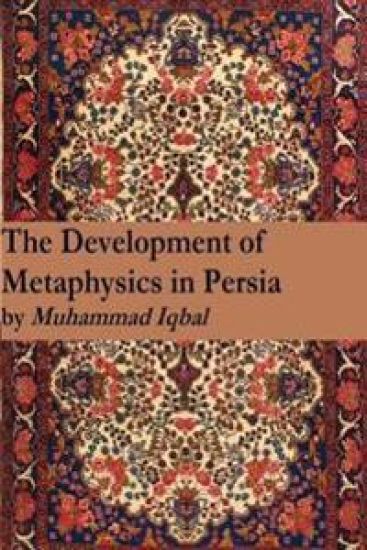
The Development of Metaphysics in Persia
Muhammad Iqbal
Createspace Independent Publishing Platform
2016
nidottu
The Development of Metaphysics in Persia is the book form of Muhammad Iqbal's PhD thesis in philosophy at the University of Munich submitted in 1908 and published in the same year. It traces the development of metaphysics in Persia from the time of Zoroaster to the advent of the Bah ' Faith.
Conventional Banking Vs Islamic Banking
Sher Khan; Irfan Nullah; Muhammad Iqbal
Lap Lambert Academic Publishing
2016
nidottu
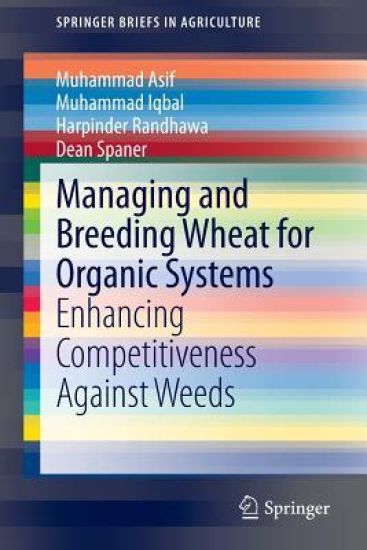
Managing and Breeding Wheat for Organic Systems
Muhammad Asif; Muhammad Iqbal; Harpinder Randhawa; Dean Spaner
Springer International Publishing AG
2014
nidottu
Genetically uniform cultivars in many self-pollinated cereal crops dominate commercial production in high-input environments especially due to their high grain yields and wide geographical adaptation. These cultivars generally perform well under favorable and high-input farming systems but their optimal performance cannot be achieved on marginal/organic lands or without the use of external chemical inputs (fertilizers, herbicides and pesticides). Cereal breeding programs aim at evaluating candidate lines/cultivars for agronomic, disease and quality traits in a weed free environment that makes it impossible to identify traits conferring competitive ability against weeds. Moreover, quantification of competitive ability is a complex phenomenon which is affected by range of growth traits. Above (e.g. light) and below (e.g. water and nutrients) ground resources also influence competitiveness to a greater extent. Competitiveness is quantitatively inherited trait which is heavily influenced by many factors including genotype, management, environment and their interaction. Sound plant breeding techniques and good experimental designs are prerequisites for maximizing genetic gains to breed cultivars for organically managed lands. The brief is focused on breeding wheat for enhanced competitive ability along with other agronomic, genetic and molecular studies that have been undertaken to improve weed suppression, disease resistance and quality in organically managed lands. The examples from other cereals have also been highlighted to compare wheat with other cereal crops.
The Development of Metaphysics in Persia a Contribution to the History of Muslim Philosophy
Muhammad Iqbal
Literary Licensing, LLC
2014
nidottu
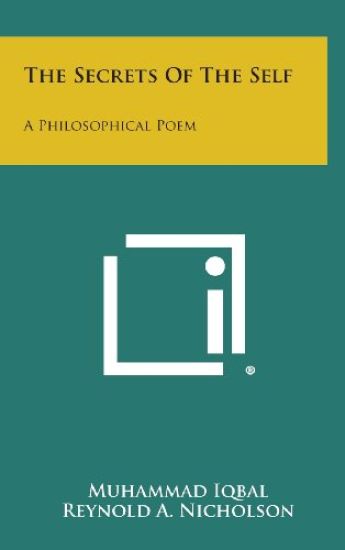
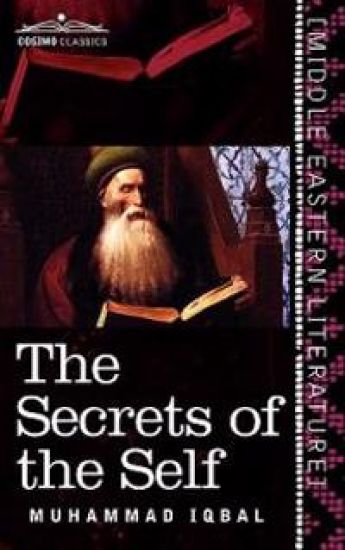
""The Secrets of the Self"" is a philosophical poem written by Muhammad Iqbal, a renowned philosopher and poet from South Asia. The book is a reflection on the nature of the self and its relationship with the divine. The poem is divided into two parts, each containing several sections. In the first part, Iqbal explores the nature of the self, its limitations, and its potential for growth and transformation. He argues that the self is not a fixed entity but rather a dynamic and evolving process that is shaped by both internal and external factors.In the second part of the poem, Iqbal delves into the relationship between the self and the divine. He argues that the self is not separate from the divine but rather a manifestation of it. He explores the idea of the self as a mirror reflecting the divine and the importance of spiritual practice in achieving a deeper understanding of this relationship.Throughout the poem, Iqbal draws on a variety of philosophical and mystical traditions, including Sufism, Vedanta, and Western philosophy, to explore the nature of the self and its relationship with the divine. The language of the poem is rich and evocative, with vivid imagery and powerful metaphors that bring the ideas to life. Overall, ""The Secrets of the Self"" is a profound and thought-provoking work that offers insights into the nature of the self, the divine, and the relationship between the two.This is a new release of the original 1944 edition.This scarce antiquarian book is a facsimile reprint of the old original and may contain some imperfections such as library marks and notations. Because we believe this work is culturally important, we have made it available as part of our commitment for protecting, preserving, and promoting the world's literature in affordable, high quality, modern editions, that are true to their original work.
Sir Muhammad Iqbal (1873-1938) was not only amongst the leading political figures of his time, but regarded by many as the spiritual father of Pakistan and a great champion of the reform movement of modern Islam. He was also a poet, in both Urdu and Persian. The recurrent theme of his poems is the infinite potentiality of man, as partner with God in shaping the destiny of the universe. As an ardent Muslim, Iqbal saw the realization of mankind’s future in a union of Islamic peoples, unfettered by the bonds of separate nationhood, fully liberated from the chains of imperial domination. The Javid-nama, commonly acknowledged as his greatest work, develops this theme within the frame-work of the ‘Ascension’ story. In imitation of the Prophet of Islam, the poet soars through the spheres, encountering on his heavenly journey many great figures of history with whom he converses. The resemblance to Dante’s Divine Comedy is obvious.
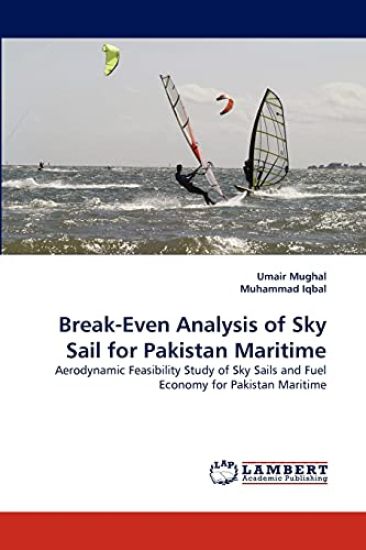
Break-Even Analysis of Sky Sail for Pakistan Maritime
Umair Mughal; Muhammad Iqbal
LAP Lambert Academic Publishing
2010
pokkari
Advances in Modeling
Nasir Mirza; Sikander Mirza; Muhammad Iqbal
LAP Lambert Academic Publishing
2010
pokkari
The Development of Metaphysics in Persia a Contribution to the History of Muslim Philosophy
Muhammad Iqbal
Kessinger Pub
2005
pokkari
The Development of Metaphysics in Persia a Contribution to the History of Muslim Philosophy
Muhammad Iqbal
Kessinger Pub
2005
sidottu