Kirjojen hintavertailu. Mukana 12 290 406 kirjaa ja 12 kauppaa.

Kirjailija

Neville A. Stanton

Kirjat ja teokset yhdessä paikassa: 55 kirjaa, julkaisuja vuosilta 2008-2025, suosituimpien joukossa Human Factors Methods and Accident Analysis. Vertaile teosten hintoja ja tarkista saatavuus suomalaisista kirjakaupoista.

55 kirjaa

Kirjojen julkaisuhaarukka 2008-2025.

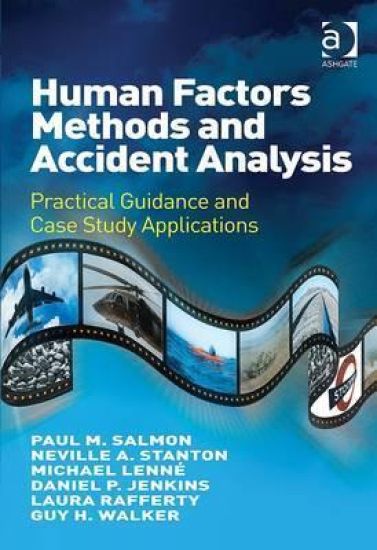
Human Factors Methods and Accident Analysis

Human Factors Methods and Accident Analysis

Paul M. Salmon; Neville A. Stanton; Michael Lenné; Daniel P. Jenkins; Laura Rafferty; Guy H. Walker

Ashgate Publishing Limited
2011
sidottu
This book provides an overview of, and practical guidance on, the range of human factors (HF) methods that can be used for the purposes of accident analysis and investigation in complex sociotechnical systems. Human Factors Methods and Accident Analysis begins with an overview of different accident causation models and an introduction to the concepts of accident analysis and investigation. It then presents a discussion focussing on the importance of, and difficulties associated with, collecting appropriate data for accident analysis purposes. Following this, a range of HF-based accident analysis methods are described, as well as step-by-step guidance on how to apply them. To demonstrate how the different methods are applied, and what the outputs are, the book presents a series of case study applications across a range of safety critical domains. It concludes with a chapter focussing on the data challenges faced when collecting, coding and analysing accident data, along with future directions in the area. Human Factors Methods and Accident Analysis is the first book to offer a practical guide for investigators, practitioners and researchers wishing to apply accident analysis methods. It is also unique in presenting a series of novel applications of accident analysis methods, including HF methods not previously used for these purposes (e.g. EAST, critical path analysis), as well as applications of methods in new domains.
Handbook of Systems Thinking Methods

Handbook of Systems Thinking Methods

Paul M. Salmon; Neville A. Stanton; Guy H. Walker; Adam Hulme; Natassia Goode; Jason Thompson; Gemma J.M. Read

TAYLOR FRANCIS LTD
2025
nidottu
The systems thinking philosophy has become popular in human factors and ergonomics and safety science. These methods are being used to understand and resolve complex societal problems in areas such as transport safety, workplace safety, medication error, disaster management, child abuse, financial crises, terrorism, climate change and public health and wellbeing. This handbook presents practical step-by-step guidance for practitioners and researchers wishing to use these methods to tackle complex problems. Each method includes an example case study which demonstrates how the method can be applied and how the results can be interpreted and translated into practical recommendations.The book presents practical guidance on state-of-the-art systems thinking methods and offers case study applications describing systems thinking methods in novel areas. It explains how to translate the outputs of systems thinking methods in practice and introduces systems thinking with an overview of Human Factors and Ergonomics applications.This book will serve as a great reference for students and engineers in the field of systems engineering, complex systems and the design and development of systems, including ergonomics/human factors and systems engineers, designers, architects, industrial engineers, project management engineers, reliability engineers, risk engineers, software engineers and computer engineers.
Human Factors on the Flight Deck

Human Factors on the Flight Deck

Katie J. Parnell; Victoria A. Banks; Rachael A. Wynne; Neville A. Stanton; Katherine L. Plant

TAYLOR FRANCIS LTD
2025
nidottu
This book presents the Human Factors methodologies and applications thereof that can be utilised across the design, modelling and evaluation stages of the design lifecycle of new technologies entering future commercial aircraft.As advances are made to the architecture of commercial aircraft cockpits, Human Factors on the Flight Deck argues that it is vitally important that these new interfaces are safely incorporated and designed in a way that is usable to the pilot. Incorporation of Human Factors is essential to ensuring that engineering developments to avionic systems are integrated such that pilots can maintain safe interactions while gaining information of value. Case study examples of various technological advancements during their early conceptual stages are given throughout to highlight how the methods and processes can be applied across each stage.The text will be useful for professionals, graduate students and academic researchers in the fields of aviation, Human Factors and ergonomics.
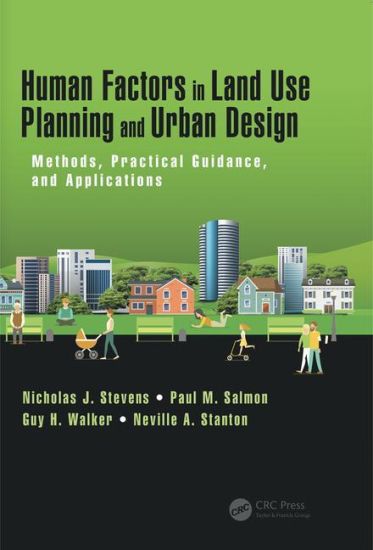
Human Factors in Land Use Planning and Urban Design

Human Factors in Land Use Planning and Urban Design

Nicholas J. Stevens; Paul M. Salmon; Guy H. Walker; Neville A. Stanton

TAYLOR FRANCIS LTD
2023
nidottu
The integration of Human Factors in Land Use Planning and Urban Design (LUP & UD) is an exciting and emerging interdisciplinary field. This book offers practical guidance on a range of Human Factors methods that can be used to rigorously and reliably explore LUP & UD.It provides new ways to interpret urban space and detail context sensitive analysis for the interpretation and design of our surroundings. The methodologies outlined allow for the consideration of the technical aspects of the built environment with the necessary experience and human centered approaches to our urban and regional settings. This book describes 30 Human Factors methods for use in the LUP & UD context. While it explores theory, it also focuses on the question of what Human Factors methods are; their advantages and disadvantages; step-by-step guidance on how to carry them out; and case studies to guide the reader. Describes the practice and processes associated with urban and regional strategic planning Constructed so that students, practitioners, and researchers with an interest in one particular area of Human Factors can read the chapters independently from one another
Human Factors on the Flight Deck

Human Factors on the Flight Deck

Katie J. Parnell; Victoria A. Banks; Rachael A. Wynne; Neville A. Stanton; Katherine L. Plant

TAYLOR FRANCIS LTD
2023
sidottu
This book presents the Human Factors methodologies and applications thereof that can be utilised across the design, modelling and evaluation stages of the design lifecycle of new technologies entering future commercial aircraft.As advances are made to the architecture of commercial aircraft cockpits, Human Factors on the Flight Deck argues that it is vitally important that these new interfaces are safely incorporated and designed in a way that is usable to the pilot. Incorporation of Human Factors is essential to ensuring that engineering developments to avionic systems are integrated such that pilots can maintain safe interactions while gaining information of value. Case study examples of various technological advancements during their early conceptual stages are given throughout to highlight how the methods and processes can be applied across each stage.The text will be useful for professionals, graduate students and academic researchers in the fields of aviation, Human Factors and ergonomics.
Handbook of Systems Thinking Methods

Handbook of Systems Thinking Methods

Paul M. Salmon; Neville A. Stanton; Guy H. Walker; Adam Hulme; Natassia Goode; Jason Thompson; Gemma J.M. Read

TAYLOR FRANCIS LTD
2022
sidottu
The systems thinking philosophy has become popular in human factors and ergonomics and safety science. These methods are being used to understand and resolve complex societal problems in areas such as transport safety, workplace safety, medication error, disaster management, child abuse, financial crises, terrorism, climate change and public health and wellbeing. This handbook presents practical step-by-step guidance for practitioners and researchers wishing to use these methods to tackle complex problems. Each method includes an example case study which demonstrates how the method can be applied and how the results can be interpreted and translated into practical recommendations.The book presents practical guidance on state-of-the-art systems thinking methods and offers case study applications describing systems thinking methods in novel areas. It explains how to translate the outputs of systems thinking methods in practice and introduces systems thinking with an overview of Human Factors and Ergonomics applications.This book will serve as a great reference for students and engineers in the field of systems engineering, complex systems and the design and development of systems, including ergonomics/human factors and systems engineers, designers, architects, industrial engineers, project management engineers, reliability engineers, risk engineers, software engineers and computer engineers.
Distributed Situation Awareness in Road Transport

Distributed Situation Awareness in Road Transport

Paul M. Salmon; Gemma Jennie Megan Read; Guy H. Walker; Michael G. Lenné; Neville A. Stanton

Ashgate Publishing Limited
2018
sidottu
How can we design transport environments that cater to the situation awareness needs of different end-users? This book answers this question by showcasing how state-of-the-art human factors theory and methods can be used to understand how situation awareness differs across drivers, cyclists, motorcyclists, and pedestrians and creates new designs that cater to these diverse situation awareness needs. Written by experts in the field and based on a major program of work funded by the Australian Research Council, this book outlines the distributed situation awareness model and provides practical guidance on how to study situation awareness naturalistically and how to create designs that support, rather than hinder, situation awareness. The book closes by outlining outline a generic framework to support similar applications in other areas, and discusses future applications in areas such as vehicle automation, artificial intelligence, and cybersecurity.Features Challenges traditional road safety analysis, design processes and conventions Outlines a novel on-road study methodology for analyzing naturalistic interactions among drivers, cyclists, motorcyclists and pedestrians Presents a review of state-of-the-art situation awareness theory and methods Provides practical guidance on a series of human factors methods Describes a framework to support the design of transport environments Evaluates new intersection concepts that encompass features designed to prevent collisions at intersections
Vehicle Feedback and Driver Situation Awareness

Vehicle Feedback and Driver Situation Awareness

Guy H. Walker; Neville A. Stanton; Paul M. Salmon

CRC Press
2018
sidottu
A potentially troubling aspect of modern vehicle design – some would argue - is a trend for isolating the driver and reducing vehicle feedback, usually in the name of comfort and refinement but increasingly because of automation. There is little doubt cars have become more civilised over the years, yet despite this, the consequences of driver behaviour remain to a large extent anecdotal. Readers will have heard such anecdotes for themselves. They usually take the form of drivers of a certain age recalling their first cars from the 1970s or 80s, in which "doing 70 mph really felt like it". The question is whether such anecdotes actually reflect a bigger, more significant issue that could be better understood. Related questions have been explored in other domains such as aviation, where the change to ‘fly-by-wire’ did indeed bring about some occasionally serious performance issues that were not anticipated. Despite some clear parallels, automotive systems have been left relatively unstudied. The research described in this book aims to explore precisely these issues from a Human Factors perspective. This means connecting the topics of vehicle feel, vehicle dynamics, and automotive engineering with the latest research on driver situation awareness. The problem is explored experimentally from a variety of theoretical viewpoints but the outcomes are consistently practical. Here we have a promising new avenue along which the driver experience can be enhanced in novel and insightful ways. Tools and templates are provided so that engineers and designers can try different ways to boost vehicle safety, efficiency and enjoyment from a human-centered perspective.Association of American Publishers (AAP) Finalist for the 2019 PROSE AwardFeatures Diagnosis of how vehicle feel impacts driver situation awareness, and how this could aid future vehicle designsMulti-theory approach to driver situation awareness, and how different views of this important concept give rise to different insightsComprehensive analysis of situation awareness in driving, the information requirements of drivers, and how these needs can be supportedPractical descriptions of how state-of-science Human Factors methods have been applied in practice
Human Factors in Land Use Planning and Urban Design

Human Factors in Land Use Planning and Urban Design

Nicholas J. Stevens; Paul M. Salmon; Guy H. Walker; Neville A. Stanton

CRC Press
2018
sidottu
The integration of Human Factors in Land Use Planning and Urban Design (LUP & UD) is an exciting and emerging interdisciplinary field. This book offers practical guidance on a range of Human Factors methods that can be used to rigorously and reliably explore LUP & UD.It provides new ways to interpret urban space and detail context sensitive analysis for the interpretation and design of our surroundings. The methodologies outlined allow for the consideration of the technical aspects of the built environment with the necessary experience and human centered approaches to our urban and regional settings. This book describes 30 Human Factors methods for use in the LUP & UD context. While it explores theory, it also focuses on the question of what Human Factors methods are; their advantages and disadvantages; step-by-step guidance on how to carry them out; and case studies to guide the reader. Describes the practice and processes associated with urban and regional strategic planning Constructed so that students, practitioners, and researchers with an interest in one particular area of Human Factors can read the chapters independently from one another
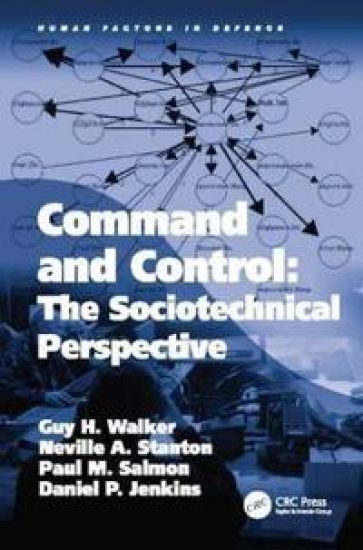
Command and Control: The Sociotechnical Perspective

Command and Control: The Sociotechnical Perspective

Guy H Walker; Neville A. Stanton; Daniel P. Jenkins

CRC Press
2017
nidottu
Military command and control is not merely evolving, it is co-evolving. Technology is creating new opportunities for different types of command and control, and new types of command and control are creating new aspirations for technology. The question is how to manage this process, how to achieve a jointly optimised blend of socio and technical and create the kind of agility and self-synchronisation that modern forms of command and control promise. The answer put forward in this book is to re-visit sociotechnical systems theory. In doing so, the problems of 21st century command and control can be approached from an alternative, multi-disciplinary and above all human-centred perspective. Human factors (HF) is also co-evolving. The traditional conception of the field is to serve as a conduit for knowledge between engineering and psychology yet 21st century command and control presents an altogether different challenge. Viewing military command and control through the lens of sociotechnical theory forces us to confront difficult questions about the non-linear nature of people and technology: technology is changing, from platform centric to network centric; the interaction with that technology is changing, from prescribed to exploratory; and complexity is increasing, from behaviour that is linear to that which is emergent. The various chapters look at this transition and draw out ways in which sociotechnical systems theory can help to understand it. The sociotechnical perspective reveals itself as part of a conceptual toolkit through which military command and control can be transitioned, from notions of bureaucratic, hierarchical ways of operating to the devolved, agile, self-synchronising behaviour promised by modern forms of command and control like Network Enabled Capability (NEC). Sociotechnical system theory brings with it a sixty year legacy of practical application and this real-world grounding in business process re-engineering underlies the entire book. An attempt has been made to bring a set of sometimes abstract (but no less useful) principles down to the level of easy examples, design principles, evaluation criteria and actionable models. All of these are based on an extensive review of the current state of the art, new sociotechnical/NEC studies conducted by the authors, and insights derived from field studies of real-life command and control. Time and again, what emerges is a realisation that the most agile, self-synchronising component of all in command and control settings is the human.
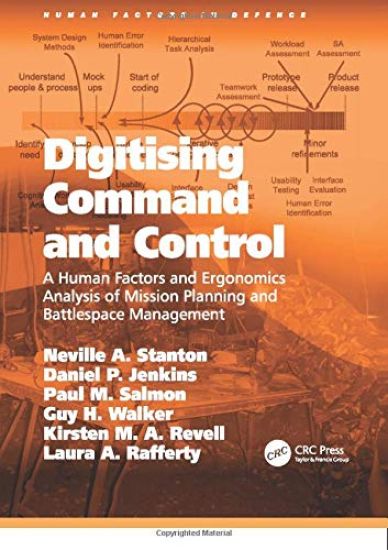
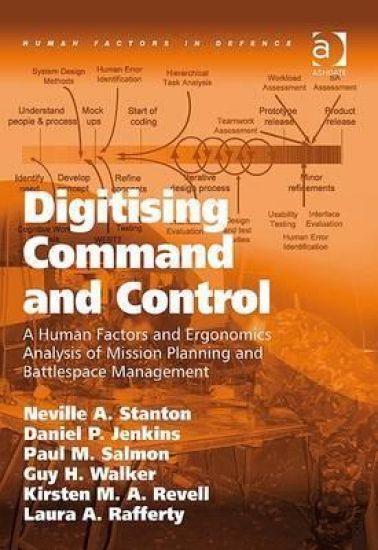
Digitising Command and Control

Digitising Command and Control

Neville A. Stanton; Daniel P. Jenkins; Paul M. Salmon; Guy H. Walker; Kirsten M. A. Revell; Laura A. Rafferty

CRC Press
2017
nidottu
This book presents a human factors and ergonomics evaluation of a digital Mission Planning and Battle-space Management (MP/BM) system. An emphasis was placed on the activities at the Brigade (Bde) and the Battle Group (BG) headquarters (HQ) levels. The analysts distributed their time evenly between these two locations. The human factors team from Brunel University, as part of the HFI DTC, undertook a multi-faceted approach to the investigation, including: - observation of people using the traditional analogue MP/BM processes in the course of their work - cognitive work analysis of the digital MP/BM system - analysis of the tasks and goal structure required by the digital MP/BM - assessment against a usability questionnaire - analysis of the distributed situation awareness - an environmental survey. The book concludes with a summary of the research project's findings and offers many valuable insights. For example, the recommendations for short-term improvements in the current generation of digital MP/BM system address general design improvements, user-interface design improvements, hardware improvements, infrastructure improvements and support improvements. In looking forward to the next generation digital MP/BM systems, general human factors design principles are presented and human factors issues in digitising mission planning are considered.
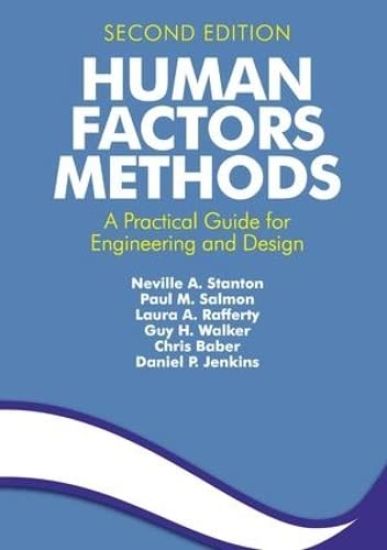
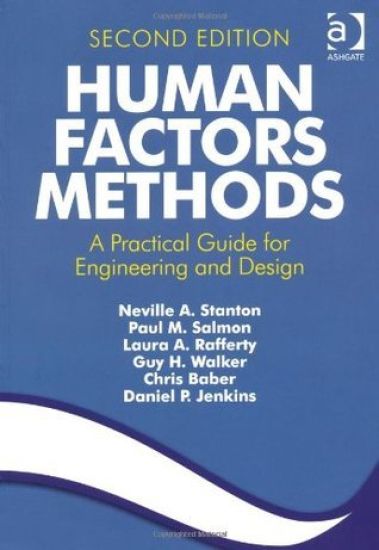
Human Factors Methods

Human Factors Methods

Neville A. Stanton; Paul M. Salmon; Laura A. Rafferty; Guy H. Walker; Chris Baber; Daniel P. Jenkins

Ashgate Publishing Limited
2013
sidottu
This second edition of Human Factors Methods: A Practical Guide for Engineering and Design now presents 107 design and evaluation methods as well as numerous refinements to those that featured in the original. The book has been carefully designed to act as an ergonomics methods manual, aiding both students and practitioners. The eleven sections represent the different categories of ergonomics methods and techniques that can be used in the evaluation and design process. Offering a 'how-to' text on a substantial range of ergonomics methods that can be used in the design and evaluation of products and systems, it is a comprehensive point of reference for all these methods. An overview of the methods is presented in chapter one, with a methods matrix showing which can be used in conjunction. The following chapters detail the methods showing how to apply them in practice. Flowcharts, procedures and examples cover the requirements of a diverse audience and varied applications of the methods. The final chapter, a new addition, illustrates the EAST method, which integrates several well-known methods into a teamwork analysis approach.
Human Factors Methods

Human Factors Methods

Neville A. Stanton; Paul M. Salmon; Laura A. Rafferty; Guy H. Walker; Chris Baber; Daniel P. Jenkins

Ashgate Publishing Limited
2013
nidottu
This second edition of Human Factors Methods: A Practical Guide for Engineering and Design now presents 107 design and evaluation methods as well as numerous refinements to those that featured in the original. The book has been carefully designed to act as an ergonomics methods manual, aiding both students and practitioners. The eleven sections represent the different categories of ergonomics methods and techniques that can be used in the evaluation and design process. Offering a 'how-to' text on a substantial range of ergonomics methods that can be used in the design and evaluation of products and systems, it is a comprehensive point of reference for all these methods. An overview of the methods is presented in chapter one, with a methods matrix showing which can be used in conjunction. The following chapters detail the methods showing how to apply them in practice. Flowcharts, procedures and examples cover the requirements of a diverse audience and varied applications of the methods. The final chapter, a new addition, illustrates the EAST method, which integrates several well-known methods into a teamwork analysis approach.
Command and Control: The Sociotechnical Perspective

Command and Control: The Sociotechnical Perspective

Guy H Walker; Neville A. Stanton; Daniel P. Jenkins

Ashgate Publishing Limited
2009
sidottu
Military command and control is not merely evolving, it is co-evolving. Technology is creating new opportunities for different types of command and control, and new types of command and control are creating new aspirations for technology. The question is how to manage this process, how to achieve a jointly optimised blend of socio and technical and create the kind of agility and self-synchronisation that modern forms of command and control promise. The answer put forward in this book is to re-visit sociotechnical systems theory. In doing so, the problems of 21st century command and control can be approached from an alternative, multi-disciplinary and above all human-centred perspective. Human factors (HF) is also co-evolving. The traditional conception of the field is to serve as a conduit for knowledge between engineering and psychology yet 21st century command and control presents an altogether different challenge. Viewing military command and control through the lens of sociotechnical theory forces us to confront difficult questions about the non-linear nature of people and technology: technology is changing, from platform centric to network centric; the interaction with that technology is changing, from prescribed to exploratory; and complexity is increasing, from behaviour that is linear to that which is emergent. The various chapters look at this transition and draw out ways in which sociotechnical systems theory can help to understand it. The sociotechnical perspective reveals itself as part of a conceptual toolkit through which military command and control can be transitioned, from notions of bureaucratic, hierarchical ways of operating to the devolved, agile, self-synchronising behaviour promised by modern forms of command and control like Network Enabled Capability (NEC). Sociotechnical system theory brings with it a sixty year legacy of practical application and this real-world grounding in business process re-engineering underlies the entire book. An attempt has been made to bring a set of sometimes abstract (but no less useful) principles down to the level of easy examples, design principles, evaluation criteria and actionable models. All of these are based on an extensive review of the current state of the art, new sociotechnical/NEC studies conducted by the authors, and insights derived from field studies of real-life command and control. Time and again, what emerges is a realisation that the most agile, self-synchronising component of all in command and control settings is the human.
Digitising Command and Control

Digitising Command and Control

Neville A. Stanton; Daniel P. Jenkins; Paul M. Salmon; Guy H. Walker; Kirsten M. A. Revell; Laura A. Rafferty

Ashgate Publishing Limited
2009
sidottu
This book presents a human factors and ergonomics evaluation of a digital Mission Planning and Battle-space Management (MP/BM) system. An emphasis was placed on the activities at the Brigade (Bde) and the Battle Group (BG) headquarters (HQ) levels. The analysts distributed their time evenly between these two locations. The human factors team from Brunel University, as part of the HFI DTC, undertook a multi-faceted approach to the investigation, including: - observation of people using the traditional analogue MP/BM processes in the course of their work - cognitive work analysis of the digital MP/BM system - analysis of the tasks and goal structure required by the digital MP/BM - assessment against a usability questionnaire - analysis of the distributed situation awareness - an environmental survey. The book concludes with a summary of the research project's findings and offers many valuable insights. For example, the recommendations for short-term improvements in the current generation of digital MP/BM system address general design improvements, user-interface design improvements, hardware improvements, infrastructure improvements and support improvements. In looking forward to the next generation digital MP/BM systems, general human factors design principles are presented and human factors issues in digitising mission planning are considered.
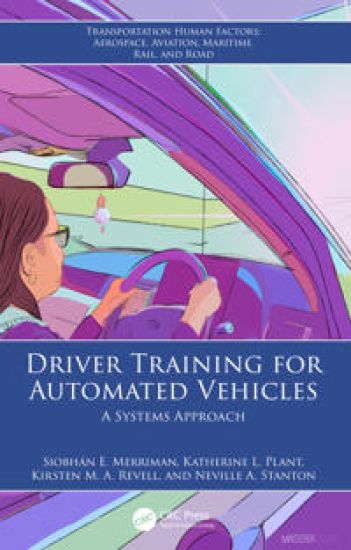
Driver Training for Automated Vehicles

Driver Training for Automated Vehicles

Siobhán E. Merriman; Katherine L. Plant; Kirsten M. A. Revell; Neville A. Stanton

TAYLOR FRANCIS LTD
2025
nidottu
Since the introduction of Automated Vehicles (AVs) on roads, there have been a number of high-profile collisions, which have highlighted significant driver challenges. These include challenges associated with drivers’ trust in the automation, their knowledge and awareness of the AV’s capabilities and limitations and their reduced situation awareness of the road environment and the vehicle. Solutions are needed to overcome these challenges, so that the expected benefits of AVs can be realised. Driver Training for Automated Vehicles: A Systems Approach identifies the training requirements for drivers of AVs and takes a systematic approach to design, develop, implement and evaluate a comprehensive training package to address these requirements. This book explores how training can overcome the driver challenges associated with AVs by improving drivers’ mental models, trust in automation, decisions and behaviour when activating a Level 4 AV. It presents a systematic approach to the training lifecycle, by first presenting the current state of research into AVs, identifying the challenges and training requirements for drivers of AVs, and then developing and evaluating a training programme to achieve these requirements. This fascinating title highlights the need for drivers to undergo training for AVs, and takes us a step closer to this need. It walks readers through a systematic, four-step process and provides practical guidance to develop and evaluate an effective training programme. The reader will develop a thorough understanding of the current driver challenges with AVs and the methods and systems to mitigate them through current knowledge and research. This book is an ideal read for practitioners, designers and academics with a professional or research interest in AVs. Its appeal extends to those in the fields of automotive design, Systems Engineering, Human Factors and education and training.
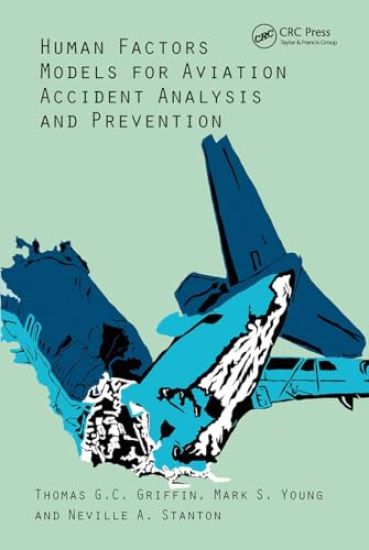
Human Factors Models for Aviation Accident Analysis and Prevention

Human Factors Models for Aviation Accident Analysis and Prevention

Thomas G.C. Griffin; Mark S. Young; Neville A. Stanton

TAYLOR FRANCIS LTD
2024
nidottu
The investigation and modelling of aviation accident causation is dominated by linear models. Aviation is, however, a complex system and as such suffers from being artificially manipulated into non-complex models and methods. This book addresses this issue by developing a new approach to investigating aviation accident causation through information networks. These networks centralise communication and the flow of information as key indicators of a system’s health and risk. This holistic approach focuses on the system environment, the activity that takes place within it, the strategies used to conduct this activity, the way in which the constituent parts of the system (both human and non-human) interact and the behaviour required. Each stage of this book identifies and expands upon the potential of the information network approach, maintaining firm focus on the overall health of a system. The book’s new model offers many potential developments and some key areas are studied in this research. Through the centralisation of barriers and information nodes the method can be applied to almost any situation. The application of Bayesian mathematics to historical data populations provides scope for studying error migration and barrier manipulation. The book also provides application of these predictions to a flight simulator study for the purposes of validation. Beyond this it also discusses the applicability of the approach to industry. Through working with a legacy airline the methods discussed are used as the basis for a new and prospective safety management system.
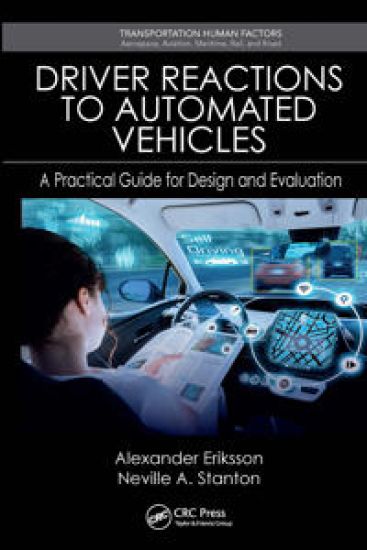
Driver Reactions to Automated Vehicles

Driver Reactions to Automated Vehicles

Alexander Eriksson; Neville A. Stanton

TAYLOR FRANCIS LTD
2024
nidottu
Driver Reactions to Automated Vehicles focuses on the design and evaluation of the handover to and from driver and the automobile. The authors present evidence from studies in driving simulators and on the open roads to show that handover times are much longer than anticipated by previous research. In the course of the studies, Eriksson and Stanton develop compelling evidence to support the use of driving simulators for the study of handovers. They also develop guidelines for the design of handover strategies and show how this improves driver takeover of vehicle control.FeaturesProvides a history of automobile automationOffers a contemporary analysis of the state of automobile automationIncludes novel approaches in examining driver-automation interactionPresents studies of automation in driving simulatorsIncludes on-road studies of driver automationCovers guidelines for design of vehicle automation
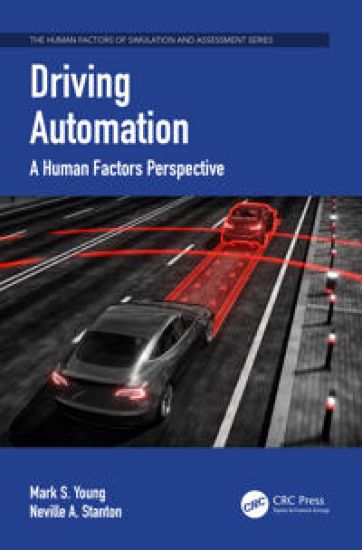
Driving Automation

Driving Automation

Mark S. Young; Neville A. Stanton

TAYLOR FRANCIS LTD
2024
nidottu
The technology behind self-driving cars is being heavily promulgated as the solution to a variety of transport problems including safety, congestion, and impact on the environment. This text examines the key role that human factors plays in driving forward future vehicle automation in a way that realizes the benefits while avoiding the pitfalls.Driving Automation: A Human Factors Perspective addresses a range of issues related to vehicle automation beyond the 'can we' to 'how should we'. It covers important topics including mental workload and malleable attentional resources theory, effects of automation on driver performance, in-vehicle interface design, driver monitoring, eco-driving, responses to automation failure, and human-centred automation.The text will be useful for graduate students and professionals in diverse areas such as ergonomics/human factors, automobile engineering, industrial engineering, mechanical engineering, and health and safety.
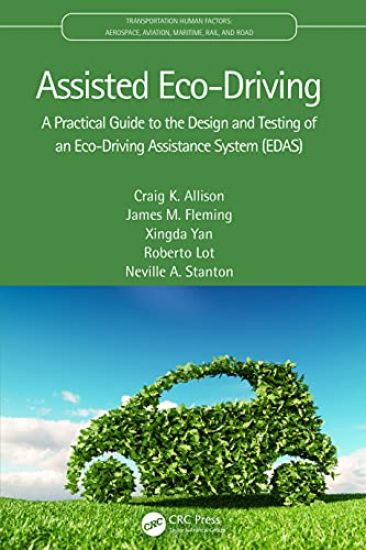
Assisted Eco-Driving

Assisted Eco-Driving

Craig K. Allison; James M. Fleming; Xingda Yan; Roberto Lot; Neville A. Stanton

TAYLOR FRANCIS LTD
2024
nidottu
This book discusses an integrative approach combining Human Factors expertise with Automotive Engineering. It develops an in-depth case study of designing a fuel-efficient driving intervention and offers an examination of an innovative study of feed-forward eco-driving advice. Assisted Eco-Driving: A Practical Guide to the Design and Testing of an Eco-Driving Assistance System offers an examination of an innovative study of feed-forward eco-driving advice based on current vehicle and road environment status. It presents lessons, insights and utilises a documented scientific and research-led approach to designing novel speed advisory and fuel use minimisation systems suitable for combustion vehicles, hybrids and electric vehiclesThe audience consists of system designers and those working with interfaces and interactions, UX, human factors and ergonomics and system engineering. Automotive academics, researchers, and practitioners will also find this book of interest.