

Kirjailija
Niall Ferguson
Kirjat ja teokset yhdessä paikassa: 49 kirjaa, julkaisuja vuosilta 1995-2024, suosituimpien joukossa Maailmalõpp. Mineviku suurõnnetused ja mõni õppetund tulevikuks. Vertaile teosten hintoja ja tarkista saatavuus suomalaisista kirjakaupoista.
49 kirjaa
Kirjojen julkaisuhaarukka 1995-2024.

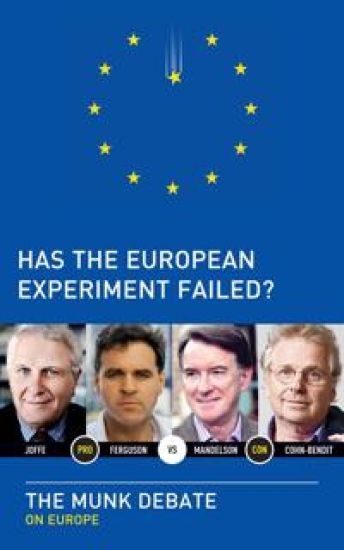
Has the European Experiment Failed?
Niall Ferguson; Daniel Cohn-Bendit; Josef Joffe; Peter Mandelson
House of Anansi Press Ltd ,Canada
2012
pokkari
In the sweep of human history, the European Union stands out as one of humankind's most ambitious endeavours. It encompasses half a billion people, twenty-seven member states, twenty-three languages, and an economy valued at over $15 trillion. Modern Europe's stunning achievements aside, its sovereign debt crisis has shaken the world's largest political and economic union to its core. Can the federal institutions and shared values of Europeans meet the challenges of debt crisis that are as much political as economic? Or, are Europe's current woes indicative of a series of deep structural faults that foreshadow the breakup and failure of the European Union? In this edition of the Munk Debates -- Canada's premier international debate series -- former EU Commissioner Lord Peter Mandelson and EU parliament co-president of the Greens/European Free Alliance Group Daniel Cohn-Bendit, German publisher-editor and author Josef Joffe, and renowned economic historian Niall Ferguson debate the future of the EU -- one of the most pressing global issues of our day. For the first time ever, this electrifying debate, which played to a sold-out audience, is now available in print, along with candid interviews with Niall Ferguson and Lord Peter Mandelson. As youth unemployment rates flare, currencies collapse, and political alliances erode, the Munk Debate on Europe tries to answer: Has the great European experiment failed?

From the bestselling author of The Ascent of Money and The Square and the Tower "A dazzling history of Western ideas." --The Economist "Mr. Ferguson tells his story with characteristic verve and an eye for the felicitous phrase." --Wall Street Journal " W]ritten with vitality and verve . . . a tour de force." --Boston Globe Western civilization's rise to global dominance is the single most important historical phenomenon of the past five centuries. How did the West overtake its Eastern rivals? And has the zenith of Western power now passed? Acclaimed historian Niall Ferguson argues that beginning in the fifteenth century, the West developed six powerful new concepts, or "killer applications"--competition, science, the rule of law, modern medicine, consumerism, and the work ethic--that the Rest lacked, allowing it to surge past all other competitors. Yet now, Ferguson shows how the Rest have downloaded the killer apps the West once monopolized, while the West has literally lost faith in itself. Chronicling the rise and fall of empires alongside clashes (and fusions) of civilizations, Civilization: The West and the Rest recasts world history with force and wit. Boldly argued and teeming with memorable characters, this is Ferguson at his very best.

Does the 21st Century Belong to China?
Henry Kissinger; Niall Ferguson; David Li; Fareed Zakaria
House of Anansi Press Ltd ,Canada
2011
pokkari
Is China's rise unstoppable? Powered by the human capital of 1.3 billion citizens, the latest technological advances, and a comparatively efficient system of state-directed capitalism, China seems poised to become the global superpower this century. But the Middle Kingdom also faces a series of challenges. From energy scarcity to environmental degradation to political unrest and growing global security burdens, a host of factors could derail China's global ascent. In this edition of The Munk Debates — Canada's premier international debate series — former U.S. Secretary of State Henry Kissinger and CNN's Fareed Zakaria square off against leading historian Niall Ferguson and world-renowned economist David Daokui Li to debate the biggest geopolitical issue of our time: Does the 21st century belong to China? Highly electrifying and thoroughly engrossing, the Munk Debate on China is the first formal public debate Dr. Kissinger has participated in on China's future, and includes exclusive interviews with Henry Kissinger and David Daokui Li.

This is the extraordinary story of Siegmund Warburg: the refugee from Nazi Germany who restored the Blitz-shattered City of London as the world's preeminent international financial centre. In recounting how this brilliant, scholarly man brought wit, passion and, above all, high ethical standards to the world of finance, Niall Ferguson shows how his meticulous methods were the antithesis of the debt-fuelled, speculative banking of our times. 'A fascinating portrait ... Beautifully paced, dramatically subtle and psychologically shrewd ... Warburg is an emblem of money as it ought to be, and now isn't' Bryan Appleyard, New Statesman'Extensively researched and beautifully written' Peter Stormonth Darling, Spectator'Ferguson's account of Warburg's life not only reveals a prophet of European unification and, later, globalization, but a banker from a more responsible (and civilised) era' Peter Mandelson, Daily Telegraph, Books of the Year'A timely, original and engaging biography' Sathnam Sanghera, The Times 'Financially literate, extremely thorough, deploying dazzling breadth of cultural reference ... Ferguson has produced a fine historical biography. He has also reminded us, regrettably, that Warburg has no peer in the financial world today' Simon Shaw, Mail on Sunday
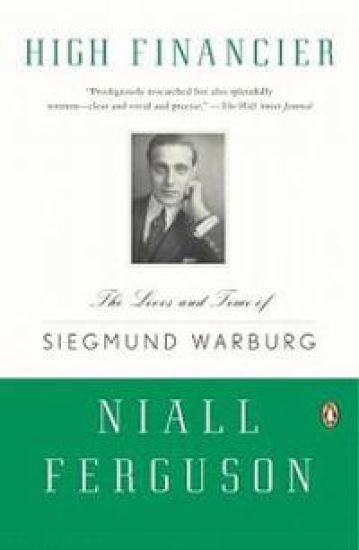
From the bestselling author of The Ascent of Money and The Square and the Tower "Prodigiously researched but also splendidly written-clear and vivid and precise." --The Wall Street Journal Drawing on more than ten thousand hitherto unavailable letters and diary entries, bestselling author Niall Ferguson tells the story of Siegmund Warburg, a complex man who was as much a psychologist, a politician, and an actor-manager as a banker. An obsessive perfectionist with an aversion to excessive risk, Warburg-and the S. G. Warburg firm-adopted a financial philosophy that was the antithesis of the debt-fueled, algorithm-driven banking of our time. In High Financier, Niall Ferguson recaptures the meticulous business methods and strict ethical code that set Warburg apart from the mere speculators and traders who inhabit today's financial world.
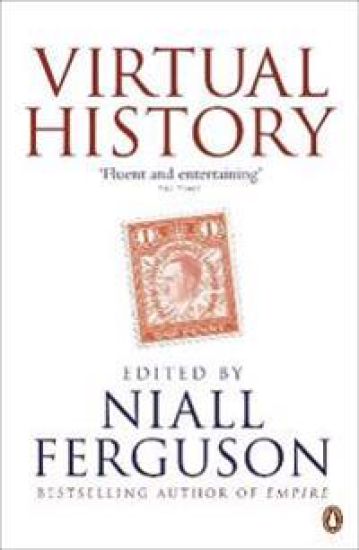
Edited by Niall Ferguson, Virtual History applies 'counterfactual' arguments to decisive moments in modern history.What if Britain had stayed out of the First World War?What if Germany had invaded Britain in 1940?What if Nazi Germany had defeated the Soviet Union?How would England look if there had been no Cromwell?What if there had been no American Revolution?And what if John F. Kennedy had lived?In this acclaimed book, leading historians from Andrew Roberts to Michael Burleigh challenge the complacency of traditional accounts, exploring what might have been if nine of the most decisive moments in modern history had never happened.'Quite brilliant, inspiring for the layman and an enviable tour de force for the informed reader ... A wonderful book ... lucid, exciting and easy to read' - Literary Review'Ferguson constructs an entire scenario starting with Charles I's defeat of the Covenanters, running through three revolutions that did not happen and climaxing with the collapse of the West, ruled by an Anglo-American empire, in the face of a mighty transcontinental, tsarist Russian imperium ... A welcome, optimistic assault on an intellectual heresy' - Sunday Times'A talented and imaginative team who tackle with counterfactual verve a series of turning points' - Daily Telegraph
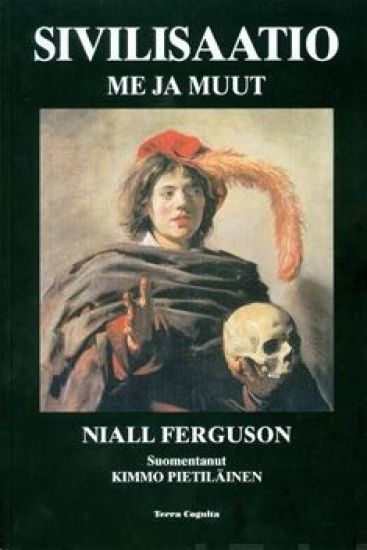
Tässä teoksessa maineikas brittiläinen taloushistorioitsija tarttuu monia askarruttaneisiin kysymyksiin:Miten pienet, kehittymättömät eurooppalaiset maat pystyivät alistamaan idän suuret imperiumit ja hallitsemaan koko maapalloa viidensadan vuoden ajan?Ja mikä on länsimaiden maailman hallitsemisen tulevaisuus?Ferguson tunnistaa kuusi täysin lännessä syntynyttä suurta innovaatiota, jotka ovat olleet länsimaiden maailmanvallan perusta. Nämä ainutlaatuiset asiat ovat kilpailu, luonnontiede, omistusoikeuden kunnioittaminen, lääketiede, kulutusyhteiskunta ja työetiikka. Sivilisaatio selvittää, miten näiden innovaatioiden varaan rakennetut yhteiskuntamme alistivat muut.Lännen kilpailijat ovat omaksumassa suuria innovaatioitamme ja niiden ympärille rakentamaamme, kuten kulutustottumuksemme, terveydenhoitomme ja tapamme hankkia tietoa. Mitä se tarkoittaa valta-asemamme kannalta?Terra Cognita on julkaissut aikaisemmin Niall Fergusonin teoksen Rahan nousu.
Tässä teoksessa Niall Ferguson osoittaa, että rahoitus on yhteiskunnan edistyksen perusta. Samalla käy ilmi, että rahan historia on kaiken historian olennainen tausta.Luoton ja velan kehitys, siis uuden rahan luominen, on kulttuurin nousun kannalta yhtä tärkeää kuin muutkin teknologiset innovaatiot ja tämä on pätenyt Babylonian rahauudistuksista lähtien. Pankit olivat Italian renessanssin loiston perusta ja joukkovelkakirjamarkkinat ratkaisivat esimerkiksi Yhdysvaltain sisällissodan.Ranskan vallankumouksen juuret ovat sata vuotta aikaisemmassa pörssikuplassa ja Argentiina muuttui maailman kuudenneksi rikkaimmasta maasta toivottomaksi inflaation pesäksi huonon raha-asioiden hoitamisen seurauksena.Ennemmin tai myöhemmin rahainnovaatioiden synnyttämät kuplat kuitenkin puhkeavat. Alkaa tuhon ja epävarmuuden aika.Rahan nousu kertoo myös, millaisia parinkymmenen viime vuoden mittaan kehitetyt rahainnovaatiot, kuten subprime-luotot, johdannaiset ja suojarahastot ovat, millaisia niihin sisältyvät riskit olivat ja miten niihin perustuvan varjopankkijärjestelmän kaatuminen saattaa vaikuttaa rahajärjestelmän tulevaisuuteen.

The Ascent of Money: A Financial History of the World: 10th Anniversary Edition
Niall Ferguson
PENGUIN BOOKS
2009
nidottu
The 10th anniversary edition, with new chapters on the crash, Chimerica, and cryptocurrency " An] excellent, just in time guide to the history of finance and financial crisis." --The Washington Post"Fascinating." --Fareed Zakaria, NewsweekIn this updated edition, Niall Ferguson brings his classic financial history of the world up to the present day, tackling the populist backlash that followed the 2008 crisis, the descent of "Chimerica" into a trade war, and the advent of cryptocurrencies, such as Bitcoin, with his signature clarity and expert lens. The Ascent of Money reveals finance as the backbone of history, casting a new light on familiar events: the Renaissance enabled by Italian foreign exchange dealers, the French Revolution traced back to a stock market bubble, the 2008 crisis traced from America's bankruptcy capital, Memphis, to China's boomtown, Chongqing. We may resent the plutocrats of Wall Street but, as Ferguson argues, the evolution of finance has rivaled the importance of any technological innovation in the rise of civilization. Indeed, to study the ascent and descent of money is to study the rise and fall of Western power itself.
I Finansplaneten viser professor Niall Ferguson at pengevesenet faktisk er grunnlaget for menneskets fremskritt. Dessuten beskriver han hvordan finanshistorien er bakteppet for all historie. Med den klarhet og begeistring han er kjent for, forklarer Ferguson komplekse problemstillinger enkelt og forståelig - og trekker de lange linjer. Med solid faglig tyngde forteller han finansenes historie - for første gang på norsk. Magasinet TIME har kåret Ferguson til en av verdens 100 mest innflytelsesrike personer.
Is America the new world empire? Presidents from Lincoln to Bush may have denied it but, as Niall Ferguson's brilliant and provocative book shows, the US is in many ways the greatest imperial power of all time. What's more, it always has been an empire, expanding westwards throughout the nineteenth century and rising to global dominance in the twentieth. But is today's American colossus really equipped to play Atlas, bearing the weight of the world on its shoulders? The United States, Ferguson reveals, is an empire running on empty, weakened by chronic defecits of money, manpower and political will. When the New Rome falls, he warns, its collapse may come from within.'One of the timeliest and most topical books to have appeared in recent years' Literary Review'Yet another tour de force from a writer who displays all his usual gifts of forceful polemic, unconventional intelligence and elegant prose ... guaranteed to spark fierce debate' Irish Times'A bravura exploration of why Americans are not cut out to be imperialists but nonetheless have an empire. Vigorous, substantive, and worrying' Timothy Garton Ash
The First World War killed around eight million men and bled Europe dry. In this provocative book Niall Ferguson asks: was the sacrifice worth it? Was it all really an inevitable cataclysm and were the Germans a genuine threat? Was the war, as is often asserted, greeted with popular enthusiasm? Why did men keep on fighting when conditions were so wretched? Was there in fact a death wish abroad, driving soldiers to their own destruction? The war, he argues, was a disaster - but not for the reasons we think. Far worse than a tragedy, it was the greatest error of modern history.'The most challenging and provocative analysis of the First World War to date' Ian Kershaw 'Must take a permanent place at the top of the War's historiography. It is one of the very few books whose own scale matches that of the events it describes' Alan Clark, Daily Telegraph'Possibly the most important book to appear in years both on the origins of the First World War ... Ferguson can confidently claim to have inherited A. J. P. Taylor's mantle' Paul Kennedy, New York Review of Books'At one massive stroke, Niall Ferguson has transformed the intellectual landscape' Economist
The beginning of the twentieth century saw human civilization at its most enlightened, well-educated, globalized and wealthy. What turned it into a bloodbath?Niall Ferguson re-tells the story of history's most savage century as a continual war that raged for 100 years. From the plains of Poland to the killing fields of Cambodia, he reveals how economic boom-and-bust, decaying empires and, above all, poisonous ideas of race led men to treat each other as aliens. It was an age of hatred that ended with the twilight, not the triumph, of the West. And, he shows, it could happen all over again.'A heartbreaking, serious and thoughtful survey of human evil that is utterly fascinating and dramatic' Simon Sebag Montefiore, The New York Times'Unputdownable, controversial, compelling' Independent on Sunday'The grenade lobbed into the cosy tea party of received wisdom' Max Hastings'A big, bold and brilliantly belligerent book' Sunday Telegraph'History at its most controversial ... no one can afford to overlook it' Allan Mallinson'Hums with energy, quotable insights and pithy summaries' Observer'Gripping' Tristram Hunt
The War of the World: Twentieth-Century Conflict and the Descent of the West
Niall Ferguson
PENGUIN BOOKS
2007
nidottu
From the bestselling author of The Ascent of Money and The Square and the Tower "Even those who have read widely in 20th-century history will find fresh, surprising details." --The Boston Globe "A fascinating read, thanks to Ferguson's gifts as a writer of clear, energetic narrative history." --The Washington Post Astonishing in its scope and erudition, this is the magnum opus that Niall Ferguson's numerous acclaimed works have been leading up to. In it, he grapples with perhaps the most challenging questions of modern history: Why was the twentieth century history's bloodiest by far? Why did unprecedented material progress go hand in hand with total war and genocide? His quest for new answers takes him from the walls of Nanjing to the bloody beaches of Normandy, from the economics of ethnic cleansing to the politics of imperial decline and fall. The result, as brilliantly written as it is vital, is a great historian's masterwork.
Colossus: The Rise and Fall of the American Empire
Niall Ferguson
Penguin Publishing Group
2005
nidottu
The author of The Pity of War argues that America is both economically and militarily the most powerful empire in history and will feel negative consequences globally and domestically as a result of imposing unrealistic timescales on interventions abroad. Reprint.
The British Empire was the largest in all history: the nearest thing to world domination ever achieved. By the eve of World War II, around a quarter of the world's land surface was under some form of British rule. Yet for today's generation, the British Empire seems a Victorian irrelevance. The time is ripe for a reappraisal, and in Empire, Niall Ferguson boldly recasts the British Empire as one of the world's greatest modernizing forces.An important new work of synthesis and revision, Empire argues that the world we know today is in large measure the product of Britain's Age of Empire. The spread of capitalism, the communications revolution, the notion of humanitarianism, and the institutions of parliamentary democracy-all these can be traced back to the extraordinary expansion of Britain's economy, population, and culture from the seventeenth century until the mid-twentieth. On a vast and vividly colored canvas, Empire shows how the British Empire acted as midwife to modernity.Displaying the originality and rigor that have made him the brightest light among British historians, Ferguson shows that the story of the Empire is pregnant with lessons for today-in particular for the United States as it stands on the brink of a new era of imperial power, based once again on economic and military supremacy.A dazzling tour de force, Empire is a remarkable reappraisal of the prizes and pitfalls of global empire.
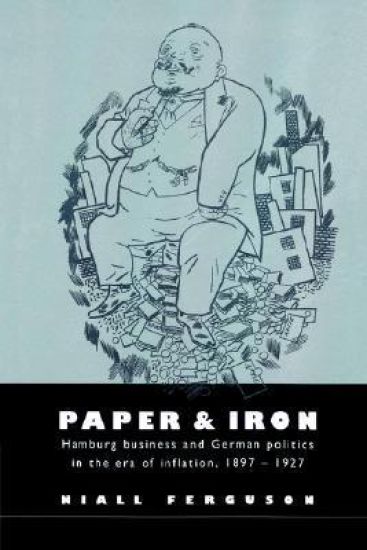
Few economic events have had a more profound or enduring impact than the German hyperinflation of 1923, still remembered popularly as a root cause of Hitler’s rise to power. Yet in recent years many historians have argued that inflationary policies were, on balance, advantageous to post-1918 Germany, both boosting growth and helping to reduce reparations. The scholarly consensus is that there was no viable alternative to inflation. In Paper and Iron Niall Ferguson takes a different view. He argues that inflation was indeed an economic and political disaster, and further that there were alternative economic policies which could have stabilised the German currency in 1920. To explain why these were not adopted he points to long-term defects in the political institutions of the Reich which went back as far as the 1890s and which persisted beyond 1918. The book therefore reveals the Wilhelmine origins of Weimar’s failure, as well as casting new light on the origins of the Third Reich.
Modern history shows that a nation's success largely depends on the way it manages its money. But where do money and politics meet? From 1700 to the present day, Niall Ferguson offers a bold and original analysis of the evolution of today's economic and political landscape. Far from being driven by the profit motive alone, our recent history, as Ferguson makes brilliantly clear, has also been made by potent and often conflicting human impulses - sex, violence and the desire for power. In this dazzling, powerful and controversial explanation of modern world history and the fundamental force that lurks behind it all, Niall Ferguson answers the big questions about finance and its crucial place in bringing happiness and despair, warfare and welfare, boom and crash to nations buffeted by the onward march of history. 'A marvellous combination of persuasion and provocation ... The Cash Nexus has enough ideas for a dozen books' Martin Daunton, History Today 'The Cash Nexus is ... packed with intriguing arguments and controversial propositions ... [an] outstanding book' Frank McLynn, Independent 'Ferguson is one of the most technically accomplished historians writing today ... The Cash Nexus offers an important corrective to the naïve story of economic growth' Robert Skidelsky, New York Review of Books