Kirjojen hintavertailu. Mukana 12 444 302 kirjaa ja 12 kauppaa.

Kirjailija

Niall Ferguson

Kirjat ja teokset yhdessä paikassa: 49 kirjaa, julkaisuja vuosilta 1995-2024, suosituimpien joukossa Maailmalõpp. Mineviku suurõnnetused ja mõni õppetund tulevikuks. Vertaile teosten hintoja ja tarkista saatavuus suomalaisista kirjakaupoista.

49 kirjaa

Kirjojen julkaisuhaarukka 1995-2024.

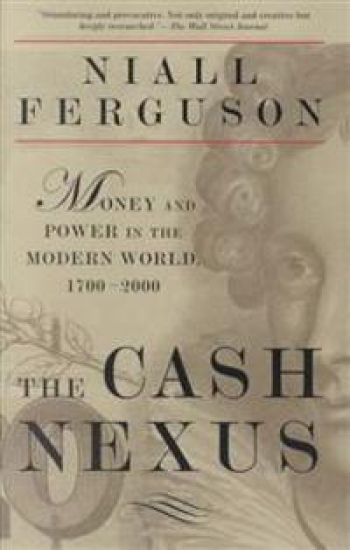
Cash Nexus

Cash Nexus

Niall Ferguson

Basic Books
2002
nidottu
Conventional wisdom has long claimed that economic change is the prime mover of political change, whether in the age of industry or Internet. But is it? Ferguson thinks it is high time we re-examined the link-the nexus, in Thomas Carlyle's phrase-between economics and politics. His central argument is that the conflicting impulses of sex, violence, and power are together more powerful than money. Among Ferguson's startling claims are: * Nothing has done more to transform the world economy than war, yet wars themselves do not have primarily economic causes. * The present age of economic globalization is coinciding-paradoxically-with political and military fragmentation. * Financial crises are frequently caused by unforeseen political events rather than economic fluctuations. * The relationship between prosperity and government popularity is largely illusory. * Since political and economic liberalization are not self-perpetuating, the so-called triumph of democracy worldwide may be short-lived.* A bold synthesis of political history and modern economic theory, Cash Nexus will transform the landscape of modern history and draw challenging conclusions about the prospects of both capitalism and democracy.

The House of Rothschild

The House of Rothschild

Niall Ferguson

Penguin Books Ltd
2000
pokkari
This second volume of Niall Ferguson's acclaimed, landmark history of the legendary Rothschild banking dynasty concludes his myth-breaking portrait of one of the most powerful and fascinating families of modern times. With all the depth, clarity and drama with which he traced the Rothschild's ascent, Ferguson shows how their power waned as conflicts from Crimea to the Second World War repeatedly threatened the stability of their worldwide empire, and how their failure to establish themselves successfully in the United States would prove fateful. At once a classic family saga and a major work of economic, social and political history, this is the definitive biography of some of the most powerful financiers of recent times.
Virtual History: Alternatives And Counterfactuals
What if there had been no American War of Independence? What if Hitler had invaded Britain? What if Kennedy had lived? What if Russia had won the Cold War? Niall Ferguson, author of the highly acclaimed The Pity of War , leads the charge in this historically rigorous series of separate voyages into imaginary time" and provides far-reaching answers to these intriguing questions.Ferguson's brilliant 90-page introduction doubles as a manifesto on the methodology of counter-factual history. His equally masterful afterword traces the likely historical ripples that would have proceeded from the maintenance of Stuart rule in England. This breathtaking narrative gives us a convincing, detailed alternative history" of the West,from the accession of James III" in 1701, to a Nazi-occupied England, to a U.S. Prime Minister Kennedy who lives to complete his term.
The Pity of War

The Pity of War

Niall Ferguson

Basic Books
2000
nidottu
In The Pity of War, Niall Ferguson makes a simple and provocative argument: that the human atrocity known as the Great War was entirely England's fault. Britain, according to Ferguson, entered into war based on naive assumptions of German aims--and England's entry into the war transformed a Continental conflict into a world war, which they then badly mishandled, necessitating American involvement. The war was not inevitable, Ferguson argues, but rather the result of the mistaken decisions of individuals who would later claim to have been in the grip of huge impersonal forces.That the war was wicked, horrific, inhuman,is memorialized in part by the poetry of men like Wilfred Owen and Siegfried Sassoon, but also by cold statistics. More British soldiers were killed in the first day of the Battle of the Somme than Americans in the Vietnam War; indeed, the total British fatalities in that single battle--some 420,000--exceeds the entire American fatalities for both World Wars. And yet, as Ferguson writes, while the war itself was a disastrous folly, the great majority of men who fought it did so with enthusiasm.Ferguson vividly brings back to life this terrifying period, not through dry citation of chronological chapter and verse but through a series of brilliant chapters focusing on key ways in which we now view the First World War.For anyone wanting to understand why wars are fought, why men are willing to fight them, and why the world is as it is today, there is no sharper nor more stimulating guide than Niall Ferguson's The Pity of War.
The House of Rothschild

The House of Rothschild

Niall Ferguson

Penguin Books Ltd
1999
pokkari
In his rich and nuanced portrait of the remarkable, elusive Rothschild family, Oxford scholar and bestselling author Niall Ferguson uncovers the secrets behind the family's phenomenal economic success. He reveals for the first time the details of the family's vast political network, which gave it access to and influence over many of the greatest statesmen of the age. And he tells a family saga, tracing the importance of unity and the profound role of Judaism in the lives of a dynasty that rose from the confines of the Frankfurt ghetto and later used its influence to assist oppressed Jews throughout Europe. A definitive work of impeccable scholarship with a thoroughly engaging narrative, 'The House of Rothschild' is a biography of the rarest kind, in which mysterious and fascinating historical figures finally spring to life.
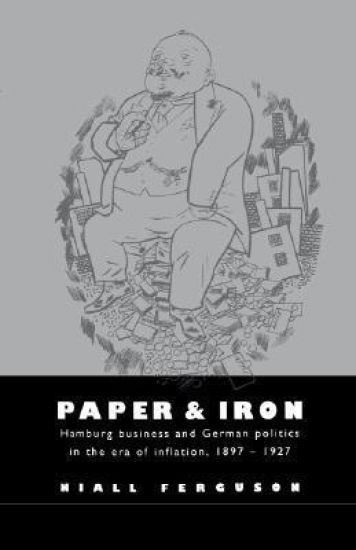
Paper and Iron

Paper and Iron

Niall Ferguson

Cambridge University Press
1995
sidottu
Few economic events have had a more profound or enduring impact than the German hyperinflation of 1923, still remembered popularly as a root cause of Hitler’s rise to power. Yet in recent years many historians have argued that inflationary policies were, on balance, advantageous to post-1918 Germany, both boosting growth and helping to reduce reparations. The scholarly consensus is that there was no viable alternative to inflation. In Paper and Iron Niall Ferguson takes a different view. He argues that inflation was indeed an economic and political disaster, and further that there were alternative economic policies which could have stabilised the German currency in 1920. To explain why these were not adopted he points to long-term defects in the political institutions of the Reich which went back as far as the 1890s and which persisted beyond 1918. The book therefore reveals the Wilhelmine origins of Weimar’s failure, as well as casting new light on the origins of the Third Reich.