Kirjojen hintavertailu. Mukana 12 595 353 kirjaa ja 12 kauppaa.

Kirjailija

Norbert Wolf

Kirjat ja teokset yhdessä paikassa: 42 kirjaa, julkaisuja vuosilta 1996-2025, suosituimpien joukossa Friedrich. Vertaile teosten hintoja ja tarkista saatavuus suomalaisista kirjakaupoista.

42 kirjaa

Kirjojen julkaisuhaarukka 1996-2025.

Friedrich

Friedrich

Norbert Wolf

TASCHEN GMBH
2015
sidottu
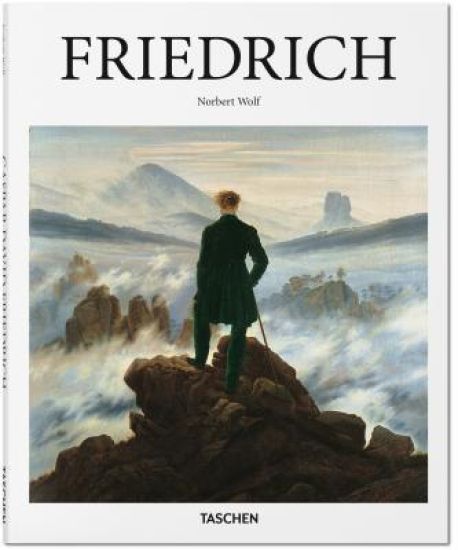
The beauty of nature and man’s loneliness are dominant themes in the work of Caspar David Friedrich (1774-1840). The artist often places a small human figure in a broad landscape, as in his famous paintings Monk by the Sea and The Wanderer above the Sea of Fog. For a long time the importance and influence of this great Romantic painter were underestimated. When he died, Friedrich had already been forgotten by his contemporaries and was only rediscovered in the early 20th century. Today he is considered to be the most important German painter of his generation and a precursor of Expressionism. Once Friedrich gave the following advice to an artist-colleague of his who was constricted by academic rules: “Shut your physical eye so that you first see your painting with your spiritual eye. Then bring to light what you saw in the dark so that it has an effect on others, shining inwards from outside.” In other words, concentration and not imitation, essence and not frivolous brushwork.
Friedrich

Friedrich

Norbert Wolf

Taschen GmbH
2015
sidottu
The beauty of nature and man’s loneliness are dominant themes in the work of Caspar David Friedrich (1774-1840). The artist often places a small human figure in a broad landscape, as in his famous paintings Monk by the Sea and The Wanderer above the Sea of Fog. For a long time the importance and influence of this great Romantic painter were underestimated. When he died, Friedrich had already been forgotten by his contemporaries and was only rediscovered in the early 20th century. Today he is considered to be the most important German painter of his generation and a precursor of Expressionism. Once Friedrich gave the following advice to an artist-colleague of his who was constricted by academic rules: “Shut your physical eye so that you first see your painting with your spiritual eye. Then bring to light what you saw in the dark so that it has an effect on others, shining inwards from outside.” In other words, concentration and not imitation, essence and not frivolous brushwork.
Romanticism

Romanticism

Norbert Wolf

Prestel
2025
sidottu
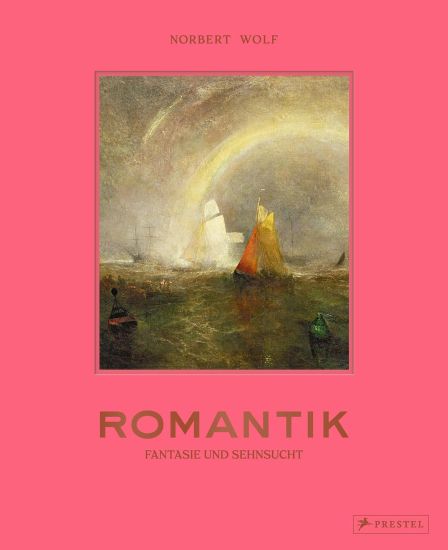
This richly illustrated volume invites readers to explore the phenomenon and fascination of Romanticism, a movement that shaped the cultural and aesthetic landscape of the nineteenth century and continues to resonate in modern consciousness. The Romantic era ignited a profound shift in the arts, celebrating imagination, emotion, and the sublime power of nature. The book offers a nuanced view of Romanticism’s revolutionary impact. It journeys through the movement’s origins in the experimental ferment of the eighteenth century, its apex in German, French, and British painting, and its later echoes across Europe and North America. The author examines key figures such as Caspar David Friedrich, J.M.W. Turner, Euge`ne Delacroix, and The´odore Ge´ricault, exploring their transformative approaches to landscape, light, and human passion. The narrative also unravels the movement’s intricate relationship with themes of melancholy, the sublime, and the spiritual reconciliation of the individual with the universal. Acclaimed art historian Norbert Wolf illuminates Romanticism’s capacity to evoke longing, its poeticization of life through art, and its engagement with profound contradictions— an embrace of both light and shadow. By tracing the stylistic and cultural trajectories of Romantic painting, from Germany’s High Romanticism to the North American Hudson River School, he situates these works within broader artistic and intellectual traditions. Filled with breathtaking reproductions of major works, and backed by impeccable scholarship, Romanticism reveals a movement that transcended national boundaries and bridged the intersection of emotion, imagination, and the sublime.
Expresionismo

Expresionismo

Norbert Wolf

TASCHEN GMBH
2024
sidottu
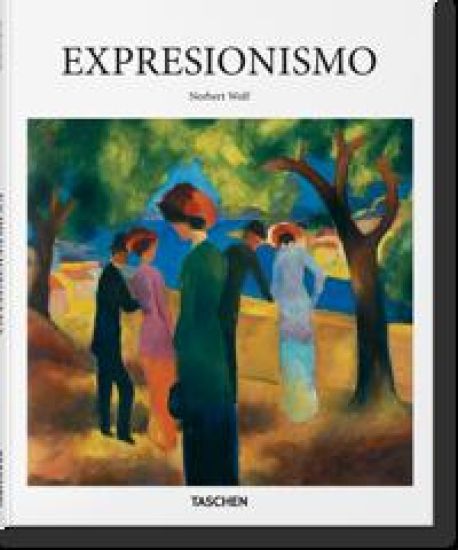
Sharp angles, strange forms, lurid colors, and distorted perspectives are classic hallmarks of Expressionism, the twentieth century movement that prioritized emotion over objective reality. Though particularly present in Germany and Austria, the movement’s approach flourished internationally and is today hailed as one of the most influential shifts in art history. With leading groups Die Brücke (The Bridge) and Der Blaue Reiter (The Blue Rider), and key players such as Wassily Kandinsky, Egon Schiele,and Emil Nolde, the Expressionists disowned Impressionism, which they regarded as “man lowered to the position of a gramophone record of the outer world”, to depict instead a raw and visceral experience of life as it was felt, rather than seen on the surface. Their paintings brim with emotive force, conveyed in particular through intense and non-naturalistic color palettes, loose brushwork, and thick textures. Covering the group’s stylistic tendencies, influences, and most important protagonists, this introductory book explores the Expressionist panorama of moods, ideas, and emotions and their abiding quest for deep authenticity.
Friedrich, C. D.

Friedrich, C. D.

Norbert Wolf

TASCHEN GMBH
2024
sidottu
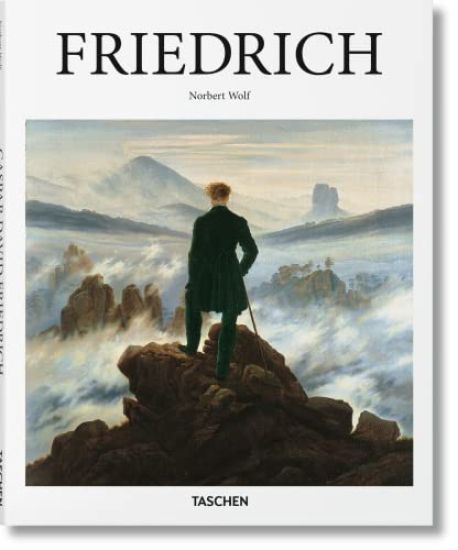
The beauty of nature and man’s loneliness are dominant themes in the work of Caspar David Friedrich (1774-1840). The artist often places a small human figure in a broad landscape, as in his famous paintings Monk by the Sea and The Wanderer above the Sea of Fog. For a long time the importance and influence of this great Romantic painter were underestimated. When he died, Friedrich had already been forgotten by his contemporaries and was only rediscovered in the early 20th century. Today he is considered to be the most important German painter of his generation and a precursor of Expressionism. Once Friedrich gave the following advice to an artist-colleague of his who was constricted by academic rules: “Shut your physical eye so that you first see your painting with your spiritual eye. Then bring to light what you saw in the dark so that it has an effect on others, shining inwards from outside.” In other words, concentration and not imitation, essence and not frivolous brushwork.
Impressionism

Impressionism

Norbert Wolf

Prestel
2023
sidottu
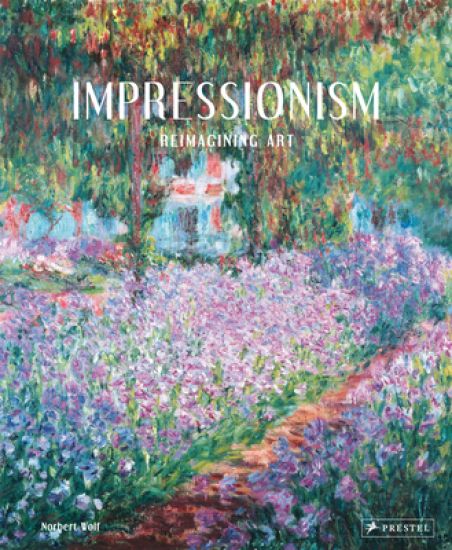
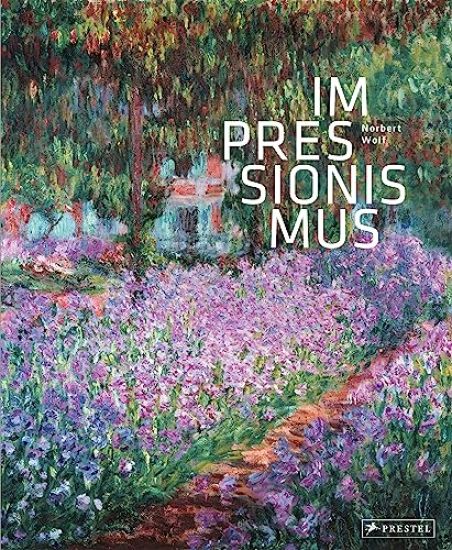
One of the art world’s most recognizable and popular styles, Impressionism is also one of the most complex. In this sumptuous overview Norbert Wolf lends his attention to all aspects of Impressionism: its historical precursors, contemporary rivals, and the movements it inspired. Over 200 reproductions of entire works and highlighted details introduce readers to the Impressionists’ aesthetics and techniques. Wolf draws insightful parallels between these paintings and other contemporary works of music, photography, and literature. Charting the movement’s expansion from France to the rest of Europe and North America, this volume shines a spotlight on the main protagonists who were key in the development of Impressionism. It highlights not only the French pioneers— Claude Monet, Gustave Caillebotte, Édouard Manet, Pierre- Auguste Renoir, Camille Pissarro, and others—but also Max Liebermann, Lovis Corinth, John Singer Sargent, Mary Cassatt, William Merritt Chase, and James McNeill Whistler. Authoritative and illuminating, this wide-ranging exploration of Impressionism’s astounding impact on art history will surprise even the most seasoned aficionado.
Velázquez

Velázquez

Norbert Wolf

Taschen GmbH
2023
sidottu
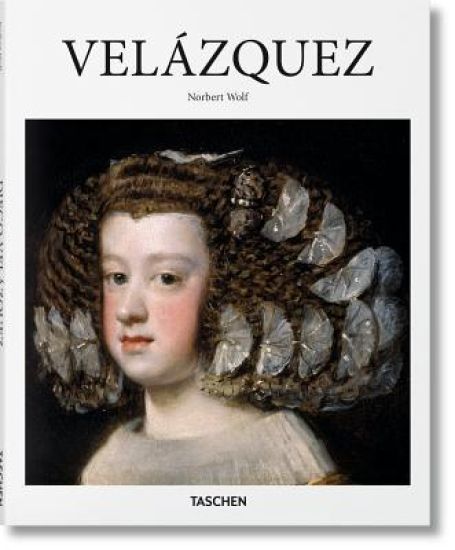
Court painter to King Philip IV of Spain, Diego Rodríguez de Silva y Velázquez (June 1599 – August 6, 1660) is not only a leading light of the Spanish Golden Age, but among the most celebrated masters in all Western art history. Monet and Renoir, Corot and Courbet, Degas and Dalí all hailed his influence. Picasso was so inspired by his masterpiece Las Meninas that he painted 44 variations of it.Velázquez’s importance is found particularly in his naturalist approach, in contrast to the more ubiquitous idealized manner of his age. Early works included numerous “bodegones”, genre scenes of everyday life in early 17th century Spain, in which warm, rich tones and textures set off the most ordinary of subjects and humble of faces, such as Old Woman Frying Eggs.Later, his portraiture for the Royal Court brought the same naturalism to the highest echelons of society, marking a profound shift in the depiction of royalty with softer, more relaxed poses that offered his subjects a human warmth and character as much as a sense of grandeur. Velázquez’s most famous work, Las Meninas, was also painted in the royal court, but in its enigmatic composition raises many broader questions about reality and illusion and the relationship between the painter, painting, and viewer.This fresh TASCHEN Basic Art 2.0 edition introduces Velázquez through key works from throughout his career. From humble genre scenes to the royal portraits, the exquisite Rokeby Venus nude, and the ever-mysterious Las Meninas, we explore his exceptional attention to composition, masterful handling of tone, and his remarkable influence as, in Manet’s words, “the greatest painter of all.”About the seriesBorn back in 1985, the Basic Art Series has evolved into the best-selling art book collection ever published. Each book in TASCHEN’s Basic Art series features:a detailed chronological summary of the life and oeuvre of the artist, covering his or her cultural and historical importancea concise biographyapproximately 100 illustrations with explanatory captions
The Renaissance Cities

The Renaissance Cities

Norbert Wolf

Prestel
2021
sidottu
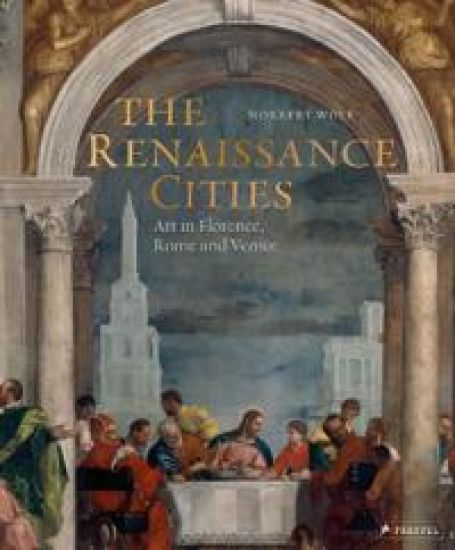
The idea of “renaissance,” or rebirth, arose in Italy as a way of reviving the art, science, and scholarship of the Classical era. It was also powered by a quest to document artistic “reality” according to newly discovered scientific and mathematical principles. By the late 15th century, Italy had become the recognised European leader in the fields of painting, architecture, and sculpture. But why was Florence the centre of this burgeoning creativity, and how did it spread to other Italian cities? Brimming with vivid reproductions of works by Leonardo, Michelangelo, Botticelli, Raphael, Titian, and others, this book showcases the creative achievements that traveled from Florence to Rome to Venice. Art historian Norbert Wolf explores the influence of secular and religious patronage on artistic development; how the urban structure and way of life allowed for such a rich exchange of ideas; and how ideas of humanism informed artists reaching toward the future while clinging to the ideals of the past. Insightful, accessible, and fascinating, this thoroughly researched book highlights the connections and mutual influences of Florence, Rome, and Venice as well as their intriguing rivalries and interdependencies.
The Golden Age of Dutch and Flemish Painting
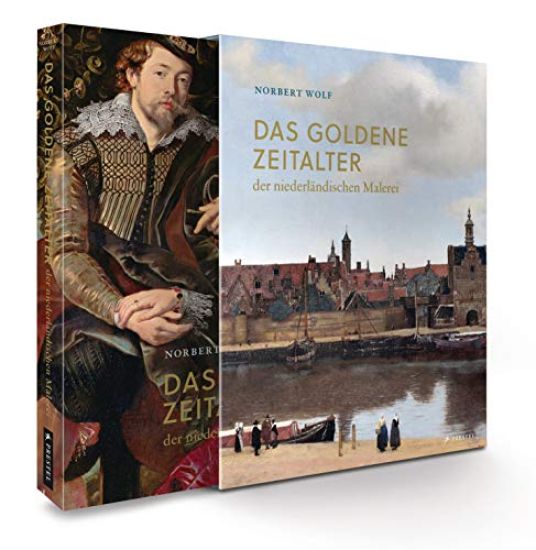
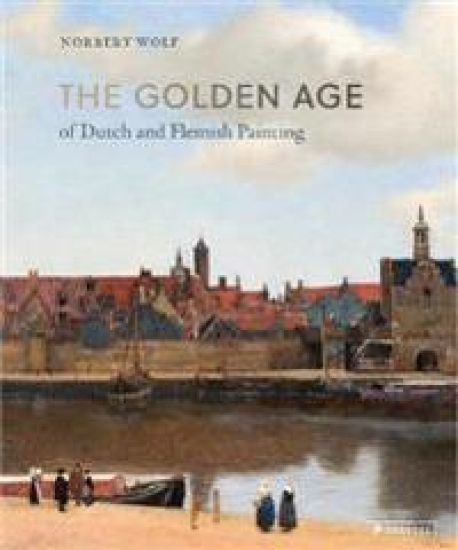
The Golden Age in Holland and Flanders roughly spanned the 17th century and was a period of enormous advances in the fields of commerce, science—and art. Still lifes, landscape paintings, and romantic depictions of everyday life became valued by the increasingly wealthy merchant classes in the Dutch provinces, while religious and historic paintings as well as portraits continued to appeal to the Flemish patronage. The Golden Age brought us Rembrandt, Vermeer, Rubens, and Van Dyck, but it was also the period of Frans Hals’ revolutionary portraiture, Adriaen Brouwer’s depictions of the working class at play, Jan Brueghel’s velvety miniatures, and Hendrick Avercamp’s lively winter landscapes. Norbert Wolf applies his vast understanding of the interplay between history, culture, and art to explore the forces that led to the Golden Age in Holland and Flanders and how this period influenced later generations of artists. Accompanied by luminous color illustrations, Wolf’s accessible text considers the complex political, religious, social, and economic situation that led to newfound prosperity and, thus, to an enormous artistic output that we continue to marvel at and enjoy today.
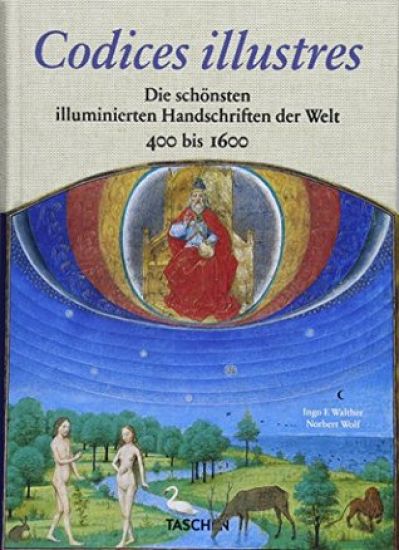
Codices illustres. The world's most famous illuminated manuscripts 400 to 1600
From The Book of Kells to Boccaccio’s Decameron, from the Vienna Genesis to Dante’s Divine Comedy: to open Codices illustres is to open the door into a precious, private world. Now in a revised format, this radiant book brings you face-to-face with 167 of the most exquisite and important manuscripts of the medieval age. Presented in brilliant large-format reproductions, these paradigms of miniature painting and illumination from the 4th century to 1600 were once the property of some of the greatest power players in history. Now art-historical treasures, they are worth many millions and typically tucked away in private collections or closely guarded archives—until now. Although the focus of this collection is on European manuscripts, examples from Mexican, Persian, and Indian tradition illustrate the refinement and intricacy of manuscript illumination in non-European cultures. An informative synopsis for each manuscript orients the reader at a glance, while a 36-page appendix contains biographies of the artists, as well as an extensive bibliography, an index, and a glossary for technical terms.
Expressionism

Expressionism

Norbert Wolf

TASCHEN GMBH
2017
sidottu
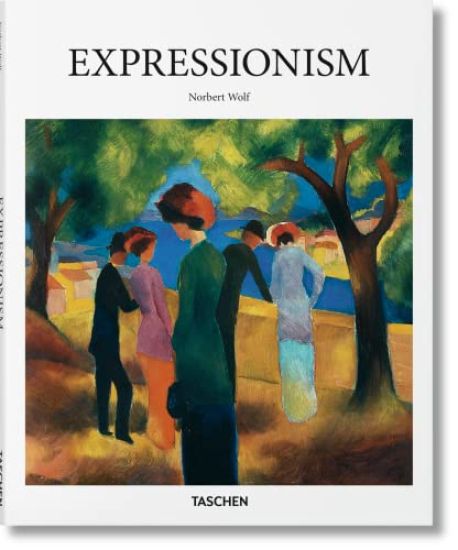
Sharp angles, strange forms, lurid colors, and distorted perspectives are classic hallmarks of Expressionism, the twentieth century movement that prioritized emotion over objective reality. Though particularly present in Germany and Austria, the movement’s approach flourished internationally and is today hailed as one of the most influential shifts in art history. With leading groups Die Brücke (The Bridge) and Der Blaue Reiter (The Blue Rider), and key players such as Wassily Kandinsky, Egon Schiele,and Emil Nolde, the Expressionists disowned Impressionism, which they regarded as “man lowered to the position of a gramophone record of the outer world”, to depict instead a raw and visceral experience of life as it was felt, rather than seen on the surface. Their paintings brim with emotive force, conveyed in particular through intense and non-naturalistic color palettes, loose brushwork, and thick textures. Covering the group’s stylistic tendencies, influences, and most important protagonists, this introductory book explores the Expressionist panorama of moods, ideas, and emotions and their abiding quest for deep authenticity.