Kirjojen hintavertailu. Mukana 12 564 777 kirjaa ja 12 kauppaa.

Kirjailija

Orrin H. Pilkey

Kirjat ja teokset yhdessä paikassa: 46 kirjaa, julkaisuja vuosilta 1984-2024, suosituimpien joukossa Vanishing Sands. Vertaile teosten hintoja ja tarkista saatavuus suomalaisista kirjakaupoista.

46 kirjaa

Kirjojen julkaisuhaarukka 1984-2024.

Vanishing Sands

Vanishing Sands

Orrin H. Pilkey; Norma J. Longo; William J. Neal; Nelson G. Rangel-Buitrago; Keith C. Pilkey; Hannah L. Hayes

DUKE UNIVERSITY PRESS
2023
sidottu
In a time of accelerating sea level rise and increasingly intensifying storms, the world’s sandy beaches and dunes have never been more crucial to protecting coastal environments. Yet, in order to meet the demands of large-scale construction projects, sand mining is stripping beaches and dunes, destroying environments, and exploiting labor in the process. The authors of Vanishing Sands track the devastating impact of legal and illegal sand mining over the past twenty years, ranging from Africa, Asia, and the Caribbean to South America and the eastern United States. They show how sand mining has reached crisis levels: beach, dune, and river ecosystems are in danger of being lost forever, while organized crime groups use deadly force to protect their illegal mining operations. Calling for immediate and widespread resistance to sand mining, the authors demonstrate that its cessation is paramount for saving not only beaches, dunes, and associated environments but also lives and tourism economies everywhere.

Living with the East Florida Shore

Living with the East Florida Shore

Dinesh C. Sharma; Harold R. Wanless; Larry J. Doyle; Orrin H. Pilkey; William J. Neal; Barbara L. Gruver

Duke University Press
1985
sidottu
More than one transplanted Floridian has paid $150,000 for a beautiful condominium with a sea view only to learn that, to keep the building from becoming part of the view, considerable additional money must be spent to build and repair seawalls or to pump up new beaches by dredging sand from offshore.Most of Florida's beachfront property lies on narrow strips of sand called barrier islands, which are low in elevation and subject to flooding during storms and hurricanes. Some of the construction is poor, adding to the problems facing homeowners, most whom came from other parts of the country with little awareness of the hazards of beaches. In Living with the East Florida Shore, Orrin H. Pilkey, Jr., of Duke University, along with his co-authors, has described the varied problems that confront the east shore of Florida today.
Living with the East Florida Shore

Living with the East Florida Shore

Dinesh C. Sharma; Harold R. Wanless; Larry J. Doyle; Orrin H. Pilkey; William J. Neal; Barbara L. Gruver

Duke University Press
1985
pokkari
More than one transplanted Floridian has paid $150,000 for a beautiful condominium with a sea view only to learn that, to keep the building from becoming part of the view, considerable additional money must be spent to build and repair seawalls or to pump up new beaches by dredging sand from offshore.Most of Florida's beachfront property lies on narrow strips of sand called barrier islands, which are low in elevation and subject to flooding during storms and hurricanes. Some of the construction is poor, adding to the problems facing homeowners, most whom came from other parts of the country with little awareness of the hazards of beaches. In Living with the East Florida Shore, Orrin H. Pilkey, Jr., of Duke University, along with his co-authors, has described the varied problems that confront the east shore of Florida today.
Escaping Nature

Escaping Nature

Orrin H. Pilkey; Charles O. Pilkey; Linda P. Pilkey-Jarvis; Norma J. Longo; Keith C. Pilkey; Fred B. Dodson; Hannah L. Hayes

DUKE UNIVERSITY PRESS
2024
pokkari
Industrial and agricultural greenhouse gas emissions are rapidly warming Earth’s climate, unleashing rising seas, ocean acidification, melting permafrost, powerful storms, wildfires, floods, deadly heat waves, droughts, tsunamis, food shortages, and armed conflict over shrinking water supplies while reducing nutritional levels in crops. Billions of people will become climate refugees. Hotter temperatures will allow tropical diseases to spread into temperate regions. Higher levels of CO2, allergens, dust, and other particulate matter will impair our physical and mental health and even reduce our cognitive abilities. Climate change disproportionately affects the world’s poor. It also harms Nature, and could ultimately trigger a sixth mass extinction. In Escaping Nature, Orrin H. Pilkey and his coauthors offer concrete suggestions for how to respond to the threats posed by global climate change. They argue that while we wait for the world’s governments to get serious about mitigating climate change we can adapt to a hotter world through technological innovations, behavioral changes, nature-based solutions, political changes, and education.
Escaping Nature

Escaping Nature

Orrin H. Pilkey; Charles O. Pilkey; Linda P. Pilkey-Jarvis; Norma J. Longo; Keith C. Pilkey; Fred B. Dodson; Hannah L. Hayes

DUKE UNIVERSITY PRESS
2024
sidottu
Industrial and agricultural greenhouse gas emissions are rapidly warming Earth’s climate, unleashing rising seas, ocean acidification, melting permafrost, powerful storms, wildfires, floods, deadly heat waves, droughts, tsunamis, food shortages, and armed conflict over shrinking water supplies while reducing nutritional levels in crops. Billions of people will become climate refugees. Hotter temperatures will allow tropical diseases to spread into temperate regions. Higher levels of CO2, allergens, dust, and other particulate matter will impair our physical and mental health and even reduce our cognitive abilities. Climate change disproportionately affects the world’s poor. It also harms Nature, and could ultimately trigger a sixth mass extinction. In Escaping Nature, Orrin H. Pilkey and his coauthors offer concrete suggestions for how to respond to the threats posed by global climate change. They argue that while we wait for the world’s governments to get serious about mitigating climate change we can adapt to a hotter world through technological innovations, behavioral changes, nature-based solutions, political changes, and education.
Vanishing Sands

Vanishing Sands

Orrin H. Pilkey; Norma J. Longo; William J. Neal; Nelson G. Rangel-Buitrago; Keith C. Pilkey; Hannah L. Hayes

DUKE UNIVERSITY PRESS
2023
pokkari
In a time of accelerating sea level rise and increasingly intensifying storms, the world’s sandy beaches and dunes have never been more crucial to protecting coastal environments. Yet, in order to meet the demands of large-scale construction projects, sand mining is stripping beaches and dunes, destroying environments, and exploiting labor in the process. The authors of Vanishing Sands track the devastating impact of legal and illegal sand mining over the past twenty years, ranging from Africa, Asia, and the Caribbean to South America and the eastern United States. They show how sand mining has reached crisis levels: beach, dune, and river ecosystems are in danger of being lost forever, while organized crime groups use deadly force to protect their illegal mining operations. Calling for immediate and widespread resistance to sand mining, the authors demonstrate that its cessation is paramount for saving not only beaches, dunes, and associated environments but also lives and tourism economies everywhere.
The World's Beaches

The World's Beaches

Orrin H. Pilkey; William J. Neal; James Andrew Graham Cooper; Joseph T. Kelley

University of California Press
2011
pokkari
Take this book to the beach; it will open up a whole new world. Illustrated throughout with color photographs, maps, and graphics, it explores one of the planet's most dynamic environments - from tourist beaches to Arctic beaches strewn with ice chunks to steaming hot tropical shores. "The World's Beaches" tells how beaches work, explains why they vary so much, and shows how dramatic changes can occur on them in a matter of hours. It discusses tides, waves, and wind; the patterns of dunes, washover fans, and wrack lines; and the shape of berms, bars, shell lags, cusps, ripples, and blisters. What is the world's longest beach? Why do some beaches sing when you walk on them? Why do some have dark rings on their surface and tiny holes scattered far and wide? This fascinating, comprehensive guide also considers the future of beaches, and explains how extensively people have affected them - from coastal engineering to pollution, oil spills, and rising sea levels.
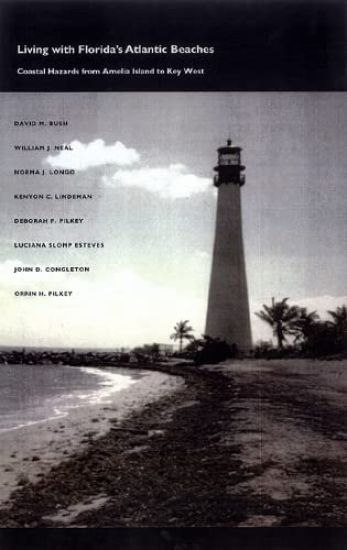
Living with Florida's Atlantic Beaches

Living with Florida's Atlantic Beaches

David M. Bush; William J. Neal; Norma J. Longo; Kenyon C. Lindeman; Deborah F. Pilkey; Luciana S. Esteves; John D. Congleton; Orrin H. Pilkey

Duke University Press
2004
sidottu
From Amelia Island just south of Georgia to Key West's southern tip, beaches are one of Florida's greatest assets. Yet these beaches are in danger: rapid structural development on a highly erodible coast make them vulnerable to some of nature's greatest storms. The same development that has been driven by the attraction of beautiful beaches and coastal amenities now threatens those very resources. In turn, coastal structures are at risk from sea-level rise, shoreline retreat, winter storms, and hurricanes. Most of the methods for reducing losses associated with storms protect property only in the short term-at a growing cost in dollars and loss of natural habitat in the long term.Living with Florida's Atlantic Beaches is a guide to mitigating or reducing losses of property, human life, and natural resources by living with, rather than just at, the shore. This illustrated volume provides an introduction to coastal processes and geology as well as a brief history of coastal hazards and short-sighted human responses. This is the first volume in the Living with the Shore series to discuss the significant long-term impact of dredge-and-fill beach construction on living marine resources. Guidance is provided for long-term risk reduction in the form of tips on storm-resistant construction and site evaluation; maps for evaluating relative vulnerability to hazards are also included. A brief review of coastal regulations will help property owners understand and navigate the various permit requirements for developing coastal property. Living with Florida's Atlantic Beaches is an invaluable source of information for everyone from the curious beach visitor to the community planner, from the prudent property investor to the decision-making public official.
Living with Florida's Atlantic Beaches

Living with Florida's Atlantic Beaches

David M. Bush; William J. Neal; Norma J. Longo; Kenyon C. Lindeman; Deborah F. Pilkey; Luciana S. Esteves; John D. Congleton; Orrin H. Pilkey

Duke University Press
2004
pokkari
From Amelia Island just south of Georgia to Key West's southern tip, beaches are one of Florida's greatest assets. Yet these beaches are in danger: rapid structural development on a highly erodible coast make them vulnerable to some of nature's greatest storms. The same development that has been driven by the attraction of beautiful beaches and coastal amenities now threatens those very resources. In turn, coastal structures are at risk from sea-level rise, shoreline retreat, winter storms, and hurricanes. Most of the methods for reducing losses associated with storms protect property only in the short term-at a growing cost in dollars and loss of natural habitat in the long term.Living with Florida's Atlantic Beaches is a guide to mitigating or reducing losses of property, human life, and natural resources by living with, rather than just at, the shore. This illustrated volume provides an introduction to coastal processes and geology as well as a brief history of coastal hazards and short-sighted human responses. This is the first volume in the Living with the Shore series to discuss the significant long-term impact of dredge-and-fill beach construction on living marine resources. Guidance is provided for long-term risk reduction in the form of tips on storm-resistant construction and site evaluation; maps for evaluating relative vulnerability to hazards are also included. A brief review of coastal regulations will help property owners understand and navigate the various permit requirements for developing coastal property. Living with Florida's Atlantic Beaches is an invaluable source of information for everyone from the curious beach visitor to the community planner, from the prudent property investor to the decision-making public official.
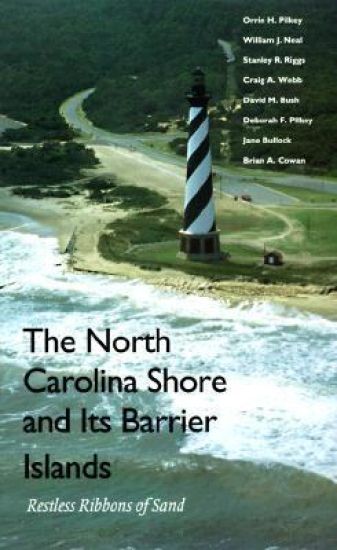
The North Carolina Shore and Its Barrier Islands

The North Carolina Shore and Its Barrier Islands

Orrin H. Pilkey; William J. Neal; Stanley R. Riggs; Craig A. Webb; David M. Bush; Deborah F. Pilkey; Jane Bullock; Brian A. Cowan

Duke University Press
1998
pokkari
The North Carolina Shore and Its Barrier Islands is the latest volume in the series, Living with the Shore. Replacing an earlier volume, this thoroughly new book provides a diverse guide to one of America’s most popular shorelines. As is true for all books in the series, it is based on the premise that understanding the changing nature of beaches and barrier islands is essential if we are to preserve them for future generations.Evidence that the North Carolina shore is changing is never hard to find, but recently the devastation wrought by Hurricane Fran and the perilous situation of the historic lighthouse at Cape Hatteras have reminded all concerned of the fragility of this coast. Arguing for a policy of intelligent development, one in which residential and commercial structures meet rather than confront the changing nature of the shore, the authors have included practical information on hazards of many kinds-storms, tides, floods, erosion, island migration, and earthquakes. Diagrams and photographs clearly illustrate coastal processes and aid in understanding the impact of hurricanes and northeasters, wave and current dynamics, as well as pollution and other environmental destruction due to overdevelopment. A chapter on estuaries provides related information on the shores of back barrier areas that are growing in popularity for recreational residences. Risk maps focus on the natural hazards of each island and together with construction guidelines provide a basis for informed island management. Lastly, the dynamics of coastal politics and management are reviewed through an analysis of the controversies over the decision to move the Cape Hatteras lighthouse and a proposed effort to stabilize Oregon Inlet. From the natural and historic perspective of the opening chapters to the regional discussions of individual barrier islands, this book is both a primer on coastal processes for the first time visitor as well as a guide to hazard identification for property owners.
The North Carolina Shore and Its Barrier Islands

The North Carolina Shore and Its Barrier Islands

Orrin H. Pilkey; William J. Neal; Stanley R. Riggs; Craig A. Webb; David M. Bush; Deborah F. Pilkey; Jane Bullock; Brian A. Cowan

Duke University Press
1998
sidottu
Devastation wrought by Hurricane Fran is a reminder of the fragility of the North Carolina coast. Arguing for a policy of intelligent development this text includes practical information on hazards of many kinds - storms, tides, floods, erosion, island migration and earthquakes.
Living with the South Carolina Coast

Living with the South Carolina Coast

Gered Lennon; William J. Neal; David M. Bush; Orrin H. Pilkey; Matthew Stutz; Jane Bullock

Duke University Press
1996
pokkari
Living with the South Carolina Coast is the latest volume in the Living with the Shore series that comprehensively investigates the status of a specific state's coastal region. Completely revising a previously published work in the series that dealt with South Carolina, this book not only brings up-to-date a wealth of information on migrating shorelines, selection of building sites, and pertinent regulations, but also reflects an expanded concept of the coast to include a broad range of coastal hazards. Powerful storms have always played a major role in coastal processes in South Carolina, and the effects of Hurricane Hugo, the storm that ravaged the area in 1989, are thoroughly discussed. A series of Coastal Risk Maps are also included. These maps, graphically depicting areas of predictable erosion and storm damage potential, have been provided for every developed beach or barrier island in the state. Beyond the threat of hurricanes and coastal erosion, South Carolina, home of the Charleston Seismic Region, is also at risk for earthquakes. An entire chapter is devoted to earthquake-resistant construction, and the great Charleston earthquake of 1886 is examined in detail. Fires and floods are discussed. The Beachfront Management Act of 1990-the first state legislation of its kind that provides a system for dealing with migrating shorelines while preserving beaches for future generations-is also explained. Covering everything from a history of the development of South Carolina's coast to recommendations on how to select an island homesite, this book will be a resource to professional coastal planners and managers, residents, prospective homeowners, and naturalists.
Living with the South Carolina Coast

Living with the South Carolina Coast

Gered Lennon; William J. Neal; David M. Bush; Orrin H. Pilkey; Matthew Stutz; Jane Bullock

Duke University Press
1996
sidottu
Living with the South Carolina Coast is the latest volume in the Living with the Shore series that comprehensively investigates the status of a specific state's coastal region. Completely revising a previously published work in the series that dealt with South Carolina, this book not only brings up-to-date a wealth of information on migrating shorelines, selection of building sites, and pertinent regulations, but also reflects an expanded concept of the coast to include a broad range of coastal hazards. Powerful storms have always played a major role in coastal processes in South Carolina, and the effects of Hurricane Hugo, the storm that ravaged the area in 1989, are thoroughly discussed. A series of Coastal Risk Maps are also included. These maps, graphically depicting areas of predictable erosion and storm damage potential, have been provided for every developed beach or barrier island in the state. Beyond the threat of hurricanes and coastal erosion, South Carolina, home of the Charleston Seismic Region, is also at risk for earthquakes. An entire chapter is devoted to earthquake-resistant construction, and the great Charleston earthquake of 1886 is examined in detail. Fires and floods are discussed. The Beachfront Management Act of 1990-the first state legislation of its kind that provides a system for dealing with migrating shorelines while preserving beaches for future generations-is also explained. Covering everything from a history of the development of South Carolina's coast to recommendations on how to select an island homesite, this book will be a resource to professional coastal planners and managers, residents, prospective homeowners, and naturalists.
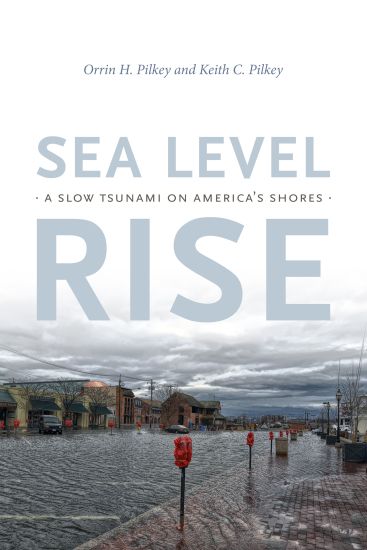
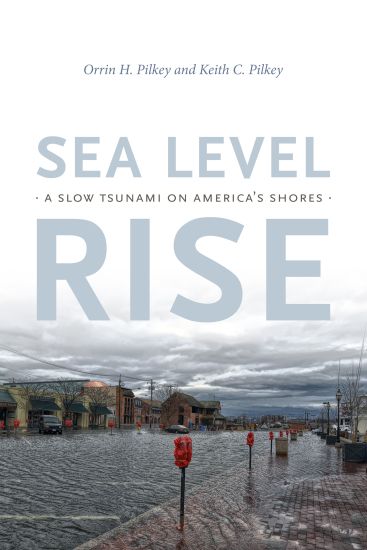
Sea Level Rise

Sea Level Rise

Orrin H. Pilkey; Keith C. Pilkey

Duke University Press
2019
pokkari
The consequences of twenty-first-century sea level rise on the United States and its nearly 90,000 miles of shoreline will be immense: Miami and New Orleans will disappear; many nuclear and other power plants, hundreds of wastewater plants and toxic waste sites, and oil production facilities will be at risk; port infrastructures will need to be raised; and over ten million Americans fleeing rising seas will become climate refugees. In Sea Level Rise Orrin H. Pilkey and Keith C. Pilkey argue that the only feasible response along much of the U.S. shoreline is an immediate and managed retreat. Among many topics, they examine sea level rise's effects on coastal ecosystems, health, and native Alaskan coastal communities. They also provide guidelines for those living on the coasts or planning on moving to or away from them, as well as the steps local governments should take to prepare for this unstoppable, impending catastrophe.
Sea Level Rise

Sea Level Rise

Orrin H. Pilkey; Keith C. Pilkey

Duke University Press
2019
sidottu
The consequences of twenty-first-century sea level rise on the United States and its nearly 90,000 miles of shoreline will be immense: Miami and New Orleans will disappear; many nuclear and other power plants, hundreds of wastewater plants and toxic waste sites, and oil production facilities will be at risk; port infrastructures will need to be raised; and over ten million Americans fleeing rising seas will become climate refugees. In Sea Level Rise Orrin H. Pilkey and Keith C. Pilkey argue that the only feasible response along much of the U.S. shoreline is an immediate and managed retreat. Among many topics, they examine sea level rise's effects on coastal ecosystems, health, and native Alaskan coastal communities. They also provide guidelines for those living on the coasts or planning on moving to or away from them, as well as the steps local governments should take to prepare for this unstoppable, impending catastrophe.
Retreat from a Rising Sea

Retreat from a Rising Sea

Orrin H. Pilkey; Linda Pilkey-Jarvis; Keith C. Pilkey

Columbia University Press
2017
pokkari
Melting ice sheets and warming oceans are causing the seas to rise. By the end of this century, hundreds of millions of people living at low elevations along coasts will be forced to retreat to higher and safer ground. Because of sea-level rise, major storms will inundate areas farther inland and will lay waste to critical infrastructure, such as water-treatment and energy facilities, creating vast, irreversible pollution by decimating landfills and toxic-waste sites. This big-picture, policy-oriented book explains in gripping terms what rising oceans will do to coastal cities and the drastic actions we must take now to remove vulnerable populations. The authors detail specific threats faced by Miami, New Orleans, New York, and Amsterdam. Aware of the overwhelming social, political, and economic challenges that would accompany effective action, they consider the burden to the taxpayer and the logistics of moving landmarks and infrastructure, including toxic-waste sites. They also show readers the alternative: thousands of environmental refugees, with no legitimate means to regain what they have lost. The authors conclude with effective approaches for addressing climate-change denialism and powerful arguments for reforming U.S. federal coastal management policies.
Retreat from a Rising Sea

Retreat from a Rising Sea

Orrin H. Pilkey; Linda Pilkey-Jarvis; Keith C. Pilkey

Columbia University Press
2016
sidottu
Melting ice sheets and warming oceans are causing the seas to rise. By the end of this century, hundreds of millions of people living at low elevations along coasts will be forced to retreat to higher and safer ground. Because of sea-level rise, major storms will inundate areas farther inland and will lay waste to critical infrastructure, such as water-treatment and energy facilities, creating vast, irreversible pollution by decimating landfills and toxic-waste sites. This big-picture, policy-oriented book explains in gripping terms what rising oceans will do to coastal cities and the drastic actions we must take now to remove vulnerable populations. The authors detail specific threats faced by Miami, New Orleans, New York, and Amsterdam. Aware of the overwhelming social, political, and economic challenges that would accompany effective action, they consider the burden to the taxpayer and the logistics of moving landmarks and infrastructure, including toxic-waste sites. They also show readers the alternative: thousands of environmental refugees, with no legitimate means to regain what they have lost. The authors conclude with effective approaches for addressing climate-change denialism and powerful arguments for reforming U.S. federal coastal management policies.
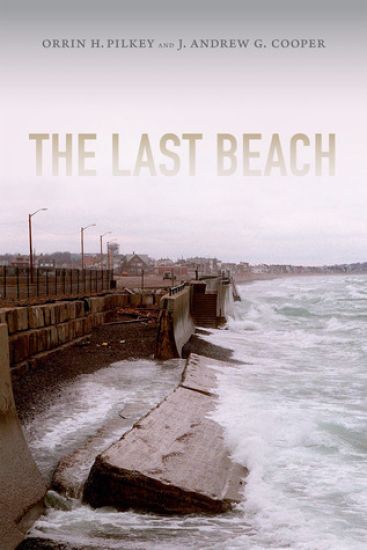
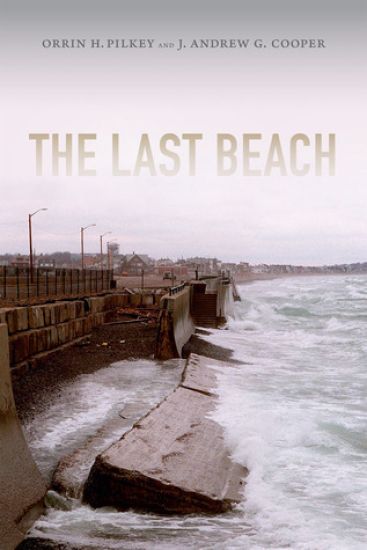
The Last Beach

The Last Beach

Orrin H. Pilkey; J. Andrew G. Cooper

Duke University Press
2014
sidottu
The Last Beach is an urgent call to save the world's beaches while there is still time. The geologists Orrin H. Pilkey and J. Andrew G. Cooper sound the alarm in this frank assessment of our current relationship with beaches and their grim future if we do not change the way we understand and treat our irreplaceable shores. Combining case studies and anecdotes from around the world, they argue that many of the world's developed beaches, including some in Florida and in Spain, are virtually doomed and that we must act immediately to save imperiled beaches.After explaining beaches as dynamic ecosystems, Pilkey and Cooper assess the harm done by dense oceanfront development accompanied by the construction of massive seawalls to protect new buildings from a shoreline that encroaches as sea levels rise. They discuss the toll taken by sand mining, trash that washes up on beaches, and pollution, which has contaminated not only the water but also, surprisingly, the sand. Acknowledging the challenge of reconciling our actions with our love of beaches, the geologists offer suggestions for reversing course, insisting that given the space, beaches can take care of themselves and provide us with multiple benefits.
The Last Beach

The Last Beach

Orrin H. Pilkey; J. Andrew G. Cooper

Duke University Press
2014
pokkari
The Last Beach is an urgent call to save the world's beaches while there is still time. The geologists Orrin H. Pilkey and J. Andrew G. Cooper sound the alarm in this frank assessment of our current relationship with beaches and their grim future if we do not change the way we understand and treat our irreplaceable shores. Combining case studies and anecdotes from around the world, they argue that many of the world's developed beaches, including some in Florida and in Spain, are virtually doomed and that we must act immediately to save imperiled beaches.After explaining beaches as dynamic ecosystems, Pilkey and Cooper assess the harm done by dense oceanfront development accompanied by the construction of massive seawalls to protect new buildings from a shoreline that encroaches as sea levels rise. They discuss the toll taken by sand mining, trash that washes up on beaches, and pollution, which has contaminated not only the water but also, surprisingly, the sand. Acknowledging the challenge of reconciling our actions with our love of beaches, the geologists offer suggestions for reversing course, insisting that given the space, beaches can take care of themselves and provide us with multiple benefits.
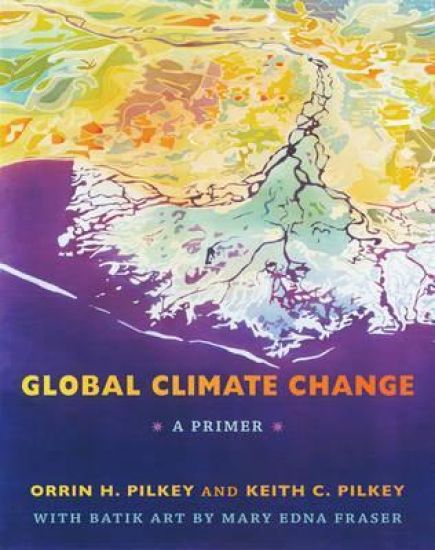
Global Climate Change

Global Climate Change

Orrin H. Pilkey; Keith C. Pilkey

Duke University Press
2011
sidottu
An internationally recognized expert on the geology of barrier islands, Orrin H. Pilkey is one of the rare academics who engages in public advocacy about science-related issues. He has written dozens of books and articles explaining coastal processes to lay readers, and he is a frequent and outspoken interviewee in the mainstream media. Here, the colorful scientist takes on climate change deniers in an outstanding and much-needed primer on the science of global change and its effects.After explaining the greenhouse effect, Pilkey, writing with son Keith, turns to the damage it is causing: sea level rise, ocean acidification, glacier and sea ice melting, changing habitats, desertification, and the threats to animals, humans, coral reefs, marshes, and mangroves. These explanations are accompanied by Mary Edna Fraser’s stunning batiks depicting the large-scale arenas in which climate change plays out. The Pilkeys directly confront and rebut arguments typically advanced by global change deniers. Particularly valuable are their discussions of “Climategate,” a manufactured scandal that undermined respect for the scientific community, and the denial campaigns by the fossil fuel industry, which they compare to the tactics used by the tobacco companies a generation ago to obfuscate findings on the harm caused by cigarettes.