Kirjojen hintavertailu. Mukana 12 657 676 kirjaa ja 12 kauppaa.
Kirjailija
Oscar Castillo
Kirjat ja teokset yhdessä paikassa: 41 kirjaa, julkaisuja vuosilta 2001-2025, suosituimpien joukossa Chemical Optimization Algorithm for Fuzzy Controller Design. Vertaile teosten hintoja ja tarkista saatavuus suomalaisista kirjakaupoista.
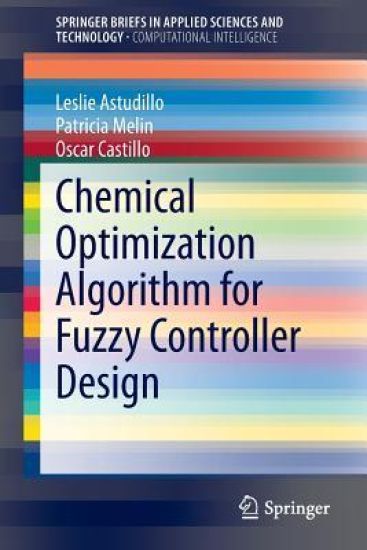
In this book, a novel optimization method inspired by a paradigm from nature is introduced. The chemical reactions are used as a paradigm to propose an optimization method that simulates these natural processes. The proposed algorithm is described in detail and then a set of typical complex benchmark functions is used to evaluate the performance of the algorithm. Simulation results show that the proposed optimization algorithm can outperform other methods in a set of benchmark functions.This chemical reaction optimization paradigm is also applied to solve the tracking problem for the dynamic model of a unicycle mobile robot by integrating a kinematic and a torque controller based on fuzzy logic theory. Computer simulations are presented confirming that this optimization paradigm is able to outperform other optimization techniques applied to this particular robot application.
This book is intended to be a reference for scientists and engineers interested in applying type-3 fuzzy logic and fractal theory techniques in medical diagnosis. In this book, a new model based on type-3 fuzzy logic and fractal theory for applications in medical diagnosis is presented. The main idea is that a higher type and order of fuzzy logic can help in solving various diagnosis problems and find better results. In addition, fractal theory is also employed for enhancing medical diagnosis. In this regard, several hybrid intelligent methods are offered. In this book, the authors test the proposed methods using several medical diagnosis problems, like diagnosis of problems in the brain, hearth, lungs, and others. The authors can notice that when type-3 fuzzy systems are implemented to model the behavior of systems, the results in diagnosis are enhanced, because the management of uncertainty is better. For this reason, the authors consider in this book the proposed methods using type-3 fuzzy systems and fractal theory to improve the diagnosis in complex medical problems.
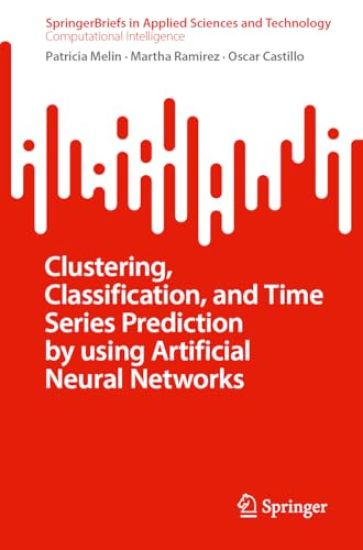
This book provides a new model for clustering, classification, and time series prediction by using artificial neural networks to computationally simulate the behavior of the cognitive functions of the brain is presented. This model focuses on the study of intelligent hybrid neural systems and their use in time series analysis and decision support systems. Therefore, through the development of eight case studies, multiple time series related to the following problems are analyzed: traffic accidents, air quality and multiple global indicators (energy consumption, birth rate, mortality rate, population growth, inflation, unemployment, sustainable development, and quality of life). The main contribution consists of a Generalized Type-2 fuzzy integration of multiple indicators (time series) using both supervised and unsupervised neural networks and a set of Type-1, Interval Type-2, and Generalized Type-2 fuzzy systems. The obtained results show the advantages of the proposed model of Generalized Type-2 fuzzy integration of multiple time series attributes. This book is intended to be a reference for scientists and engineers interested in applying type-2 fuzzy logic techniques for solving problems in classification and prediction. We consider that this book can also be used to get novel ideas for new lines of research, or to continue the lines of research proposed by the authors of the book.
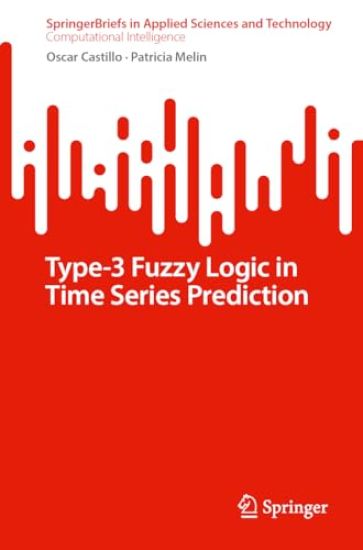
This book focuses on the field of type-3 fuzzy logic for applications in time series prediction. The main idea is that a higher type and order of fuzzy logic can help in solving various prediction problems and find better results. In addition, neural networks and fractal theory are employed in enhancing prediction results. In this regard, several hybrid intelligent methods are offered. In this book we test the proposed methods using several prediction problems, like predicting COVID-19 and the stock market. We can notice that when Type-3 fuzzy systems are implemented to model the behavior of systems, the results in prediction are enhanced, because the management of uncertainty is better. For this reason, we consider in this book the proposed methods using type-3 fuzzy systems, neural networks and fractal theory to improve the prediction behavior of the complex nonlinear systems. This book is intended to be a reference for scientists and engineers interested in applying type-3 fuzzy logic techniques for solving complex prediction problems. This book can also be used as a reference for graduate courses like the following: soft computing, fuzzy logic, neural networks, bio-inspired algorithms, intelligent prediction, and similar ones. We consider that this book can also be used to get novel ideas for new lines of research, or to continue the lines of research proposed by the authors of the book.
This book focuses on the field of type-3 fuzzy logic, also considering metaheuristics for applications in the control area. The main idea is that these areas together can solve various control problems and find better results. In this book, we test the proposed method using several benchmark problems, such as the problem for filling a water tank and the problem for controlling the trajectory in an autonomous mobile robot. We notice that when interval type-3 fuzzy systems are implemented to model the behavior of the systems, the results in control show a better stabilization, because the management of uncertainty is better. For this reason, we consider in this book the proposed method using type-3 fuzzy systems, fuzzy controllers, and metaheuristic algorithms to improve the control behavior of complex nonlinear plants. This book is intended to be a reference for scientists and engineers interested in applying type-3 fuzzy logic techniques for solving problems in intelligent control. We consider that this book can also be used to get novel ideas for new lines of research, or to continue the lines of research proposed by the authors of the book
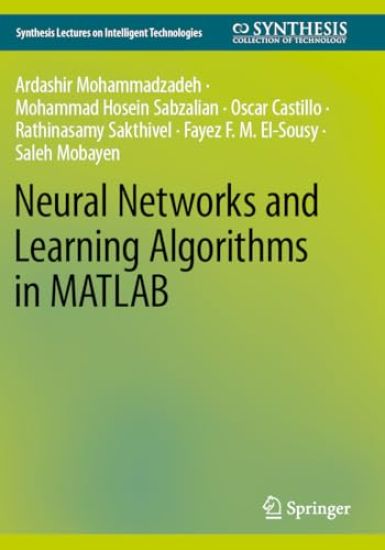
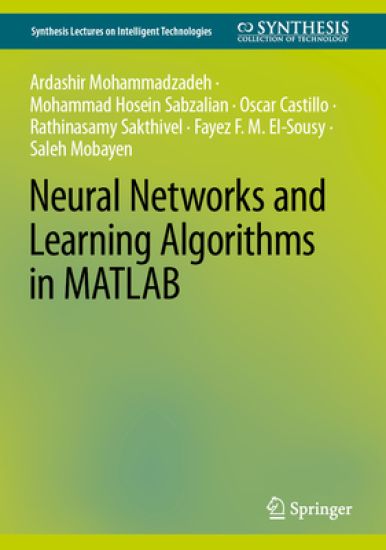
This book explains the basic concepts, theory and applications of neural networks in a simple unified approach with clear examples and simulations in the MATLAB programming language. The scripts herein are coded for general purposes to be easily extended to a variety of problems in different areas of application. They are vectorized and optimized to run faster and be applicable to high-dimensional engineering problems. This book will serve as a main reference for graduate and undergraduate courses in neural networks and applications. This book will also serve as a main basis for researchers dealing with complex problems that require neural networks for finding good solutions in areas, such as time series prediction, intelligent control and identification. In addition, the problem of designing neural network by using metaheuristics, such as the genetic algorithms and particle swarm optimization, with one objective and with multiple objectives, is presented.
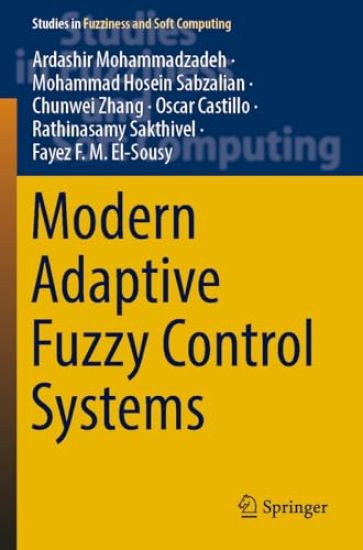
This book explains the basic concepts, theory and applications of fuzzy systems in control in a simple unified approach with clear ex-amples and simulations in the MATLAB programming language. Fuzzy systems, especially, type-2 neuro-fuzzy systems, are now used extensively in various engineering fields for different purposes. In plain language, this book aims to practically explain fuzzy sys-tems and different methods of training and optimizing these systems. For this purpose, type-2 neuro-fuzzy systems are first analyzed along with various methods of training and optimizing these systems through implementation in MATLAB. These systems are then em-ployed to design adaptive fuzzy controllers. The authors aim at pre-senting all the well-known optimization methods clearly and code them in the MATLAB language.
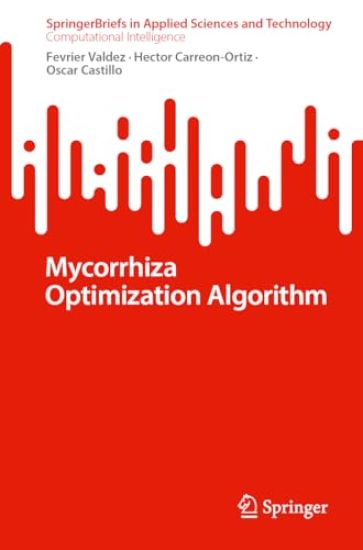
This book provides two new optimization algorithms to address real optimization problems. Optimization is a fundamental concept in engineering and science, and its applications are needed in many fields. From designing products and systems to developing algorithms and models, optimization plays a critical role in achieving efficient and effective solutions to complex problems. Optimization algorithms inspired by nature have proven effective in solving a wide range of problems, including those in engineering, finance, and machine learning. These algorithms are often used when traditional optimization techniques are impractical due to the size or complexity of the problem. In this book, we are presenting two new optimization algorithms inspired by plant roots and the Mycorrhiza Network. The first algorithm is called the Continuous Mycorrhiza Optimization Algorithm (CMOA), which was proposed based on the model of the Continuous Lotka-Volterra System Equations. The second algorithm is called the Discrete Mycorrhiza Optimization Algorithm (DMOA), which design based on the model of Discrete Lotka-Volterra System Equations. By mastering the proposed algorithms, the readers able to develop innovative solutions that improve efficiency, reduce costs, and improve performance in the corresponding field of work.
This book briefly reviews the basic concepts of type-2 fuzzy systems and then describes the proposed definitions for interval type-3 fuzzy sets and relations, also interval type-3 inference and systems. The use of type-2 fuzzy systems has become widespread in the leading economy sectors, especially in industrial and application areas, such as services, health, defense, and so on. However, recently the use of interval type-3 fuzzy systems has been receiving increasing attention and some successful applications have been developed in the last year. These issues were taken into consideration for this book, as we did realize that there was a need to offer the main theoretical concepts of type-3 fuzzy logic, as well as methods to design, develop and implement the type-3 fuzzy systems. A review of basic concepts and their use in the design and implementation of interval type-3 fuzzy systems, which are relatively new models of uncertainty and imprecision, are presented. The main focus of thiswork is based on the basic reasons of the need for interval type-3 fuzzy systems in different areas of application. In addition, we describe methods for designing interval type-3 fuzzy systems and illustrate this with some examples and simulations.
This book explains the basic concepts, theory and applications of neural networks in a simple unified approach with clear examples and simulations in the MATLAB programming language. The scripts herein are coded for general purposes to be easily extended to a variety of problems in different areas of application. They are vectorized and optimized to run faster and be applicable to high-dimensional engineering problems. This book will serve as a main reference for graduate and undergraduate courses in neural networks and applications. This book will also serve as a main basis for researchers dealing with complex problems that require neural networks for finding good solutions in areas, such as time series prediction, intelligent control and identification. In addition, the problem of designing neural network by using metaheuristics, such as the genetic algorithms and particle swarm optimization, with one objective and with multiple objectives, is presented.
This book explains the basic concepts, theory and applications of fuzzy systems in control in a simple unified approach with clear ex-amples and simulations in the MATLAB programming language. Fuzzy systems, especially, type-2 neuro-fuzzy systems, are now used extensively in various engineering fields for different purposes. In plain language, this book aims to practically explain fuzzy sys-tems and different methods of training and optimizing these systems. For this purpose, type-2 neuro-fuzzy systems are first analyzed along with various methods of training and optimizing these systems through implementation in MATLAB. These systems are then em-ployed to design adaptive fuzzy controllers. The authors aim at pre-senting all the well-known optimization methods clearly and code them in the MATLAB language.
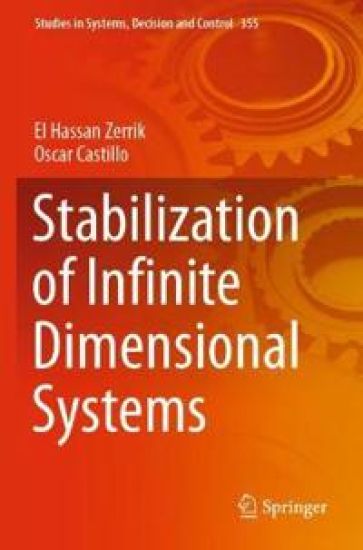
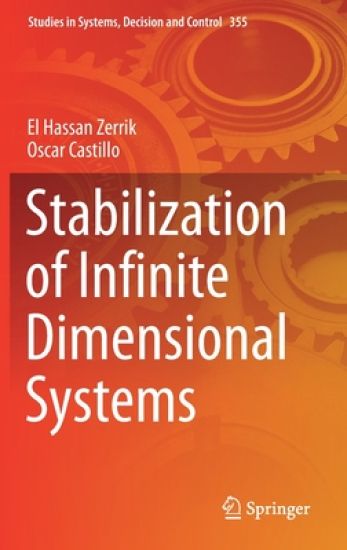
This book deals with the stabilization issue of infinite dimensional dynamical systems both at the theoretical and applications levels. Systems theory is a branch of applied mathematics, which is interdisciplinary and develops activities in fundamental research which are at the frontier of mathematics, automation and engineering sciences. It is everywhere, innumerable and daily, and moreover is there something which is not system: it is present in medicine, commerce, economy, psychology, biological sciences, finance, architecture (construction of towers, bridges, etc.), weather forecast, robotics, automobile, aeronautics, localization systems and so on. These are the few fields of application that are useful and even essential to our society. It is a question of studying the behavior of systems and acting on their evolution. Among the most important notions in system theory, which has attracted the most attention, is stability. The existing literature on systems stability is quite important, but disparate, and the purpose of this book is to bring together in one document the essential results on the stability of infinite dimensional dynamical systems. In addition, as such systems evolve in time and space, explorations and research on their stability have been mainly focused on the whole domain in which the system evolved. The authors have strongly felt that, in this sense, important considerations are missing: those which consist in considering that the system of interest may be unstable on the whole domain, but stable in a certain region of the whole domain. This is the case in many applications ranging from engineering sciences to living science. For this reason, the authors have dedicated this book to extension of classical results on stability to the regional case. This book considers a very important issue, which is that it should be accessible to mathematicians and to graduate engineering with a minimal background in functional analysis. Moreover, for the majority of the students, this would be their only acquaintance with infinite dimensional system. Accordingly, it is organized by following increasing difficulty order. The two first chapters deal with stability and stabilization of infinite dimensional linear systems described by partial differential equations. The following chapters concern original and innovative aspects of stability and stabilization of certain classes of systems motivated by real applications, that is to say bilinear and semi-linear systems. The stability of these systems has been considered from a global and regional point of view. A particular aspect concerning the stability of the gradient has also been considered for various classes of systems. This book is aimed at students of doctoral and master’s degrees, engineering students and researchers interested in the stability of infinite dimensional dynamical systems, in various aspects.
This book briefly reviews the basic concepts of type-2 fuzzy systems and then describes the proposed definitions for interval type-3 fuzzy sets and relations, also interval type-3 inference and systems. The use of type-2 fuzzy systems has become widespread in the leading economy sectors, especially in industrial and application areas, such as services, health, defense, and so on. However, recently the use of interval type-3 fuzzy systems has been receiving increasing attention and some successful applications have been developed in the last year. These issues were taken into consideration for this book, as we did realize that there was a need to offer the main theoretical concepts of type-3 fuzzy logic, as well as methods to design, develop and implement the type-3 fuzzy systems. A review of basic concepts and their use in the design and implementation of interval type-3 fuzzy systems, which are relatively new models of uncertainty and imprecision, are presented. The main focus of thiswork is based on the basic reasons of the need for interval type-3 fuzzy systems in different areas of application. In addition, we describe methods for designing interval type-3 fuzzy systems and illustrate this with some examples and simulations.
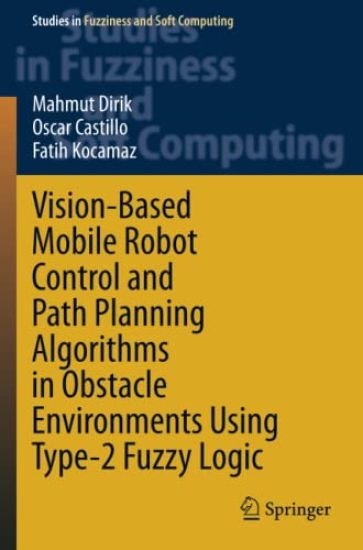
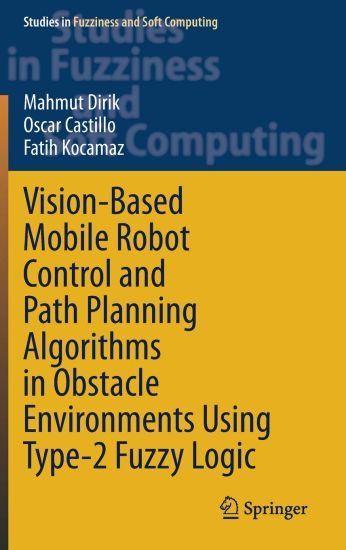
The book includes topics, such as: path planning, avoiding obstacles, following the path, go-to-goal control, localization, and visual-based motion control. The theoretical concepts are illustrated with a developed control architecture with soft computing and artificial intelligence methods. The proposed vision-based motion control strategy involves three stages. The first stage consists of the overhead camera calibration and the configuration of the working environment. The second stage consists of a path planning strategy using several traditional path planning algorithms and proposed planning algorithm. The third stage consists of the path tracking process using previously developed Gauss and Decision Tree control approaches and the proposed Type-1 and Type-2 controllers. Two kinematic structures are utilized to acquire the input values of controllers. These are Triangle Shape-Based Controller Design, which was previously developed and Distance-BasedTriangle Structure that is used for the first time in conducted experiments. Four different control algorithms, Type-1 fuzzy logic, Type-2 Fuzzy Logic, Decision Tree Control, and Gaussian Control have been used in overall system design. The developed system includes several modules that simplify characterizing the motion control of the robot and ensure that it maintains a safe distance without colliding with any obstacles on the way to the target. The topics of the book are extremely relevant in many areas of research, as well as in education in courses in computer science, electrical and mechanical engineering and in mathematics at the graduate and undergraduate levels.
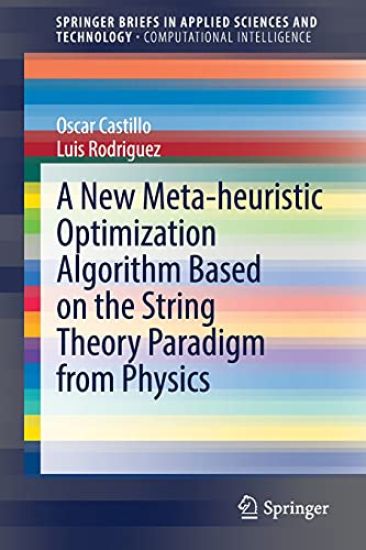
This book focuses on the fields of nature-inspired algorithms, optimization problems and fuzzy logic. In this book, a new metaheuristic based on String Theory from Physics is proposed. It is important to mention that we have proposed the new algorithm to generate new potential solutions in optimization problems in order to find new ways that could improve the results in solving these problems. We are presenting the results for the proposed method in different cases of study. The first case, is optimization of traditional benchmark mathematical functions. The second case, is the optimization of benchmark functions of the CEC 2015 Competition and we are also presenting results of the CEC 2017 Competition on Constrained Real-Parameter Optimization that are problems that contain the presence of constraints that alter the shape of the search space making them more difficult to solve. Finally, in the third case, we are presenting the optimization of a fuzzy inference system, specificallyfor finding the optimal design of a fuzzy controller for an autonomous mobile robot. It is important to mention that in all study cases we are presenting statistical tests in or-der to validate the performance of proposed method. In summary, we believe that this book will be of great interest to a wide audience, ranging from engineering and science graduate students, to researchers and professors in computational intelligence, metaheuristics, optimization, robotics and control.
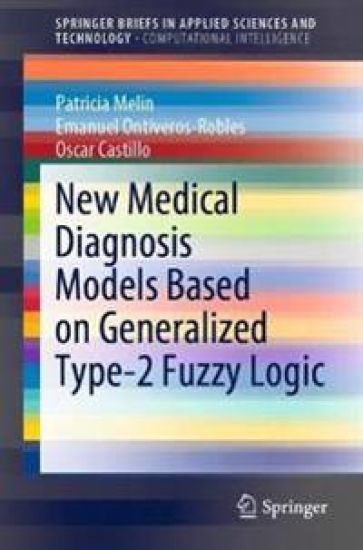
This book presents different experimental results as evidence of the good results obtained compared with respect to conventional approaches and literature references based on fuzzy logic. Nowadays, the evolution of intelligence systems for decision making has been reached considerable levels of success, as these systems are getting more intelligent and can be of great help to experts in decision making. One of the more important realms in decision making is the area of medical diagnosis, and many kinds of intelligence systems provide the expert good assistance to perform diagnosis; some of these methods are, for example, artificial neural networks (can be very powerful to find tendencies), support vector machines, that avoid overfitting problems, and statistical approaches (e.g., Bayesian). However, the present research is focused on one of the most relevant kinds of intelligent systems, which are the fuzzy systems. The main objective of the present work is the generation of fuzzy diagnosis systems that offer competitive classifiers to be applied in diagnosis systems. To generate these systems, we have proposed a methodology for the automatic design of classifiers and is focused in the Generalized Type-2 Fuzzy Logic, because the uncertainty handling can provide us with the robustness necessary to be competitive with other kinds of methods. In addition, different alternatives to the uncertainty modeling, rules-selection, and optimization have been explored. Besides, different experimental results are presented as evidence of the good results obtained when compared with respect to conventional approaches and literature references based on Fuzzy Logic.
This book deals with the stabilization issue of infinite dimensional dynamical systems both at the theoretical and applications levels. Systems theory is a branch of applied mathematics, which is interdisciplinary and develops activities in fundamental research which are at the frontier of mathematics, automation and engineering sciences. It is everywhere, innumerable and daily, and moreover is there something which is not system: it is present in medicine, commerce, economy, psychology, biological sciences, finance, architecture (construction of towers, bridges, etc.), weather forecast, robotics, automobile, aeronautics, localization systems and so on. These are the few fields of application that are useful and even essential to our society. It is a question of studying the behavior of systems and acting on their evolution. Among the most important notions in system theory, which has attracted the most attention, is stability. The existing literature on systems stability is quite important, but disparate, and the purpose of this book is to bring together in one document the essential results on the stability of infinite dimensional dynamical systems. In addition, as such systems evolve in time and space, explorations and research on their stability have been mainly focused on the whole domain in which the system evolved. The authors have strongly felt that, in this sense, important considerations are missing: those which consist in considering that the system of interest may be unstable on the whole domain, but stable in a certain region of the whole domain. This is the case in many applications ranging from engineering sciences to living science. For this reason, the authors have dedicated this book to extension of classical results on stability to the regional case. This book considers a very important issue, which is that it should be accessible to mathematicians and to graduate engineering with a minimal background in functional analysis. Moreover, for the majority of the students, this would be their only acquaintance with infinite dimensional system. Accordingly, it is organized by following increasing difficulty order. The two first chapters deal with stability and stabilization of infinite dimensional linear systems described by partial differential equations. The following chapters concern original and innovative aspects of stability and stabilization of certain classes of systems motivated by real applications, that is to say bilinear and semi-linear systems. The stability of these systems has been considered from a global and regional point of view. A particular aspect concerning the stability of the gradient has also been considered for various classes of systems. This book is aimed at students of doctoral and master’s degrees, engineering students and researchers interested in the stability of infinite dimensional dynamical systems, in various aspects.
The book includes topics, such as: path planning, avoiding obstacles, following the path, go-to-goal control, localization, and visual-based motion control. The theoretical concepts are illustrated with a developed control architecture with soft computing and artificial intelligence methods. The proposed vision-based motion control strategy involves three stages. The first stage consists of the overhead camera calibration and the configuration of the working environment. The second stage consists of a path planning strategy using several traditional path planning algorithms and proposed planning algorithm. The third stage consists of the path tracking process using previously developed Gauss and Decision Tree control approaches and the proposed Type-1 and Type-2 controllers. Two kinematic structures are utilized to acquire the input values of controllers. These are Triangle Shape-Based Controller Design, which was previously developed and Distance-BasedTriangle Structure that is used for the first time in conducted experiments. Four different control algorithms, Type-1 fuzzy logic, Type-2 Fuzzy Logic, Decision Tree Control, and Gaussian Control have been used in overall system design. The developed system includes several modules that simplify characterizing the motion control of the robot and ensure that it maintains a safe distance without colliding with any obstacles on the way to the target. The topics of the book are extremely relevant in many areas of research, as well as in education in courses in computer science, electrical and mechanical engineering and in mathematics at the graduate and undergraduate levels.
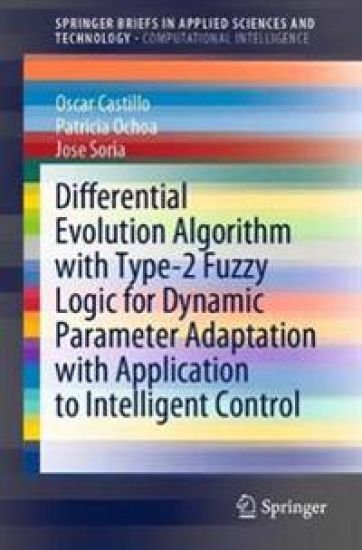
This book focuses on the fields of fuzzy logic, bio-inspired algorithm, especially the differential evolution algorithm and also considering the fuzzy control area. The main idea is that these two areas together can help solve various control problems and to find better results. In this book, the authors test the proposed method using five benchmark control problems. First, the water tank, temperature, mobile robot, and inverted pendulum controllers are considered. For these 4 problems, experimentation was carried out using a Type-1 fuzzy system and an Interval Type-2 system. The last control problem was the D.C. motor, for which the experiments were performed with Type-1, Interval Type-2, and Generalized Type-2 fuzzy systems. When we use fuzzy systems combined with the differential evolution algorithm, we can notice that the results obtained in each of the controllers are better and with increasing uncertainty, the results are even better. For this reason, the authors consider in this book the proposed method using fuzzy systems and the differential evolution algorithm to improve the fuzzy controllers’ behavior in complex control problems.
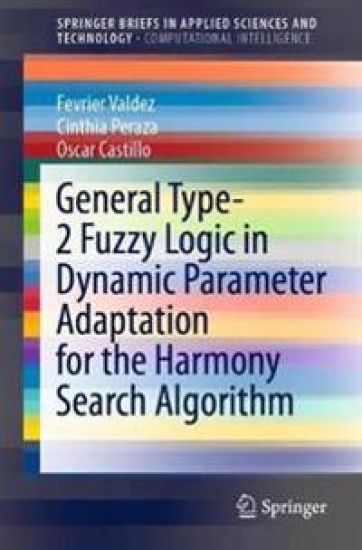
This book focuses on the fields of fuzzy logic and metaheuristic algorithms, particularly the harmony search algorithm and fuzzy control. There are currently several types of metaheuristics used to solve a range of real-world of problems, and these metaheuristics contain parameters that are usually fixed throughout the iterations. However, a number of techniques are also available that dynamically adjust the parameters of an algorithm, such as probabilistic fuzzy logic.This book proposes a method of addressing the problem of parameter adaptation in the original harmony search algorithm using type-1, interval type-2 and generalized type-2 fuzzy logic. The authors applied this methodology to the resolution of problems of classical benchmark mathematical functions, CEC 2015, CEC2017 functions and to the optimization of various fuzzy logic control cases, and tested the method using six benchmark control problems – four of the Mamdani type: the problem of filling a water tank, theproblem of controlling the temperature of a shower, the problem of controlling the trajectory of an autonomous mobile robot and the problem of controlling the speed of an engine; and two of the Sugeno type: the problem of controlling the balance of a bar and ball, and the problem of controlling control the balance of an inverted pendulum. When the interval type-2 fuzzy logic system is used to model the behavior of the systems, the results show better stabilization because the uncertainty analysis is better. As such, the authors conclude that the proposed method, based on fuzzy systems, fuzzy controllers and the harmony search optimization algorithm, improves the behavior of complex control plants.