Kirjojen hintavertailu. Mukana 12 506 973 kirjaa ja 12 kauppaa.

Kirjailija

Patricia Pulliam Phillips

Kirjat ja teokset yhdessä paikassa: 29 kirjaa, julkaisuja vuosilta 2007-2024, suosituimpien joukossa Performance Consulting: A Strategic Process to Improve, Measure, and Sustain Organizational Results. Vertaile teosten hintoja ja tarkista saatavuus suomalaisista kirjakaupoista.

29 kirjaa

Kirjojen julkaisuhaarukka 2007-2024.

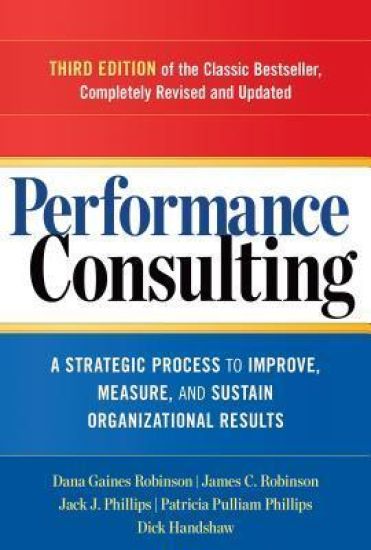
Performance Consulting: A Strategic Process to Improve, Measure, and Sustain Organizational Results

Performance Consulting: A Strategic Process to Improve, Measure, and Sustain Organizational Results

Dana Robinson; James C. Robinson; Patricia Pulliam Phillips; Jack Phillips; Dick Handshaw

Berrett-Koehler
2015
nidottu
NEW EDITION, REVISED AND UPDATEDIn America, organizations spend $175 billion in training initiatives and more than $500 billion in human resource solutions every year yet often have little to show for it. One reason is that people jump to solutions before they identify the causes of the problem. Performance consultants are effective because they partner with clients to clarify business goals and determine root causes for gaps between desired and current results. Only then are specific solutions agreed upon and implemented. This third edition of the classic book that introduced performance consulting adds a wealth of new material. There are new case examples throughout and four new chapters providing detailed steps for measuring results from performance consulting initiatives on five different levels, including ROI. The book includes a never-before-published Alignment and Measurement Model, allowing you to connect organizational needs and performance consulting initiatives designed to address those needs with the appropriate level of measurement. This remains a profoundly practical book, featuring tools, models, and checklists. It will enable you to make a difference in your organization that is valued, measurable, and sustainable. "
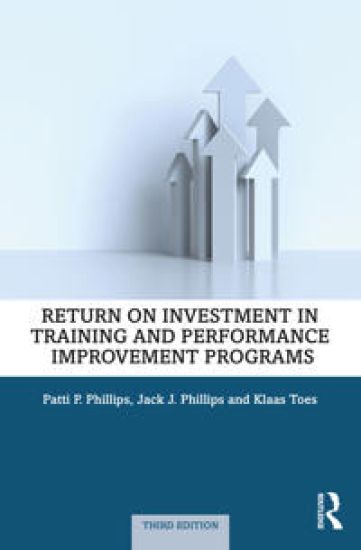
Return on Investment in Training and Performance Improvement Programs

Return on Investment in Training and Performance Improvement Programs

Patricia Pulliam Phillips; Jack J. Phillips; Klaas Toes

TAYLOR FRANCIS LTD
2024
sidottu
The third edition of this bestselling book guides you through a proven, results-based approach to calculating the return on investment in training and performance improvement programs. The ROI Methodology described in the book has evolved into the most used evaluation system in the world.Patricia Pulliam Phillips, Jack J. Phillips, and Klaas Toes present the ROI Methodology, a user-friendly approach to showing and proving the value of programs, projects, and initiatives. Based on over 40 years of development and refinement, it is a process that meets the demands currently facing training and performance improvement functions. This third edition includes chapters thoroughly detailing the application of the ROI Methodology and new and innovative developments. The book provides examples, case studies and worksheets, and solutions to implementation issues. A case study spans the book and takes the reader through each part of the ROI Methodology. Readers can work through the case, step-by-step, exploring the issues uncovered in the chapter and learn how to apply the process in their own organizations. This book continues to be a primary reference for learning how to utilize ROI to show the contribution of training, education, learning systems, performance improvement, human resources, and change initiatives throughout organizations.Proven to work as a guide for practitioners, managers, and leaders, the book is also ideal for students of learning and development and performance improvement at graduate and postgraduate levels and individuals involved in executive and professional development programs. A complimentary 500-page book with 25 detailed case studies is available to book purchasers. See the offer on page 384 at the back of the book.
Return on Investment in Training and Performance Improvement Programs

Return on Investment in Training and Performance Improvement Programs

Patricia Pulliam Phillips; Jack J. Phillips; Klaas Toes

TAYLOR FRANCIS LTD
2024
nidottu
The third edition of this bestselling book guides you through a proven, results-based approach to calculating the return on investment in training and performance improvement programs. The ROI Methodology described in the book has evolved into the most used evaluation system in the world.Patricia Pulliam Phillips, Jack J. Phillips, and Klaas Toes present the ROI Methodology, a user-friendly approach to showing and proving the value of programs, projects, and initiatives. Based on over 40 years of development and refinement, it is a process that meets the demands currently facing training and performance improvement functions. This third edition includes chapters thoroughly detailing the application of the ROI Methodology and new and innovative developments. The book provides examples, case studies and worksheets, and solutions to implementation issues. A case study spans the book and takes the reader through each part of the ROI Methodology. Readers can work through the case, step-by-step, exploring the issues uncovered in the chapter and learn how to apply the process in their own organizations. This book continues to be a primary reference for learning how to utilize ROI to show the contribution of training, education, learning systems, performance improvement, human resources, and change initiatives throughout organizations.Proven to work as a guide for practitioners, managers, and leaders, the book is also ideal for students of learning and development and performance improvement at graduate and postgraduate levels and individuals involved in executive and professional development programs. A complimentary 500-page book with 25 detailed case studies is available to book purchasers. See the offer on page 384 at the back of the book.
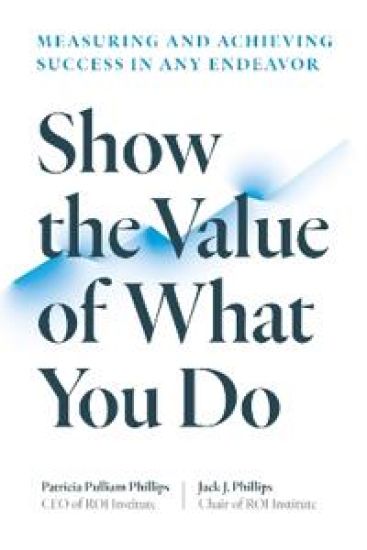
Show the Value of What You Do

Show the Value of What You Do

Patricia Pulliam Phillips

Berrett-Koehler Publishers
2022
nidottu
Prove your effectiveness to anyone--and achieve professional success--by adopting the same ROI methods and metrics that leading companies use. In an era of evidence-based inquiry, people need to be able to demonstrate the value of their projects credibly. But how do you do that when there isn't an obvious measure connected to the project, like increased sales? In their new book Patti and Jack Phillips, the cofounders of ROI Institute, show how you can adopt the same methodology used by more than 6,000 organizations in seventy countries to evaluate large institutional initiatives. By following their six-step process, you can build a case for any project, process, or intervention, even so-called soft programs. For example, the first case study in the book involves successfully demonstrating the effectiveness of chaplaincy in an intensive care unit. The authors explain how to link your project to a meaningful business outcome, make sure your project will actually influence that outcome, identify metrics that will show if you're making progress, collect and analyze data, and use the results to build support. This book includes extensive examples from a wide range of organizations: businesses, nonprofits, schools, law enforcement, and more. It provides diagnostic tools and supportive practices and even offers advice on how to find a positive interpretation for results that don't conform to your anticipated outcome. Answering the question "Is it worth it?" defines the ultimate value of any project. Using the methodology this book presents will keep your work relevant, your career on track, and your organization healthy.
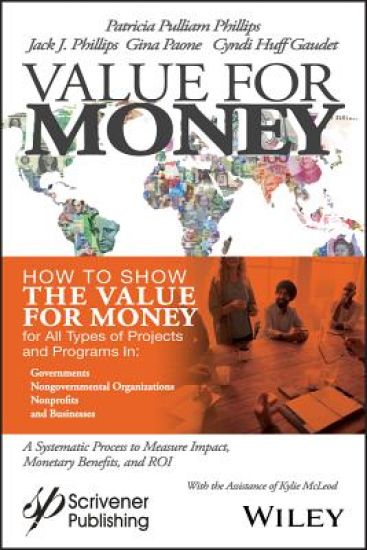
Value for Money

Value for Money

Patricia Pulliam Phillips; Jack J. Phillips; Gina Paone; Cyndi Huff Gaudet

JOHN WILEY SONS INC
2019
sidottu
Written by two of the world's most well-known ROI (Return on Investment) gurus, this guide is indispensable for anyone involved in showing the value of money for projects and programs in governments, non-governmental organizations, nonprofits, and businesses. These range from human capital programs to marketing initiatives, technology implementations, systems integrations, quality and lean processes, public health initiatives, procurement procedures, public relations events, risk management policies, economic development programs, corporate social responsibility projects, public policy programs, branding activities, innovation programs, customer satisfaction projects, and everything in between. In a step-by-step process, the book shows how to measure the success of projects and programs, including measuring impact and ROI (Return on Investment). This book also shows how to forecast the value of the project in advance and how to collect data during and after project implementation. It addresses improvements throughout the process so that the project delivers optimum value. In addition to businesses, this book is appropriate for governments, NGOs, nonprofits, universities and healthcare organizations. As a reference for those who are seeking ways to assign value to what they have measured, the book will clarify and resolve much of the mystery surrounding the conversion of data to monetary values. Building on a tremendous amount of experience, application, practice, and research, the book will be based on the work of many individuals and organizations, particularly those who have been reaching the ultimate levels of accountability using the ROI Methodology. Developed in an easy-to-read format and fortified with examples, tips, and checklists, this will be an indispensable guide for those who seek to understand accountability issues.
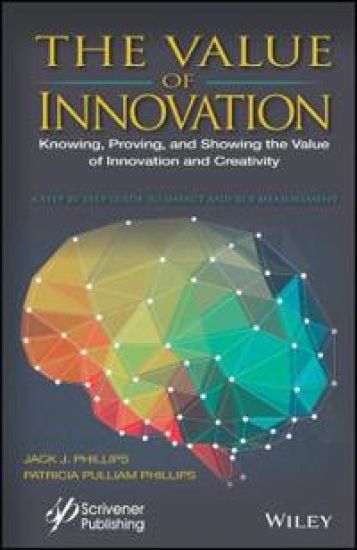
The Value of Innovation

The Value of Innovation

Jack J. Phillips; Patricia Pulliam Phillips

John Wiley Sons Inc
2018
sidottu
Innovation is the life blood of practically every organization. Innovation drives growth, development, and prosperity for many organizations and geographical areas. Sometimes, innovation thrives within a certain geographical location or in certain organizations that are known for their innovative approaches. This outstanding new volume will demonstrate how to measure the success of innovation in all types of organizations. In the last decade, there have been tremendous investments in creativity and innovations sponsored by companies, cities, states, countries, universities, NGO’s, and even non-profits. With the magnitude of emphasis on creativity and innovation, the sponsors and key stakeholders will demand to know the value of these programs. The Value of Innovation: Measuring the Impact and ROI in Creativity and Innovation Programs will show step-by-step how to measure the impact and the ROI of innovation and creativity programs. The process collects six types of data: reaction, learning, application, impact, ROI, and intangibles. Data are collected analyzed and reported using a systematic, logic model. Conservative standards create results that are both CEO and CFO friendly. This proven process has been used now in 5000 organizations and this new book adapts the method directly to this critical area of innovation, showing examples and case studies.
Handbook of Training Evaluation and Measurement Methods

Handbook of Training Evaluation and Measurement Methods

Jack J. Phillips; Patricia Pulliam Phillips

Routledge
2016
sidottu
Today’s economic climate means that anyone involved in training and development must be able to measure its effect on business performance. With a focus on costs, benefits, and return on investment, this book provides a comprehensive reference for those who are learning about or implementing an evaluation system.This new edition is fully revised and updated to reflect current developments, with step-by-step guidance on a range of vital topics, including: Developing a results-based approach to HRD Evaluation design Data collection and measuring success Calculating program costs and ROI Increasing management support for HRD programs. With end-of-chapter discussion questions and an accompanying online Instructor Guide, this fourth edition provides sound theory and practical solutions.The Handbook of Training Evaluation and Measurement Methods is a complete and detailed reference guide suitable for HRD professionals and students in advanced courses in HRD, training evaluation, and program evaluation.
Handbook of Training Evaluation and Measurement Methods

Handbook of Training Evaluation and Measurement Methods

Jack J. Phillips; Patricia Pulliam Phillips

Routledge
2016
nidottu
Today’s economic climate means that anyone involved in training and development must be able to measure its effect on business performance. With a focus on costs, benefits, and return on investment, this book provides a comprehensive reference for those who are learning about or implementing an evaluation system.This new edition is fully revised and updated to reflect current developments, with step-by-step guidance on a range of vital topics, including: Developing a results-based approach to HRD Evaluation design Data collection and measuring success Calculating program costs and ROI Increasing management support for HRD programs. With end-of-chapter discussion questions and an accompanying online Instructor Guide, this fourth edition provides sound theory and practical solutions.The Handbook of Training Evaluation and Measurement Methods is a complete and detailed reference guide suitable for HRD professionals and students in advanced courses in HRD, training evaluation, and program evaluation.
Making Change Work

Making Change Work

Emma Weber; Patricia Pulliam Phillips; Jack Phillips

Kogan Page Ltd
2016
nidottu
Underpinned by decades of research and application, Making Change Work shows that the lynchpin that connects change initiatives and their ultimate success is behavioural change. The book brings together the ROI Institute's established methodology for aligning projects and programmes to business needs and for evaluating impact and ROI with the Turning Learning Into Action methodology developed by Emma Weber to support learning transfer. It offers a step-by-step process that partners with any business initiative requiring behavioural change, providing the critical link bridging the knowledge and application. At the heart of the methodology is a framework for reflective conversation, ensuring accountability and aligning people to the desired outcomes. Cutting through complex change theory, Making Change Work is a 'how to' guide, providing an end-to-end approach to solve the problem that businesses have grappled with for so long from change projects that don't deliver business impact. It includes real life case studies from organizations such as BMW and the University of NSW Department of Innovation on how organizations are using the framework to create successful outcomes that are not just demonstrated but that are delivered and measurable. It is ideal for any professional who is embarking on any organizational initiative requiring change and evaluation of the subsequent ROI, whether it is a learning initiative, quality initiative or change initiative.
Accountability in Human Resource Management

Accountability in Human Resource Management

Jack J. Phillips; Patricia Pulliam Phillips; Kirk Smith

Routledge
2016
sidottu
From selection and assessment, to training and development, and reward management, all HR functions have an impact on an organization. Ever-present budgetary pressures mean that there is perpetual competition for resources, so HR departments must be able to account for and justify their contribution to the bottom line.This practical text presents a results-based approach to HR accountability, which explains how to: Uncover and monitor the costs of HR programs Develop programs emphasizing accountability Collect data for evaluation Measure the contribution of human resources Calculate HR’s return on investmentThis new edition is fully revised and updated to reflect developments in the field, such as the rise of talent management and the increased role of technology in HR measurement, and is supported with international examples throughout. New chapters have been added to address business alignment, HR scorecards, analytics maturity, and international applications of the methodology. Case studies, tool templates and lecture slides are provided as online supplements for HR practitioners and students.Accountability in Human Resource Management 2nd Edition is a complete and detailed guide suitable for HR professionals and students on advanced human resource management courses.
Accountability in Human Resource Management

Accountability in Human Resource Management

Jack J. Phillips; Patricia Pulliam Phillips; Kirk Smith

Routledge
2016
nidottu
From selection and assessment, to training and development, and reward management, all HR functions have an impact on an organization. Ever-present budgetary pressures mean that there is perpetual competition for resources, so HR departments must be able to account for and justify their contribution to the bottom line.This practical text presents a results-based approach to HR accountability, which explains how to: Uncover and monitor the costs of HR programs Develop programs emphasizing accountability Collect data for evaluation Measure the contribution of human resources Calculate HR’s return on investmentThis new edition is fully revised and updated to reflect developments in the field, such as the rise of talent management and the increased role of technology in HR measurement, and is supported with international examples throughout. New chapters have been added to address business alignment, HR scorecards, analytics maturity, and international applications of the methodology. Case studies, tool templates and lecture slides are provided as online supplements for HR practitioners and students.Accountability in Human Resource Management 2nd Edition is a complete and detailed guide suitable for HR professionals and students on advanced human resource management courses.
Return on Investment in Meetings & Events

Return on Investment in Meetings & Events

M. Theresa Breining; Jack J. Phillips; Patricia Pulliam Phillips

Routledge
2016
sidottu
The Phillips ROI Methodology™ utilizes five levels of evaluation, which are essential in determining the return on investment. At Level 1 - Reaction and Planned Action, attendee and stakeholder satisfaction from the meeting can be measured. Almost all organizations evaluate at Level 1, usually with a generic, end-of-meeting questionnaire. While this level of evaluation is important as a “stakeholder” satisfaction measure, a favorable reaction does not ensure that attendees have acquired new skills, knowledge, opinions or attitudes from the meeting. At Level 2 - Learning, measurements focus on what participants learned during the meeting using tests, skill practices, role-plays, simulations, group evaluations, and other assessment tools. A learning check is helpful to ensure that attendees have absorbed the meeting material or messages and know how to use or apply it properly. It is also important at this level to determine the quantity and quality of new professional contacts acquired and whether existing professional contacts were strengthened due to the meeting. However, a positive measure at this level is no guarantee that what was learned or whether the professional contacts acquired will be used on the job. At Level 3 - Job Applications, a variety of follow-up methods can be used to determine if attendees applied on the job what they learned or acquired at the meeting. The frequency and use of skills are important measures at Level 3. While Level 3 evaluations are important to gauge the success of the meeting, it still does not guarantee that there will be a positive business impact in the organization or for the attendee. At Level 4 - Business Results, the measurement focuses on the actual business results achieved by meeting participants as they successfully apply the meeting material or messages. Typical Level 4 measures include output, sales, quality, costs, time and customer satisfaction. Although the meeting may produce a measurable business impact, there is still a concern that the meeting may cost too much. At Level 5 - Return on Investment, this ultimate level of measurement compares the monetary benefits from the meeting with the fully-loaded meeting costs as expressed in the ROI formula. All levels of evaluation must be conducted in order to determine the ROI of a meeting or event. The data collected should show a chain of impact occurring through the levels as the skills and knowledge learned (Level 2) are applied on the job (Level 3) to produce business results (Level 4).
Real World Training Evaluation

Real World Training Evaluation

Patricia Pulliam Phillips; Jack J. Phillips

ATD Press
2016
pokkari
Overcome the real-world challenges of evaluating your training programs.Renowned ROI experts jack and Patti Phillips tackle the obstacles and daily challenges that practitioners face when trying to evaluate their training programs. Measurement and evaluation are key to establishing success and demonstrating the value-add of your programs—but so often, L&D professionals launch into this journey with no clear destination in mind, much less guideposts to show them the way. This book leads you to the ultimate destination of real world evaluation, the intersection of learning and evaluation where the two are so intertwined that the activity of evaluation is seamless.Describe program success in quantitative, qualitative, financial, and nonfinancial terms.Present a complete set of data to show the overall success of a program.Learn to balance the art and science of real world evaluation.
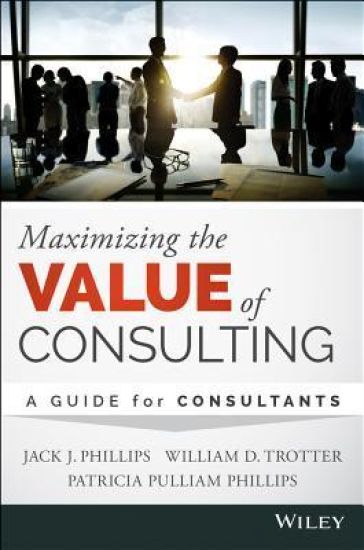
Maximizing the Value of Consulting

Maximizing the Value of Consulting

Jack J. Phillips; William D. Trotter; Patricia Pulliam Phillips

John Wiley Sons Inc
2015
sidottu
Provide organized, efficient, relevant consulting with lasting value Maximizing the Value of Consulting is an indispensable, practical guide for managing, measuring, and delivering the results that make internal and external consulting a lasting value to clients and the company. Sponsored by the ROI Institute and the Association of Internal Management Consultants, this book provides a roadmap to relevance for consultants operating in the increasingly fast-paced, changing, dynamic environment. Readers will learn how to use resources properly and manage the investment efficiently, while truly connecting to the business, securing appropriate levels of commitment, and providing adequate levels of support. Detailed coverage includes guidance toward calculating the value of consulting in terms that executives understand, including business impact and ROI, and using the appropriate tools to show how things are working throughout the process. Whether organizations are using internal or external consultants, or both, consultants can provide better value to the company. Consultants are needed to provide advice, support, and insight into the processes undertaken to improve the business, and integrate the input of different functional units into a more streamlined strategy. This book is designed to help consultants provide the utmost value to clients by maximizing organization, efficiency, and ultimately, ROI. Manage for value with better organization and cost controlSet objectives at multiple levels to deliver useful resultsMeasure implementation, impact, ROI, and intangiblesUse final results to drive appropriate actions, creating lasting value The skyrocketing need for internal and external consultants will continue, in almost every functional area ranging from HR and technology, to auditing and risk management. Maximizing the Value of Consulting provides a manual for relevant, value-driven consulting, with world-renowned expert insight.
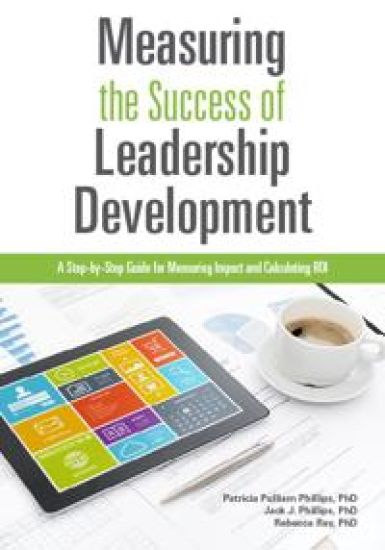
Measuring the Success of Leadership Development

Measuring the Success of Leadership Development

Patricia Pulliam Phillips; Jack J. Phillips; Rebecca Ray

ATD Press
2015
pokkari
Evaluate leadership development programs all the way to impact and ROI.Globally, a record amount is being invested in leadership development, more than at any other time in history. And that translates into additional accountability for anyone spearheading a new program. Measuring the Success of Leadership Development offers a proven methodology that will help you step up to the challenge. You’ll learn how to begin the leadership development process with the end in mind and show return on investment to key stakeholders.Renowned ROI experts Jack and Patti Phillips have joined knowledge organization expert Rebecca Ray to support you every step of the way. This essential guide outlines each step of the proven ROI Methodology and explains how to apply it to driving leadership development program performance and evaluating results. Case studies show the methodology in action across seven successful leadership development programs.If you’re leading the charge, it’s crucial that you create and track metrics for your program’s success. In this book you will learn:how to begin the leadership development process with the end in mindwhat data to collect to show return on investment to key stakeholdersbest practices in measurement and evaluation strategies.
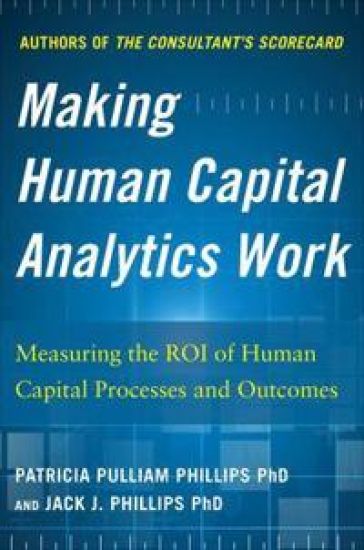
Making Human Capital Analytics Work: Measuring the ROI of Human Capital Processes and Outcomes

Making Human Capital Analytics Work: Measuring the ROI of Human Capital Processes and Outcomes

Jack Phillips; Patricia Pulliam Phillips

McGraw-Hill Professional
2014
sidottu
PROVE THE VALUE OF YOUR HR PROGRAM WITH HARD DATAWhile corporate leaders may well know the value of human capital, they don’t always understand the extent to which the HR function contributes to the bottom line. So when times get tough and business budgets get cut, HRdepartments often take the first hit.In this groundbreaking guide, the cofounders of ROI Institute, Jack Phillips and Patti Phillips, provide the tools and techniques you need to use analytics to show top decision makers the value of HR in your organization.Focusing on three types of analytics--descriptive,predictive, and prescriptive--Making Human Capital Analytics Work shows how you can apply analytics by:Developing relationships between variablesPredicting the success of HR programsDetermining the cost of intangibles that are otherwise diffi cult to valueShowing the business value of particular HR programsCalculating and forecasting the ROI of various HR projects and programsMuch more than a guide to using data collectionand analysis, Making Human Capital Analytics Work is a template for spearheading large-scale change in your organization by dramatically influencing your department's overall image within the organization.The authors take you step-by-step through the processes of using hard data to drive decisions and demonstrate the tangible value of HR.You know that your department is more than administrative and transactional--that it's an integral player in your company's strategy. Apply the lessons in Making Human Capital Analytics Work and ensure that all other stakeholders know too.
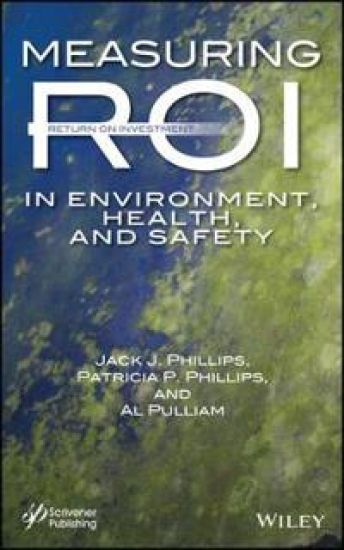
Measuring ROI in Environment, Health, and Safety

Measuring ROI in Environment, Health, and Safety

Jack J. Phillips; Patricia Pulliam Phillips; Al Pulliam

John Wiley Sons Inc
2014
sidottu
Using the most successful evaluation system in the world for measuring impact and ROI—the ROI Methodology—learn how to measure the success of all business programs and projects involving environmental initiatives, health-related programs for employees and citizens, and various safety programs in all types of settings Few topics are more important than the health and safety of employees, associates, and citizens. Organizations focus a tremendous amount of money/resources on maintaining a zero-harm approach to its employees, the greater community, and the surrounding environment. At the same time, organizations are implementing many types of wellness and fitness programs ensuring that employees remain healthy, safe, and productive. Measuring ROI in Environment, Health, and Safety shows how to measure the success of all types of programs and projects involving environmental initiatives, health-related programs for employees and citizens, and various safety programs in all types of settings. Environmental efforts, or green projects, can represent value for organizations. Eighty percent can deliver a positive ROI, and the other 20 percent are often required by regulation. In either case, it is critical to understand whether or not these projects are working. This new book will show step-by-step how to measure the success of many types of green programs. Within an organization, responsibility for environment, health, and safety is often under the direction of the same executive team. Their concern is always about how well the programs are working and, more importantly, what can be done to ensure that they are more successful. ROI in Environment, Health, and Safety introduces the ROI Methodology, now used by over 4,000 organizations, and the most successful and utilized evaluation system in the world for measuring program impact and ROI. It shows step-by-step how to capture the reaction to the various initiatives and programs a firm may institute, the learning necessary to make them successful, progress in terms of application and implementation, the specific business impact measures driven by these programs, and, finally, the financial ROI. Along the way, data is collected for process improvement to ensure that if certain programs are not working, they can be adjusted for success.
Measuring the Success of Organization Development

Measuring the Success of Organization Development

Patricia Pulliam Phillips; Jack J. Phillips; Lizette Zuniga

ATD Press
2013
pokkari
Measuring the Success of Organization Development: A Step-by-Step Guide for Measuring Impact and Calculating ROI examines the strategic role of organisational development (OD), explains the reasons for measuring OD efforts, and proposes a framework for measuring effectiveness. Ultimately, OD practitioners will be able to determine how particular OD interventions correlate with business results; determine areas for investments, modifications, and cessation; justify budget allocations; and be more accountable for how money is spent within their organisations. Part I of the book explains the concept of ROI and outlines the steps to ensure accurate measurement of the effects of OD programs. Part II consists of case studies that show “evaluation in action,” providing a conceptual framework and workable suggestions for developing, implementing, and maintaining programs for measuring success in OD programmes.
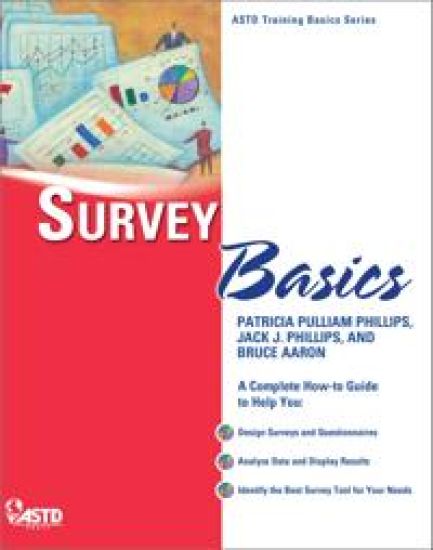
Survey Basics

Survey Basics

Patricia Pulliam Phillips; Jack J. Phillips; Bruce Aaron

ATD Press
2013
pokkari
Known for their expertise in ROI, Jack and Patricia Phillips have contributed to another area in the field of measurement and evaluation. Together with Bruce Aaron, they’re offering a useful tool to help learning and development professionals design and administer surveys and questionnaires. Written in the accessible style of ASTD Basics books, this volume covers: the purpose of surveys and questionnaires types of error that can creep into survey results considerations when developing survey questions tricks to ensure positive response rates content on validity and reliability approaches to data analysis and reporting results. In addition to content on survey design, the book includes a section that evaluates various survey technologies. By applying a simple decision-making process, readers can identify the most appropriate survey tool for their needs.