Kirjailija
Patrick Colm Hogan
Kirjat ja teokset yhdessä paikassa: 38 kirjaa, julkaisuja vuosilta 1990-2025, suosituimpien joukossa American Literature and American Identity. Vertaile teosten hintoja ja tarkista saatavuus suomalaisista kirjakaupoista.
38 kirjaa
Kirjojen julkaisuhaarukka 1990-2025.
In earlier work Patrick Colm Hogan argued that a few story genres-heroic, romantic, sacrificial, and others-recur prominently across separate literary traditions. These structures recur because they derive from important emotion-motivation systems governing human social interaction, such as group pride and shame. In Colonialism and Literature Hogan extends this work to argue that these genres play a prominent role in the fashioning of postcolonization literature-literature encompassing both the colonial and postcolonial periods. Crucially, colonizers and colonized people commonly understand and explain their situation in terms of these narrative structures. In other words, the stories we tell to some degree simply reflect the facts. But we also tend to interpret our condition in terms of genre, with the genre guiding us about what to record and how to evaluate it. Hogan explores these consequential processes in theoretical and literary analysis, presenting extended, culturally and historically specified interpretations of works by PÁdraic Pearse (Ireland), Ngugi wa Thiong’o (Kenya), Yasujiro Ozu (Japan), J. M. Coetzee (South Africa), Margaret Atwood (Canada), Rabindranath Tagore (India), Abderrahmane Sissako (Mali), and Dinabandhu Mitra (India).
An influential body of recent work on moral psychology has stressed the interconnections among ethics, narrative, and empathy. Yet as Patrick Colm Hogan argues, this work is so vague in its use of the term 'narrative' as to be almost substanceless, and this vagueness is in large part due to the neglect of literary study. Extending his previous work on universal story structures, Hogan argues that we can transform ill-defined intuitions about narrative and ethics into explicit and systematic accounts of the deep connections between moral attitudes and narratives. These connections are, in turn, inseparable from empathy, a concept that Hogan proceeds to clarify and defend against a number of widely read critiques. In the course of the book, Hogan develops and illustrates his arguments through analyses of global narratives, constructing illuminating ethical interpretations of literary works ranging from Shakespeare to Chinese drama and the Bhagavad Gita.
What is Colonialism? develops a clear and rigorous account of what colonialism is and how it works. It draws on and synthesizes recent work in cognitive science, affective science, and social psychology, along with Marxism and related forms of analysis.Hogan begins with some fundamental conceptual distinctions, such as the degree to which a group shares beliefs, dispositions, and skills versus the degree to which they share identification with a category. Building on these distinctions, he defines colonialism in terms of political, economic, and cultural autonomy, clarifying the nature of culture and autonomy particularly. He goes on to articulate an invaluable systematic account of the varieties of colonialism. The final chapters outline the motives of imperialists, differentiating these from their ideological rationalizations, and sketching the harms caused by colonialism. The book concludes by considering when, or if, one can achieve a genuinely postcolonial condition. Hogan illustrates these analyses by examining influential literary works—by European writers (such as Joseph Conrad) and by non-Europeans (such as Athol Fugard, Kamala Markandaya, and Wole Soyinka).This accessible and informative volume is the ideal resource for students and scholars interested in colonialism and empire.
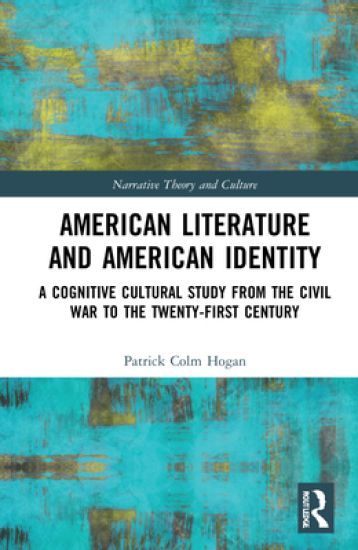
In recent years, cognitive and affective science have become increasingly important for interpretation and explanation in the social sciences and humanities. However, little of this work has addressed American literature, and virtually none has treated national identity formation in influential works since the Civil War. In this book, Hogan develops his earlier cognitive and affective analyses of national identity, further exploring the ways in which such identity is integrated with cross-culturally recurring patterns in story structure. Hogan examines how authors imagined American identity—understood as universal, democratic egalitarianism—in the face of the nation’s clear and often brutal inequalities of race, sex, and sexuality, exploring the complex and often ambivalent treatment of American identity in works by Charlotte Perkins Gilman, Eugene O’Neill, Lillian Hellman, Djuna Barnes, Amiri Baraka, Margaret Atwood, N. Scott Momaday, Spike Lee, Leslie Marmon Silko, Tony Kushner, and Heidi Schreck.
An influential body of recent work on moral psychology has stressed the interconnections among ethics, narrative, and empathy. Yet as Patrick Colm Hogan argues, this work is so vague in its use of the term 'narrative' as to be almost substanceless, and this vagueness is in large part due to the neglect of literary study. Extending his previous work on universal story structures, Hogan argues that we can transform ill-defined intuitions about narrative and ethics into explicit and systematic accounts of the deep connections between moral attitudes and narratives. These connections are, in turn, inseparable from empathy, a concept that Hogan proceeds to clarify and defend against a number of widely read critiques. In the course of the book, Hogan develops and illustrates his arguments through analyses of global narratives, constructing illuminating ethical interpretations of literary works ranging from Shakespeare to Chinese drama and the Bhagavad Gita.
In recent years, cognitive and affective science have become increasingly important for interpretation and explanation in the social sciences and humanities. However, little of this work has addressed American literature, and virtually none has treated national identity formation in influential works since the Civil War. In this book, Hogan develops his earlier cognitive and affective analyses of national identity, further exploring the ways in which such identity is integrated with cross-culturally recurring patterns in story structure. Hogan examines how authors imagined American identity—understood as universal, democratic egalitarianism—in the face of the nation’s clear and often brutal inequalities of race, sex, and sexuality, exploring the complex and often ambivalent treatment of American identity in works by Charlotte Perkins Gilman, Eugene O’Neill, Lillian Hellman, Djuna Barnes, Amiri Baraka, Margaret Atwood, N. Scott Momaday, Spike Lee, Leslie Marmon Silko, Tony Kushner, and Heidi Schreck.
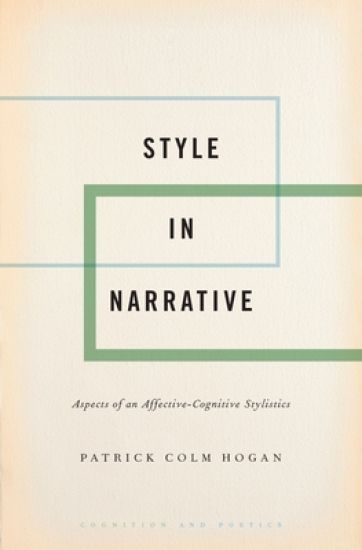
Literary style is something many people talk about, but few could define. Yet it is crucial for our response to narrative art. Style can facilitate or obscure the events of a story or the motivations of a character, enhance the aesthetic appeal of a narrative or complicate its emotional impact, and even inflect the political or ethical implications of a work. It is precisely this complex operation of style that Patrick Colm Hogan explains in Style in Narrative. Drawing on recent psychological research, this book proposes a new and clear definition of style and provides a systematic theoretical account of style in relation to cognitive and affective science. Hogan's definition stresses that style varies by both scope, or the range of text or texts that may share a style, and level, the components of an individual work that might involve a shared style. The book uses rich examples from literature, film, and graphic fiction, including analysis of Virginia Woolf's Mrs. Dalloway, Shakespeare's canon, William Faulkner's As I Lay Dying, and Art Spiegelman's Maus, as well as visual analysis of films by Robert Rodriguez, Deepa Mehta, Eric Rohmer, M.F.Husain, Yasujiro Ozu, and Chuan Lu. Through these studies Hogan identifies stylistic concerns common across mediums as well as the most consequential stylistic differences between them. Bringing together three often separated mediums within a coherent framework, Style in Narrative makes an important contribution to and necessary intervention in the field of stylistics.
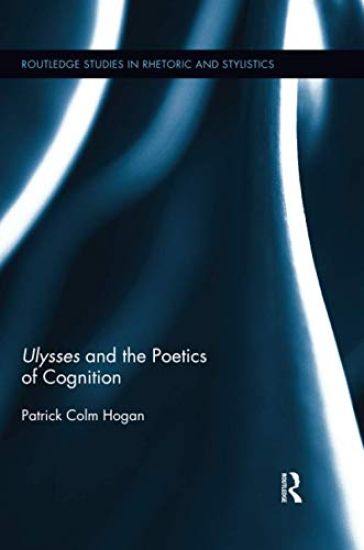
Given Ulysses’ perhaps unparalleled attention to the operations of the human mind, it is unsurprising that critics have explored the work’s psychology. Nonetheless, there has been very little research that draws on recent cognitive science to examine thought and emotion in this novel. Hogan sets out to expand our understanding of Ulysses, as well as our theoretical comprehension of narrative—and even our views of human cognition. He revises the main narratological accounts of the novel, clarifying the complex nature of narration and style. He extends his cognitive study to encompass the anti-colonial and gender concerns that are so obviously important to Joyce’s work. Finally, through a combination of broad overviews and detailed textual analyses, Hogan seeks to make this notoriously difficult book more accessible to non-specialists.
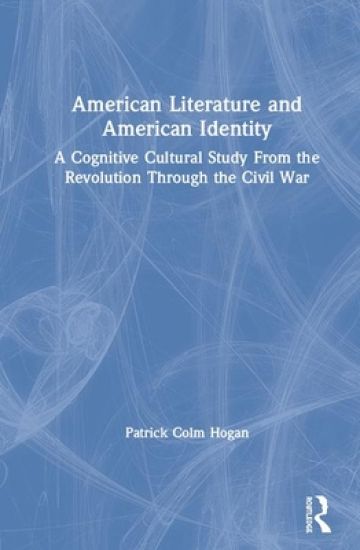
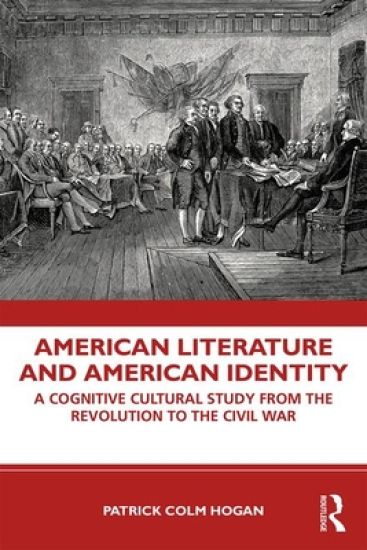
American Literature and American Identity addresses the crucial issue of identity formation, especially national identity, in influential works of American literature. Patrick Colm Hogan uses techniques of cognitive and affective science to examine the complex and often highly ambivalent treatment of American identity in works by Melville, Cooper, Sedgwick, Apess, Stowe, Jacobs, Douglass, Hawthorne, Poe, and Judith Sargeant Murray. Hogan focuses on the issue of how authors imagined American identity—specifically, as universal, democratic egalitarianism—in the face of the nation’s clear and often brutal inequalities of race and sex. In the course of this study, Hogan advances our understanding of nationalism in general, American identity in particular, and the widely read literary works he examines.
In Personal Identity and Literature, Hogan examines what makes an individual a particular, unique self. He draws on cognitive and affective science as well as literary works - from Walt Whitman and Frederick Douglass to Dorothy Richardson, Alice Munro, and J. M. Coetzee. His scholarly analyses are also intertwined with more personal reflections, on for example his mother’s memory loss. The result is a work that examines a complex topic by drawing on a unique range of resources, from empirical psychology and philosophy to novels, films, and biographical experiences. The book provides a clear, systematic account of personal identity that is theoretically strong, but also unique and engaging.
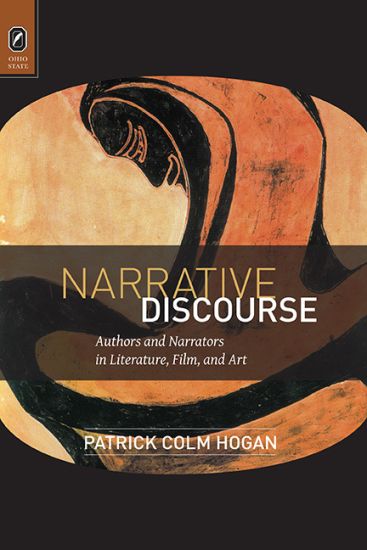
In Narrative Discourse: Authors and Narrators in Literature, Film, and Art, Patrick Colm Hogan reconsiders fundamental issues of authorship and narration in light of recent research in cognitive and affective science. He begins with a detailed overview of the components of narrative discourse, both introducing and reworking key principles. Based on recent studies treating the complexity of human cognition, Hogan presents a new account of implied authorship that solves some notorious problems with that concept. In subsequent chapters Hogan takes the view that implied authorship is both less unified and more unified than is widely recognized. In connection with this notion, he examines how we can make interpretive sense of the inconsistencies of implied authors within works and the continuities of implied authors across works. Turning to narrators, he considers some general principles of readers' judgments about reliability, emphasizing the emotional element of trust. Following chapters take up the operation of complex forms of narration, including parallel narration, embedded narration, and collective voicing ("we" narration). In the afterword, Hogan sketches some subtleties at the other end of narrative communication, considering implied readers and narratees. In order to give greater scope to the analyses, Hogan develops case studies from painting and film as well as literature, treating art by Rabindranath Tagore; films by David Lynch, Bimal Roy, and Kabir Khan; and literary works by Mirabai, Harriet Beecher Stowe, Ernest Hemingway, William Faulkner, Margaret Atwood, Ngugi wa Thiong'o, and Joseph Diescho.
From the rise of Nazism to the conflict in Kashmir in 2008, nationalism has been one of the most potent forces in modern history. Yet the motivational power of nationalism is still not well understood. In Understanding Nationalism: On Narrative, Cognitive Science, and Identity, Patrick Colm Hogan begins with empirical research on the cognitive psychology of group relations to isolate varieties of identification, arguing that other treatments of nationalism confuse distinct types of identity formation. Synthesizing different strands of this research, Hogan articulates a motivational groundwork for nationalist thought and action. Understanding Nationalism goes on to elaborate a cognitive poetics of national imagination, most importantly, narrative structure. Hogan focuses particularly on three complex narrative prototypes that are prominent in human thought and action cross-culturally and trans-historically. He argues that our ideas and feelings about what nations are and what they should be are fundamentally organized and oriented by these prototypes. He develops this hypothesis through detailed analyses of national writings from Whitman to George W. Bush, from Hitler to Gandhi. Hogan's book alters and expands our comprehension of nationalism generally-its cognitive structures, its emotional operations. It deepens our understanding of the particular, important works he analyzes. Finally, it extends our conception of the cognitive scope and political consequence of narrative.
Cognitive cultural theorists have rarely taken up sex, sexuality, or gender identity. When they have done so, they have often stressed the evolutionary sources of gender differences. In Sexual Identities, Patrick Colm Hogan extends his pioneering work on identity to examine the complexities of sex, the diversity of sexuality, and the limited scope of gender. Drawing from a diverse body of literary works, Hogan illustrates a rarely drawn distinction between practical identity (the patterns in what one does, thinks, and feels) and categorical identity (how one labels oneself or is categorized by society). Building on this distinction, he offers a nuanced reformulation of the idea of social construction, distinguishing ideology, situational determination, shallow socialization, and deep socialization. He argues for a meticulous skepticism about gender differences and a view of sexuality as evolved but also contingent and highly variable. The variability of sexuality and the near absence of gender fixity--and the imperfect alignment of practical and categorical identities in both cases--give rise to the social practices that Judith Butler refers to as "regulatory regimes." Hogan goes on to explore the cognitive and affective operation of such regimes. Ultimately, Sexual Identities turns to sex and the question of how to understand transgendering in a way that respects the dignity of transgender people, without reverting to gender essentialism.
Recent decades have witnessed an explosion in neuroscientific and related research treating aesthetic response. This book integrates this research with insights from philosophical aesthetics to propose new answers to longstanding questions about beauty and sublimity. Hogan begins by distinguishing what we respond to as beautiful from what we count socially as beautiful. He goes on to examine the former in terms of information processing (specifically, prototype approximation and non-habitual pattern recognition) and emotional involvement (especially of the endogenous reward and attachment systems). In the course of the book, Hogan examines such issues as how universal principles of aesthetic response may be reconciled with individual idiosyncrasy, how it is possible to argue rationally over aesthetic response, and what role personal beauty and sublimity might play in the definition of art. To treat these issues, the book considers works by Woolf, Wharton, Shakespeare, Arthur Miller, Beethoven, Matisse, and Kiran Rao, among others.
During the 1947 partition of the Indian subcontinent, Kashmir-a Muslim-majority area ruled by a Hindu maharaja-became a hotly disputed territory. Divided between India and Pakistan, the region has been the focus of international wars and the theater of political and military struggles for self-determination. The result has been great human suffering within the state, with political implications extending globally.Imagining Kashmir examines cinematic and literary imaginings of the Kashmir region’s conflicts and diverse citizenship, analyzing a wide range of narratives from writers and directors such as Salman Rushdie, Bharat Wakhlu, Mani Ratnam, and Mirza Waheed in conjunction with research in psychology, cognitive science, and social neuroscience. In this innovative study, Patrick Colm Hogan’s historical and cultural analysis of Kashmir advances theories of narrative, colonialism, and their corresponding ideologies in relation to the cognitive and affective operations of identity. Hogan considers how narrative organizes people’s understanding of, and emotions about, real political situations and the ways in which such situations in turn influence cultural narratives, not only in Kashmir but around the world.
Conversations on Cognitive Cultural Studies
Frederick Luis Aldama; Patrick Colm Hogan
Ohio State University Press
2016
pokkari
Recent decades have witnessed an explosion in neuroscientific and related research treating aesthetic response. This book integrates this research with insights from philosophical aesthetics to propose new answers to longstanding questions about beauty and sublimity. Hogan begins by distinguishing what we respond to as beautiful from what we count socially as beautiful. He goes on to examine the former in terms of information processing (specifically, prototype approximation and non-habitual pattern recognition) and emotional involvement (especially of the endogenous reward and attachment systems). In the course of the book, Hogan examines such issues as how universal principles of aesthetic response may be reconciled with individual idiosyncrasy, how it is possible to argue rationally over aesthetic response, and what role personal beauty and sublimity might play in the definition of art. To treat these issues, the book considers works by Woolf, Wharton, Shakespeare, Arthur Miller, Beethoven, Matisse, and Kiran Rao, among others.