Kirjojen hintavertailu. Mukana 12 150 702 kirjaa ja 12 kauppaa.

Kirjailija

Patrick Moore

Kirjat ja teokset yhdessä paikassa: 43 kirjaa, julkaisuja vuosilta 1966-2025, suosituimpien joukossa The Scientists. Vertaile teosten hintoja ja tarkista saatavuus suomalaisista kirjakaupoista.

43 kirjaa

Kirjojen julkaisuhaarukka 1966-2025.

The Scientists

The Scientists

Naomi Pasachoff; Jay Pasachoff; Robert Iliffe; Frank A.J.L. James; Jordi Cat; Patrick Moore; Martin Rudwick; Laura Dassow Walls; Roger McCoy; Michael Hunter; Jean-Pierre Poirier; Alan Rocke; Nathan Brooks; Georgina Ferry; Virendra Singh; Frank Close; Andrew Whitaker; Robert Paradowski

Thames Hudson Ltd
2012
sidottu
This book tells the remarkable lives of the pioneers of science – from Galileo and Newton, Faraday and Darwin, Pasteur and Marie Curie, to Einstein, Freud, Turing, and Crick and Watson. A series of seventy articles, written by an international team of distinguished scientists, historians of science and science writers, provides an unrivalled account of the lives and personalities behind the greatest scientific breakthroughs of all time. Organized thematically, starting at the ‘Universe’, and moving smaller through the ‘Earth’ and ‘Molecules and Matter’ to ‘Inside the Atom’, with the final two sections looking at ‘Life’ and ‘Body and Mind’, it covers all the major scientific disciplines, including astronomy, biology, biochemistry, chemistry, computing, ecology, geology, medicine, neurology, physics and psychology, as well as mathematics. The Scientists will intrigue budding scientists, those fascinated by the lives of great individuals, and anyone curious to know how over the centuries we came to understand the physical world around us and inside us.
Patrick Moore

Patrick Moore

Patrick Moore

The History Press Ltd
2005
nidottu
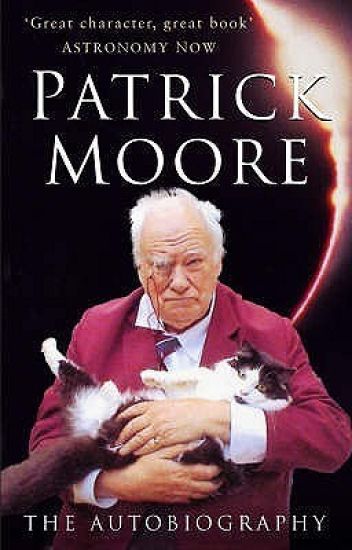
Throughout his distinguised career, Patrick Moore has, without a doubt, done more to raise the profile of astronomy amoung the British public than any other figure in the scientific world. As the presenter of The Sky at Night on BBC television for nearly 50 years he was honoured with an OBE in 1968 and a CBE in 1988. In 2001 he was knighted 'for services to the popularisation of science and to broadcasting'. The BBC first aired The Sky at Night in April 1957 and it is now in the record books as the world's longest running TV series with the same presenter. He is also the author of over 60 books on astronomy, all of which, including his autobiography have been written on his 1908 typewriter. Partly thanks to his larger-than-life personality, Sir Patrick's own fame extends far beyond astronomical circles. A self-taught musician and talented composer, he has displayed his xylophone-playing skills at the Royal Variety Performance and as a passionate supporter of cricket, he has played for the Lord's Taverners charity cricket team.
Legends of the Stars

Legends of the Stars

Patrick Moore

THE HISTORY PRESS LTD
2025
pokkari
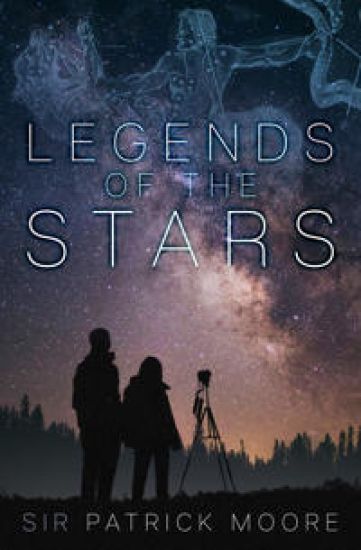
Have you ever wondered how the constellations got their names? Or wanted to know the stories of the gods and heroes immortalised in the night sky? In Legends of the Stars, Patrick Moore, Britain's best-loved astronomer and presenter of The Sky at Night for over fifty years, re-tells some of the stories behind these star-groups, and explains how to look for them in the heavens. From the great hunter Orion to his nemesis the Scorpion, and from Pegasus the flying horse to Jason's ship the Argo, he guides the reader through the celestial picture book, bringing alive some of greatest tales ever told. In an age when the ancient myths are seldom taught in schools, this is an ideal book for anyone who has ever gazed at the stars and asked themselves how the names of the constellations came about.
KAWS + Warhol

KAWS + Warhol

Patrick Moore

Monacelli Press
2024
sidottu
A never-before-seen look at the striking thematic parallels between KAWS and Andy Warhol, two of the most iconic artists of our time As celebrated artists that draw from popular culture, KAWS and Andy Warhol are known for creating art that is approachable beyond the confines of the traditional art world. While at first glance, both artists’ works often appear celebratory and joyful, they share a number of dark common threads beneath the surface: tragedy as spectacle and meditations on death and dying. When these two bold bodies of work are juxtaposed, that connection is made explicit and powerful. This book highlights the artistic intersection of KAWS and Warhol, featuring their takes on death and disaster, advertising, nostalgia, abstraction, skulls, and self-portraiture. Accompanying a major exhibition at The Andy Warhol Museum that will travel internationally, it presents some of the most standout and analogous works from two of the most popular artists of all time.
Osynliga katastrofer och falska hot om jordens undergång
Om inte drastiska åtgärder vidtas snarast kommer de av männi­skan orsakade klimat­föränd­ringarna att leda till en gigantisk ­klimatkris som hotar livet på planeten ... Så kan den konventionella visdomen* om klimatet formuleras. Enligt denna uppfattning kommer klimat­förändringarna, om inget görs, att få bland annat följande konsekvenser: Kraftigt högre temperaturer. Mer torka och fler bränder. Snabbt stigande havsnivåer. Ökad havsförsurning som dödar merparten av marint liv. Artutrotning och skogsdöd i massiv skala. Korallrevens utplåning. Missväxt och matbrist. Miljarder flyktingar.Men allt fler forskare och debattörer ifrågasätter denna dystra syn på klimatet och framtiden. En av dem är den kanadensiske ekologen och grundaren av Green­peace, Patrick Moore. I sin bok visar han hur många påståenden och förutsägelser om klimatförändringarna och dess effekter är helt eller delvis felaktiga. Även de två mest centrala antagandena att koldioxid spelar en nyckelroll för jordens uppvärmning och att en ökad koldioxidhalt är av ondo saknar vetenskaplig grund, menar författaren.Patrick Moore är en kanadensisk doktor i ekologi som sedan slutet av 1960-talet varit verksam i den internationella miljörörelsen. Bland annat var han med och grundade Green­peace 1971 där han innehade ledande positioner fram till 1986. Han stod i spetsen för Greenpeaces kampanjer för att rädda valarna, hejda mas­slakt av säl­ungar och stoppa kärn­vapenprovsprängningar. År 1986 lämnade Patrick Moore Green­peace då han kommit att inse att organisationen hade över­givit ett vetenskapligt grundat synsätt. År 2015 var han med och bildade CO2 Coalition, en organisation med syftet att upp­lysa om kol­dioxidens fördelar för livet på jorden.* En allmänt accepterad och utbredd föreställning om någonting som inte nödvän­digtvis är sann. I modern tid introducerades begreppet av nationalekonomen John Kenneth Galbraith. Synonymer: allmän kunskap, majoritetsuppfattning, truism, dominerande ideologi, ortodoxi, plattityd, partilinje.»För en tid sedan gick det upp för mig att mer­par­ten av de skräckscenarier som målas upp om planetens tillstånd grundar sig på sådant som antingen är osynligt, som koldioxid och radioaktiv strålning, eller är extremt avlägset, som isbjörnar och korallrev. Detta faktum omöjliggör för de allra flesta människor att ta ställning till om de påståenden som görs i scenariorna är sanna eller inte. I stället tvingas vi sätta vår lit till att aktivister, journalister, politiker och forskare ger oss sanningen, trots att dessa grupper kan ha stora ekonomiska och/eller politiska intressen att försvara. Möj­ligheten öppnas därmed för att narrativ helt enkelt hittas på. Detta är vad som har skett med påståendet att koldioxidutsläpp i samband med förbränning av fossila bränslen orsakar en klimatkris.« Patrick Moore »Sammanfattningsvis är idén om att människan ­orsa­­kar en dramatisk ökning av den ­globala temperaturen ge­nom att förbränna fossila bränslen helt enkelt inte sann. Människans lilla bidrag till koldioxidhalten ett spårämne i ­jordens atmosfär är i själva verket mycket fördel­aktigt. Föreställningen att det skulle vara skad­ligt eller farligt är falsk. Patrick Moore visar oss varför det är så i denna klarsynta, välskrivna och upp­lysande bok. Författaren har lagt ned ett enormt arbete på boken som är mycket välillustrerad och fullproppad med information.« Nicholas Dykes »Om du har unga intelligenta människor i din närhet som tror på den konventionella visdomen om ­kli­matförändringarna, men vars övertygelse ännu inte är huggen i sten, är Patrick Moores bok den du ska sätta i händerna på dem. För­visso finns redan ett antal utmärkta böcker som vederläg­ger teo­rierna om ett nära förestående klimat-­harmageddon, men Moores bok är sär­skilt kraftfull och övertygande. Utan omsvep hävdar han att varje påstående från ­kli­matetablissemanget är falskt. Enligt sin egen definition är han en kättare alltså någon som förnekar en teoris underliggande antaganden snarare än en ­skeptiker som förkastar en teoris slutsatser. Författa­ren ­behärskar sitt mate­rial på ett ­impo­nerande vis och han skriver övertygande, koncist och, när så är befogat, vasst.« Rael Jean Isaac»Osynliga katastrofer och falska hot om jordens un­der­gång är en underbar bok. I kapitel efter kapitel demonterar Patrick Moore med förödande logik de falska påståendena som görs om klima­tet. Han visar också mod när han pläderar för att vi lever i en tid som i framtiden mycket väl kan komma att betraktas som en period av kollektiv galenskap. Jag re­kom­menderar boken varmt.« David Mason-Jones
Bang!! 2

Bang!! 2

Brian May; Chris Lintott; Hannah Wakeford; Patrick Moore

Welbeck Publishing Group
2021
sidottu
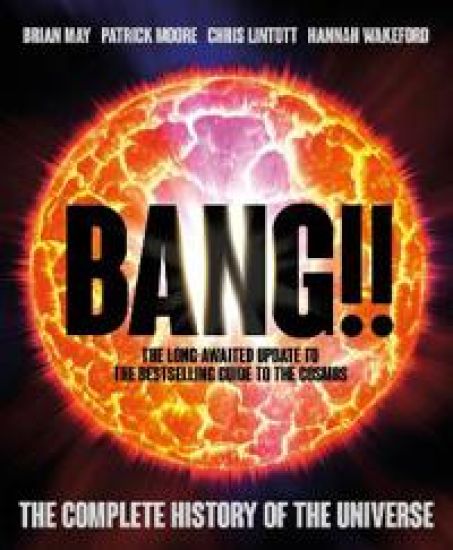
In 2004 a rock star, a TV astronomer and a young research astronomer sat down to write the story of the Universe in the order in which it happened, from its birth at the Big Bang 13.7 billion years ago, through to its ultimate demise in the infinitely far future.The aim of this book is to explain the Big Bang and everything that followed in a way that made sense, in the strict order in which events occurred, and without using maths, so it would be understandable to everyone, regardless of educational background. The original edition of Bang! was a bestseller, and a go-to for anyone wanting to understand the story of the origins and evolution of our Universe that did not duck the science.Since the first edition, thousands of planets have been discovered, the 'habitable zone' has expanded and a flotilla of new satellites has explored our own solar system, bringing back fresh images and new science. In this book all the latest findings about the evolution of stars and galaxies are included, and the current thinking about our ultimate origins. The latest ideas about Dark Matter and Dark Energy are explained, all illustrated with new images from the world's largest telescopes and space missions.This is the new, updated, popular guide to 'Life, the Universe, and Everything' – The Complete History of the Universe.
The Epic Tale of Jag-Man

The Epic Tale of Jag-Man

Patrick Moore

J. Kenkade Publishing
2021
nidottu
Have you ever wondered what it would feel like to have the keen eye-sight, speed and agility of a Jaguar? Being able to see horrible and unlawful events take place, but in a mere instance have the capability of making sure that these events stopped in the eye of danger? If so, Max Rockafellor has an epic tale of how he became Jag-Man, Inquisitor of the Night
The Data Book of Astronomy

The Data Book of Astronomy

Patrick Moore

CRC Press
2019
nidottu
The Data Book of Astronomy is a one-stop reference for astronomers at all levels of experience, from beginners to experienced observers. Filled with data about the Earth, Moon, the planets, the stars, our Galaxy, and the myriad galaxies in deep space, it also reveals the latest scientific discoveries about black holes, quasars, and the origins of the Universe. Written by a premier astronomy expert, this book begins with a discussion of the Sun, from sunspots to solar eclipses. It then features over 100 tables on characteristics of the Moon, and the names, positions, sizes, and other key descriptors of all the planets and their satellites. The book tabulates solar and lunar eclipse, comets, close-approach asteroids, and significant meteor showers dates. Twenty-four maps show the surface features of the planets and their moons. The author then looks to the stars, their distances and movements, and their detailed classification and evolution. Forty-eight star charts cover both northern and southern hemispheres, enabling you to track down and name the main stars in all the constellations. The maps are supported by detailed tables of the names, positions, magnitudes, and spectra of the main stars in each constellation, along with key data on galaxies, nebulae, and clusters. There is a useful catalogue of the world's great telescopes and observatories, a history of astronomy and of space research, and biographies of 250 astronomers who have been most influential in developing the current understanding of the subject.
The Wandering Astronomer

The Wandering Astronomer

Patrick Moore

CRC Press
2019
nidottu
Drawing on his vast knowledge and direct experience of most of the key events in astronomy and space exploration during this century, Patrick Moore takes a sideways look at the historical reports and contemporary thought behind a wide range of astronomical topics. The Wandering Astronomer presents his personal accounts of the towering characters of 20th-century astronomy, intriguing facts about puzzling astronomical phenomena, and amusing stories about the quirkier side of astronomy and space exploration. This collection of essays covers everything from the case of vanishing planets to UFOs over Selsey.
Out of the Darkness

Out of the Darkness

Clyde Tombaugh; Patrick Moore

Stackpole Books
2017
nidottu
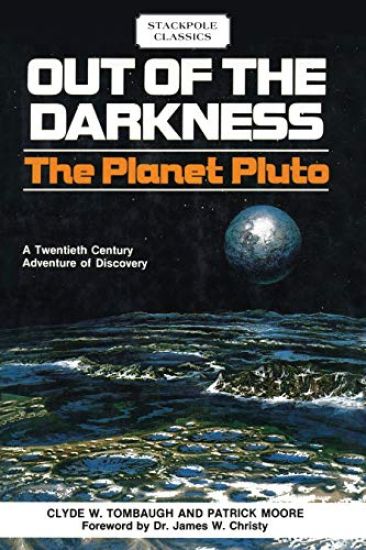
An adventure in scientific discovery Pluto, the farthermost planet in the solar system, some 3,673 million mites from the Sun, was discovered by Clyde Tombaugh at the Lowell Observatory in 1930. The fiftieth anniversary of Pluto's discovery will be celebrated in 1980 and OUT OF THE DARKNESS: THE PLANET PLUTO tells the exciting scientific story of the twenty-five year search for a planet X beyond Neptune, and its discovery-the only planet found in the twentieth century. The planets Mercury, Venus. Mars, Jupiter, and Saturn were all known since antiquity. Then Sir William Herschel discovered Uranus in 1781, and 65 years later, in 1846, Johann Calle and Urbain le Verner discovered Neptune. Variations in orbital perturbations of the planets and theoretical astronomy were responsible for predicting and discovering the three outermost planets (Uranus, Neptune, and Pluto) and so Pluto's story is also, to some extent, the story of its planetary neighbors. What kind of world is Pluto? Much is still a mystery (its
Exploring the Mysteries of Astronomy

Exploring the Mysteries of Astronomy

Patrick Moore; Pete Lawrence

Rosen Young Adult
2016
sidottu
Bring astronomy down from the mountaintops and into the backyard with this one-stop stargazing manual from Sir Patrick Moore and Pete Lawrence, stars of the BBC's The Sky at Night. This book is an introduction to how to practice astronomy in the digital age. It explains the principles of astronomy as well as the practical techniques to provide both beginners and more experienced observers with all the information they need to understand and enjoy the wonders of the night sky.
Patrick Moore's Astronomy: A Complete Introduction: Teach Yourself
Astronomy: A Complete Introduction will ensure you recognize what you are seeing in the night sky. You will investigate the sun, moon, planets comets and stars and learn how to observe them. This comprehensive guide, complete with star charts, will map out the skies and allow you to impress your friends with your knowledge of the sky at night.Astronomy: A Complete Introduction includes:Chapter 1: Introducing AstronomyChapter 2: The spinning skyChapter 3: Sky-watchersChapter 4: The astronomer's telescopeChapter 5: Into spaceChapter 6: The SunChapter 7: The MoonChapter 8: The Sun's familyChapter 9: The inner planetsChapter 10: The outer planetsChapter 11: Minor members of the Solar SystemChapter 12: The starsChapter 13: Pattern of starsChapter 14: Double and variable starsChapter 15: The life and times of a starChapter 16: The Star-clusters and nebulaeChapter 17: The depths of the universeChapter 18: Into the future - life beyond the Earth
Patrick Moore's Data Book of Astronomy

Patrick Moore's Data Book of Astronomy

Patrick Moore; Robin Rees

Cambridge University Press
2014
pokkari
Packed with up-to-date astronomical data about the Solar System, our Galaxy and the wider Universe, this is a one-stop reference for astronomers of all levels. It gives the names, positions, sizes and other key facts of all the planets and their satellites; discusses the Sun in depth, from sunspots to solar eclipses; lists the dates for cometary returns, close-approach asteroids, and significant meteor showers; and includes 88 star charts, with the names, positions, magnitudes and spectra of the stars, along with key data on nebulae and clusters. Full of facts and figures, this is the only book you need to look up data about astronomy. It is destined to become the standard reference for everyone interested in astronomy.
Astronomy with a Budget Telescope

Astronomy with a Budget Telescope

Patrick Moore; John Watson

Springer-Verlag New York Inc.
2012
nidottu
Astronomy with a Budget Telescope, 2nd Edition is a complete introduction to buying and using a low-cost amateur astronomical telescope. It provides essential hints and tips about what to look for when buying on a budget - the best are now excellent value, but they all lack an astronomer's advice about setting them up and using them.Astronomy with a Budget Telescope was first published in 2003, since then technology has moved on substantially. The main factors are first the availability of fairly inexpensive computer-controlled "go-to" telescopes which after setting up can automatically locate any celestial objects with reasonable accuracy. Second, digital cameras have now almost completely displaced "wet" film cameras, and some of them are particularly well-suited to astronomical use. Third, prices are down and quality is up!This new edition is revised and extended to include using a low-cost "go-to" telescope - there are various pitfalls to be avoided - and how this class of instrument can make amateur astronomy more accessible to those with limited time at their disposal. It also discusses the new breed of mid-range digital cameras that include powerful on-board processing and image enhancement software that used to be available only to people with advanced astronomical CCD cameras. Finally, there are detailed reviews and test reports on some of the budget telescopes that are available on Main Street and by mail order.
The Sky at Night

The Sky at Night

Patrick Moore

Springer-Verlag New York Inc.
2010
nidottu
When I became the producer of the Sky at Night in 2002, I was given some friendly advice: “It’s a quiet little programme, not much happens in astronomy.” How wrong they were! It’s been a hectic and enthralling time ever since:, with missions arriving at distant planets; new discoveries in our Universe; and leaps in technology, which mean amateurs can take pictures as good as the Hubble Space Telescope. What a privilege it is to work on a programme with such a huge heritage! I am constantly amazed looking back at the flotilla of excellent programmes which have gone out over the past five decades. The Sky at Night has always been at the sharp end of science broadcasting, whether it’s showing the first view from the far side of the Moon or pictures of a new comet which has swept into our sky. Viewers can depend on Sir Patrick to tell them the latest news and explain what it means. It’s an outstanding achievement and Sir Patrick still holds the world record for being the same presenter on the longest running TV programme. Our guests love coming down to Farthings, Sir Patrick’s home. For them, me- ing him is like meeting their astronomical hero. Over the past five decades, the Sky at Night has managed to talk to the space scientists and astronomers making the landmark discoveries. No matter how busy they are, they make room for Sir Patrick.