Kirjojen hintavertailu. Mukana 12 209 252 kirjaa ja 12 kauppaa.

Kirjailija

Paul Bishop

Kirjat ja teokset yhdessä paikassa: 53 kirjaa, julkaisuja vuosilta 1995-2026, suosituimpien joukossa Ludwig Klages and the Philosophy of Life. Vertaile teosten hintoja ja tarkista saatavuus suomalaisista kirjakaupoista.

53 kirjaa

Kirjojen julkaisuhaarukka 1995-2026.

Ludwig Klages and the Philosophy of Life
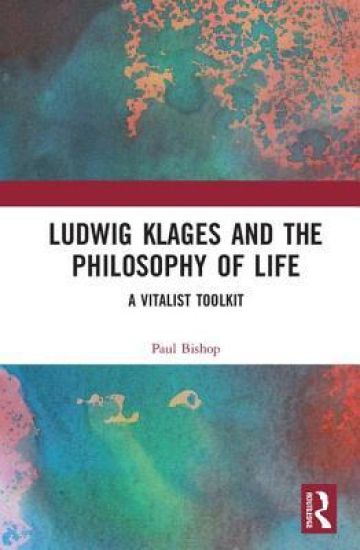
This book provides a unique overview of and introduction to the work of the German psychologist and philosopher Ludwig Klages (1872-1956), an astonishing figure in the history of German ideas. Central to intellectual life in turn-of-the-century Munich, he went on to establish a reputation for himself as an original and provocative thinker. Nowadays he is often overlooked, partly because of the absence of an accessible and authoritative introduction to his thought; this volume offers just such a point of entry. With an emphasis on applicability and utility, Paul Bishop reinvigorates the discourse surrounding Klages, providing a neutral and compact account of his intellectual development and his impact on psychology and philosophy.Part 1 offers an overview of Klages’s life, visiting the major stations of his intellectual development. Part 2 examines in turn nine major conceptual ‘tools’ found in Klages’s extensive writings, aiming to clarify Klages’s terminology, to demystify his discourse, and to sift through Klages’s credentials as a psychological thinker. Part 3 consists of extracts from Klages’s writings, thematically oriented; these showcase the aphoristic and lyrical, as well as psychological and philosophical, qualities of Klages’s writing, including his interest in aesthetics. Taken together, all three parts constitute a vitalist ‘toolkit’ — to build a fuller, richer life.Drawing on previous studies of Klages that have only been available in German, Ludwig Klages and the Philosophy of Life provides a non-polemical account of Klages’s life and work, with explanations and commentaries to guide the reader through extracts from his writings. The book accessibly explains the most important ideas and concepts found in Klages’s work, including soul, spirit, character, expression, will, and consciousness, and it reveals Klages to be a serious figure whose thought remains relevant to many disciplines today. It will stimulate interest in his work and create a new readership for his remarkable worldview.
Ludwig Klages and the Philosophy of Life
This book provides a unique overview of and introduction to the work of the German psychologist and philosopher Ludwig Klages (1872-1956), an astonishing figure in the history of German ideas. Central to intellectual life in turn-of-the-century Munich, he went on to establish a reputation for himself as an original and provocative thinker. Nowadays he is often overlooked, partly because of the absence of an accessible and authoritative introduction to his thought; this volume offers just such a point of entry. With an emphasis on applicability and utility, Paul Bishop reinvigorates the discourse surrounding Klages, providing a neutral and compact account of his intellectual development and his impact on psychology and philosophy.Part 1 offers an overview of Klages’s life, visiting the major stations of his intellectual development. Part 2 examines in turn nine major conceptual ‘tools’ found in Klages’s extensive writings, aiming to clarify Klages’s terminology, to demystify his discourse, and to sift through Klages’s credentials as a psychological thinker. Part 3 consists of extracts from Klages’s writings, thematically oriented; these showcase the aphoristic and lyrical, as well as psychological and philosophical, qualities of Klages’s writing, including his interest in aesthetics. Taken together, all three parts constitute a vitalist ‘toolkit’ — to build a fuller, richer life.Drawing on previous studies of Klages that have only been available in German, Ludwig Klages and the Philosophy of Life provides a non-polemical account of Klages’s life and work, with explanations and commentaries to guide the reader through extracts from his writings. The book accessibly explains the most important ideas and concepts found in Klages’s work, including soul, spirit, character, expression, will, and consciousness, and it reveals Klages to be a serious figure whose thought remains relevant to many disciplines today. It will stimulate interest in his work and create a new readership for his remarkable worldview.
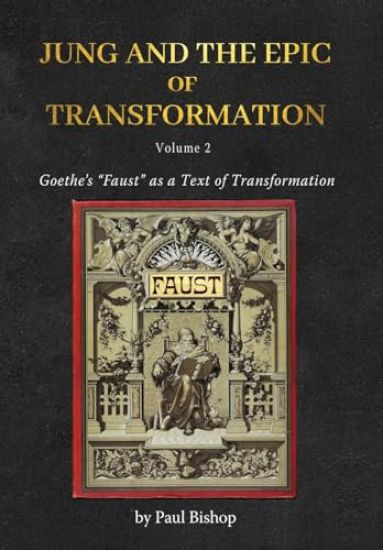
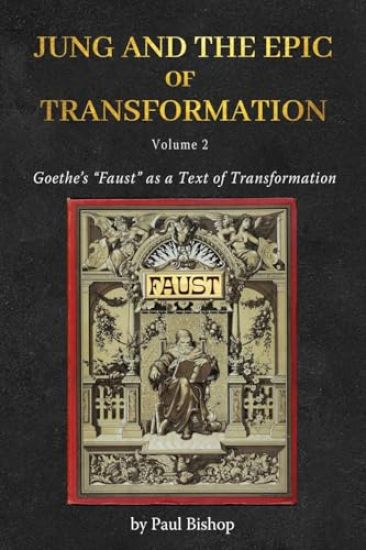
Jung and the Epic of Transformation - Volume 2

Jung and the Epic of Transformation - Volume 2

Paul Bishop

CHIRON PUBLICATIONS
2025
sidottu
For Goethe, his Faust was his "main business" (Hauptgesch ft), an opus magnum or divinum within the framework of which his whole life was so enacted. Or so believed C.G. Jung, who described himself as "haunted by the same dream," as "launched upon a single enterprise" which was his "main business," and someone in whom Faust had "struck a chord and pierced through" in a way he could not but regard as "personal." In Goethe's "Faust" as a Text of Transformation, Paul Bishop considers the significance for Jung of this iconic work of German literature which embraces the periods of Sturm und Drang, Weimar Classicism, and Romanticism, and constitutes a major work in the German epic of transformation. In Parts One and Two of this dramatic poem (or poetic drama), Faust undergoes a series of transformations - as do those readers who, as Jung did, open themselves up to the transformational power of Goethe's work. This is the second volume in a series of books, examining key texts in German literature and thought that were, in Jung's own estimation or by scholarly consent, highly influential on his thinking. The project of Jung and the Epic of Transformation consists of four titles, sequentially arranged to explore great works from a Jungian perspective and in turn to highlight their importance for interpreting The Red Book. Table of Contents List of Abbreviations Editions of translations cited "Faust" editions and commentaries Works on Goethean life (in chronological order) Works on Goethean aesthetics (in chronological order) Jungian/alchemical readings of "Faust" (in chronological order) Audiovisual recommendations Acknowledgments Preface Chapter 1 Goethe's Faust, Part One Chapter 2 Goethe's Faust, Part Two Chapter 3 Goethe's Faust in Jung's Works A]: Faust in Jung's Autobiographical and Early Works Chapter 4 Goethe's Faust in Jung's Works B]: Faust in Jung's Later Works of the Thirties, Forties, and Fifties Bibliography
Jung and the Epic of Transformation - Volume 2

Jung and the Epic of Transformation - Volume 2

Paul Bishop

CHIRON PUBLICATIONS
2025
pokkari
For Goethe, his Faust was his "main business" (Hauptgesch ft), an opus magnum or divinum within the framework of which his whole life was so enacted. Or so believed C.G. Jung, who described himself as "haunted by the same dream," as "launched upon a single enterprise" which was his "main business," and someone in whom Faust had "struck a chord and pierced through" in a way he could not but regard as "personal." In Goethe's "Faust" as a Text of Transformation, Paul Bishop considers the significance for Jung of this iconic work of German literature which embraces the periods of Sturm und Drang, Weimar Classicism, and Romanticism, and constitutes a major work in the German epic of transformation. In Parts One and Two of this dramatic poem (or poetic drama), Faust undergoes a series of transformations - as do those readers who, as Jung did, open themselves up to the transformational power of Goethe's work. This is the second volume in a series of books, examining key texts in German literature and thought that were, in Jung's own estimation or by scholarly consent, highly influential on his thinking. The project of Jung and the Epic of Transformation consists of four titles, sequentially arranged to explore great works from a Jungian perspective and in turn to highlight their importance for interpreting The Red Book. Table of Contents List of Abbreviations Editions of translations cited "Faust" editions and commentaries Works on Goethean life (in chronological order) Works on Goethean aesthetics (in chronological order) Jungian/alchemical readings of "Faust" (in chronological order) Audiovisual recommendations Acknowledgments Preface Chapter 1 Goethe's Faust, Part One Chapter 2 Goethe's Faust, Part Two Chapter 3 Goethe's Faust in Jung's Works A]: Faust in Jung's Autobiographical and Early Works Chapter 4 Goethe's Faust in Jung's Works B]: Faust in Jung's Later Works of the Thirties, Forties, and Fifties Bibliography
Nietzsche’s Writing Against Religion and the Crisis of Faith

Nietzsche’s Writing Against Religion and the Crisis of Faith

Paul Bishop

Springer International Publishing AG
2024
sidottu
This book offers an exercise in reception theory and investigates the key figures in the reception of Nietzsche’s critique of Judeo-Christianity in the course of the twentieth century. It has often been remarked upon — but rarely, if ever, explained — why Nietzsche, the author of the famous parable in The Gay Science in which a madman announces the “death of God” and a self-proclaimed opponent of organised religion, should have been a figure of such profound interest to writers, thinkers and theologians who were of a Christian persuasion. In order better to understand the attractiveness of Nietzsche to practitioners of faith, this book undertakes an analytical study of the reception of Nietzsche by around a dozen writers and thinkers working within the discourse of twentieth-century theology in the European tradition (French, Italian, German, Polish, and Swiss).
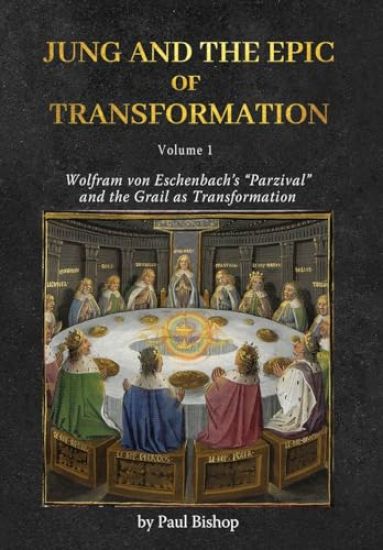
Jung and the Epic of Transformation - Volume 1

Jung and the Epic of Transformation - Volume 1

Paul Bishop

CHIRON PUBLICATIONS
2024
sidottu
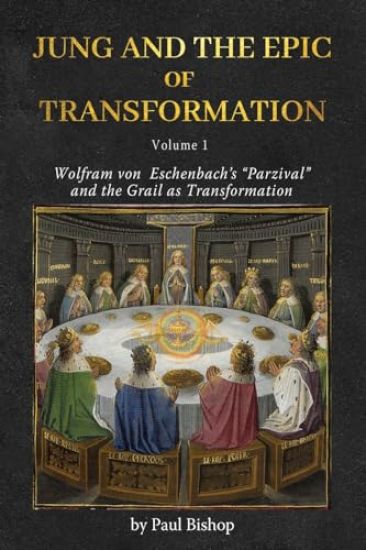
What have the Middle Ages got to do with us? For Jung, it seems, quite a lot; after all, he tells us: "I must catch up with a piece of the Middle Ages - within myself," adding: "We have only finished the Middle Ages - of others." In Wolfram von Eschenbach's "Parzival" and the Grail as Transformation, Paul Bishop considers the significance for Jung of a masterpiece of medieval German literature, and a major work in the tradition of the legendary Holy Grail. Wolfram's Parzival epic depicts a three-fold quest: for the hero's identity, for vr ude ("joy"), and for the mysterious Grail. In the course of this quest, Parzival himself is transformed from a fool into the lord of the Grail, and the power of the Grail brings about a collective transformation as well.This is the first volume in a series of books, examining key texts in German literature and thought that were, in Jung's own estimation or by scholarly consent, highly influential on his thinking. The project of Jung and the Epic of Transformation consists of four titles, sequentially arranged to explore great works from a Jungian perspective and in turn to highlight their importance for interpreting The Red Book.Table of Contents-List of Abbreviations -Grail Studies (in chronological order) -Parzival/Parsifal Studies (in chronological order) -Editions cited -Acknowledgements -Preface: The Grail and Arthurian Legend -Chapter 1 An Introduction to Epic -Chapter 2 Wolfram's Parzival -Chapter 3 Jung and the Grail Myth: Analytical Psychology as a New Form of Quest for Transformation -Bibliography
Discourses of Philology and Theology in Nietzsche

Discourses of Philology and Theology in Nietzsche

Paul Bishop

Springer International Publishing AG
2023
sidottu
This study proposes to examine the tension in Nietzsche’s works between two competing discourses, i.e., the discourse of theology and the discourse of philology. It argues that, in order to understand Nietzsche’s complicated standpoint and the aim of his Kulturkritik, we have to appreciate how he operates with two different discourses, one indexed to belief, faith, liturgy (i.e., the discourse of theology) and another indexed to analytical reason, sceptical investigation, and logical argumentation, as well as historical context and linguistic precision (i.e., the discourse of philology). Its core thesis is that, in the end, Nietzsche can no longer believe, because he thinks he has uncovered a fraudulent production of meaning in the texts, in a way that is comparable with his insight into the production of morality in On the Genealogy of Morals (1887).
Reading Plato through Jung

Reading Plato through Jung

Paul Bishop

Springer International Publishing AG
2023
sidottu
This book examines the Jungian imperative that the Third must become the Fourth through the lens of Carl Jung’s complex reception of Plato. While in psychoanalytic discourse the Third is typically viewed as an agent that brings about healing, the author highlights that, in the case of Jung, an early emphasis on the Third as the “transcendent function” gave way to an increasing insistence on the importance of the Fourth. And yet, he asks, why must “the Third become the Fourth”? Paul Bishop begins with a survey of work on Jung’s relation to Plato, before turning to Jung’s readings of the Timaeus and Black Books, as well as Goethe’s Faust II and Nietzsche’s Zarathustra. He proceeds to unpick Jung’s statements on the Third and the Fourth though a compelling analysis of how Jung draws upon religious and alchemical traditions, Pythagorean numerology, his own dream-like experiences and Plato’s cosmology. This book will appeal to practitioners and to scholars working in the history of ideas, psychoanalysis, philosophy, and psychoanalytic theory.
Nietzsche'S the Anti-Christ

Nietzsche'S the Anti-Christ

Paul Bishop

EDINBURGH UNIVERSITY PRESS
2021
nidottu
The Anti-Christ, although written in 1888, was not published until 1895. It is one of the most notorious, if not the most notorious, books by Nietzsche and one of his most frequently misrepresented. The main cause for scandal has been its expression of a virulent anti-religious and specifically anti-Christian stance. Precisely this aspect makes a reconsideration of this work timely, not to say urgent.Presupposing no prior knowledge of Nietzsche or the text, nor assuming you are familiar with Christian beliefs or doctrines, Paul Bishop contextualises The Anti-Christ within Nietzsche's work as a whole and carefully guides you through some of the difficulties dealing with Nietzsche's rhetoric.
Nietzsche'S the Anti-Christ

Nietzsche'S the Anti-Christ

Paul Bishop

Edinburgh University Press
2021
sidottu
The Anti-Christ, although written in 1888, was not published until 1895. It is one of the most notorious, if not the most notorious, books by Nietzsche and one of his most frequently misrepresented. The main cause for scandal has been its expression of a virulent anti-religious and specifically anti-Christian stance. Precisely this aspect makes a reconsideration of this work timely, not to say urgent.Presupposing no prior knowledge of Nietzsche or the text, nor assuming you are familiar with Christian beliefs or doctrines, Paul Bishop contextualises The Anti-Christ within Nietzsche's work as a whole and carefully guides you through some of the difficulties dealing with Nietzsche's rhetoric.
From Father to Son

From Father to Son

Paul Bishop

Pitch Publishing Ltd
2021
sidottu
From Father to Son is Paul Bishop's semi-autobiographical account of his love of football, and most of all his local team Watford. It touches on the innocence of childhood and the influence of parents, family, friends, and in Paul's case Jimmy Hill, Johnny Haynes and many others. Part history, part travelogue, the book takes the reader on a nostalgic trip from the early 1960s, when football was a game and not a business. It explains why a five-minute segment in Kes makes it a better football film than Escape to Victory. It was an era when all English grounds were dominated by terraces, you could meet your mates and have a chat on the 'cinder curve' at Vicarage Road, as you marvelled at the skill of Ray Lugg and the heading ability of Barry Endean. The author also acknowledges the original 'boss' in his young eyes... Watford's legendary manager Ken Furphy, who went from Workington to New York Cosmos, via Watford, and ended up coaching both Pele and Johan Cruyff.
Collection of Years Gone By

Collection of Years Gone By

Paul Bishop

Rosedog Books
2020
nidottu
Paul Bishop has lived most of his life in Sauk Prairie, Wisconsin. Over time, he resided in Dallas, Tucson, and some small towns in Wisconsin. He is very familiar with the mental health system and before he came to Christ, he underwent ECT (electro convulsive therapy). Eventually, he bottomed out and there was not anything else medically to be offered. Growing up, Bishop enjoyed sports. He earned good grades without much effort and after high school he went to LaCrosse for a year. After transferring to UW-Madison, all his hopes and dreams were tossed out the window. His strength is his spirituality and expertise in being a survivor.
Reading Goethe at Midlife

Reading Goethe at Midlife

Paul Bishop

Chiron Publications
2020
pokkari
This book explores the history of the idea of the midlife crisis, using the writings of C.G. Jung and Goethe to investigate its relevance for today. Tracing how "the ages of humankind" became "the stages of life" in which the midlife crisis represents a pivotal moment, Paul Bishop offers a detailed analysis of a paper by Jung on this subject. He then shifts the focus to Goethe's interest in Orphic wisdom, and one of Goethe's major later poems, "Primal Words. Orphic" (Urworte Orphisch). Using Jungian ideas to explore the psychological implications of this poem, Bishop draws on Goethe's own commentary, and other background material, to uncover its vital message.Reading Goethe at Midlife reveals the remarkable symmetry between the ideas and Jung and Goethe. Jung's analysis of the stages of life, and his advice to heed the "call of the self," are brought into the conjunction with Goethe's emphasis on the importance of hope, showing an underlying continuity of thought and relevance from ancient wisdom, via German classicism to analytical psychology.Table of ContentsList of Abbreviations Acknowledgments Preface to the second edition PART ONEChapter 1: The Stages of Life and the Midlife Crisis: A BriefHistory of an Idea Two Visual Starting Points - From the Ages of Humankind......to the Stages of Life -- The Stages of Life: An Idea Comesof Age - The Midlife Crisis - Walter B. Pitkin and EdmundBergler - Erik H. Erikson and Elliott Jaques - Gail Sheehy andDaniel J. Levinson - Other Approaches, Including the Return ofthe Noonday Demon - Jungian Approaches to Midlife -Literature of the Nineties - Recent French Approaches: ricDeschavanne and Pierre-Henri Tavoillot, Marie de Hennezeland Bertrand VergelyChapter 2: The Turning Point in Life: What Conflict the SunMust Experience at Midday PART TWOChapter 3: Goethe's OrphismThe Cult of Orpheus - Orpheus in the Age of Romanticism -Goethe's Relation to the Orphic Mysteries - Creuzer andHermann, Zoega and Welcker - Faust as Orpheus - Orphism, and Primal WordsChapter 4: Primal Words. OrphicDaimon - Chance - Eros - The Necessity of Love; or, EroticNecessity - The Necessity of Necessity; or, Necessary Necessity -Hope - ConclusionIndex
Reading Goethe at Midlife

Reading Goethe at Midlife

Paul Bishop

Chiron Publications
2020
sidottu
This book explores the history of the idea of the midlife crisis, using the writings of C.G. Jung and Goethe to investigate its relevance for today. Tracing how "the ages of humankind" became "the stages of life" in which the midlife crisis represents a pivotal moment, Paul Bishop offers a detailed analysis of a paper by Jung on this subject. He then shifts the focus to Goethe's interest in Orphic wisdom, and one of Goethe's major later poems, "Primal Words. Orphic" (Urworte Orphisch). Using Jungian ideas to explore the psychological implications of this poem, Bishop draws on Goethe's own commentary, and other background material, to uncover its vital message.Reading Goethe at Midlife reveals the remarkable symmetry between the ideas and Jung and Goethe. Jung's analysis of the stages of life, and his advice to heed the "call of the self," are brought into the conjunction with Goethe's emphasis on the importance of hope, showing an underlying continuity of thought and relevance from ancient wisdom, via German classicism to analytical psychology.Table of ContentsList of Abbreviations Acknowledgments Preface to the second edition PART ONEChapter 1: The Stages of Life and the Midlife Crisis: A BriefHistory of an Idea Two Visual Starting Points - From the Ages of Humankind......to the Stages of Life -- The Stages of Life: An Idea Comesof Age - The Midlife Crisis - Walter B. Pitkin and EdmundBergler - Erik H. Erikson and Elliott Jaques - Gail Sheehy andDaniel J. Levinson - Other Approaches, Including the Return ofthe Noonday Demon - Jungian Approaches to Midlife -Literature of the Nineties - Recent French Approaches: ricDeschavanne and Pierre-Henri Tavoillot, Marie de Hennezeland Bertrand VergelyChapter 2: The Turning Point in Life: What Conflict the SunMust Experience at Midday PART TWOChapter 3: Goethe's OrphismThe Cult of Orpheus - Orpheus in the Age of Romanticism -Goethe's Relation to the Orphic Mysteries - Creuzer andHermann, Zoega and Welcker - Faust as Orpheus - Orphism, and Primal WordsChapter 4: Primal Words. OrphicDaimon - Chance - Eros - The Necessity of Love; or, EroticNecessity - The Necessity of Necessity; or, Necessary Necessity -Hope - ConclusionIndex