Kirjojen hintavertailu. Mukana 12 473 495 kirjaa ja 12 kauppaa.

Kirjailija

Paul Guyer

Kirjat ja teokset yhdessä paikassa: 40 kirjaa, julkaisuja vuosilta 1987-2026, suosituimpien joukossa Reason and Experience in Mendelssohn and Kant. Vertaile teosten hintoja ja tarkista saatavuus suomalaisista kirjakaupoista.

40 kirjaa

Kirjojen julkaisuhaarukka 1987-2026.

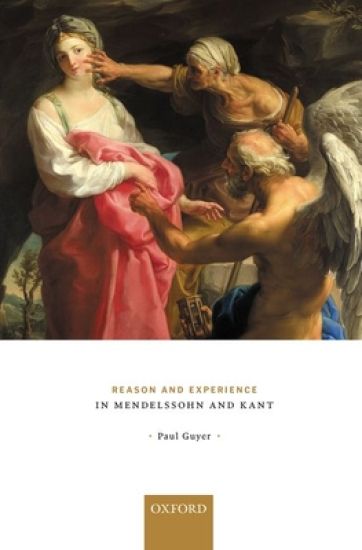
Reason and Experience in Mendelssohn and Kant

Reason and Experience in Mendelssohn and Kant

Paul Guyer

Oxford University Press
2025
nidottu
Reason and Experience in Mendelssohn and Kant provides the first in-depth examination of the lifelong intellectual relationship between two of the greatest figures of the European Enlightenment, Immanuel Kant (1724-1804) and Moses Mendelssohn (1729-86). Both were engaged in a common project of striking the right balance between rationalism and empiricism. They sometimes borrowed from one another, often disagreed with one another, and can usefully be compared even when they did not directly interact. Guyer examines a series of comparisons and contrasts: their arguments and conclusions on a range of metaphysical issues, including proofs of the existence of God, immortality, and idealism; their shared interests in aesthetics; and their path-breaking work on the "religion of reason" and the separation of church and state. Setting the work of both philosophers in historical context, Guyer shows that, where Kant sometimes provides deeper insight into the underlying structure of human thought, Mendelssohn is often the deeper student of the variety of human experience. This is evident above all in their treatments of aesthetics and religion: Mendelssohn recognizes more deeply than Kant the emotional impact of art, and while Kant imagines that organized religion will one day be superseded by pure morality, Mendelssohn argued that organized religion in all its varieties seems here to stay, and so toleration for religious variety is an inescapable requirement of human morality. Based on an exhaustive study of a wide range of texts, this study demonstrates the ongoing relevance of Kant and Mendelssohn to modern thought.
Kant's Impact on Moral Philosophy

Kant's Impact on Moral Philosophy

Paul Guyer

Oxford University Press
2024
sidottu
Immanuel Kant introduced a new paradigm into modern moral philosophy, first with his Groundwork for the Metaphysics of Morals in 1785, followed by his Critique of Practical Reason in 1788, Religion within the Boundaries of Mere Reason in 1793, and Metaphysics of Morals in 1798. For Kant, the fundamental goal of morality is not the realization of the greatest happiness for the greatest number, under some interpretation of that formula, but the realization of human autonomy governed by pure reason in the form of the "categorical imperative." Kant's ideal of autonomy is nothing less than the greatest possible freedom of each human being to set his or her own ends compatible with the equal freedom of every other human being to do the same. As Kant put it in lectures to his own students, freedom "not restrained under certain rules . . . is the most terrible thing there could ever be," but the condition "under which alone the greatest use of freedom is possible, and under which it can be self-consistent" is the "essential end of humankind" and the "inner worth of the world." Kant's work immediately drew the attention of both critics and supporters. While some argued that Kant's categorical imperative was an "empty formalism," that he left no room for happiness in his morality, that he could not explain responsibility for evil, and that he allowed no room for moral feeling in morally worthy motivation, others have found inspiration in his underlying idea that maximal but equal freedom is the "inner worth of the world." This book examines the response to Kant by other significant moral philosophers from Fichte, Schelling, and Hegel to through T.H. Green, Josiah Royce, and Friedrich Nietzsche, to John Rawls, Onora O'Neill, Christine Korsgaard, and Derek Parfit, with many stops along the way. The book is not a history of Kant scholarship, but an examination of Kant's impact on other major moral philosophers from his time to our own. While it attempts to do justice to the arguments of every philosopher discussed, the book argues that the most profound responses to Kant have been precisely those that have developed in their own way Kant's ideal of freedom as the inner worth of the world.
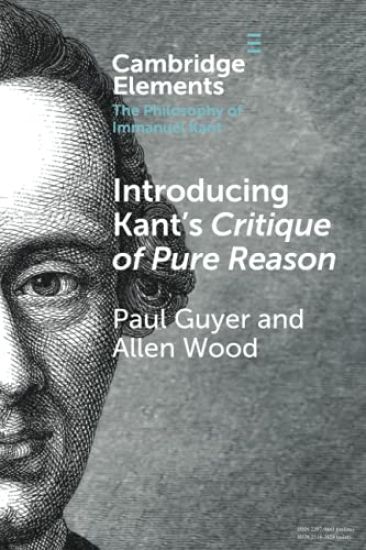
Introducing Kant's Critique of Pure Reason

Introducing Kant's Critique of Pure Reason

Paul Guyer; Allen Wood

Cambridge University Press
2021
pokkari
This Element surveys the place of the Critique of Pure Reason in Kant's overall philosophical project and describes and analyzes the main arguments of the work. It also surveys the developments in Kant's thought that led to the first critique, and provides an account of the genesis of the book during the 'silent decade' of its composition in the 1770s based on Kant's handwritten notes from the period.
Reason and Experience in Mendelssohn and Kant

Reason and Experience in Mendelssohn and Kant

Paul Guyer

Oxford University Press
2020
sidottu
Reason and Experience in Mendelssohn and Kant provides the first in-depth examination of the lifelong intellectual relationship between two of the greatest figures of the European Enlightenment, Immanuel Kant (1724-1804) and Moses Mendelssohn (1729-1786). Both were engaged in a common project of striking the right balance between rationalism and empiricism. They sometimes borrowed from one another, often disagreed with one another, and can usefully be compared even when they did not directly interact. Guyer examines a series of comparisons and contrasts: their arguments and conclusions on a range of metaphysical issues, including proofs of the existence of God, immortality, and idealism; their shared interests in aesthetics; and their path-breaking work on the "religion of reason" and the separation of church and state. Setting the work of both philosophers in historical context, Guyer shows that, where Kant sometimes provides deeper insight into the underlying structure of human thought, Mendelssohn is often the deeper student of the variety of human experience. This is evident above all in their treatments of aesthetics and religion: Mendelssohn recognizes more deeply than Kant the emotional impact of art, and while Kant imagines that organized religion will one day be superseded by pure morality, Mendelssohn argued that organized religion in all its varieties seems here to stay, and so toleration for religious variety is an inescapable requirement of human morality. Based on an exhaustive study of a wide range of texts, this study demonstrates the on-going relevance of Kant and Mendelssohn to modern thought.
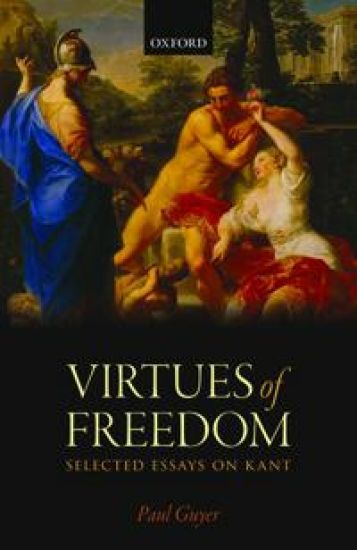
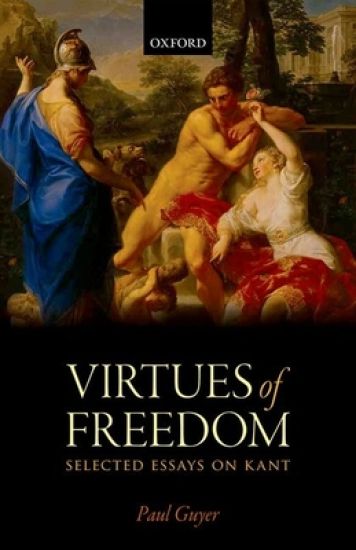
The Virtues of Freedom

The Virtues of Freedom

Paul Guyer

Oxford University Press
2016
nidottu
The essays collected in this volume by Paul Guyer, one of the world's foremost Kant scholars, explore Kant's attempt to develop a morality grounded on the intrinsic and unconditional value of the human freedom to set our own ends. When regulated by the principle that the freedom of all is equally valuable, the freedom to set our own ends -- what Kant calls "humanity" - becomes what he calls autonomy. These essays explore Kant's strategies for establishing the premise that freedom is the inner worth of the world or the essential end of humankind, as he says, and for deriving the specific duties that fundamental principle of morality generates in the empirical circumstances of human existence. The Virtues of Freedom further investigates Kant's attempts to prove that we are always free to live up to this moral ideal, that is, that we have free will no matter what, as well as his more successful explorations of the ways in which our natural tendencies to be moral -- dispositions to the feeling of respect and more specific feelings such as love and self-esteem -- can and must be cultivated and educated. Guyer finally examines the various models of human community that Kant develops from his premise that our associations must be based on the value of freedom for all. The contrasts but also similarities of Kant's moral philosophy to that of David Hume but many of his other predecessors and contemporaries, such as Stoics and Epicureans, Pufendorf and Wolff, Hutcheson, Kames, and Smith, are also explored.
The Virtues of Freedom

The Virtues of Freedom

Paul Guyer

Oxford University Press
2016
sidottu
The essays collected in this volume by Paul Guyer, one of the world's foremost Kant scholars, explore Kant's attempt to develop a morality grounded on the intrinsic and unconditional value of the human freedom to set our own ends. When regulated by the principle that the freedom of all is equally valuable, the freedom to set our own ends -- what Kant calls "humanity" - becomes what he calls autonomy. These essays explore Kant's strategies for establishing the premise that freedom is the inner worth of the world or the essential end of humankind, as he says, and for deriving the specific duties that fundamental principle of morality generates in the empirical circumstances of human existence. The Virtues of Freedom further investigates Kant's attempts to prove that we are always free to live up to this moral ideal, that is, that we have free will no matter what, as well as his more successful explorations of the ways in which our natural tendencies to be moral -- dispositions to the feeling of respect and more specific feelings such as love and self-esteem -- can and must be cultivated and educated. Guyer finally examines the various models of human community that Kant develops from his premise that our associations must be based on the value of freedom for all. The contrasts but also similarities of Kant's moral philosophy to that of David Hume but many of his other predecessors and contemporaries, such as Stoics and Epicureans, Pufendorf and Wolff, Hutcheson, Kames, and Smith, are also explored.
Kant

Kant

Paul Guyer

Routledge
2014
sidottu
In this updated edition of his outstanding introduction to Kant, Paul Guyer uses Kant’s central conception of autonomy as the key to his thought.Beginning with a helpful overview of Kant’s life and times, Guyer introduces Kant’s metaphysics and epistemology, carefully explaining his arguments about the nature of space, time and experience in his most influential but difficult work, The Critique of Pure Reason. He offers an explanation and critique of Kant’s famous theory of transcendental idealism and shows how much of Kant’s philosophy is independent of this controversial doctrine.He then examines Kant’s moral philosophy, his celebrated ‘categorical imperative’ and his theories of duty, freedom of will and political rights. This section of the work has been substantially revised to clarify the relation between Kant’s conceptions of "internal" and "external" freedom. In his treatments of Kant’s aesthetics and teleology, Guyer focuses on their relation to human freedom and happiness. Finally, he considers Kant’s view that the development of human autonomy is the only goal that we can conceive for both natural and human history.Including a chronology, glossary, chapter summaries and up-to-date further reading, Kant, second edition is an ideal introduction to this demanding yet pivotal figure in the history of philosophy, and essential reading for all students of philosophy.
Kant

Kant

Paul Guyer

Routledge
2014
nidottu
In this updated edition of his outstanding introduction to Kant, Paul Guyer uses Kant’s central conception of autonomy as the key to his thought.Beginning with a helpful overview of Kant’s life and times, Guyer introduces Kant’s metaphysics and epistemology, carefully explaining his arguments about the nature of space, time and experience in his most influential but difficult work, The Critique of Pure Reason. He offers an explanation and critique of Kant’s famous theory of transcendental idealism and shows how much of Kant’s philosophy is independent of this controversial doctrine.He then examines Kant’s moral philosophy, his celebrated ‘categorical imperative’ and his theories of duty, freedom of will and political rights. This section of the work has been substantially revised to clarify the relation between Kant’s conceptions of "internal" and "external" freedom. In his treatments of Kant’s aesthetics and teleology, Guyer focuses on their relation to human freedom and happiness. Finally, he considers Kant’s view that the development of human autonomy is the only goal that we can conceive for both natural and human history.Including a chronology, glossary, chapter summaries and up-to-date further reading, Kant, second edition is an ideal introduction to this demanding yet pivotal figure in the history of philosophy, and essential reading for all students of philosophy.
Kant's System of Nature and Freedom

Kant's System of Nature and Freedom

Paul Guyer

Clarendon Press
2005
nidottu
The concept of systematicity is central to Immanuel Kant's conception of scientific knowledge and to his practical philosophy. But Kant also held that we must be able to unite the separate systems of nature and freedom into a single system: on the one hand, morality itself requires that we be able to see its commands and goals as realizable within nature, while on the other hand our experience of nature itself leads us to see it as a system with the goal of human moral development. The essays in this volume, including two published here for the first time, explore various aspects of Kant's conception of the system of nature, the system of freedom, and the system of nature and freedom. The essays in the first part explore the systematicity of concepts and laws as the ultimate goal of natural science, consider the implications of Kant's account of our experience of organisms for the goal of the unity of science, and examine Kant's attempts to prove that the existence of an ether is a necessary condition for a physical system of nature. The essays in the second part explore Kant's view that morality requires a systematic union of persons as ends in themselves and of the ends that persons set for themselves, and examine the system of duties and obligations necessary to realize such a systematic union of persons and their ends. These essays thus examine both the general foundations of Kant's moral philosophy and his final account of the duties of right or justice and of ethics or virtue in his late work, the Metaphysics of Morals. The essays in the third part examine Kant's attempt, in the last of his three great critiques, the Critique of the Power of Judgment., to unify the systems of nature and freedom through a radical transformation of traditional teleology as a theory of the creation of organic nature into an account of our experience of organic nature and of nature as a whole.
Kant's System of Nature and Freedom

Kant's System of Nature and Freedom

Paul Guyer

Clarendon Press
2005
sidottu
Paul Guyer is acknowledged as one of the world's foremost Kant specialists, and he collects here some of his most celebrated essays from the past decade and a half. The governing theme of the volume is the role of systematicity in Kant's theoretical and practical philosophy. Featuring twobrand-new papers and an introduction to orient the reader, Kant's System of Nature and Freedom will be an essential purchase for anyone working on the history of philosophy and related areas of ethics, philosophy of science, and metaphysics.
Kant and the Claims of Knowledge

Kant and the Claims of Knowledge

Paul Guyer

Cambridge University Press
1987
pokkari
This book offers a radically new account of the development and structure of the central arguments of Kant’s Critique of Pure Reason: the defense of the objective validity of such categories as substance, causation, and independent existence. Paul Guyer makes far more extensive use than any other commentator of historical materials from the years leading up to the publication of the Critique and surrounding its revision, and he shows that the work which has come down to us is the result of some striking and only partially resolved theoretical tensions. Kant had originally intended to demonstrate the validity of the categories by exploiting what he called ‘analogies of appearance’ between the structure of self-knowledge and our knowledge of objects. The idea of a separate ‘transcendental deduction’, independent from the analysis of the necessary conditions of empirical judgements, arose only shortly before publication of the Critique in 1781, and distorted much of Kant’s original inspiration. Part of what led Kant to present this deduction separately was his invention of a new pattern of argument - very different from the ‘transcendental arguments’ attributed by recent interpreters to Kant - depending on initial claims to necessary truth.
Selected Essays on Kant I: Volume 1

Selected Essays on Kant I: Volume 1

Paul Guyer

Cambridge University Press
2026
sidottu
Paul Guyer, winner of the 2024 International Kant Prize, is one of the world's leading Kant scholars. This volume collects twelve of his essays on Kant's philosophy of Right, his political-legal philosophy, published since 2009. The essays definitely establish the foundation of Kant's philosophy of Right in his moral philosophy, and demonstrate the continuing need for motivation by respect for the moral law on the part of both those in positions of power and ordinary citizens in any government that aspires to the ideal of justice. The volume examines Kant's contribution to specific issues such as the separation of powers in a constitutional democracy and the separation of church and state, and concludes with two essays showing how John Rawls's well-known theory of justice is grounded on Kant's moral philosophy but could have benefited by attention to Kant's own doctrine of Right.
Selected Essays on Kant I: Volume 1

Selected Essays on Kant I: Volume 1

Paul Guyer

Cambridge University Press
2026
pokkari
Paul Guyer, winner of the 2024 International Kant Prize, is one of the world's leading Kant scholars. This volume collects twelve of his essays on Kant's philosophy of Right, his political-legal philosophy, published since 2009. The essays definitely establish the foundation of Kant's philosophy of Right in his moral philosophy, and demonstrate the continuing need for motivation by respect for the moral law on the part of both those in positions of power and ordinary citizens in any government that aspires to the ideal of justice. The volume examines Kant's contribution to specific issues such as the separation of powers in a constitutional democracy and the separation of church and state, and concludes with two essays showing how John Rawls's well-known theory of justice is grounded on Kant's moral philosophy but could have benefited by attention to Kant's own doctrine of Right.
Selected Essays on Kant II: Volume 2

Selected Essays on Kant II: Volume 2

Paul Guyer

Cambridge University Press
2026
sidottu
Paul Guyer, winner of the 2024 International Kant Prize, is one of the world's leading Kant scholars. This volume collects ten of his essays on Kant's critical approach to metaphysics and epistemology that have been published since his path-breaking Kant and the Claims of Knowledge (Cambridge 1987). These essays resolve long-running debates about the meaning of Kant's doctrine of transcendental idealism while criticizing Kant's fundamental argument for the position; show what is nevertheless enduringly valuable in Kant's transcendental method; and situate Kant's work in theoretical philosophy in his teleological approach to philosophy in general. The essays clarify Kant's inheritance from and disagreements with two of his most important predecessors, John Locke and Gottfried Wilhelm Leibniz, and analyse the difference between Kant's philosophical method and that of his most influential modern interpreter, Peter Strawson.
Selected Essays on Kant II: Volume 2

Selected Essays on Kant II: Volume 2

Paul Guyer

Cambridge University Press
2026
nidottu
Paul Guyer, winner of the 2024 International Kant Prize, is one of the world's leading Kant scholars. This volume collects ten of his essays on Kant's critical approach to metaphysics and epistemology that have been published since his path-breaking Kant and the Claims of Knowledge (Cambridge 1987). These essays resolve long-running debates about the meaning of Kant's doctrine of transcendental idealism while criticizing Kant's fundamental argument for the position; show what is nevertheless enduringly valuable in Kant's transcendental method; and situate Kant's work in theoretical philosophy in his teleological approach to philosophy in general. The essays clarify Kant's inheritance from and disagreements with two of his most important predecessors, John Locke and Gottfried Wilhelm Leibniz, and analyse the difference between Kant's philosophical method and that of his most influential modern interpreter, Peter Strawson.
The Moral Foundation of Right

The Moral Foundation of Right

Paul Guyer

Cambridge University Press
2025
pokkari
Kant defined 'Right' (Recht) as the condition that obtains among a population of physically embodied persons capable of setting their own ends who live on a finite surface and therefore cannot avoid interaction with each other if each is as free to set their own ends as is consistent with the freedom of all to do the same. He regarded this rational idea, heir to the traditional idea of 'natural Right, as the test of the legitimacy of the laws of any actual state, or 'positive Right.' He clearly considered Right to be part of morality as a whole, namely the coercively enforceable part, as contrasted to Ethics, which is the non-coercively enforceable part of morality. Some have questioned whether Right is part of morality, but this Element shows how Kant's "Universal Principle of Right" follows straightforwardly from the foundational idea of Kant's moral philosophy as a whole.
The Moral Foundation of Right

The Moral Foundation of Right

Paul Guyer

Cambridge University Press
2025
sidottu
Kant defined 'Right' (Recht) as the condition that obtains among a population of physically embodied persons capable of setting their own ends who live on a finite surface and therefore cannot avoid interaction with each other if each is as free to set their own ends as is consistent with the freedom of all to do the same. He regarded this rational idea, heir to the traditional idea of 'natural Right, as the test of the legitimacy of the laws of any actual state, or 'positive Right.' He clearly considered Right to be part of morality as a whole, namely the coercively enforceable part, as contrasted to Ethics, which is the non-coercively enforceable part of morality. Some have questioned whether Right is part of morality, but this Element shows how Kant's "Universal Principle of Right" follows straightforwardly from the foundational idea of Kant's moral philosophy as a whole.