Kirjojen hintavertailu. Mukana 12 390 323 kirjaa ja 12 kauppaa.

Kirjailija

Paul Hurley

Kirjat ja teokset yhdessä paikassa: 41 kirjaa, julkaisuja vuosilta 2005-2026, suosituimpien joukossa Brewing in Cheshire. Vertaile teosten hintoja ja tarkista saatavuus suomalaisista kirjakaupoista.

41 kirjaa

Kirjojen julkaisuhaarukka 2005-2026.

Northwich and Around at Work

Northwich and Around at Work

Paul Hurley; Rose Hurley

AMBERLEY PUBLISHING
2026
nidottu
The town of Northwich in Cheshire has been known for its salt production for centuries. The salt mines beneath the town were exploited by the Romans through to the modern era and in the vast excavations have caused major subsidence in Northwich. By the nineteenth century Northwich was also a centre of the chemical industry in the northwest of England. Brunner Mond started the production of soda ash in 1874 at Winnington and the company later became ICI, building a huge industrial railway network in the area and growing into one of the largest manufacturers in the UK. Among the other industries in Northwich were steel works and shipyards. W.J. Yarwoods & Sons Ltd built over 1,000 vessels including small warships, one under the direction of Lawrence of Arabia, and Isaac Pimblott & Sons also built small craft including canal vessels, both closing in the 1960s/1970s. The town also had steel works and many other industries. Northwich and Around at Work explores the working life of this town and surrounding area in Cheshire and its people and the industries that have characterised it through the ages. The book will appeal to all those with an interest in the history of Northwich.
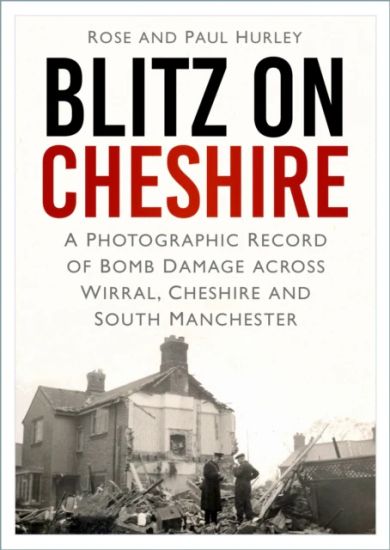
Blitz on Cheshire

Blitz on Cheshire

Paul Hurley; Rose Hurley

THE HISTORY PRESS LTD
2026
nidottu
The cities of Britain suffered during the Blitz, but what about the counties? This book presents a selection of photographs showing the result of bombing attacks on Cheshire as the county was back the 1940s (alarger area including such towns as Stockport, Birkenhead and parts of Greater Manchester, as covered by the Cheshire Constabulary.) This rare collection of photographs were taken by a Cheshire police photographer, and offer a fascinating insight into the damage sustained in this area during this time. In many instances, German bombs were randomly dropped when bombers were returning from the major cities. Some were intentionally dropped on sites of heavy industry, such as Crewe Railway Works. Chester City escaped most of the heavy bombing, possibly because the so-called German Baedeker raids were eventually discontinued. However, as shown in this book, many of Cheshire's towns and villages did not escape, as painfully evidenced in these images.
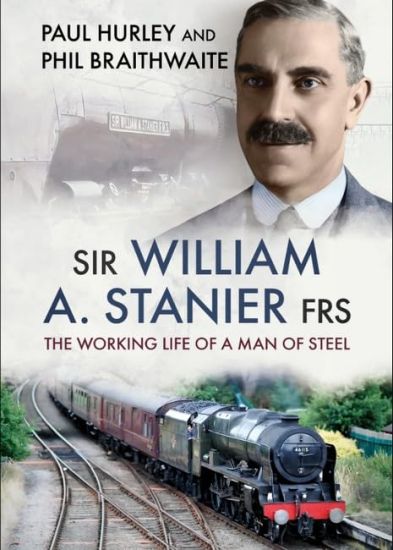
Sir William A. Stanier FRS

Sir William A. Stanier FRS

Paul Hurley; Phil Braithwaite

Fonthill Media Ltd
2025
nidottu
Swindon-born William A. Stanier joined Great Western Railway as a fifteen-year-old trainee and began rising swiftly through the ranks. In 1904, he was appointed assistant to the divisional locomotive superintendent in London, and by 1931 he was chief mechanical engineer of the London Midland & Scottish Railway. The LMS locomotives were in a poor state, with some dating back to the 1800s, and Stanier was charged with updating the company with new and more powerful locomotives. His iconic designs in steam and diesel dominated British railways from the 1930s to the end of steam in 1968. During the Second World War, Stanier was seconded to the Ministry of Supply as a consultant, and in 1943 he was knighted and appointed a fellow of the Royal Society. He retired in 1944. 'Sir William A. Stanier FRS' is a photographic celebration of his extraordinary life in rail.
Northwich Reflections

Northwich Reflections

Paul Hurley

AMBERLEY PUBLISHING
2025
nidottu
During Roman times, Northwich was known as ‘Salinae’ or the ‘salt works’, and later by the Celtic name ‘Hellath Dhu’, or the black salt town by the Ancient Britons. The Cheshire town grew up at the confluence of the River Dane and River Weaver and lies on underground salt beds, which were exploited through the Middle Ages to the twentieth century. Over the years, mines were dug and later abandoned. Two other towns had an abundance of salt beneath the ground, and Northwich became known as one of the three Wiches or Wyches of Cheshire: Northwich, Nantwich and, in between the two, Middlewich. The use of water to extract the salt in the nineteenth century led to extensive subsidence in the area which has been stabilised as the town has been redeveloped in recent years. As the town has grown, it has absorbed nearby settlements and is now a major commercial hub in the centre of the Cheshire Plain, as well as retaining its historic market town centre in the heart of Northwich. Northwich Reflections features an exciting collection of historic and modern pictures that are individually merged to reveal how the area has changed over the decades. Each of the 180 pictures in this book combines a recent colour view of Northwich with the matching sepia archive scene. Through the split-image effect, readers can see how streets, buildings and everyday life have transformed with the passing of time. This fascinating visual chronicle ingeniously reflects past and present glimpses of Northwich and will be of interest to residents, visitors, local historians and all those with links to the area.
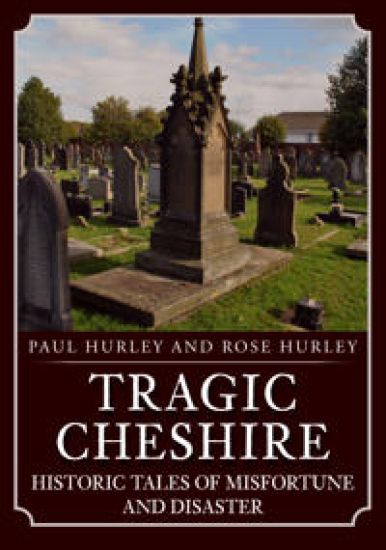
Tragic Cheshire

Tragic Cheshire

Paul Hurley; Rose Hurley

AMBERLEY PUBLISHING
2024
nidottu
This book covers tragic happenings within the boundaries of the historic county of Cheshire from the eighteenth to the twentieth century. The tragedies cover a wide range of human and natural disasters, from accidents in carts, cars, trains and aircraft to the devastating effects of fire and floods. Some of the misfortunes that individuals suffered were caused by others, including their own family members, while others were industrial accidents or sheer bad luck. Crime also intruded on everyday life in this period, and others suffered through mental illness and self-harm. This collection of tragic stories of misfortune and disaster gives a vivid insight into life in Cheshire in the eighteenth, nineteenth and twentieth centuries. This book will fascinate anyone who wants to know more about the unfortunate history of this area in the north-west of England.
Against the Tyranny of Outcomes

Against the Tyranny of Outcomes

Paul Hurley

Oxford University Press
2024
sidottu
Outcomes tyrannize over prevailing accounts of ethics, actions, reasons, attitudes, and social practices. The right action promotes the best outcome, the end of every action is an outcome to be promoted, reasons to act are reasons to promote outcomes, and preferences and desires rationalize actions that aim at the outcome of realizing their contents. This book canvasses two sets of seemingly powerful arguments, the first that outcome-centered ethics cannot be wrong, the second that it cannot be right. It proceeds to undermine the arguments that outcome-centered ethics cannot be wrong, in the process providing additional support for the arguments that it cannot be right. The tyranny of outcomes in ethics is given its appearance of legitimacy by ethical arguments that trade on conflations obscured from view by appeal to non-ethical accounts that are in the grips of these very same conflations. Rooting out the mistaken grounding for outcome-centered ethics involves rooting out the outcome-centered accounts of value, attitudes, reasons, and actions upon which the case for outcome-centered ethics depends, along with the considerations that have been offered to support them. The ethical and intuitive arguments for outcome-centered ethics are implausible, the outcome-centered accounts of attitudes, reasons and actions that form the cornerstone of the non-ethical argument shoring up outcome-centered ethics are implausible, and the considerations offered to bolster such outcome-centered accounts either themselves turn on the same equivocations that undermine the ethical arguments, or depend upon highly controversial positions in metaphysics and the theory of action. The result is a comprehensive argument for rejecting these outcome-centered accounts, stepping outside of this toxic outcome-centered circle. The conclusion points to only a few of the many significant implications of this comprehensive rejection of the tyranny of outcomes, with particular focus upon our democratic and legal practices. It demonstrates that outcome-centered accounts lead agents away from the quest for good reasons of the right kind--for integrated and authentic agency, and towards appeal to the wrong kinds of reasons and to bad reasons of the right kind.
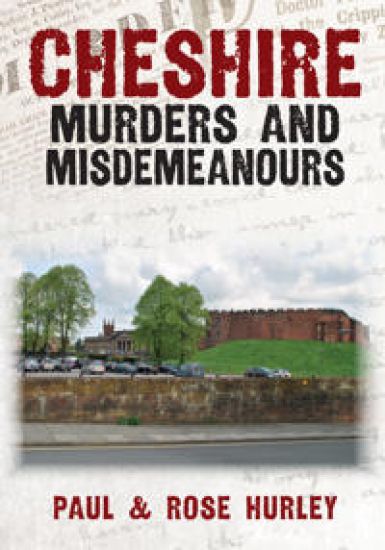
Cheshire Murders and Misdemeanours

Cheshire Murders and Misdemeanours

Paul Hurley; Rose Hurley

AMBERLEY PUBLISHING
2023
nidottu
In the nineteenth and early twentieth centuries Cheshire was a thriving part of the north-west of England. Bordered by Liverpool and Manchester to the north, much of the county was rural and agricultural, centred on the historic county city of Chester, the market towns of Macclesfield, Winsford and Northwich and also the industrial towns of Warrington, Crewe, Widnes, Runcorn and Ellesmere Port. It was a period of great social change as people from all walks of life moved with their families in search of work. Deprivation and poverty could often be found cheek by jowl with more affluent sections of society, and crime, as always, knew no boundaries. The stories were often chronicled in detail in local press at the time and in this book authors Paul and Rose Hurley have delved into the historical records to reveal the dark side of life of everyday people of Cheshire, which could turn to murder and death by execution. This collection of true-life crime stories gives a vivid insight into life in Cheshire in the nineteenth and early twentieth centuries. This book will fascinate anyone with an interest in the history of crime, as well as those who want to know more about the history of this area of the North West.
Remembering the Big Four

Remembering the Big Four

Paul Hurley; Jeremy Suter

THE HISTORY PRESS LTD
2022
nidottu
The railways of Britain were battered and bruised after the First World War. Over 20,000 miles of track were owned and operated by 120 companies, and the government decided the country could no longer support so many inefficient, diverse and, in some cases, overlapping operations. To stem the mounting losses and regulate the system, the 1921 Railways Act, also known as the Grouping Act, became law on 1 January 1923. Just four large companies remained, nicknamed the ‘Big Four’: the LMS (London, Midland and Scottish Railway); the LNER (London and North Eastern Railway); the SR (Southern Railway); and the GWR (Great Western Railway). Remembering the Big Four looks back at the Big Four railway companies, 100 years after they were drawn together. Complete with contemporary images of the locomotives inherited and built by each company, it is essential reading for any railway enthusiast.
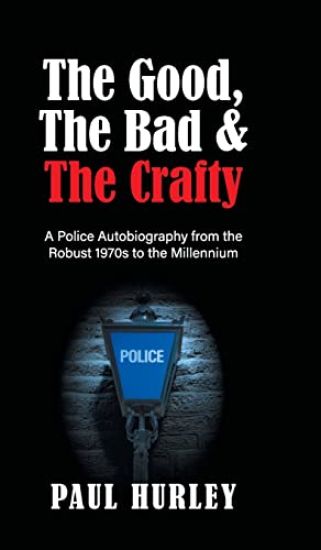
The Good, The Bad and The Crafty

The Good, The Bad and The Crafty

Paul Hurley

New Generation Publishing
2022
sidottu
After serving in the Royal Navy, Paul joined the Cheshire Police, initial training, uniform, and plain clothes duties followed by the Divisional CID. Stories from the period, which include CID politics This was followed by secondment to the No 1 Regional Crime Squad (RCS), advanced driver, and surveillance training. Undercover work on the biggest police drugs operation in the Northwest at the time.Returning to uniform duties as a sergeant at Macclesfield and Wilmslow for 15 months, before another secondment to the RCS as a detective sergeant. Again, he dealt with serious crimes, including murders. The day before the Berlin Wall came down a young girl was kidnapped from a school playing field gaining national publicity. He worked on this job alone and recovered the little girl.Returning to leafy Cheshire, well, Warrington He set up Operation Granite, the most important and successful operation of its kind at the time, looking into child abuse at care homes.More horrendous paedophile and murder arrests. All is written with a strong sense of cynicism and humour, enabling the story to flow comfortably from humorous anecdotes to heart-rending sadness. All involving the good, the bad, and the crafty.
The Good, The Bad and The Crafty

The Good, The Bad and The Crafty

Paul Hurley

New Generation Publishing
2022
pokkari
After serving in the Royal Navy, Paul joined the Cheshire Police, initial training, uniform, and plain clothes duties followed by the Divisional CID. Stories from the period, which include CID politics This was followed by secondment to the No 1 Regional Crime Squad (RCS), advanced driver, and surveillance training. Undercover work on the biggest police drugs operation in the Northwest at the time.Returning to uniform duties as a sergeant at Macclesfield and Wilmslow for 15 months, before another secondment to the RCS as a detective sergeant. Again, he dealt with serious crimes, including murders. The day before the Berlin Wall came down a young girl was kidnapped from a school playing field gaining national publicity. He worked on this job alone and recovered the little girl.Returning to leafy Cheshire, well, Warrington He set up Operation Granite, the most important and successful operation of its kind at the time, looking into child abuse at care homes.More horrendous paedophile and murder arrests. All is written with a strong sense of cynicism and humour, enabling the story to flow comfortably from humorous anecdotes to heart-rending sadness. All involving the good, the bad, and the crafty.
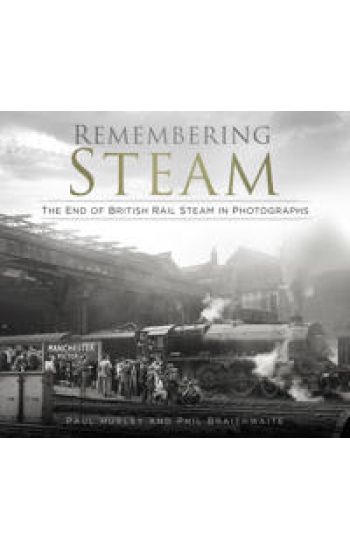
Remembering Steam

Remembering Steam

Paul Hurley; Phil Braithwaite

The History Press Ltd
2021
nidottu
Over fifty years ago, main line steam in Britain ceased to exist: the last ‘official’ date was 11 August 1968. At the time, British Railways’ plan was that this was to be the end of steam traction – although a special dispensation was given for Britannia Class 4-6-2 No. 70013 Oliver Cromwell to travel under its own steam into preservation on the 12th and 13th of that month. We now know that this was not quite the end; that, in fact, steam locomotives would eventually return to the main lines on highly popular ‘specials’.New in paperback, packed with over 200 rare photographs, Remembering Steam takes a look back at the days and years that led up to the end of steam on Britain’s railways.
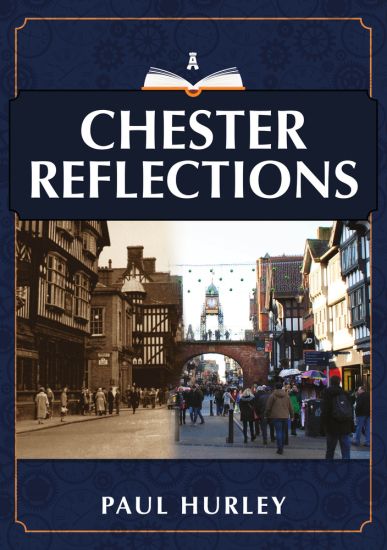
Chester Reflections

Chester Reflections

Paul Hurley

Amberley Publishing
2021
nidottu
From its foundation as a Roman fort, Chester has played an important role in the history of north-west England. Close to the Welsh border, the city is still surrounded by an almost complete circuit of city walls, enclosing the cathedral, castle and many other ancient buildings, including the famous Rows of black and white half-timbered buildings. Chester continued its prominence into the industrial age, with the arrival first of the canal system then the railways. Today, the city of Chester has extended with new housing well beyond the city walls and redevelopments within the city, but still attracts many to its historic centre, its racecourse beside the River Dee and lively cultural scene. Chester Reflections features an exciting collection of historic and modern pictures that are individually merged to reveal how the area has changed over the decades. Each of the 180 pictures in this book combines a recent colour view of Chester with the matching sepia archive scene. Through the split-image effect, readers can see how streets, buildings, the docks and everyday life have transformed with the passing of time. Local author Paul Hurley presents this fascinating visual chronicle that ingeniously reflects past and present glimpses of Chester. This book will be of interest to residents, visitors, local historians and all those with links to the area.
The Changing Railways of Britain

The Changing Railways of Britain

Paul Hurley; Phil Braithwaite

The History Press Ltd
2019
sidottu
After steam finished on the main line on 11 August 1968, something had to take its place; something modern, less difficult to maintain, and that was a natural progression. ‘Modernisation’ was the word. British Railways – and later privatised companies – developed other methods of providing power. In the follow-up to Remembering Steam, Paul Hurley and Phil Braithwaite take the reader back down memory lane, exploring traction from the very first locomotive to the latest colourful multiple units, and of course the preserved locomotives, lovingly restored to their former glory and working heritage lines across the country. With over 200 never-before-seen photographs, paired with fond and nostalgic captions, The Changing Railways of Britain is a book not to be missed.
Historic England: Cheshire

Historic England: Cheshire

Paul Hurley

Amberley Publishing
2019
nidottu
This illustrated history portrays one of England’s finest counties. It provides a nostalgic look at Cheshire’s past and highlights the special character of some of its most important historic sites. The photographs are taken from the Historic England Archive, a unique collection of over 12 million photographs, drawings, plans and documents covering England’s archaeology, architecture, social and local history. Pictures date from the earliest days of photography to the present and cover subjects from Bronze Age burials and medieval churches to cinemas and seaside resorts. The county of Cheshire was for centuries a strategically important region of north-west England on the border with Wales, heavily fortified by the Romans around the city of Chester, and part of Anglo-Saxon Mercia, before becoming a County Palatine with independent powers under the Normans. Although much of the county is still rural, the historic city of Chester, with its Roman remains, ancient cathedral and near-complete medieval walls, draws many visitors. The black and white half-timbered buildings that are a feature of Cheshire can be found throughout the county. Industry has also played an important role in the history of Cheshire – notably at Crewe, home of railways and Rolls-Royce for many years, Ellesmere Port on the Manchester Ship Canal and Runcorn on the River Mersey. This book will help you discover the rich history of this county.
Britain Invaded: A nightmare story of love and evil in Nazi Britain
The novel comprises well researched fact and plausible fi ction, carefully interwoven to form an alternative and frightening history.It is a military tale, not just a war story, it is a thriller and love story based on the premise that in 1940 Germany invaded Britain It is written factually until the point where the allies reach Dunkirk. The cream of the allied armies are then trapped and imprisoned The Germans invade Britain successfully.In the summer of 1940, Churchill stood virtually alone in his refusal to surrender whilst facing almost certain defeat.In reality, if Britain had surrendered in that summer of 1940 the European war would have ended. Quite possibly no Pearl Harbour and no Italian or further Russian involvement, hostilities would have ceased worldwide. But what of the Holocaust, would that have gone ahead? The evidence suggests that under Hitler and the Nazis it would The book is thought provoking and fi ctional. The story is an unambiguous alternative history and the book is anti-Nazi but most certainly not anti-German.CV... Paul Hurley is a freelance writer and author and is a member of the Society of Authors. He has newspaper and magazine credits, two newspaper columns and has also written 29 non-fi ction books for Amberley Publishers and The History Press. Paul lives in Winsford Cheshire with his wife Rose. He has two sons and two daughters.Contact www.paul-hurley.co.ukEmail: [email protected]
Britain Invaded: A nightmare story of love and evil in Nazi Britain
The novel comprises well researched fact and plausible action, carefully interwoven to form an alternative and frightening history. It is a military tale, not just a war story, it is a thriller and love story based on the premise that in 1940 Germany invaded Britain It is written factually until the point where the allies reach Dunkirk. The cream of the allied armies are then trapped and imprisoned The Germans invade Britain successfully. In the summer of 1940, Churchill stoo
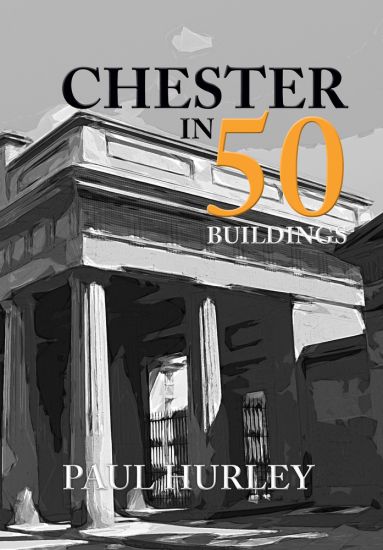
Chester in 50 Buildings

Chester in 50 Buildings

Paul Hurley

Amberley Publishing
2017
nidottu
From its earliest days as a major Roman fortress to its current status as one of Britain’s most visited tourist destinations, Chester has a proud and distinctive identity. Its extraordinary history is embodied in the rich architecture that has shaped this jewel of the North West, famed for its perfectly preserved city walls. Chester in 50 Buildings explores the history of this much-loved city through a selection of its greatest architectural treasures. From the unique Chester Rows to the magnificent Gothic Revival Town Hall, this study celebrates Chester’s architectural heritage in a new and accessible way. Local author and historian Paul Hurley guides the reader on a tour of the city’s historic buildings and modern architectural projects.
Knutsford History Tour

Knutsford History Tour

Paul Hurley

Amberley Publishing
2017
nidottu
The origins of the name Knutsford have been disputed by historians but there is an ancient and popular explanation. After one of his victories, King Canute crossed the brook known as Birkin and the village became known as ‘Canute’s ford’, later to be changed to Knutsford. The Domesday Book gives some credence to this by calling it ‘Cunetesford’ (Canute’s Ford). Canute was the king of England from 1016 to 1035 and his name in Old Norse was Knútr. Over the years, Knutsford became popular and affluent with the many wealthy families who settled in the vicinity. In the late 1800s Richard Harding Watt arrived with money and a love of Italian architecture; he used his wealth to build the Gaskell Memorial Tower, in honour of the town’s famous author Elizabeth Cleghorn Gaskell, along with the Kings Coffee House next to it and a number of Italianesque buildings. Join Paul Hurley as he guides us through Knutsford’s streets and alleyways, showing how its famous landmarks used to look and how they’ve changed over the years, as well as exploring lesser-known gems and hidden corners. With the help of a handy location map, readers are invited to follow along and discover for themselves the changing face of Knutsford.