Kirjailija
Paul Ricoeur
Kirjat ja teokset yhdessä paikassa: 64 kirjaa, julkaisuja vuosilta 1976-2026, suosituimpien joukossa Reflections on the Just. Vertaile teosten hintoja ja tarkista saatavuus suomalaisista kirjakaupoista.
Mukana myös kirjoitusasut: Paul Ricœur
64 kirjaa
Kirjojen julkaisuhaarukka 1976-2026.
Now in paperback, the definitive English translation of Ricoeur's second collection of essays (after The Just) about justice and law. At the time of his death in 2005, French philosopher Paul Ricoeur was regarded as one of the great thinkers of his generation. In more than half a century of writing about the essential questions of human life, Ricoeur’s thought encompassed a vast range of wisdom and experience, and he made landmark contributions that would go on to influence later scholars in such areas as phenomenology, hermeneutics, structuralism, and theology. Toward the end of his life, Ricoeur began to focus directly on ethical questions that he feared had been overshadowed by his other work; the result was a two-volume collection of essays on justice and the law. The University of Chicago Press published the English translation of the first volume, The Just, to great acclaim in 2000. Now this translation of the second volume, Reflections on the Just, completes the set and makes available to readers the whole of Ricoeur’s meditations on the concept. Consisting of fifteen thematically organized essays, Reflections on the Just continues and expands on the work Ricoeur began with his “little ethics” in Oneself as Another and The Just. In the preface, he considers what revisions he would make were he to start over and how that is reflected in these essays. The opening part brings phenomenology to bear on ethics; the second group of essays comprises shorter, occasional pieces considering the concept of justice in the works of other philosophers, including Max Weber and Charles Taylor. The final part turns to the specific domains of medicine and the law, examining how concepts of right and justice operate in those realms. Cogent, deeply considered, and fully engaged with the realities of the contemporary world, Reflections on the Just is an essential work for understanding the development of Ricoeur’s thought in his final years.
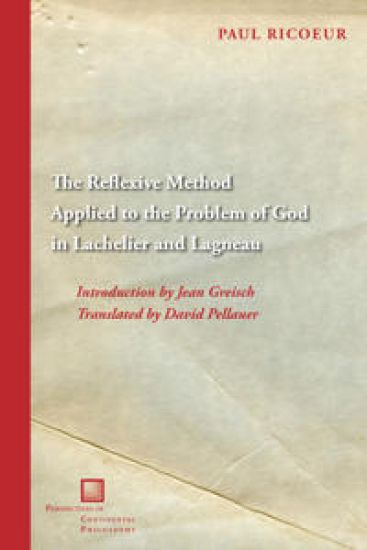
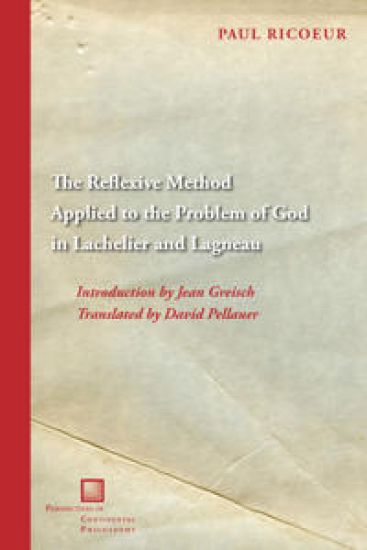
The Reflexive Method Applied to the Problem of God in Lachelier and Lagneau
Paul Ricœur
FORDHAM UNIVERSITY PRESS
2025
sidottu
An engaging and thought-provoking translation of Paul Ricoeur's earliest work that is essential for understanding his philosophical development The Reflexive Method Applied to the Problem of God in Lachelier and Lagneau, now held in the Ricoeur Archive in Paris, was a qualifying thesis Ricoeur wrote at the age of twenty-one when he was just beginning his advanced university studies. In it he examines the use of the reflexive method used by two important French philosophers from the nineteenth century, Jules Lachelier and Jules Lagneau. They both sought to develop an "integral metaphysics" that recognizes God as the principle underlying pure, impersonal thought and practical reason, and that requires a kind of philosophical faith. In his conclusion, Ricoeur criticizes their doctrine of God and philosophy of immanence for not being able to deal with the question of transcendence and for its failure to address concrete human existence yet concedes that it may be seen as a first truce in "the internecine war" between faith and reason. Despite this criticism, Ricoeur later maintained that his own philosophy does stand "in the line of a reflexive philosophy" while remaining "within the sphere of Husserlian phenomenology" and striving to be "a hermeneutical variation of this phenomenology." He also continued to address the question of faith and reason in works like Figuring the Sacred and (with André LaCocque) Thinking Biblically, as well as in many other essays. The Reflexive Method Applied to the Problem of God in Lachelier and Lagneau is necessary reading for anyone doing serious work on and with Ricoeur's philosophy.
The Reflexive Method Applied to the Problem of God in Lachelier and Lagneau
Paul Ricœur
FORDHAM UNIVERSITY PRESS
2025
pokkari
An engaging and thought-provoking translation of Paul Ricoeur's earliest work that is essential for understanding his philosophical development The Reflexive Method Applied to the Problem of God in Lachelier and Lagneau, now held in the Ricoeur Archive in Paris, was a qualifying thesis Ricoeur wrote at the age of twenty-one when he was just beginning his advanced university studies. In it he examines the use of the reflexive method used by two important French philosophers from the nineteenth century, Jules Lachelier and Jules Lagneau. They both sought to develop an "integral metaphysics" that recognizes God as the principle underlying pure, impersonal thought and practical reason, and that requires a kind of philosophical faith. In his conclusion, Ricoeur criticizes their doctrine of God and philosophy of immanence for not being able to deal with the question of transcendence and for its failure to address concrete human existence yet concedes that it may be seen as a first truce in "the internecine war" between faith and reason. Despite this criticism, Ricoeur later maintained that his own philosophy does stand "in the line of a reflexive philosophy" while remaining "within the sphere of Husserlian phenomenology" and striving to be "a hermeneutical variation of this phenomenology." He also continued to address the question of faith and reason in works like Figuring the Sacred and (with André LaCocque) Thinking Biblically, as well as in many other essays. The Reflexive Method Applied to the Problem of God in Lachelier and Lagneau is necessary reading for anyone doing serious work on and with Ricoeur's philosophy.
Since the last decade of the twentieth century, there has been talk of a return of religion in Western societies – the very societies that were regarded by many people as undergoing an irreversible process of secularization. Paul Ricoeur’s philosophical writings on religion are contemporaneous with this movement of secularization and return, while at he same time his work complicates the schema. In Ricoeur’s view, religion is part of the universe of convictions in which subjects live concretely, convictions that deserve to be heard and placed under the lights of argumentation and conviction. For Ricoeur, religion is the other of philosophy, the non-philosophical par excellence. He did not write a systematic philosophy of religion, but he wrote extensively about religion as a meeting place for language and conviction. The essays in this volume, written between 1953 and 2003, attest to the coherence, richness and variety of Ricoeur’s secular and philosophical approach towards religion. They range over the problem of guilt, the legitimacy or otherwise of Freudian, Marxist and other critiques of religion, the relation between experience and language in religious discourse, the study of biblical hermeneutics, the nature of religious belief, and reflections on sacrifice, gifts and debt. Ricoeur draws on religion to think, while not neglecting the analysis of religion itself. These texts by one of the leading philosophers of the twentieth century will be of interest to students and scholars of philosophy and theology and to anyone concerned with the enduring role of religion in the modern world.
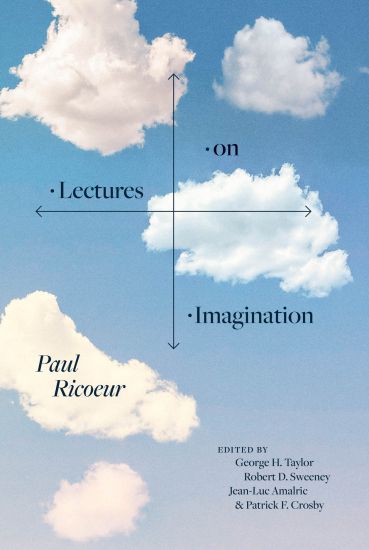
Ricoeur’s theory of productive imagination in previously unpublished lectures. The eminent philosopher Paul Ricoeur was devoted to the imagination. These previously unpublished lectures offer Ricoeur’s most significant and sustained reflections on creativity as he builds a new theory of imagination through close examination, moving from Aristotle, Pascal, Spinoza, Hume, and Kant to Ryle, Price, Wittgenstein, Husserl, and Sartre. These thinkers, he contends, underestimate humanity’s creative capacity. While the Western tradition generally views imagination as derived from the reproductive example of the image, Ricoeur develops a theory about the mind’s power to produce new realities. Modeled most clearly in fiction, this productive imagination, Ricoeur argues, is available across conceptual domains. His theory provocatively suggests that we are not constrained by existing political, social, and scientific structures. Rather, our imaginations have the power to break through our conceptual horizons and remake the world.
The philosophy of Paul Ricoeur is rarely viewed through the lens of political philosophy, and yet questions of power, and of how to live together in the polis, were a constant preoccupation of his writings. This volume brings together a selection of his texts spanning six decades, from 1958 to 2003, which together present Ricoeur’s political project in its coherence and diversity. In Ricoeur’s view, the political is the realm of a tension between “rationality” (the attempt to provide a coherent explanation of the world) and “irrationality,” which manifests itself in force and repression. This “political paradox” lies at the heart of politics, for the claim to explain the world generates its own form of violence: the more one desires the good, the more one is inclined to impose it. Ricoeur warns citizens, the guardians of democracy, against any totalizing system of thought and any dogmatic understanding of history. Power should be divided and controlled, and Ricoeur defends a form of political liberalism in which states are conscious of the limits of their power and respectful of the freedom of their citizens. Ranging from questions of power and repression to those of ethics, identity, and responsibility, these little-known political texts by one of the leading philosophers of the twentieth century will be of interest to students and scholars of philosophy, politics, and theology and to anyone concerned with the great political questions of our time.
In this series of interviews and dialogues which took place between 1981 and 2003, Paul Ricoeur addresses some of the central questions of political philosophy and ethics: justice, violence, war, the environmental crisis, the question of evil, ethical and political action in the polis. Philosophical issues are brought to bear on present-day concerns and the practical realities of contemporary politics. How can the philosopher speak about politics without claiming superior insight or a higher order of knowledge? Ricoeur distinguishes three levels of society: ‘tools’ (modes of production and the accumulation of technology), ‘institutions’ (which are tied to national cultures) and ‘values’ (which claim to be universal). The philosopher’s task is to probe each of these levels and open up spaces for reflection, criticism and democratic deliberation. It is to explore the paradoxes of the political rather than invoking certainties dictated by conscience. Just as there no longer exists a grand narrative about the past, so too there is no longer any utopia capable of projecting the desired future. What remains is human creativity, which marks the source common to the institutional frameworks that are already present and the horizons that extend beyond them. The philosopher’s engagement lies in the promise to revive this source at the very moment it appears to dry up under the weight of the real. This volume of interviews and dialogues with one of the most important French philosophers of the post-war period will be of interest to anyone interested in the great political and ethical questions of our time.
Ricoeurs philosophische Entwicklung seit Beginn der siebziger Jahre dokumentiert sich nicht nur in seinen Monographien, sondern auch in einer Reihe von Aufsätzen, die bislang unübersetzt geblieben oder an entlegener Stelle in deutscher Sprache erschienen sind. Das Ziel des vorliegenden Bandes besteht darin, besonders prägnante Aufsätze zu den wichtigsten Themen zu präsentieren, mit denen sich Ricoeur in dieser Zeit auseinandergesetzt hat. Dazu zählen seine Überlegungen zu einer Hermeneutik des Textes, zur Theorie von Metapher und Erzählung, zum Verhältnis von Ideologie und Utopie, zur Religionsphilosophie, zu einer Hermeneutik des Selbst, zur Ethik und Rechtsphilosophie sowie zum Verhältnis von Erinnerung und Vergessen. Auf diese Weise soll dem Leser die Gelegenheit geboten werden, sich einen Überblick über die Schwerpunkte von Ricoeurs philosophischer Arbeit der letzten drei Jahrzehnte zu verschaffen. Was die Auswahl der einzelnen Texte anbelangt, so orientiert sie sich zum einen am Gewicht der Themen im Zusammenhang des gesamten Werks, zum anderen aber auch daran, daß die Beiträge die Position des Autors auf besonders exemplarische Weise darstellen. Der Band wird abgerundet durch eine "Philosophische Autobiographie", in der Autor seinen Denkweg reflektiert.
This is the second edition of a 1979 commentary on the book of Daniel. The commentary is completely revised, and the introduction in particular is here much extended and addresses fundamental questions regarding the book of Daniel and the apocalyptic movement it inaugurates (with 1 Enoch). Daniel is an indispensable trove and reference about issues like the apocalyptic vision of world's periodized history, the notion of Son of Man, messianism without a messiah, the belief in resurrection, the kingdom of God, the centrifugal spread of divine revelation, and the positive role of the Jewish diaspora. This edition is meant for scholars, college and university researchers, and students of the Bible (of the Old Testament and New Testament) in general. ""LaCocque brings to this book his vast knowledge of biblical and related texts and, in this second edition, integrates added insights gleaned from a lifetime of study and experience, along with his wisdom and good judgement. Scholars, pastors, and theological students are sure to devour this book with enthusiasm and joy."" --Doreen McFarlane, St. Paul Evangelical Lutheran Church, Niagara Falls, Ontario, Canada ""In this expanded edition, Andre LaCocque offers the serious scholar or student a richly drawn guide to the book of Daniel, especially its apocalyptic dimensions. He presents the necessary historical-critical arguments and explores the theological implications, firmly grounding the work in its historical context while preserving the multivalence of apocalyptic symbolism."" --Rachel S. Mikva, Chicago Theological Seminary ""This second edition of Lacocque's classic commentary on the book of Daniel revives interest in one of the 'strange books of the Bible.' New updated introductions and fresh critical discussions of the biblical text enhance this masterful commentary that is enriched by illuminating insights from rabbinic literature. Also, profound and existential reflections on life and the meaning of history give this ancient book pertinence and relevancy."" --Jacques Doukhan, Seventh-day Adventist Theological Seminary, Andrews University Andre LaCocque is emeritus professor of Hebrew Scripture and Director of the Center of Jewish-Christian Studies at the Chicago Theological Seminary. He is the author or coauthor of numerous books, including the Cascade Books trilogy on the Yahwist: The Trial of Innocence (2006), Onslaught against Innocence (2008) and The Captivity of Innocence (2009). Other volumes include Thinking Biblically (1998, with Paul Ricoeur) and Jesus the Central Jew (2015).
Att läsa Arendt
Étienne Balibar; Judith Butler; Julia Kristeva; Bonnie Honig; Jürgen Habermas; Seyla Benhabib; Paul Ricoeur
Tankekraft Förlag
2017
nidottu
Hannah Arendt framstår med allt större tydlighet som en av det förra århundradets mest egensinniga och användbara teoretiker. Föreliggande antologi samlar nio essäer och artiklar om hennes politiska tänkande. Ett par av texterna är skrivna av författare som primärt kan karakteriseras som Arendtforskare medan de övriga är skrivna av mer namnkunniga politiska tänkare och filosofer för vilka Arendt blir en dialogpartner i det kontinuerliga utvecklandet av deras egna teorier. Genomgående handlar det om författare som tänker med Arendt mot Arendt och som visar att det med utgångspunkt i hennes verk fortfarande är möjligt att ställa de riktigt stora frågorna om politikens mening, våld och makt, mänskliga rättigheter och människans villkor. Parallellt med den här boken publiceras Rätten till rättigheter: Politiska texter i urval som innehåller essäer, fragment och intervjuer av och med Hannah Arendt. Redaktör för båda volymerna är Anders Burman, idéhistoriker verksam vid Södertörns högskola som på TankeKraft förlag tidigare gett ut Att läsa Hegel (tillsammans med Anders Bartonek) och Flykten från Hegel.
Le lecteur trouvera ici rassembles quelques textes qui appartiennent aux annees d'apprentissage de leur auteur. La plupart sont consacres exclusivement a celui qui fut un de ses peu nombreux educateurs a la pensee: Edmund Husserl. Ils justifient pleinement le titre donne a la collection d'articles: A l'ecole de la phenomenologie, etant entendu que le titre de phenomenologie s'identifie ici au nom de son second fondateur, apres Hegel. Si l'introduction aux Idees directrices, tome I, ainsi que le commentaire accompagnant la traduction de 1950, ne figurent pas dans ce recueil, les Idees directrices, tome II, et surtout les Meditations Cartesiennes, sans oublier la Krisis, sont largement commentees. On a joint deux ou trois essais dans lesquels l'auteur se livre a quelques exercices de caractere plus personnel. Mais ils ont tous ete composes a l'ecole de la phenomenologie husserlienne.
Vers la fin de sa vie, Paul Ricoeur a plusieurs fois aborde la question de la traduction. Trois conferences sur ce sujet sont rassemblees dans ce volume. A une reflexion qui part du constat de l'irreductible difference entre les langues, la traduction parait impossible. Et pourtant elle existe: on a toujours traduit. La tache de la pensee est donc non tant de l'expliquer ou de la justifier que de penser a partir d'elle, puisqu'elle reste une operation risquee, toujours en quete de sa theorie . L'auteur explore des lors les deux voies d'entrees dans le probleme de la traduction: si la conception qui voit en elle le simple transfert d'un message verbal d'une langue a une autre lui semble trop etroite, celle qui revient a assimiler tout processus de comprehension a une traduction est sans doute trop peu rigoureuse. Par-dela le soupcon toujours vivace de la trahison qui pese sur elle, la traduction, ce defi , apparait en fin de compte au philosophe comme un bonheur celui de l'hospitalite langagiere .
Collected and translated by John B. Thompson, this collection of essays by Paul Ricoeur includes many that had never appeared in English before the volume's publication in 1981. As comprehensive as it is illuminating, this lucid introduction to Ricoeur's prolific contributions to sociological theory features his more recent writings on the history of hermeneutics, its central themes and issues, his own constructive position and its implications for sociology, psychoanalysis and history. Presented in a fresh twenty-first-century series livery, and including a specially commissioned preface written by Charles Taylor, illuminating its enduring importance and relevance to philosophical enquiry, this classic work has been revived for a new generation of readers.
How do human beings become human? This question lies behind the so-called ?human sciences.? But these disciplines are scattered among many different departments and hold up a cracked mirror to humankind. This is why, in the view of Paul Ricoeur, we need to develop a philosophical anthropology, one that has a much older history but still offers many untapped resources. This appeal to a specifically philosophical approach to questions regarding what it was to be human did not stop Ricoeur from entering into dialogue with other disciplines and approaches, such as psychoanalysis, history, sociology, anthropology, linguistics and the philosophy of language, in order to offer an up-to-date reflection on what he saw as the fundamental issues. For there is clearly not a simple, single answer to the question ?what is it to be human?? Ricoeur therefore takes up the complexity of this question in terms of the tensions he sees between the ?voluntary? and the ?involuntary,? ?acting? and ?suffering,? ?autonomy? and ?vulnerability,? ?capacity? and ?fragility,? and ?identity? and ?otherness.? The texts brought together in this volume provide an overall view of the development of Ricoeur?s philosophical thinking on the question of what it is to be human, from his early 1939 lecture on ?Attention? to his remarks on receiving the Kluge Prize in 2004, a few months before his death.
Paul Ricoeur is widely regarded as one of the most distinguished philosophers of our time. In The Rule of Metaphor he seeks 'to show how language can extend itself to its very limits, forever discovering new resonances within itself'. Recognizing the fundamental power of language in constructing the world we perceive, it is a fruitful and insightful study of how language affects how we understand the world, and is also an indispensable work for all those seeking to retrieve some kind of meaning in uncertain times.