Kirjojen hintavertailu. Mukana 12 152 606 kirjaa ja 12 kauppaa.

Kirjailija

Paul S. Sutter

Kirjat ja teokset yhdessä paikassa: 58 kirjaa, julkaisuja vuosilta 2005-2026, suosituimpien joukossa The Takeover. Vertaile teosten hintoja ja tarkista saatavuus suomalaisista kirjakaupoista.

58 kirjaa

Kirjojen julkaisuhaarukka 2005-2026.

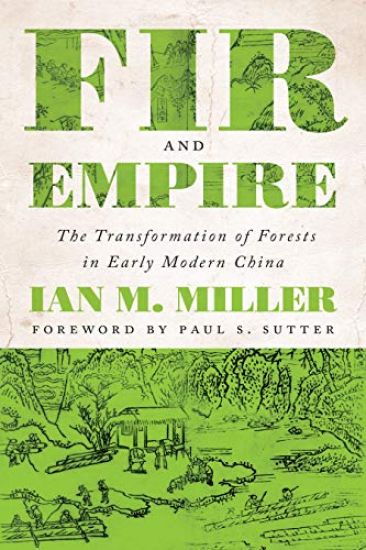
Fir and Empire

Fir and Empire

Ian M. Miller; Paul S. Sutter

UNIVERSITY OF WASHINGTON PRESS
2024
pokkari
A CHOICE OUTSTANDING ACADEMIC TITLERestores China's place in forest historyThe disappearance of China's naturally occurring forests is one of the most significant environmental shifts in the country's history, one often blamed on imperial demand for lumber. China's early modern forest history is typically viewed as a centuries-long process of environmental decline, culminating in a nineteenth-century social and ecological crisis. Pushing back against this narrative of deforestation, Ian Miller charts the rise of timber plantations between about 1000 and 1700, when natural forests were replaced with anthropogenic ones. Miller demonstrates that this form of forest management generally rested on private ownership under relatively distant state oversight and taxation. He further draws on in-depth case studies of shipbuilding and imperial logging to argue that this novel landscape was not created through simple extractive pressures, but by attempts to incorporate institutional and ecological complexity into a unified imperial state.Miller uses the emergence of anthropogenic forests in south China to rethink both temporal and spatial frameworks for Chinese history and the nature of Chinese empire. Because dominant European forestry models do not neatly overlap with the non-Western world, China's history is often left out of global conversations about them; Miller's work rectifies this omission and suggests that in some ways, China's forest system may have worked better than the more familiar European institutions.The open access publication of this book was made possible by a grant from the James P. Geiss and Margaret Y. Hsu Foundation.
Fir and Empire

Fir and Empire

Ian M. Miller; Paul S. Sutter

University of Washington Press
2020
sidottu
A CHOICE OUTSTANDING ACADEMIC TITLERestores China's place in forest historyThe disappearance of China's naturally occurring forests is one of the most significant environmental shifts in the country's history, one often blamed on imperial demand for lumber. China's early modern forest history is typically viewed as a centuries-long process of environmental decline, culminating in a nineteenth-century social and ecological crisis. Pushing back against this narrative of deforestation, Ian Miller charts the rise of timber plantations between about 1000 and 1700, when natural forests were replaced with anthropogenic ones. Miller demonstrates that this form of forest management generally rested on private ownership under relatively distant state oversight and taxation. He further draws on in-depth case studies of shipbuilding and imperial logging to argue that this novel landscape was not created through simple extractive pressures, but by attempts to incorporate institutional and ecological complexity into a unified imperial state.Miller uses the emergence of anthropogenic forests in south China to rethink both temporal and spatial frameworks for Chinese history and the nature of Chinese empire. Because dominant European forestry models do not neatly overlap with the non-Western world, China's history is often left out of global conversations about them; Miller's work rectifies this omission and suggests that in some ways, China's forest system may have worked better than the more familiar European institutions.The open access publication of this book was made possible by a grant from the James P. Geiss and Margaret Y. Hsu Foundation.
The Takeover

The Takeover

Monica R. Gisolfi; Paul S. Sutter

University of Georgia Press
2017
pokkari
Economists have described the upcountry Georgia poultry industry as the quintessential agribusiness. Following a trajectory from Reconstruction through the Great Depression to the present day, Monica R. Gisolfi shows how the poultry farming model of semivertical integration perfected a number of practices that had first underpinned the cotton-growing crop-lien system, ultimately transforming the poultry industry in ways that drove tens of thousands of farmers off the land and rendered those who remained dependent on large agribusiness firms.Gisolfi argues that the inequalities inherent in the structure of modern poultry farming have led to steep human and environmental costs. Agribusiness firms—many of them descended from the cotton-era South’s furnishing merchants—brought farmers into a system of feed-conversion contracts that placed all production decisions in the hands of the poultry corporations but at least half of the capital risks on the farmers. Along the way, the federal government aided and abetted—sometimes unwittingly—the consolidation of power by poultry firms through direct and indirect subsidies and favorable policies. Drawing on USDA files, oral history, congressional records, and poultry publications, Gisolfi puts a local face on one of the twentieth century’s silent agribusiness revolutions.
The Takeover

The Takeover

Monica R. Gisolfi; Paul S. Sutter

University of Georgia Press
2017
sidottu
Economists have described the upcountry Georgia poultry industry as the quintessential agribusiness. Following a trajectory from Reconstruction through the Great Depression to the present day, Monica R. Gisolfi shows how the poultry farming model of semivertical integration perfected a number of practices that had first underpinned the cotton-growing crop-lien system, ultimately transforming the poultry industry in ways that drove tens of thousands of farmers off the land and rendered those who remained dependent on large agribusiness firms.Gisolfi argues that the inequalities inherent in the structure of modern poultry farming have led to steep human and environmental costs. Agribusiness firms—many of them descended from the cotton-era South’s furnishing merchants—brought farmers into a system of feed-conversion contracts that placed all production decisions in the hands of the poultry corporations but at least half of the capital risks on the farmers. Along the way, the federal government aided and abetted—sometimes unwittingly—the consolidation of power by poultry firms through direct and indirect subsidies and favorable policies. Drawing on USDA files, oral history, congressional records, and poultry publications, Gisolfi puts a local face on one of the twentieth century’s silent agribusiness revolutions.
The Beach Cure

The Beach Cure

Meghan Crnic; Paul S. Sutter

UNIVERSITY OF WASHINGTON PRESS
2025
pokkari
How sun and sea air were prescribed as medicine on America's Eastern coastFor centuries, the ocean was seen as a place of danger and work, but by the late nineteenth century, northeastern shores of the United States became therapeutic destinations for the sick and weary. Doctors in Philadelphia, New York, Boston, and other cities began prescribing time at the beach as a remedy for ailments such as tuberculosis, rickets, and exhaustion. In the decades that followed, seaside towns became health havens complete with hospitals that served urban families and children.Meghan Crnic's The Beach Cure explores how physicians, tourists, and families transformed the coastline into a medical and cultural landscape. Crnic traces how beliefs in "marine medication"—the healing power of the sun, sea air, and saltwater—shaped the development of northeastern coastal tourist destinations and health institutions in Atlantic City, Coney Island, and beyond. Despite advances in germ theory and the rise of laboratory science, the conviction that nature can restore health and well-being persisted and continues to resonate with beachgoers today.This book uncovers the profound ways in which Americans tied health to place, showing how the underlying belief in nature's therapeutic powers brought people to the seashore as a precursor to the beach becoming a destination for leisure and recreation. The Beach Cure offers fresh insight into the history of environmental health, urging readers to reflect on how landscapes shape well-being.
The Beach Cure

The Beach Cure

Meghan Crnic; Paul S. Sutter

UNIVERSITY OF WASHINGTON PRESS
2025
sidottu
How sun and sea air were prescribed as medicine on America's Eastern coastFor centuries, the ocean was seen as a place of danger and work, but by the late nineteenth century, northeastern shores of the United States became therapeutic destinations for the sick and weary. Doctors in Philadelphia, New York, Boston, and other cities began prescribing time at the beach as a remedy for ailments such as tuberculosis, rickets, and exhaustion. In the decades that followed, seaside towns became health havens complete with hospitals that served urban families and children.Meghan Crnic's The Beach Cure explores how physicians, tourists, and families transformed the coastline into a medical and cultural landscape. Crnic traces how beliefs in "marine medication"—the healing power of the sun, sea air, and saltwater—shaped the development of northeastern coastal tourist destinations and health institutions in Atlantic City, Coney Island, and beyond. Despite advances in germ theory and the rise of laboratory science, the conviction that nature can restore health and well-being persisted and continues to resonate with beachgoers today.This book uncovers the profound ways in which Americans tied health to place, showing how the underlying belief in nature's therapeutic powers brought people to the seashore as a precursor to the beach becoming a destination for leisure and recreation. The Beach Cure offers fresh insight into the history of environmental health, urging readers to reflect on how landscapes shape well-being.
Contaminated Country

Contaminated Country

Jessica Urwin; Paul S. Sutter

UNIVERSITY OF WASHINGTON PRESS
2025
sidottu
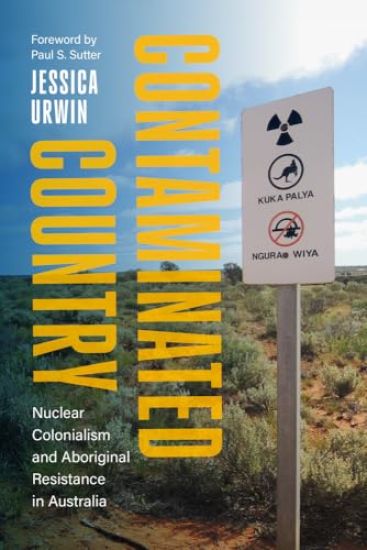
The destruction and defiance that swirled around Australia's embrace of the world's nuclear orderThough a nonnuclear state, Australia was embroiled in the military and civilian nuclear energy programs of numerous global powers across the twentieth century. From uranium extraction to nuclear testing, Australia's lands became sites of imperial exploitation under the guise of national development. The continent was subject to rampant nuclear colonialism. However, this history is not just one of imposition. Aboriginal communities, bearing the brunt of these processes, have persistently resisted, reclaiming their rights to Country and demanding reparations.As Jessica Urwin shows, extraction, weapons testing, and nuclear waste disposal have caused incalculable physical, spiritual, and cultural harm to Aboriginal communities and lands. Yet Indigenous peoples all over the world have not only survived nuclear colonialism but challenged it time and time again. Tracking the colonial mechanisms Australia used to pursue a nuclear industry, Urwin simultaneously highlights how Aboriginal peoples refused and reshaped those same mechanisms over time. A groundbreaking book, Contaminated Country reveals how Australia's deep nuclear past has been entangled with colonialism locally, nationally, and internationally.
Contaminated Country

Contaminated Country

Jessica Urwin; Paul S. Sutter

UNIVERSITY OF WASHINGTON PRESS
2025
pokkari
The destruction and defiance that swirled around Australia's embrace of the world's nuclear orderThough a nonnuclear state, Australia was embroiled in the military and civilian nuclear energy programs of numerous global powers across the twentieth century. From uranium extraction to nuclear testing, Australia's lands became sites of imperial exploitation under the guise of national development. The continent was subject to rampant nuclear colonialism. However, this history is not just one of imposition. Aboriginal communities, bearing the brunt of these processes, have persistently resisted, reclaiming their rights to Country and demanding reparations.As Jessica Urwin shows, extraction, weapons testing, and nuclear waste disposal have caused incalculable physical, spiritual, and cultural harm to Aboriginal communities and lands. Yet Indigenous peoples all over the world have not only survived nuclear colonialism but challenged it time and time again. Tracking the colonial mechanisms Australia used to pursue a nuclear industry, Urwin simultaneously highlights how Aboriginal peoples refused and reshaped those same mechanisms over time. A groundbreaking book, Contaminated Country reveals how Australia's deep nuclear past has been entangled with colonialism locally, nationally, and internationally.
Animating Central Park

Animating Central Park

Dawn Day Biehler; Paul S. Sutter

UNIVERSITY OF WASHINGTON PRESS
2024
sidottu
The entangled human and more-than-human histories of one of the world's iconic urban green spacesFrom deer and beavers to "free range" pigs and goats in and around Seneca Village, what we now know as Central Park has long been home to an abundance of animals. In 1858, the city adopted the Greensward Plan and began the long process of reshaping the 843 acres of land into a park where everything—from the trees to the trails to the inhabitants—would be meticulously planned to benefit New Yorkers and to promote the city as a global metropolis among the likes of London and Paris. But this vision of Central Park embodied white elite European values, and disagreements about which creatures belonged in the park's waters and green spaces have often perpetuated systems of oppression.Illuminating the multispecies story of Central Park from the 1850s to the 1970s, Dawn Day Biehler examines the vibrant and intimately connected lives of humans and nonhuman animals in the park. She reveals stories of grazing sheep, teeming fish, nesting swans, migrating warblers, and escaped bison as well as human New Yorkers' attempts to reconfigure their relationships to the land and claim spaces for recreation and leisure. Ultimately, Biehler shows how Central Park has always been a place where animals and humans alike have vied for power and belonging.
Social Roots

Social Roots

Paul S. Sutter

UNIVERSITY OF GEORGIA PRESS
2024
sidottu
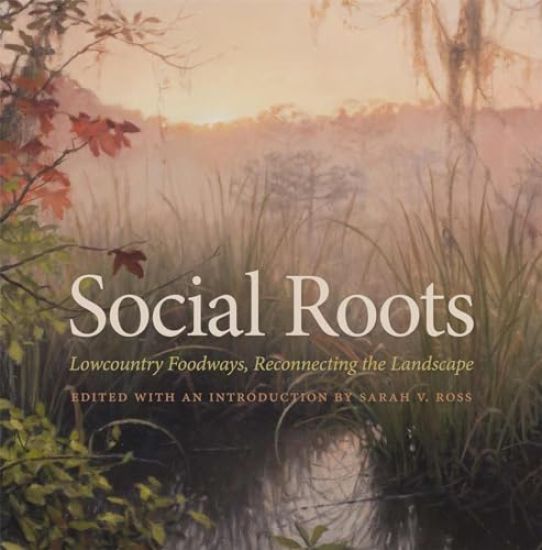
Social Roots is an interdisciplinary volume that draws on contributions from inside and outside the academy to explore the relationships between nature and culture as expressed in the foodways of the Georgia and South Carolina coasts. In seventeen chapters, a handful of bespoke artworks, and recipes, Sarah V. Ross and her contributors illuminate the invisible threads that run in wild tangles through the Lowcountry, connecting massive live oaks and palmetto and freshwater sloughs with tidal waters flooding and draining the most extensive salt marshes on the Eastern Seaboard. These threads connect the landscape from the St. Marys River on the Georgia-Florida border to the confluence of Ashley and Cooper Rivers in Charleston, South Carolina. Flowing threads of tidal creeks—half ocean, half fresh river water—also connect us through time to cultures who feasted on an abundance of shellfish thousands of years ago. An enduring bounty of oysters, shrimps, crabs, clams, and mussels still lure us into their world. Looking across time and geography, this book interweaves fundamental ecological principles as it honors three early cultures: Native American, European, and African. All were enmeshed with the coastal environment. All shared similar threads connecting food production: hunting, foraging, planting, cultivating, harvesting, preserving, and cooking. Across the ages, this ongoing connection—among land, harvester or farmer, and cook—forms the infrastructure of cookery practices. In large part, Lowcountry foodways are built simultaneously on scarcity and fickle opportunity.
Cleaning Up the Bomb Factory

Cleaning Up the Bomb Factory

Casey A. Huegel; Paul S. Sutter

UNIVERSITY OF WASHINGTON PRESS
2024
pokkari
Housewives, hard hats, and an Ohio town's restoration of the radioactive wasteland in its backyardIn 1984, a uranium leak at Ohio's outdated Fernald Feed Materials Production Center highlighted the decades of harm inflicted on Cold War communities by negligent radioactive waste disposal. Casey A. Huegel tells the story of the unlikely partnership of grassroots activists, regulators, union workers, and politicians that responded to the event with a new kind of environmental movement.The community group Fernald Residents for Environmental Safety and Health (FRESH) drew on the expertise of national organizations while maintaining its autonomy and focus on Fernald. Leveraging local patriotism and employment concerns, FRESH recruited blue-collar allies into an innovative program that fought for both local jobs and a healthier environment. Fernald's transformation into a nature reserve with an on-site radioactive storage facility reflected the political compromises that left waste sites improved yet imperfect. At the same time, FRESH's outsized influence transformed how the government scaled down the Cold War weapons complex, enforced health and safety standards, and reckoned with the immense environmental legacy of the nuclear arms race.A compelling history of environmental mobilization, Cleaning Up the Bomb Factory details the diverse goals and mixed successes of a groundbreaking activist movement.
Cleaning Up the Bomb Factory

Cleaning Up the Bomb Factory

Casey A. Huegel; Paul S. Sutter

UNIVERSITY OF WASHINGTON PRESS
2024
sidottu
Housewives, hard hats, and an Ohio town's restoration of the radioactive wasteland in its backyardIn 1984, a uranium leak at Ohio's outdated Fernald Feed Materials Production Center highlighted the decades of harm inflicted on Cold War communities by negligent radioactive waste disposal. Casey A. Huegel tells the story of the unlikely partnership of grassroots activists, regulators, union workers, and politicians that responded to the event with a new kind of environmental movement.The community group Fernald Residents for Environmental Safety and Health (FRESH) drew on the expertise of national organizations while maintaining its autonomy and focus on Fernald. Leveraging local patriotism and employment concerns, FRESH recruited blue-collar allies into an innovative program that fought for both local jobs and a healthier environment. Fernald's transformation into a nature reserve with an on-site radioactive storage facility reflected the political compromises that left waste sites improved yet imperfect. At the same time, FRESH's outsized influence transformed how the government scaled down the Cold War weapons complex, enforced health and safety standards, and reckoned with the immense environmental legacy of the nuclear arms race.A compelling history of environmental mobilization, Cleaning Up the Bomb Factory details the diverse goals and mixed successes of a groundbreaking activist movement.
Seeds of Control

Seeds of Control

David Fedman; Paul S. Sutter

UNIVERSITY OF WASHINGTON PRESS
2024
pokkari
Conservation as a tool of colonialism in early twentieth-century KoreaJapanese colonial rule in Korea (1905–1945) ushered in natural resource management programs that profoundly altered access to and ownership of the peninsula's extensive mountains and forests. Under the banner of "forest love," the colonial government set out to restructure the rhythms and routines of agrarian life, targeting everything from home heating to food preparation. Timber industrialists, meanwhile, channeled Korea's forest resources into supply chains that grew in tandem with Japan's imperial sphere. These mechanisms of resource control were only fortified after 1937, when the peninsula and its forests were mobilized for total war.In this wide-ranging study David Fedman explores Japanese imperialism through the lens of forest conservation in colonial Korea—a project of environmental rule that outlived the empire itself. Holding up for scrutiny the notion of conservation, Seeds of Control examines the roots of Japanese ideas about the Korean landscape, as well as the consequences and aftermath of Japanese approaches to Korea's "greenification." Drawing from sources in Japanese and Korean, Fedman writes colonized lands into Japanese environmental history, revealing a largely untold story of green imperialism in Asia.
Capturing Glaciers

Capturing Glaciers

Dani Inkpen; Paul S. Sutter

UNIVERSITY OF WASHINGTON PRESS
2024
pokkari
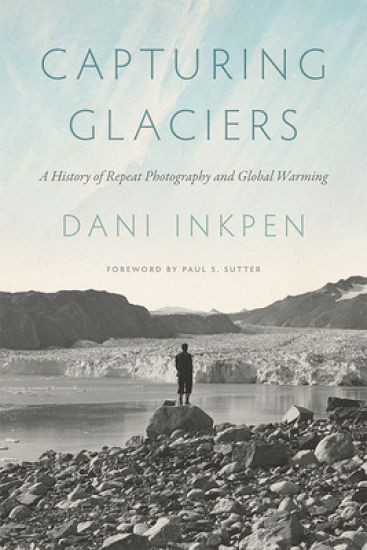
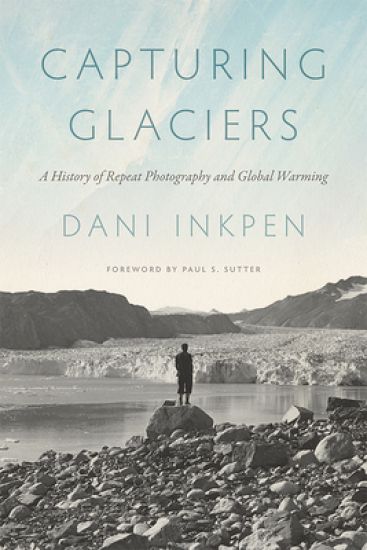
Explores the photography of climate changePhotographs do not simply speak for themselves. Their meanings are built through interpretive frameworks that shift over time. Today, photographs of receding glaciers are one of the most well recognized visualizations of human-caused climate change. These images, captured through repeat photography, have become effective with an unambiguous message: global warming is happening, and it is happening now. But this wasn't always the case. The meaning and evidentiary value of repeat glacier photography has varied over time, reflecting not only evolving scientific norms but also social, cultural, and political influences.In Capturing Glaciers, Dani Inkpen historicizes the use of repeat glacier photographs, examining what they show, what they obscure, and how they influence public understanding of nature and climate change. Though convincing as a form of evidence, these images offer a limited and sometimes misleading representation of glaciers themselves. Furthermore, their use threatens to replicate problematic ideas baked into their history. With clear and compelling writing, Capturing Glaciers ultimately calls for a centering of climate justice and warns of the consequences of reducing the problem of global warming to one of distant wilderness.
Capturing Glaciers

Capturing Glaciers

Dani Inkpen; Paul S. Sutter

UNIVERSITY OF WASHINGTON PRESS
2024
sidottu
Explores the photography of climate changePhotographs do not simply speak for themselves. Their meanings are built through interpretive frameworks that shift over time. Today, photographs of receding glaciers are one of the most well recognized visualizations of human-caused climate change. These images, captured through repeat photography, have become effective with an unambiguous message: global warming is happening, and it is happening now. But this wasn't always the case. The meaning and evidentiary value of repeat glacier photography has varied over time, reflecting not only evolving scientific norms but also social, cultural, and political influences.In Capturing Glaciers, Dani Inkpen historicizes the use of repeat glacier photographs, examining what they show, what they obscure, and how they influence public understanding of nature and climate change. Though convincing as a form of evidence, these images offer a limited and sometimes misleading representation of glaciers themselves. Furthermore, their use threatens to replicate problematic ideas baked into their history. With clear and compelling writing, Capturing Glaciers ultimately calls for a centering of climate justice and warns of the consequences of reducing the problem of global warming to one of distant wilderness.
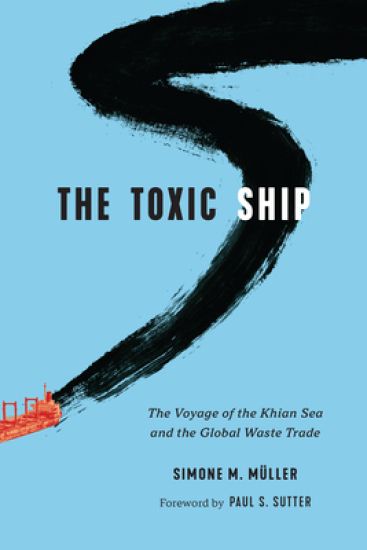
The Toxic Ship

The Toxic Ship

Simone M. Müller; Paul S. Sutter

UNIVERSITY OF WASHINGTON PRESS
2023
pokkari
Winner of the 2025 Hagley Prize for the Best Book in Business History from the Business History Conference and the Hagley LibraryWinner of the 2025 Harold and Margaret Sprout Award from the International Studies AssociationAn infamous voyage explores the hazardous waste trade and environmental justiceIn 1986 the Khian Sea, carrying thousands of tons of incinerator ash from Philadelphia, began a two-year journey, roaming the world's oceans in search of a dumping ground. Its initial destination and then country after country refused to accept the waste. The ship ended up dumping part of its load in Haiti under false pretenses, and the remaining waste was illegally dumped in the ocean. Two shipping company officials eventually received criminal convictions.Simone M. Müller uses the Khian Sea's voyage as a lens to elucidate the global trade in hazardous waste—the movement of material ranging from outdated consumer products and pesticides to barges filled with all sorts of toxic discards—from the 1970s to the present day, exploring the story's international nodes and detailing the downside of environmental conscientiousness among industrial nations as waste is pushed outward. Müller also highlights the significance of the trip's start in Philadelphia, a city with a significant African American population. The geographical origins shed light on environmental racism within the United States in the context of the global story of environmental justice. Activism in response to the ship's journey set an important precedent, and this book brings together the many voices that shaped the international trade in hazardous waste.
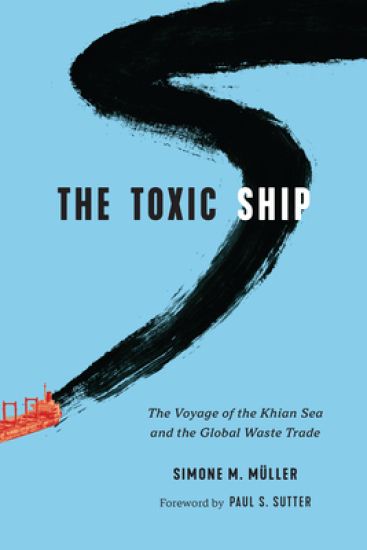
The Toxic Ship

The Toxic Ship

Simone M. Müller; Paul S. Sutter

UNIVERSITY OF WASHINGTON PRESS
2023
sidottu
Winner of the 2025 Hagley Prize for the Best Book in Business History from the Business History Conference and the Hagley LibraryWinner of the 2025 Harold and Margaret Sprout Award from the International Studies AssociationAn infamous voyage explores the hazardous waste trade and environmental justiceIn 1986 the Khian Sea, carrying thousands of tons of incinerator ash from Philadelphia, began a two-year journey, roaming the world's oceans in search of a dumping ground. Its initial destination and then country after country refused to accept the waste. The ship ended up dumping part of its load in Haiti under false pretenses, and the remaining waste was illegally dumped in the ocean. Two shipping company officials eventually received criminal convictions.Simone M. Müller uses the Khian Sea's voyage as a lens to elucidate the global trade in hazardous waste—the movement of material ranging from outdated consumer products and pesticides to barges filled with all sorts of toxic discards—from the 1970s to the present day, exploring the story's international nodes and detailing the downside of environmental conscientiousness among industrial nations as waste is pushed outward. Müller also highlights the significance of the trip's start in Philadelphia, a city with a significant African American population. The geographical origins shed light on environmental racism within the United States in the context of the global story of environmental justice. Activism in response to the ship's journey set an important precedent, and this book brings together the many voices that shaped the international trade in hazardous waste.