Kirjojen hintavertailu. Mukana 12 235 562 kirjaa ja 12 kauppaa.

Kirjailija

Peter Adamson

Kirjat ja teokset yhdessä paikassa: 37 kirjaa, julkaisuja vuosilta 2006-2026, suosituimpien joukossa Al-Kindi. Vertaile teosten hintoja ja tarkista saatavuus suomalaisista kirjakaupoista.

37 kirjaa

Kirjojen julkaisuhaarukka 2006-2026.

Al-Kindi

Al-Kindi

Peter Adamson

Oxford University Press Inc
2007
nidottu
This will be the first book in the Great Medieval Thinkers series to focus on an Islamic philosopher. It will offer a brief, accessible introduction to the thought of the philosopher al-Kindî (died about 870 AD). The classical tradition of Arabic philosophy may be said to have five most prominent figures: al-Kindî, al-Fârâbî, Avicenna, al-Ghazâlî, and Averroes. Of these, only al-Kindî has not been the subject of a scholarly monograph. This is despite the fact that his philosophy is much more tractable than that of the others insofar as the corpus of his surviving works is of modest size. His works, though brief, are of great historical importance. Al-Kindî was the first philosopher of the Islamic world. He was a central figure in the translation movement of 9th-century Baghdad, which rendered much of Greek philosophy, science, and medicine into Arabic. His works are also of great intrinsic philosophical interest, since al-Kindî, in engaging with the Greek tradition, develops original theories on key questions of philosophy of religion, metaphysics, physical science, and ethics. Peter Adamson will survey what is known of al-Kindîs life, examine his thought on a wide range of topics, and consider the relationship of al-Kindîs work to his Greek sources. Adamson is also preparing a one-volume translation of al-Kindîs works to be published in OUP Pakistan's series, Studies in Islamic Philosophy. Together these two volumes will offer the only reliable access for non-specialists to this important thinker.
Al-Razi

Al-Razi

Peter Adamson

Oxford University Press Inc
2021
nidottu
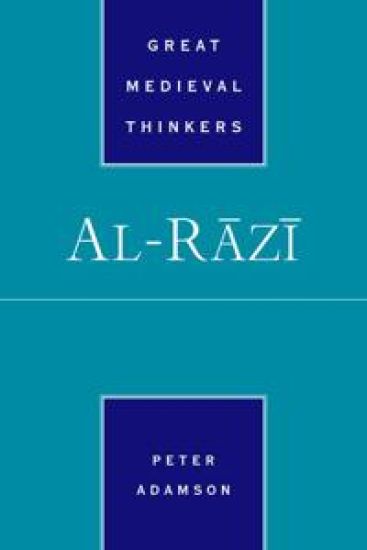
This book introduces readers to Abu Bakr al-Razi (known in Latin as Rhazes), one of the most innovative and divisive figures of the early philosophical tradition in the Islamic world. Drawing on his extant works on ethics and a range of quotations and testimony from often hostile medieval authors, Adamson reconstructs Razi's cosmological system, which posits four principles alongside God for the making of the universe: Soul, Matter, Time, and Place. Adamson argues that this system is fundamentally based on Plato, while it accepts Aristotle's physics as a "relative" or superficial description of the universe. This notorious theory of the "five eternals" led to charges of heresy. But through an examination of his debates with contemporary Islamic theologians and representatives of Ismaili Shiism, Adamson shows that Razi's ideas about religion and prophecy may have been distorted by intellectual opponents. Razi's scientific contributions are also considered in depth. One chapter is devoted to the philosophically rewarding aspects of Razi's extensive writings on medicine. His ideas about alchemy are also discussed along with his atomist account of matter. The final chapter looks at Razi's views on ethics, and argues against a prominent interpretation of him as a hedonist inspired by Epicureanism. The book presupposes no prior knowledge of Razi or specialist knowledge of this period in the history of philosophy. It will be rewarding for anyone with an interest in the reception of Greek philosophy, especially Plato, in the history of medicine, or of medieval philosophy more generally.
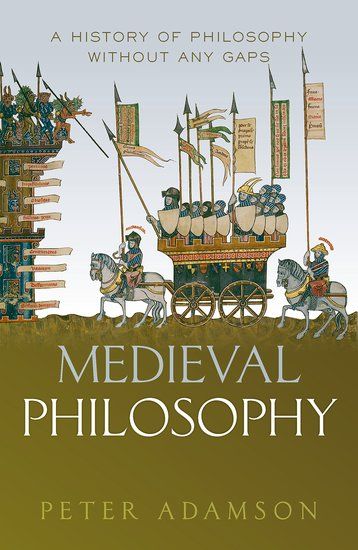
Medieval Philosophy

Medieval Philosophy

Peter Adamson

Oxford University Press
2019
sidottu
Peter Adamson presents a lively introduction to six hundred years of European philosophy, from the beginning of the ninth century to the end of the fourteenth century. The medieval period is one of the richest in the history of philosophy, yet one of the least widely known. Adamson introduces us to some of the greatest thinkers of the Western intellectual tradition, including Peter Abelard, Anselm of Canterbury, Thomas Aquinas, John Duns Scotus, William of Ockham, and Roger Bacon. And the medieval period was notable for the emergence of great women thinkers, including Hildegard of Bingen, Marguerite Porete, and Julian of Norwich. Original ideas and arguments were developed in every branch of philosophy during this period - not just philosophy of religion and theology, but metaphysics, philosophy of logic and language, moral and political theory, psychology, and the foundations of mathematics and natural science.
Classical Philosophy

Classical Philosophy

Peter Adamson

Oxford University Press
2016
nidottu
Classical Philosophy is the first of a series of books in which Peter Adamson aims ultimately to present a complete history of philosophy, more thoroughly but also more enjoyably than ever before. In short, lively chapters, based on the popular History of Philosophy podcast, he offers an accessible, humorous, and detailed look at the emergence of philosophy with the Presocratics, the probing questions of Socrates, and the first full flowering of philosophy with the dialogues of Plato and the treatises of Aristotle. The story is told 'without any gaps', discussing not only such major figures but also less commonly discussed topics like the Hippocratic Corpus, the Platonic Academy, and the role of women in ancient philosophy. Within the thought of Plato and Aristotle, the reader will find in-depth introductions to major works, such as the Republic and the Nicomachean Ethics, which are treated in detail that is unusual in an introduction to ancient philosophy. Adamson looks at fascinating but less frequently read Platonic dialogues like the Charmides and Cratylus, and Aristotle's ideas in zoology and poetics. This full coverage allows him to tackle ancient discussions in all areas of philosophy, including epistemology, metaphysics, philosophy of language, philosophy of science, ethics and politics. Attention is also given to the historical and literary context of classical philosophy, with exploration of how early Greek cosmology responded to the poets Homer and Hesiod, how Socrates was presented by the comic playwright Aristophanes and the historian Xenophon, and how events in Greek history may have influenced Plato's thought. This is a new kind of history which will bring philosophy to life for all readers, including those coming to the subject for the first time.
Al-Kindi

Al-Kindi

Peter Adamson

Oxford University Press Inc
2006
sidottu
The first book in the Great Medieval Thinkers series to focus on an Islamic philosopher. It offers a brief, accessible introduction to the thought of the philosopher al -Kindi (died roughly 870 AD). His works, though brief, are of great historical importance. Al-Kindi was the first philosopher of the Islamic world. Peter Adamson will survey what is known of al-Kindi's life, examine his thought on a wide range of topics, and consider the relationship of al-Kindi's work to his Greek sources.
Philosophy in the Reformation

Philosophy in the Reformation

Peter Adamson

Oxford University Press
2026
sidottu
In this latest volume of A History of Philosophy Without Any Gaps, Peter Adamson presents a lively and accessible introduction to European philosophy during the fifteenth and sixteenth centuries. Philosophy in the Reformation focuses on the parallel and intertwining emergence of humanism and of religious reform, as figures like Erasmus, Luther, and Calvin remade the intellectual and spiritual life of Europe. In the first three parts of the book, philosophical developments in central Europe, France, and Britain are examined. A wide range of topics and controversies are discussed, from debates over free will to the legitimacy of tyrannicide. This was also the time of the Northern Renaissance, which saw a resurgence of ancient concepts like skepticism and atomist theories of matter. The volume's final section charts the Catholic reaction to these epochal events in the Counter-Reformation, and especially the ideas of Spanish thinkers like Molina and Suárez. Quite a few familiar figures are discussed, such as Montaigne and Copernicus. But as always in this series, Adamson lavishes attention on fascinating figures who are often ignored in the history of philosophy, like John Dee, Robert Fludd, and Oliva Sabuco (who is just one of numerous women intellectuals covered). Another feature of the book is its attention to literature and the arts: the reader will learn how the achievements of Dürer, Michelangelo, Shakespeare, and Cervantes relate to philosophical currents of the time. The eighth volume in the A History of Philosophy Without Any Gaps series takes us to the threshold of the early modern era and sets the stage for the developments that unfolded during the Enlightenment.
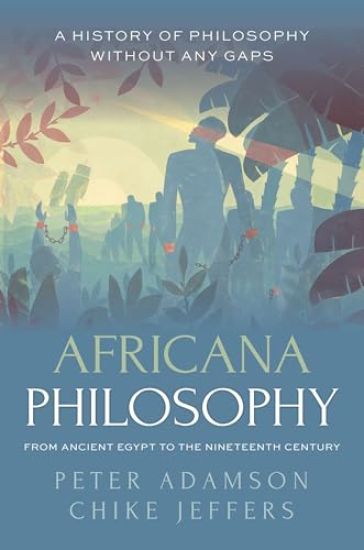
Africana Philosophy from Ancient Egypt to the Nineteenth Century

Africana Philosophy from Ancient Egypt to the Nineteenth Century

Peter Adamson; Chike Jeffers

Oxford University Press
2025
sidottu
In this latest instalment of the series A History of Philosophy Without Any Gaps, Peter Adamson and Chike Jeffers delve into the fascinating world of Africana Philosophy. Africana Philosophy from Ancient Egypt to the Nineteenth Century is the first of two volumes in the History of Philosophy Without Any Gaps series to bring readers the story of Africana philosophy. This diverse topic is defined as philosophy emerging from and distinctively related to Africa or the African diaspora. The story starts at the very beginning by asking what it would mean to engage philosophically with evidence left by prehistoric peoples of Africa, and proceeds to discuss the philosophical traditions of ancient Egypt, late ancient and early modern Ethopia, and Islamic philosophy in West Africa. A number of chapters then explore the idea of philosophy in African oral traditions, considering the methodological debates that have raged between African philosophers like John Mbiti, Paulin Hountondji, and Henry Odera Oruka. Peter Adamson and Chike Jeffers also consider philosophical responses to the situation brought about by the transatlantic slave trade and the early colonization of Africa. Starting from early figures like Anton Wilhelm Amo and Phillis Wheatley, and the ideas that drove the Haitian Revolution, extensive discussion is then given to Africana philosophy of the nineteenth century. The incendiary ideas of David Walker, the nuanced rhetoric of Frederick Douglass, and the clashing approaches of Booker T. Washington and W.E.B. Du Bois are among the highlights here. Significant attention is given to female thinkers like Maria W. Stewart, Sojourner Truth, Anna Julia Cooper, and Ida B. Wells. The coverage is also geographically diverse, with chapters on figures who worked not only in Africa and the United States, but also Brazil, Canada, Britain, France, and the Caribbean.
Byzantine and Renaissance Philosophy

Byzantine and Renaissance Philosophy

Peter Adamson

Oxford University Press
2025
nidottu
Peter Adamson presents an engaging and wide-ranging introduction to the thinkers and movements of two great intellectual cultures: Byzantium and the Italian Renaissance. First, he traces the development of philosophy in the Eastern Christian world, from such early figures as John of Damascus in the eighth century to the late Byzantine scholars of the fifteenth century. Adamson introduces major figures like Michael Psellos, Anna Komnene, and Gregory Palamas, and examines the philosophical significance of such cultural phenomena as iconoclasm and conceptions of gender. We discover the little-known traditions of philosophy in Syriac, Armenian, and Georgian. These chapters also explore the scientific, political, and historical literature of Byzantium. There is a close connection to the second half of the book, since thinkers of the Greek East helped to spark the humanist movement in Italy. Adamson tells the story of the rebirth of philosophy in Italy in the fifteenth and sixteenth centuries. We encounter such famous names as Christine de Pizan, Niccolò Machiavelli, Giordano Bruno, and Galileo, but as always in this book series such major figures are read alongside contemporaries who are not so well known, including fascinating figures like Lorenzo Valla, Girolamo Savonarola, and Bernardino Telesio. Major historical themes include the humanist engagement with ancient literature, the emergence of women humanists, the flowering of Republican government in Renaissance Italy, the continuation of Aristotelian and scholastic philosophy alongside humanism, and breakthroughs in science. All areas of philosophy, from theories of economics and aesthetics to accounts of the human mind, are featured. This is the sixth volume of Adamson's History of Philosophy Without Any Gaps series, taking us to the threshold of the early modern era.
Don't Think for Yourself

Don't Think for Yourself

Peter Adamson

UNIVERSITY OF NOTRE DAME PRESS
2024
nidottu
How do we judge whether we should be willing to follow the views of experts or whether we ought to try to come to our own, independent views? This book seeks the answer in medieval philosophical thought. In this engaging study into the history of philosophy and epistemology, Peter Adamson provides an answer to a question as relevant today as it was in the medieval period: how and when should we turn to the authoritative expertise of other people in forming our own beliefs? He challenges us to reconsider our approach to this question through a constructive recovery of the intellectual and cultural traditions of the Islamic world, the Byzantine Empire, and Latin Christendom. Adamson begins by foregrounding the distinction in Islamic philosophy between taqlid, or the uncritical acceptance of authority, and ijtihad, or judgment based on independent effort, the latter of which was particularly prized in Islamic law, theology, and philosophy during the medieval period. He then demonstrates how the Islamic tradition paves the way for the development of what he calls a "justified taqlid," according to which one develops the skills necessary to critically and selectively follow an authority based on their reliability. The book proceeds to reconfigure our understanding of the relation between authority and independent thought in the medieval world by illuminating how women found spaces to assert their own intellectual authority, how medieval writers evaluated the authoritative status of Plato and Aristotle, and how independent reasoning was deployed to defend one Abrahamic faith against the other. This clear and eloquently written book will interest scholars in and enthusiasts of medieval philosophy, Islamic studies, Byzantine studies, and the history of thought.
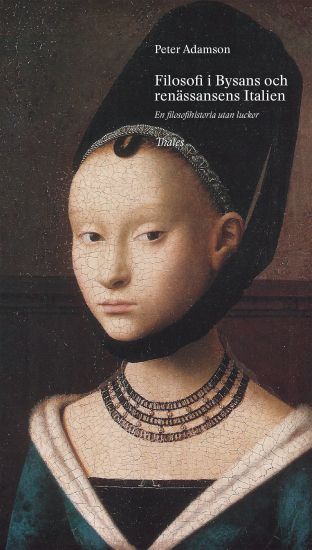
Filosofi i Bysans och Renässansens Italien : en filosofihistoria utan luckor
Filosofi i Bysans och renässansens Italien är sjätte volymen i Peter Adamsons bokserie En filosofihistoria utan luckor . Han tecknar här en levande och inträngande bild av tänkandet i två stora intellektuella kulturer, under en period från senantiken fram till nya tiden. I bokens första del spåras filosofins utveckling i Bysans från Johannes av Damaskus på 700-talet till 1400-talets lärda, verksamma i spänningsfältet mellan kristen teologi och antikens tänkande. Förutom genrer som historieskrivning, retorik och brevkonst, med centrala gestalter som Michael Psellos och Anna Komnena, diskuteras också den filosofiska betydelsen av kulturella fenomen som ikonoklasmen och hesychasmen, liksom synen på könen och den vetenskapliga litteraturen. Andra delen leder vidare från Bysans till renässansens Italien och den humanistiska rörelsen, som inspireras av den grekisktalande österns förmedling av arvet från antiken. Här berättas om filosofins och vetenskapens pånyttfödelse, med välkända namn som Niccolò Machiavelli, Christine de Pizan och Pico della Mirandola. Återupptäckandet av antikens litteratur och filosofi stimulerar till odling av latinsk stilkonst och litterär kritik, filologi och historia liksom till samhällsutopier och diskussioner om styrelseskick. Ur konfrontationen mellan humanismens platonism och den aristoteliska och skolastiska traditionen växer de första ansatserna till den moderna naturvetenskapen fram, med företrädare som Giordano Bruno och Galileo Galilei. Peter Adamson är professor i senantik och arabisk filosofi vid Ludwig-Maximilians universitet i München och en av vår tids främsta filosofihistoriker.
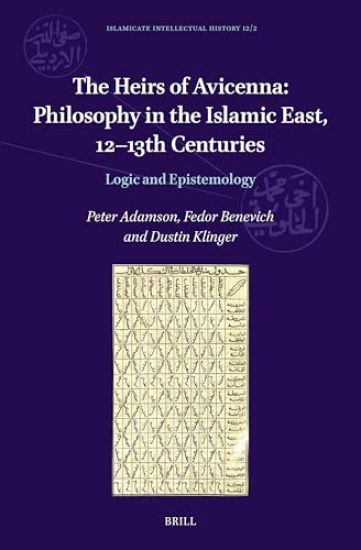
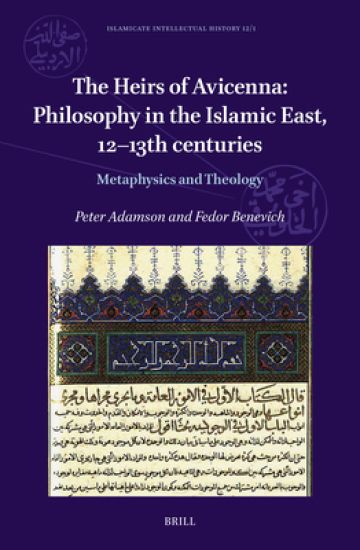
The Heirs of Avicenna: Philosophy in the Islamic East, 12-13th Centuries
This is the first in a series of sourcebooks charting the reception of Avicenna (Ibn Sina, d.1037) in the Islamic East (from Syria to central Asia) in the 12th-13th centuries CE. Avicenna was the dominant philosophical authority in this period, who provoked generations of thinkers to subtle critique, defense, and development of his ideas. The series will translate and analyze hundreds of passages from works by such figures as al-Ghazali, al-Suhrawardi, Fakhr al-Din al-Razi, Na?ir al-Din al-?usi, and many more. This volume focuses especially on issues in metaphysics, dealing with topics like the essence-existence distinction, the problem of universals, free will and determinism, Platonic Forms, good and evil, proofs of God’s existence, and the relationship between philosophy and theology.
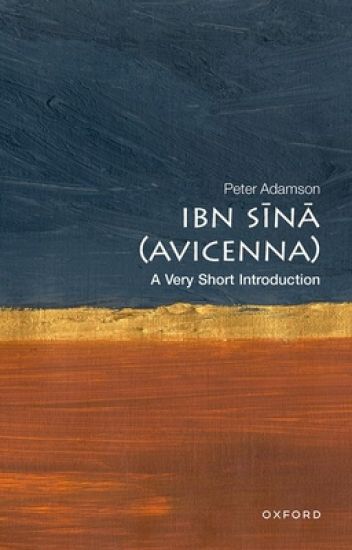
Ibn Sina (Avicenna)

Ibn Sina (Avicenna)

Peter Adamson

Oxford University Press
2023
nidottu
Very Short Introductions: Brilliant, Sharp, Inspiring This book provides an introduction to the most important philosopher of the Islamic world, Ibn Sina, often known in English by his Latinized name Avicenna. After introducing the man and his works, with an overview of the historical context in which he lived, the book devotes chapters to the different areas of Ibn Sina's thought. Among the topics covered are his innovations in logic, his theory of the human soul and its powers, the relation between his medical writings and his philosophy, and his metaphysics of existence. Particular attention is given to two famous arguments: his flying man thought experiment and the so-called “demonstration of the truthful,” a proof for the existence of God as the Necessary Existent. A distinctive feature of the book is its attention to the relationship between Ibn Sina and Islamic rational theology (kalam): in which we see how Ibn Sina responded to this tradition in many areas of his thought. A final chapter looks at Ibn Sina's legacy in both the Islamic world and in Latin Christendom. Here Adamson focuses on the critical responses to Ibn Sina in subsequent generations by such figures as al-Ghazali, al-Suhrawardi, and Fakhr al-Din al-Razi. ABOUT THE SERIES: The Very Short Introductions series from Oxford University Press contains hundreds of titles in almost every subject area. These pocket-sized books are the perfect way to get ahead in a new subject quickly. Our expert authors combine facts, analysis, perspective, new ideas, and enthusiasm to make interesting and challenging topics highly readable.
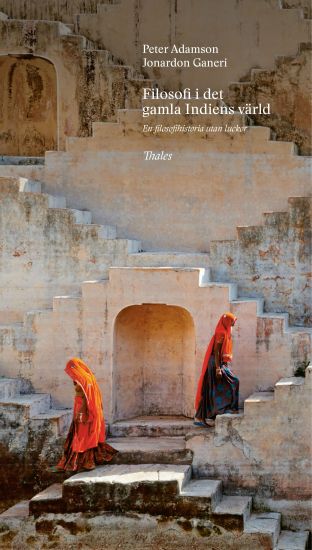
Filosofi i det gamla Indiens värld

Filosofi i det gamla Indiens värld

Peter Adamson; Jonardon Ganeri

Bokförlaget Thales
2022
sidottu
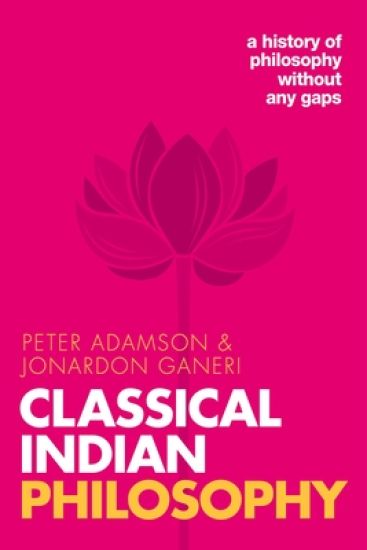
Filosofi i det gamla Indiens värld ger en bred överblick av tänkandet på den indiska subkontinenten, och presenterar en mångfald olika tankeskolor, i vilka religiösa och filosofiska strävanden oupplösligen sammanflätas. Utgångspunkten är hinduismen och den brahminska kulturen, med dess inriktning på förståelse av jagets natur och uttolkning av de gamla Vedaskrifterna. Den har givit oss förklarande texter som Upanishaderna men även det litterära eposet Mahabharata med dess mest berömda avsnitt Bhagavadgita. Buddhismen och jainismen växer fram som reaktioner på denna tradition, men delar samtidigt dess syn på filosofin som i första hand ett sätt att leva. För Buddha handlar det om att följa icke-jagets väg för att utsläcka begäret och uppnå befrielse från lidande (nirvana), för jainismen om praktiserandet av icke-våld (ahimsa) för att frigöras från karma och därmed undgå återfödelse.Den senare utvecklingen yttrar sig i en enormt rik litteratur på sanskrit, pali och andra språk. Med tiden ser vi en ökad fokusering på kunskapsteori och metafysik, språk och logik, men även på frågor om medvetandets och jagets existens och natur. Tanken på filosofins betydelse för livet går dock aldrig förlorad, och vi finner även praktiskt inriktade discipliner som yoga och tantra tillsammans med ayurvedisk medicin och en på dramatiken inriktad estetik. Boken ingår i serien "Filosofihistoria utan luckor" men kan även läsas självständigt. Någon liknande översikt över indisk filosofi har aldrig funnits på svenska. Peter Adamson är professor i senantik och arabisk filosofi vid Ludwig-Maximilians universitet i München och en av vår tids främsta filosofihistoriker. Denna del av "Filosofihistoria utan luckor" är skriven tillsammans med Jonardon Ganeri, professor vid Torontos universitet och specialist på sydasiatisk filosofi.
Don't Think for Yourself

Don't Think for Yourself

Peter Adamson

UNIVERSITY OF NOTRE DAME PRESS
2022
sidottu
How do we judge whether we should be willing to follow the views of experts or whether we ought to try to come to our own, independent views? This book seeks the answer in medieval philosophical thought. In this engaging study into the history of philosophy and epistemology, Peter Adamson provides an answer to a question as relevant today as it was in the medieval period: how and when should we turn to the authoritative expertise of other people in forming our own beliefs? He challenges us to reconsider our approach to this question through a constructive recovery of the intellectual and cultural traditions of the Islamic world, the Byzantine Empire, and Latin Christendom. Adamson begins by foregrounding the distinction in Islamic philosophy between taqlid, or the uncritical acceptance of authority, and ijtihad, or judgment based on independent effort, the latter of which was particularly prized in Islamic law, theology, and philosophy during the medieval period. He then demonstrates how the Islamic tradition paves the way for the development of what he calls a "justified taqlid," according to which one develops the skills necessary to critically and selectively follow an authority based on their reliability. The book proceeds to reconfigure our understanding of the relation between authority and independent thought in the medieval world by illuminating how women found spaces to assert their own intellectual authority, how medieval writers evaluated the authoritative status of Plato and Aristotle, and how independent reasoning was deployed to defend one Abrahamic faith against the other. This clear and eloquently written book will interest scholars in and enthusiasts of medieval philosophy, Islamic studies, Byzantine studies, and the history of thought.
Filosofi i medeltidens värld

Filosofi i medeltidens värld

Peter Adamson

Bokförlaget Thales
2022
sidottu
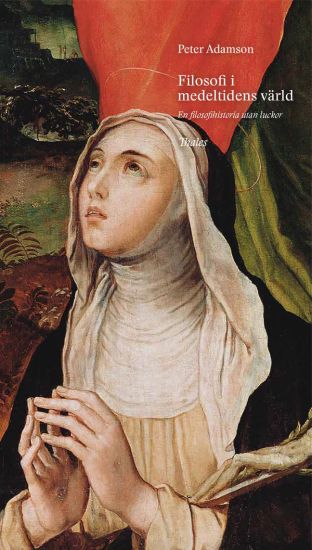
Filosofi i medeltidens värld är fjärde delen i Peter Adamson bokserie En filosofihistoria utan luckor . Medeltiden har ofta behandlats som en dunkel parentes i filosofins historia, men Peter Adamson visar att den är en lång och innehållsrik period, från 800-talets karolingiska renässans fram till 1400-talet, när det är dags för nästa renässans. Under medeltiden utforskas filosofins alla områden på djupet, från metafysik, logik och kunskapsteori till etiskt och politiskt tänkande, med utveckling av originella idéer och argument. Här finns välkända namn som Pierre Abélard, Thomas av Aquino och William Ockham, vilka tillsammans med otaliga anonyma tänkare lämnat efter sig en stor mängd texter där filosofi och religion ofta går hand i hand, utan att förnuftet någonsin helt underkastas teologins doktriner. I Adamson framställning möter vi dock inte bara universitetens skolmän utan också mystiker och skönlitterära författare, såväl kvinnliga som manliga, vilka prövar nya tankemöjligheter på folkspråket och utmanar både skolastikens och kyrkans läror och traditioner. Medeltidens filosofi står för en avgörande förmedling av det västerländska tänkandets arv från antiken till den moderna tiden, ofta med föregripande av senare idéer inom filosofi och vetenskap.Peter Adamson är professor i senantik och arabisk filosofi vid Ludwig-Maximilians universitet i München, och har publicerat ett flertal böcker och artiklar om medeltidens filosofi.
Byzantine and Renaissance Philosophy

Byzantine and Renaissance Philosophy

Peter Adamson

Oxford University Press
2022
sidottu
Peter Adamson explores the rich intellectual history of the Byzantine Empire and the Italian Renaissance. Peter Adamson presents an engaging and wide-ranging introduction to the thinkers and movements of two great intellectual cultures: Byzantium and the Italian Renaissance. First he traces the development of philosophy in the Eastern Christian world, from such early figures as John of Damascus in the eighth century to the late Byzantine scholars of the fifteenth century. He introduces major figures like Michael Psellos, Anna Komnene, and Gregory Palamas, and examines the philosophical significance of such cultural phenomena as iconoclasm and conceptions of gender. We discover the little-known traditions of philosophy in Syriac, Armenian, and Georgian. These chapters also explore the scientific, political, and historical literature of Byzantium. There is a close connection to the second half of the book, since thinkers of the Greek East helped to spark the humanist movement in Italy. Adamson tells the story of the rebirth of philosophy in Italy in the fifteenth and sixteenth centuries. We encounter such famous names as Christine de Pizan, Niccolò Machiavelli, Giordano Bruno, and Galileo, but as always in this book series such major figures are read alongside contemporaries who are not so well known, including such fascinating figures as Lorenzo Valla, Girolamo Savonarola, and Bernardino Telesio. Major historical themes include the humanist engagement with ancient literature, the emergence of women humanists, the flowering of Republican government in Renaissance Italy, the continuation of Aristotelian and scholastic philosophy alongside humanism, and breakthroughs in science. All areas of philosophy, from theories of economics and aesthetics to accounts of the human mind, are featured. This is the sixth volume of Adamson's History of Philosophy Without Any Gaps, taking us to the threshold of the early modern era.
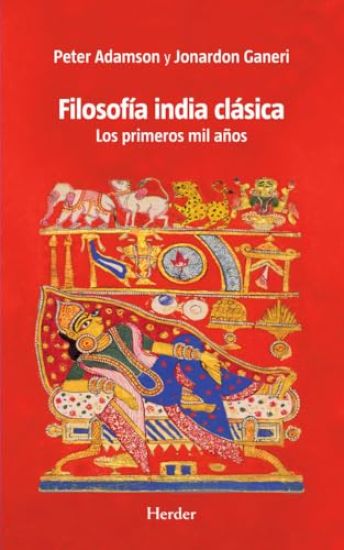
Classical Indian Philosophy

Classical Indian Philosophy

Peter Adamson; Jonardon Ganeri

Oxford University Press
2022
nidottu
Peter Adamson and Jonardon Ganeri present a lively introduction to one of the world's richest intellectual traditions: the philosophy of classical India. They begin with the earliest extant literature, the Vedas, and the explanatory works that these inspired, known as Upanisads. They also discuss other famous texts of classical Vedic culture, especially the Mahabharata and its most notable section, the Bhagavad-Gita, alongside the rise of Buddhism and Jainism. In this opening section, Adamson and Ganeri emphasize the way that philosophy was practiced as a form of life in search of liberation from suffering. Next, the pair move on to the explosion of philosophical speculation devoted to foundational texts called 'sutras,' discussing such traditions as the logical and epistemological Nyaya school, the monism of Advaita Vedanta, and the spiritual discipline of Yoga. In the final section of the book, they chart further developments within Buddhism, highlighting Nagarjuna's radical critique of 'non-dependent' concepts and the no-self philosophy of mind found in authors like Dignaga, and within Jainism, focusing especially on its 'standpoint' epistemology. Unlike other introductions that cover the main schools and positions in classical Indian philosophy, Adamson and Ganeri's lively guide also pays attention to philosophical themes such as non-violence, political authority, and the status of women, while considering textual traditions typically left out of overviews of Indian thought, like the Carvaka school, Tantra, and aesthetic theory as well. Adamson and Ganeri conclude by focusing on the much-debated question of whether Indian philosophy may have influenced ancient Greek philosophy and, from there, evaluate the impact that this area of philosophy had on later Western thought.
Medieval Philosophy

Medieval Philosophy

Peter Adamson

Oxford University Press
2022
nidottu
Peter Adamson presents a lively introduction to six hundred years of European philosophy, from the beginning of the ninth century to the end of the fourteenth century. The medieval period is one of the richest in the history of philosophy, yet one of the least widely known. Adamson introduces us to some of the greatest thinkers of the Western intellectual tradition, including Peter Abelard, Anselm of Canterbury, Thomas Aquinas, John Duns Scotus, William of Ockham, and Roger Bacon. And the medieval period was notable for the emergence of great women thinkers, including Hildegard of Bingen, Marguerite Porete, and Julian of Norwich. Original ideas and arguments were developed in every branch of philosophy during this period - not just philosophy of religion and theology, but metaphysics, philosophy of logic and language, moral and political theory, psychology, and the foundations of mathematics and natural science.