Kirjojen hintavertailu. Mukana 12 390 323 kirjaa ja 12 kauppaa.

Kirjailija

Peter Bloom

Kirjat ja teokset yhdessä paikassa: 25 kirjaa, julkaisuja vuosilta 1998-2026, suosituimpien joukossa Organizing Power. Vertaile teosten hintoja ja tarkista saatavuus suomalaisista kirjakaupoista.

25 kirjaa

Kirjojen julkaisuhaarukka 1998-2026.

Organizing Power

Organizing Power

Pasi Ahonen; Peter Bloom

Routledge
2026
nidottu
Understanding the nature and dynamics of power is crucial for future managers. This innovative text not only examines how power operates in organizations, but also shows how power fundamentally is the process of organizing. The book is supported by online materials, including case studies for each chapter and links to additional readings and resources. It will be essential reading for advanced undergraduate students looking at power and organizations on dedicated modules, and will be valuable reading for those on broader HRM and organizational studies programmes.
Organizing Power

Organizing Power

Pasi Ahonen; Peter Bloom

Routledge
2026
sidottu
Understanding the nature and dynamics of power is crucial for future managers. This innovative text not only examines how power operates in organizations, but also shows how power fundamentally is the process of organizing. The book is supported by online materials, including case studies for each chapter and links to additional readings and resources. It will be essential reading for advanced undergraduate students looking at power and organizations on dedicated modules, and will be valuable reading for those on broader HRM and organizational studies programmes.
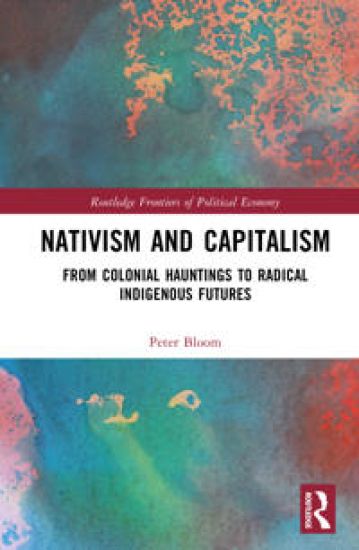
Nativism and Capitalism

Nativism and Capitalism

Peter Bloom

TAYLOR FRANCIS LTD
2026
sidottu
Nativism and Capitalism: From Colonial Hauntings to Radical Indigenous Futures offers a sweeping reappraisal of nativism as a central force within global capitalism rather than a simple reaction against it. Peter Bloom shows how the figure of the “native,” inherited from colonial rule, continues to shape how capitalist modernity organizes scarcity, hierarchy, and belonging. From nineteenth-century empire to today’s far-right populisms, the book traces how contemporary movements convert economic dispossession into racialized narratives of authenticity and exclusion. Bringing together political economy, decolonial thought, and cultural critique, the book reframes indigeneity as a global political horizon rooted in internationalist Indigenous politics that challenges both exclusionary nativism and neoliberal globalization. Drawing on Indigenous epistemologies, governance practices, ecological perspectives, and transnational movements, Bloom highlights alternative ways of imagining community, reciprocity, and planetary solidarity while also revealing how colonial legacies persist in shaping the present. The result is a pioneering work that offers new insights into the politics of belonging and outlines pathways toward more just and sustainable futures. It is essential reading for scholars in political science, sociology, anthropology, economics, and cultural studies, as well as policymakers and activists working on nationalism, migration, global justice, and Indigenous rights.
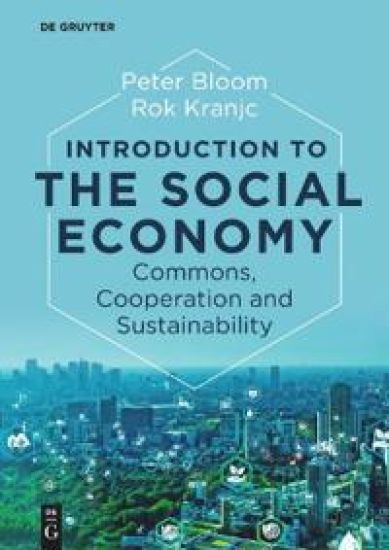
Introduction to the Social Economy

Introduction to the Social Economy

Peter Bloom; Rok Kranjc

De Gruyter
2025
isokokoinen pokkari
Mainstream economic models prioritize growth, individualism, and efficient allocation driven by self-interest. However, across history, groups marginalized or disillusioned by the status quo have imagined and constructed alternative economic systems – the "social economy", referring to organizations and enterprises oriented toward social goals and community benefit rather than profit maximization and centered on different values like cooperation, sustainability, democracy, and community benefit. In an accessible and unique manner, Introduction to the Social Economy explores the core topics that help to conceptually understand and practically implement a social economy. The book presents a wide range of conceptions of alternative economic theories and models within the social economy, ranging from the solidarity economy to the commons to feminist and degrowth perspectives. It provides a standard set of knowledge and cases that can be drawn upon in a diverse set of disciplines and cultural contexts. Furthermore, it does so at multiple levels – from macro-economic theories and policies to organisational design and community-based transformation. It offers students an important set of understandings and tools for innovatively addressing contemporary grand challenges such as economic inequality and climate change. Introduction to the Social Economy will be of immense benefit to scholars and students striving to study, advocate and organize economic activities to better serve human and ecological wellbeing.
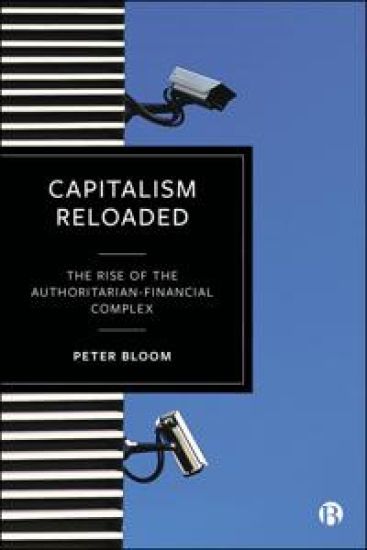
Capitalism Reloaded

Capitalism Reloaded

Peter Bloom

Bristol University Press
2025
nidottu
Available Open Access digitally under CC-BY-NC-ND license. In Capitalism Reloaded, Peter Bloom charts a pivotal shift from the well-known military-industrial complex to a new ‘Authoritarian-Financial Complex’. Unlike its predecessor, which centred on armaments and defence, this emerging power structure fuses financial interests with advanced surveillance and digital control, turning social repression into a lucrative industry. Bloom introduces a ground breaking theory of ‘complex power', where control itself becomes a central driver of capitalism, shaping economies and societies. Bloom explores how this insatiable demand for security and profit extends beyond traditional authoritarian regimes, permeating everyday life and eroding democratic freedoms. This book challenges readers to confront the deep entanglements of modern capitalism before they solidify into a techno-authoritarian order.
Capitalism Reloaded

Capitalism Reloaded

Peter Bloom

Bristol University Press
2025
sidottu
Available Open Access digitally under CC-BY-NC-ND license. In Capitalism Reloaded, Peter Bloom charts a pivotal shift from the well-known military-industrial complex to a new ‘Authoritarian-Financial Complex.’ Unlike its predecessor, which centred on armaments and defence, this emerging power structure fuses financial interests with advanced surveillance and digital control, turning social repression into a lucrative industry. Bloom introduces a ground breaking theory of ‘complex power,’ where control itself becomes a central driver of capitalism, shaping economies and societies. Bloom explores how this insatiable demand for security and profit extends beyond traditional authoritarian regimes, permeating everyday life and eroding democratic freedoms. This book challenges readers to confront the deep entanglements of modern capitalism before they solidify into a techno-authoritarian order.
Authoritarian Capitalism in the Age of Globalization

Authoritarian Capitalism in the Age of Globalization

Peter Bloom

EDWARD ELGAR PUBLISHING LTD
2024
nidottu
Authoritarian capitalism is rapidly evolving, intensifying and spreading across the globe. This updated second edition book demonstrates that the recent resurgence of fascism and repressive democracies are connected to and symptomatic of the fundamental authoritarianism of capitalism.Analysing how marketization is promoting political authoritarianism across the world, Peter Bloom tells a story of authoritarian progress in which capitalist sovereignty is replacing liberal and social democracy. In doing so, Bloom rethinks the structural and discursive role of sovereign power within capitalism, illustrating how the free market relies upon a range of authoritarian political fantasies not just for its growth but for its very survival. This fully updated edition reveals how this had led to an evolution from corporate globalization to a new era of ‘popular authoritarianism’, based on the political competition between far-Right ethno-capitalism and politically repressive capitalist democracy. Exploring new perspectives such as "the commons" and "degrowth development", it points to new possibilities for resisting authoritarian capitalism and reinvigorating democracy.The unique insights in this book will prove invaluable for students and scholars of political science, economics, development and organization studies, international relations and sociology. It will also be of interest to practitioners concerned with globalization, political authoritarianism, and the expansion of the free market.
Berlioz in Time

Berlioz in Time

Peter Bloom

BOYDELL BREWER LTD
2022
pokkari
Fourteen revealing essays by a prominent Berlioz authority on some of the composer's acclaimed compositions (the Symphonie fantastique, Les Nuits d'été, Les Troyens) and writings (the celebrated Mémoires). Written for both music lovers and scholars, these essays probe some of Berlioz's major works, including the Symphonie fantastique (the period of whose genesis is newly explored), Les Nuits d'été (whose origins are newly clarified by a revelation regarding Berlioz's possible muse), the Symphonie militaire (whose existence is examined in the period before it became the Symphonie funèbre et triomphale), Les Troyens (whose epilogue is seen as a paean to Napoléon III), and Béatrice et Bénédict (whose text reveals extraordinary understanding of the original play). The essays consider anew Berlioz's relationships with Franz Liszt (with whom the composer shared intimate details of his marriage to Harriet Smithson) and Richard Wagner (by whom the Frenchman was both charmed and alarmed), his travels in Germany (revealed as having had a specifically administrative purpose), his appreciation of English literature and Shakespeare (on whose work he was considered an expert), his modus operandi in composing the Mémoires, and his major twentieth-century biographers. Of conspicuous concern are the "politics" of a man sometimes erroneously viewed as distant from the political arena. This book is openly available in digital format, under Creative Commons license CC BY-NC-ND, thanks to generous funding from The New Berlioz Edition Trust.
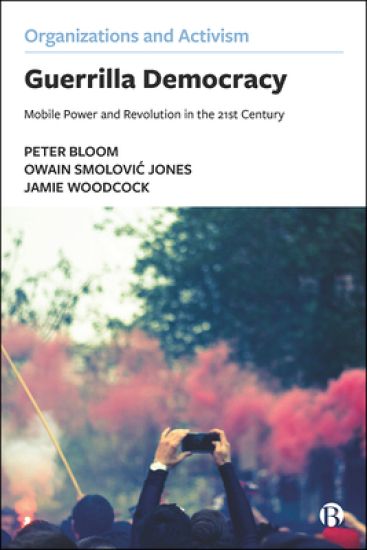
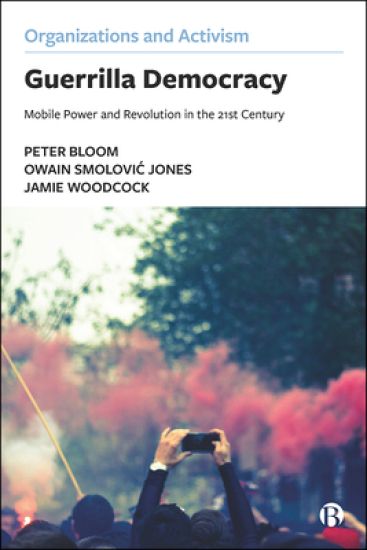
Guerrilla Democracy

Guerrilla Democracy

Peter Bloom; Owain Smolovic Jones; Jamie Woodcock

Bristol University Press
2021
sidottu
The liberating promise of big data and social media to create more responsive democracies and workplaces is overshadowed by a nightmare of election meddling, privacy invasion, fake news and an exploitative gig economy. Yet, while regressive forces spread disinformation and hate, 'guerrilla democrats' continue to foster hope and connection through digital technologies. This book offers an in-depth analysis of platform-based radical movements, from the online coalitions of voters and activists to the Deliveroo and Uber strikes. Combining cutting edge theories with empirical research, it makes an invaluable contribution to the emerging literature on the relationship between technology and society.
Guerrilla Democracy

Guerrilla Democracy

Peter Bloom; Owain Smolovic Jones; Jamie Woodcock

Bristol University Press
2021
nidottu
The liberating promise of big data and social media to create more responsive democracies and workplaces is overshadowed by a nightmare of election meddling, privacy invasion, fake news and an exploitative gig economy. Yet, while regressive forces spread disinformation and hate, 'guerrilla democrats' continue to foster hope and connection through digital technologies. This book offers an in-depth analysis of platform-based radical movements, from the online coalitions of voters and activists to the Deliveroo and Uber strikes. Combining cutting edge theories with empirical research, it makes an invaluable contribution to the emerging literature on the relationship between technology and society.
Identity, Institutions and Governance in an AI World

Identity, Institutions and Governance in an AI World

Peter Bloom

Springer Nature Switzerland AG
2021
nidottu
The 21st century is on the verge of a possible total economic and political revolution. Technological advances in robotics, computing and digital communications have the potential to completely transform how people live and work. Even more radically, humans will soon be interacting with artificial intelligence (A.I.) as a normal and essential part of their daily existence. What is needed now more than ever is to rethink social relations to meet the challenges of this soon-to-arrive "smart" world. This book proposes an original theory of trans-human relations for this coming future. Drawing on insights from organisational studies, critical theory, psychology and futurism - it will chart for readers the coming changes to identity, institutions and governance in a world populated by intelligent human and non-human actors alike. It will be characterised by a fresh emphasis on infusing programming with values of social justice, protecting the rights and views of all forms of "consciousness" and creating the structures and practices necessary for encouraging a culture of "mutual intelligent design". To do so means moving beyond our anthropocentric worldview of today and expanding our assumptions about the state of tomorrow's politics, institutions, laws and even everyday existence. Critically such a profound shift demands transcending humanist paradigms of a world created for and by humans and instead opening ourselves to a new reality where non-human intelligence and cyborgs are increasingly central.
Identity, Institutions and Governance in an AI World

Identity, Institutions and Governance in an AI World

Peter Bloom

Springer Nature Switzerland AG
2020
sidottu
The 21st century is on the verge of a possible total economic and political revolution. Technological advances in robotics, computing and digital communications have the potential to completely transform how people live and work. Even more radically, humans will soon be interacting with artificial intelligence (A.I.) as a normal and essential part of their daily existence. What is needed now more than ever is to rethink social relations to meet the challenges of this soon-to-arrive "smart" world. This book proposes an original theory of trans-human relations for this coming future. Drawing on insights from organisational studies, critical theory, psychology and futurism - it will chart for readers the coming changes to identity, institutions and governance in a world populated by intelligent human and non-human actors alike. It will be characterised by a fresh emphasis on infusing programming with values of social justice, protecting the rights and views of all forms of "consciousness" and creating the structures and practices necessary for encouraging a culture of "mutual intelligent design". To do so means moving beyond our anthropocentric worldview of today and expanding our assumptions about the state of tomorrow's politics, institutions, laws and even everyday existence. Critically such a profound shift demands transcending humanist paradigms of a world created for and by humans and instead opening ourselves to a new reality where non-human intelligence and cyborgs are increasingly central.
The Ethics of Neoliberalism

The Ethics of Neoliberalism

Peter Bloom

Routledge
2019
nidottu
The 21st century is the age of "neo-liberalism" – a time when the free market is spreading to all areas of economic, political and social life. Yet how is this changing our individual and collective ethics? Is capitalism also becoming our new morality? From the growing popular demand for corporate social responsibility to personal desire for "work-life balance" it would appear that non-market ideals are not only surviving but also thriving. Why then does it seem that capitalism remains as strong as ever?The Ethics of Neoliberalism boldly proposes that neoliberalism strategically co-opts traditional ethics to ideologically and structurally strengthen capitalism. It produces "the ethical capitalist subject" who is personally responsible for making their society, workplace and even their lives "more ethical" in the face of an immoral but seemingly permanent free market.Rather than altering our morality, neoliberalism "individualizes" ethics, making us personally responsible for dealing with and resolving its moral failings. In doing so, individuals end up perpetuating the very market system that they morally oppose and feel powerless to ultimately change. This analysis reveals the complex and paradoxical way capitalism is currently shaping us as "ethical subjects". People are increasingly asked to ethically "save" capitalism both collectively and personally. This can range from the "moral responsibility" to politically accept austerity following the financial crisis to the willingness of employees to sacrifice their time and energy to make their neoliberal organizations more "humane" to the efforts by individuals to contribute to their family and communities despite the pressures of a franetic global business environment. Neoliberalism, thus, uses our ethics against us, relying on our "good nature" and sense of personal responsibility to reduce its human cost in practice. Ironically
Disruptive Democracy

Disruptive Democracy

Peter Bloom; Alessandro Sancino

SAGE Publications Ltd
2019
sidottu
Do new "smart" technologies such as AI, robotics, social media, and automation threaten to disrupt our society? Or does technological innovation hold the potential to transform our democracies and civic societies, creating ones that are more egalitarian and accountable? Disruptive Democracy explores these questions and examines how technology has the power to reshape our civic participation, our economic and political governance, and our entire existence. In this innovative study, the authors use international examples such as Trump’s America, and Bolsonaro’s recent election as President of Brazil, to lead the discussion on perhaps the most profound political struggle of the 21st century, the coming clash between a progressive "Techno-democracy" and a regressive "Techno-populism".
Monitored

Monitored

Peter Bloom

Pluto Press
2019
sidottu
Our contemporary age is confronted by a profound contradiction: on the one hand, our lives as workers, consumers and citizens have become ever more monitored by new technologies. On the other, big business and finance become increasingly less regulated and controllable. What does this technocratic ideology and surveillance-heavy culture reveal about the deeper reality of modern society? Monitored investigates the history and implications of this modern accountability paradox. Peter Bloom reveals pervasive monitoring practices which mask how at its heart, the elite remains socially and ethically out of control. Challenging their exploitive 'accounting power', Bloom demands that the systems that administer our lives are oriented to social liberation and new ways of being in the world.
Monitored

Monitored

Peter Bloom

Pluto Press
2019
pokkari
Our contemporary age is confronted by a profound contradiction: on the one hand, our lives as workers, consumers and citizens have become ever more monitored by new technologies. On the other, big business and finance become increasingly less regulated and controllable. What does this technocratic ideology and surveillance-heavy culture reveal about the deeper reality of modern society? Monitored investigates the history and implications of this modern accountability paradox. Peter Bloom reveals pervasive monitoring practices which mask how at its heart, the elite remains socially and ethically out of control. Challenging their exploitive 'accounting power', Bloom demands that the systems that administer our lives are oriented to social liberation and new ways of being in the world.
The Bad Faith in the Free Market

The Bad Faith in the Free Market

Peter Bloom

Springer Nature Switzerland AG
2019
nidottu
Innovatively combining existentialist philosophy with cutting edge post-structuralist and psychoanalytic perspectives, this book boldly reconsiders market freedom. Bloom argues that present day capitalism has robbed us of our individual and collective ability to imagine and implement alternative and more progressive economic and social systems; it has deprived us of our radical freedom to choose how we live and what we can become.Since the Great Recession, capitalism has been increasingly blamed for rising inequality and feelings of mass social and political alienation. In place of a deeper liberty, the free market offers subjects the opportunity to continually reinvest their personal and shared hopes within its dogmatic ideology and policies. This embrace helps to temporarily alleviate growing feelings of anxiety and insecurity at the expense of our fundamental human agency. What has become abundantly clear is that the free market is anything but free.Here, Bloom exposes our present day bad faith in the free market and how we can break free from it.
The Bad Faith in the Free Market

The Bad Faith in the Free Market

Peter Bloom

Springer International Publishing AG
2018
sidottu
Innovatively combining existentialist philosophy with cutting edge post-structuralist and psychoanalytic perspectives, this book boldly reconsiders market freedom. Bloom argues that present day capitalism has robbed us of our individual and collective ability to imagine and implement alternative and more progressive economic and social systems; it has deprived us of our radical freedom to choose how we live and what we can become.Since the Great Recession, capitalism has been increasingly blamed for rising inequality and feelings of mass social and political alienation. In place of a deeper liberty, the free market offers subjects the opportunity to continually reinvest their personal and shared hopes within its dogmatic ideology and policies. This embrace helps to temporarily alleviate growing feelings of anxiety and insecurity at the expense of our fundamental human agency. What has become abundantly clear is that the free market is anything but free.Here, Bloom exposes our present day bad faith in the free market and how we can break free from it.
CEO Society

CEO Society

Peter Bloom; Carl Rhodes

Zed Books Ltd
2018
sidottu
Chief Executive Officers (CEOs) have become the cultural icons of the 21st century. Figures like Steve Jobs and Mark Zuckerberg are held up as role models who epitomise the modern pursuit of innovation, wealth and success. We now live, Bloom and Rhodes argue, in a ‘CEO society’ – a society where corporate leadership has become the model for transforming not just business, but all spheres of life, where everyone from politicians to jobseekers to even those seeking love are expected to imitate the qualities of the lionized corporate executive.But why, in the wake of the failings exposed by the 2008 financial crisis, does the corporate ideal continue to exert such a grip on popular attitudes? In this insightful new book, Bloom and Rhodes examine the rise of the CEO society, and how it has started to transform governments, culture and the economy. This influence, they argue, holds troubling implications for the future of democracy - as evidenced by the disturbing political rise of Donald Trump in the US - and for our society as a whole.