Kirjojen hintavertailu. Mukana 12 595 353 kirjaa ja 12 kauppaa.

Kirjailija

Peter Charles Hoffer

Kirjat ja teokset yhdessä paikassa: 48 kirjaa, julkaisuja vuosilta 1998-2025, suosituimpien joukossa Reading and Writing American History Volume 1. Vertaile teosten hintoja ja tarkista saatavuus suomalaisista kirjakaupoista.

48 kirjaa

Kirjojen julkaisuhaarukka 1998-2025.

The Supreme Court

The Supreme Court

Peter Charles Hoffer; Williamjames Hull Hoffer; N.E.H. Hull

University Press of Kansas
2018
sidottu
For more than two centuries, the U.S. Supreme Court has provided a battleground for nearly every controversial issue in our nation’s history. Now a veteran team of talented historians—including the editors of the acclaimed Landmark Law Cases and American Society series—have updated the most readable, astute single-volume history of this venerated institution with a new chapter on the Roberts Court.The Supreme Court chronicles an institution that dramatically evolved from six men meeting in borrowed quarters to the most closely watched tribunal in the world. Underscoring the close connection between law and politics, the authors highlight essential issues, cases, and decisions within the context of the times in which the decisions were handed down. Deftly combining doctrine and judicial biography with case law, they demonstrate how the justices have shaped the law and how the law that the Court makes has shaped our nation, with an emphasis on how the Court responded—or failed to respond—to the plight of the underdog. Each chapter covers the Court’s years under a specific Chief Justice, focusing on cases that are the most reflective of the way the Court saw the law and the world and that had the most impact on the lives of ordinary Americans. Throughout the authors reveal how—in times of war, class strife, or moral revolution—the Court sometimes voiced the conscience of the nation and sometimes seemed to lose its moral compass. Their extensive quotes from the Court’s opinions and dissents illuminate its inner workings, as well as the personalities and beliefs of the justices and the often-contentious relationships among them.Fair-minded and sharply insightful, The Supreme Court portrays an institution defined by eloquent and pedestrian decisions and by justices ranging from brilliant and wise to slow-witted and expedient. An epic and essential story, it illuminates the Court’s role in our lives and its place in our history in a manner as engaging for general readers as it is rigorous for scholars.
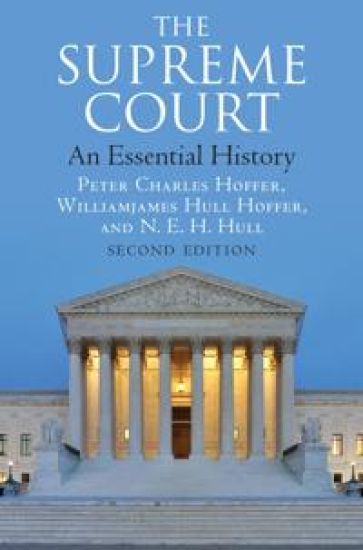
The Supreme Court

The Supreme Court

Peter Charles Hoffer; Williamjames Hull Hoffer; N.E.H. Hull

University Press of Kansas
2018
nidottu
For more than two centuries, the U.S. Supreme Court has provided a battleground for nearly every controversial issue in our nation’s history. Now a veteran team of talented historians—including the editors of the acclaimed Landmark Law Cases and American Society series—have updated the most readable, astute single-volume history of this venerated institution with a new chapter on the Roberts Court.The Supreme Court chronicles an institution that dramatically evolved from six men meeting in borrowed quarters to the most closely watched tribunal in the world. Underscoring the close connection between law and politics, the authors highlight essential issues, cases, and decisions within the context of the times in which the decisions were handed down. Deftly combining doctrine and judicial biography with case law, they demonstrate how the justices have shaped the law and how the law that the Court makes has shaped our nation, with an emphasis on how the Court responded—or failed to respond—to the plight of the underdog. Each chapter covers the Court’s years under a specific Chief Justice, focusing on cases that are the most reflective of the way the Court saw the law and the world and that had the most impact on the lives of ordinary Americans. Throughout the authors reveal how—in times of war, class strife, or moral revolution—the Court sometimes voiced the conscience of the nation and sometimes seemed to lose its moral compass. Their extensive quotes from the Court’s opinions and dissents illuminate its inner workings, as well as the personalities and beliefs of the justices and the often-contentious relationships among them.Fair-minded and sharply insightful, The Supreme Court portrays an institution defined by eloquent and pedestrian decisions and by justices ranging from brilliant and wise to slow-witted and expedient. An epic and essential story, it illuminates the Court’s role in our lives and its place in our history in a manner as engaging for general readers as it is rigorous for scholars.
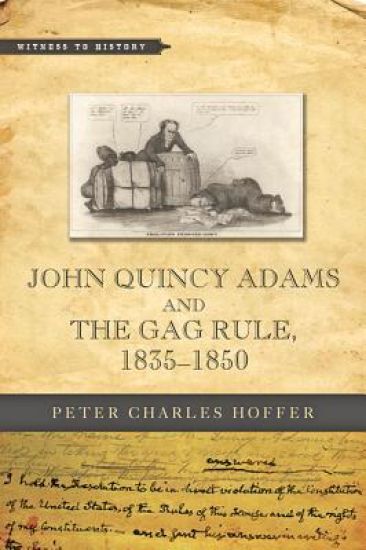
John Quincy Adams and the Gag Rule, 1835–1850

John Quincy Adams and the Gag Rule, 1835–1850

Peter Charles Hoffer

Johns Hopkins University Press
2017
pokkari
Passed by the House of Representatives at the start of the 1836 session, the gag rule rejected all petitions against slavery, effectively forbidding Congress from addressing the antislavery issue until it was rescinded in late 1844. In the Senate, a similar rule lasted until 1850. Strongly supported by all southern and some northern Democratic congressmen, the gag rule became a proxy defense of slavery's morality and economic value in the face of growing pro-abolition sentiment. In John Quincy Adams and the Gag Rule, 1835-1850, Peter Charles Hoffer transports readers to Washington, DC, in the period before the Civil War to contextualize the heated debates surrounding the rule. At first, Hoffer explains, only a few members of Congress objected to the rule. These antislavery representatives argued strongly for the reception and reading of incoming abolitionist petitions. When they encountered an almost uniformly hostile audience, however, John Quincy Adams took a different tack. He saw the effort to gag the petitioners as a violation of their constitutional rights. Adams's campaign to lift the gag rule, joined each year by more and more northern members of Congress, revealed how the slavery issue promoted a virulent sectionalism and ultimately played a part in southern secession and the Civil War. A lively narrative intended for history classrooms and anyone interested in abolitionism, slavery, Congress, and the coming of the Civil War, John Quincy Adams and the Gag Rule, 1835-1850, vividly portrays the importance of the political machinations and debates that colored the age.
John Quincy Adams and the Gag Rule, 1835–1850

John Quincy Adams and the Gag Rule, 1835–1850

Peter Charles Hoffer

Johns Hopkins University Press
2017
sidottu
Passed by the House of Representatives at the start of the 1836 session, the gag rule rejected all petitions against slavery, effectively forbidding Congress from addressing the antislavery issue until it was rescinded in late 1844. In the Senate, a similar rule lasted until 1850. Strongly supported by all southern and some northern Democratic congressmen, the gag rule became a proxy defense of slavery's morality and economic value in the face of growing pro-abolition sentiment. In John Quincy Adams and the Gag Rule, 1835-1850, Peter Charles Hoffer transports readers to Washington, DC, in the period before the Civil War to contextualize the heated debates surrounding the rule. At first, Hoffer explains, only a few members of Congress objected to the rule. These antislavery representatives argued strongly for the reception and reading of incoming abolitionist petitions. When they encountered an almost uniformly hostile audience, however, John Quincy Adams took a different tack. He saw the effort to gag the petitioners as a violation of their constitutional rights. Adams's campaign to lift the gag rule, joined each year by more and more northern members of Congress, revealed how the slavery issue promoted a virulent sectionalism and ultimately played a part in southern secession and the Civil War. A lively narrative intended for history classrooms and anyone interested in abolitionism, slavery, Congress, and the coming of the Civil War, John Quincy Adams and the Gag Rule, 1835-1850, vividly portrays the importance of the political machinations and debates that colored the age.
The Federal Courts

The Federal Courts

Peter Charles Hoffer; Williamjames Hull Hoffer; N. E. H. Hull

Oxford University Press Inc
2016
sidottu
There are moments in American history when all eyes are focused on a federal court: when its bench speaks for millions of Americans, and when its decision changes the course of history. More often, the story of the federal judiciary is simply a tale of hard work: of finding order in the chaotic system of state and federal law, local custom, and contentious lawyering. The Federal Courts is a story of all of these courts and the judges and justices who served on them, of the case law they made, and of the acts of Congress and the administrative organs that shaped the courts. But, even more importantly, this is a story of the courts' development and their vital part in America's history. Peter Charles Hoffer, Williamjames Hull Hoffer, and N. E. H. Hull's retelling of that history is framed the three key features that shape the federal courts' narrative: the separation of powers; the federal system, in which both the national and state governments are sovereign; and the widest circle: the democratic-republican framework of American self-government. The federal judiciary is not elective and its principal judges serve during good behavior rather than at the pleasure of Congress, the President, or the electorate. But the independence that lifetime tenure theoretically confers did not and does not isolate the judiciary from political currents, partisan quarrels, and public opinion. Many vital political issues came to the federal courts, and the courts' decisions in turn shaped American politics. The federal courts, while the least democratic branch in theory, have proved in some ways and at various times to be the most democratic: open to ordinary people seeking redress, for example. Litigation in the federal courts reflects the changing aspirations and values of America's many peoples. The Federal Courts is an essential account of the branch that provides what Massachusetts Supreme Judicial Court Judge Oliver Wendell Homes Jr. called "a magic mirror, wherein we see reflected our own lives."
Rutgers v. Waddington

Rutgers v. Waddington

Peter Charles Hoffer

University Press of Kansas
2016
nidottu
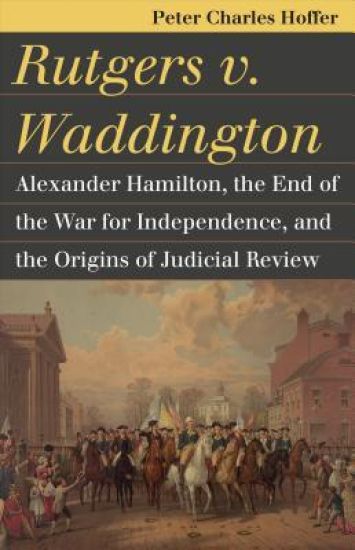
Once the dust of the Revolution settled, the problem of reconciling the erstwhile warring factions arose, and as is often the case in the aftermath of violent revolutions, the matter made its way intothe legal arena. Rutgers v. Waddington was such a case. Through this little-known but remarkable dispute over back rent for aburned-down brewery, Peter Charles Hoffer recounts a tale of political and constitutional intrigue involving some of the most important actors in America’s transition from a confederation of states under the Articles of Confederation to a national republic under the US Constitution.At the end of the Revolution, the widow Rutgers and her sons returned to the brewery they’d abandoned when the British had occupied New York. They demanded rent from Waddington, the loyalist who hadrented the facility under the British occupation.Under a punitive New York state law, the loyalist Waddington was liable. But the peace treaty’s provisions protecting loyalists’property rights said otherwise. Appearing for the defendants was war veteran, future Federalist, and first secretary of the treasury,Alexander Hamilton. And, as always, lurking in the background was the estimable Aaron Burr. As Hoffer details Hamilton’s arguments for the supremacy of treaty law over state law, the significance of Rutgers v. Waddington in the development of a strongcentral government emerges clearly—as does the role of the courts in bridging the young nation’s divisions in the Revolution’swake. Rutgers v. Waddington illustrates a foundational moment in American history. As such, it is an encapsulation of a societyriven by war, buffeted by revolutionary change attempting to piece together the true meaning of, in John Adams’s formulation,“rule by law, and not by men.”
Rutgers v. Waddington

Rutgers v. Waddington

Peter Charles Hoffer

University Press of Kansas
2016
sidottu
Once the dust of the Revolution settled, the problem of reconciling the erstwhile warring factions arose, and as is often the case in the aftermath of violent revolutions, the matter made its way intothe legal arena. Rutgers v. Waddington was such a case. Through this little-known but remarkable dispute over back rent for aburned-down brewery, Peter Charles Hoffer recounts a tale of political and constitutional intrigue involving some of the most important actors in America’s transition from a confederation of states under the Articles of Confederation to a national republic under the US Constitution.At the end of the Revolution, the widow Rutgers and her sons returned to the brewery they’d abandoned when the British had occupied New York. They demanded rent from Waddington, the loyalist who hadrented the facility under the British occupation.Under a punitive New York state law, the loyalist Waddington was liable. But the peace treaty’s provisions protecting loyalists’property rights said otherwise. Appearing for the defendants was war veteran, future Federalist, and first secretary of the treasury,Alexander Hamilton. And, as always, lurking in the background was the estimable Aaron Burr. As Hoffer details Hamilton’s arguments for the supremacy of treaty law over state law, the significance of Rutgers v. Waddington in the development of a strongcentral government emerges clearly—as does the role of the courts in bridging the young nation’s divisions in the Revolution’swake. Rutgers v. Waddington illustrates a foundational moment in American history. As such, it is an encapsulation of a societyriven by war, buffeted by revolutionary change attempting to piece together the true meaning of, in John Adams’s formulation,“rule by law, and not by men.”
Benjamin Franklin Explains the Stamp ACT Protests to Parliament, 1766
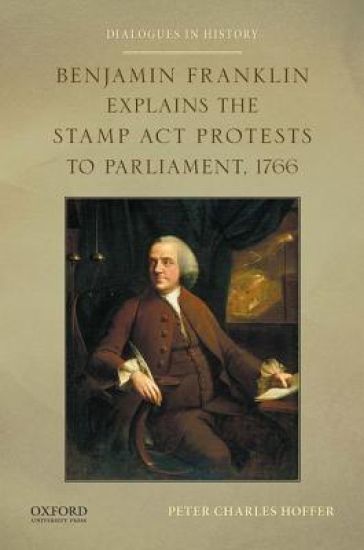
Benjamin Franklin Explains the Stamp Act Protests to Parliament, 1766 brings together a unique collection of primary source documents, organized and arranged as a dialogue, to examine the issues surrounding the Stamp Act. The selections--at the center of which is Benjamin Franklin's examination in Parliament on February 13, 1766--are meant to be read as a continuous dialogue among leading colonists in America and politicians in England. While the individual documents were separated in time and space, here they are reconstituted as part of a consistent whole--a trans-Atlantic conversation about the nature of the empire, the rights of the colonists, and the powers of Parliament at a critical moment in American and British history. Some liberty has been taken in their editing in order to emphasize this conversational quality. A chronology preceding the documents indicates the sequence of their production, and a bibliographical essay at the end of the documents directs students to useful secondary sources.
Prelude to Revolution

Prelude to Revolution

Peter Charles Hoffer

Johns Hopkins University Press
2014
sidottu
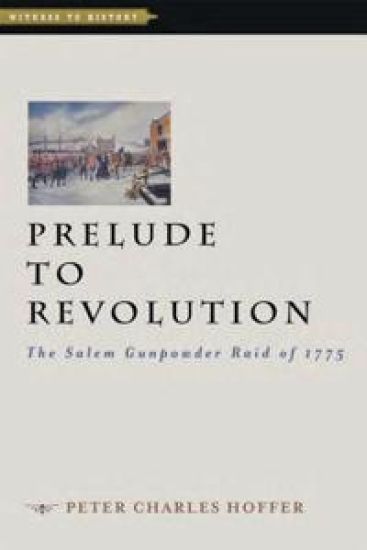
Before colonial Americans could declare independence, they had to undergo a change of heart. Beyond a desire to rebel against British mercantile and fiscal policies, they had to believe that they could stand up to the fully armed British soldier. Prelude to Revolution uncovers one story of how the Americans found that confidence. On April 19, 1775, British raids on Lexington Green and Concord Bridge made history, but it was an episode nearly two months earlier in Salem, Massachusetts, that set the stage for the hostilities. Peter Charles Hoffer has discovered records and newspaper accounts of a British gunpowder raid on Salem. Seeking powder and cannon hidden in the town, a regiment of British Regulars were foiled by quick-witted patriots who carried off the ordnance and then openly taunted the Regulars. The prudence of British commanding officer Alexander Leslie and the persistence of the patriot leaders turned a standoff into a bloodless triumph for the colonists. What might have been a violent confrontation turned into a local victory, and the patriots gloated as news spread of "Leslie's Retreat." When British troops marched on Lexington and Concord on that pivotal day in April, Hoffer explains, each side had drawn diametrically opposed lessons from the Salem raid. It emboldened the rebels to stand fast and infuriated the British, who vowed never again to back down. After relating these battles in vivid detail, Hoffer provides a teachable problem in historic memory by asking why we celebrate Lexington and Concord but not Salem and why New Englanders recalled the events at Salem but then forgot their significance. Praise for the work of Peter Charles Hoffer "This book more than succeeds in achieving its goal of helping students understand and appreciate the cultural and intellectual environment of the Anglophone world." (New England Quarterly, reviewing When Benjamin Franklin Met the Reverend Whitefield). "A synthetic essay of considerable grace and scope...An excellent overview of the field." (Journal of Legal History, reviewing Law and People in Colonial America).
Prelude to Revolution

Prelude to Revolution

Peter Charles Hoffer

Johns Hopkins University Press
2014
pokkari
Before colonial Americans could declare independence, they had to undergo a change of heart. Beyond a desire to rebel against British mercantile and fiscal policies, they had to believe that they could stand up to the fully armed British soldier. Prelude to Revolution uncovers one story of how the Americans found that confidence. On April 19, 1775, British raids on Lexington Green and Concord Bridge made history, but it was an episode nearly two months earlier in Salem, Massachusetts, that set the stage for the hostilities. Peter Charles Hoffer has discovered records and newspaper accounts of a British gunpowder raid on Salem. Seeking powder and cannon hidden in the town, a regiment of British Regulars were foiled by quick-witted patriots who carried off the ordnance and then openly taunted the Regulars. The prudence of British commanding officer Alexander Leslie and the persistence of the patriot leaders turned a standoff into a bloodless triumph for the colonists. What might have been a violent confrontation turned into a local victory, and the patriots gloated as news spread of "Leslie's Retreat." When British troops marched on Lexington and Concord on that pivotal day in April, Hoffer explains, each side had drawn diametrically opposed lessons from the Salem raid. It emboldened the rebels to stand fast and infuriated the British, who vowed never again to back down. After relating these battles in vivid detail, Hoffer provides a teachable problem in historic memory by asking why we celebrate Lexington and Concord but not Salem and why New Englanders recalled the events at Salem but then forgot their significance. Praise for the work of Peter Charles Hoffer "This book more than succeeds in achieving its goal of helping students understand and appreciate the cultural and intellectual environment of the Anglophone world." (New England Quarterly, reviewing When Benjamin Franklin Met the Reverend Whitefield). "A synthetic essay of considerable grace and scope...An excellent overview of the field." (Journal of Legal History, reviewing Law and People in Colonial America).
Clio Among the Muses

Clio Among the Muses

Peter Charles Hoffer

New York University Press
2013
sidottu
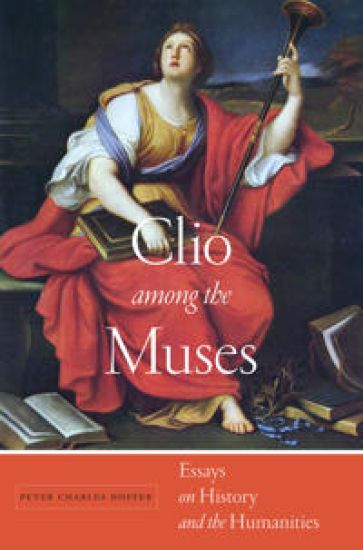
History helps us understand change, provides clues to our own identity, and hones our moral sense. But history is not a stand-alone discipline. Indeed, its own history is incomplete without recognition of its debt to its companions in the humane and social sciences. In Clio among the Muses, noted historiographer Peter Charles Hoffer relates the story of this remarkable collaboration. Hoffer traces history's complicated partnership with its coordinate disciplines of religion, philosophy, the social sciences, literature, biography, policy studies, and law. As in ancient days, when Clio was preeminent among the other eight muses, so today, the author argues that history can and should claim pride of place in the study of past human action and thought. Intimate and irreverent at times, Clio among the Muses synthesizes a remarkable array of information. Clear and concise in its review of the companionship between history and its coordinate disciplines, fair-minded in its assessment of the contributions of history to other disciplines and these disciplines' contributions to history, Clio among the Muses will capture the attention of everyone who cares about the study of history. For as the author demonstrates, the study of history is something unique, ennobling, and necessary. One can live without religion, philosophy and the rest. One cannot exist without history. Rigorously documented throughout, the book offers a unique perspective on the craft of history.
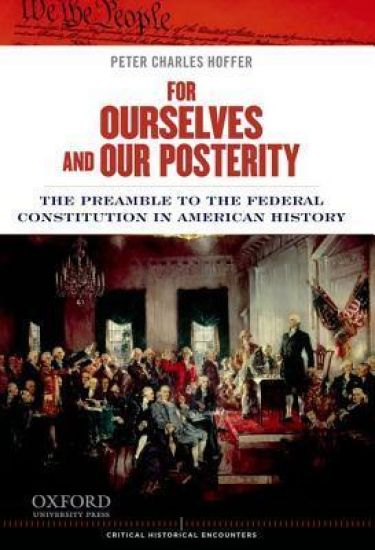
For Ourselves and Our Posterity: The Preamble to the Federal Constitution in American History
In For Ourselves and Our Posterity: The Preamble to the Federal Constitution in American History, author Peter Charles Hoffer offers a sweeping, dramatic narration of a crucial moment in Early American history. Over the course of five days in September 1787, five men serving on an ad hoc "Committee of Style and Arrangement" edited the draft of the federal Constitution at the Constitutional Convention, profoundly recasting the wording of the Preamble. In so doing, the committee changed a federation into a Union and laid out an ambitious program for national governance many years ahead of its time. The Preamble and all that it came to represent was the unique achievement of a remarkable group of men at a momentous turning point in American history. Providing a clear exposition of constitutional issues, For Ourselves and Our Posterity features individual portraits of the leading framers at the heart of this dramatic event.
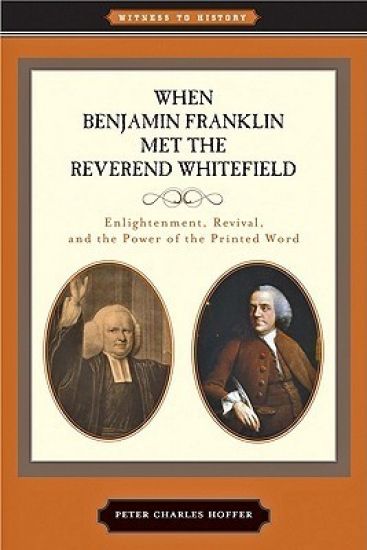
When Benjamin Franklin Met the Reverend Whitefield

When Benjamin Franklin Met the Reverend Whitefield

Peter Charles Hoffer

Johns Hopkins University Press
2012
pokkari
In the 1740s, two quite different developments revolutionized Anglo-American life and thought-the Enlightenment and the Great Awakening. This book takes an encounter between the paragons of each movement-the printer and entrepreneur Benjamin Franklin and the British-born revivalist George Whitefield-as an opportunity to explore the meaning of the beginnings of modern science and rationality on one hand and evangelical religious enthusiasm on the other. There are people who both represent the times in which they live and change them for the better. Franklin and Whitefield were two such men. The morning that they met, they formed a long and lucrative partnership: Whitefield provided copies of his journals and sermons, Franklin published them. So began one of the most unique, mutually profitable, and influential friendships in early American history. By focusing this study on Franklin and Whitefield, Peter Charles Hoffer defines with great precision the importance of the Anglo-American Atlantic World of the eighteenth century in American history. With a swift and persuasive narrative, Hoffer introduces readers to the respective life story of each man, examines in engaging detail the central themes of their early writings, and concludes with a description of the last years of their collaboration. Franklin's and Whitefield's intellectual contributions reach into our own time, making Hoffer's readable and enjoyable account of these extraordinary men and their extraordinary friendship relevant today. Also in the Witness to History series The Huron-Wendat Feast of the Dead: Indian-European Encounters in Early North America by Erik R. Seeman King Philip's War: Colonial Expansion, Native Resistance, and the End of Indian Sovereignty by Daniel R. Mandell The Caning of Charles Sumner: Honor, Idealism, and the Origins of the Civil War by Williamjames Hull Hoffer Bloodshed at Little Bighorn: Sitting Bull, Custer, and the Destinies of Nations by Tim Lehman
When Benjamin Franklin Met the Reverend Whitefield

When Benjamin Franklin Met the Reverend Whitefield

Peter Charles Hoffer

Johns Hopkins University Press
2012
sidottu
In the 1740s, two quite different developments revolutionized Anglo-American life and thought-the Enlightenment and the Great Awakening. This book takes an encounter between the paragons of each movement-the printer and entrepreneur Benjamin Franklin and the British-born revivalist George Whitefield-as an opportunity to explore the meaning of the beginnings of modern science and rationality on one hand and evangelical religious enthusiasm on the other. There are people who both represent the times in which they live and change them for the better. Franklin and Whitefield were two such men. The morning that they met, they formed a long and lucrative partnership: Whitefield provided copies of his journals and sermons, Franklin published them. So began one of the most unique, mutually profitable, and influential friendships in early American history. By focusing this study on Franklin and Whitefield, Peter Charles Hoffer defines with great precision the importance of the Anglo-American Atlantic World of the eighteenth century in American history. With a swift and persuasive narrative, Hoffer introduces readers to the respective life story of each man, examines in engaging detail the central themes of their early writings, and concludes with a description of the last years of their collaboration. Franklin's and Whitefield's intellectual contributions reach into our own time, making Hoffer's readable and enjoyable account of these extraordinary men and their extraordinary friendship relevant today. Also in the Witness to History series The Huron-Wendat Feast of the Dead: Indian-European Encounters in Early North America by Erik R. Seeman King Philip's War: Colonial Expansion, Native Resistance, and the End of Indian Sovereignty by Daniel R. Mandell The Caning of Charles Sumner: Honor, Idealism, and the Origins of the Civil War by Williamjames Hull Hoffer Bloodshed at Little Bighorn: Sitting Bull, Custer, and the Destinies of Nations by Tim Lehman
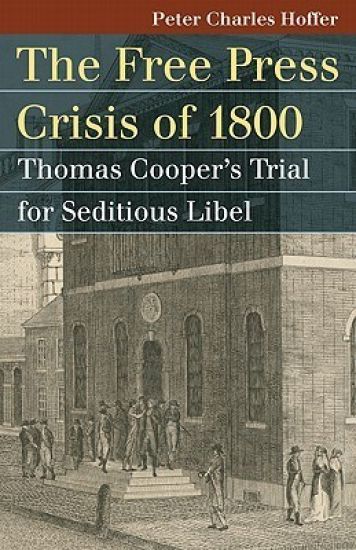
The Free Press Crisis of 1800

The Free Press Crisis of 1800

Peter Charles Hoffer

University Press of Kansas
2011
sidottu
The far-reaching Sedition Act of 1798 was introduced by Federalists to suppress Republican support of French revolutionaries and imposed fines and imprisonment “if any person shall write, print, utter or publish . . . scandalous and malicious writing or writings against the government of the United States.” Such a broadly and loosely defined offense challenged the freedom of the American press and gave the government the power to drag offending newspaper editors into court. The trial of Thomas Cooper in particular became an important showcase for debating the dangers and limits of the new law, one with great implications for both the new republic and federal constitutional law. Cooper’s trial has now been rescued from long neglect and illuminated by Peter Charles Hoffer, one our nation’s preeminent legal historians. While most modern students of the Sedition Act regard it as an extreme measure motivated by partisan malice, Hoffer offers a much more nuanced view that weighs all the arguments and fairly considers the position of each side in historical and legal context. Hoffer sets the stage by revisiting both the much better known 1735 trial of Peter Zenger and the subsequent fashioning of the First Amendment during the first meeting of the U.S. Congress. He then describes the rise of political factions in the early republic, congressional debate over the Sedition Act, and Thomas Jefferson’s and James Madison’s Kentucky and Virginia Resolves. After a close reading of Cooper’s allegedly seditious writings, Hoffer brings the trial record to life, capturing prosecution and defense strategies, including Cooper’s attempt to subpoena President Adams and Federalist trial judge Samuel Chase’s management of the prosecution from the bench. Long after the Federalists had departed the scene, echoes of the free-press crisis continued to roil American politics—reappearing in the debates over antislavery petitions, the suppression of dissent during the Civil War and two world wars, and most recently in the trials of suspected terrorists. Hoffer’s book is an authoritative review of this landmark case and a vital touchstone for anyone concerned about the role of government and the place of dissent in times of national emergency.
The Free Press Crisis of 1800

The Free Press Crisis of 1800

Peter Charles Hoffer

University Press of Kansas
2011
nidottu
The far-reaching Sedition Act of 1798 was introduced by Federalists to suppress Republican support of French revolutionaries and imposed fines and imprisonment “if any person shall write, print, utter or publish . . . scandalous and malicious writing or writings against the government of the United States.” Such a broadly and loosely defined offense challenged the freedom of the American press and gave the government the power to drag offending newspaper editors into court. The trial of Thomas Cooper in particular became an important showcase for debating the dangers and limits of the new law, one with great implications for both the new republic and federal constitutional law. Cooper’s trial has now been rescued from long neglect and illuminated by Peter Charles Hoffer, one our nation’s preeminent legal historians. While most modern students of the Sedition Act regard it as an extreme measure motivated by partisan malice, Hoffer offers a much more nuanced view that weighs all the arguments and fairly considers the position of each side in historical and legal context. Hoffer sets the stage by revisiting both the much better known 1735 trial of Peter Zenger and the subsequent fashioning of the First Amendment during the first meeting of the U.S. Congress. He then describes the rise of political factions in the early republic, congressional debate over the Sedition Act, and Thomas Jefferson’s and James Madison’s Kentucky and Virginia Resolves. After a close reading of Cooper’s allegedly seditious writings, Hoffer brings the trial record to life, capturing prosecution and defense strategies, including Cooper’s attempt to subpoena President Adams and Federalist trial judge Samuel Chase’s management of the prosecution from the bench. Long after the Federalists had departed the scene, echoes of the free-press crisis continued to roil American politics—reappearing in the debates over antislavery petitions, the suppression of dissent during the Civil War and two world wars, and most recently in the trials of suspected terrorists. Hoffer’s book is an authoritative review of this landmark case and a vital touchstone for anyone concerned about the role of government and the place of dissent in times of national emergency.
"Cry Liberty"

"Cry Liberty"

Peter Charles Hoffer

Oxford University Press Inc
2010
nidottu
The story of slavery in the colonial New World is, in part, one of rebellion. In Jamaica, Hispaniola, Dutch Surinam and elsewhere, massive uprisings threatened European rule. But not in British North America. Between the founding of Jamestown in 1607 and the start of the American Revolution in 1775, the colonies experienced only one notable revolt, on South Carolina's Stono River in 1739, and it lasted a single day. Yet, writes Peter Charles Hoffer, as brief as this event was, historians have misunderstood it--and have thus overlooked its deeper significance. In "Cry Liberty," Hoffer provides a deeply researched and finely nuanced narrative of the Stono River conflict, offering uncomfortable insights into American slavery. In particular, he draws on new sources to reexamine this one dramatic day. According to conventional wisdom, recently imported African slaves-warriors in spirit and training-learned of an impending war between England and Spain. Seeking freedom from Spanish authorities, the argument runs, they launched a well-planned uprising in order to escape to Florida.But Hoffer has mined legislative and legal records, land surveys, and first-hand accounts to identify precisely where the fighting began, trace the paths taken by rebels and militia, and offer a new explanation of its causes. Far from a noble, well-crafted revolt, he reveals, the slaves were simply breaking into a store to take what they thought was their due, and chance events put them on a path no participant had originally intended. The truth is a far less heroic, but far more of a human tragedy. Richly researched, crisply told, and unflinchingly honest, this book uncovers the grim truth about the violent wages of slavery and sheds light on why North America had so few slave rebellions.
The Historians' Paradox

The Historians' Paradox

Peter Charles Hoffer

New York University Press
2010
pokkari
Hoffer argues for a new methodological philosophy of history that mitigates fallibility and paradox How do we know what happened in the past? We cannot go back, and no amount of historical data can enable us to understand with absolute certainty what life was like "then." It is easy to demolish the very idea of historical knowing, but it is impossible to demolish the importance of historical knowing. In an age of cable television pundits and anonymous bloggers dueling over history, the value of owning history increases at the same time as our confidence in history as a way of knowing crumbles. Historical knowledge thus presents a paradox—the more it is required, the less reliable it has become. To reconcile this paradox—that history is impossible but necessary—Peter Charles Hoffer proposes a practical, workable philosophy of history for our times, one that is robust and realistic, and that speaks to anyone who reads, writes and teaches history. Covering a sweeping range of philosophies (from ancient history to game theory), methodological approaches to writing history, and the advantages and disadvantages of different strategies of argument, Hoffer constructs a philosophy of history that is reasonable, free of fallacy, and supported by appropriate evidence that is itself tenable.
A Nation of Laws

A Nation of Laws

Peter Charles Hoffer

University Press of Kansas
2010
sidottu
America's founders extolled a nation of laws, for they knew that only a fairly enforced legal system could protect liberty and property against corruption and tyranny. Nearly two and a half centuries later, that system remains the ultimate safeguard for us all. With concise but penetrating and provocative insights, the eminent Peter Charles Hoffer recaptures the spirit of this grand enterprise while never losing sight of its human face. The distillation of four decades of stellar writing, Hoffer's book is a wise and illuminating meditation on the key concepts, history, evolution, and importance of American law. He brings the law to life through brief narratives and portraits drawn from the pages of our nation's history. He takes his readers on a tumultuous journey from the Salem witchcraft trials through the divisive debates over slavery; the long struggles for equality and civil rights; the moral and culture wars over abortion, gay rights, and the teaching of evolution; and, recent controversies concerning the rule of law in wartime. In a very compact space, Hoffer has a great deal to say about the role of law, lawmakers, law cases, lawyers, litigants, judges, law professors, and public opinion in creating and recreating the fabric that weaves all of these elements together. He pays particular attention to the criminal trial by looking at the legal proceedings against slave liberator John Brown, feminist Susan B. Anthony, and teacher of evolution John Scopes. He also explores what happens when the law is stretched to the breaking point by revisiting such events as the Stono Slave Rebellion, the Seneca Falls women's rights convention, and FDR's paradigm-shifting New Deal speech. Throughout, Hoffer carefully weighs the promise and vitality of our laws against its flaws and historical failures, for our legal system has not reflected a strong linear progress from inequality and privilege toward perfected liberty and dignity for all. His crystal clear vision of our legal history reminds us of the ambiguities and contradictions, quarrels and confrontations, that mirror the struggles within American history itself and reinforce the central role of law in American life.
The Historians' Paradox

The Historians' Paradox

Peter Charles Hoffer

New York University Press
2008
sidottu
Hoffer argues for a new methodological philosophy of history that mitigates fallibility and paradox How do we know what happened in the past? We cannot go back, and no amount of historical data can enable us to understand with absolute certainty what life was like "then." It is easy to demolish the very idea of historical knowing, but it is impossible to demolish the importance of historical knowing. In an age of cable television pundits and anonymous bloggers dueling over history, the value of owning history increases at the same time as our confidence in history as a way of knowing crumbles. Historical knowledge thus presents a paradox—the more it is required, the less reliable it has become. To reconcile this paradox—that history is impossible but necessary—Peter Charles Hoffer proposes a practical, workable philosophy of history for our times, one that is robust and realistic, and that speaks to anyone who reads, writes and teaches history. Covering a sweeping range of philosophies (from ancient history to game theory), methodological approaches to writing history, and the advantages and disadvantages of different strategies of argument, Hoffer constructs a philosophy of history that is reasonable, free of fallacy, and supported by appropriate evidence that is itself tenable.