Kirjojen hintavertailu. Mukana 12 657 676 kirjaa ja 12 kauppaa.

Kirjailija

Peter Charles Hoffer

Kirjat ja teokset yhdessä paikassa: 48 kirjaa, julkaisuja vuosilta 1998-2025, suosituimpien joukossa Reading and Writing American History Volume 1. Vertaile teosten hintoja ja tarkista saatavuus suomalaisista kirjakaupoista.

48 kirjaa

Kirjojen julkaisuhaarukka 1998-2025.

The Treason Trials of Aaron Burr

The Treason Trials of Aaron Burr

Peter Charles Hoffer

University Press of Kansas
2008
nidottu
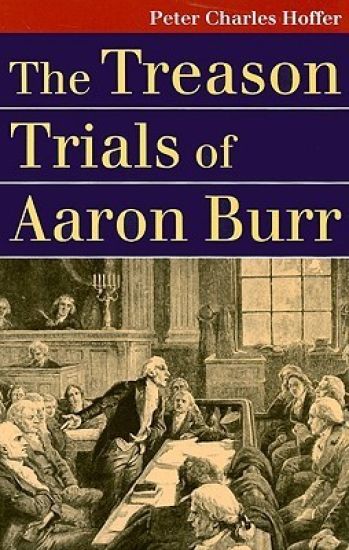
Aaron Burr was an enigma even in his own day. Founding father and vice president, he engaged in a duel with Alexander Hamilton resulting in a murder indictment that effectively ended his legal career. And when he turned his attention to entrepreneurial activities on the frontier he was suspected of empire building - and worse.Burr was finally arrested as a threat to national security, under suspicion of fomenting insurrection against the young republic, and then held without bail for months. His trial, witnessing the unfortunate intrusion of partisan politics and personal animosity into the legal process, revolved around a highly contentious debate over the constitutional meaning of treason.In the first book dedicated to this important case, Peter Charles Hoffer unveils a cast of characters ensnared by politics and law at the highest levels of government, including President Thomas Jefferson - one of Burr's bitterest enemies - and Chief Justice John Marshall, no fan of either Burr or Jefferson. Hoffer recounts how Jefferson's prosecutors argued that the mere act of discussing an ""overt Act of War"" - the constitution's definition of treason - was tantamount to committing the act. Marshall, however, ruled that without the overt act, no treasonable action had occurred and neither discussion nor conspiracy could be prosecuted. Subsequent attempts to convict Burr on violations of the Neutrality Act failed as well.A fascinating excursion into the early American past, Hoffer's narrative makes it clear why the high court's ultimate finding was so foundational that it has been cited as precedent 383 times. Along the way, Hoffer expertly unravels the tale's major themes: attempts to redefine treason in times of crisis, efforts to bend the law to political goals, the admissibility of evidence, the vulnerability of habeas corpus, and the reach of executive privilege. He also proposes an original and provocative explanation for Burr's bizarre conduct that will provide historians with new food for thought.Deftly linking politics to law, Hoffer's highly readable study resonates with current events and shows us why the issues debated two centuries ago still matter today.
The Treason Trials of Aaron Burr

The Treason Trials of Aaron Burr

Peter Charles Hoffer

University Press of Kansas
2008
sidottu
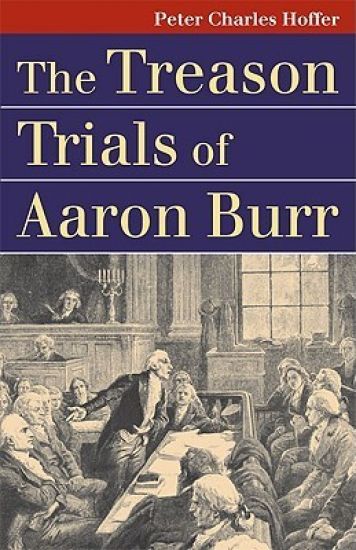
Aaron Burr was an enigma even in his own day. Founding father and vice president, he engaged in a duel with Alexander Hamilton resulting in a murder indictment that effectively ended his legal career. And when he turned his attention to entrepreneurial activities on the frontier he was suspected of empire building - and worse.Burr was finally arrested as a threat to national security, under suspicion of fomenting insurrection against the young republic, and then held without bail for months. His trial, witnessing the unfortunate intrusion of partisan politics and personal animosity into the legal process, revolved around a highly contentious debate over the constitutional meaning of treason.In the first book dedicated to this important case, Peter Charles Hoffer unveils a cast of characters ensnared by politics and law at the highest levels of government, including President Thomas Jefferson - one of Burr's bitterest enemies - and Chief Justice John Marshall, no fan of either Burr or Jefferson. Hoffer recounts how Jefferson's prosecutors argued that the mere act of discussing an ""overt Act of War"" - the constitution's definition of treason - was tantamount to committing the act. Marshall, however, ruled that without the overt act, no treasonable action had occurred and neither discussion nor conspiracy could be prosecuted. Subsequent attempts to convict Burr on violations of the Neutrality Act failed as well.A fascinating excursion into the early American past, Hoffer's narrative makes it clear why the high court's ultimate finding was so foundational that it has been cited as precedent 383 times. Along the way, Hoffer expertly unravels the tale's major themes: attempts to redefine treason in times of crisis, efforts to bend the law to political goals, the admissibility of evidence, the vulnerability of habeas corpus, and the reach of executive privilege. He also proposes an original and provocative explanation for Burr's bizarre conduct that will provide historians with new food for thought.Deftly linking politics to law, Hoffer's highly readable study resonates with current events and shows us why the issues debated two centuries ago still matter today.
The Brave New World

The Brave New World

Peter Charles Hoffer

Johns Hopkins University Press
2007
pokkari
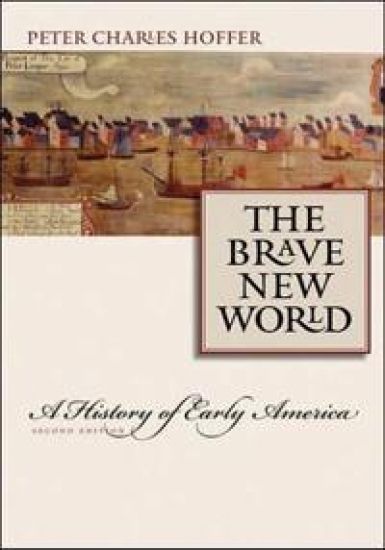
The Brave New World covers the span of early American history, from 30,000 years before Europeans ever landed on North American shores to creation of the new nation. With its exploration of the places and peoples of early America, this comprehensive, lively narrative brings together the most recent scholarship on the colonial and revolutionary eras, Native Americans, slavery, politics, war, and the daily lives of ordinary people. The revised, enlarged edition includes a new chapter carrying the story through the American Revolution, the War for Independence, and the creation of the Confederation. Additional material on the frontier, the Southwest and the Caribbean, the slave trade, religion, science and technology, and ecology broadens the text, and maps drawn especially for this edition will enable readers to follow the story more closely. The bibliographical essay, one of the most admired features of the first edition, has been expanded and brought up to date. Peter Charles Hoffer combines the Atlantic Rim scholarship with a Continental perspective, illuminating early America from all angles-from its first settlers to the Spanish Century, from African slavery to the Salem witchcraft cases, from prayer and drinking practices to the development of complex economies, from the colonies' fight for freedom to an infant nation's struggle for political and economic legitimacy. Wide-ranging in scope, inclusive in content, the revised edition of The Brave New World continues to provide professors, students, and historians with an engaging and accessible history of early North America.
Sensory Worlds in Early America

Sensory Worlds in Early America

Peter Charles Hoffer

Johns Hopkins University Press
2006
pokkari
Over the past half-century, historians have greatly enriched our understanding of America's past, broadening their fields of inquiry from such traditional topics as politics and war to include the agency of class, race, ethnicity, and gender and to focus on the lives of ordinary men and women. We now know that homes and workplaces form a part of our history as important as battlefields and the corridors of power. Only recently, however, have historians begun to examine the fundamentals of lived experience and how people perceive the world through the five senses. In this ambitious work, Peter Charles Hoffer presents a "sensory history" of early North America, offering a bold new understanding of the role that sight, sound, smell, taste, and touch played in shaping the lives of Europeans, Indians, and Africans in the New World. Reconstructing the most ephemeral aspects of America's colonial past-the choking stench of black powder, the cacophony of unfamiliar languages, the taste of fresh water and new foods, the first sight of strange peoples and foreign landscapes, the rough texture of homespun, the clumsy weight of a hoe-Hoffer explores the impact of sensuous experiences on human thought and action. He traces the effect sensation and perception had on the cause and course of events conventionally attributed to deeper cultural and material circumstances. Hoffer revisits select key events, encounters, and writings from America's colonial past to uncover the sensory elements in each and decipher the ways in which sensual data were mediated by prevailing and often conflicting cultural norms. Among the episodes he reexamines are the first meetings of Europeans and Native Americans; belief in and encounters with the supernatural; the experience of slavery and slave revolts; the physical and emotional fervor of the Great Awakening; and the feelings that prompted the Revolution. Imaginatively conceived, deeply informed, and elegantly written, Sensory Worlds of Early America convincingly establishes sensory experience as a legitimate object of historical inquiry and vividly brings America's colonial era to life.
The Great New York Conspiracy of 1741

The Great New York Conspiracy of 1741

Peter Charles Hoffer

University Press of Kansas
2004
sidottu
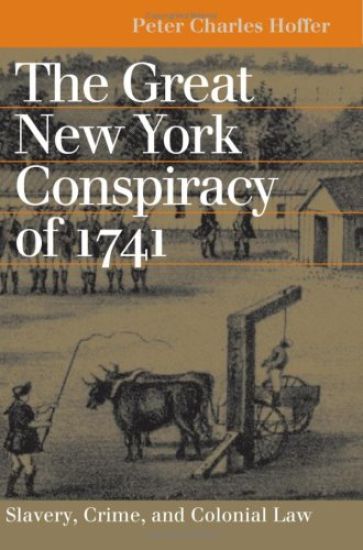
Three and a half decades before the city of New York witnessed the first great battle waged by the new United States of America for its independence, rumors of a massive conspiracy among the city's slaves spread panic throughout the colony. On the testimony of frightened bondsmen and a handful of whites, over seventy slaves were convicted and a third of these were executed. The suspected conspiracy in New York prompted one of the most extensive slave trials in colonial history and some of the most grisly punishments ever meted out to individuals. Peter Hoffer now retells the dramatic story of those landmark trials, setting the events in their legal and historical contexts and offering a revealing glimpse of slavery in colonial cities and of the way that the law defined and policed the institution. Among other things, Hoffer reveals how conspiracy became a central feature of the law of slavery at the same time as it reflected the white belief that slaves were always conspiring against their masters. He draws on uniquely revealing firsthand accounts of the trials to both retell a gripping story and open a window on colonial American justice. He leads readers through a chain of events involving robbery and arson that culminated in the trials of a group of white men suspected of inciting the slaves to revolt. The episode, so vital to our understanding of a time when slavery was an entrenched institution and the law made even the angry muttering of slaves into a criminal act, has much to tell us about current affairs as well. African slaves in colonial times were viewed by authorities and citizens much as some foreigners are today: inherently dangerous, easily identifiable, and constantly conspiring. Peter Charles Hoffer is Distinguished Professor of History at the University of Georgia and coeditor of the series Landmark Law Cases and American Society. Among his other books are The Salem Witchcraft Trials: A Legal History (see page 48). The Law's Conscience: Constitutionalism in America, and Roe v. Wade: The Abortion Rights Controversy in American History, coauthored with N. E. H. Hull (see page 36).
Sensory Worlds in Early America

Sensory Worlds in Early America

Peter Charles Hoffer

Johns Hopkins University Press
2003
sidottu
Over the past half-century, historians have greatly enriched our understanding of America's past, broadening their fields of inquiry from such traditional topics as politics and war to include the agency of class, race, ethnicity, and gender and to focus on the lives of ordinary men and women. We now know that homes and workplaces form a part of our history as important as battlefields and the corridors of power. Only recently, however, have historians begun to examine the fundamentals of lived experience and how people perceive the world through the five senses. In this ambitious work, Peter Charles Hoffer presents a "sensory history" of early North America, offering a bold new understanding of the role that sight, sound, smell, taste, and touch played in shaping the lives of Europeans, Indians, and Africans in the New World. Reconstructing the most ephemeral aspects of America's colonial past-the choking stench of black powder, the cacophony of unfamiliar languages, the taste of fresh water and new foods, the first sight of strange peoples and foreign landscapes, the rough texture of homespun, the clumsy weight of a hoe-Hoffer explores the impact of sensuous experiences on human thought and action. He traces the effect sensation and perception had on the cause and course of events conventionally attributed to deeper cultural and material circumstances. Hoffer revisits select key events, encounters, and writings from America's colonial past to uncover the sensory elements in each and decipher the ways in which sensual data were mediated by prevailing and often conflicting cultural norms. Among the episodes he reexamines are the first meetings of Europeans and Native Americans; belief in and encounters with the supernatural; the experience of slavery and slave revolts; the physical and emotional fervor of the Great Awakening; and the feelings that prompted the Revolution. Imaginatively conceived, deeply informed, and elegantly written, Sensory Worlds of Early America convincingly establishes sensory experience as a legitimate object of historical inquiry and vividly brings America's colonial era to life.
The Great New York Conspiracy of 1741

The Great New York Conspiracy of 1741

Peter Charles Hoffer

University Press of Kansas
2003
nidottu
Almost 35 years before New York saw the first great battle waged by the new United States of America for its independence, rumours of a slave conspiracy spread in the city, leading to the conviction and execution of over 70 slaves. This text retells the dramatic story of these landmark trials.
The Devil's Disciples

The Devil's Disciples

Peter Charles Hoffer

Johns Hopkins University Press
1998
pokkari
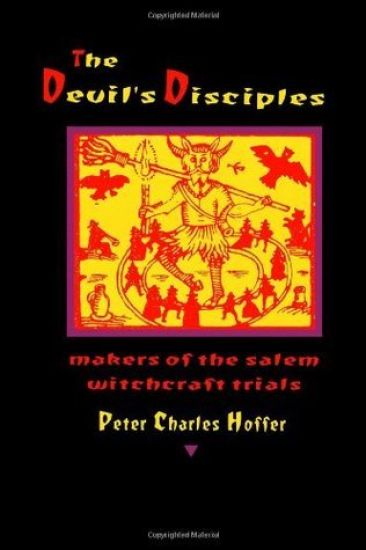
Approaching the subject as a legal and social historian, Peter Charles Hoffer offers a fresh look at the Salem outbreak based on recent studies of panic rumors, teen hysteria, child abuse, and intrafamily relations. He brings to life a set of conversations -- in taverns and courtrooms, at home and work -- which took place among suspected witches, accusers, witnesses, and spectators. The accusations, denials, and confessions of this legal story eventually resurrect the tangled internal tensions that lay at the bottom of the Salem witch hunts.