Kirjojen hintavertailu. Mukana 12 657 676 kirjaa ja 12 kauppaa.
Kirjailija
Peter Doyle
Kirjat ja teokset yhdessä paikassa: 44 kirjaa, julkaisuja vuosilta 1996-2026, suosituimpien joukossa Fritz and Tommy. Vertaile teosten hintoja ja tarkista saatavuus suomalaisista kirjakaupoista.
How much can you really find out about the Leaders and Commanders of the First World War in five minutes? This handy little history book will surpass all your expectations and leave you well versed on all you wish to know, and maybe even a little bit more… Who were the leaders? Who commanded the British Army on the Somme? Which general committed suicide in shame? Who stopped the German offensive at Verdun? Who invented stormtroopers? Jam-packed with facts and first-hand accounts of the action, all woven together in an accessible way by an expert in the field, this 5 Minute History is a valuable addition to anyone’s bookshelf, ready to be delved into at a moment’s notice.
Objects allow us to reach out and touch the past and they play a living role in history today. Through them we can understand the experience of men and women during the First World War. They bear witness to the stories of men whose only morning comfort in the trenches was the rum ration, children who grew up with only one photograph of the father that they would never get to know, women who would sacrifice their girlhood in hospitals yards from the frontline, pinning a brooch on to remind themselves of a past life. Weapons like the machine gun and vehicles like the tank that transformed the battlefield; planes that had barely learnt to be flown entangled in dogfights far above the barbed wire of the frontline; German submarines that stalked shipping across the seas. Through these incredible artefacts, Peter Doyle tells the story of the First World War in a whole new light.
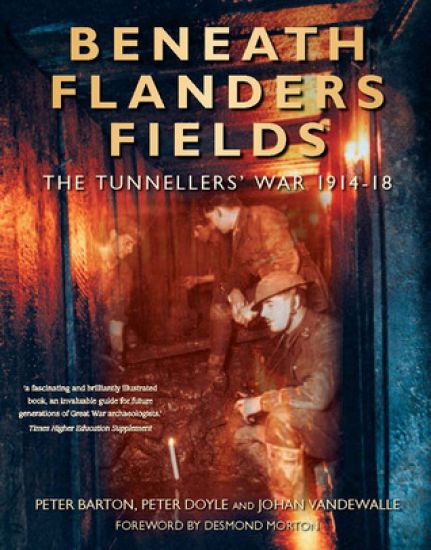
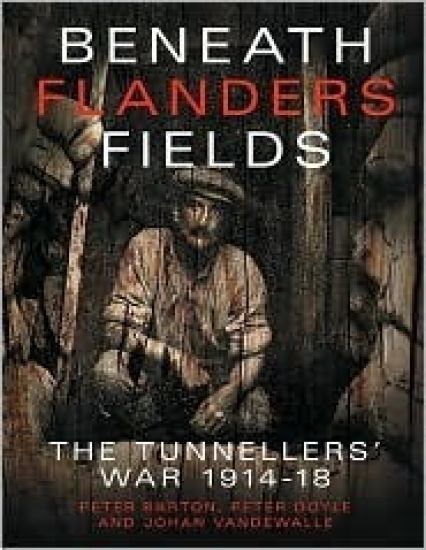
The result of over twenty-five years of research, Beneath Flanders Fields reveals how this intense underground battle was fought and won. The authors give the first full account of mine warfare in World War I through the words of the tunnellers themselves as well as plans, drawings, and previously unpublished archive photographs, many in colour. Beneath Flanders Fields also shows how military mining evolved. The tunnellers constructed hundreds of deep dugouts that housed tens of thousands of troops. Often electrically lit and ventilated, these tunnels incorporated headquarters, cookhouses, soup kitchens, hospitals, drying rooms, and workshops. A few dugouts survive today, a final physical legacy of the Great War, and are presented for the first time in photographs in Beneath Flanders Fields.
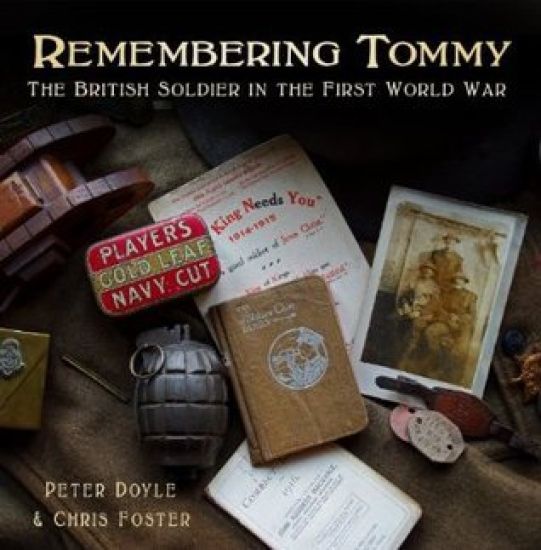
The British soldier of the Great War has been depicted in many books. Invariably, a pen picture paints him as stoic, joining the army in a wave of patriotic fervour, and destined to serve four years on the Western Front in some of the most costly battles in history. Yet often the picture is difficult to resolve for the reader. What was it like in the trenches? How did the soldier live, where did he sleep? What was it like to go over the top, and when he did, what did he carry with him? For many, the idea of trench life is hazy, and usually involves ‘drowning in mud’, in, as one writer put it, ‘the pitiless misery’ of Passchendaele. Recently, military historians have presented an alternative picture, a picture in which the hopelessness of the First World War is given new life and purpose. Remembering Tommy pays tribute to the real life British soldier of the Great War from the moment of joining up to their final homecoming. Using original artefacts in historic settings, the men and their words are brought to life. The uniforms they wore, the equipment they carried, the letters they wrote home, their personal possessions, mementos and photographs come together in a powerful tribute to the indomitable Tommy. Each one of these precious artefacts bears witness to the men who left them behind – allowing us to almost reach out and touch history.
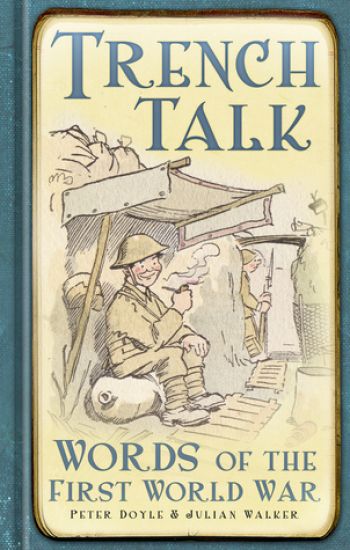
The First World War largely directed the course of the twentieth century. Fought on three continents, the war saw 14 million killed and 34 million wounded. Its impact shaped the world we live in today, and the language of the trenches continues to live in the modern consciousness. One of the enduring myths of the First World War is that the experience of the trenches was not talked about. Yet dozens of words entered or became familiar in the English language as a direct result of the soldiers’ experiences. This book looks at how the experience of the First World War changed the English language, adding words that were both in slang and standard military use, and modifying the usage and connotations of existing words and phrases. Illustrated with material from the authors’ collections and photographs of the objects of the war, the book will look at how the words emerged into everyday language.
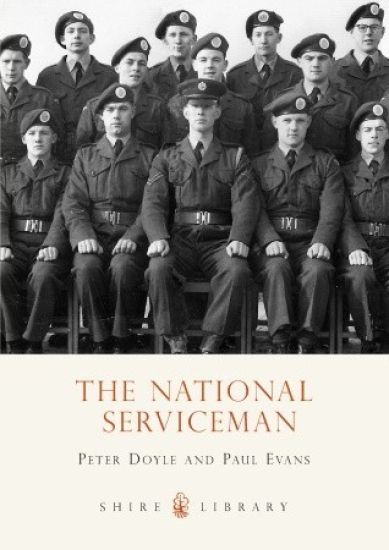
As Britain emerged from the Second World War, the armed forces desperately needed extra manpower to face new threats from old allies and to meet the considerable obligations of its Empire. Between 1947 and 1960, more than 1.1 million men were conscripted for a oneor two-year stint as national servicemen to help the Army, RAF, and, to a lesser extent, the Navy, cope with the demands placed on them. After basic training of bull, blanco and square-bashing, recruits would quickly be turned into soldiers, airmen and sailors and posted all over the globe – many of them to fight guerillas, cope with riots and civil war, or even serve on the front line in such theatres as Korea, Malaya, Suez and Aden. Peter Doyle and Paul Evans here explain what life was like for these recruits, from training to demob, and how they were affected by their experiences.
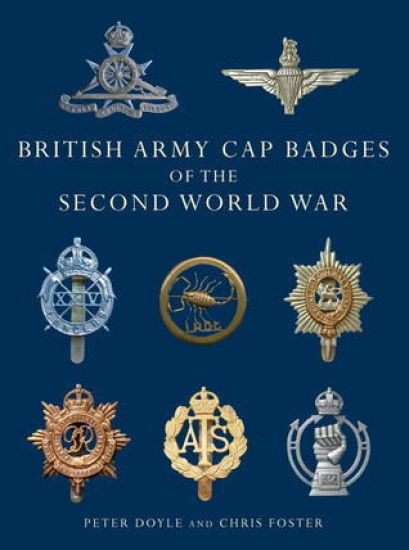
In their companion volume to British Army Cap Badges of the First World War, authors Peter Doyle and Chris Foster present an overview of the main cap badges worn by the British Army during the Second World War, which continued the rich and varied tradition of British regimental insignia. This book describes and illustrates, for the first time in high quality full colour, the main types of cap badge worn. With many amalgamations, war-raised units and special forces, British military insignia from the period have a surprising range that differs substantially from that worn by the soldiers of the previous generation. As in the first book, this volume contains contemporary illustrations of the soldiers themselves wearing the badges. Employing the skills of an established writer (and collector) and artist, it provides a unique reference guide for anyone interested in the British Army of the period.
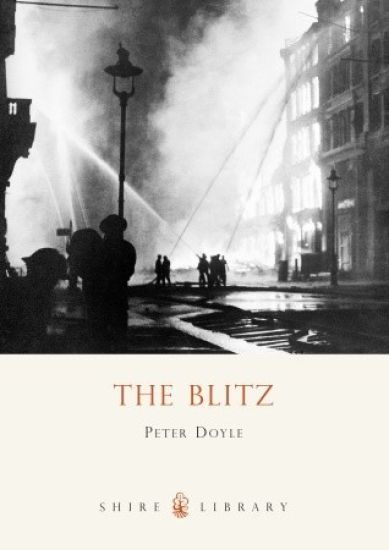
It's May 1941: over 43,000 civilians had been killed, and over a million houses destroyed following endless nights of bombing raids. Yet London, and other cities that had been targeted survived, their spirit undaunted, their people resilient. Revisionist historians have sought to dampen the notion of the 'Blitz spirit', but the writings and surviving records all point to a resilience that would remain unbroken, despite the death toll rising to almost 52,000 from bombing alone. Illustrated with archive photographs and other materials, and illuminated by first hand recollections of the "Blitz", this human history of the bombing raids on Britain is the perfect introduction to this dark episode in British history.
Postcards sent by men on the front, and to them by their families, are among the most numerous, and most telling, surviving artefacts of the Great War. They tell us much about attitudes towards the war, and provide a great insight into men's lives, and into the thoughts and emotions of those left behind. Very different in their illustration, and in their writing, between the beginning of the war and the end, postcards provide a social history of the war in microcosm. Illustrated with a wide range of postcards, this is a fascinating look into the response of the British people to the horrors of the war.
In the late 1930s, when war seemed inevitable and it was realised that aerial attack would be the greatest threat posed by any coming conflict, the government established a volunteer organisation - Air Raid Precautions or ARP - that would stand at the centre of the wartime civil defence. Members of the ARP distributed gasmasks to the population, and policed the blackout. Once raids started they played a vital role in shepherding people to shelter, reporting on damage, and rescuing people from wrecked buildings. Alongside the ARP the Auxiliary Fire Service (later the NFS), Police, Fire Guard and Women's Voluntary Service worked to deal with the effects of bombing raids and to minimise the suffering of the British people. Together they formed the Civil Defence Services, and this book is their history.
The history of the British home in the 1940s is dominated by the Second World War. In the first five years of the decade homes were adapted to better survive the affects of bombing. The 1930s home became the wartime home with the addition of anti-blast tape to the windows, sandbags round the door, and a Morrison shelter in the kitchen. In the garden, lawn and shrubs gave way to vegetable plots and chicken coops. For those whose houses were damaged or destroyed, or those moved out of their homes by post-war rehousing schemes, the picture was very different. For many the pre-fab became home, and new designs of furniture made under the utility scheme furnished rooms cheaply and stylishly. And new estates, different from anything tried before the war, rose from the bomb sites, offering state-of-the-art sanitisation and modern facilities to thousands.
This book provides a clear practical introduction to shareholder value analysis for the marketing professional. It gives them the tools to develop the marketing strategies that will create the most value for business. For top management and CFOs the book explains how marketing generates shareholder value. It shows how top management should evaluate strategies and stimulate more effective and relevant marketing in their companies. The original essence of the first edition has been maintained but obvious areas have been updated and revised, as well as, new areas such as technology have been addressed. The second edition of this book has been written by a ghost writer who has fully updated, enhanced and replaced statistics, case studies and other outdated content with the help of a select advisory panel, each of whom has acted as a subject expert, a guide and as part of a steering committee. The highly prestigious panels of contributors include: Jean-Claude Larréché – INSEAD Veronica Wong – Aston Business School John Quelch – Harvard Business School Susan Hart – Strathclyde Graduate Business School (SGBS) Michael Baker – Emeritus Professor SGBS Tim Ambler – London Business School Tony Cram – Ashridge Table of Contents: PART I Principles of Value Creation 1 Marketing and Shareholder Value 2 The Shareholder Value Approach 3 The Marketing Value Driver 4 The Growth Imperative PART II Developing High-Value Strategies 5 Strategic Position Assessment 6 Value-Based Marketing Strategy PART III Implementing High-Value Strategies 7 Building Brands 8 Pricing for Value 9 Value-Based Communications 10 Value-Based Marketing in the Digital Age
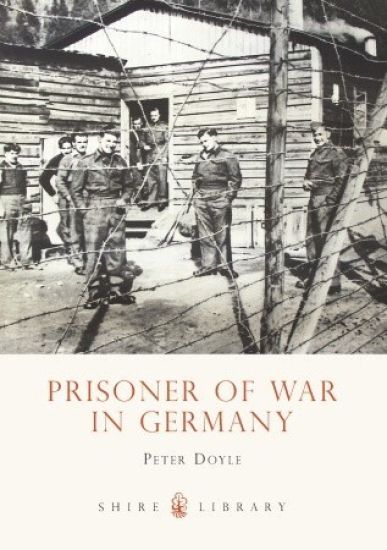
During World War II, German prison camps swelled with Allied Prisoners of War, captured during fierce conflicts, from the Battle of France in 1940 to the bomber offensives over Germany from 1943. This book looks in intimate detail at the life of average private soldiers, beginning with their capture, through the long days as prisoners and hard labourers, to the readjustment to home life after their release. Illustrated with original materials, postcards, and photographs, the author reveals their personal experiences in this intriguing account, including letters to and from home, which disclose some surprising attitudes towards the POWs.
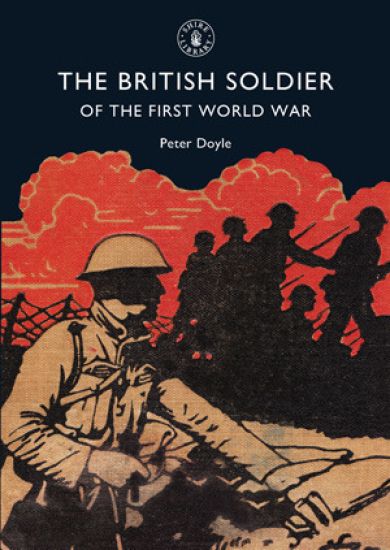
The familiar pictures of the First World War show soldiers in their trenches: hellish images of mud. But there is another dimension not depicted by these frightening representations of battle: the mundane everyday routine of the majority of the soldier's life that was spent away from the Front. This book explores the life of the average British 'Tommy' of the Great War, in battle and at rest, in training, and on his return home. Illustrated with evocative images of the war, and items of the soldier's kit, it provides an answer to the question: What was it like to be a soldier in the trenches on the front line?
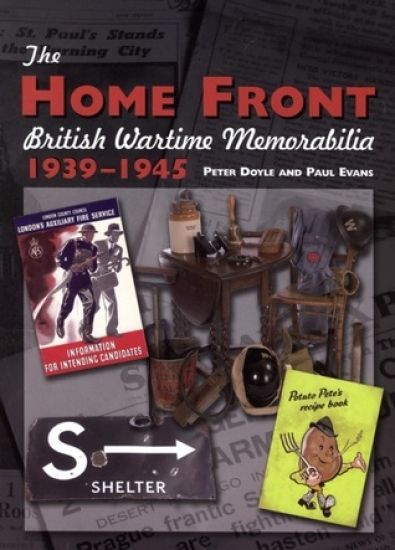
For those living in Britain between 1939 and 1945, the war was an ever-present reality; reminders were to be found everywhere. Huge numbers of objects relating to the war effort at home - some functional, like gas masks, ARP uniforms and ration books, and others less so, like Hitler chamber pots and toys and games - were manufactured and became commonplace in homes up and down the land.
Whilst the war raged across Flanders fields, an equally horrifying and sometimes more dangerous battle took place underground. Beneath Flanders Fields tells the story of the tunnellers’ war, which still remains one of the most misunderstood, misrepresented and mystifying conflicts of the Great War.A wealth of personal testimonies reveal the engineering, technology and science behind how this most intense of battles was fought – and won. They speak of how the tunnellers lived a relentless existence in the depths of the battlefield for almost two and a half years, enduring physical and mental stresses that were often more extreme than their infantry counterparts. Their lives were reduced to a complex war of silence, tension and claustrophobia, leading up to the most dramatic mine offensive in history launched on 7 June 1917 at Messines Ridge. Yet, Messines was not the end of their story, which continued with the crafting of a whole underground world of headquarters, cookhouses and hospitals, housing the innumerable troops who passed through this part of the Western Front.Here, this extraordinary, hidden world is revealed and the fragile legacy it has left behind on Flanders fields is brought to light.Peter Barton, like so many others, derived his passion for the Great War from his grandfather, who served in a veterinary unit near Ypres, and from veteran friends like Bert Fearns, to whom this book is dedicated. He is a filmmaker and writer, and secretary of the All Party Parliamentary War Graves and Battlefields Heritage Group.Peter Doyle is a geologist – and latterly an archaeologist – with a special interest in the role of geology and terrain in the outcome of battles. Amongst others, he has made studies of the Great War battlefields of the Western Front, Gallipoli and Salonika. With Peter Barton, he is co-secretary of the All Parliamentary War Graves and Battlefields Heritage Group.Johan Vandewalle was born and bred in Zonnebeke. He grew up surrounded by the legacy of the Great War, and many childhood adventures involved things subterranean. Although today a skilled carpenter, his working life began as a professional civil engineer tunneller, and the combined knowledge of both disciplines has created a passion and technical understanding of the underground war which has made him the foremost explorer of the tunnels and dugouts in Flanders. Johan can be found on most evenings at his other business, the Café De Dreve on the corner of Polygon Wood, the home of the underground war in the Ypres Salient.
Marketing Management and Strategy is a concise and practical management guide to the latest ideas in advanced Marketing and Strategy. The authors show how to develop a marketing orientation in the organisation and how this impacts on the ultimate corporate goals of profit, growth and security. They then examine how marketing strategies are developed and implemented through effective product, pricing, distribution, communication and services. This is a core text for MBA Marketing Management course and for university short courses for executives. This will also be suitable for any undergraduates or postgraduates on marketing strategy courses.
Echo and Reverb is the first history of acoustically imagined space in popular music recording. The book documents how acoustic effects-reverberation, room ambience, and echo-have been used in recordings since the 1920s to create virtual sonic architectures and landscapes. Author Peter Doyle traces the development of these acoustically-created worlds from the ancient Greek myth of Echo and Narcissus to the dramatic acoustic architectures of the medieval cathedral, the grand concert halls of the 19th century, and those created by the humble parlor phonograph of the early 20th century, and finally, the revolutionary age of rock 'n' roll. Citing recordings ranging from Gene Austin's 'My Blue Heaven' to Elvis Presley's 'Mystery Train,' Doyle illustrates how non-musical sound constructs, with all their rich and contradictory baggage, became a central feature of recorded music. The book traces various imagined worlds created with synthetic echo and reverb-the heroic landscapes of the cowboy west, the twilight shores of south sea islands, the uncanny alleys of dark cityscapes, the weird mindspaces of horror movies, the private and collective spaces of teen experience, and the funky juke-joints of the mind.
The failure of the Gallipoli campaign was instantly blamed on a great untruth – that the War Office was unprepared. This book, incorporating information unavailable elsewhere, shows that in fact the WO and the Admiralty had amassed a huge amount of data. Aerial reconnaissance had played a part – even Lawrence of Arabia had done his bit! The War Office knew all about Greek plans to capture the peninsula and one plan was even Anglo-Greek. The authors examine all the intelligence and how it was used or ignored and in the process, in the words of the late Richard Holmes they ‘illuminate a wildly beautiful landscape, which never fails to charm and shock me in equal measure.’
This highly illustrated, definitive, important, book is the first full account of the British and German mine warfare of the Ypres Salient combining personal testimonies of the tunnellers themselves with details of the workings, giving the reader a new insight into this most secret of all Great War battles and incorporating a host of previously unpublished archive photographs.