Kirjojen hintavertailu. Mukana 12 203 718 kirjaa ja 12 kauppaa.
Kirjailija
Peter Green
Kirjat ja teokset yhdessä paikassa: 35 kirjaa, julkaisuja vuosilta 1993-2026, suosituimpien joukossa Andrei Tarkovsky. Vertaile teosten hintoja ja tarkista saatavuus suomalaisista kirjakaupoista.
A survey of the work of Andrei Tarkovsky, the Russian film-maker who lived from 1932-1986. It is a critical examination of his films in the light of his own writings and life, his aesthetics of film, his theory of time in cinematography and an attempt to comprehend his vision.
During the final days of the Second World War, for 900 Allied officers held by the Germans, freedom was still a world away. Marched east by their captors, away from the liberating American forces, March and April 1945 was a time of great trials, at the mercy of vengeful Nazis and Allied air raids. Amongst their number were men whose names would become famous post-war, such as actor Desmond Llewellyn, cabinet minister Frederick Corfield and Major Bruce Shand, father of the Duchess of Cornwall.The March East 1945 draws on official and eyewitness accounts, as well as over 30 diaries and memoirs. With more than 120 photographs and exceptional illustrations taken and drawn by PoWs as well as the German instructions for camp evacuation, it reveals the human story that unfolded in Hesse, Thuringia and Saxony, and explains how the prisoners survived until their final liberation.
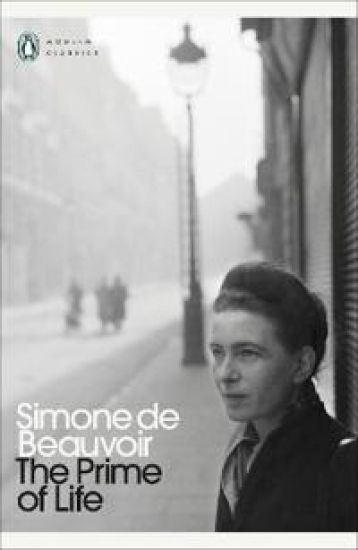
The second volume in Simone de Beauvoir’s celebrated autobiography recalls her formative years in Paris when she began to emerge as a public figureFirst published in 1960, The Prime of Life offers an intimate, captivating picture of Simone de Beauvoir in her twenties, thirties and forties. Beginning as a recent graduate from the Sorbonne teaching high-school girls, we see de Beauvoir revel in the freedom her new financial independence brings. We see her and Jean-Paul Sartre recognise the powerful romantic and intellectual partnership they have found in one another, as they fall in love and define their own unconventional parameters. The Second World War comes, bringing austerity, violence and questions of the reality of freedom and individual responsibility into de Beauvoir’s life. As relevant and penetrating as when first published, The Prime of Life offers rare insight into a truly fascinating mind.
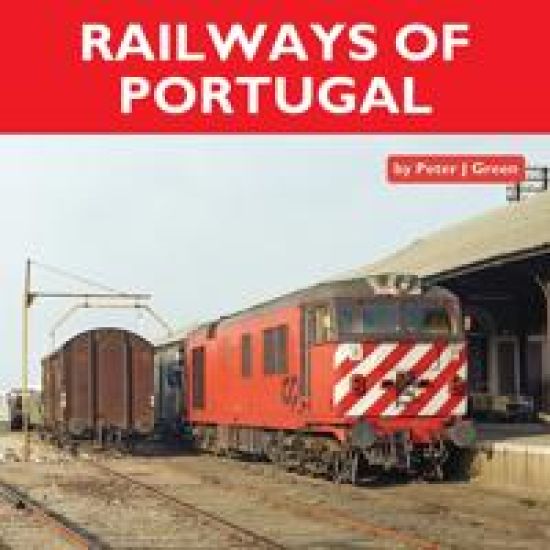
Following the end of the steam locomotive in normal service, the diesel has become the favourite of many railway enthusiasts. To show something of the diesel types and operations on various international railway systems, Peter J. Green has selected some of his best railway photographs from his travels to six of the seven continents of the world. The photographs were taken in forty-five countries between 1975 and 2019. While the use of diesel locomotives in many parts of the world is declining with the increasing use of railcars and spreading electrification, a good variety of power can still be found. Particularly rewarding destinations include the USA and Canada, with their impressive freight trains, and many parts of Asia, where diesel-hauled passenger trains regularly run through interesting landscapes. Diesel traction has also become an important feature of many tourist railways worldwide. Whether photographing the railways or travelling by train, the visitor cannot fail to be impressed.
The metre-gauge railways of South East Asia are a popular destination for railway enthusiasts from all over the world. In this book, Peter J. Green looks at the national railways of Thailand, Malaysia, Cambodia, Myanmar and Vietnam in the twenty-first century. While all these railways are modernising at varying rates, it is still possible to step back into the past and experience train travel behind diesel traction, often in carriages with windows that open, through varied and interesting landscapes. Semaphore signalling is disappearing rapidly but can still be seen in parts of Thailand, Myanmar and Malaysia. With a wealth of previously unpublished photographs, this book offers a fascinating insight into the railways of this rapidly changing area of the world.
For the British 1st Airborne Division Operation Market Garden in September 1944 was a disaster. The Division was eliminated as a fighting force with around a half of its men were captured. The Germans were faced with dealing with 6,000 prisoners in a fortnight; many of them seriously wounded. Somehow the men were processed and despatched to camps around Germany and German occupied eastern Europe. Here the men experienced the reality of the collapsing regime - little food and shrinking frontiers. Once liberated in 1945 returning former prisoners were required to complete liberation questionnaires. Some refused. Others returned before 'Operation Endor' to handle released men and their repatriation to Britain was in place. Around a third did. However the questionnaires that do exist give an picture of every day experience for the 2,357 of these elite troops' time in captivity from capture to release. They show that German procedures still operating, but that men were often treated inhumanely, when moved to camps by closed box cars and when camps were evacuated. Although their interrogators were interested in Allied aircraft and airfields, their interrogators were also concerned the effect of the new miracle weapons and with politics, how Germany would be treated after an Allied victory? Nevertheless the airborne men's morale remained high; carrying out sabotage at artificial oil plants, railway repairs, factories and mines. Some overcame their guards when being evacuated at the end of the War, in some cases joining the Resistance. They record help received from Dutch, French and German civilians.
A jogger out for an early morning run discovers Nigel Butler, a hairdresser, dead, with a comb and scissors stuck up his ass, upside down in a trashcan in front of the Columbia Library. Jimmy Dugan, the only detective in the small Westchester town of Columbia, goes to the salon where Nigel worked and discovers that one of his former clients - a man he had a disagreement with - is Joey Davies, a "retired" mafioso and Columbia's most prominent citizen. Jimmy's investigation into the murder takes a twisting path with some unusual consequences: his family is threatened; there's a shoot-out in Columbia; the mob in a neighboring town is torn apart. Still whoever killed Nigel Butler remains on the loose.
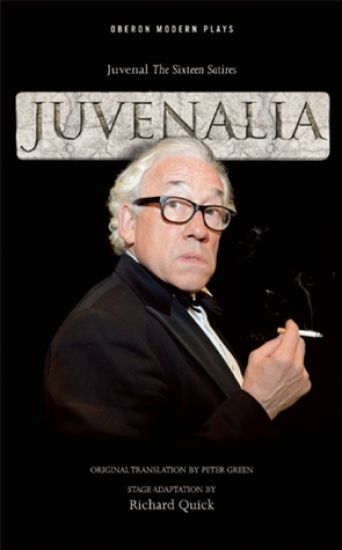
And now for something completely different - Simon Callow, theatrical treasure extraordinaire, reprises a success from early in his career. The writer, Juvenal born circa 55AD, wrote sixteen satires that attacked the decadence of Rome in its heyday. Here adapted by Richard Quick we are given a view into the moral decline that is as relevant now as it was back then.
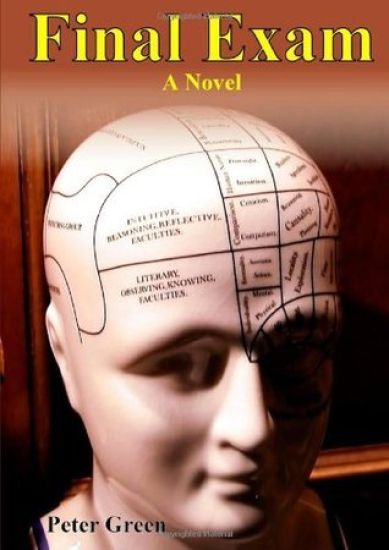
'Exams tend to corrupt; final exams corrupt finally.' This novel is about exams, literature, sex, cancer and time. It asks: 'What use is the study of literature?' Spanning the period 1961 to 2013, Final Exam follows the careers of three undergraduates. The settings are Cambridge University, Sussex University, and hospitals in and around London. Finally, the novel examines the reader. Ian McEwan says: 'I was fascinated and pleased by Final Exam - a stimulating blend of high energy intellectual and sexual tease.' Other readers' comments: 'Disgusting - but most beautifully written and erudite...' ('Maud', on the Kindle website.) 'Whose final exam, and examined by whom and about what? These questions make the novel a fascinating and thought- provoking read.' (Kate, High School Head of English.) 'I thought, "What has my friend and colleague done? Destroyed our occupation? Just had fun?"' (Laurence Lerner, poet and Professor of English.)
A fast moving action novel, which is based on historical characters from the first half of the eighteenth century. Jenny Diver, whose character was included as a role in the Beggar's Opera and was also a character in the song 'Mac the Knife', was born in 1700 as Mary Jones in a Brothel in Ireland. She was adopted at the age of ten and her name was changed to Mary Young. Mary was given another name, Jenny Diver, by her gang as a term of endearment and is depicted as a Robin Hood type of character who, after running away at fifteen, makes her way in the world in London as a thief, an expert con artist and entrepreneur of the 'sting'. Twice Jenny is convicted under assumed names of theft and transported to Virginia before returning to London to continue her "business". The third time she is arrested is far more serious and she shares her story with twenty other convicts in Newgate prison, who have all been sentenced to death.
Until recently, popular biographers and most scholars viewed Alexander the Great as a genius with a plan, a romantic figure pursuing his vision of a united world. His dream was at times characterized as a benevolent interest in the brotherhood of man, sometimes as a brute interest in the exercise of power. Green, a Cambridge-trained classicist who is also a novelist, portrays Alexander as both a complex personality and a single-minded general, a man capable of such diverse expediencies as patricide or the massacre of civilians. Green describes his Alexander as "not only the most brilliant (and ambitious) field commander in history, but also supremely indifferent to all those administrative excellences and idealistic yearnings foisted upon him by later generations, especially those who found the conqueror, tout court, a little hard upon their liberal sensibilities." This biography begins not with one of the universally known incidents of Alexander's life, but with an account of his father, Philip of Macedonia, whose many-territoried empire was the first on the continent of Europe to have an effectively centralized government and military. What Philip and Macedonia had to offer, Alexander made his own, but Philip and Macedonia also made Alexander form an important context for understanding Alexander himself. Yet his origins and training do not fully explain the man. After he was named hegemon of the Hellenic League, many philosophers came to congratulate Alexander, but one was conspicuous by his absence: Diogenes the Cynic, an ascetic who lived in a clay tub. Piqued and curious, Alexander himself visited the philosopher, who, when asked if there was anything Alexander could do for him, made the famous reply, "Don't stand between me and the sun." Alexander's courtiers jeered, but Alexander silenced them: "If I were not Alexander, I would be Diogenes." This remark was as unexpected in Alexander as it would be in a modern leader. For the general reader, the book, redolent with gritty details and fully aware of Alexander's darker side, offers a gripping tale of Alexander's career. Full backnotes, fourteen maps, and chronological and genealogical tables serve readers with more specialized interests.
The so-called first war of the twenty-first century actually began more than 2,300 years ago when Alexander the Great led his army into what is now a sprawling ruin in northern Afghanistan. Frank L. Holt vividly recounts Alexander's invasion of ancient Bactria, situating in a broader historical perspective America's war in Afghanistan.
During the final days of the Second World War, for 900 Allied officers held by the Germans, freedom was still a world away. Marched east by their captors, away from the liberating American forces, March and April 1945 was a time of great trials, at the mercy of vengeful Nazis and Allied air raids. Amongst their number were men whose names would become famous post-war, such as actor Desmond Llewellyn, cabinet minister Frederick Corfield and Major Bruce Shand, father of the Duchess of Cornwall.The March East 1945 draws on official and eyewitness accounts, as well as over 30 diaries and memoirs. With more than 120 photographs and exceptional illustrations taken and drawn by PoWs as well as the German instructions for camp evacuation, it reveals the human story that unfolded in Hesse, Thuringia and Saxony, and explains how the prisoners survived until their final liberation.