

Kirjailija
Peter Handke
Kirjat ja teokset yhdessä paikassa: 168 kirjaa, julkaisuja vuosilta 1969-2026, suosituimpien joukossa Noch einmal vom Neunten Land. Vertaile teosten hintoja ja tarkista saatavuus suomalaisista kirjakaupoista.
168 kirjaa
Kirjojen julkaisuhaarukka 1969-2026.
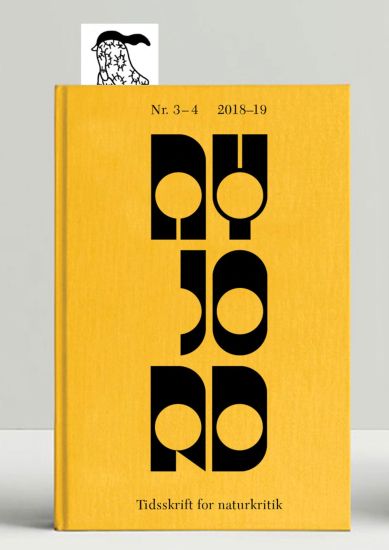
Ny Jord 3-4
Andreas Malm; Margaret Mead; Emil Leth Meilvang; Peter Handke; Rune Engelbreht Larsen; Christoffer Basse Eriksen; Simone Weil; Anders Dunker; Francisco Goya; Liv Sejrbo Lidegaard; Arno Schmidt; Phillip Martinussen; Walt Whitman; Emil Bønnelycke; Signe Gjessing; Daniel Flendt Dreesen; Gaston Bachelard; Jørn H. Sværen; Michael Stoltze; Lao Zi; Ursula K. Le Guin; Peter Sloterdijk; Oliver Bak; Anna Marie Ortese; Edith Södergran; August Strindberg; C.Y. Frostholm; Lea Marie Løppenthin; Max Klinger; Charles Sanders Peirce
Forlaget Virkelig
2020
nidottu
Ny Jord – Tidsskrift for naturkritik er et multidisciplinært tidsskrift, der orienterer sig på tværs af århundreder og landegrænser og bringer videnskab, litteratur og kunst side om side i ønsket om at bidrage til en kvalificeret samtale om naturen i en tid, hvor vores forestillinger og idéer om den ændres markant.

Im neuen Buch, der geheimnisvollen und überraschungsreichen "Vorwintergeschichte" Kali, bricht eine Sängerin nach Abschluß ihrer Tournee in ihre Kindergegend auf - nach Handke-Land: "In die Gegend gleich nebenan, hinter dem Kindheitsfluß. ... Dort ist der Winter noch Winter. Oder: Es ist eine Auswanderer-Gegend ... Das Einzige, was ich noch weiß: Der Untergrund dort besteht bis in die tiefsten Tiefen aus Salz - Kali. ... Auch im Sommer ein schneeweißer Bergrücken mitten in der Ebene." An jenem Ort leben die unterschiedlichsten Weltenbewohner, "Überlebende des Dritten Weltkriegs, der rund um uns schon seit langem wütet, unerklärt, wenig sichtbar, aber um so böser". Deren Leben, so wird der Sängerin bei ihrer Ankunft in der Siedlung auf dem Kali-Berg deutlich, ist völlig aus den Fugen, seit ein Kind verschwunden ist. Und wie geht es mit dem Kind weiter? Und warum heißt es am Ende: "Ah, wenn einmal ein Kind ins Erzählen kommt..."? In Kali hat Peter Handke die Geschichte, die Stationen, das ernste Spiel des Verlorengehens, des Findens und Suchens in unserer Zeit erzählt. Wen sucht die Sängerin? Warum reist sie zunächst zu ihrer Mutter? Wieso flößt sie dem Mann und dessen Sohn in der Bergwohnsiedlung Angst ein? Und warum reist sie zum tiefsten Punkt des Salzstocks?

'Sterne glänzend im angebissenen Apfel'
Peter Handke; Manfred Osten
Wallstein Verlag GmbH
2026
sidottu
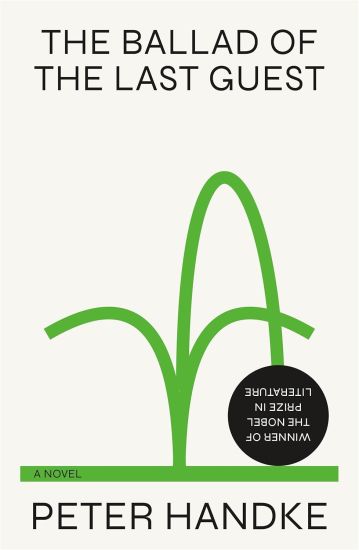
A novel about a man who returns home, only to find that home is now unrecognizable, by the Nobel laureate Peter Handke. Gregor returns home from another continent. The landscape, formerly dotted with small villages, has been absorbed into the outskirts of a large city, both familiar and foreign at the same time. His father sits playing cards, waiting for him, but Gregor is surprised to find his sister holding an infant. He, the older brother, is to be the child's godfather--though he also carries with him the secret of his younger brother's death. In the end, Gregor is never quite able to stay put. He is drawn out into the world, into the streets and alleys of what is now a city, to the cinema, the soccer stadium, the forest, and above all the old fruit orchard, now overgrown and beyond saving. As he walks, the present and the past become intertwined--memories of childhood surface, and inner voices enter into dialogue. Revisiting many of the settings and themes of Peter Handke's previous works, The Ballad of the Last Guest takes stock of the changes that have been wrought on the land--and on human beings --over the course of the twenty-first century.


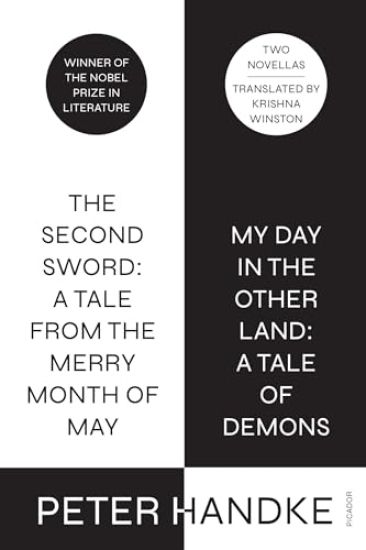
The Second Sword: A Tale from the Merry Month of May, and My Day in the Other Land: A Tale of Demons
Peter Handke
St Martin's Press
2025
nidottu
The Second Sword and My Day in the Other Land are two new novellas by the 2019 Nobel laureate Peter Handke. The first picks up the story where Handke’s last work of fiction, The Fruit Thief (described in The New York Times as “an experience of unadulterated literature”), left off. Here a man has returned to his home in the suburbs of Paris, only to soon set out again. Why? We learn, over the course of a story redolent of Handke’s harrowing A Sorrow Beyond Dreams, that he is seeking to avenge his mother, who has been unjustly denounced in the pages of a newspaper. The Second Sword is a suspenseful work of self-examination: Will the narrator’s journey end in him throwing down the gauntlet? My Day in the Other Land is Handke’s most recently published work - and the first to be written after he was awarded the Nobel Prize. Evoking imagery from the Bible and classical mythology, it portrays a man who has been possessed by demons, causing him to rage endlessly against the inhabitants of his rural village. Aided by his sister, he embarks on a journey to a lake on whose opposite shore lies the “other land.” What ensues is an exorcism of sorts - and one of Handke’s most evocative and original endings.

Gregor återvänder hem från en annan del av världen. Den »tidigare lantliga trakten« har blivit en tätort, är på samma gång bekant och främmande. Också familjen har förändrats: även om fadern likt tidigare väntar med spelkorten har systern oväntat ett dibarn i famnen. Han, den äldre brodern, ska bli barnets gudfar. Av lillebrodern Hans återstår bara ett dödsbud som den äldre brodern har undanhållit familjen, och minnen, likt olyckan med brännässlorna. Till och med fruktträdgården har blivit en annan. Den ligger fortfarande på samma plats, men är inte längre möjlig att rädda. Så dras Gregor till gatorna och gränderna, till biografen och fotbollsstadion, till skogen och vidare. I Peter Handkes roman flätas nutid och dåtid samman, det ena tycks tippa över i det andra och allt står »på en knivsegg«. På sin väg tillbaka till familjen, genom det som en gång var bekanta landskap, stannar berättaren gång på gång upp, barndomsminnen väcks till liv och inre röster träder in i dialogen. Det som en gång var har oåterkalleligt förändrats och förblir ändå bekant.



The Second Sword: A Tale from the Merry Month of May, and My Day in the Other Land: A Tale of Demons
Peter Handke; Translated from the German by Krishna Winston
FARRAR, STRAUS GIROUX INC
2024
sidottu
The Second Sword and My Day in the Other Land are two new novellas by the 2019 Nobel laureate Peter Handke. The first picks up the story where Handke’s last work of fiction, The Fruit Thief (described in The New York Times as “an experience of unadulterated literature”), left off. Here a man has returned to his home in the suburbs of Paris, only to soon set out again. Why? We learn, over the course of a story redolent of Handke’s harrowing A Sorrow Beyond Dreams, that he is seeking to avenge his mother, who has been unjustly denounced in the pages of a newspaper. The Second Sword is a suspenseful work of self-examination: Will the narrator’s journey end in him throwing down the gauntlet? My Day in the Other Land is Handke’s most recently published work - and the first to be written after he was awarded the Nobel Prize. Evoking imagery from the Bible and classical mythology, it portrays a man who has been possessed by demons, causing him to rage endlessly against the inhabitants of his rural village. Aided by his sister, he embarks on a journey to a lake on whose opposite shore lies the “other land.” What ensues is an exorcism of sorts - and one of Handke’s most evocative and original endings.

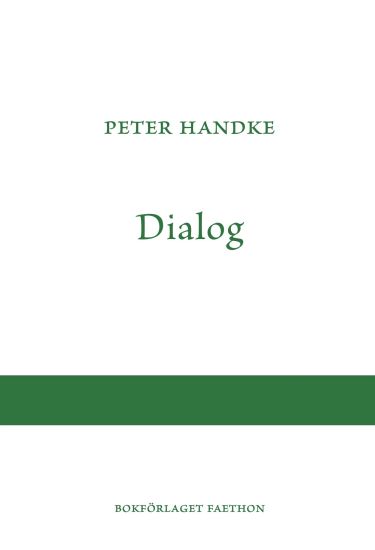
Den ene minns en teaterpjäs han sett som barn, kanske inte själva pjäsen, men miljön och kulisserna. Ett slags urbild som vandraren igenkänner i grannstäder, i en lada eller en kyrkogård. Den andre minns sin släkting i skyttegraven, som där umgicks med djuren. Dialog är en rörelse mellan röster och minnen. Jesper Festin har översatt till svenska. Peter Handke, född 1942 i Griffen (Kärnten) och bor idag i Chaville utanför Paris. Hans rika författarskap omfattar romaner, berättande prosa, teater, dikter och essäer. Han tilldelades Nobelpriset i litteratur 2019.
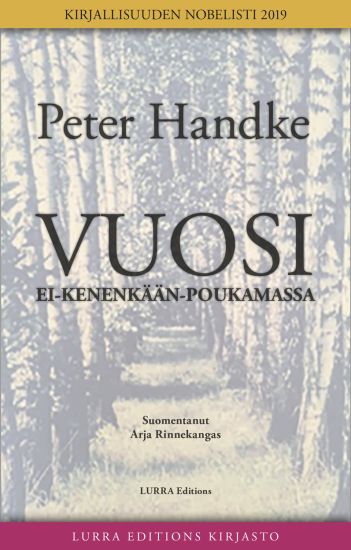
Kirjailija Gregor K muuttaa Pariisista ylänköjen takaiseen esikaupunkiin - paikkaan, josta muu maailma ei tiedä mitään, ja jota hän alkaa kutsua Poukamaksi - ja käynnistää omalaatuisen ympäristötutkielmansa. Alueen rikkaan luonnon ja monikulttuurisen elämän ja arjen keskellä K kokee kaipaamansa muodonmuutoksen suurkaupunki-ihmisestä syrjäeläjäksi ja oppii havainnoimisen merkityksen. Vuoteen 1997 sijoittuva teos on sadun ja unen, unelmien ja viattomuuden sävyttämä kuvaus myös lapsisuhteen ja rakkauden monista kasvoista ja yksinäisyydestä; kirjailijan materiaaleista. Oman surrealistisen unensa muodostavat seitsemän ystävän amarcordilaiset matkat ympäri maailman, jotka K kuvittelee odottaessaan seitsikkoa päivällisille Poukamaansa. Kertomuksen luontosuhde on vertaansa vailla ajassamme, jossa luonnon puolesta puhumisesta on tullut mantra, jolla kuka tahansa voi korostaa itseään tuntematta luontoa. Handke on kronikoitsija, jolle myytit ja tarut, elävät ja poisnukkuneet, linnut ja jyrsijät, maisema ja valo ovat yksi jakamaton todellisuus. Luonnon yksityiskohtien loputtomuus ja ihmisen vieraus rakennetussa järjestelmässä nousevat keskeisiksi teemoiksi paradoksien täyttämässä eksistentialistisessa odysseiassa.

On a summer day under a blue sky a man is stung on his foot by a bee. “The sting signaled that the time had come to set out, to hit the road. Off with you. The hour of departure has arrived.” The man boards a train to Paris, crosses the city by Métro, then boards another, disembarking in a small town on the plains to the north. He is searching for a young woman he calls the Fruit Thief, who, like him, has set off on a journey to the Vexin plateau. What follows is a vivid but dreamlike exploration of topography both physical and affective, charting the Fruit Thief’s perambulations across France’s internal borderlands: alongside rivers and through ravines, beside highways and to a bolt-hole under the stairs of an empty hotel. Chance encounters - with a man scrambling through the underbrush in search of his lost cat, and with a delivery boy who abandons his scooter to become a fellow traveler for a day - are like so many throws of the dice, each exposing new facets of this mysterious individual in the manner of a cubist portrait. In prose of unrivaled precision, lucidly rendered into English by Krishna Winston, The Fruit Thief elevates the terrain of everyday life to epic status, and situates the microgeography of an individual at the center of a book like few others. This is one of Nobel laureate Peter Handke’s most significant and original achievements.

A career-spanning collection of essays by the Nobel laureate Peter Handke, featuring two new works never before published in English Quiet Places brings together Peter Handke's forays into the border regions of life and story, upending the distinction between literature and the literary essay. Proceeding from the specificity of place (the mountains of Carinthia and Spain, the hinterlands of Paris) to specific objects (the jukebox, the boletus mushroom) to the irreducible particularity of our moods and mental impressions, these works--each a novella in its own right--offer rare insight into the affinities that can develop between a storyteller and the unlikeliest of subjects. Here, Handke posits a reevaluation of the possibilities and proper concerns of literature in a style unmistakably his own. This collection unites the three essays from The Jukebox with two new works: "Essay on a Mushroom Maniac," the story of a friend's descent into and ascent from the depths of obsession, and "Essay on Quiet Places," a memoiristic tour d'horizon of bathrooms and their place in Handke's life and work. Featuring masterful translations by Krishna Winston and Ralph Manheim, this collection encapsulates the oeuvre of one of our greatest living writers.