Kirjojen hintavertailu. Mukana 12 595 353 kirjaa ja 12 kauppaa.

Kirjailija

Peter N. Stearns

Kirjat ja teokset yhdessä paikassa: 69 kirjaa, julkaisuja vuosilta 1974-2026, suosituimpien joukossa Anger. Vertaile teosten hintoja ja tarkista saatavuus suomalaisista kirjakaupoista.

Mukana myös kirjoitusasut: Peter N Stearns

69 kirjaa

Kirjojen julkaisuhaarukka 1974-2026.

Facing up to Management Faddism

Facing up to Management Faddism

Margaret C. Brindle; Peter N. Stearns

Praeger Publishers Inc
2001
sidottu
Organizations pour billions of dollars into programs that in the end prove to be nothing but fads--short lived enthusiasms with little purpose other than to make those who initiate and promote them rich. Brindle and Stearns take a look at these vogues and fashions, and find that over a history of at least a century, there is continuity to, and similarities among them. Fads are both product and process, they find, tied to tensions in the workplace and to those who too quickly profess solutions to problems these tensions cause. The authors shed new light on such fads, examining how they develop in other cultures too, and give managers everywhere new ways to react to them, ways to uncover and resist patently nonproductive blandishments.How to distinguish fads that may have at least some validity from those that don't is a main purpose of the book. The authors show that what works in one place may not work in another, exploring how firms often implement fad-based programs across borders without considering the cultural nuances in doing so. Brindle and Stearns use an interdisciplinary approach with an historical bent in their reviews, examinations and appraisals, but they remain pragmatic and utilitarian at all times. They are serious when they say that managing the fad itself is at least as important, often more so, than managing the fad's content. Their section on strategy alone will be of special value to managers in the trenches who need guidance day by day, as well as to financial and organizational analysts who want to avoid being hoodwinked by today's fads and tomorrow's as well.
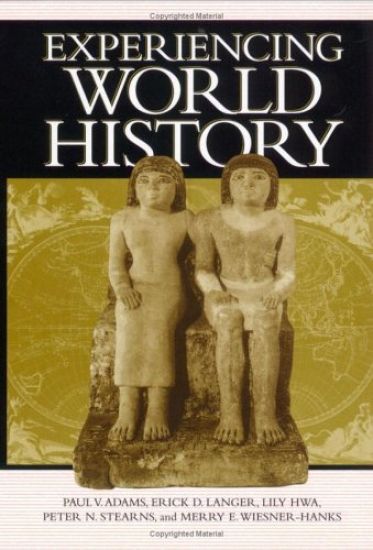
Experiencing World History

Experiencing World History

Paul Vauthier Adams; Erick Detlef Langer; Lily Hwa; Peter N. Stearns; Merry E. Wiesner-Hanks

New York University Press
2000
pokkari
An intensive introduction to global social history themes, covering early societies to the 20th century Covering early societies, the classical, postclassical, and modern periods, and the 20th century, and blending the great advances in historical research over the past quarter century, Experiencing World History represents an important addition to the teaching of world history. Focusing on major issues in social history in the context of world history and divided into five chronological sections that highlight the mixture of change and continuity, the volume traces key aspects of society over time, among them gender; work and leisure; state and society; culture contact and population patterns. Truly global in scope, Experiencing World History includes deep coverage of all the major areas including Asia, Africa, Europe, and the Americas. A brief introduction ties the social history themes to more conventional world history coverage, and an epilogue after each of the five sections suggests overarching themes and connections.
Experiencing World History

Experiencing World History

Paul Vauthier Adams; Erick Detlef Langer; Lily Hwa; Peter N. Stearns; Merry E. Wiesner-Hanks

New York University Press
2000
sidottu
An intensive introduction to global social history themes, covering early societies to the 20th century Covering early societies, the classical, postclassical, and modern periods, and the 20th century, and blending the great advances in historical research over the past quarter century, Experiencing World History represents an important addition to the teaching of world history. Focusing on major issues in social history in the context of world history and divided into five chronological sections that highlight the mixture of change and continuity, the volume traces key aspects of society over time, among them gender; work and leisure; state and society; culture contact and population patterns. Truly global in scope, Experiencing World History includes deep coverage of all the major areas including Asia, Africa, Europe, and the Americas. A brief introduction ties the social history themes to more conventional world history coverage, and an epilogue after each of the five sections suggests overarching themes and connections.
Battleground of Desire

Battleground of Desire

Peter N. Stearns

New York University Press
1999
sidottu
In recent years, Peter N. Stearns has established himself as the foremost historian of American emotional life. In books on anger, jealousy, "coolness," and body image, he has mapped out the basic terrain of the American psyche. Now Stearns crowns his work of the past decade with this powerful volume, in which he reveals the fundamental dichotomy at the heart of the national character: a self-indulgent hedonism and the famed American informality on the one hand, and a deeply imbedded repressiveness on the other. Whether hunting and gathering tribe or complex industrial civilization, every social group is governed by explicit and implicit guidelines on how to behave. But these definitions vary widely. The Japanese worry less about public drunkenness than Americans. Northern Europeans adhere to stricter standards than Americans when it comes to littering. Today, we swear more now and spit less, discuss sex more and death less. With an emphasis on sex, culture, and discipline of the body, Stearns traces how particular anxieties take root, and how they express inherent tension in contemporary standards and a stubborn nostalgia for the previous nineteenth century regime. Battleground of Desire explodes common wisdom about Americans in the twentieth century as normless and tolerant, emphasizing that most of us follow a litany of rules, governing everything from adultery to bad breath.
Millennium III, Century Xxi

Millennium III, Century Xxi

Peter N Stearns

Westview Press Inc
1998
nidottu
This book is intended as a survivor's guide to turn-of-the-century and millennial furor. It offers data about events and relevant cultural traditions in the past and a framework within which to consider how we will interpret the waning age and how we can sensibly look ahead.
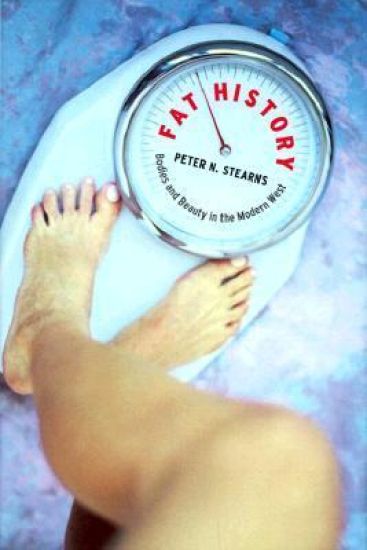
Fat History

Fat History

Peter N. Stearns

New York University Press
1997
sidottu
The modern struggle against fat cuts deeply and pervasively into American culture. Dieting, weight consciousness, and widespread hostility toward obesity form one of the fundamental themes of modern life. Fat History explores the meaning of fat in contemporary Western society and illustrates how progressive changes, such as growth in consumer culture, increasing equality for women, and the refocusing of women's sexual and maternal roles have influenced today's obsession with fat. Brought up-to-date with a new preface and filled with narrative anecdotes, Fat History explores fat's transformation from a symbol of health and well-being to a sign of moral, psychological, and physical disorder.
American Cool

American Cool

Peter N. Stearns

New York University Press
1994
pokkari
Cool. The concept has distinctly American qualities and it permeates almost every aspect of contemporary American culture. From Kool cigarettes and the Peanuts cartoon's Joe Cool to West Side Story (Keep cool, boy.) and urban slang (Be cool. Chill out.), the idea of cool, in its many manifestations, has seized a central place in our vocabulary. Where did this preoccupation with cool come from? How was Victorian culture, seemingly so ensconced, replaced with the current emotional status quo? From whence came American Cool? These are the questions Peter Stearns seeks to answer in this timely and engaging volume. American Cool focuses extensively on the transition decades, from the erosion of Victorianism in the 1920s to the solidification of a cool culture in the 1960s. Beyond describing the characteristics of the new directions and how they altered or amended earlier standards, the book seeks to explain why the change occured. It then assesses some of the outcomes and longer-range consequences of this transformation.
Expanding the Past

Expanding the Past

Peter N. Stearns

New York University Press
1988
pokkari
Since its founding twenty years ago the Journal of Social History has made substantial contributions to altering the way American historians look at and interpret their subject. It has served as a central outlet for new and exciting scholarship in social history, particularly European and American history but also Asian and Latin American as well. Under the editorship of Peter N. Stearns, the journal has published innovative work by many major American historians. Expanding the Past commemorates and highlights the achievements of the journal by republishing a selection of the most excellent articles that have appeared in the journal and that especially illustrate key features and trends in social history. These important essays cover issues such as illiteracy, work and gender roles, the police, kleptomania, immigration, and domesticity. Topics such as the history of old age, the social history of women, and working class history are explored. The volume reveals how historians define and deal with the most recent phenomena such as disease symptoms, the integration of subject matter to conventional issues like politics, and an enlargement of the past to embrace new elements. This book is an introduction to looking at the characteristic topics, methods, and particular insights of social history. Collectively, the essays represent some of the most vigorous and important work in this dynamic field of American historical research. They serve as an ideal vehicle for those readers who wish to further their understanding of this distinct approach to the past.
1848

1848

Peter N. Stearns

WW Norton Co
1974
nidottu
Only in that year did revolution assume virtually continental proportions: France, Italy, Germany, and the countries of the Habsburg monarchy experienced serious revolutions, and significant outbreaks occurred in Switzerland, Denmark, Romania, Poland, and Ireland. Britain, though untouched by formal revolution, saw the last wave of Chartist agitation. Of the larger countries, then, only Russia and Spain were exempt. Peter N. Stearns uses a comparative approach in his analysis of these largely interconnected risings. Concentrating on the key areas of revolutionary action—France, Germany, Italy, and the Habsburg monarchy—he shows how the revolutions were linked by economic causation, by ideology, and by the fascination of revolution itself. In exploring the origins, successes, and failures of these movements, Professor Stearns goes beyond the specific political and intellectual factors involved in the events themselves to discuss the kind of society that could produce such an astonishing revolutionary contagion. He assesses the tragic consequences of the revolutions' failure, particularly in central Europe, and analyzes their positive impact on the nature of political protest, the rise of the labor movement, and the attitude of conservatives in power toward change.