Kirjailija
Peter Schäfer
Kirjat ja teokset yhdessä paikassa: 37 kirjaa, julkaisuja vuosilta 1975-2027, suosituimpien joukossa Anziehung und Abstoßung. Vertaile teosten hintoja ja tarkista saatavuus suomalaisista kirjakaupoista.
Mukana myös kirjoitusasut: Peter Schafer
37 kirjaa
Kirjojen julkaisuhaarukka 1975-2027.
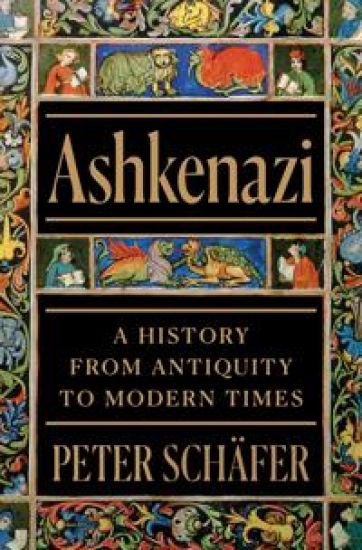
From a prize-winning historian, the first comprehensive narrative history of Ashkenazi Jews: their culture, their religion, their daily lives, and their many migrations Covering two millennia of history, from late antiquity to the twentieth century, this landmark volume by an eminent historian traces the long trajectory of Ashkenazi Jews, that branch of the Jewish people who migrated from the Levant into central and then eastern Europe. Because religion, in the form of rabbinic Judaism, played so central a role in the lives of almost all Jews before modernity, author Peter Schäfer examines the ways in which the institutions and practices of the rabbis were transplanted, and transformed, during these periods of migration. Schäfer describes the establishment and flourishing of centers of rabbinic learning and innovation in the new European homelands—places including Cologne, Frankfurt, Worms, and Troyes, the French home of the legendary medieval Talmudic sage Rashi. He discusses the long and often fraught period of intellectual, cultural, economic, and political exchange with the Christian majority, and chronicles such Jewish movements as kabbalah (Jewish mysticism), messianism (Sabbateanism) and (in the modern period) Jewish socialism (“Bundism”) and Zionism. The scope of Ashkenazi is vast, beginning with a portrait of Jews in the late Roman Empire and then mapping the first central European Jewish settlements in the tenth and eleventh centuries, the expulsions of the late fifteenth century, the subsequent migration to Russia, Lithuania, and Poland, followed by remigration westward in the nineteenth century after the start of Russian pogroms. Finally, Schäfer considers the impact of the Holocaust, and the founding of the state of Israel—which was spearheaded by Zionist leaders of largely Ashkenazi origins.

Cost Accounting: A Decision-oriented Approach
Gunther Friedl; Christian Hofmann; Burkhard Pedell; Peter Schafer
WORLD SCIENTIFIC PUBLISHING CO PTE LTD
2022
nidottu
Analyzing and managing costs is crucial for business success. Industrial, service, and non-profit companies will not be successful in the long-term if they do not understand their costs.This textbook introduces the basic concepts and current developments in cost accounting. The book features numerous anecdotal examples from a wide range of industries, case studies, Microsoft Excel examples, and exercises to ensure a sustainable learning success.
Cost Accounting: A Decision-oriented Approach
Gunther Friedl; Christian Hofmann; Burkhard Pedell; Peter Schafer
WORLD SCIENTIFIC PUBLISHING CO PTE LTD
2022
sidottu
Analyzing and managing costs is crucial for business success. Industrial, service, and non-profit companies will not be successful in the long-term if they do not understand their costs.This textbook introduces the basic concepts and current developments in cost accounting. The book features numerous anecdotal examples from a wide range of industries, case studies, Microsoft Excel examples, and exercises to ensure a sustainable learning success.
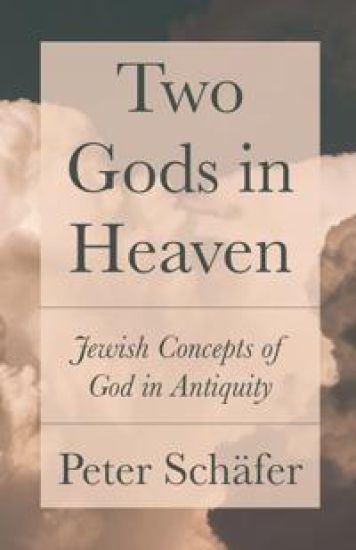
A book that challenges our most basic assumptions about Judeo-Christian monotheismContrary to popular belief, Judaism was not always strictly monotheistic. Two Gods in Heaven reveals the long and little-known history of a second, junior god in Judaism, showing how this idea was embraced by rabbis and Jewish mystics in the early centuries of the common era and casting Judaism's relationship with Christianity in an entirely different light.Drawing on an in-depth analysis of ancient sources that have received little attention until now, Peter Schäfer demonstrates how the Jews of the pre-Christian Second Temple period had various names for a second heavenly power—such as Son of Man, Son of the Most High, and Firstborn before All Creation. He traces the development of the concept from the Son of Man vision in the biblical book of Daniel to the Qumran literature, the Ethiopic book of Enoch, and the Jewish philosopher Philo of Alexandria. After the destruction of the Second Temple, the picture changes drastically. While the early Christians of the New Testament took up the idea and developed it further, their Jewish contemporaries were divided. Most rejected the second god, but some—particularly the Jews of Babylonia and the writers of early Jewish mysticism—revived the ancient Jewish notion of two gods in heaven.Describing how early Christianity and certain strands of rabbinic Judaism competed for ownership of a second god to the creator, this boldly argued and elegantly written book radically transforms our understanding of Judeo-Christian monotheism.
"Schäfer ist eine umfassende und überzeugende Darstellung der talmudischen Wahrnehmung Jesu gelungen."Christoph Stenschke in Theologische Beiträge 45 (2014), S. 118-119"[Ein] höchst lesenswertes und spannendes Buch, das zu weiteren Forschungen und Überlegungen reichen Anlass bietet."Werner Trutwin in Freiburger Rundbrief 20 (2013), S. 224-226"Mir ist dieses kenntnisreiche und spannend geschriebene Buch eine große Hilfe geworden. Äußerst gründlich arbeitet es übergangene Zusammenhänge auf und ist damit aus meiner Sicht eine wichtige und hilfreiche Bereicherung für das jüdisch-christliche Gespräch, das in unserer Zeit zu neuer Offenheit findet."Hans-Helmar Auel in Homiletische Monatshefte 90 (2014/15), Heft 4, S. 199"In seinem neuesten Buch [Jesus im Talmud] hat Schäfer sich nicht nur als ein grossartiger Erforscher antiker und mittelalterlicher jüdischer Texte erwiesen - das wurde bereits zur Genüge demonstriert -, sondern auch als ein talentierter Autor, aus dessen Händen der Text fliesst wie das Wasser, mit dem die Rabbinen die Torah verglichen haben."Galit Hasan-Rokem in Jewish Quarterly Review 99 (2009), S. 114"Schäfers faszinierende Studie demonstriert meisterhaft, dass der babylonische Talmud auf christliche Behauptungen über Jesus von Nazareth antwortet, [...] dass die Überlieferungen der babylonischen Rabbinen nicht die verqueren Phantasien bornierter Rabbinen [...] sind, sondern faszinierende "Rohdiamanten", kurze und oft brutale Meisterstücke, die historische Lektionen von entscheidender Bedeutung mitzuteilen haben."Richard Kalmin in Jewish Quarterly Review 99 (2009), S. 112"Nicht zuletzt mit der Klarheit in der Argumentation löst das Buch […] den Anspruch Schäfers, ein allgemeinverständliches Werk vorzulegen, überzeugend ein."S.O. in Herder Korrespondenz 62 (2008), S. 269"Zudem ist sein Werk - gerade in einer Zeit aufkommenden religiösen Fundamentalismus - auch für interessierte Laien mit Gewinn zu lesen, bietet es doch Einblicke in die Auseinandersetzungen von Spätantike und Frühmittelalter, die historisch einzuordnen Aufgabe unserer Zeit ist, damit ein angemessenes Nebeneinander der Religionen erreicht werden kann."Joachim Jeska in Biblische Zeitschrift 52 (2008), S. 297-298
Die Frage nach dem Verhältnis zwischen Judentum und Christentum in den ersten Jahrhunderten hat man lange wie selbstverständlich so beantwortet, dass irgendwann im 1. oder 2. Jahrhundert eine bleibende Abgrenzung voneinander vollzogen worden sei. Inzwischen wird eine bereits so früh vollzogene Trennung der beiden Religionen vehement bestritten. Denn die Quellen lassen erkennen, dass sich dieser Prozess über einen deutlich längeren Zeitraum erstreckt hat. Er ist so sehr geprägt gewesen von wechselseitiger argumentativer Befruchtung, dass man wie von der "Geburt des Christentums aus dem Geist des Judentums" auch von der "Geburt des Judentums aus dem Geist des Christentums" sprechen muss. Peter Schäfer zeigt in einer spannenden Analyse der Überlieferungen und Deutungen des Patriarchen Henoch bzw. des höchsten Engels Metatron, wie Anziehung und Abstoßung zwischen Judentum und Christentum in den formativen ersten Jahrhunderten Gestalt gewonnen haben.
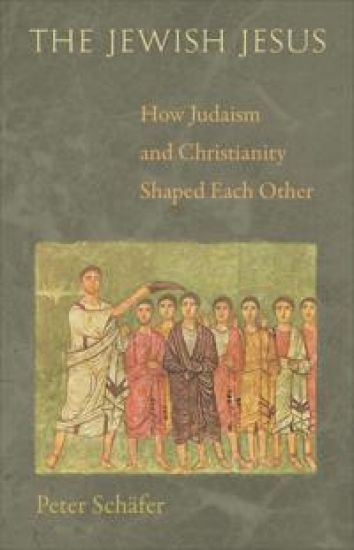
In late antiquity, as Christianity emerged from Judaism, it was not only the new religion that was being influenced by the old. The rise and revolutionary challenge of Christianity also had a profound influence on rabbinic Judaism, which was itself just emerging and, like Christianity, trying to shape its own identity. In The Jewish Jesus, Peter Schafer reveals the crucial ways in which various Jewish heresies, including Christianity, affected the development of rabbinic Judaism. He even shows that some of the ideas that the rabbis appropriated from Christianity were actually reappropriated Jewish ideas. The result is a demonstration of the deep mutual influence between the sister religions, one that calls into question hard and fast distinctions between orthodoxy and heresy, and even Judaism and Christianity, during the first centuries CE.
Kosten- und Leistungsrechnung macchiato
Peter Schäfer; Michael Holtschulte
Pearson Studium - Scientific Tools
2014
nidottu
In late antiquity, as Christianity emerged from Judaism, it was not only the new religion that was being influenced by the old. The rise and revolutionary challenge of Christianity also had a profound influence on rabbinic Judaism, which was itself just emerging and, like Christianity, trying to shape its own identity. In The Jewish Jesus, Peter Schafer reveals the crucial ways in which various Jewish heresies, including Christianity, affected the development of rabbinic Judaism. He even shows that some of the ideas that the rabbis appropriated from Christianity were actually reappropriated Jewish ideas. The result is a demonstration of the deep mutual influence between the sister religions, one that calls into question hard and fast distinctions between orthodoxy and heresy, and even Judaism and Christianity, during the first centuries CE.
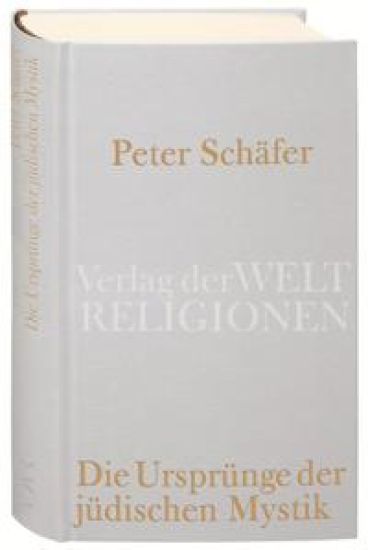
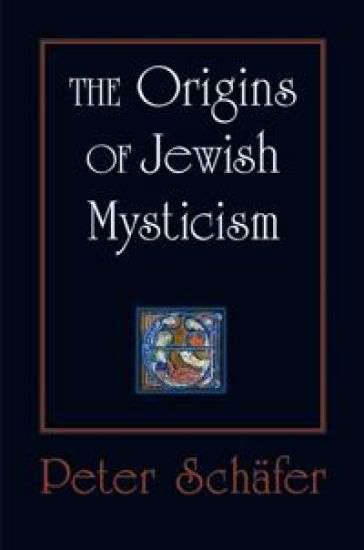
The Origins of Jewish Mysticism offers the first in-depth look at the history of Jewish mysticism from the book of Ezekiel to the Merkavah mysticism of late antiquity. The Merkavah movement is widely recognized as the first full-fledged expression of Jewish mysticism, one that had important ramifications for classical rabbinic Judaism and the emergence of the Kabbalah in twelfth-century Europe. Yet until now, the origins and development of still earlier forms of Jewish mysticism have been largely overlooked. In this book, Peter Schafer sheds new light on Ezekiel's tantalizing vision, the apocalyptic literature of Enoch, the Dead Sea Scrolls, the writings of the Hellenistic Jewish philosopher Philo, the rabbinical writings of the Talmudic period, and the esotericism of the Merkavah mystics. Schafer questions whether we can accurately speak of Jewish mysticism as a uniform, coherent phenomenon with origins in Judaism's mythical past. Rather than imposing preconceived notions about "mysticism" on a great variety of writings that arose from different cultural, religious, and historical settings, he reveals what these writings seek to tell us about the age-old human desire to get close to and communicate with God.