Kirjojen hintavertailu. Mukana 12 595 353 kirjaa ja 12 kauppaa.

Kirjailija

Peter Singer

Kirjat ja teokset yhdessä paikassa: 64 kirjaa, julkaisuja vuosilta 1986-2025, suosituimpien joukossa Ética para el mundo real. Vertaile teosten hintoja ja tarkista saatavuus suomalaisista kirjakaupoista.

64 kirjaa

Kirjojen julkaisuhaarukka 1986-2025.

The Allocation of Health Care Resources

The Allocation of Health Care Resources

John McKie; Peter Singer; Jeff Richardson

Routledge
2020
nidottu
The competition for limited health care resources is intensifying. We urgently need an acceptable method for deciding how they should be allocated. But the goods that health care produces are of very different kinds. Health care can extend the lives of children and of older people. It can make it possible for a person to walk, when without health care that person would be permanently bedridden; and it can reduce the pain and distress of people who are terminally ill. How can we possibly decide which of these - and many more - diverse achievements of health care are more deserving than others? We need a common unit by which we might be able to measure these very different goods. The Quality-Adjusted Life Year, or QALY, is the most developed proposal for such a unit of measure. In this book a distinguished team of ethicists and economists defend the core of the QALY proposal: that health care resources should be used so as to produce more years of life, of the highest possible quality. This leads to a discussion of such fundamental questions as whether all lives are of equal value, whether health care should be allocated on the basis of need and whether the QALY approach incorporates an adequate account of fairness or justice. The result is the most thorough account yet of the ethical issues raised by the use of the QALY as a basis for allocating health care resources.

O veschakh dejstvitelno vazhnykh. Moralnye vyzovy XXI veka
Pitera Singera chasto nazyvajut samym vlijatelnym filosofom v mire. I on zhe javljaetsja odnim iz samykh protivorechivykh. Buduchi avtorom takikh vazhnykh knig, kak "Osvobozhdenie zhivotnykh" i "Prakticheskaja etika", on zaschischaet prava zhivotnykh, podderzhivaet altruisticheskie dvizhenija i sposobstvuet razvitiju bioetiki. V svoej novoj knige "O veschakh dejstvitelno vazhnykh" Piter Singer demonstriruet umenie analizirovat vazhnejshie sobytija sovremennosti v formate nebolshikh esse.Singer zadaetsja voprosom, mozhno li schitat shimpanze ljudmi, nuzhno li zapreschat kurenie na zakonodatelnom urovne, a takzhe stavit pod vopros svjatost chelovecheskoj zhizni, podkrepljaja svoi utverzhdenija poslednimi mirovymi sobytijami. V dopolnenie k etomu on v prostoj i dostupnoj forme osveschaet filosofskie voprosy, takie kak dejstvitelno li v mire est chto-to v... Rekomenduem!
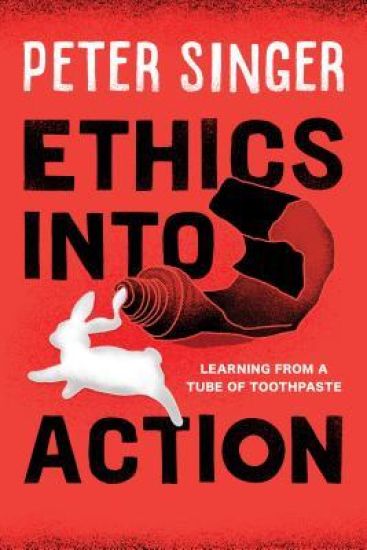
Ethics into Action

Ethics into Action

Peter Singer

Rowman Littlefield
2019
pokkari
More than twenty years after its publication, Peter Singer's Ethics into Action continues to inspire new generations of activists through its portrayal of Henry Spira and the animal rights movement. With a new preface from the author, this edition celebrates the continued importance of social movements and provides a path towards furthering changes in our world. Singer, one of the world's most influential living philosophers, reveals how Henry Spira influenced major corporations by simultaneously applying targeted pressures and removing existing obstacles to achieve his ethical goals. As people all over the world continues to struggle for justice, Spira's method of affecting change serves as a proven model for activists fighting across a wide range of causes.
The Ethics Of What We Eat

The Ethics Of What We Eat

Peter Singer

Rodale Press
2018
nidottu
Ethicist Singer and co-author Mason ("Animal Factories") document corporate deception, widespread waste and desensitization to inhumane practices in this consideration of ethical eating. The authors examine three families' grocery-buying habits and the motivations behind those choices. One woman says she's "absorbed in my life and my family...and I don't think very much about the welfare of the meat I'm eating," while a wealthier husband and wife mull the virtues of "triple certified" coffee, buying local and avoiding chocolate harvested by child slave labour, though "no one seems to be pondering that as they eat."In investigating food production conditions, the authors' first-hand experiences alternate between horror and comedy, from slaughterhouses to artificial turkey-insemination ("the hardest, fastest, dirtiest, most disgusting, worst-paid work"). This sometimes-graphic expose is not myopic: profitability and animal welfare are given equal consideration, though the reader finishes the book agreeing with the authors' conclusion that "America's food industry seeks to keep Americans in the dark about the ethical components of their food choices."A no-holds-barred treatise on ethical consumption, this is an important read for those concerned with the long, frightening trip between farm and plate.
Marx

Marx

Peter Singer

Oxford University Press
2018
nidottu
Karl Marx is one of the most influential philosophers of all time, whose theories have shaped and directed political, economic, and social thought for 150 years. Considering Marx's life and impact, renowned philosopher Peter Singer identifies the central vision that unifies Marx's thought, enabling us to grasp Marx's views as a whole. Presenting Marx as a philosopher primarily concerned with human freedom, rather than as an economist or a social scientist, Singer explains Marx's key ideas on alienation, historical materialism, and the economic theory of Capital, in plain English. In this new edition, Singer explores whether Marx remains relevant to the twenty first century, and if so, how. Does the fact that eight billionaires now own as much as the bottom half of the world's population give support to Marxist thinking? Does the ease with which conservative politicians can win over working class voters by appealing to nationalism undermines Marx's view of class struggle and the inevitability of victory for the proletariat? Singer ponders key questions such as these, and also discusses the place of the internet as a 'productive force' when analysed in Marxist theory. He concludes with an assessment of Marx's legacy, asking if there is any realistic prospect of replacing capitalism with a better system of production and distribution in the twenty first century. ABOUT THE SERIES: The Very Short Introductions series from Oxford University Press contains hundreds of titles in almost every subject area. These pocket-sized books are the perfect way to get ahead in a new subject quickly. Our expert authors combine facts, analysis, perspective, new ideas, and enthusiasm to make interesting and challenging topics highly readable.
Utilitarianism

Utilitarianism

Katarzyna De Lazari-Radek; Peter Singer

Oxford University Press
2017
nidottu
Utilitarianism may well be the most influential secular ethical theory in the world today. It is also one of the most controversial. It clashes, or is widely thought to clash, with many conventional moral views, and with human rights when they are seen as inviolable. Would it, for example, be right to torture a suspected terrorist in order to prevent an attack that could kill and injure a large number of innocent people? In this Very Short Introduction Peter Singer and Katarzyna de Lazari-Radek provide an authoritative account of the nature of utilitarianism, from its nineteenth-century origins, to its justification and its varieties. Considering how utilitarians can respond to objections that are often regarded as devastating, they explore the utilitarian answer to the question of whether torture can ever be justified. They also discuss what it is that utilitarians should seek to maximize, paying special attention to the classical utilitarian view that only pleasure or happiness is of intrinsic value. Singer and de Lazari-Radek conclude by analysing the continuing importance of utilitarianism in the world, indicating how it is a force for new thinking on contemporary moral challenges like global poverty, the treatment of animals, climate change, reducing the risk of human extinction, end-of-life decisions for terminally-ill patients, and the shift towards assessing the success of government policies in terms of their impact on happiness. ABOUT THE SERIES: The Very Short Introductions series from Oxford University Press contains hundreds of titles in almost every subject area. These pocket-sized books are the perfect way to get ahead in a new subject quickly. Our expert authors combine facts, analysis, perspective, new ideas, and enthusiasm to make interesting and challenging topics highly readable.
How to Create a Vegan World

How to Create a Vegan World

Tobias Leenaert; Peter Singer

Lantern Books,US
2017
nidottu
In this thought-provoking book, Tobias Leenaert leaves well-trodden animal advocacy paths and takes a fresh look at the strategies, objectives, and communication of the vegan and animal rights movement. He argues that, given our present situation, with entire societies dependent on using animals, we need a very pragmatic approach. How to Create a Vegan World contains many valuable ideas and insights for both budding advocates for animals and seasoned activists, organizational leaders, and even entrepreneurs.
One World Now

One World Now

Peter Singer

Yale University Press
2016
pokkari
One World Now seamlessly integrates major developments of the past decade into Peter Singer's classic text on the ethics of globalization, One World. Singer, often described as the world's most influential philosopher, here addresses such essential concerns as climate change, economic globalization, foreign aid, human rights, immigration, and the responsibility to protect people from genocide and crimes against humanity, whatever country they may be in. Every issue is considered from an ethical perspective. This thoughtful and important study poses bold challenges to narrow nationalistic views and offers valuable alternatives to the state-centric approach that continues to dominate ethics and international theory. Singer argues powerfully that we cannot solve the world’s problems at a national level, and shows how we should build on developments that are already transcending national differences. This is an instructive and necessary work that confronts head-on both the perils and the potentials inherent in globalization.
Praktisk etik

Praktisk etik

Peter Singer

Bokförlaget Thales
2016
sidottu
Peter Singers klara och innehållsrika bok Praktisk etik har alltsedan den första utgivningen 1979 varit den klassiska introduktionen till tillämpad etik, och översatts till många språk. Bland bokens frågor finns sådana som direkt rör våra individuella handlingar. Är det försvarbart att köpa lyxvaror åt mig själv när andra svälter eller dör i sjukdomar som är lätta att bota? Bör jag avstå från kött som produceras i djurfabriker? Gör jag fel om mitt ekologiska fotavtryck är större än det globala genomsnittet? Andra frågor rör oss som medborgare i demokratiska samhällen: frågor om jämlikhet och om diskriminering på grund av ras, kön eller etnisk tillhörighet; om djurförsök och användning av mänskliga embryon för forskning; om eutanasi och prioriteringar inom vården; om politiskt våld, krig och terrorism och om vad vi kan och bör göra för att komma tillrätta med miljöproblemen. Peter Singer har kallats världens mest inflytelserika filosof. Han klarlägger de relevanta argumenten överskådligt och lättfattligt, med starkt engagemang men utan ideologiska bindningar. Han frilägger de filosofiska rötterna till dagens kontroverser, där den yttersta nöd parad med blixtsnabb teknisk utveckling och ekonomiskt överflöd ställer moralens frågor på sin spets. Till den tredje upplagan har författaren reviderat och uppdaterat hela boken, och dess- utom lagt till ett nytt kapitel om klimatetik, en av vår tids viktigaste etiska utmaningar. Den presenteras i en helt ny översättning till svenska av Jim Jakobsson.
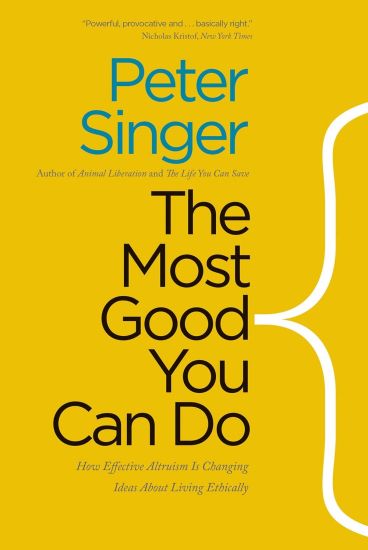
The Most Good You Can Do

The Most Good You Can Do

Peter Singer

Yale University Press
2016
nidottu
From the ethicist the New Yorker calls "the most influential living philosopher," a new way of thinking about living ethically"Singer's argument is powerful, provocative and, I think, basically right. The world would be a better place if we were as tough-minded in how we donate money as in how we make it."-Nicholas Kristof, New York Times"Bold, fresh, inspired, reasoned, optimistic."-Walter M. Bortz II, MD, Huffington Post Blog Peter Singer's books and ideas have been disturbing our complacency ever since the appearance of Animal Liberation. Now he directs our attention to a new movement in which his own ideas have played a crucial role: effective altruism. Effective altruism is built upon the simple but profound idea that living a fully ethical life involves doing the "most good you can do." Such a life requires an unsentimental view of charitable giving: to be a worthy recipient of our support, an organization must be able to demonstrate that it will do more good with our money or our time than other options open to us. Singer introduces us to an array of remarkable people who are restructuring their lives in accordance with these ideas, and shows how living altruistically often leads to greater personal fulfillment than living for oneself.The Most Good You Can Do develops the challenges Singer has made, in the New York Times and Washington Post, to those who donate to the arts, and to charities focused on helping our fellow citizens, rather than those for whom we can do the most good. Effective altruists are extending our knowledge of the possibilities of living less selfishly, and of allowing reason, rather than emotion, to determine how we live. The Most Good You Can Do offers new hope for our ability to tackle the world's most pressing problems.
The Point of View of the Universe

The Point of View of the Universe

Katarzyna de Lazari-Radek; Peter Singer

Oxford University Press
2016
nidottu
What does the idea of taking 'the point of view of the universe' tell us about ethics? The great nineteenth-century utilitarian Henry Sidgwick used this metaphor to present what he took to be a self-evident moral truth: the good of one individual is of no more importance than the good of any other. Ethical judgments, he held, are objective truths that we can know by reason. The ethical axioms he took to be self-evident provide a foundation for utilitarianism. He supplements this foundation with an argument that nothing except states of consciousness have ultimate value, which led him to hold that pleasure is the only thing that is intrinsically good. Are these claims defensible? Katarzyna de Lazari-Radek and Peter Singer test them against a variety of views held by contemporary writers in ethics, and conclude that they are. This book is therefore a defence of objectivism in ethics, and of hedonistic utilitarianism. The authors also explore, and in most cases support, Sidgwick's views on many other key questions in ethics: how to justify an ethical theory, the significance of an evolutionary explanation of our moral judgments, the choice between preference-utilitarianism and hedonistic utilitarianism, the conflict between self-interest and universal benevolence, whether something that it would be wrong to do openly can be right if kept secret, how demanding utilitarianism is, whether we should discount the future, or favor those who are worse off, the moral status of animals, and what is an optimum population.
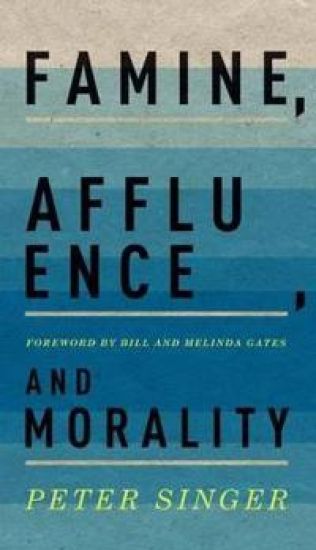
Famine, Affluence, and Morality

Famine, Affluence, and Morality

Peter Singer; Bill and Melinda Gates

Oxford University Press Inc
2016
sidottu
In 1972, Peter Singer published "Famine, Affluence and Morality," which rapidly became one of the most widely discussed essays in applied ethics. Through this article, Singer presents his view that we have the same moral obligations to those far away as we do to those close to us. He argues that choosing not to send life saving money to starving people on the other side of the earth is the moral equivalent of neglecting to save drowning children because we prefer not to muddy our shoes. If we can help, we must-and any excuse is hypocrisy. Singer's extreme stand on the standard of giving has become a powerful topic of discussion in modern philosophy and continues to challenge people's attitudes towards extreme poverty. As Bill and Melinda Gates observe in their foreword, Singer's essay is as relevant today as it ever was. This short edition provides a valuable collection of the original article, two of Singer's more popular writings on our obligations to those in poverty and a new introduction by Singer that advances the topic with his current thinking.
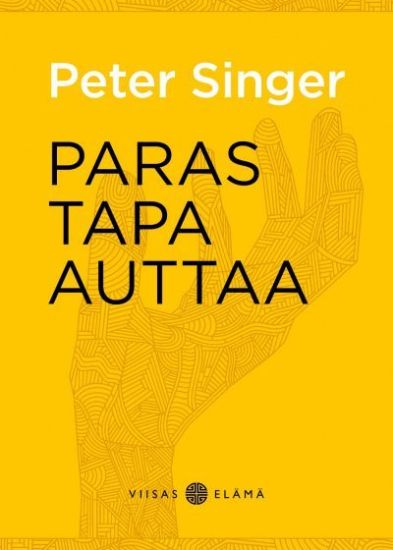
Paras tapa auttaa

Paras tapa auttaa

Peter Singer

Viisas Elämä
2016
sidottu
Filosofi Peter Singer valottaa uudessa teoksessaan, millä tavoin auttamalla voimme parhaiten tehdä hyvää toisille. Hän osoittaa, miten hyvää vastaanottava taho voi arvioida auttamisen vaikuttavuutta.Auttaminen ei perustu tunteiluun eikä koske vain lähipiirin auttamista, vaan on osa eettistä ja harkintaan perustuvaa elämäntapaa. Tehokas altruismi lisää oman elämämme merkityksellisyyttä. Teos antaa valmiuksia epäitsekkääseen elämänasenteeseen, joka johtaa myös epäitsekkäisiin tekoihin.
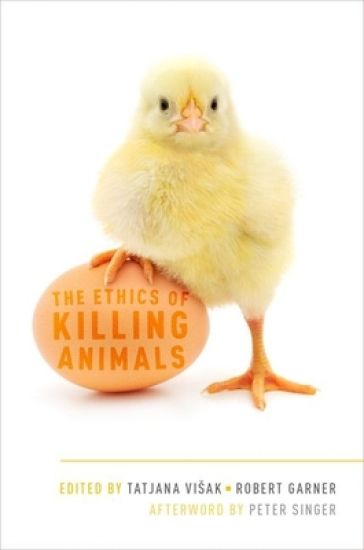
The Ethics of Killing Animals

The Ethics of Killing Animals

Peter Singer

Oxford University Press Inc
2015
nidottu
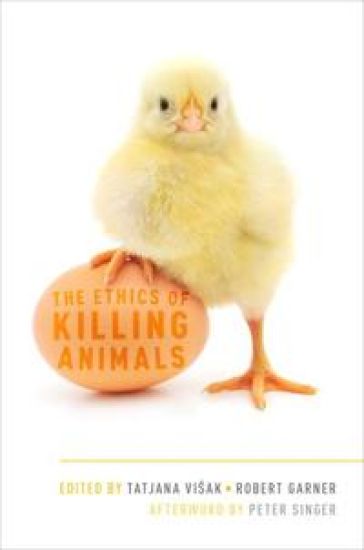
While it is generally accepted that animal welfare matters morally, it is less clear how to morally evaluate the ending of an animal's life. It seems to matter for the animal whether it experiences pain or pleasure, or enjoyment or suffering. But does it also matter for the animal whether it lives or dies? Is a longer life better for an animal than a shorter life? If so, under what conditions is this so, and why is this the case? Is it better for an animal to live rather than never to be born at all? The Ethics of Killing Animals addresses these value-theoretical questions about animal life, death and welfare. It also discusses whether and how answers to these questions are relevant for our moral duties towards animals. Is killing animals ever morally acceptable and, if so, under what conditions? Do animals have moral rights, such as the right to life and should they be accorded legal rights? How should our moral duties towards animals inform our individual behavior and policy-making? This volume presents a collection of contributions from major thinkers in ethics and animal welfare, with a special focus on the moral evaluation of killing animals.
The Ethics of Killing Animals

The Ethics of Killing Animals

Peter Singer

Oxford University Press Inc
2015
sidottu
While it is generally accepted that animal welfare matters morally, it is less clear how to morally evaluate the ending of an animal's life. It seems to matter for the animal whether it experiences pain or pleasure, or enjoyment or suffering. But does it also matter for the animal whether it lives or dies? Is a longer life better for an animal than a shorter life? If so, under what conditions is this so, and why is this the case? Is it better for an animal to live rather than never to be born at all? The Ethics of Killing Animals addresses these value-theoretical questions about animal life, death and welfare. It also discusses whether and how answers to these questions are relevant for our moral duties towards animals. Is killing animals ever morally acceptable and, if so, under what conditions? Do animals have moral rights, such as the right to life and should they be accorded legal rights? How should our moral duties towards animals inform our individual behavior and policy-making? This volume presents a collection of contributions from major thinkers in ethics and animal welfare, with a special focus on the moral evaluation of killing animals.