Kirjojen hintavertailu. Mukana 12 595 353 kirjaa ja 12 kauppaa.
Kirjailija
Peter Singer
Kirjat ja teokset yhdessä paikassa: 64 kirjaa, julkaisuja vuosilta 1986-2025, suosituimpien joukossa Ética para el mundo real. Vertaile teosten hintoja ja tarkista saatavuus suomalaisista kirjakaupoista.
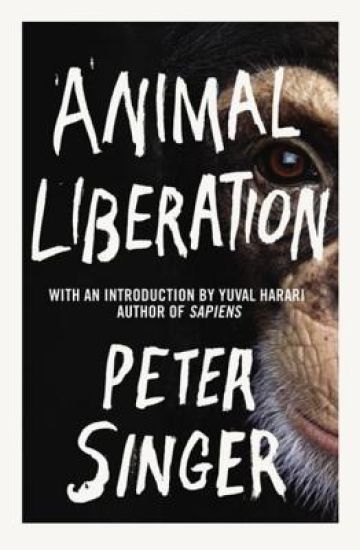
How should we treat non-human animals? In this book, the author addresses this simple question with trenchant, dispassionate reasoning. Accompanied by the disturbing evidence of factory farms and laboratories, his answers triggered the birth of the animal rights movement.
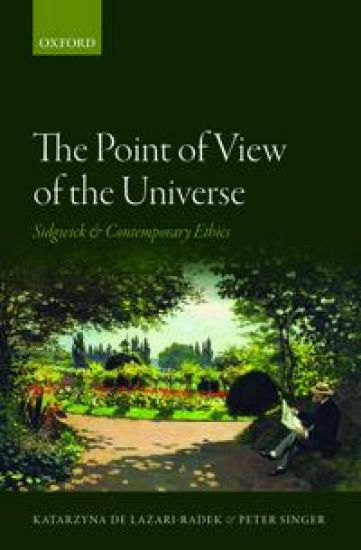
What does the idea of taking 'the point of view of the universe' tell us about ethics? The great nineteenth-century utilitarian Henry Sidgwick used this metaphor to present what he took to be a self-evident moral truth: the good of one individual is of no more importance than the good of any other. Ethical judgments, he held, are objective truths that we can know by reason. The ethical axioms he took to be self-evident provide a foundation for utilitarianism. He supplements this foundation with an argument that nothing except states of consciousness have ultimate value, which led him to hold that pleasure is the only thing that is intrinsically good. Are these claims defensible? Katarzyna de Lazari-Radek and Peter Singer test them against a variety of views held by contemporary writers in ethics, and conclude that they are. This book is therefore a defence of objectivism in ethics, and of hedonistic utilitarianism. The authors also explore, and in most cases support, Sidgwick's views on many other key questions in ethics: how to justify an ethical theory, the significance of an evolutionary explanation of our moral judgments, the choice between preference-utilitarianism and hedonistic utilitarianism, the conflict between self-interest and universal benevolence, whether something that it would be wrong to do openly can be right if kept secret, how demanding utilitarianism is, whether we should discount the future, or favor those who are worse off, the moral status of animals, and what is an optimum population.
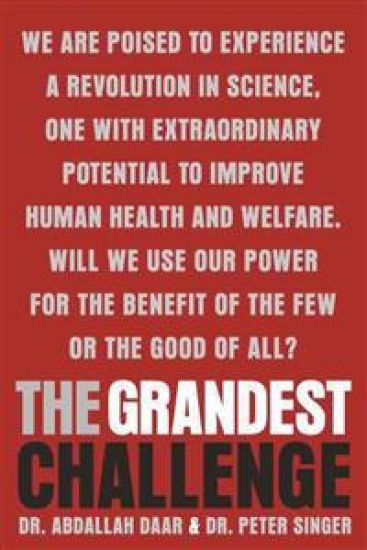
The Grandest Challenge begins with a simple premise: that every person's life is of equal value, regardless of where in the world he or she lives. It also begins with an alarming fact: that in this age of spectacular scientific advances, it is still those who live in the developed world--mainly the west--who overwhelmingly benefit from our enormous new power to combat disease and enhance food, while those in the developing world are far more likely to die for lack of basic health care and inexpensive nutrition. As personalized medicine, designer drugs, and high-quality nutrients become more readily available than ever in the richest parts of the world, distinguished doctors Abdallah Daar and Peter Singer urge us to pause and ask these vital questions: Who will have access to the life-enhancing advances of biotechnology? And who are these advances ultimately meant to help? In this challenging, controversial, thought-provoking, and humane book, Daar and Singer inspire us to look more deeply at our new science, and at the revolution that is already changing all of our lives.
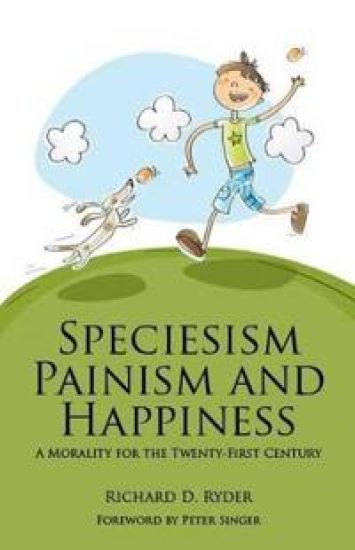
Richard Ryder created the term speciesism in early 1970 and shared the idea with Peter Singer, who popularised it in his classic work Animal Liberation (1975). A key figure in the modern animal rights revival Ryder appeared on the first-ever televised discussion of animal rights (The Lion's Share, Scottish Television) in December 1970. He further promoted the ideas around speciesism in recorded discussions with Bridget Brophy, for the Open University, and in his contribution to the seminal philosophical work Animals Men and Morals edited by the Oxford philosophers Stanley and Roslind Godlovitch and John Harris in 1971. From 1969 Ryder organised protests against animal experiments and bloodsports. He continued to promote his ideas about speciesism in leaflets and broadcasts, culminating in the publication of his Victims of Science in 1975 - a book that provoked debates in Parliament and on television and was described by The Spectator at the time as "a morally and historically important book". Dr Ryder was elected to the RSPCA Council in 1971, first becoming Chairman in 1977. In 1980 he was founding Chairman of the Liberal Democrat Animal Protection Group, and later ran for Parliament, was Director of the Political Animal Lobby and then Mellon Professor in the Department of Philosophy at Tulane University. Ryder coined the term painism to describe his wider moral theory in 1990. He has several times broadcast on the BBC's Moral Maze.
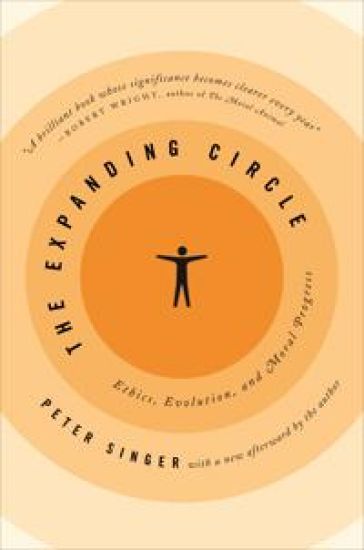
What is ethics? Where do moral standards come from? Are they based on emotions, reason, or some innate sense of right and wrong? For many scientists, the key lies entirely in biology - especially in Darwinian theories of evolution and self-preservation. But if evolution is a struggle for survival, why are we still capable of altruism? In his classic study "The Expanding Circle", Peter Singer argues that altruism began as a genetically based drive to protect one's kin and community members but has developed into a consciously chosen ethic with an expanding circle of moral concern. Drawing on philosophy and evolutionary psychology, he demonstrates that human ethics cannot be explained by biology alone. Rather, it is our capacity for reasoning that makes moral progress possible. In a new afterword, Singer takes stock of his argument in light of recent research on the evolution of morality.
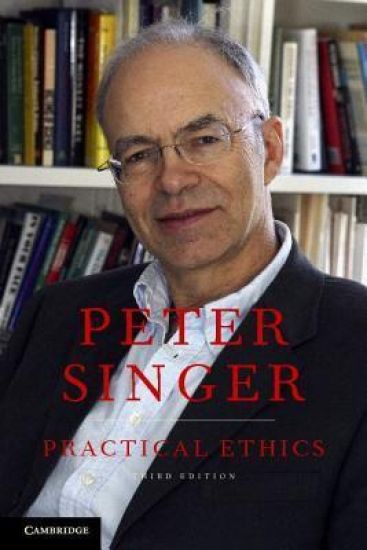
For thirty years, Peter Singer's Practical Ethics has been the classic introduction to applied ethics. For this third edition, the author has revised and updated all the chapters and added a new chapter addressing climate change, one of the most important ethical challenges of our generation. Some of the questions discussed in this book concern our daily lives. Is it ethical to buy luxuries when others do not have enough to eat? Should we buy meat from intensively reared animals? Am I doing something wrong if my carbon footprint is above the global average? Other questions confront us as concerned citizens: equality and discrimination on the grounds of race or sex; abortion, the use of embryos for research and euthanasia; political violence and terrorism; and the preservation of our planet's environment. This book's lucid style and provocative arguments make it an ideal text for university courses and for anyone willing to think about how she or he ought to live.
For thirty years, Peter Singer's Practical Ethics has been the classic introduction to applied ethics. For this third edition, the author has revised and updated all the chapters and added a new chapter addressing climate change, one of the most important ethical challenges of our generation. Some of the questions discussed in this book concern our daily lives. Is it ethical to buy luxuries when others do not have enough to eat? Should we buy meat from intensively reared animals? Am I doing something wrong if my carbon footprint is above the global average? Other questions confront us as concerned citizens: equality and discrimination on the grounds of race or sex; abortion, the use of embryos for research and euthanasia; political violence and terrorism; and the preservation of our planet's environment. This book's lucid style and provocative arguments make it an ideal text for university courses and for anyone willing to think about how she or he ought to live.
While moral perfectionists rank conscious beings according to their cognitive abilities, Paola Cavalieri launches a more inclusive defense of all forms of subjectivity. In concert with Peter Singer, J. M. Coetzee, Harlan B. Miller, and other leading animal studies scholars, she expands our understanding of the nonhuman in such a way that the derogatory category of "the animal" becomes meaningless. In so doing, she presents a nonhierachical approach to ethics that better respects the value of the conscious self. Cavalieri opens with a dialogue between two imagined philosophers, laying out her challenge to moral perfectionism and tracing its influence on our attitudes toward the "unworthy." She then follows with a roundtable "multilogue" which takes on the role of reason in ethics and the boundaries of moral status. Coetzee, Nobel Prize winner for Literature and author of The Lives of Animals, emphasizes the animality of human beings; Miller, a prominent analytic philosopher at Virginia Polytechnic Institute, dismantles the rationalizations of human bias; Cary Wolfe, professor of English at Rice University, advocates an active exposure to other worlds and beings; and Matthew Calarco, author of Zoographies: The Question of the Animal from Heidegger to Derrida, extends ethical consideration to entities that traditionally have little or no moral status, such as plants and ecosystems. As Peter Singer writes in his foreword, the implications of this conversation extend far beyond the issue of the moral status of animals. They "get to the heart of some important differences about how we should do philosophy, and how philosophy can relate to our everyday life." From the divergences between analytical and continental approaches to the relevance of posthumanist thinking in contemporary ethics, the psychology of speciesism, and the practical consequences of an antiperfectionist stance, The Death of the Animal confronts issues that will concern anyone interested in a serious study of morality.
"A most important book that will change the way many of us look at animals--and, ultimately, at ourselves." -- Chicago TribuneSince its original publication in 1975, this groundbreaking work has awakened millions of people to the existence of "speciesism"--our systematic disregard of nonhuman animals--inspiring a worldwide movement to transform our attitudes to animals and eliminate the cruelty we inflict on them.In Animal Liberation, author Peter Singer exposes the chilling realities of today's "factory farms" and product-testing procedures--destroying the spurious justifications behind them, and offering alternatives to what has become a profound environmental and social as well as moral issue. An important and persuasive appeal to conscience, fairness, decency, and justice, it is essential reading for the supporter and the skeptic alike.
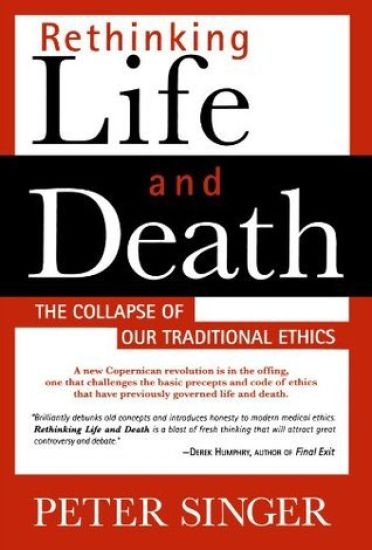
An animal rights activist, philosopher, and author of Animal Liberation examines the meanings of life and death, discusses a range of medical controversies and moral ambiguities, and proposes a new set of ethics for the twenty-first century. Reprint.
I denne boken angriper forfatteren menneskets diskriminering av andre levende vesener. Han beskriver misgjerninger begått mot dyr i laboratorieforskning og avdekker en rystende virkelighet for dyrene i det moderne landbruk. Videre argumenterer han for at alle vesener som kan føle lidelse, må omfattes av våre etiske vurderinger, og han bygger i denne boken opp en moralfilosofi som også inkluderer dyrene.
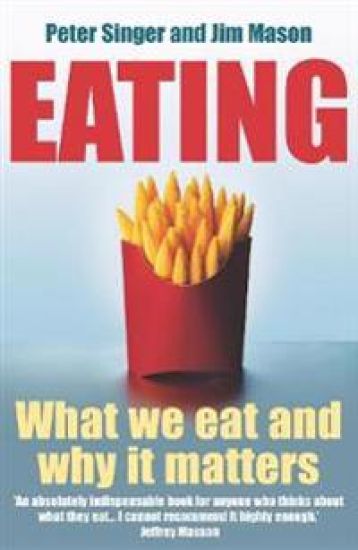
Explores our eating habits, making us look at what we eat as a moral issue. This book follows three families with varying eating habits, from fast-food eaters to vegans, to explore how the food we eat makes its way to the table, and at what expense. It also offers ways to make choices within the framework of a diet that includes animal products.
I sin nya bok tar Peter Singer upp moraliska frågor kring globalisering och söker ge ett sammanhängande svar på de utmaningar som vår planets förvandling till en värld ställer oss inför. Den svenska utgåvan har ett nyskrivet förord av Singer om Irakkriget, USA och FN. Exempel på några av de oundvikliga frågor som Singer ställer i sin bok är: Vilka skyldigheter har världens rika mot tredje världens innevånare? Är global marknadsekonomi bra för de fattiga? Kan militär intervention rättfärdigas av humanitära skäl? Hans svar är praktiska och ofta provokativa. Han manar oss att fästa mindre vikt vid den traditionella nationalstaten som fokus för politiska beslut, och istället betrakta frågor från ett mer opartiskt globalt perspektiv. Singer diskuterar hur internationell rätt ska kunna förhindra brott mot de mänskliga rättigheterna, vilka kriterier som bör vara uppfyllda för att man ska ingripa till deras försvar. Vårt beroende av andra människor och vår möjlighet att påverka andras livsvillkor varsomhelst på jorden på ett tidigare okänt sätt har på många sätt ställt vår etik på ända. Förvandlingen av vår planet till en värld ställer oss inför både skrämmande och spännande utmaningar.
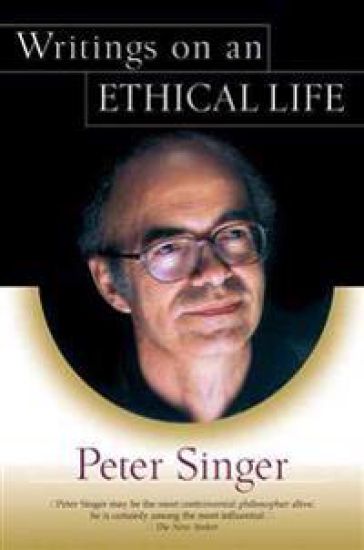
Love him or hate him, you certainly can't ignore him. For the past twenty years, Australian philosopher and professor of bioethics Peter Singer has pushed the hot buttons of our collective conscience. In addition to writing the book that sparked the modern animal rights movement, Singer has challenged our most closely held beliefs on the sanctity of human life, the moral obligation's of citizens of affluent nations toward those living in the poorest countries of the world, and much more, with arguments that intrigue as often and as powerfully as they incite.Writings On An Ethical Life offers a comprehensive collection of Singer's best and most provocative writing, as chosen by Singer himself. Among the controversial subjects addressed are the moral status of animals, environmental account-ablility, abortion, infanticide, euthanasia, and the ultimate choice of living an ethical life. This book provides an unsurpassed one-volume view of both the underpinnings and the applications of Singer's governing philosophy.
Many people regard Hegel's work as obscure and extremely difficult, yet his importance and influence are universally acknowledged. Professor Singer eliminates any excuse for remaining ignorant of the outlines of Hegel's philosophy by providing a broad discussion of his ideas and an account of his major works. ABOUT THE SERIES: The Very Short Introductions series from Oxford University Press contains hundreds of titles in almost every subject area. These pocket-sized books are the perfect way to get ahead in a new subject quickly. Our expert authors combine facts, analysis, perspective, new ideas, and enthusiasm to make interesting and challenging topics highly readable.
German Philosophers contains studies of four of the most important German theorists: Kant, arguably the most influential modern philosopher; Hegel, whose philosophy inspired an enduring vision of a communist society; Schopenhauer, renowned for his pessimistic preference for non-existence; and Nietzsche, who has been appropriated as an icon by an astonishingly diverse spectrum of people.
Henry Spira is a lifelong activist and founder of the modern animal rights movement. Inspired by the thinking of Peter Singer in the early 1970's, Henry turned Singer's ethical lessons into action, launching campaigns against organizations whose practices caused unnecessary suffering to animals. He has taken on some of the most powerful companies in America, including Revlon, Avon, Perdue, and McDonald's with extraordinary success. His respectful, though forceful, dialogue with these opponents convinces them that they can change their procedures without losing face or profit. This inspiring story of Henry's life and his campaigns proposes that his remarkable successful method of action can be adopted by activists of all kinds.
The competition for limited health care resources is intensifying. We urgently need an acceptable method for deciding how they should be allocated. But the goods that health care produces are of very different kinds. Health care can extend the lives of children and of older people. It can make it possible for a person to walk, when without health care that person would be permanently bedridden; and it can reduce the pain and distress of people who are terminally ill. How can we possibly decide which of these - and many more - diverse achievements of health care are more deserving than others? We need a common unit by which we might be able to measure these very different goods. The Quality-Adjusted Life Year, or QALY, is the most developed proposal for such a unit of measure. In this book a distinguished team of ethicists and economists defend the core of the QALY proposal: that health care resources should be used so as to produce more years of life, of the highest possible quality. This leads to a discussion of such fundamental questions as whether all lives are of equal value, whether health care should be allocated on the basis of need and whether the QALY approach incorporates an adequate account of fairness or justice. The result is the most thorough account yet of the ethical issues raised by the use of the QALY as a basis for allocating health care resources.