Kirjojen hintavertailu. Mukana 12 595 353 kirjaa ja 12 kauppaa.

Kirjailija

Peter Tuffrey

Kirjat ja teokset yhdessä paikassa: 99 kirjaa, julkaisuja vuosilta 1995-2025, suosituimpien joukossa Askern and Norton. Vertaile teosten hintoja ja tarkista saatavuus suomalaisista kirjakaupoista.

99 kirjaa

Kirjojen julkaisuhaarukka 1995-2025.

Askern and Norton

Askern and Norton

Peter Tuffrey

NPI Media Group
1998
nidottu
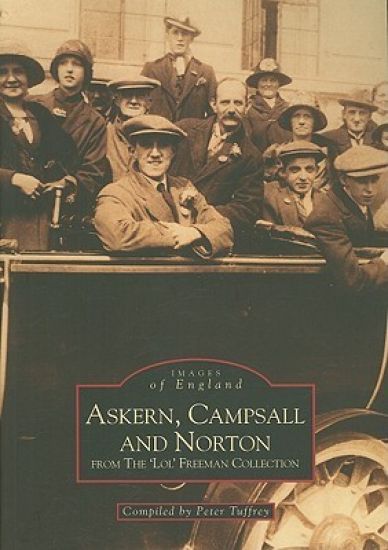
This book is part of the Images ofEngland series, which uses old photographs and archived images toshow the history ofvarious local areas in England, through their streets, shops, pubs, and people."
Last Days of Southern Steam from the Bill Reed Collection
This album of 160 colour photographs was taken in the Southern Region of B.R., which was formerly the lines constituting the Southern Railway. Bill Reed took the pictures between 1958 and 1967 during a number of visits to stations, sheds and areas offering attractive vantage points of locomotives. From Greater London in the north, at sheds and stations including Bricklayers Arms, Feltham and Victoria, to Brighton, Southampton and Bournemouth on the south coast. Dover and Folkestone in the south east were visited as well as Exeter, Yeovil and Wadebridge on the south west. The Isle of Wight is also included as the area was incorporated into the S.R. upon Grouping and later the Southern Region of B.R. This book contains a selection of photographs taken on numerous branch lines around the region and these are particularly evocative of the final years of steam under B.R. operation. From a modern perspective they also give an indication why there was such an eagerness on the part of B.R. for their closure. Many of the lines utilized locomotives that had been in service for a number of years and were perhaps coming to the end of their life span.
East Midlands Railways

East Midlands Railways

Peter Tuffrey

GREAT NORTHERN BOOKS LTD
2025
sidottu
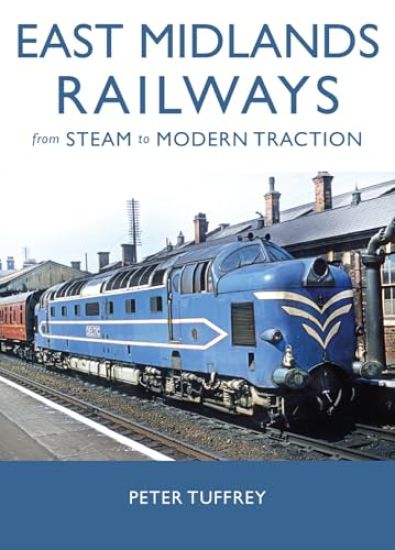
A transitional period existed following the announcement of British Railways’ Modernisation Plan in 1955 as steam engines operated alongside new diesel and electric forms of motive power.The East Midlands was particularly affected as diesel locomotives came to work the area’s expresses and freight trains. Diesel Multiple Units sought to halt declining branch line usage, though many eventually closed. Yet, some improvements in infrastructure were also seen.East Midlands Railways From Steam to Modern Traction uses around 200 excellent colour and black-and-white images to look at the changing scene in the 1950s and 1960s.The area’s lines were formerly operated by the London, Midland & Scottish Railway and the London & North Eastern Railway. Many of these companies’ locomotives could be seen, as well as British Railways’ Standard Classes. A number of new diesel classes and DMUs appeared and worked alongside these during the late 1950s and early 1960s.The locomotives are at locations across the East Midlands, which covers Derbyshire, Leicestershire, Lincolnshire, Northamptonshire, Nottinghamshire and Rutland. Principal cities include Derby, Leicester, Lincoln and Nottingham, whilst there are several large towns, such as Chesterfield, Grantham, Kettering, Loughborough, Mansfield, Northampton, Wellingborough, etc.The pictures have been captured from the lineside, engine sheds, stations, marshalling yards and industrial locations.From the announcement of the Modernisation Plan to the end of steam services, just 13 years elapsed. Fortuitously, many enthusiast photographers were on hand to capture this important period of railway history
West Midlands Railways

West Midlands Railways

Peter Tuffrey

GREAT NORTHERN BOOKS LTD
2025
sidottu
From the announcement of the Modernisation Plan to the end of steam services, just 13 years elapsed. A transitional period existed where steam engines operated alongside new diesel and electric forms of motive power.West Midlands Railways From Steam to Modern Traction uses around 200 excellent colour and black-and-white images to look at the changing scene in the 1950s and 1960s.The area's lines were formerly operated by the London, Midland & Scottish Railway and the Great Western Railway. Many of these companies' locomotives could be seen, as well as British Railways' Standard Classes. A number of new diesel classes and DMUs appeared and worked alongside these during the late 1950s and early 1960s.The West Midlands consists of Herefordshire, Shropshire, Staffordshire, Warwickshire, Worcestershire and the ceremonial West Midlands county. The primary cities are Birmingham, Coventry, Hereford, Lichfield, Stoke-on-Trent, Wolverhampton and Worcester. Large towns located in the area are Burton-on-Trent, Dudley, Kidderminster, Leamington Spa, Nuneaton, Rugby, Shrewsbury, Stafford, Stourbridge, Tamworth, Uttoxeter, etc.The pictures have been captured from the lineside, engine sheds, stations, marshalling yards and industrial locations.The West Midlands was a vibrant and exciting place for railway enthusiasts to record locomotives at work. This collection is presented to celebrate those days.
North East Railways

North East Railways

Peter Tuffrey

GREAT NORTHERN BOOKS LTD
2025
sidottu
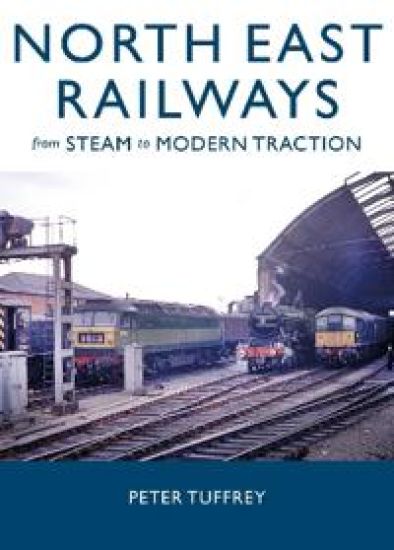
Following the announcement of British Railways' Modernisation Plan in 1955, a transitional period existed where steam engines operated alongside new diesel and electric forms of motive power.North East England was particularly affected as diesel locomotives came to work the area's expresses and freight trains. Diesel Multiple Units tried to halt declining branch line usage, though many lines eventually closed. Yet, some improvements in infrastructure were also seen.North East Railways From Steam to Modern Traction uses around 200 excellent colour and black-and-white images to look at the changing scene in the 1950s and 1960s.Many of the recognisable steam classes are featured: Gresley A3 and A4 Classes; Peppercorn A1 Class; Gresley V2 Class; Thompson B1 Class; Raven Q6 Class; Worsdell J27 Class; WD 'Austerity'; etc. Working alongside these in the North East were new diesel locomotives: English Electric Type 5 (TOPS Class 55); English Electric Type 3 (Class 37); BR Type 2 (Class 24); Brush Type 4 (Class 47); etc.The locomotives are at locations across the North East, including: Newcastle; Sunderland; Darlington; Middlesbrough; Stockton; Durham; etc.The pictures have been captured from the lineside, engine sheds, stations, marshalling yards and industrial locations.Thirteen years passed from the instigation of the Modernisation Plan and the end of steam services. Thankfully, many amateur photographers were on hand to capture this fascinating time in railway history.
The Glorious Years of the Southern Railway

The Glorious Years of the Southern Railway

Peter Tuffrey

GREAT NORTHERN BOOKS LTD
2025
sidottu
The Southern Railway was the smallest of the ‘Big Four’ companies created by the Railways Act 1921. Yet, this was not a hindrance, rather a benefit which helped the SR become one of the more innovative of the group. The Glorious Years of the Southern Railway looks at the company over the period 1923-1945 using nearly 230 high quality black-and-white photographs. These are collected into several sections: locomotives; electric traction; Isle of Wight Railway; carriages; Southampton Docks; stations; war effort. The SR was the only one of the ‘Big Four’ to be solely operational in England, but the company’s territory stretched from east to west in the south. The photographs have been taken in this area at many locations, including stations, the lineside, sheds and workshops. Several companies formed the SR: London, Brighton & South Coast Railway; London & South Western Railway; South Eastern & Chatham Railway; Isle of Wight Railway. A small section of the book recognises their history, whilst the rolling stock continued to be a feature of the SR in the years after formation. The motive power of the SR developed an identity under Maunsell with the ‘Lord Nelson’ Class 4-6-0s, ‘Schools’ Class 4-4-0s, U Class 2-6-0s and Q Class 0-6-0. Though constrained by the war, Bulleid revolutionised the SR’s locomotives with the introduction of the ‘Merchant Navy’ Class Pacifics, ‘West Country’ and ’Battle of Britain’ Pacifics and Q1 Class 0-6-0. The SR continued to develop the constituents’ electrification schemes and by the 1930s could boast of operating the largest suburban network in the world. The company also instigated one of the first main line electrification schemes to Brighton which opened in January 1933. This work also saw the SR modernise with colour-light signalling which became the longest stretch used in Britain. Operational for just 25 years, the SR managed to achieve much in that period thanks to the company’s officers and employees. The Glorious Years of the Southern Railway celebrates this contribution to railway history.
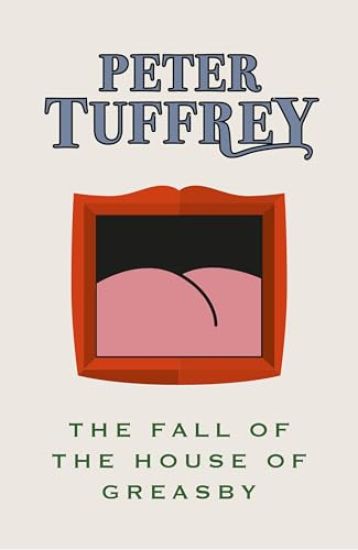
The Fall of the House of Greasby

The Fall of the House of Greasby

Peter Tuffrey

GREAT NORTHERN BOOKS LTD
2025
nidottu
Al Cooper mourns the death of his only son, though finds solace from this tragedy through art. When made redundant from his position in a local authority art gallery, Al takes a high-ranking position with art dealers Greasby Fine Art.Seemingly the perfect job working with prestigious art in galleries across the UK, Al soon discovers deception, debauchery and criminality is at the heart of the firm.Run by father and daughter team Frankie and Nicola, the integrity of art is often sacrificed to fund increasingly lavish lifestyles. Frankie’s spiralling drink and drug habit leads him to question his identity. Nicola requires a constant stream of cash to fund vicar-husband Nigel’s new church.The need for cash allowed a shadowy Eastern European figure known as Y to force Greasby Fine Art to accept stolen paintings from across the continent.Al struggles to avoid this criminality and keep the firm solvent in the face of progressively dangerous and violent situations.He finds hope for the future through a friendship with billionaire businesswoman and art collector Brenda Fitch. She has grand plans for a new museum to celebrate the contribution women have made to art and wants Al to be involved in the mission.A spectacular collection of paintings promises to be centrepiece of the project, yet a dramatic theft snatches them from Brenda’s grasp and Al is determined to ensure their safe return.Al rediscovers his own artistic ability which helps to overcome the grief plaguing his life. Yet as he looks for the stolen paintings Al’s existence and the new start he craves is threatened to be snatched from his grasp.
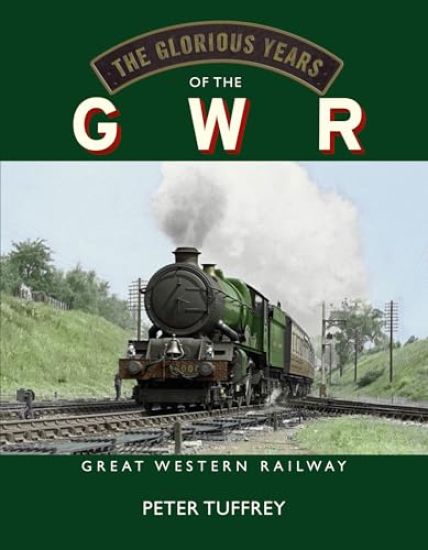
The Glorious Years of the GWR

The Glorious Years of the GWR

Peter Tuffrey

GREAT NORTHERN BOOKS LTD
2024
sidottu
The Great Western Railway’s first train ran on the Broad Gauge during 1838 and thereafter the company developed an esteemed reputation amongst travellers and enthusiasts alike.The Glorious Years of the GWR looks at the early days of the Broad Gauge to the conversion to Standard Gauge and the post-Grouping period using over 230 excellent black-and-white images. Split into several sections, the book presents locomotives, carriages, buses and road vehicles and stations.The photographs have been taken at the GWR’s stations, sheds and workshops, as well as the lineside, spanning South West England, the West Midlands and most of Wales.A number of the various locomotive classes built over the years are featured, including: Daniel Gooch’s Iron Duke Class singles; constituent Broad Gauge locomotives; William Dean’s singles and 4-4-0s; Joseph and George Armstrong’s classes; Churchward’s pioneering designs; Collett’s recognisable 4-6-0s, etc.The GWR developed a distinct identity with their coaching stock, taking inspiration from developments in America. This was displayed in the 70 ft Dreadnought stock of the early 20th century and later by the Super Saloons of the late 1920s. Many steam rail motors were built for local services in the 1900s and the GWR was amongst the early adopters of the idea. The use of slip coaches also set the company apart from others in Britain.In 1903, the GWR was the first railway company to offer a bus service, running from Helston to The Lizard. This began a development of local routes and led to the adoption of motor transport for goods traffic from the rail head to destination.The GWR was operational for 110 years and during that time the company’s officers and employees were able to create a lasting legacy of hard work, achievement and innovation.
Yorkshire Railways from Steam to Modern Traction

Yorkshire Railways from Steam to Modern Traction

Peter Tuffrey

GREAT NORTHERN BOOKS LTD
2024
sidottu
Thirteen years elapsed between the publication of British Railways’ Modernisation Plan and the end of steam services on the national network. In this transitional period, modern traction worked alongside steam engines and was captured by enthusiasts across the country. Yorkshire offers an interesting insight into the changeover during the mid-to late 1950s and much of the 1960s, as the two forms of traction worked side-by-side on the main lines and branches with both passenger and freight trains. The county was also affected by several other features of the plan, such as line closures, station rebuilds and infrastructure improvements. Yorkshire Railways from Steam to Modern Traction uses over 200 colour and black-and-white images to present this changing scene in the 1950s and 1960s. Many of the familiar steam locomotive classes are featured: Fowler Royal Scot; Stanier Jubilee; Stanier Class 5; Thompson B1; WD Austerity; etc. New diesel classes working in Yorkshire were: Brush Type 2 (TOPS Class 30), English Electric Type 3 (Class 37), English Electric Type 4 (Class 40), Sulzer Type 4 (Class 45) and Brush Type 4 (Class 47). The Sheffield to Manchester Woodhead route was electrified in the 1950s and the EM1 and EM2 Classes handled freight and passenger services respectively. The locomotives are seen at locations across Yorkshire: Alne; Ardsley; Arthington; Barnsley; Batley; Beverley; Bradford; Bridlington; Doncaster; Halifax; Harrogate; Hellifield; Holbeck; Huddersfield; Hull; Leeds; Mirfield; Normanton; Penistone; Rotherham; Scarborough; Selby; Sheffield; Wakefield; Whitby; York. The pictures have been taken from the lineside, at stations, sheds and marshalling yards.
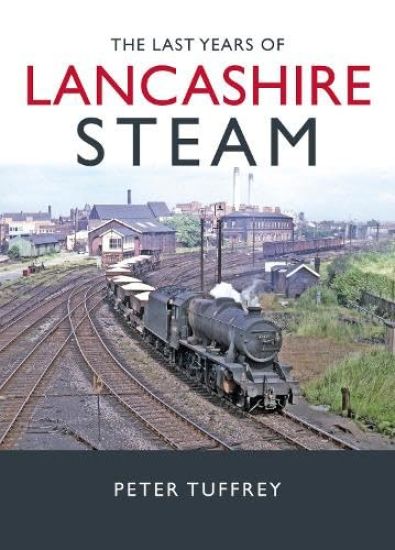
The Last Years of Lancashire Steam

The Last Years of Lancashire Steam

Peter Tuffrey

GREAT NORTHERN BOOKS LTD
2024
sidottu
The historic county of Lancashire saw the birth of modern railways when the Liverpool & Manchester Railway opened in 1830. Thereafter, developed a complex network of lines serving passengers, businesses and industries of the area. The ‘Beeching Axe’ cut several railways in the 1960s and Lancashire was where the British steam era came to an end on 11th August 1968. The Last Years of Lancashire Steam charts the area under British Railways from the early 1950s to 1968. Using nearly 200 excellent colour and black-and-white images, the collection features routes around Liverpool and Manchester, which later split from the county as part of the Local Government Act 1972, as well as places such as: Accrington; Aintree; Bacup; Blackburn, Blackpool; Bolton; Burnley; Bury; Carnforth; Fleetwood; Gorton; Horwich; Lancaster; Lostock Hall; Morecambe; Oldham; Patricroft; Preston; Rochdale; Salford; Southport; Warrington; Widnes; Wigan. Captured at stations, sheds, the lineside and industrial locations, the steam locomotives featured consist of many ex-London Midland & Scottish Railway designs. These include Stanier’s Pacifics, 4-6-0s, 2-8-0s and 2-6-4Ts, Fowler’s 4-6-0s, 0-6-0s and 0-6-0Ts, Fairburn 2-6-4Ts and Hughes 2-6-0s. Supporting these in the county were BR’s new Standard Classes – Britannia Pacific, Class 5 and 4 4-6-0s, Class 2 2-6-0, 9F 2-10-0. Some of the London & North Western and Lancashire & Yorkshire engines survived into the BR period, as did ex-Great Central Railway locomotives on the Cheshire Lines Committee routes. At industrial locations 0-6-0ST and 0-4-0ST engines were favoured. As an interesting and vibrant place for railways, Lancashire attracted many enthusiasts, both local and tourists, in the 1950s and 1960s. A number had their cameras on hand to record a transitional time in British history which has thankfully allowed this collection to be presented.
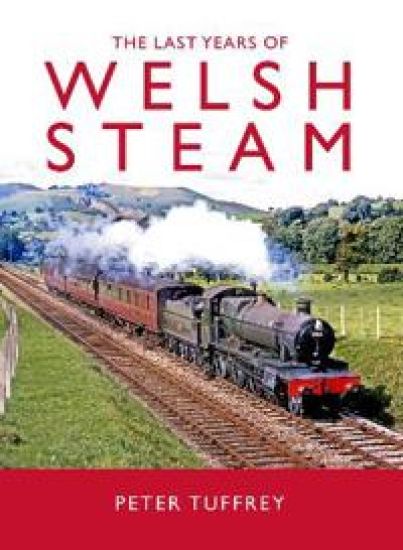
The Last Years of Welsh Steam

The Last Years of Welsh Steam

Peter Tuffrey

GREAT NORTHERN BOOKS LTD
2024
sidottu
The railways of Wales had a varied character, ranging from the heavy industry of the South to the rural Mid- and North. The country was badly affected by the Beeching Report of the early 1960s which saw many lines and stations closed. The Last Years of Welsh Steam presents the British Railways period using over 200 evocative colour and black and white images. These have been captured from the lineside, at stations, sheds, and industrial locations. Some of the places featured include: Aberystwyth; Afon Wen; Bala; Bangor; Barmouth; Barry; Bedwas; Blaenau Ffestiniog; Brecon; Builth Wells; Cardiff; Carmarthen; Colwyn Bay; Devil's Bridge; Fishguard; Holyhead; Llandudno; Llanidloes; Machynlleth; Magor; Merthyr Tydfil; Mountain Ash; Neath; Newport; Portmadoc; Pwllheli; Rhyl; Severn Tunnel Junction; Swansea; Talyllyn; Towyn; Welshpool; Whitland; Wrexham. Many of Collett's GWR designs are featured, as are those of Hawksworth and Churchward. Some Stanier LMSR locomotives worked in the country, particularly in the North. Several Taff Vale Railway engines remained in service, as did Swansea Harbour Trust shunters and these are present. With extensive colliery sidings, industrial locomotives were required and a small selection are included.
The Glorious Years of the LMS

The Glorious Years of the LMS

Peter Tuffrey

GREAT NORTHERN BOOKS LTD
2023
sidottu
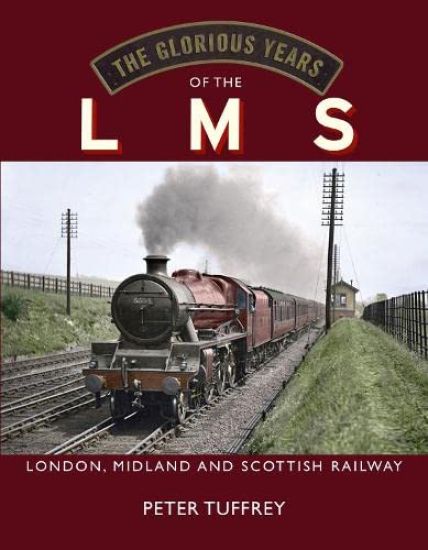
One hundred years have passed from the formation of the largest British railway company – the London Midland & Scottish Railway. This was also the biggest transport concern in the world at the time. The LMSR was able to serve passengers and customers to a high standard up to the Second World War. During the conflict the LMSR made a valuable contribution to the war effort in terms of motive power provision, movement of goods and war materials. The Glorious Years of the LMS examines the company over the period 1923-1947 using over 250 high-quality black-and-white images. These are split into several sections: locomotives; carriages; war work; road vehicles; stations. The LMSR’s territory spread across much of England, Scotland and into Wales and the photographs have been taken at a number of locations. These include stations, lineside, sheds and workshops. Several companies constituted the LMSR, including the London & North Western Railway, Midland Railway, Caledonian Railway, Glasgow & South Western Railway, etc. Locomotives from these are included in the collection, alongside those of Sir Henry Fowler – Royal Scot 4-6-0, 4P 4-4-0, etc. – and Sir William Stanier. The latter’s designs are most associated with the LMSR and include Jubilee 4-6-0, Class 5 4-6-0, 8F 2-8-0, Princess Royal and Coronation Class Pacifics. The LMSR was an early pioneer of steel-panelled coaching stock and also experimented with different types of carriages – cocktail bar, club car, lounge. Luxurious sets were built for the Royal Scot and Coronation Scot named trains, whilst the company provided new Royal Train saloons in the early 1940s. At the time of Grouping, road transport was increasing and the LMSR was keen to keep the competition at bay. A fleet of nearly 30,000 vehicles was developed, ranging from horse-drawn drays to vans, lorries and specialised trucks, particularly for containerised traffic. The LMSR also branched into bus services. The LMSR existed for just 25 years and during that time the company, the officers and employees were able to create a lasting legacy of hard work, achievement and innovation.
The Last Years of South West Steam

The Last Years of South West Steam

Peter Tuffrey

GREAT NORTHERN BOOKS LTD
2023
sidottu
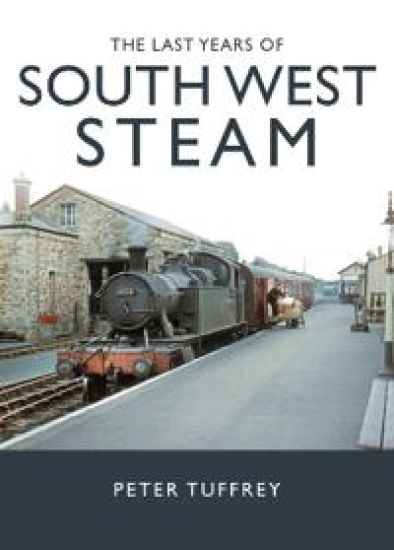
In South West England a rich railway history was developed through the construction of various routes, the steam locomotives used and services offered. Last Years of South West Steam looks at the region in the 1950s and 1960s as steam traction came to an end. This is done using 230 evocative colour and black-and-white images. Covering over 9,000 square miles, South West England includes the counties: Cornwall; Devon; Dorset; Gloucestershire; Somerset; Wiltshire. A selection of the towns and cities present are: Bath; Bristol; Bournemouth; Cheltenham; Cirencester; Dawlish; Exeter; Exmouth; Gloucester; Liskeard; Newton Abbot; Penzance; Plymouth; Salisbury; Sidmouth; Swindon; Tavistock; Truro; Wadebridge; Weymouth; Yeovil. A number of important routes pass through the area, including the Great Western Main Line from Paddington to Penzance and the South Western Main Line between Waterloo and Weymouth. Several local lines and branches also connected places in the South West. Many of the locomotive classes that worked in the region are present. These were mainly ex-Great Western Railway designs, such as Collett’s ‘Castle’, ‘Hall’, ‘Grange’ and ‘Manor’ Class 4-6-0s or the numerous 5700 and 8750 Class 0-6-0PTs, 5101 and 6100 2-6-2Ts, whilst Churchward’s 2800 Class 2-8-0s and 4300 2-6-0s were still employed. Some ex-Southern Railway classes feature, such as the ‘West Country’ Pacifics, Maunsell’s ‘N’ Class 2-6-0, Drummond T9 Class 4-4-0, Adams 415 Class 4-4-2T, Drummond M7 Class 0-4-4T, etc. BR’s Standard Classes also assisted in the region at the end of steam. The locomotives are pictured at stations, junctions, points from the lineside and sheds, both large and small. Last Years of South West Steam chronicles the railways of the area in the final years of an increasingly distant time in English history.
British Guitarists 1952-1972

British Guitarists 1952-1972

Peter Tuffrey

GREAT NORTHERN BOOKS LTD
2023
sidottu
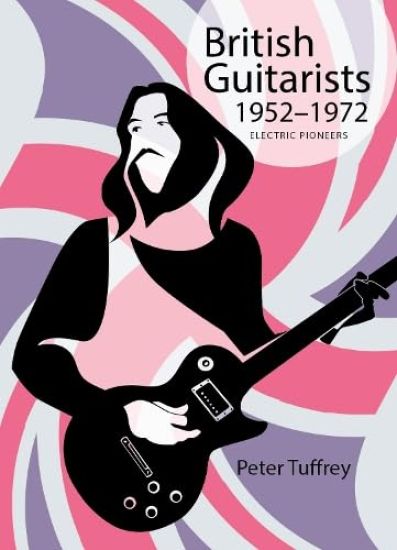
Featuring legendary and inspirational guitarists and the equipment they used. This fully illustrated, beautifully produced hardback explores the history of the pioneering British guitarists – their background, career and equipment. Includes many exclusive interviews. From the mid-20th century, no other musical instrument developed faster or had a greater impact than the electric guitar. In Britain, many young lads became enthralled by the look and the sound, leading them to take up the guitar to entertain their peers. Several dozen were able to master the instrument sufficiently to gain national and international recognition, enjoying careers spanning decades which has resulted in a number being awarded Queen's honours. British Guitarists 1952-1972: Electric Pioneers examines a number of musicians that were part of a first wave of new popular music in the second half of the 20th century. A focus is placed on the guitars, amplifiers and effects used by the artists. Starting from their early days, the book looks at the evolution of the guitarist's equipment and how this has impacted on their music. The guitarists featured are: Martin Barre, Syd Barrett, Jeff Beck, Ritchie Blackmore, Marc Bolan, Joe Brown, Eric Clapton, Dave 'Clem' Clempson, Dave Davies, Lonnie Donegan, Andy Fairweather Low, Peter Frampton, Robert Fripp, David Gilmour, Peter Green, George Harrison, Tony Hicks, Steve Howe, Tony Iommi, Brian Jones, Paul Kossoff, Albert Lee, Alvin Lee, John Lennon, Phil Manzanera, Hank Marvin, John McLaughlin, Tony McPhee, Micky Moody, Jimmy Page, Alan Parker, Mike Pender, Andy Powell, Keith Richards, Mick Ronson, Mick Taylor, Pete Townshend, Bert Weedon, Ronnie Wood.
Stanier's Jubilees

Stanier's Jubilees

Peter Tuffrey

GREAT NORTHERN BOOKS LTD
2023
sidottu
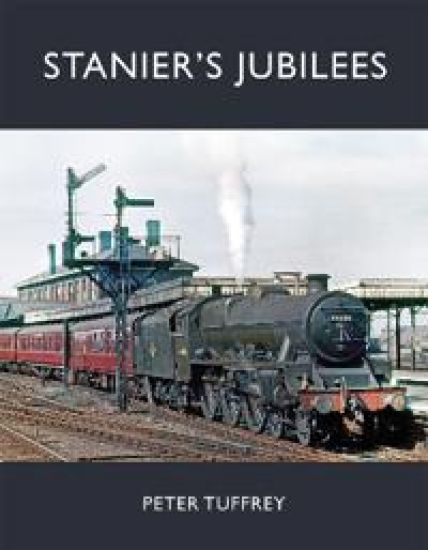
Sir William A. Stanier’s ‘Jubilee’ 5XP 4-6-0 Class served as the backbone of passenger services for the London Midland & Scottish Railway – as well as the successor London Midland Region of British Railways – for a number of years. Despite initial design flaws, the class went on to be well-liked by enginemen and enthusiasts alike. Stanier’s Jubilees follows the career of this 191-locomotive class from their introduction in 1934 to withdrawal in 1967. A number are featured during the LMSR period, whilst many are seen during the British Railways years. The engines are featured in over 200 excellent colour and black-and-white images. A wide area was worked by the Jubilee Class, ranging from the West Coast Main Line to the Midland Main Line, Glasgow-Perth-Aberdeen route and cross-country from York to Liverpool, in addition to Leeds-Bristol. The images included have been taken at stations, sheds, lineside and workshops. Accompanying the pictures are informative captions detailing the locomotive’s history, as well as other interesting details. Four locomotives were preserved following withdrawal at the end of steam and three are in steam at present. Hopefully, they will continue to be so and honour their fallen class mates, many of which are remembered here in this collection.
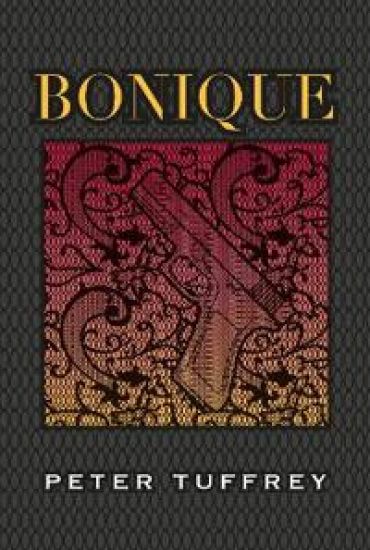
Bonique

Bonique

Peter Tuffrey

GREAT NORTHERN BOOKS LTD
2022
nidottu
Investigative journalist Terry Nelson is divorced, depressed and disillusioned. He has abandoned his career to smoke copious amounts of crack cocaine and engage in meaningless sex in order to reach ‘pleasure’s cutting edge’. Obsessed with the beautiful yet vapid Paula, Terry is soon drawn into a shadowy underworld to fund their growing drug habits. Mikey, a Jamaican gangster, befriends Terry and recruits him as a driver for drug deals. This allows Terry access to large amounts of crack cocaine, as well as information about the local drugs scene. Peterfield – a once prosperous manufacturing hub in the North of England – has descended into extreme urban decay and become a place where the residents turn to sex and drugs to escape their dead-end, mundane existence. Drug dealers supplied by international crime gangs are only too pleased to meet the population’s needs and regenerate the area to further line their pockets. Terry is convinced the gangs are led by a mysterious figure – Bonique. Who is Bonique? This is the question that haunts Terry and threatens to destroy his life. As Terry searches for contacts to Bonique his life becomes increasingly violent and leads him to question the path he has chosen. A vigilante group is increasingly active, targeting suspected drug dealers and criminals plaguing Peterfield. Who are they and who are they led by? Terry’s relationship with his mother and father is very strained. Why is his father so distant? Does the reason involve an unidentified girl Terry witnessed arguing with his father when he was in his teens? Terry struggles to piece together any strands of information that might yield an answer. A Government Task Force arrives in Peterfield to break the drug gangs’ hold on the city. Terry’s involvement with drugs is taken advantage of by the organisation for information. The cash he’s paid keeps his drug habit financed. Terry’s Task Force handler, Mark, is reluctant to share information and appears to be hiding something. Can Terry pull together all the pieces and soothe his growing obsessions? Or will he lose control of the forces pulling him in the wrong direction, causing harm to himself and his family?